

Zephyr, Regent And Kalamazoo Thinline · American Guitars
Epiphone Zephyr Value Guide
Choose the original factory version before comparing an early single-pickup Zephyr with a Gibson-built two-pickup thinline.
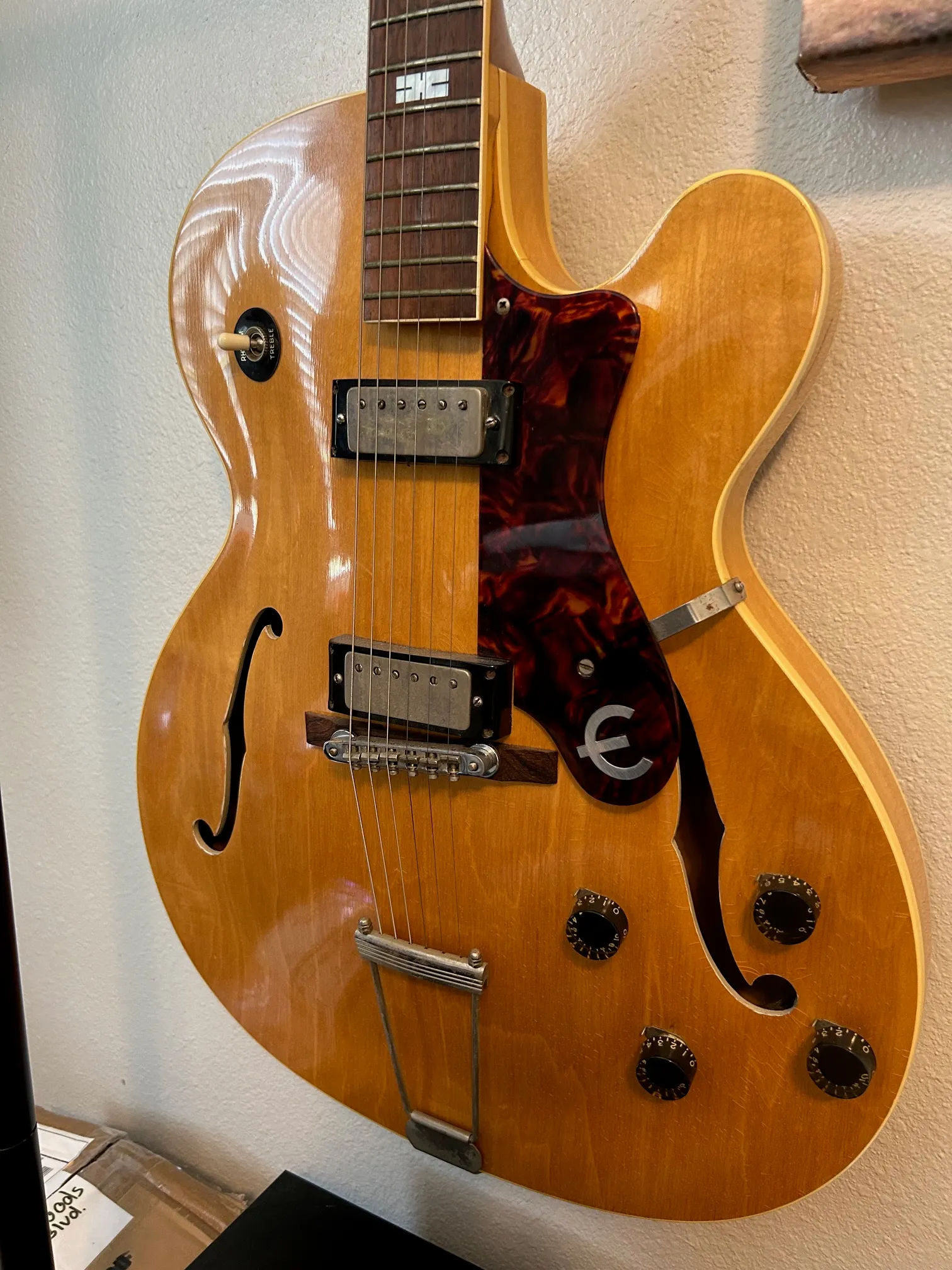
A vintage Epiphone Zephyr is estimated at $1,750 to $2,650 for an early natural example with its metal handrest, $2,150 to $3,250 for a 1950 to 1953 sunburst Regent, and $4,350 to $5,200 for a 1960 to 1964 natural Kalamazoo thinline. These ranges assume excellent, original condition with the original case. Check the Zephyr authentication guide before treating the shared name as one continuous specification.
This Is An Estimate Of Market Value, Not An Offer To Buy And Not A Guarantee. Market Values Fluctuate; Have Your Specific Item Appraised.
Excellent Original Examples
Zephyr And Regent Price Chart
On a phone, swipe across the chart to see the estimated values.
| Model | Pricing Year Group | Configuration | Estimated Value |
|---|---|---|---|
| Zephyr | 1939 to 1940 | Natural, metal handrest pickup | $1,750 to $2,650 |
| Zephyr | 1941 to 1943 | Natural, no metal handrest | $1,750 to $2,600 |
| Zephyr | 1944 to 1946 | Natural, top-mounted pickup | $1,750 to $2,600 |
| Zephyr | 1947 to 1948 | 17 3/8-inch body, metal-covered pickup | $1,750 to $2,600 |
| Zephyr | 1949 to 1957 | Natural, single pickup; verify period hardware | $1,600 to $2,400 |
| Zephyr | 1953 to 1957 | Sunburst, single pickup; verify period hardware | $1,500 to $2,300 |
| Zephyr Regent | 1950 to 1953 | Natural, single pickup, cutaway | $2,700 to $4,100 |
| Zephyr Regent | 1950 to 1953 | Sunburst, single pickup, cutaway | $2,150 to $3,250 |
| Zephyr Cutaway | 1954 to 1957 | Natural | $2,700 to $4,100 |
| Zephyr Cutaway | 1954 to 1957 | Sunburst | $2,400 to $3,550 |
| Zephyr Electric Cutaway | 1958 to 1959 | Kalamazoo thinline, natural | $3,500 to $4,850 |
| Zephyr Electric Cutaway | 1958 to 1959 | Kalamazoo thinline, sunburst | $3,050 to $3,900 |
| Zephyr Electric Cutaway | 1960 to 1964 | Kalamazoo thinline, natural | $4,350 to $5,200 |
| Zephyr Electric Cutaway | 1960 to 1964 | Kalamazoo thinline, sunburst | $3,950 to $4,850 |
| Zephyr Tenor | 1940 to 1950 | Natural figured top, four strings | $1,800 to $2,650 |
U.S. dollars. Joe’s October 2026 estimates start with published reference-guide ranges and apply his pricing adjustment. They are not averages of completed sales. Estimates assume excellent, original condition and the original case where applicable. These are market estimates, not purchase offers. An individual appraisal accounts for repairs and changes.
Read the model, years and configuration as one row. The natural finish on a postwar non-cutaway doesn’t put it in the same group as a natural Kalamazoo thinline. Likewise, an added pickup doesn’t turn a single-pickup Regent into a more expensive factory model. Photograph the complete body before choosing the closest comparison.
The chart stops at the last supported Zephyr groups rather than extending every name through 1970. It includes the tenor row but doesn’t price amplifiers, steel guitars or every product bearing the Zephyr name. The Zephyr De Luxe and Zephyr Emperor electrics have their own parent-model value guides.
Handrests, Pickups And Body Changes
Early Zephyr Prices Depend On Surviving Equipment
Prewar And Wartime Configurations
The early natural range with a metal handrest is $1,750 to $2,650. The next group without that handrest is $1,750 to $2,600. Check the complete pickup and control arrangement rather than assuming that a missing accessory explains every difference between those instruments.
Keep any removed handrest, pickup cover or control parts with the guitar. A loose piece needs to be identified before it can count toward completeness, but discarding it removes useful evidence. Take separate photographs without trying to reinstall fragile hardware for the appraisal.
Postwar Non-Cutaways
The later natural non-cutaway single-pickup group is $1,600 to $2,400, while its sunburst group is $1,500 to $2,300. These are comparisons for the specified period and equipment. An old finish alone can’t establish that the pickup, bridge and wiring are original to the body.
Include the back and sides, especially if a repair has changed the electrical access or jack location. A replacement pickup may work perfectly while leaving a different opening underneath. Describe what is known and leave concealed woodwork for a qualified inspection.
Regent And Later Cutaway Names
What A Cutaway Changes In The Comparison
The natural 1950 to 1953 Regent estimate is $2,700 to $4,100, with sunburst at $2,150 to $3,250. The later Cutaway rows remain separate. Match the original rim shape and model identity rather than assigning a premium merely because the word Regent appears in an old description.
The ordinary Regent should not be confused with the ornate Zephyr De Luxe Regent. The DeLuxe value guide covers that family, while the Emperor value guide covers the larger three-pickup electric. Both explain omitted electric price groups that need individual appraisal. Choosing the wrong parent model can distort the estimate more than a small disagreement over condition.
A cutaway repair deserves clear photographs from the front, side and inside where visible. Replaced binding or finish around the neck joint can obscure the original work. You don’t need to decide the repair’s quality before contacting Joe; send the invoice or explain the history so it can be assessed alongside the images.
Two Pickups And A Thin Body
Kalamazoo Zephyr Values
Early Gibson-Built Zephyrs
The natural range is $3,500 to $4,850 and sunburst is $3,050 to $3,900. Confirm the early electrical configuration and body identity. A replacement pickup set should not be ignored because the serial falls inside the right years.
Later Thinline Comparisons
The natural estimate is $4,350 to $5,200, with sunburst at $3,950 to $4,850. Inspect the neck angle, covered pickups, bridge and tailpiece together. These figures do not establish that every surviving natural guitar retains its first finish.
The Kalamazoo Zephyr is not the full-depth Broadway. A front photograph can conceal that distinction, so include a side view and a body-depth measurement when possible. The long body and single cutaway should be documented with the neck attached in the frame, rather than cropped into a generic pickup close-up.
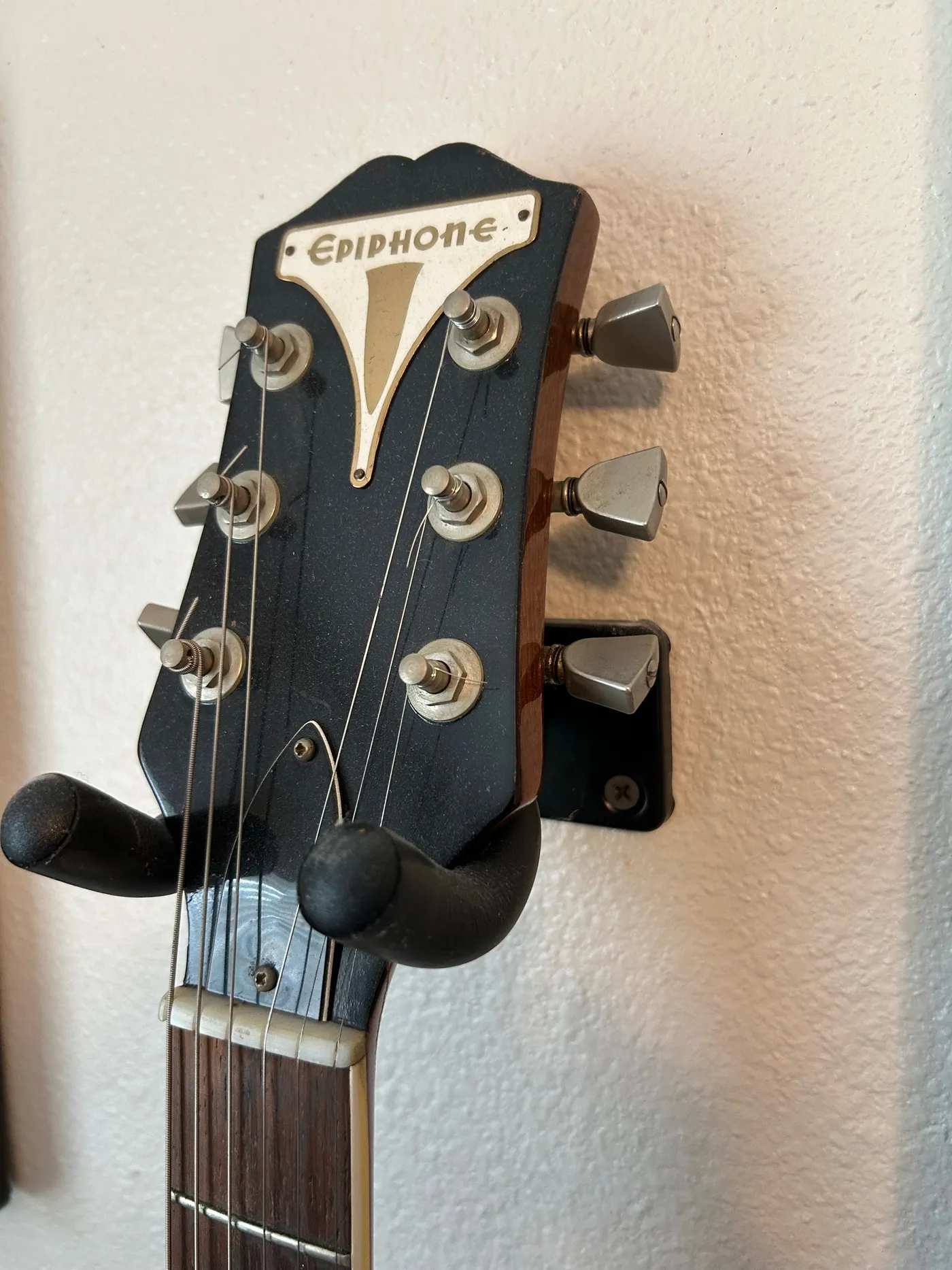
The pictured 1961 Zephyr is an identification example, not an all-original condition benchmark or a purchase offer. Its visible hardware can be compared with the period catalog, but photographs alone do not establish the history of its pickups or finish. Use the chart’s original-condition assumption only after those questions are answered.
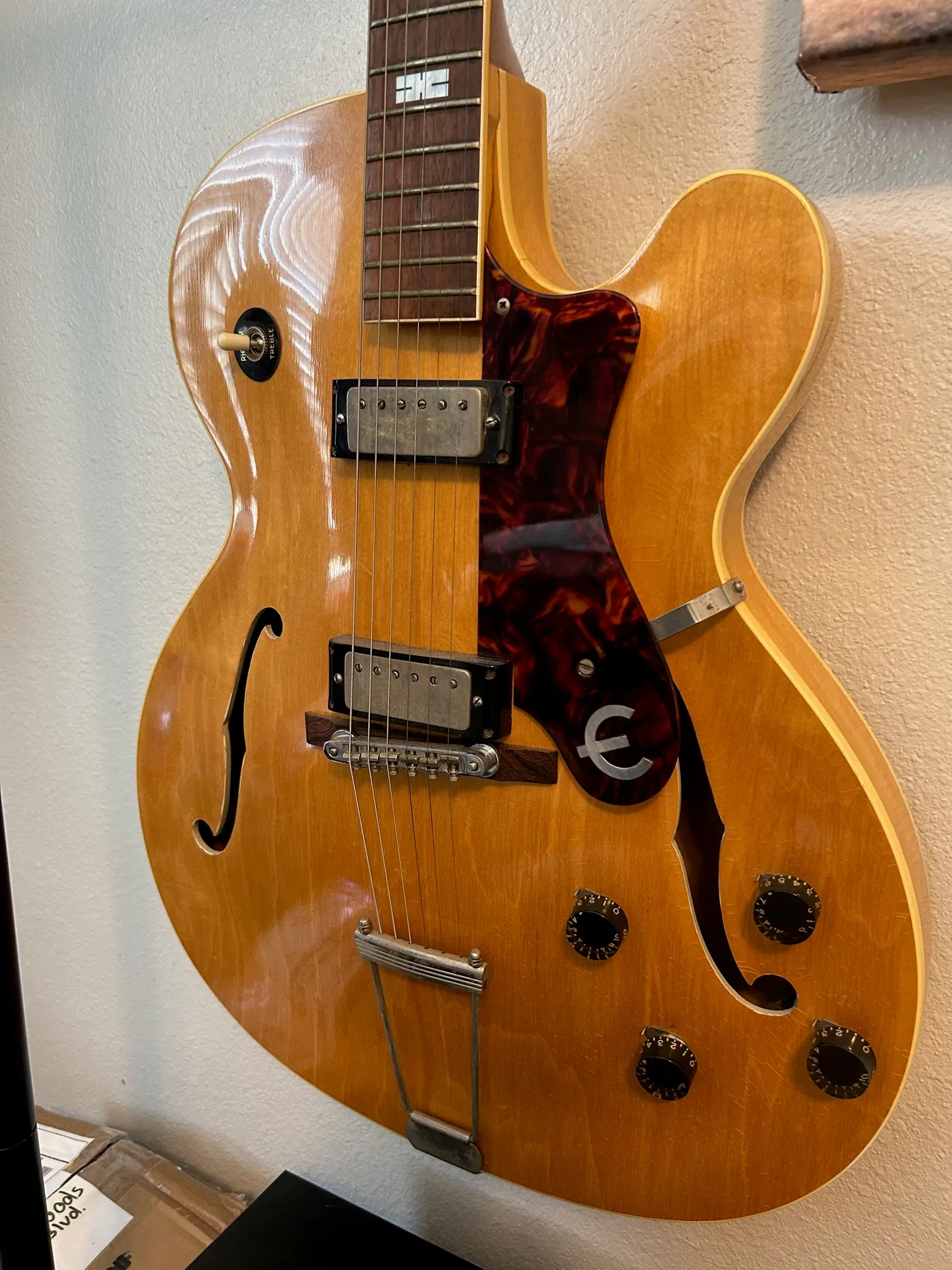
1961 Epiphone Zephyr: the body and headstock need to be assessed together, including any changed hardware.
Evaluate The Work Before Choosing A Range
Repairs That Need A Separate Zephyr Adjustment
Electrical Changes
Rewinds, replacement pickups, new pots and added controls need separate descriptions. Record any routing or enlarged holes. The pickup replacement guide explains why a working pickup is not automatically an original one.
Neck And Top Movement
Photograph the heel, bridge height and top under the strings. A guitar that needs structural work should not be matched to an excellent-condition row without adjustment. Avoid forcing a bridge down or changing tension simply to improve its appearance in a photograph.
Finish And Binding
Include overspray, repaired binding and stripped areas in the description. Consult the refinish guide for that specific issue and the broader condition guide for other changes.
A professional repair can make a Zephyr usable while remaining relevant to its market value. Keep those judgments separate. A replaced bridge may allow good adjustment, but the missing original still affects how the instrument is described. Conversely, an untouched guitar with a failing neck joint is not excellent simply because its parts are old.
Before commissioning work, read whether to restore a guitar before selling. An appraisal can clarify which questions matter without requiring you to replace tuners, polish the plating or remove old finish. Keep the guitar and its removed parts in their present condition until the scope of any work is understood.
Give Joe The Complete Instrument
Photograph The Details That Set The Zephyr Row
Begin With Front, Back And Side Views
Show the cutaway or non-cutaway outline, body depth, neck and case. Include the entire instrument in at least one photograph. The side view is particularly useful when distinguishing a deep older electric from a Kalamazoo thinline.
Record Markings And Electrical Parts
Photograph the headstock front and back, label, visible serial and any internal stamp. Add the pickup, control and jack details. Copy uncertain characters as uncertain instead of turning a blurred mark into a definite digit.
Add Repairs, Loose Parts And History
Send close-ups of damage and changed areas, plus repair paperwork. Explain whether the case is original, period or modern. A family purchase date can help the history without automatically proving the manufacturing year.
For a tenor, show the complete neck, tuner count and bridge spacing so the shorter string layout is clear. Do not use the six-string price simply because the finish and headstock look familiar. If an instrument has been converted, explain the conversion and photograph the original holes or remaining parts. The appraisal needs the present condition as well as the factory starting point.
If the guitar has been stored for years, describe how it was kept and whether it has recently been played or serviced. A photograph cannot establish that a pickup works or that a repaired joint remains stable under tension. Include what you have observed without testing a damaged instrument just to complete the description.
Send The Evidence
Send Your Zephyr Photos To Joe
Request a free appraisal with the complete photo set. The Epiphone selling page explains the offer process. Any offer is based on the reviewed guitar, not an automatic payment of the chart’s upper figure.
Questions AboutEpiphone Values
Is Every Zephyr A Single-Pickup Guitar?
Where Are The Other Zephyr Families Covered?
Does A Natural Finish Establish The Natural Price Row?
Are Zephyr Amplifiers Included?
The Last Word
A Value For Your Guitar
Choose the correct Zephyr family, then evaluate the finish, electronics and structure. The Zephyr authentication guide explains the factory changes and the limits of serial dating. Send the uncertain details with the clear ones so the estimate reflects the actual guitar.
This Is An Estimate Of Market Value, Not An Offer To Buy And Not A Guarantee. Market Values Fluctuate; Have Your Specific Item Appraised.