

American Emperor Models · 1935 To 1970
Epiphone Emperor Value Guide
Acoustic, cutaway and electric Emperors need different price comparisons. Start with the construction and production period.
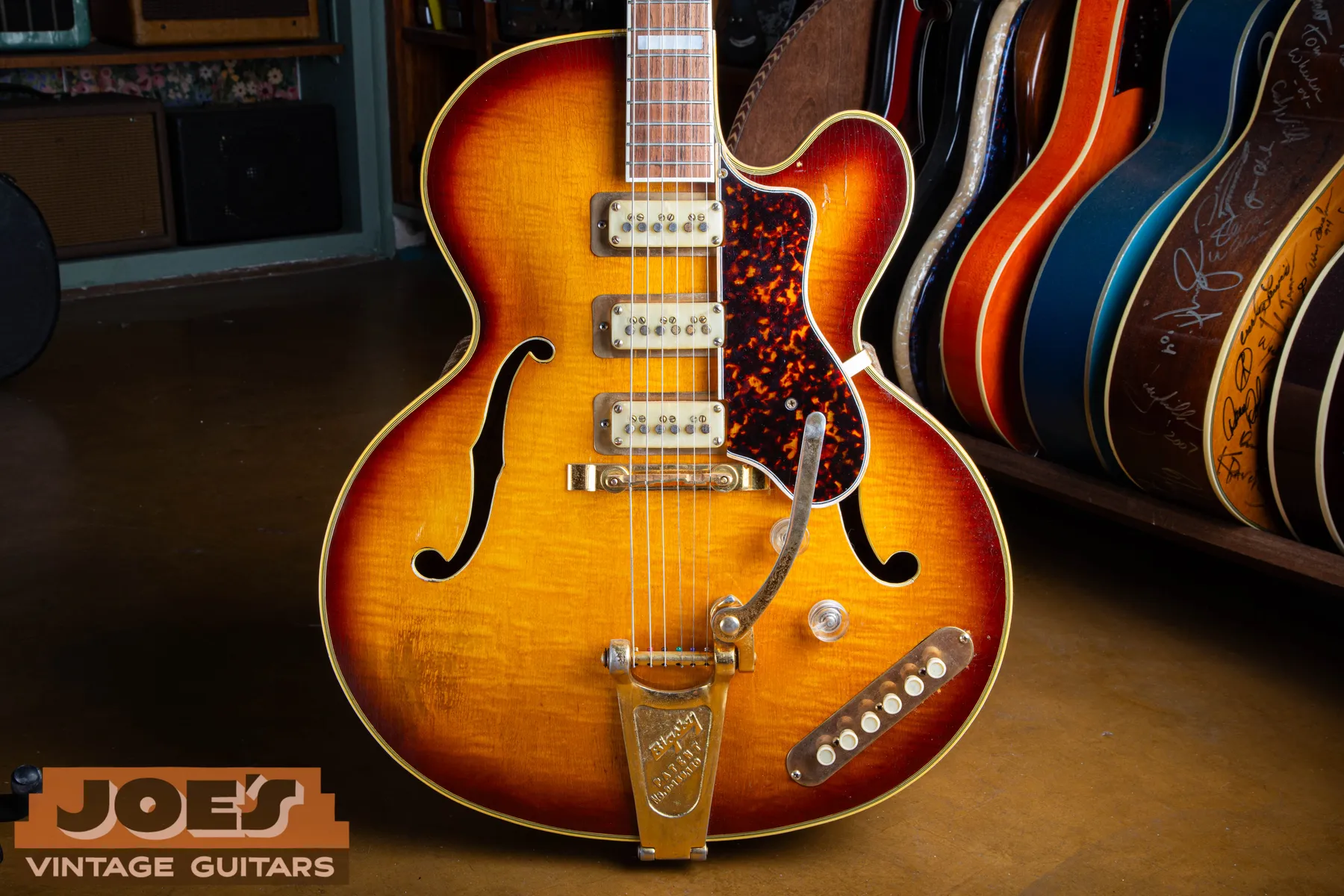
An American Epiphone Emperor can fall into very different value groups: a 1935 to 1939 sunburst acoustic is estimated at $5,750 to $8,600, while a 1958 to 1959 natural Kalamazoo thinline electric is $7,650 to $11,900. These estimates assume excellent, original condition and the original case. The Emperor authentication guide separates the acoustic, Zephyr Emperor Regent and Gibson-built electric versions before you choose a row.
This Is An Estimate Of Market Value, Not An Offer To Buy And Not A Guarantee. Market Values Fluctuate; Have Your Specific Item Appraised.
Joe’s Estimated Market Values
Emperor Prices By Construction And Era
On a phone, swipe across the chart to see the estimated values.
| Model | Pricing Year Group | Configuration | Estimated Value |
|---|---|---|---|
| Emperor Acoustic | 1935 to 1939 | Natural; documented finish option by 1938 | $8,500 to $12,750 |
| Emperor Acoustic | 1935 to 1939 | Sunburst | $5,750 to $8,600 |
| Emperor Acoustic | 1940 to 1949 | Natural or sunburst | $6,550 to $10,200 |
| Emperor Acoustic | 1950 to 1954 | Natural | $5,850 to $8,700 |
| Emperor Acoustic | 1950 to 1954 | Sunburst | $5,400 to $8,150 |
| Emperor Regent | 1948 to 1953 | Acoustic rounded cutaway, natural | $6,250 to $8,900 |
| Emperor Regent | 1948 to 1953 | Acoustic rounded cutaway, sunburst | $5,400 to $8,150 |
| Emperor Cutaway | 1953 to 1957 | Acoustic, natural | $6,600 to $9,450 |
| Emperor Cutaway | 1953 to 1957 | Acoustic, sunburst | $5,900 to $8,800 |
| Emperor Thinline Electric | 1958 to 1959 | Natural, three New York pickups | $7,650 to $11,900 |
| Emperor Thinline Electric | 1958 to 1959 | Sunburst, three New York pickups | $6,150 to $10,550 |
| Emperor Thinline Electric | 1960 to 1962 | Natural | $7,300 to $11,450 |
| Emperor Thinline Electric | 1960 to 1962 | Sunburst | $5,700 to $9,350 |
| Emperor Thinline Electric | 1963 to 1969 | Special order | $5,650 to $8,700 |
U.S. dollars. Joe’s October 2026 estimates start with published reference-guide ranges and apply his pricing adjustment. They are not averages of completed sales. Estimates assume excellent, original condition and the original case where applicable. These are market estimates, not purchase offers. An individual appraisal accounts for repairs and changes. Some overlapping pre-Gibson electric groups are omitted. Read the explanation below before choosing a comparison.
Read the configuration column before the dollar column. The earliest natural-finish row is a 1935 to 1939 pricing bracket, not a claim that the finish was available in every year: documented examples establish the blond option by 1938. Natural and sunburst finishes have separate rows where shown, and an acoustic cutaway has its own range. A pickup fitted to an acoustic guitar doesn’t make it a factory electric Emperor. Establish whether the top was built for installed pickups, whether the controls belong to that version and whether the finish remains original.
The pre-Gibson three-pickup Emperor Electric and Zephyr Emperor Regent need individual appraisals here. Their historical price categories overlap without a reliable distinction for choosing one range, so those entries are omitted. Do not borrow a Kalamazoo thinline figure for the older deep-body electric. Send the complete label, controls, pickup details and side profile; those views establish which instrument Joe is reviewing before its condition is considered. No separate Kalamazoo acoustic Emperor estimate is supplied here, and the final electric row ends in 1969.
Body, Finish And Cutaway
What Changes An Acoustic Emperor’s Value
New York Acoustic Examples
The chart separates the earliest natural and sunburst guitars, then groups the 1940s examples at $6,550 to $10,200. Those figures are starting points for complete instruments. A large carved top deserves a careful structural assessment: show the bridge height, neck angle and any repaired separation. An attractive front photograph can conceal a guitar that needs substantial work before it plays comfortably.
Keep the instrument’s finish history attached to the estimate. A pale surface might be an original natural finish, a stripped sunburst or later clear lacquer. Photographs around protected areas and a repair invoice can help distinguish those possibilities. Don’t choose the natural row simply because the guitar is now light in color.
Regent And Philadelphia-Era Cutaways
For the acoustic Regent, the 1948 to 1953 natural range is $6,250 to $8,900. The later 1953 to 1957 natural cutaway row is $6,600 to $9,450. The price difference doesn’t authorize an exact year from an uncertain serial. Catalog features, construction and original records need to establish which description fits.
The move from New York to Philadelphia belongs in the identification history, but a city name alone doesn’t establish a premium. Preserve the label and all readable wording. If a guitar falls near a factory transition, describe the evidence rather than treating the label address as a guaranteed production date. The instrument’s condition remains part of the same appraisal.
Thinline Electrics And Special Orders
Pricing A Gibson-Built Emperor
Kalamazoo thinline Emperors have their own rows. The 1958 to 1959 sunburst estimate is $6,150 to $10,550, compared with $5,700 to $9,350 for 1960 to 1962 sunburst examples. Early New York pickups and later pickup arrangements must be documented rather than inferred from the year grouping. A replaced set can make a guitar look like a different point in the production run.
The 1963 to 1969 special-order electric range is $5,650 to $8,700. “Special order” isn’t permission to assume every unusual component was ordered that way. A different tailpiece, extra switch or unexpected finish needs evidence of its own. An original receipt identifying the option is useful; an owner’s guess based on the guitar’s rarity isn’t equivalent documentation.
A Complete Electrical System
Document all three pickups and every control. A system assembled from unrelated period components may still work, but it no longer supports an untouched-original description. If a technician repaired the circuit, include the description of the work and identify any old components retained in the case.
The Correct Body Family
Show a side view with the whole rim visible. A large outline does not distinguish a deep acoustic from a shallow electric body. Dimensions help establish the family before an appraisal starts, especially when the only earlier photograph showed the instrument straight from the front.
Documented Factory Details
Keep the label, serial, finish and hardware evidence together. A serial lookup should support the physical identification. If a feature disagrees, flag it for inspection. An uncertain year should not be used to justify moving a guitar into a more favorable price row.
A cataloged Kalamazoo acoustic Emperor also needs its own assessment. It should not inherit the thinline electric price because both guitars were built under Gibson ownership. Send the model marking and body photographs, and explain whether the guitar has ever carried a pickup. That keeps a missing chart row from turning into an invented valuation.
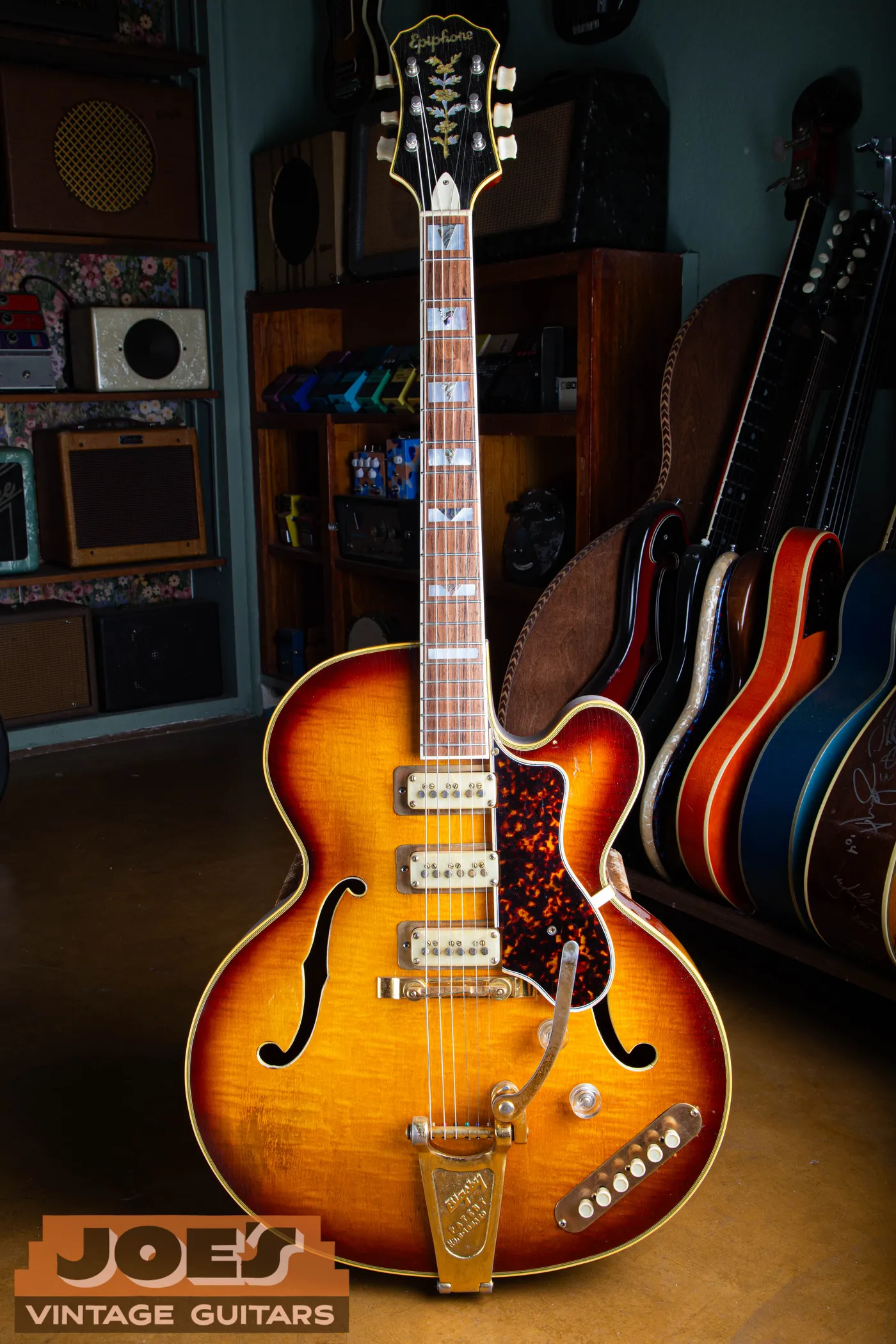
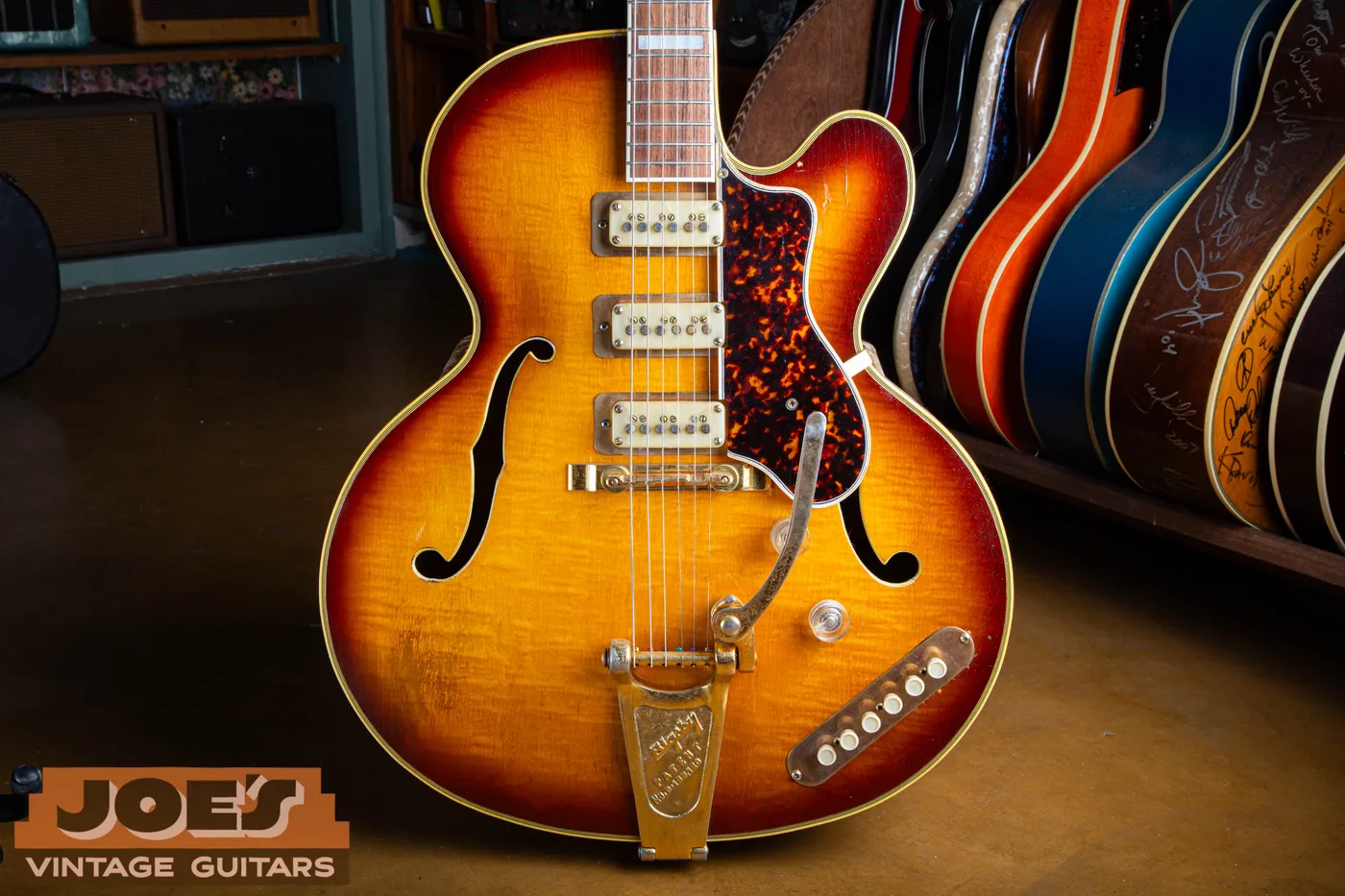
This three-pickup Zephyr Emperor Regent belongs with the Emperor family.
Before Any Cleaning Or Repairs
Condition Details Worth Photographing
Top Shape And Neck Geometry
Photograph the bridge from the side and show the string height over the fingerboard. Describe sinking, distortion, open seams or a previous neck reset if known. A lowered bridge can conceal an unfavorable neck angle, so a low action measurement alone doesn’t settle structural condition.
Binding And Decorative Work
Include close-ups of loose binding, missing inlay and repaired edges. Replaced decorative material should be disclosed even when the workmanship is tidy. Show the affected area in context so an appraiser can distinguish one local repair from work extending around the whole body.
Pickups And Added Holes
An added vibrato or replacement control can leave woodwork behind. Show the tailpiece attachment and unused holes. Read how replaced pickups affect value before treating an old-looking pickup as proof of an original electrical system.
Finish work needs a separate description. Use the refinish guide and condition guide to understand why cosmetic improvement may reduce originality. There is no repair percentage table here because the extent of the work matters. A repaired edge and a stripped body should not receive the same adjustment.
If you plan to sell, get an appraisal before commissioning cosmetic restoration. The restoration guide explains the decision. Keep loose parts in a labeled bag and leave fragile components alone until they can be assessed. Cleaning that removes a label or damages original plating makes the next evaluation harder.
A Useful Photo Set
Prepare Your Emperor For An Appraisal
Photograph The Whole Instrument
Include front, back, both sides and the complete headstock. Add a ruler beside the lower bout and a clear rim-depth view. Keep the guitar on a stable padded surface rather than balancing it for a photograph.
Show Identity And Repairs
Capture the complete label and serial, then the pickups, controls and tailpiece. Photograph known repairs separately. If a number is faint, send several light angles instead of tracing it or guessing the missing digit.
Gather The Case And History
Show the case interior, exterior and any accessories. Include receipts and dated family photographs that can be tied to this guitar. State what is documented and what is a recollection; both can be useful without being treated as the same evidence.
Describe the case honestly as well. A later case may protect the guitar well, but the chart’s original-case assumption should not be carried forward when the case has been replaced.
Send The Evidence
Ask Joe About Your Emperor
Send the photo set for a free appraisal. If you want a purchase offer, the Epiphone seller page explains how to submit the instrument and discuss shipping. These chart figures are market estimates, so the offer depends on the actual guitar.
Questions AboutEpiphone Values
Are All Vintage Emperors Priced Alike?
Does An Added Pickup Make An Acoustic Emperor Electric?
Is There A Kalamazoo Acoustic Emperor Price Here?
Does Special Order Mean A Higher Automatic Value?
The Last Word
A Value For Your Guitar
The right Emperor range follows the instrument’s construction, period and original configuration. Resolve those details with the Emperor authentication guide, then account for repairs and missing parts. A complete photo set gives Joe a better basis for an appraisal than the model name alone.
This Is An Estimate Of Market Value, Not An Offer To Buy And Not A Guarantee. Market Values Fluctuate; Have Your Specific Item Appraised.