

Emperor, Regent And Zephyr Emperor · American Production
Epiphone Emperor Authentication Guide
Follow the large acoustic archtop into the pre-Gibson electric line and the shallow Kalamazoo three-pickup Emperor.
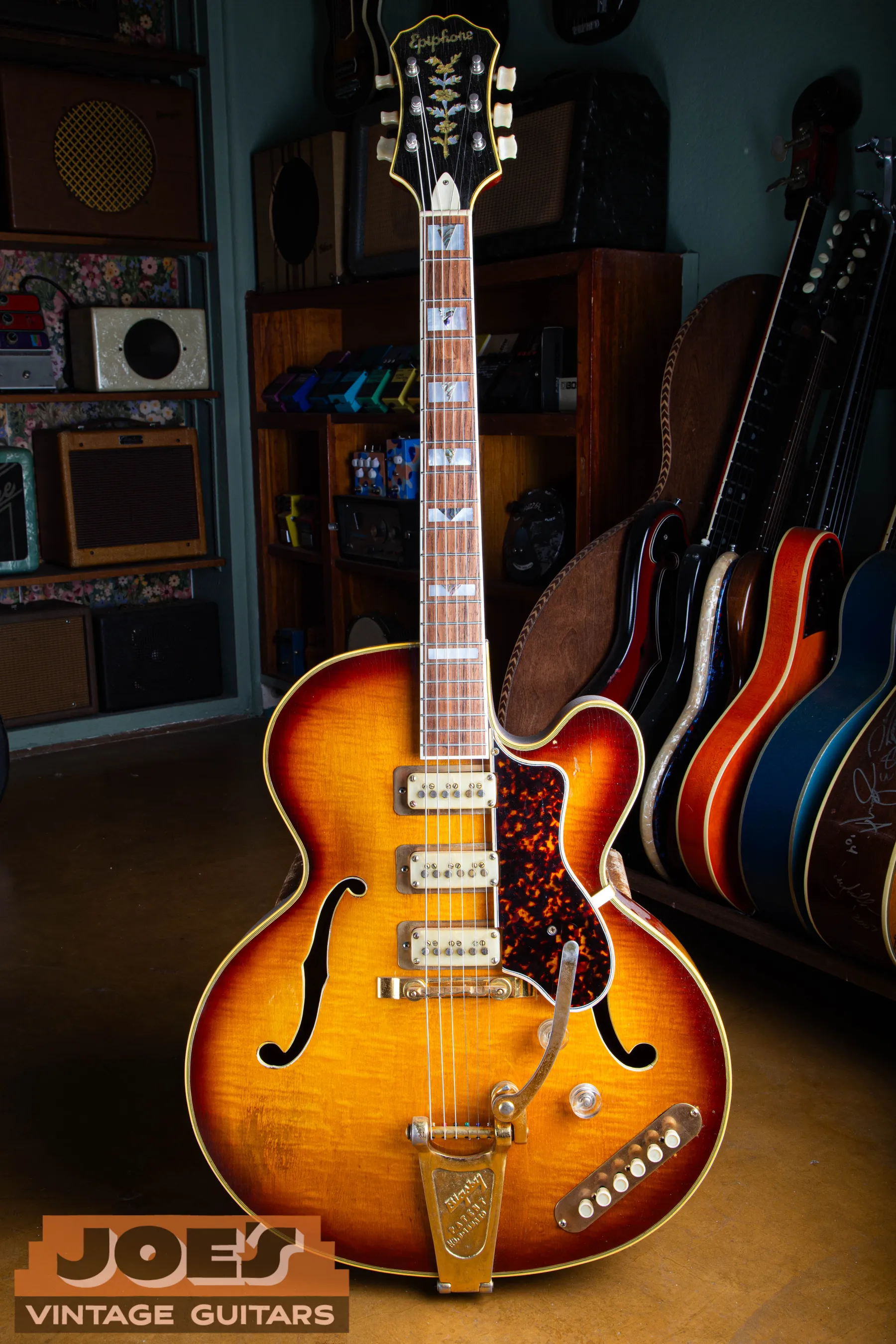
Identify an Epiphone Emperor by its body construction before using its serial number. The name covers a large acoustic archtop, cutaway acoustics, pre-Gibson Zephyr Emperor electrics and a different Kalamazoo thinline electric. The Emperor value guide prices those groups separately. A three-pickup guitar with an ornate headstock is a starting point for inspection, not proof of a particular factory or year.
Authenticity And Originality Are Assessed From The Information Provided. A Hands-On Inspection Can Change The Conclusion.
Catalog Features To Compare
The Main American Emperor Constructions
| Version | Body And Neck | Electrical And Visual Clues |
|---|---|---|
| New York Acoustic | Carved spruce top, maple body; large 18½-inch format | No factory body-mounted pickups; elaborate pearl and abalone decoration |
| Acoustic Regent Or Cutaway | Large acoustic body with a cutaway | Floating acoustic bridge and period tailpiece; added pickups need separate disclosure |
| Zephyr Emperor Regent | Large pre-Gibson electric cutaway | Three pickups and push-button selection on the 1954 catalog design |
| Kalamazoo E112T / E112TN | 18½-inch wide shallow electric body; 25½-inch scale in the 1961 catalog | Three pickups, individual volume controls, master tone and toggle switching |
| Kalamazoo A112 | Deep acoustic cutaway; special-order listing in the 1966 catalog | Spruce top, maple body and Frequensator; no installed electric system in the catalog specification |
The table identifies families, not a universal checklist for every production year. A prewar non-cutaway and a late special-order acoustic should not be expected to have identical details. Measure the instrument, read its model marking and choose the relevant catalog before deciding that a feature is wrong. The 1961 and 1966 catalogs describe different Emperor products within the same Gibson-owned period.
Record how each measurement was taken. Measure rim depth at the side rather than across the arched top and back. A photograph of the ruler’s placement makes the number easier to interpret and prevents a different measuring method from looking like a different model.
The Acoustic And Electric Families
From New York To Philadelphia
The Large Acoustic Emperor
The Emperor entered the New York line in 1935 above the DeLuxe. Original catalog material documents the broad body, carved spruce top, figured maple and elaborate decoration that distinguish this family. The circa-1950 catalog gives an 18½-inch width and 21¾-inch body length. Those dimensions are more useful than assuming every ornate Epiphone is an Emperor.
The Regent option adds a cutaway to the acoustic model. It doesn’t mean the guitar was originally electric. Inspect a fitted pickup as a separate component, including its mounting and cable route. A removable pickup can coexist with an identifiable acoustic Emperor, while cut holes and installed controls require their own alteration history.
Philadelphia And The Three-Pickup Electric
The pre-Gibson story continues through the Philadelphia period before the 1957 sale. The 1954 catalog separates an acoustic Emperor from the Emperor Electric, with three pickups and a bank of six selector buttons on the electric. It also shows the large body and decorative fingerboard associated with that model. This is the family that includes the Zephyr Emperor Regent name.
A label address helps document the instrument but doesn’t turn an approximate serial estimate into an exact completion date. Production batches, remaining parts and catalog terminology have to be considered together. Keep photographs of the label and electrical layout attached to the identification rather than relying on a shortened name in an inventory.
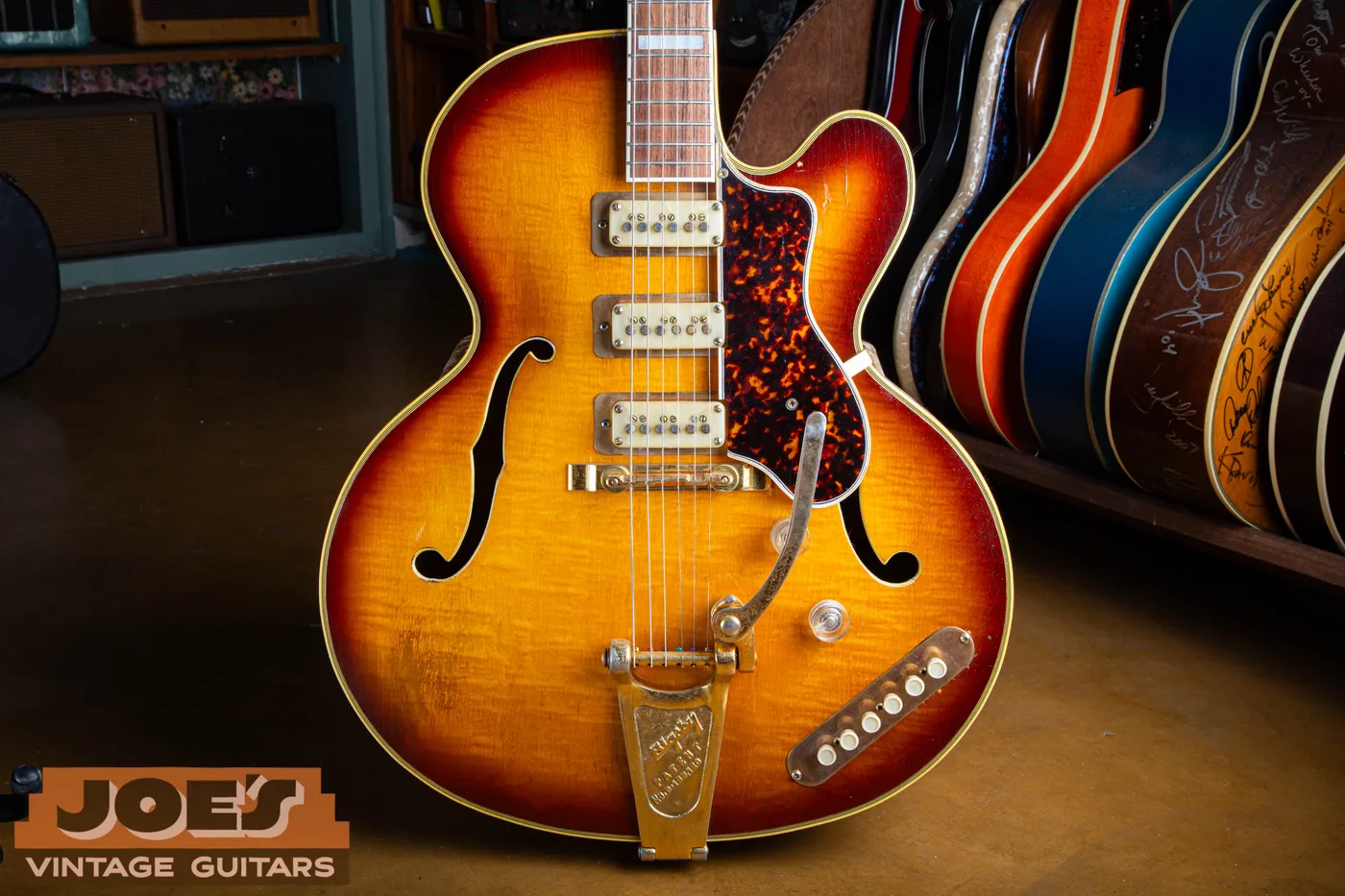
Three pickups, six buttons and the decorated fingerboard identify this as an Emperor-family electric.
A Sequence For Catalog Comparison
Emperor Changes Across The American Run
The Emperor Enters The Acoustic Line
Begin with the large carved-top model and compare early ornamentation with the relevant catalog. Later fingerboard patterns should not be used to judge an earlier guitar without checking when the design appeared.
Acoustic Regents And Zephyr Electrics
Cutaway acoustics and the three-pickup electric family require separate descriptions. The word Regent points to the cutaway, while the construction and installed electrical system establish which branch you have.
Ownership And Factory Change
CMI bought Epiphone in 1957, and Kalamazoo production began in 1958. Use the Sheraton history for that chronology. Earlier Epiphone features and remaining New York pickups can occur in the transition; the Gibson-built line isn’t identified by replacing every old detail at once.
The Cataloged Thinline Emperor
The E112T shaded and E112TN natural instruments have a broad, shallow body and three adjustable-pole pickups. The catalog shows toggle selection and rotary controls instead of the earlier six-button arrangement. Compare the complete circuit layout, not just the number of pickups.
An Acoustic Special-Order Listing
The A112 appears in the acoustic catalog with a special-order mark. That documents an available model, not a production total or proof that a particular guitar was completed that year. Its deep acoustic body must stay separate from the E112T electric.
Body Depth, Hardware And Serial System
How Gibson Changed The Emperor
The Kalamazoo electric retains an 18½-inch-wide outline, but the 1961 catalog describes a rim less than two inches deep. Its 25½-inch scale, single cutaway and three-pickup layout are specified together. The acoustic A112 in the 1966 catalog is 3⅜ inches deep. A straight side view therefore answers a basic identification question that an ornate headstock can’t.
Read construction descriptions by version. The 1961 electric listing describes curly maple for the top, rims and neck, with a laminated arched maple back. The 1966 acoustic listing specifies spruce and maple. Neither description should be replaced with a generic claim that every Emperor has the same carved spruce acoustic top. If the interior can’t be assessed from photographs, leave the construction conclusion open for hands-on inspection.
New York Pickups And Gibson Mini-Humbuckers
Early Kalamazoo Emperors used New York pickups carried into the new line. By the early 1960s, Gibson-made mini-humbuckers are part of the identification sequence, consistent with the transition described in the Sheraton history. A broad date range in a price chart isn’t a guarantee of one pickup type throughout that range.
Inspect covers, mounting, pole screws and the relationship between the pickups and controls. Epiphone mini-humbuckers and Firebird pickups have different internal construction; don’t call them the same design. The Emperor also should not acquire a Gibson sibling’s specification merely because both were built in Kalamazoo. Shared Gibson-era hardware and serial practices are evidence to compare, not permission to rename the guitar.
Logo, Tailpiece And Factory Markings
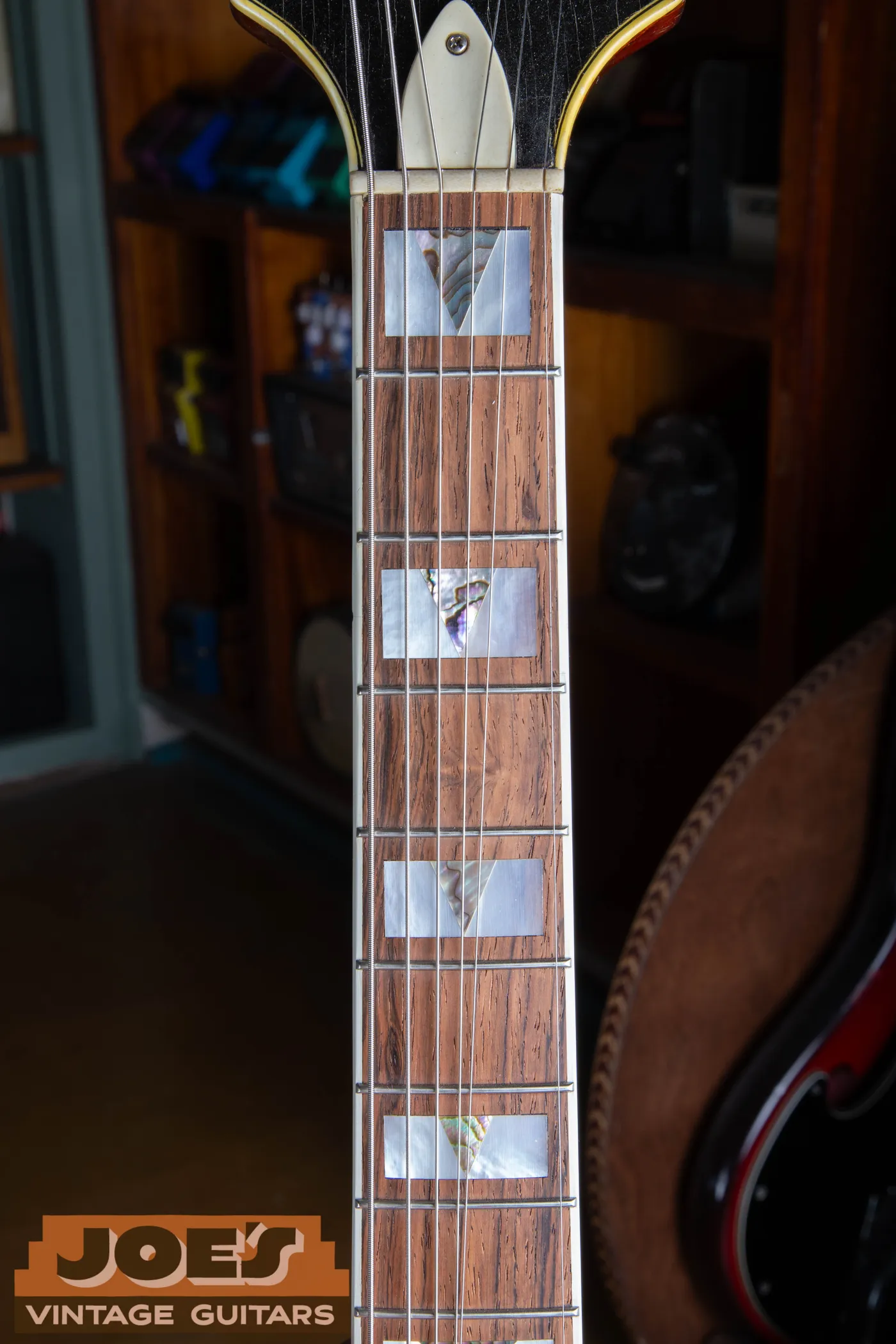
The ornate Epiphone headstock and decorated fingerboard continue to distinguish the Emperor. Photograph the logo, headstock outline and each inlay instead of identifying it from one decorative motif. A repaired headstock or replaced fingerboard can preserve some original features while changing others.
The 1961 electric catalog shows a Tune-o-matic bridge and Frequensator tailpiece; the 1966 acoustic listing also specifies a Frequensator. A Bigsby on an individual guitar needs its own mounting inspection and history. Kalamazoo serials follow Gibson-era systems, so use the Gibson serial reference alongside the label, model code and construction.
The original American period ends with the move to Japanese production in 1970 in the house chronology. That boundary does not establish uninterrupted output of every Emperor variant. A catalog entry supports availability at that point; a serial and physical examination support the identity of a particular surviving instrument. Keep those conclusions separate when describing a scarce special-order guitar.
Shared Materials, Different Appointments
Compare The Acoustic Emperor With The Super 400C
The contemporary Gibson Super 400C is a useful comparison for the acoustic Emperor: the 1960 Gibson catalog specifies a carved spruce top, figured maple back and rims, maple neck and 25½-inch scale. The large acoustic construction is the shared starting point. Body dimensions, fingerboard decoration and tailpiece design still need their own model-specific checks. The Super 400’s dedicated tailpiece is not an Emperor Frequensator, and the comparison does not establish interchangeable factory specifications.
Acoustic And Electric Branches
Keep Emperor Variant Names Attached To Construction
Acoustic Emperor And Regent
The non-cutaway acoustic and its cutaway counterpart belong together, but they remain distinct configurations. Record the body outline before deciding what Regent means on an old description. A seller may use the word loosely for any cutaway Epiphone. The actual model label and body appointments need to support the Emperor identification.
Zephyr Emperor Regent And Emperor Electric
These names occur in the pre-Gibson electrical branch. The 1954 catalog’s three-pickup, six-button instrument gives a concrete layout to compare. Do not silently translate an older name into a Kalamazoo E112T designation. Photograph the control bank, pickup covers and body depth so the distinction remains visible in the guitar’s record.
Kalamazoo Acoustic And Thinline
The A112 acoustic and E112T electric share a family name and decorative ambition, but their depth, top specification and electrical equipment differ. A factory model code should agree with those major features. If an acoustic has acquired body-mounted pickups, describe the conversion rather than treating it as a factory E112T. Original records can help explain the work, while a front photograph alone cannot.
Observed Features
An Emperor From Joe’s Photo Archive
Pre-Gibson Electric
1950s Zephyr Emperor Regent, Serial 68191
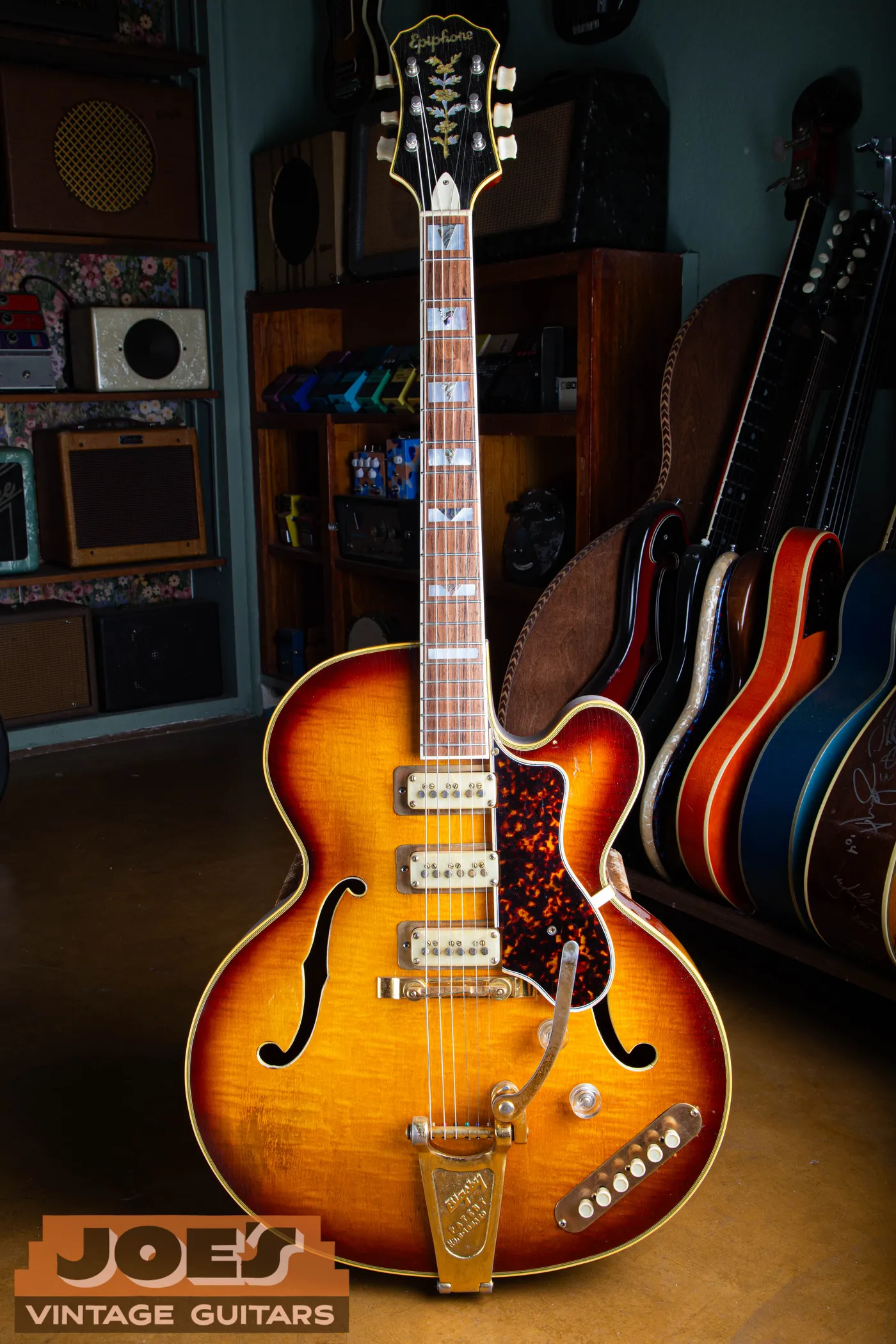
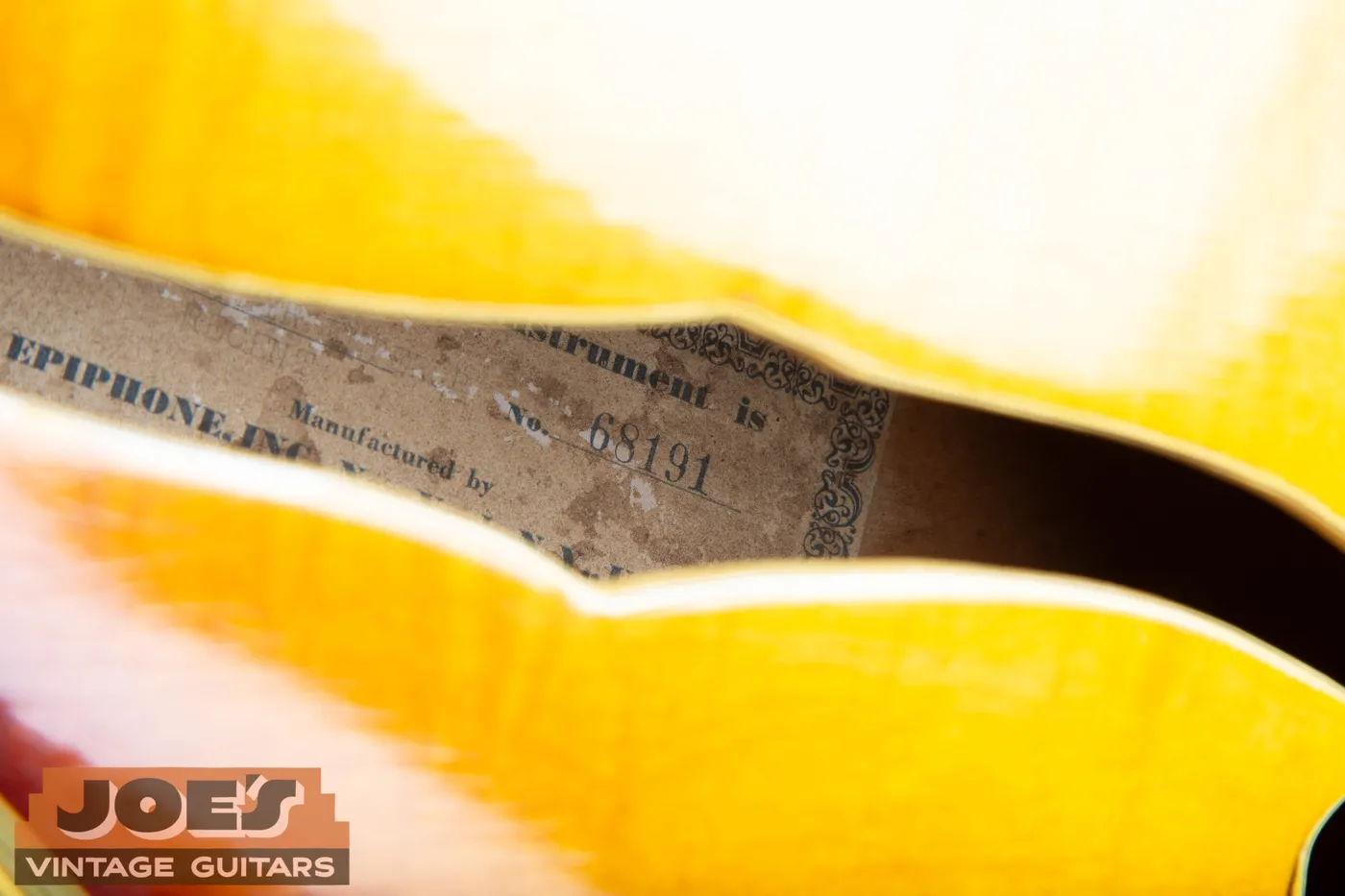
This guitar has three pickups, six push buttons, a Bigsby and pearl blocks with V-shaped abalone inserts. The full-size label photograph shows 68191. Those visible details place it in the Emperor family, even though its photo folder used the shorter Zephyr Regent name. The Bigsby is shown as present; the photograph alone does not establish when it was installed.
The New York Epiphone Registry records this serial as a Zephyr Emperor Regent with an estimated 1954 date. The caption keeps the broader 1950s description because the serial estimate is not an exact factory completion record. This example should not be used as the standard layout for a one-pickup Zephyr Regent or a Kalamazoo thinline.
Two Different Numbering Contexts
Use The Serial As Supporting Evidence
Early Kalamazoo hollowbodies need a separate first check: an A followed by four digits on the interior label belongs to Epiphone’s early A-series, not the similarly named Gibson A-prefix chart. Photograph the whole label and keep any factory order number separate. A model code is not a serial number. Later impressed numbers can be compared with the shared Gibson system, with the guitar’s construction used to check the result.
Pre-Gibson Emperor Identification
The digits are readable in Joe’s label photograph and match the registry entry. The approximate year is supported by the model features and research record. It is not a date code that can be decoded digit by digit.
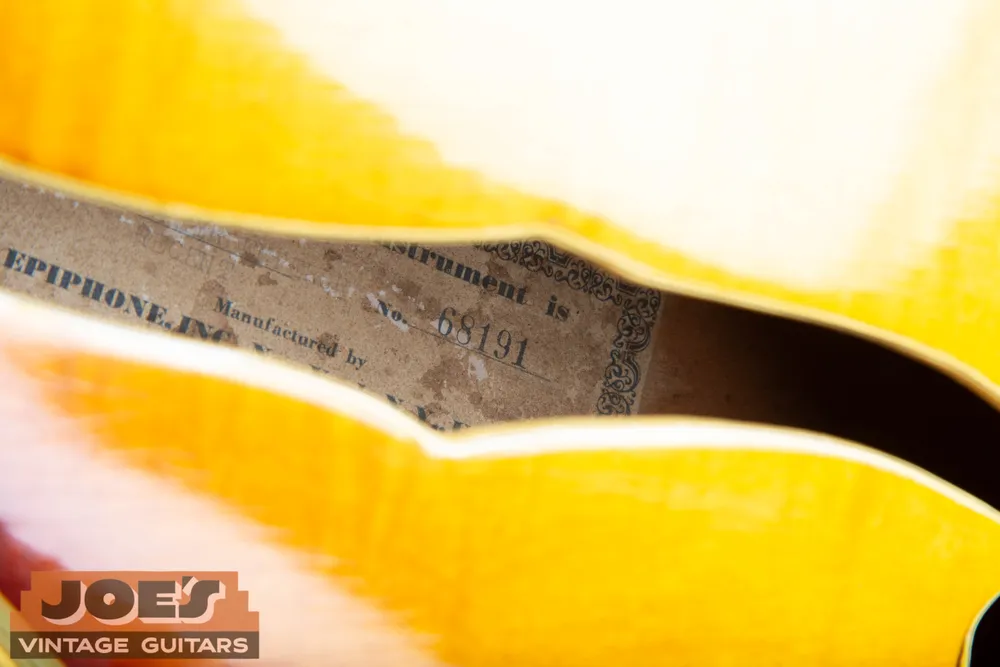
Pre-Gibson Epiphone numbers were assigned in model batches, and the surviving research does not supply an exact calendar for each instrument. Compare label wording, body construction, pickups and period catalogs. An older label that gives a New York address should be recorded exactly, including incomplete characters, rather than rewritten to fit an assumed factory location.
For a Kalamazoo guitar, photograph the back of the headstock and all internal markings. Gibson serial ranges can overlap, so the number needs physical corroboration. If a result suggests an acoustic year but the guitar has a thinline electric body, revisit the interpretation. The serial guide explains the broader system without certifying an Emperor’s original parts.
Check The Version Before The Year
A Kalamazoo Emperor Inspection Checklist
Measure Width And Rim Depth
Record the broad lower bout and the depth at the rim. Compare those measurements with the appropriate electric or acoustic catalog. Include the entire side in a photograph so a partial view cannot conceal a different body construction.
Read The Model And Serial Together
Capture the label without removing or cleaning it. Look for an E112-family electric designation or the acoustic identification, then compare the serial system. A replacement label or unreadable code needs additional evidence, not a guessed transcription.
Document All Three Pickup Positions
On an electric, show each pickup and the full control layout. Note mismatched covers or mounting rings. Have a qualified technician document concealed wiring only when further inspection is needed; pulling a hollowbody harness simply for photographs can damage it.
Inspect The Neck And Tailpiece Attachments
Show the heel, headstock back, bridge and bottom rim. Look for repaired joints, extra tuner holes and old tailpiece footprints. Separate the identity of the guitar from the originality of those replaceable components.
Reconcile Unusual Details
Keep a custom-feature claim provisional unless records or physical evidence support it. A special-order catalog listing does not explain every later modification. Photograph the difference and state what remains unresolved.
Send The Evidence
Send Your Emperor Identification Photos
Send the body views, label, serial and hardware details for a free appraisal. The Emperor value guide is the next step after the version is established. Use Sell My Epiphone when you want to discuss an offer.
Import And Reissue Exclusions
Recognizing Later Emperor Name Reuse
Outside The American Run
1981 Japanese Emperor Comparison
Joe’s archive identifies this guitar as a 1981 Japanese Emperor. Its two full-size humbuckers and later manufacturing context place it outside the American models covered here. The familiar sunburst finish and ornate appointments do not move it into a New York or Kalamazoo category.
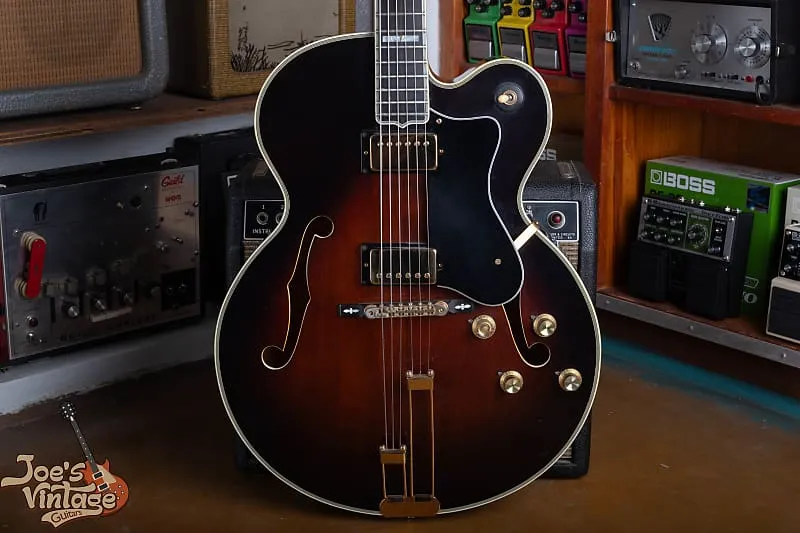
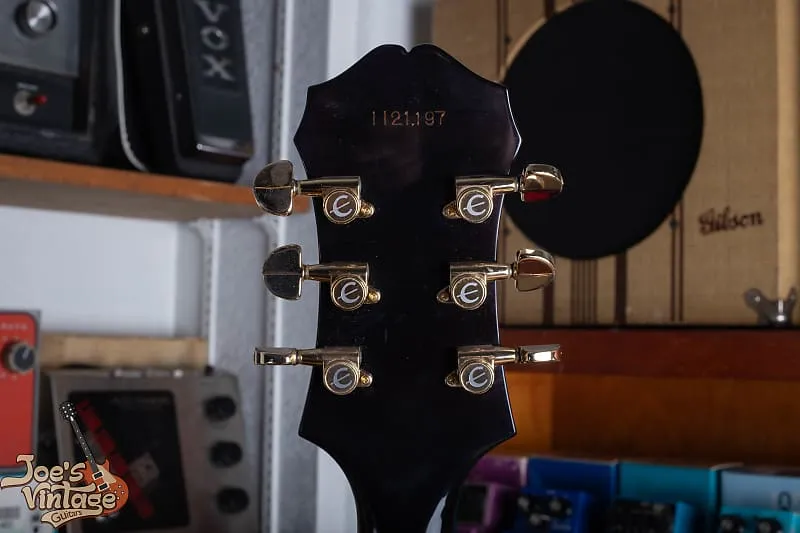
Later Japanese, Korean and Chinese Emperors, Elitist instruments and signature models need their own production identification. A historical name or recreated inlay pattern is not a manufacturing date. Use the full label, country marking, serial system and original paperwork to establish which later series is present. Do not treat an imported Emperor as a counterfeit merely because it is outside this guide’s scope.
For an American example with repairs, list the repairs independently of model authenticity. The condition guide explains the valuation consequences. An identifiable Emperor may have changed pickups, a new bridge or repaired binding; none should disappear behind an unqualified “all original” description.
Primary Specifications And Instrument Research
Emperor Catalog And Dating References
- Epiphone Serialization Reference
Epiphone section, page 1071: the early hollowbody A-label sequence differs from Gibson’s A-prefix series; later impressed numbers require feature checks.
- Circa-1950 Epiphone Acoustic Catalog
Original acoustic Emperor dimensions, materials and Regent option.
- 1954 Epiphone Catalog
Separate acoustic and three-pickup Emperor Electric specifications and controls.
- 1961 Epiphone Catalog
Kalamazoo E112T and E112TN dimensions, construction, hardware and controls.
- 1966 Epiphone Acoustic Catalog
Original A112 specification matrix and special-order notation.
- 1960 Gibson Catalog, Page 37
Original Super 400C specification for the limited acoustic construction comparison.
- New York Epiphone Registry
Observed serial 68191 and its estimated date; instrument research rather than a factory ledger.
- Epiphone Serial Research
Limits of pre-Gibson serial dating and the evidence behind estimated dates.
- JVG Sheraton History
House chronology and New York pickup to mini-humbucker transition.
Questions AboutEpiphone Identification
Is A Zephyr Emperor Regent The Same As A Zephyr Regent?
Did Gibson Make Both Acoustic And Electric Emperors?
Does A Pre-Gibson Serial Give An Exact Year?
Is A Japanese Emperor A Kalamazoo Guitar?
The Last Word
Keep The Evidence Together
Body construction, pickup layout and factory markings should tell the same story. Preserve uncertainty where they do not. Once the Emperor family and period are supported, use the matching value guide to assess the instrument’s condition and market range.
Authenticity And Originality Are Assessed From The Information Provided. A Hands-On Inspection Can Change The Conclusion.