
Serial Plate
The L-prefix neck plate becomes normal, though some January and February guitars can retain older five-digit plates.
Current values, factory features, and the evidence that separates a real 1963 Stratocaster from a mixed or modified guitar.
The short answer
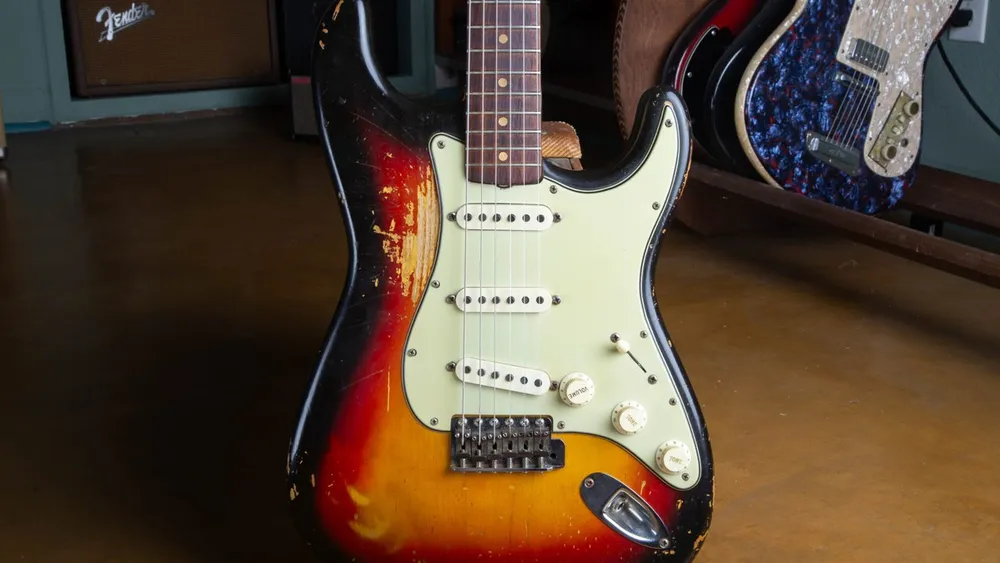
An excellent, all-original 1963 Fender Stratocaster with its original case is generally worth about $15,000 to $24,000 in sunburst. Authenticated factory custom colors can bring roughly $22,000 to $52,000 or more.
The 1963 Stratocaster is a veneer-board, L-series pre-CBS guitar with several useful transition details. Early guitars can retain older plain serial plates, the twelfth-fret clay dots move from wide to narrow spacing, and a pickguard screw shifts during the year to reduce celluloid warping.
The market likes the mature pre-CBS specification, but 1963 also demonstrates why a checklist cannot be rigid. Wide dots, narrow dots, early plain plates, L plates, and two correct guard-screw positions can all occur when the month supports them.
2026 market estimate
Start with the correct range, then adjust for what is actually present. These are retail-value estimates, not automatic cash offers or insurance replacement values. They assume a sunburst guitar unless the custom-color range is stated.
| Condition and originality | Estimated value | How to use it |
|---|---|---|
| Excellent and all original | $15,000 to $24,000 | The headline sunburst range, assuming the original case and a coherent, authenticated guitar. |
| Very good and largely original | $11,000 to $22,000 | About 75% to 90% of the excellent range. Honest play wear, normal checking, or a professional refret can fit here when the finish and major parts remain original. |
| Professional refinish | $7,000 to $14,000 | Often about 45% to 60% of a comparable original. The exact result depends on the remaining parts, quality of the work, and whether the body has been altered. |
| Major parts mismatch | Value component by component | A replacement neck or body, extra routes, mixed-year parts, or uncertain provenance prevents a reliable whole-guitar comparison. |
Year-specific evidence
The fastest visual starting point for this year is L-series plate, dot-spacing and pickguard-screw transitions. That narrows the window; it does not authenticate the guitar by itself. The strongest conclusion comes from several independent details agreeing.
The L-prefix neck plate becomes normal, though some January and February guitars can retain older five-digit plates.
The pair at the twelfth fret moves from wider to narrower spacing during the year. Both arrangements can be correct.
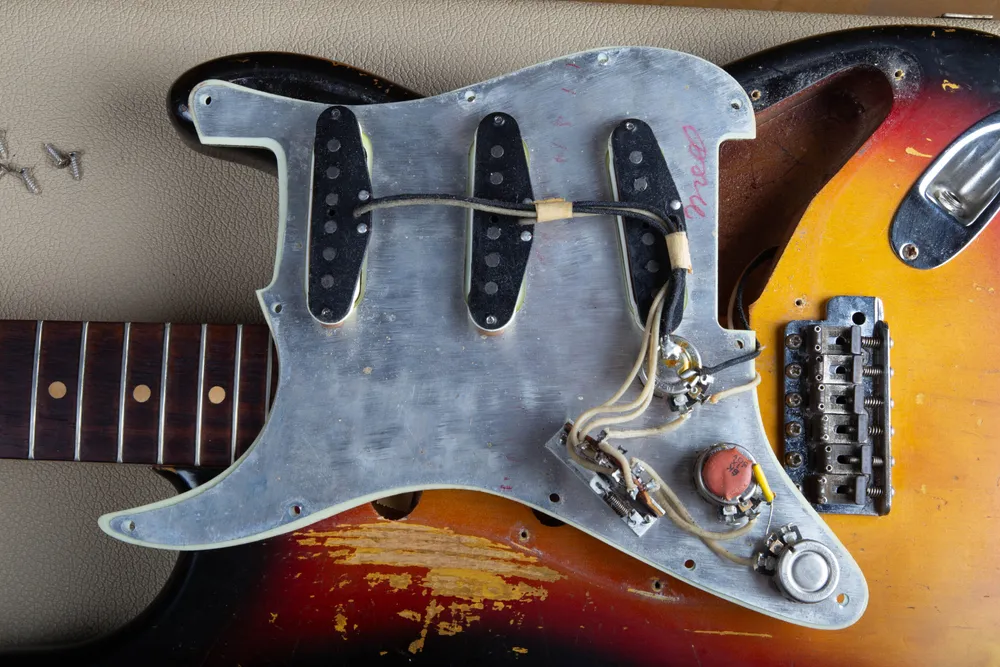
The eleven-screw count stays the same, but one screw between the neck and middle pickups moves closer to the middle pickup.
A thin curved veneer rosewood board with clay dots is the expected neck construction.
For the full chronology, use the Fender Stratocaster dating guide. Then compare component codes with the Fender serial number guide, neck-date guide, and pot-code guide.
Before you set a price
Do not remove a neck or loaded pickguard unless you know how to do it safely. Clear photos of the front, back, headstock, neck plate, case, and any visible repairs are enough to begin a free appraisal.
Worked example
A heavily played but original 1963 sunburst can remain more valuable than a cleaner refinished example. Original finish, matching dates, and an undisturbed harness matter more than superficial shine.
This is an illustrative appraisal using the real guitars and details pictured on this site, not a claimed public sale record. I first place the guitar in the correct year and finish range, then adjust for originality, condition, repairs, case, and provenance. Asking prices can show seller expectations, but completed comparable sales and firsthand inspection carry more weight.
The method is intentionally conservative: unusual artist ownership and auction outliers do not set the baseline for an ordinary guitar. Read the full valuation methodology and deduction guide before applying a headline number.

Have a vintage guitar to sell or a question? I’m here to help.