

Fender Esquire Identification · Factory Model And Originality
Fender Esquire Authentication Guide
A single pickup and blank guard begin the inspection. Factory identity depends on the decal, circuit, dates, construction and history agreeing with one another.
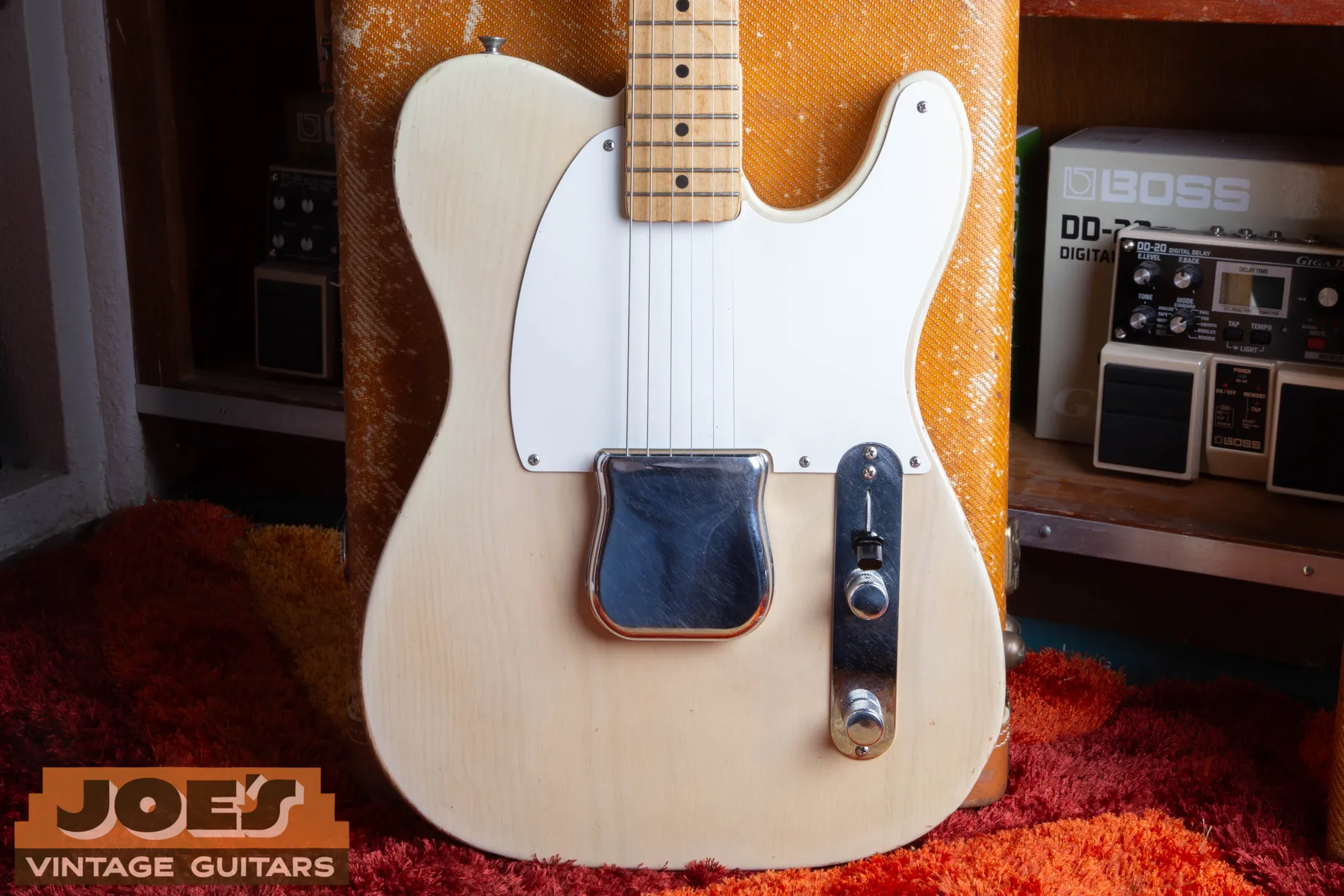
A factory Esquire needs more evidence than one bridge pickup and a pickguard without a neck-pickup opening. Establish its identity before using the Esquire value guide. Fender’s shared construction makes conversions possible in both directions. This guide follows a 1957 example through its decal, dates, bridge and electronics, then compares a 1965 Esquire, a refinished 1958 guitar and a 1951 Esquire converted to two pickups.
Authenticity And Originality Are Assessed From The Information Provided. A Hands-On Inspection Can Change The Conclusion.
Shared Construction Requires Several Checks
Establish Factory Esquire Identity
| Evidence | Expected Relationship |
|---|---|
| Pickup Layout | Single bridge pickup on the established production model |
| Controls | Volume, tone and a three-way switch selecting tone paths |
| Hidden Routing | A factory neck-pickup cavity can exist beneath the blank guard |
| Model Identity | Decal, circuit, dates, construction and documented history agree |
| Earliest Instruments | 1950 examples require specialized assessment |
The familiar vintage Esquire uses a single bridge pickup on the same basic solidbody platform as the Telecaster. Its switch selects different electrical paths for that pickup. A Telecaster can be converted to this arrangement with a blank guard and wiring changes, so the current pickup count can’t establish the factory model.
Start by documenting the decal and headstock finish, bridge pickup, complete control assembly and any available component dates. The evidence should support a plausible production period and a consistent history. A correct-looking modern circuit can demonstrate Esquire-style function while leaving the guitar’s original identity unresolved.
The earliest 1950 instruments require specialized review because their specifications and development history differ from the later established single-pickup model. Don’t force an early example through a checklist based solely on a 1957 guitar. The existing Esquire value guide also treats those earliest instruments individually.
Write down what is known about ownership and repairs. An old receipt naming an Esquire can be useful if it can be connected to this instrument. A family photograph can document its earlier appearance. Neither should be stretched beyond what it shows, especially when a neck or decal has since been replaced.
Body, Headstock, Bridge And Internal Evidence
Examine The 1957 Esquire As A Complete Guitar
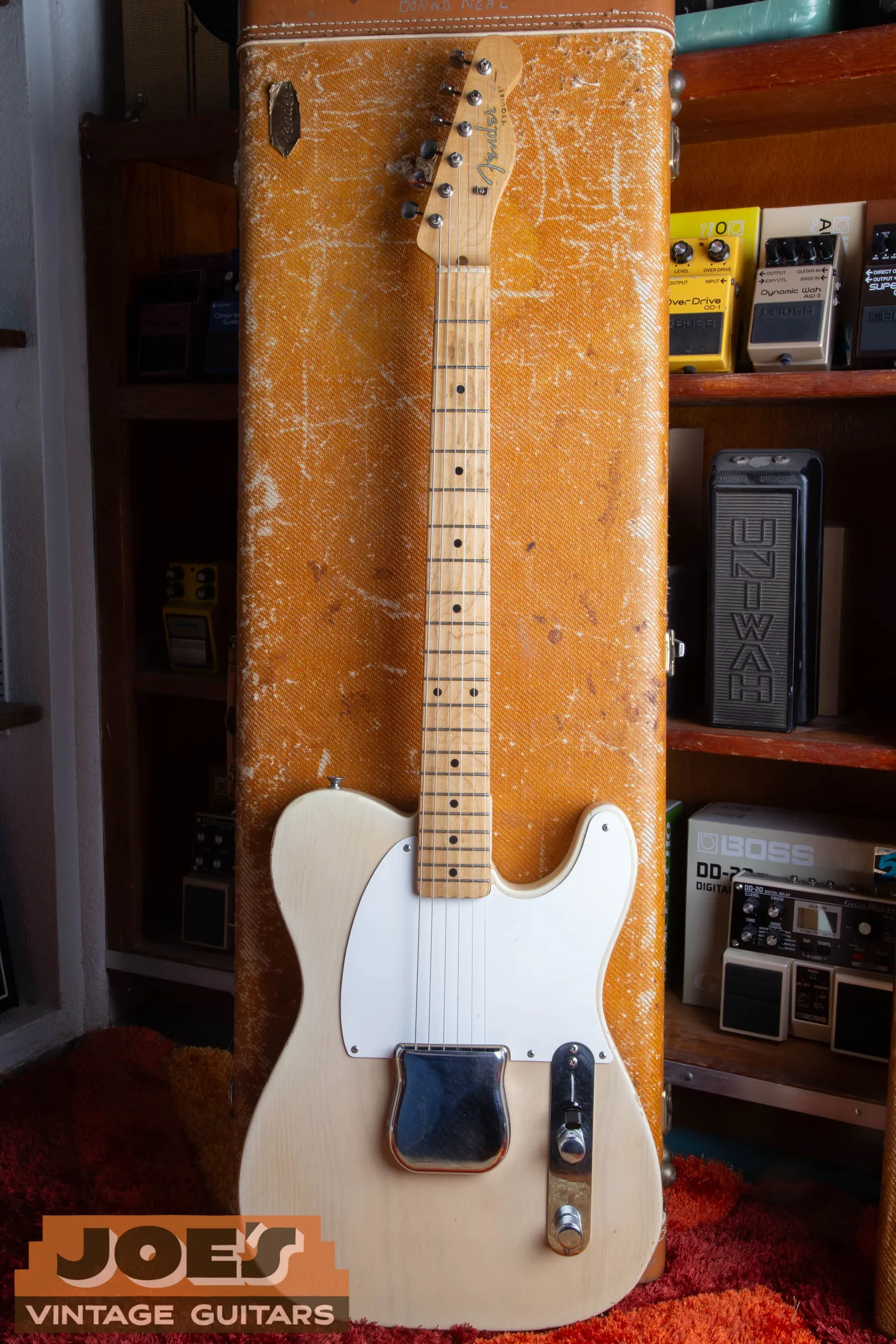
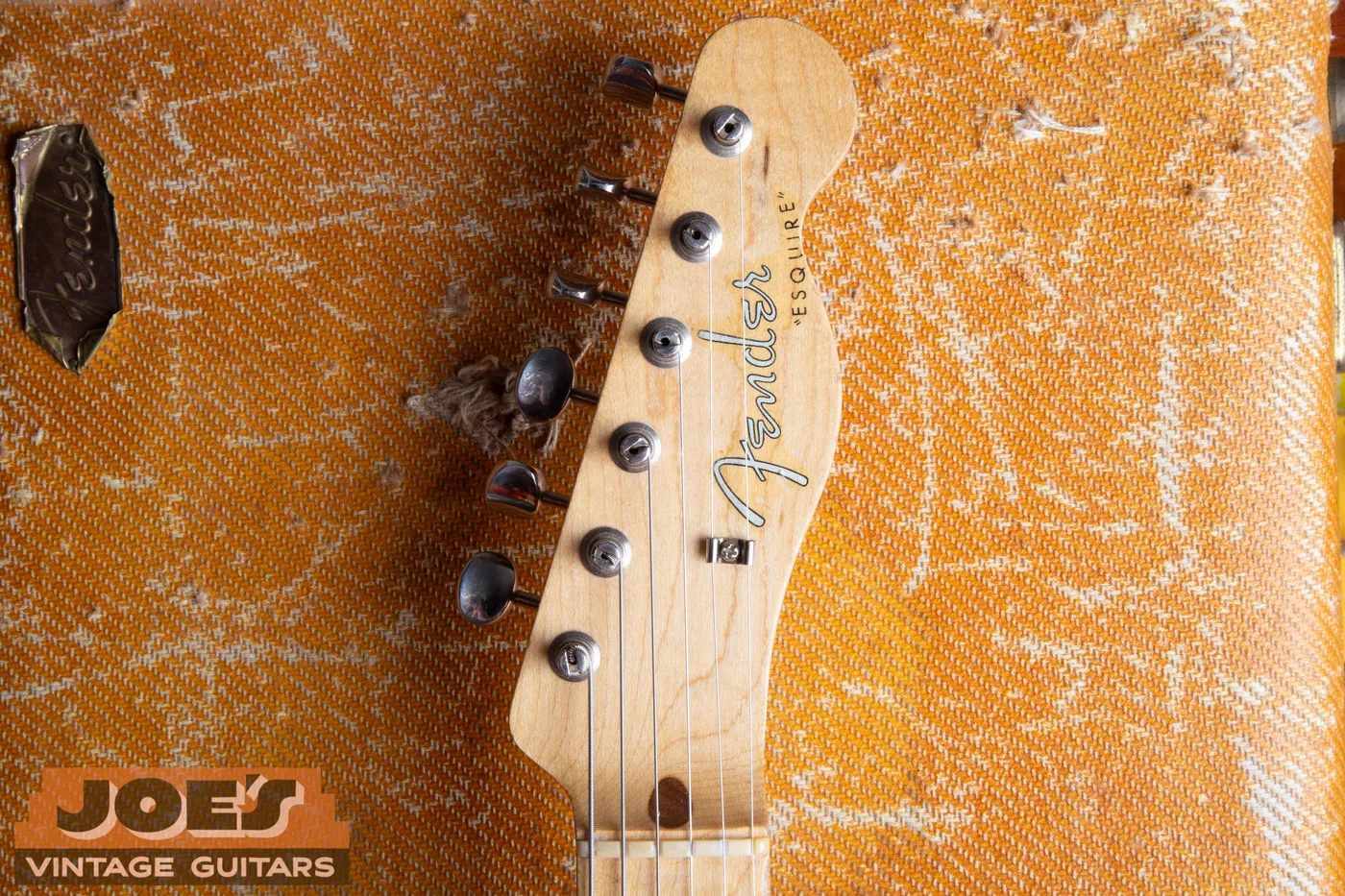
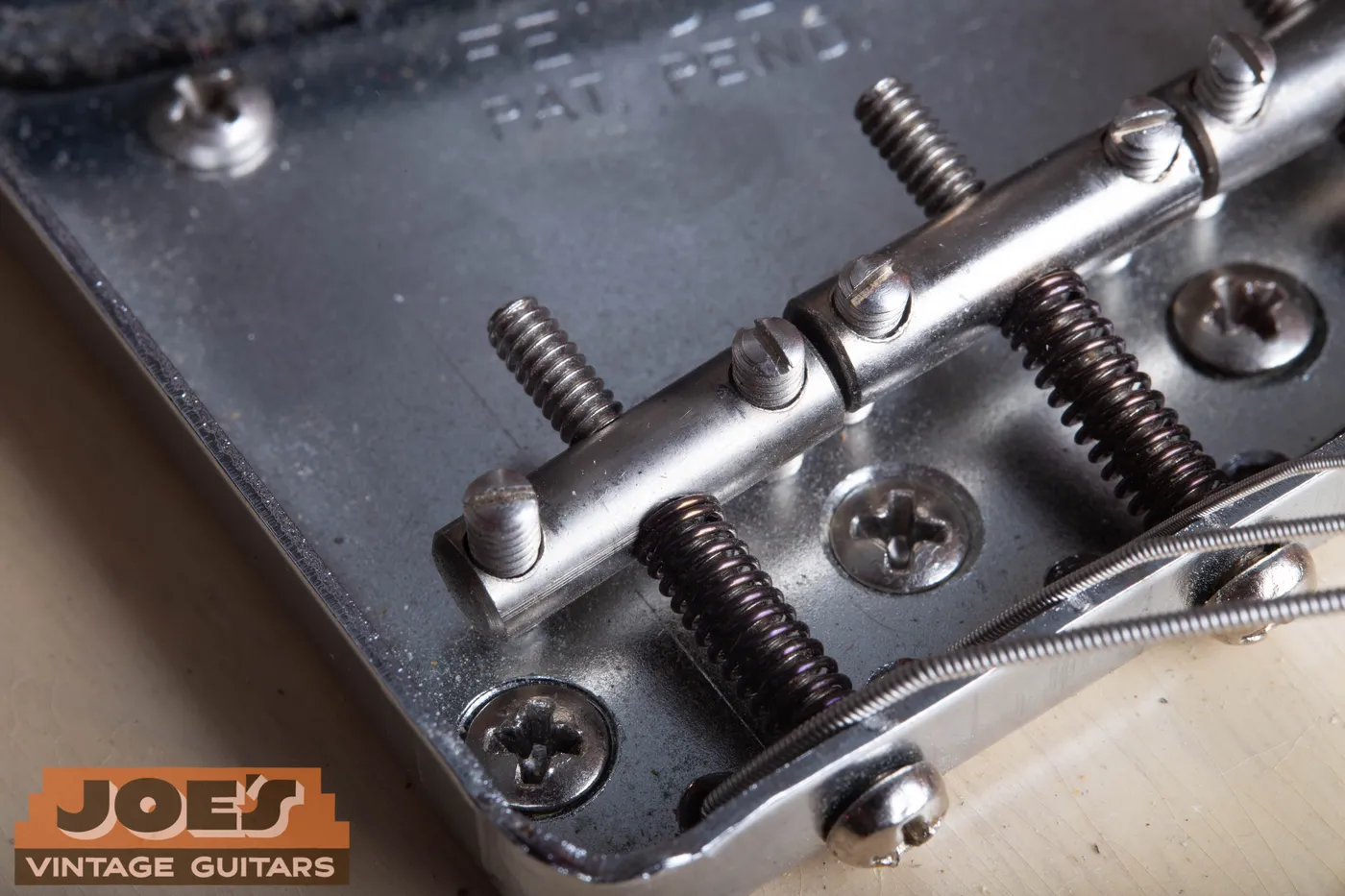
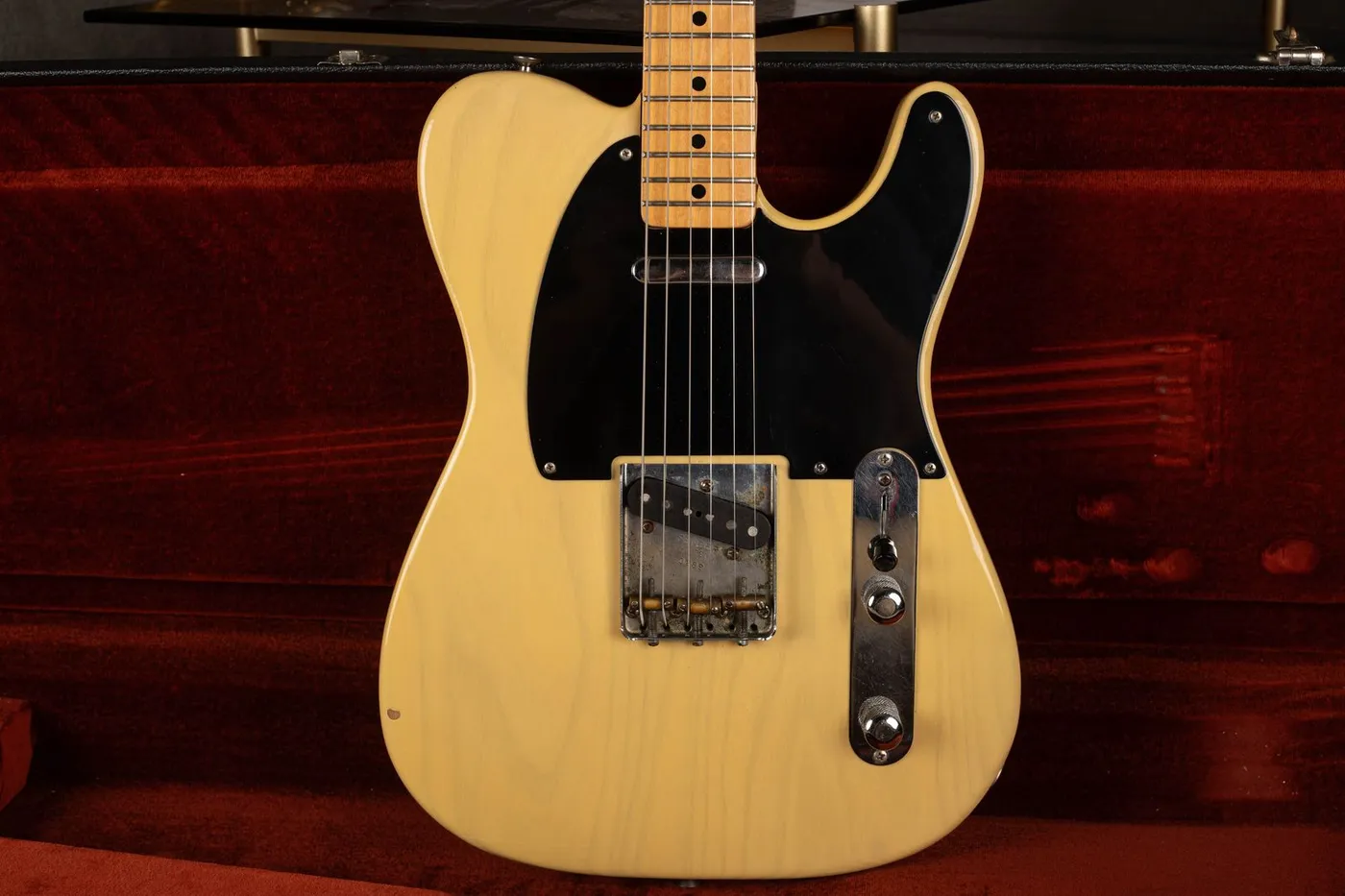
The 1957 example shows a maple neck, white pickguard and single bridge pickup. The close bridge photograph records the three smooth steel saddles. These details belong to this instrument’s inspection record; they are useful comparisons when another guitar is represented as a similar-period Esquire.
The full front supplies context that a decal photograph can’t. Check the body outline, guard fit, bridge alignment and relationship between the neck and strings. A mismatched neck or altered bridge installation may become apparent in this wider view before a small stamped mark becomes meaningful.
The headstock decal supports the model description, but its condition should be considered with the surrounding finish. Look for evidence of sanding, a refinished face or lettering that appears inconsistent with the rest of the instrument. A missing or damaged decal can make identification harder without automatically changing the guitar’s factory history.
The bridge assembly and pickup are removable. Compare wear and construction with the instrument’s date evidence, and preserve photographs of any replacements or loose original parts. A later bridge bearing an old-looking serial or a period pickup installed recently should be described according to the evidence available.
One Pickup With Several Tone Paths
Understand The Esquire’s Three-Way Circuit
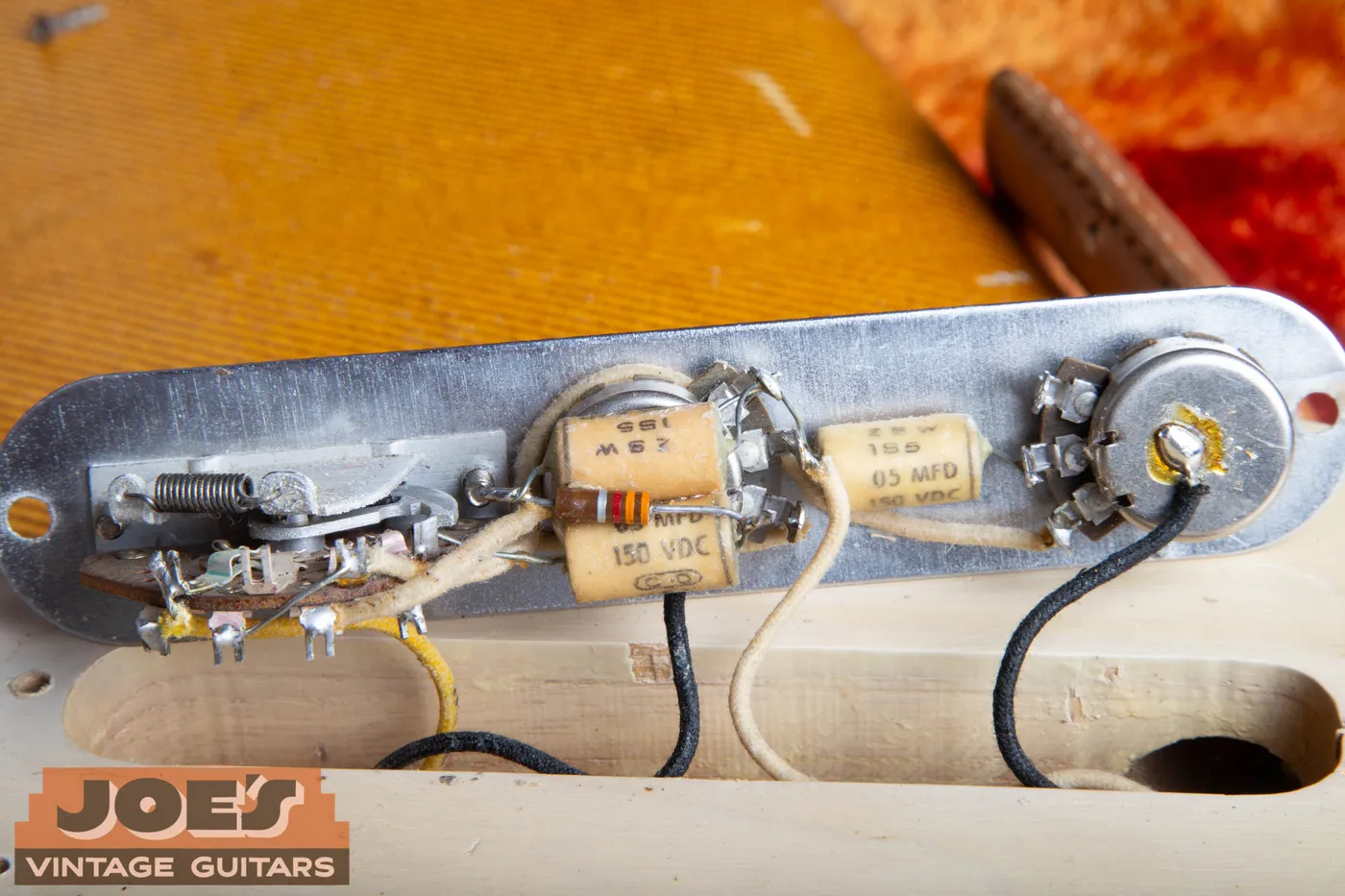
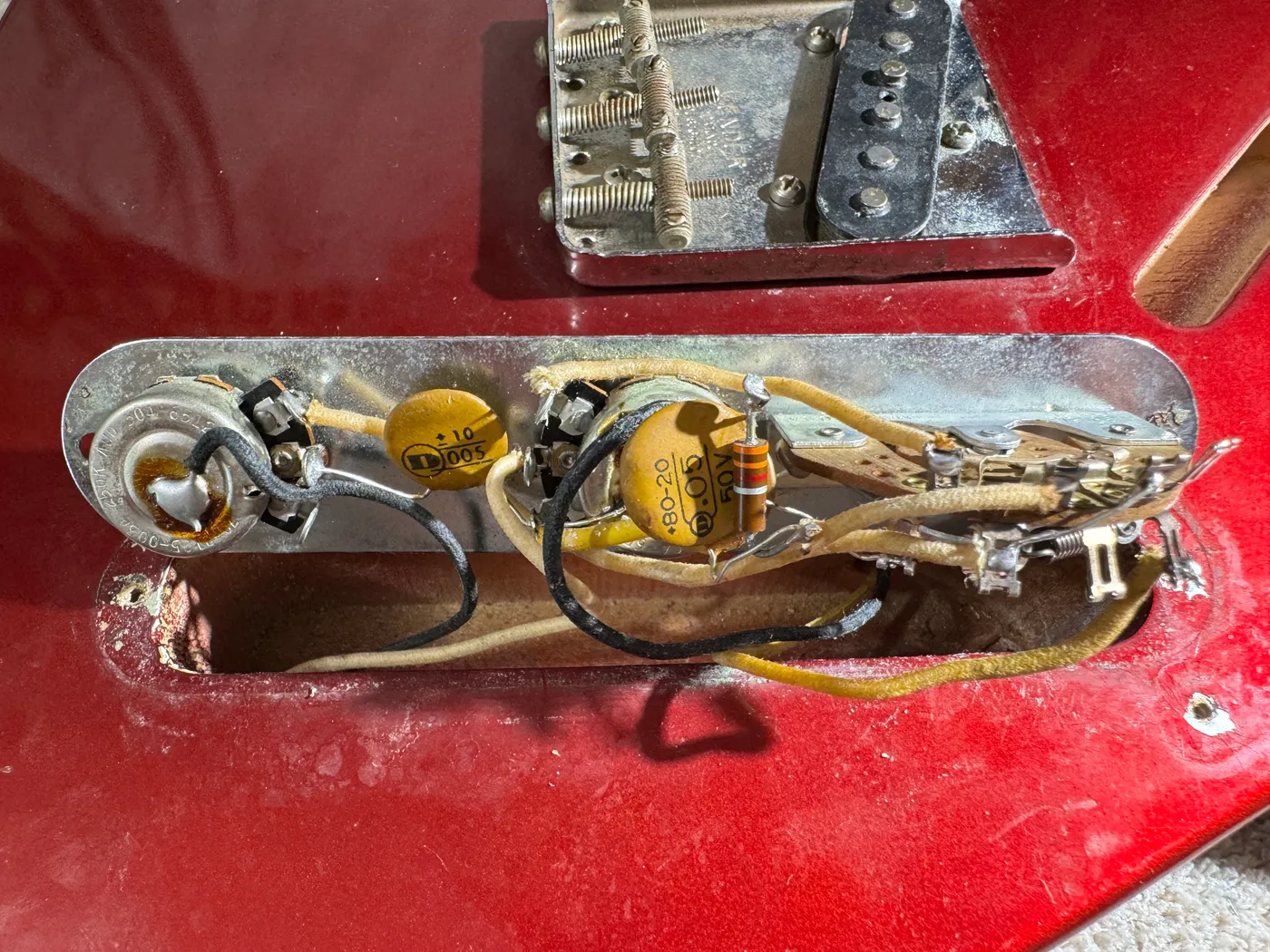
Common vintage Esquire circuits provide a normal volume-and-tone path, a brighter path that bypasses the tone control and a dark preset. The switch therefore has a useful purpose even with a single pickup. A position in which the tone knob has no effect may be functioning as intended.
Component values and position order need comparison with the appropriate production period. One modern schematic should not be imposed on every vintage instrument. Test the settings systematically and describe what each does before assuming a fault or ordering replacement parts.
The 1957 electronics photograph shows the switch, pots, capacitors and wiring together. The 1965 image offers a later comparison. Read the assembly as a circuit with connected components, rather than authenticating it from the appearance of one cloth-covered wire or one old capacitor.
Changed solder joints may record a repair, a pickup replacement or a conversion. Ask what was done and retain service records. A pot with an appropriate date can be installed long after manufacture, so its presence doesn’t prove an untouched harness.
A technician can trace the circuit and document it before necessary work. Photograph the components in position and preserve any removed pieces with a note explaining the repair. Replacing a noisy control before documenting it can discard evidence useful to the next owner.
Factory Routing And Later Alterations
Read The Neck-Pickup Cavity Correctly
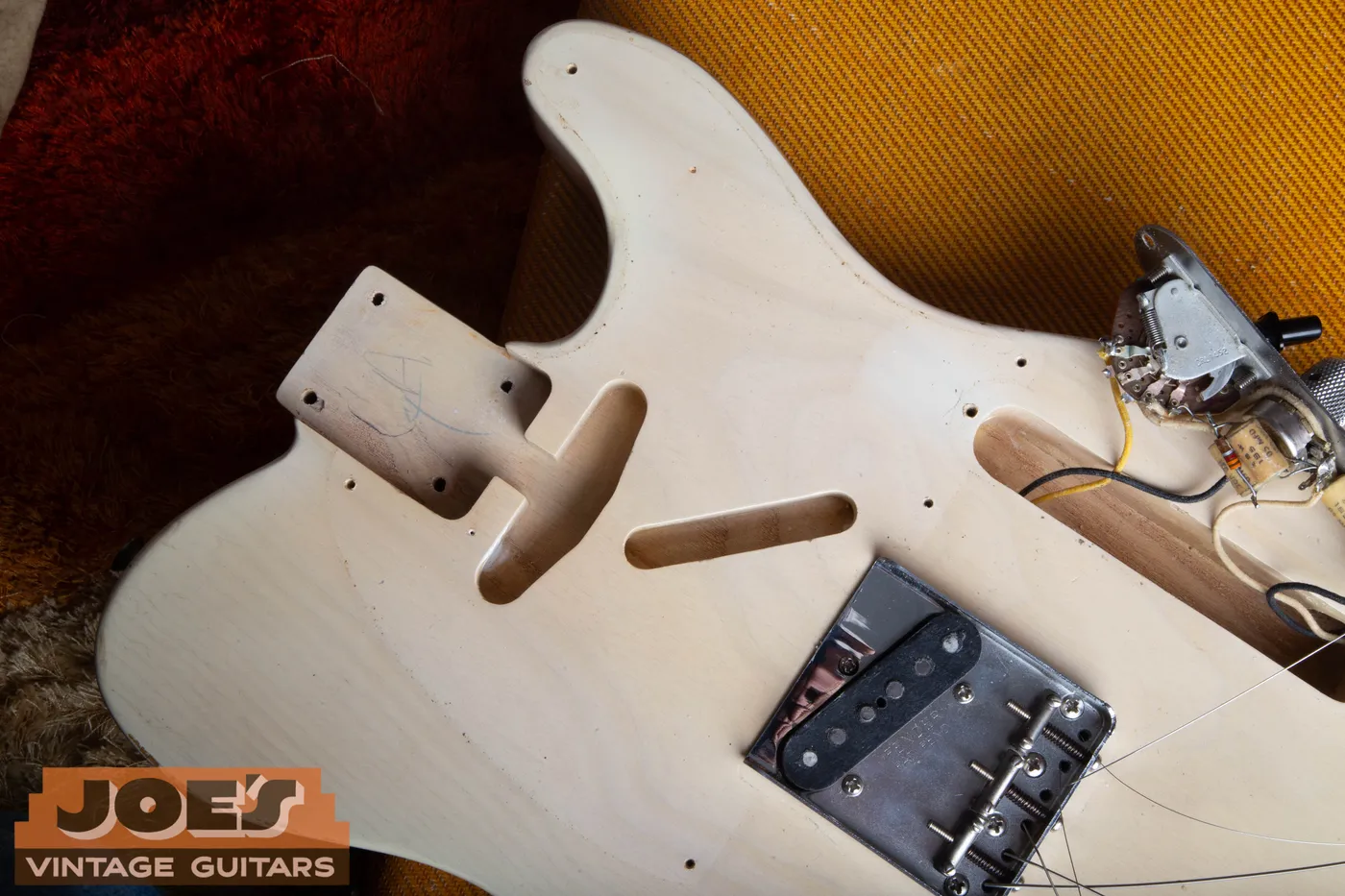
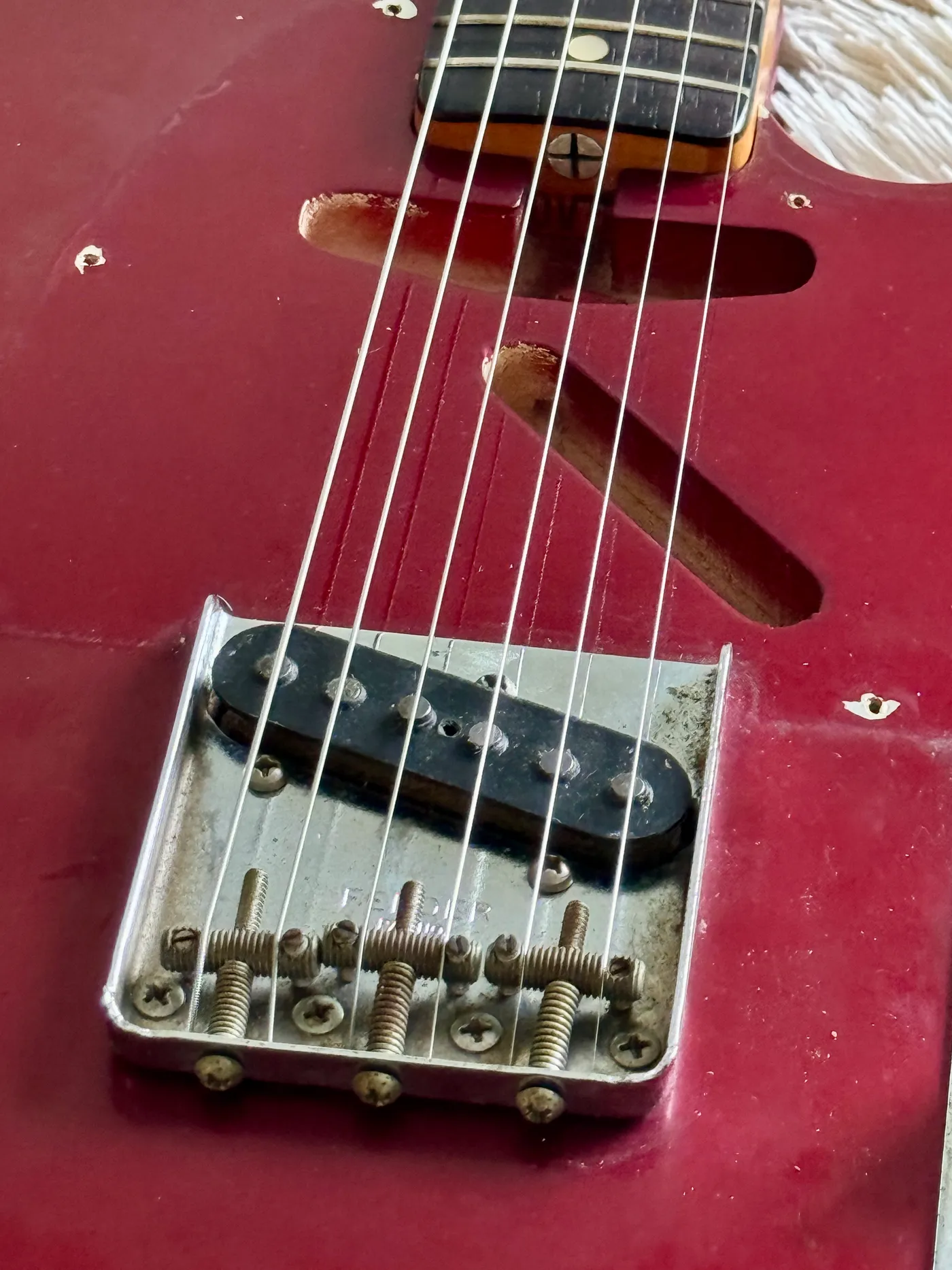
Both the 1957 and 1965 photographs show the hidden neck-pickup area with the guard removed. The cavity is compatible with factory Esquire construction. Its presence should not be described automatically as evidence that a neck pickup was taken out.
The shape and condition of a route still matter. An enlarged opening, filled wood or fresh tool marks may document a later modification. Evaluate the surface, finish relationship and surrounding work together. An original cavity and an enlarged cavity are different findings even when a blank guard hides both.
Extra screw holes can also come from replacement guards or earlier pickup installations. Record them without assuming that every hole has the same origin. A repair photograph made before a fill or refinish can be especially useful because the present surface may conceal the earlier work.
The 1965 example provides another practical lesson: a red finish and an empty route can coexist on a factory Esquire. The color still needs its own authentication. The route identifies a construction feature; it doesn’t prove the age, originality or exact name of the paint surrounding it.
A first photo appraisal doesn’t require lifting the guard. Use existing service photographs when available, and leave disassembly to someone who can avoid breaking a fragile guard, damaging screws or pulling short leads.
A Date Range Supported By Several Components
Compare Serial, Neck And Pot Dates
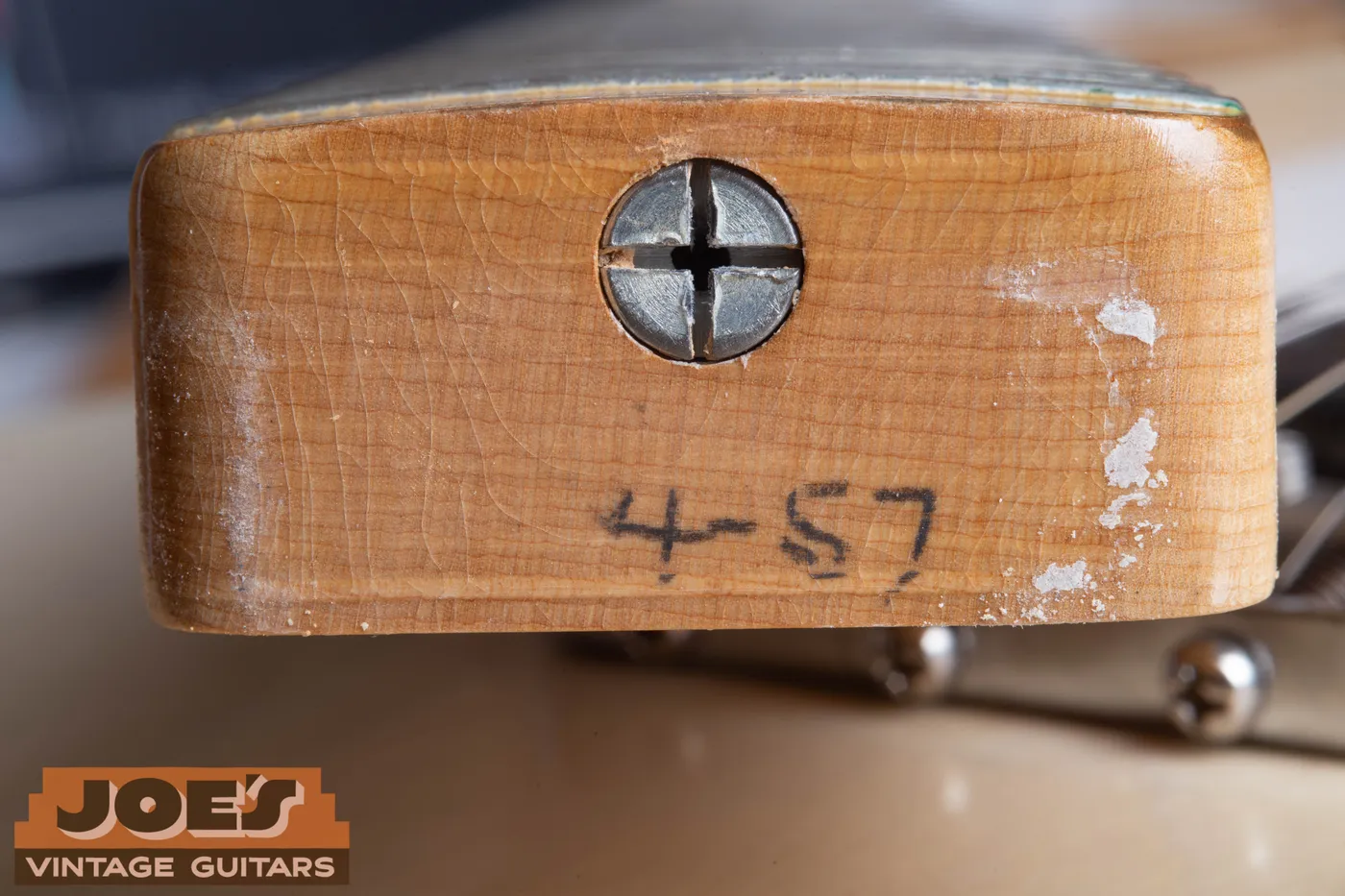
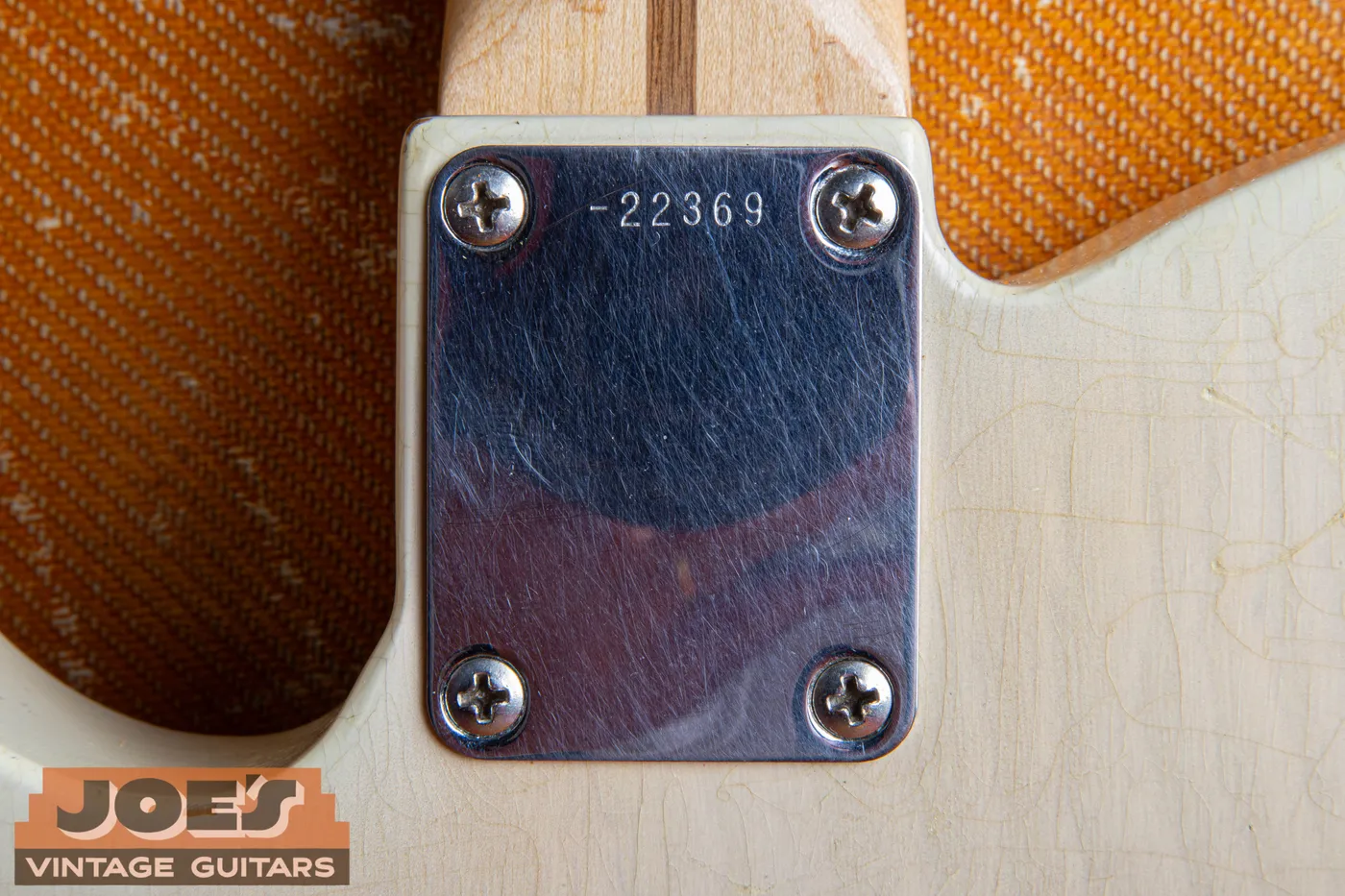
The 1957 neck-heel photograph records the pencil date 4-57, read as April 1957. This dates the neck’s production stage. For late-1950s Fender necks, a pencil date or an undated heel can be appropriate; a stamped heel should not be presented as the universal expectation for that period. Later stamped systems need their own format and model-code interpretation.
Use the Fender neck-date guide to compare the mark with the claimed production period. A neck date records the neck’s production stage. It can precede assembly, and a replacement neck can introduce a date that no longer describes the body.
The serial plate is another removable component. Consult the Fender serial guide for the appropriate range, then compare it with the neck, pickup and electronics. Record uncertain digits as uncertain until a better photograph resolves them.
Pot codes identify the manufacturer and the component’s production date. Stackpole commonly uses 304, CTS 137 and Centralab 134. Read the remaining digits in context because shortened year formats can be ambiguous between decades. A pot date is generally evidence about when the pot was made, not an exact final assembly date.
If a pencil date on the body is documented, include it with the other evidence. Preserve the original photograph and avoid cleaning the mark. A handwritten date that disagrees with the rest of the guitar calls for investigation rather than an automatic choice of the oldest available date.
Normal production overlap can explain some differences. A much later component may reflect service. Describe the pattern: a coherent neck and electronics period with one replaced pot is a more useful finding than insisting that every date must match exactly.
Visible Parts And Hidden Repairs
Inspect The Bridge Pickup And Hardware
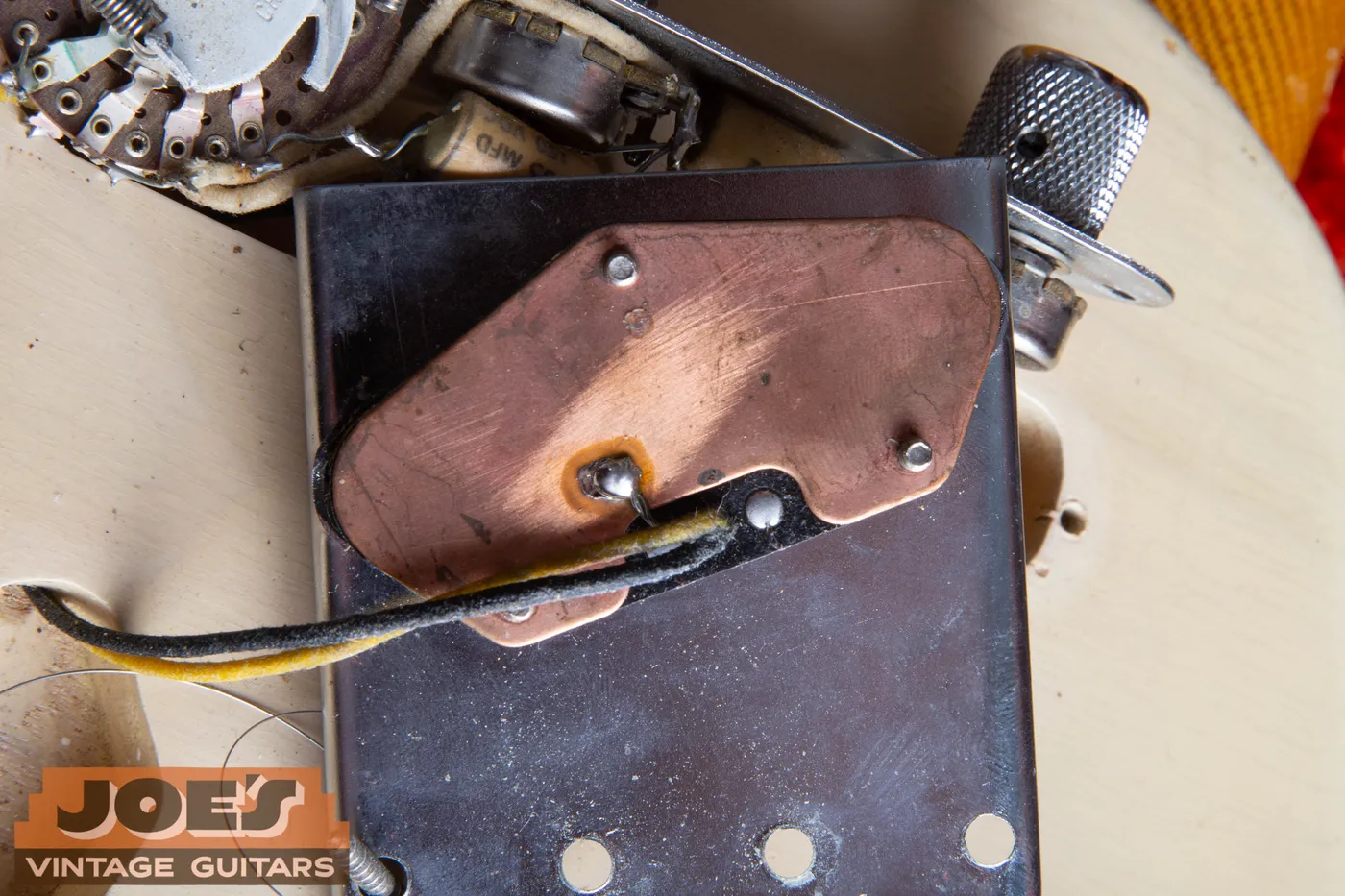
The underside photograph of the 1957 bridge pickup shows evidence unavailable from the front. The base, leads and solder can help a specialist assess construction and repairs. Keep the entire pickup in the image rather than cropping down to one mark or wire.
A pickup can retain its original cover or base after a rewind. Record known work and any measurements taken during service. Resistance alone can’t establish an original winding, and differences in temperature or the measurement circuit can change the reading.
The bridge saddles, screws and plate should be compared with the appropriate era. Players often replace saddles for setup reasons or install a complete later bridge. An original assembly stored in the case can be relevant even if the player currently prefers different hardware.
Inspect the tuners from the rear as well as the front. Replacement footprints, additional screws or enlarged holes may reveal work hidden beneath the installed parts. A tuner button that looks old doesn’t establish the age of the complete mechanism.
Check fret condition, nut work and signs of neck repair before describing the guitar as original throughout. A refret or new nut may be practical maintenance, but the work still belongs in the description. Keep the condition assessment separate from the question of whether the guitar began as an Esquire.
The 1958 Black Example
Recognize A Refinished Esquire
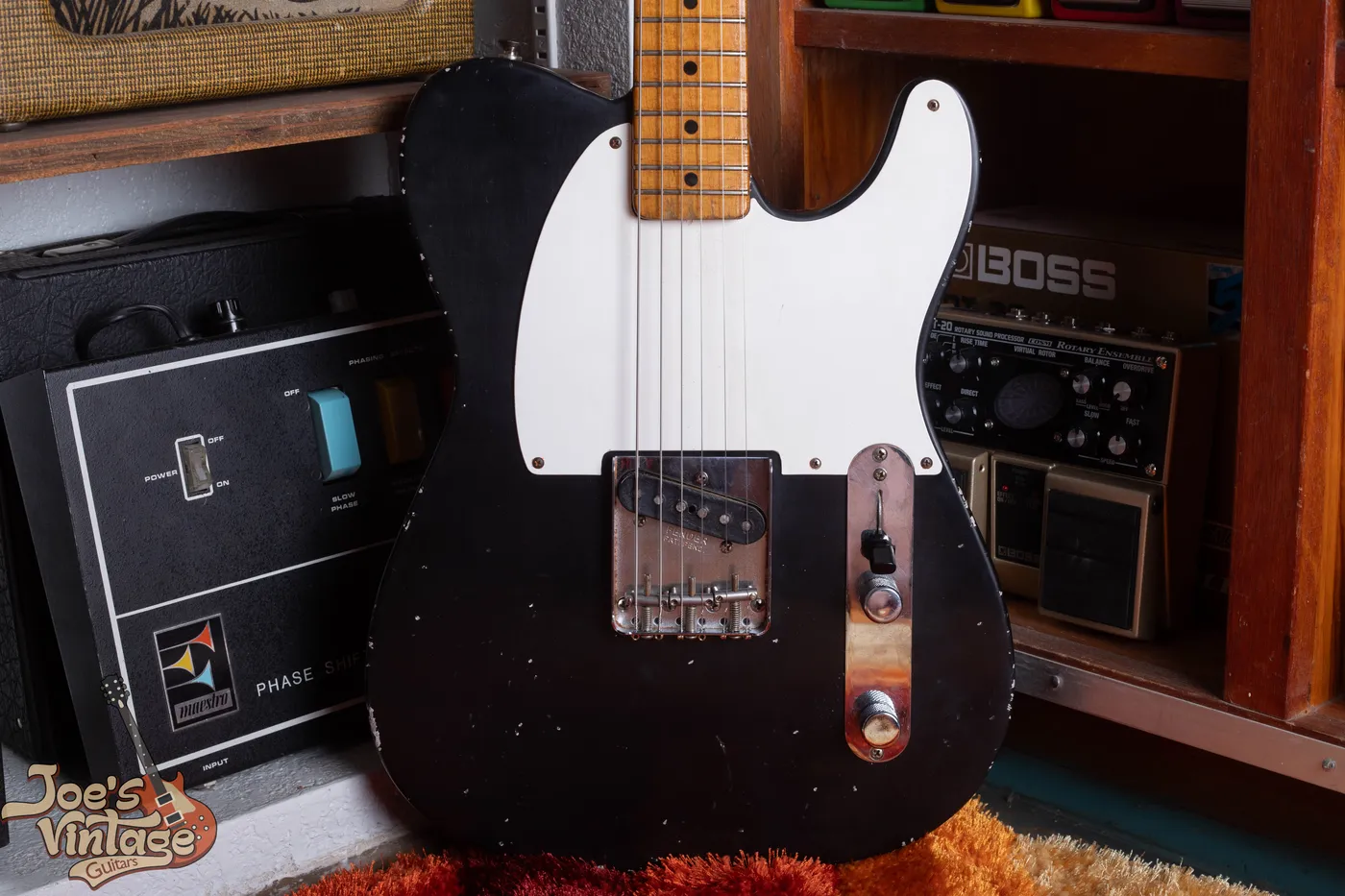
This 1958 Esquire has a black refinish. Its present color is useful to show, with that fact stated plainly. It should not be used as evidence for a factory-black 1958 finish or as an untouched custom-color benchmark.
A refinish may retain old hardware and a well-worn neck. Those surviving parts can help identify the instrument even though the body’s original surface is gone. Record which areas were refinished, whether the body was sanded or reshaped and whether any earlier photographs survive.
Factory custom colors require careful authentication, especially when rarity materially changes the value. Wear, checking and discoloration can develop on an older refinish. The refinish guide explains how to describe the extent of work before discussing price.
For Candy Apple Red, the metallic base changes from silver in the earlier period to gold later. A paint-layer observation therefore needs the correct period context. Avoid exposing a layer by scraping; existing repair images or a qualified inspection are preferable.
The Refinished 1951 Two-Pickup Example
Document A Converted Esquire Without Changing Its History
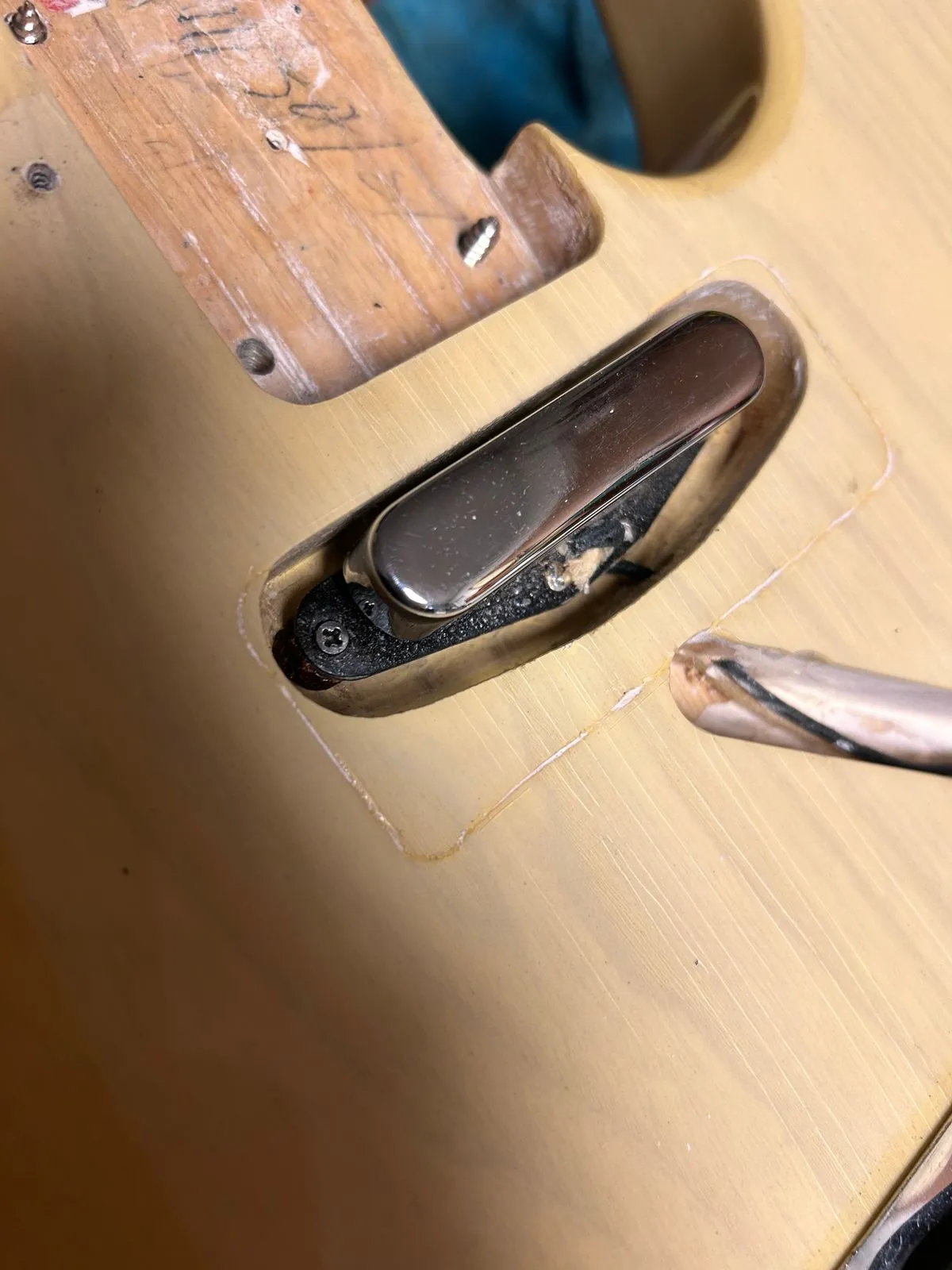
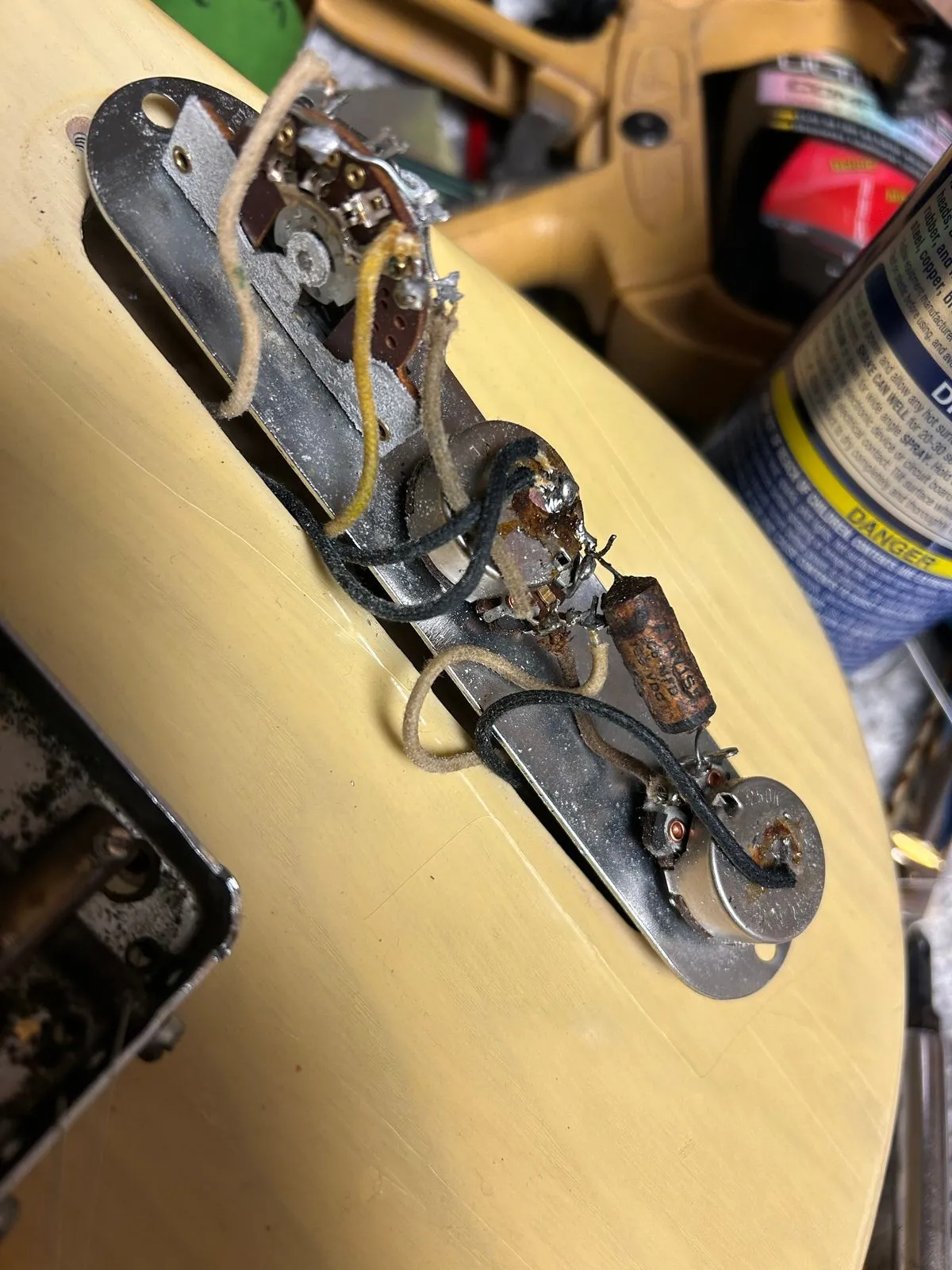
The pictured 1951 Esquire has a full refinish and an added neck pickup. Its documented work also includes a previously enlarged neck-pickup route that was filled, replacement tuners and pots, and a refret. That history is essential to understanding the current instrument.
Adding the second pickup creates a different playing configuration. It doesn’t establish that the guitar was originally a Broadcaster. A sale title that mentions a Broadcaster-style conversion should remain a description of the modification, rather than becoming a new factory identity.
The internal pictures show the guitar as it now exists. They should be read together with the known repair history. A neat-looking filled area can’t reveal every stage of an earlier modification, and a current photograph may not independently prove when the work occurred.
The reverse conversion also occurs: a Telecaster receives a blank guard and Esquire-style wiring. Its original factory identity still depends on the underlying evidence. A correct single-pickup circuit can make a useful instrument while leaving the factory-model question to be resolved.
When the surviving evidence is insufficient, describe the uncertainty directly. Separate established original components, known replacement parts and unresolved claims. That description gives a prospective buyer or appraiser a sound basis for the next inspection.
Preserve The Evidence Before Service
Prepare An Esquire Authentication Photo Set
Start with the full front and back, headstock faces, visible serial, bridge and controls. Add repair areas, the case and loose parts. Include older photographs of the guitar and any service records that identify the work performed.
If internal images already exist, send the whole neck heel, pickup underside and control assembly. Keep unreadable markings in the original image instead of retouching them. Joe can explain which remaining questions require a closer photograph or hands-on assessment.
Check The Model Evidence
Compare the decal, pickup layout and known circuit with the construction and history.
Read Dates In Context
Use the serial, neck mark and pot codes together. Keep uncertain characters unresolved.
Document Conversions And Repairs
Identify added pickups, changed routing, refinishes and replacement hardware before discussing originality.
Send The Evidence
Identify Your Vintage Fender Esquire
Send the visible model details, date evidence and repair history. Include any conversion or finish work so the review begins with an accurate description.
Factory Documentation And Related Dating Guides
Esquire Reference Material
- Fender 1957 To 1958 Catalog
Period factory reference for the established Esquire model.
- Fender On The Esquire Circuit
Fender’s explanation of the classic tone-bypass and preset functions in a later anniversary model.
- Fender Neck Dates
Pencil dates, later stamps and component-date interpretation.
Questions AboutFender Identification
Does An Empty Neck-Pickup Route Mean A Pickup Was Removed?
Why Does An Esquire Have A Three-Way Switch?
Is A Two-Pickup Esquire Automatically A Broadcaster?
Does A Refinish Prevent Identification?
The Last Word
Keep The Evidence Together
Factory identity follows the combined evidence, including documented changes. Once the Esquire and its condition are understood, use the existing Esquire value guide and ask Joe for an individual appraisal.
Authenticity And Originality Are Assessed From The Information Provided. A Hands-On Inspection Can Change The Conclusion.