


Every Guitar Has A Story
An Original-Owner Family Story
1954 Gibson L-5C: A Family Story
His daughter preserved the guitar, the family history, and the story of the musician who first owned it.
The owner asked that her name remain private.
The first picture says more than a Gibson serial number ever could. She is smiling, seated in her home, with her father's 1954 Gibson L-5C across her lap.
She asked me not to use her name, and I am honoring that request. What she did want to share was the guitar's story. Her father worked as a session musician in California. According to his daughter, he was friends with Les Paul and Chet Atkins.
It was my dad's guitar. He was a California session musician, and he was friends with Les Paul and Chet Atkins.
That is the story she shared with me.
The Guitar
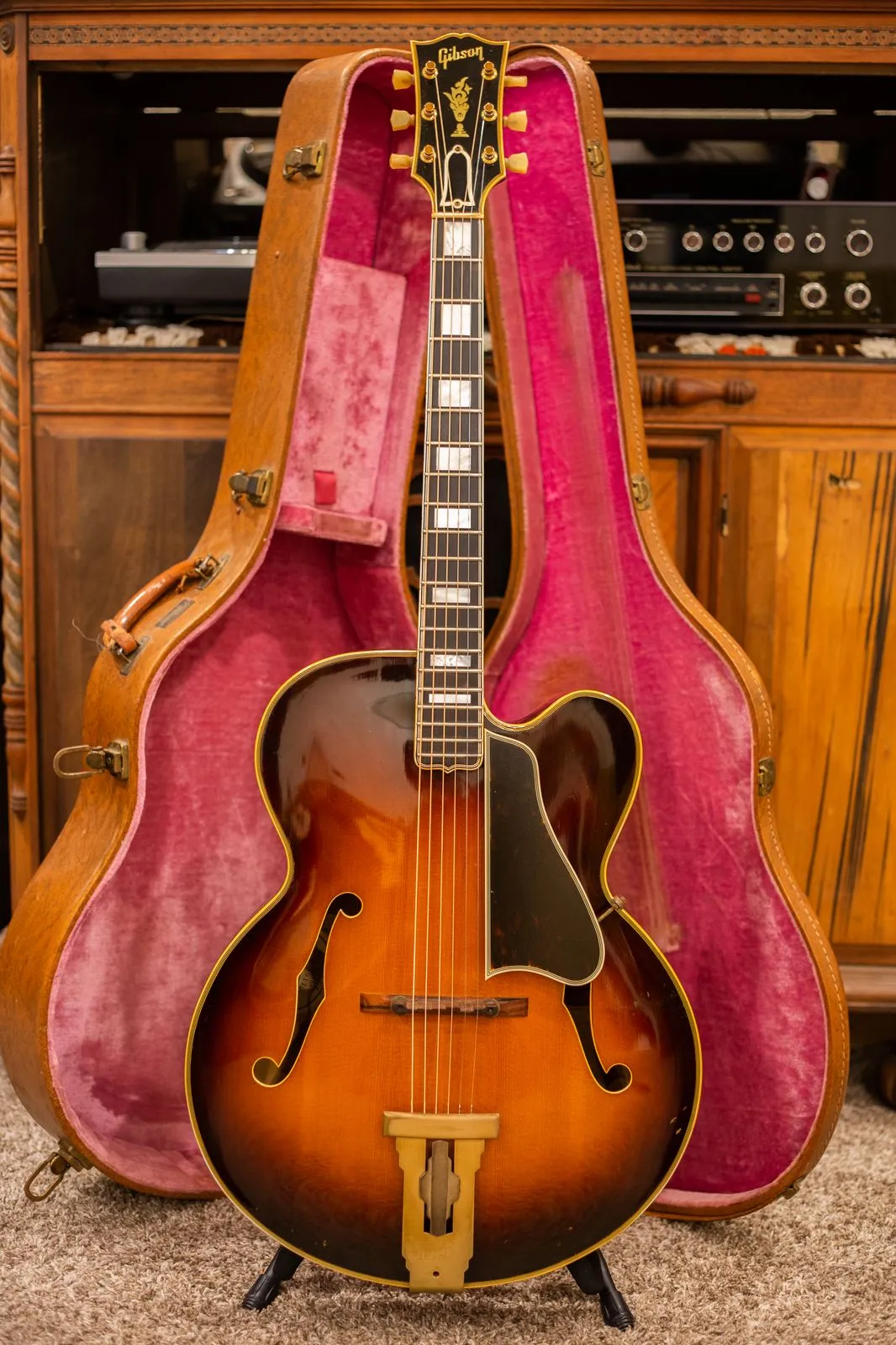
A Professional Archtop From the Top of Gibson's Line
The L-5 was already one of Gibson's established professional archtops by 1954. The acoustic L-5C paired a full-depth carved body with a rounded Venetian cutaway, giving a player better access to the upper frets without turning the guitar into an electric model.
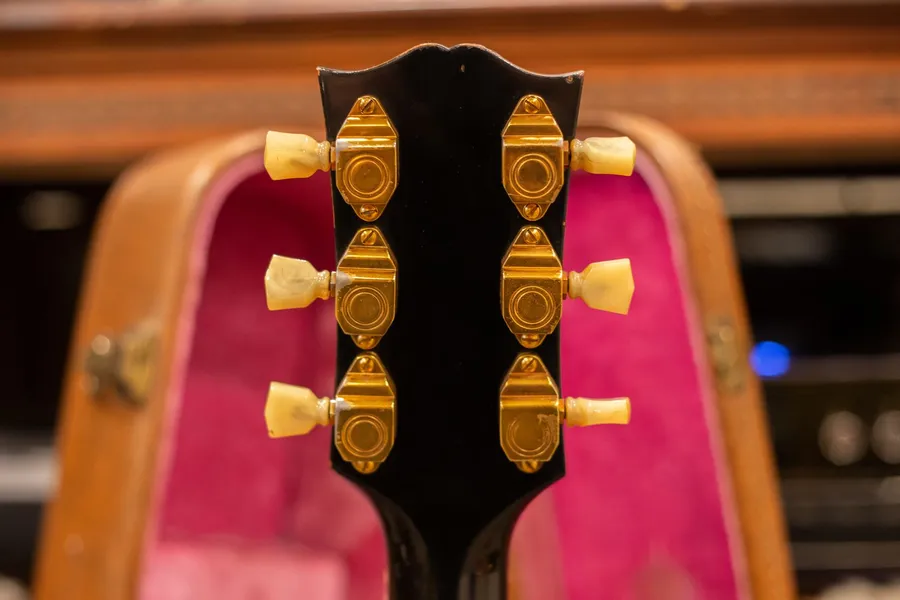
This was a serious working musician's instrument. The large carved spruce top, figured maple back, ebony fingerboard, pearl block inlays, elaborate headstock, and gold-plated hardware all placed it near the top of Gibson's line. The appointments were luxurious, but the point was still to make music.
The model name matters here. An L-5C is the cutaway acoustic version of the L-5, while the L-5CES is the factory electric model with pickups. My Gibson L-5 guide explains how the model developed and which features changed over time.
What I See
A Guitar That Was Played, Not Displayed
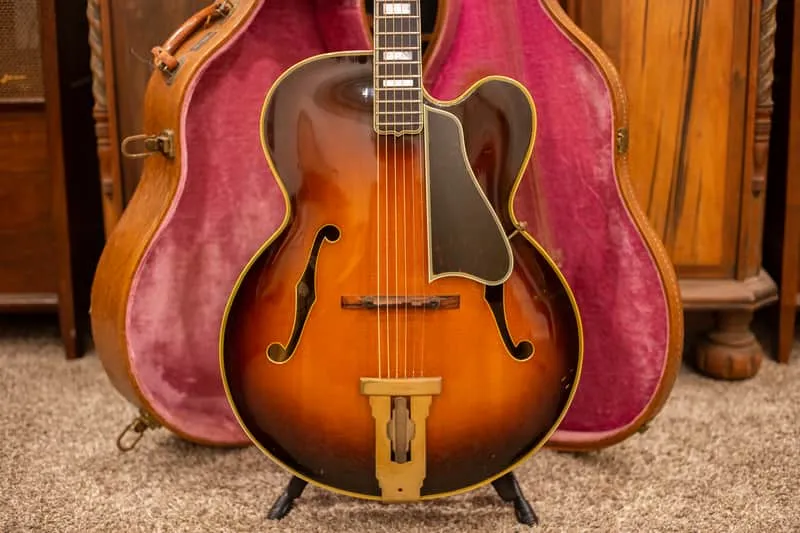
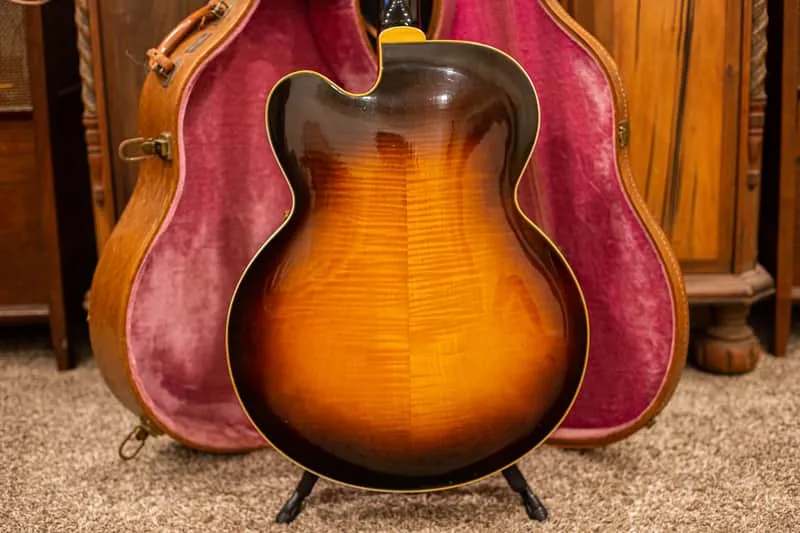
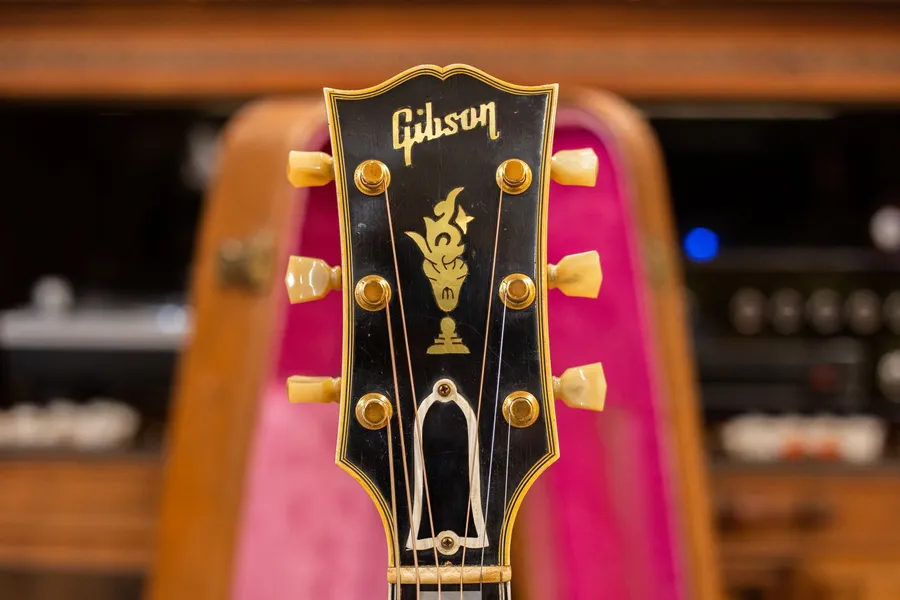
The first thing that catches my eye is the sunburst. It opens into warm amber at the center of the top and moves to a dark brown edge that follows the body shape. The rounded Venetian cutaway, bound f-holes, large tortoise-style pickguard, pearl block inlays, and flowerpot headstock inlay identify it as a top-grade Gibson archtop.
The maple back has broad figuring that becomes more visible as the light moves across it. I also see normal age and use. There are fine marks in the finish, wear on the hardware, and small signs that this guitar was handled rather than stored as decoration. Confirming finish, repairs, replaced parts, and structural condition requires an in-person inspection.
The Family Provenance
The Story Stayed With the Guitar
The most valuable part of an original-owner guitar is not always something you can photograph. It is knowing where the instrument came from and who played it before it reached you.
This L-5C belonged to a working California musician. Decades later, his daughter could still sit with it across her lap and tell us whose guitar it was. That continuity is rare. It turns an already impressive 1954 Gibson into one family's piece of musical history.
I am grateful she trusted me with the story and allowed me to share her photograph while keeping her name private.
Every Guitar Has A Story
Is a Vintage Gibson Part of Your Family History?
Send the photographs and the story that came with it, and I will tell you what I see.