
One Family From New: A 1946 Martin D-28
I bought this herringbone D-28 from the original owner's grandson in Apache Junction, Arizona. The family connection stayed with the guitar.
We get a lot of guitars through the shop. Every now and then, one arrives with the line of ownership still attached to it. This 1946 Martin D-28 is one of those guitars. I bought it in Apache Junction from the grandson of the original owner, nearly eighty years after Martin built it.
- Model
- Martin D-28
- Year
- 1946
- Body
- Dreadnought
- Trim
- Herringbone
- Provenance
- Original Owner's Family
- Location
- Apache Junction, Arizona
The Guitar Stayed With the Family
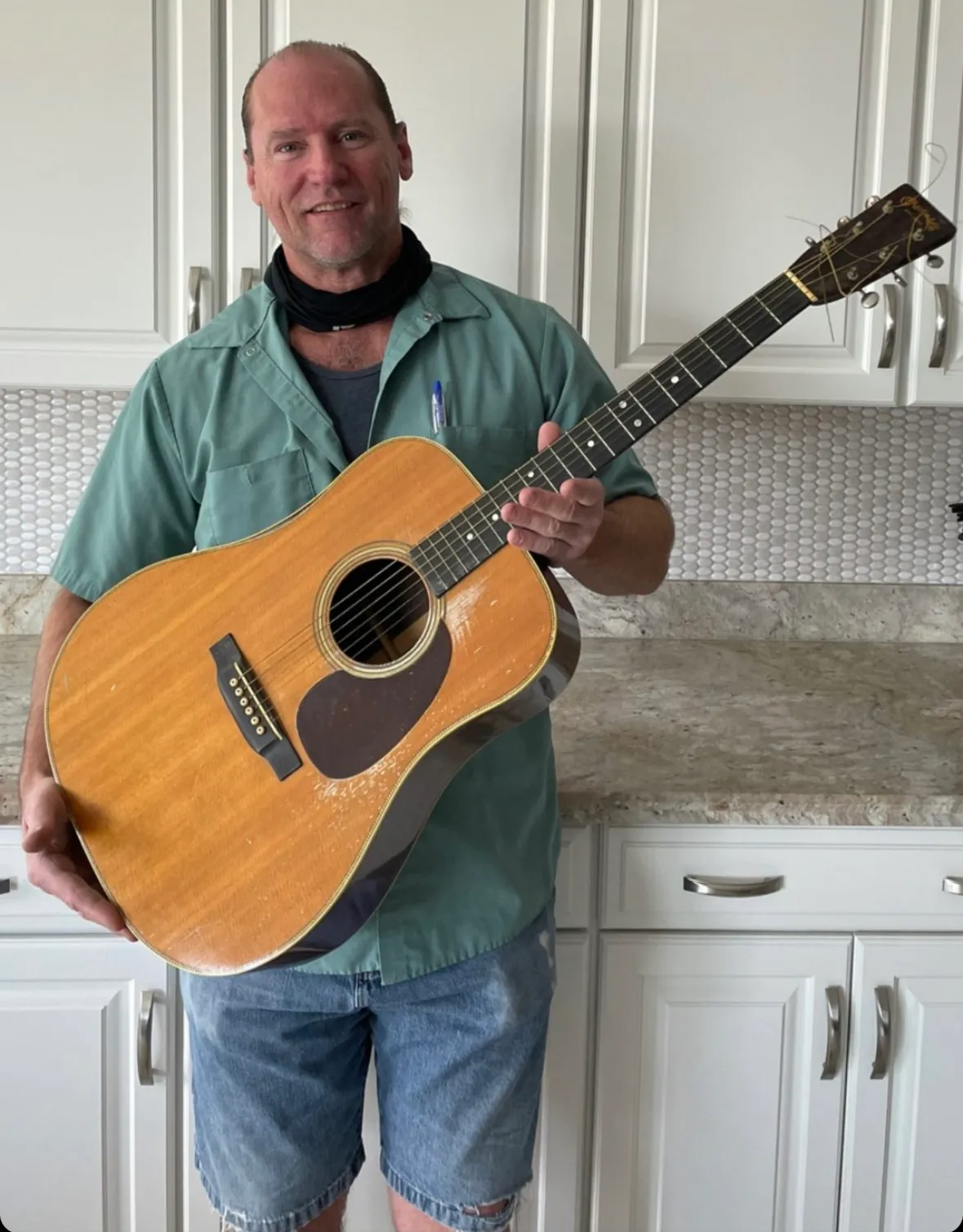
The grandson is the person in the photograph. He is holding the guitar that belonged to his grandfather, the original owner. That direct family connection is the central fact of this story.
We do not have a full scrapbook or a stack of dated photographs. We have one picture and the family's account of where the guitar came from. That is still meaningful provenance. It gives the next owner something more useful than a vague dealer story. It connects the instrument to the family that kept it.
One photograph can keep a family connection from disappearing.
A 1946 D-28 at a Turning Point
The year matters. Martin describes the 1946 D-28 as a transitional instrument, carrying the herringbone top trim of the earlier period alongside the simpler dot inlays and construction changes of the postwar years. Martin's own museum story about Waylon Jennings' 1946 D-28 explains why guitars from this year sit between two eras.
The herringbone around the top is the detail collectors notice first. It was near the end of the original herringbone run on Style 28 guitars. The D-28 name continued, and the modern Martin D-28 still carries the same basic spruce and rosewood dreadnought idea, but the 1946 version belongs to a specific moment that cannot be reproduced by a new instrument.
The Wear Belongs to the Story
The photograph shows a guitar that was played. There is visible wear below the pickguard, around the lower top, and along the body edge. I would not turn those marks into a biography we do not have. What they prove is simpler. This guitar was used enough for generations of handling to remain visible.
Dating a Martin begins with the model and serial number stamped on the neck block. My Martin serial number lookup and guide explains where to find both stamps. For value, the year is only the beginning. Originality, repairs, finish, and documented history all matter. My Martin dreadnought value guide goes through those factors in more detail.
Keeping the Name With the Guitar
I document original owner instruments because the people matter as much as the specifications. A guitar can outlive the person who bought it, then outlive the stories everyone assumes they will remember. Writing down the connection now gives the next player a place to begin.
This D-28 came to me from the original owner's grandson in Apache Junction. The photograph will stay with the story, and the story should stay with the guitar. You can find more instruments with documented family histories in the JVG Museum and Original Owners archive.
Have a Vintage Martin With a Story?
If your family has a Martin with an original owner photograph, receipt, or remembered history, send me what you have. I can help identify the guitar, explain what matters, and give you a straightforward assessment.