

You might want to play it yourself or pass it to someone who will. Guitars are made to be played, and a new player can give a well-loved instrument more years of music. Learning what it is can be a separate task from deciding where it should go.
If the guitar is still part of an estate, my guide to an inherited guitar covers authority and valuation questions to raise with the person handling it. Here, I'm talking about the personal decision once the practical responsibilities are understood.
Original Owners And Their Guitars
These are the people behind some of the guitars in my original-owner stories. Open a photograph or story title to read the family's account and see more photographs.
They are individual accounts shared by the families involved. They aren't a template for what your family should decide.
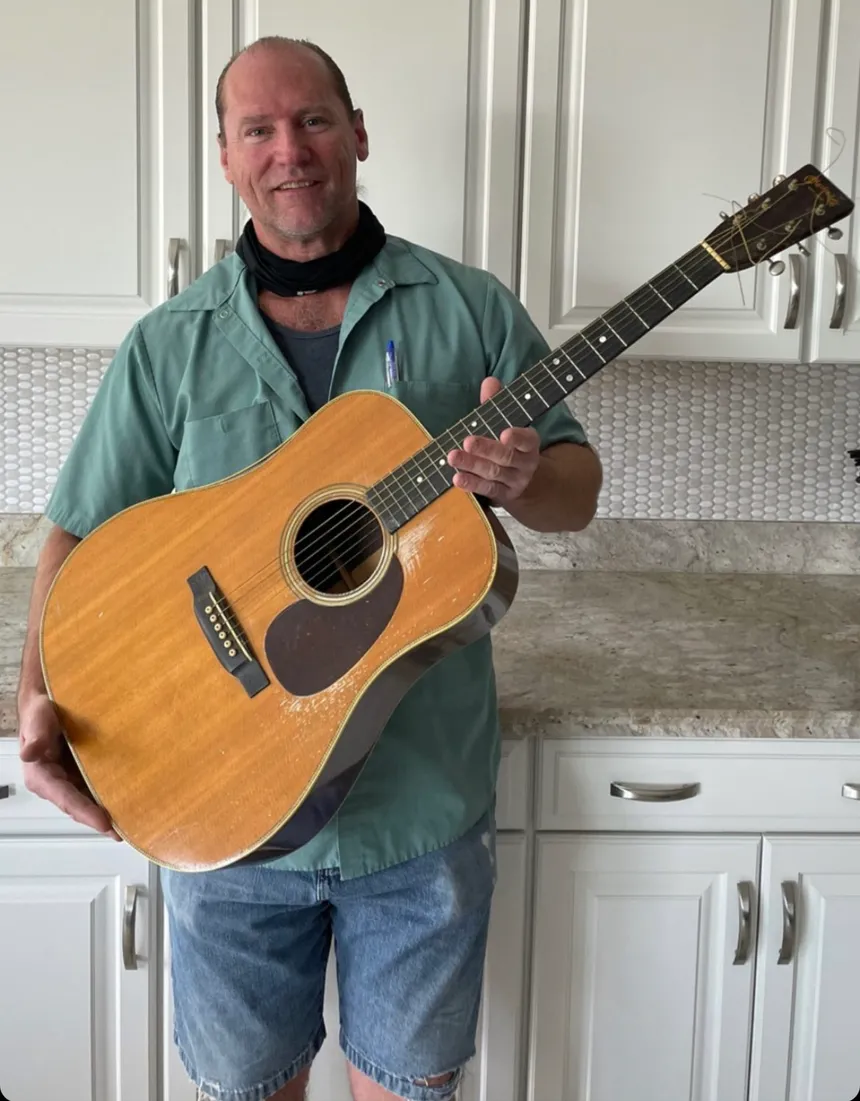
One Family From New: A 1946 Martin D-28
Read The Family's Story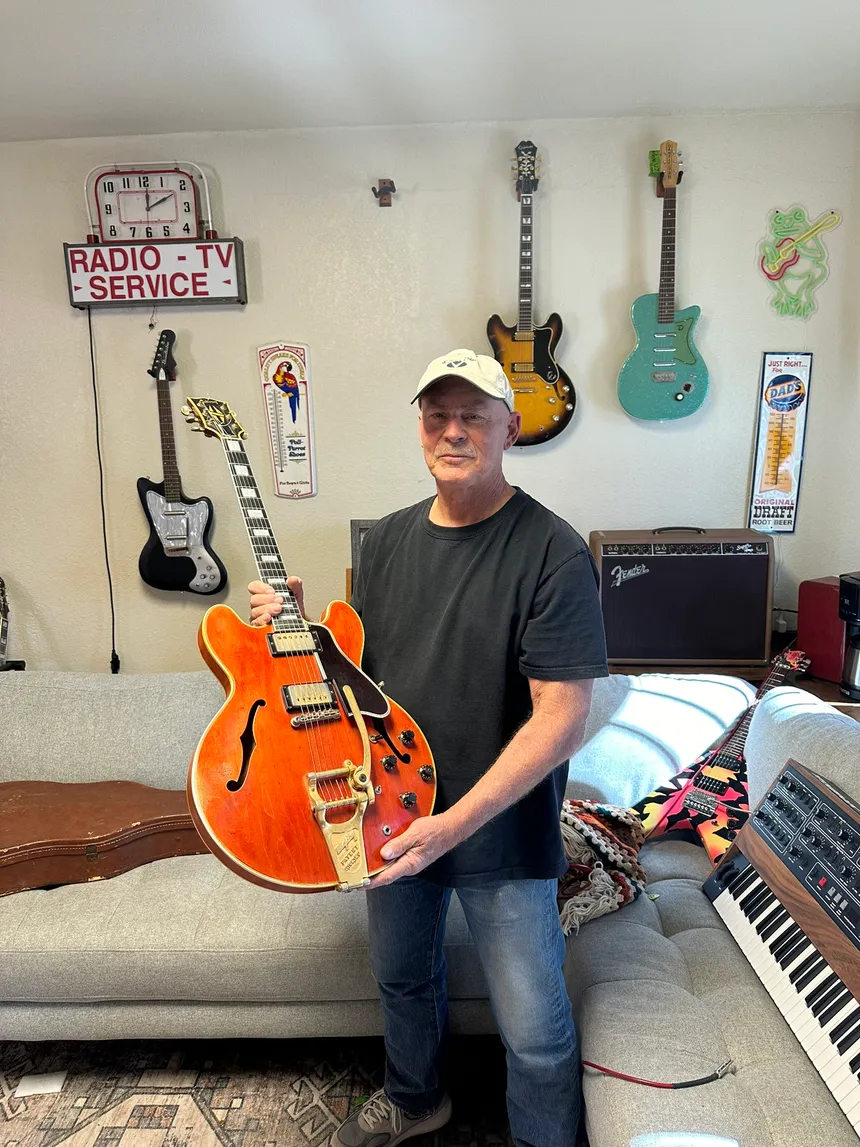
One Family's 1959 Gibson ES-355
Read The Family's Story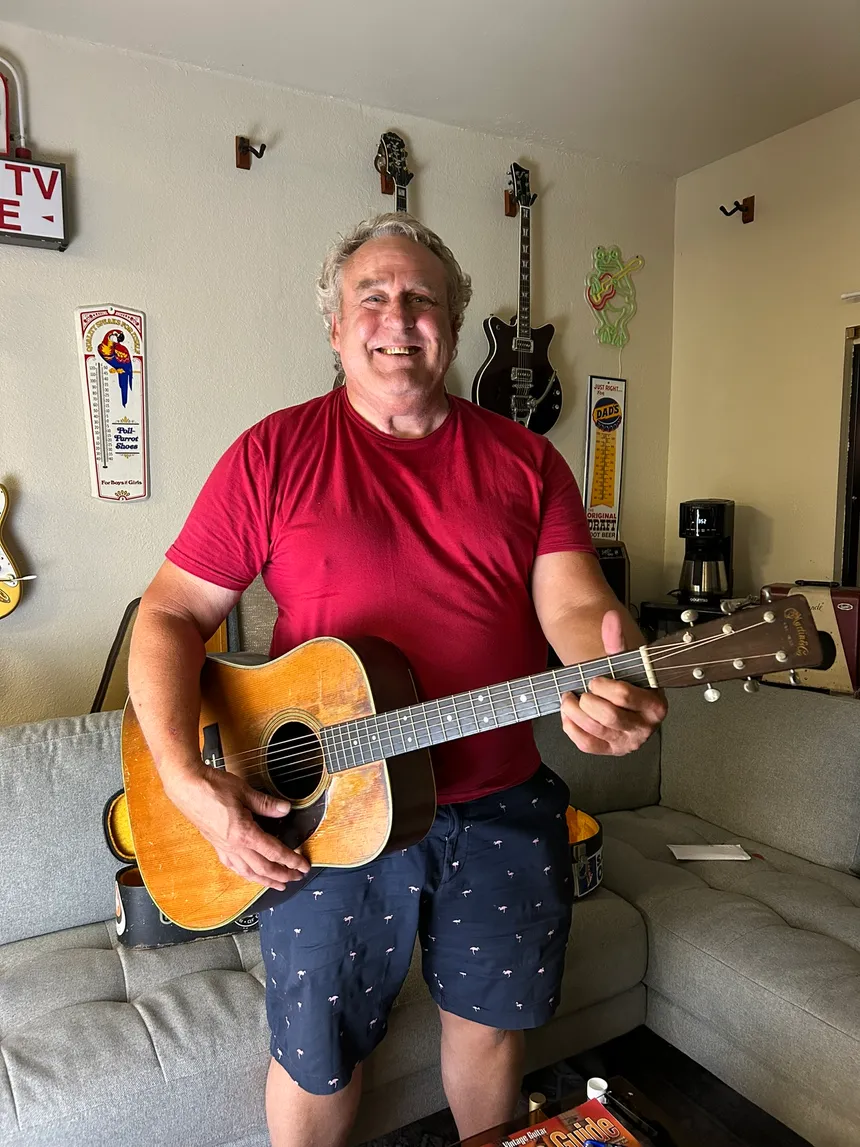
One Owner 1955 Martin D-28
Read The Family's Story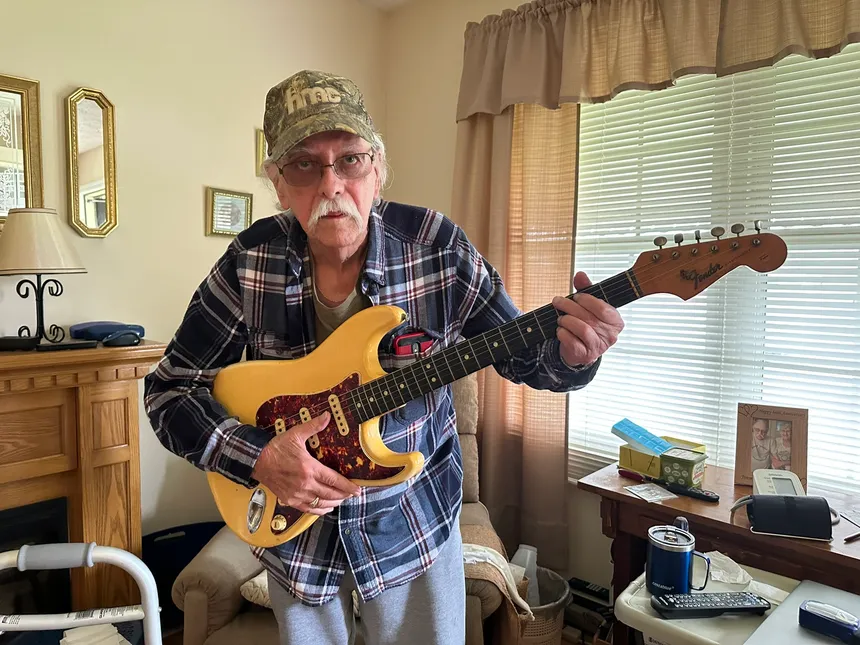
A Lifetime Of Music: One 1965 Fender Stratocaster
Read The Owner's StoryFor another family's account, read One Owner From New: The Story Of A 1957 Gibson Byrdland.
Browse All Original-Owner StoriesWays To Keep A Guitar In The Family
Playing it is one possibility, but it isn't a requirement for keeping it. You don't have to become a musician to justify caring about your parent's or grandparent's instrument. It can be something you choose to keep because of its place in your family.
If someone does want to play, find out what condition it is in before making changes. A careful setup may make it useful without replacing the features that identify it. My guide to what to consider before restoring a guitar explains why cosmetic improvements should wait for an assessment.
Another family member may already play. A loan can let the guitar be used while the family takes more time to decide its long-term home. Talk through who will look after it, what work is acceptable and what happens if the borrower can no longer keep it.
A plain note about where the guitar is and what everyone understands can help. That doesn't need to turn a family conversation into a formal project. It can prevent a well-meant loan from becoming a different story in each person's memory.
Write down the story you want to keep with it. The owner's name, the songs you remember or the occasions when it was played can be enough. A short account in the case can preserve something that the brand and serial number never will.
Ways To Let It Go Well
Selling can be a considered decision rather than a rejection of the person who owned it. You may know that nobody in the family wants the responsibility of keeping the instrument. Passing it to another player can make sense without requiring you to feel pleased about every part of the decision.
You can preserve photographs before it leaves. Include the views that matter to you, perhaps the worn place where a hand rested or the case you remember seeing at home. Those pictures are for the family; they don't need to look like a dealer's inventory photographs.
A written account can travel with the guitar if you want it to. Keep to what the family knows, and decide which details you are comfortable sharing. You can preserve the connection without publishing addresses, private correspondence or the whole family history.
If you want to keep an original receipt, tag or other small item, discuss that before agreeing on a sale. The contents of the sale should be clear to both sides. A copy may let the family keep the original paper while the guitar retains useful documentation.
There is no need to remove an original part from the instrument as a keepsake. A photograph, a written memory or an item already separate from the guitar may serve that purpose without changing it. Choose something that feels appropriate to the family.
A buyer's interest doesn't obligate you to proceed. Ask what you need to understand, take time to discuss it and be clear when you haven't decided. Information is useful even if the guitar ultimately stays where it is.
When Selling Makes Sense
Sometimes a sale is the practical option the family agrees on. An estate may need to be divided, nobody may want to keep the guitar, or the person storing it may no longer have a suitable place. Those circumstances can be discussed without making the instrument's sentimental meaning disappear.
If nobody in the family expects to play it, a sale can give the guitar a home where it will be used again. For some families, putting it back into a player's hands is the best way to honor what the instrument was made for. The photographs, memories and written history can stay with you.
If care or storage is the concern, the guide to looking after an old guitar covers the immediate practical steps. Solving that problem can give you time to think. It doesn't have to decide the final outcome for you.
I wouldn't encourage someone to sell simply because a buyer happens to be ready. A workable sale should follow the family's decision. It shouldn't create the deadline for making that decision.
Questions That Can Help You Decide
It may help to answer a few plain questions before asking where to sell. There isn't a score to add up, and the answers can change after a conversation with the family.
- Do I want to keep this particular guitar, or am I mainly afraid that selling it would look uncaring?
- Is there someone in the family who wants to play it or take responsibility for keeping it?
- Would photographs and a written account preserve what I most want to remember?
- Have the people who need to be involved had a chance to say what they want?
- Is there a practical deadline from the estate, or am I assuming there is one?
- What information would help me decide without committing to a sale?
Different relatives may answer differently. One may remember the music, another the person carrying the case, and another the difficulty of finding somewhere to keep it. Hearing those answers can be more useful than trying to persuade everyone that the guitar should mean the same thing.
You can also decide on a next step without deciding on a sale. Identification, a condition assessment or a family discussion may be enough for now. Giving the next step a small scope can make the whole task feel more manageable.
You Can Keep The Story Either Way
If the guitar stays, put the account somewhere the next person will find it. If it leaves, decide which version goes with it and keep a copy. The story can remain part of the family's records regardless of the instrument's next home.
You don't need a remarkable concert history or a famous owner to write something worth keeping. A few accurate sentences about who played it and what the family remembers are enough. Where a date or detail is uncertain, leave it uncertain.
Keeping the guitar doesn't require a promise that it will stay forever. Selling it doesn't erase the time it spent with its owner. You can make the decision that fits the people and circumstances you have now.
Questions About Keeping Or Selling
Is It Disrespectful To Sell A Parent's Guitar?
No. Selling can be a thoughtful family decision, just as keeping it can. The guitar's meaning to you doesn't require one particular choice about its future home.
Should I Keep It If Nobody Plays?
You can keep it if you want to and can look after it. If nobody expects to play it, selling to someone who will use and care for it can be a thoughtful choice. The family can keep the memories and photographs while the guitar keeps making music.
How Do I Keep The Story With The Guitar?
Write down what the family knows, keep a copy and decide what you are comfortable passing along. A short accurate account and photographs can preserve the connection without sharing private details.
Can I Find Out What It Is Without Committing To Sell?
Yes. Identification and an initial market opinion can be separate from a sale. You can gather that information and leave the decision about keeping the guitar open.
What If The Family Isn't Ready To Decide?
Ask the person handling any estate responsibilities what timing is actually required. Within that context, it is reasonable to gather information and return to the personal decision later.
If knowing what it is would help, you can send photographs for a free guitar identification and market opinion. You don't need to be ready to sell.