
One Owner From New: The Story of a 1957 Gibson Byrdland
We get a lot of guitars through the shop. Every now and then one arrives carrying something that money cannot add later: a story that never left the family. This 1957 Gibson Byrdland is one of those.
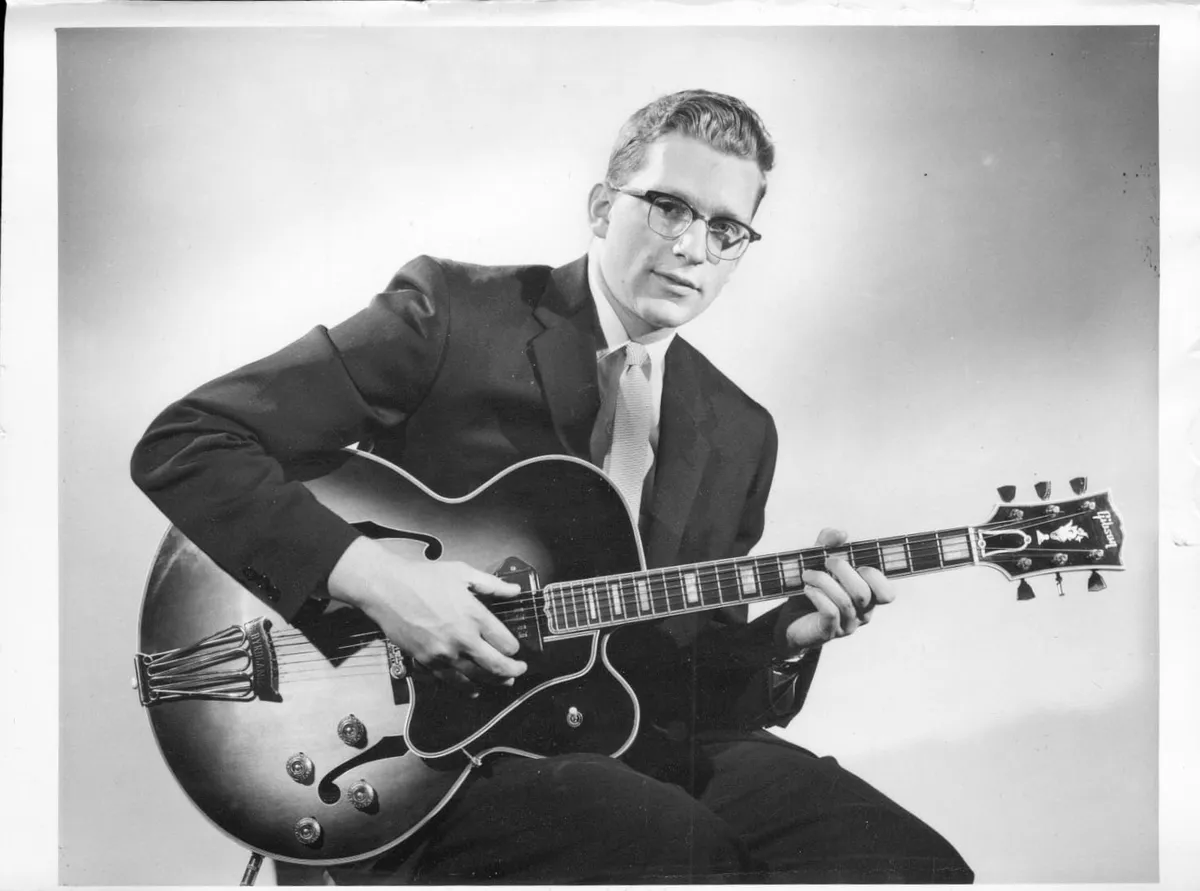
It came to us from the family of a man named Don Majure. He was its only owner. He bought it new in 1957, when he was sixteen years old, and it stayed with him for the rest of his life. The guitar is a beautiful thing on its own. But what makes it special is everything that happened around it for the last sixty-eight years, and the fact that his family was kind enough to write it all down for us. With their blessing, we want to pass it along.
On this page
- The Boy Who Saved for It
- Why 1957 Made This Guitar Special
- A Closer Look at This One
- Why the Story Is the Point
The 16-Year-Old Who Saved for It
Don grew up in Peoria, Illinois. In 1957 he was sixteen, and the guitar he wanted was a Gibson Byrdland. Not a starter guitar. One of the fanciest, most expensive electrics Gibson built.
So he went and earned it. He saved money from paper routes and odd jobs until he had enough. In 1957 a Byrdland listed for $550. To put that in perspective, that was roughly a quarter of the price of a brand-new car, and north of $6,000 in today’s money. It was a serious sum for a grown adult to lay out on a guitar, let alone a teenager funding it a few dollars at a time on a paper route. His family still calls it “a BIG purchase for a 16-year-old,” and they are not exaggerating.
He played all the way through high school, and for a while he taught other students. He was never in a band. As his family put it, playing “was for his interest and enjoyment.” His hero was Chet Atkins. Years later one of his kids introduced him to the guitarist Lawson Rollins, and he loved it, mostly because it made him laugh. He was so tickled, they said, because “this guy does things on the guitar that are just impossible.”
By the time he was in college he was working too much to play the way he used to, and life did what life does. He picked it up again for a short spell in the 1970s, playing with a group at his church, but he never felt he could give it the hours it would take to get back to where he had been. Family, work, and everything else came first. He loved music and appreciated it deeply. The guitar mostly waited.
It was never hidden away and forgotten, though. His kids remember begging him to get it out and play for them, and they remember the case almost as vividly as the guitar:
As kids we would beg him to take out his guitar and play for us while we ran our fingers over the soft, hot pink lining of the case.
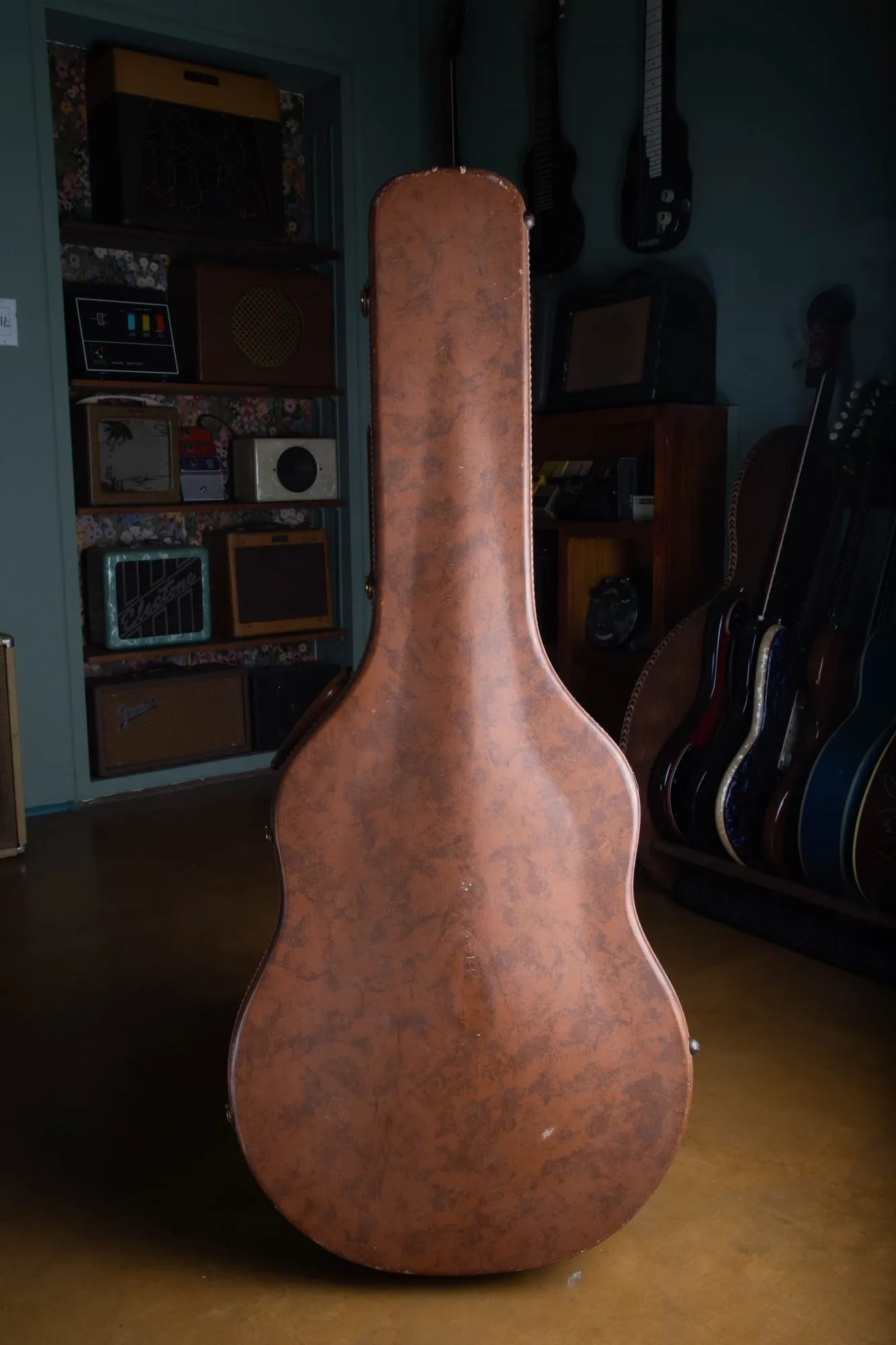
That case, brown on the outside with its plush pink interior, lived under the bed for decades.
Don is gone now. His wife is in an assisted living facility, where the guitar no longer fits under the bed the way it always had, and she decided it was time for it to find a new home. By her family’s account she is happy about where it is headed. As they told us, she is excited that “dad’s high school investment from his paper route earnings turned out to be a bit of a prize that others might treasure.”
That last line is really the whole reason we wanted to write this up.
What 1957 Meant at Gibson, and Why the Byrdland Is Special
To understand why a sixteen-year-old would work that hard for this particular guitar, it helps to know what it was.
The Byrdland was still nearly new when Don bought his. Gibson had introduced it in 1955, and it was unlike anything else in the catalog. It was the first of Gibson’s “thinline” archtops, and it was born from a very practical complaint. Two of the best players in the country, Nashville session aces Billy Byrd and Hank Garland, told Gibson president Ted McCarty that they loved the sound of a big Gibson archtop like the L-5 but hated wrestling with all that depth. A standard L-5 was more than three and a third inches deep. They wanted the tone without the bulk.
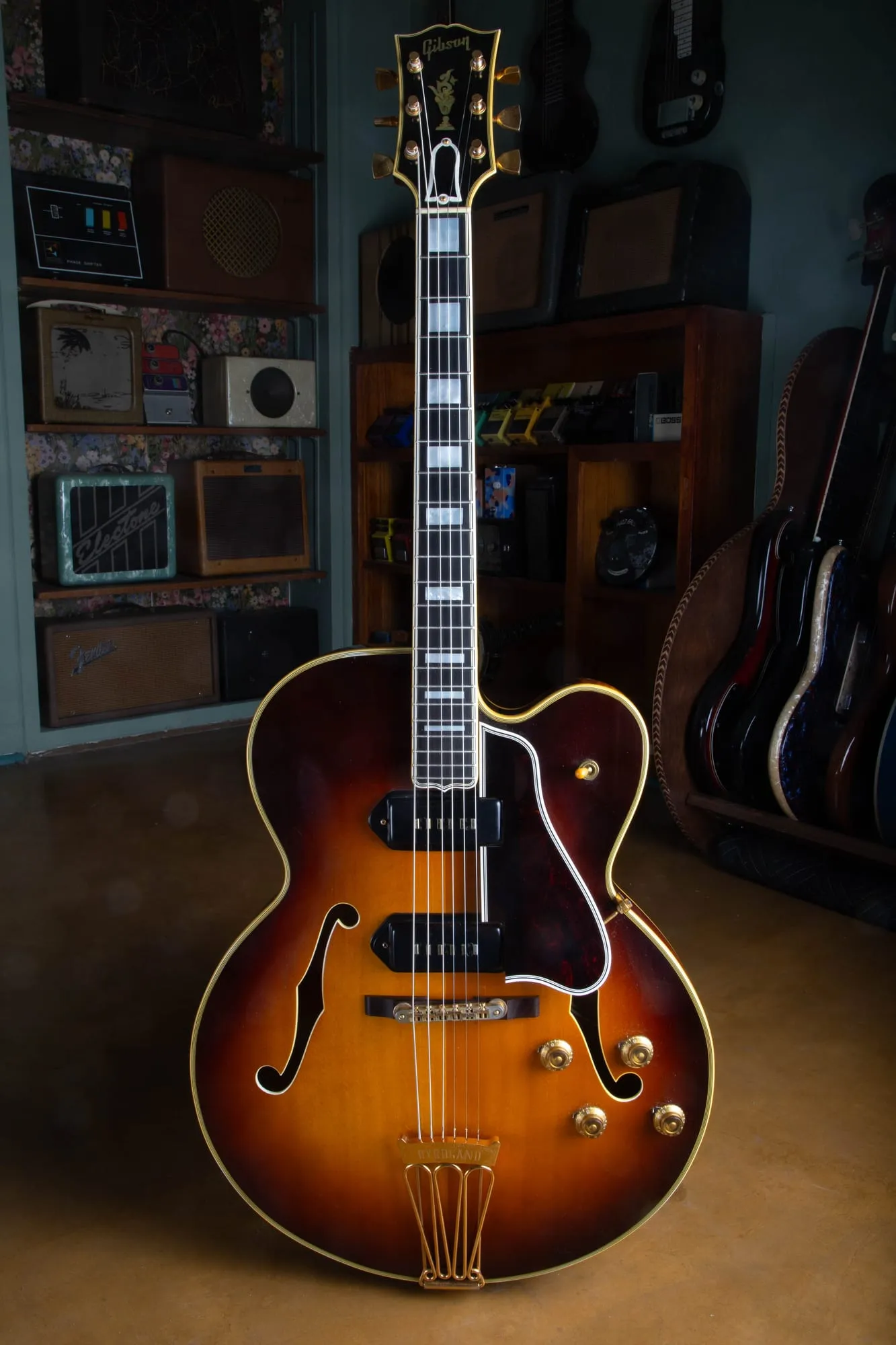
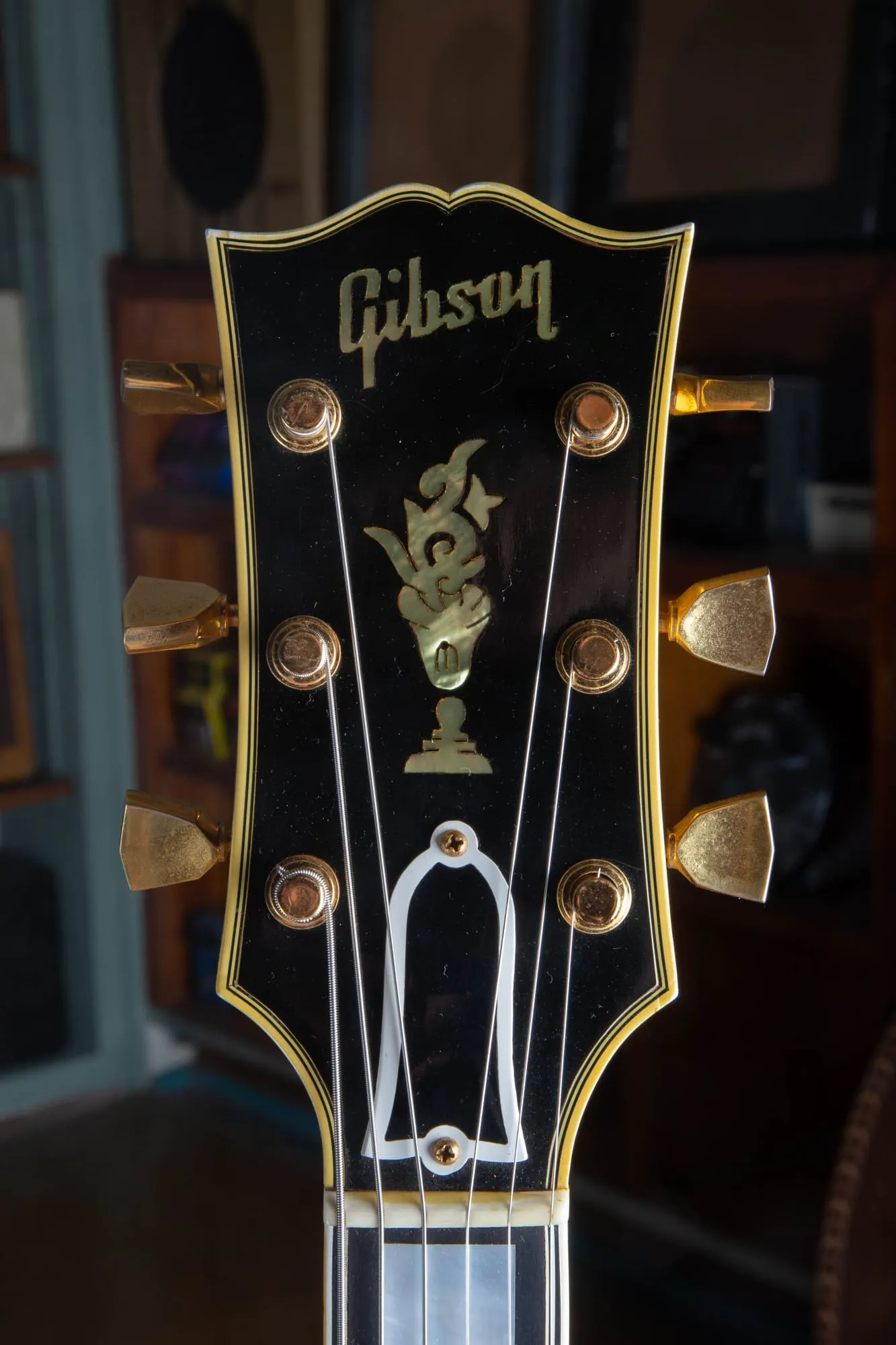
What McCarty’s team built for them was essentially a slimmed-down L-5. The body was cut down to about two and a quarter inches deep. The scale was shortened to 23½ inches and the neck was made narrower than standard, both changes meant to make fast chord work and stretchy single-note runs easier. Then Gibson gave it every premium feature it had: a hand-carved solid spruce top, solid flamed maple back and sides, gold hardware, an ebony fingerboard with pearl block inlays, and the pearl “flowerpot” inlay on the headstock. They named it by splicing the two players’ names together. Byrd plus Garland became Byrdland.
It sat right at the top of Gibson’s electric line, just below the L-5CES and the Super 400CES, and it was priced to match. This was not a guitar most people owned. It was a professional’s instrument, or a serious enthusiast’s.
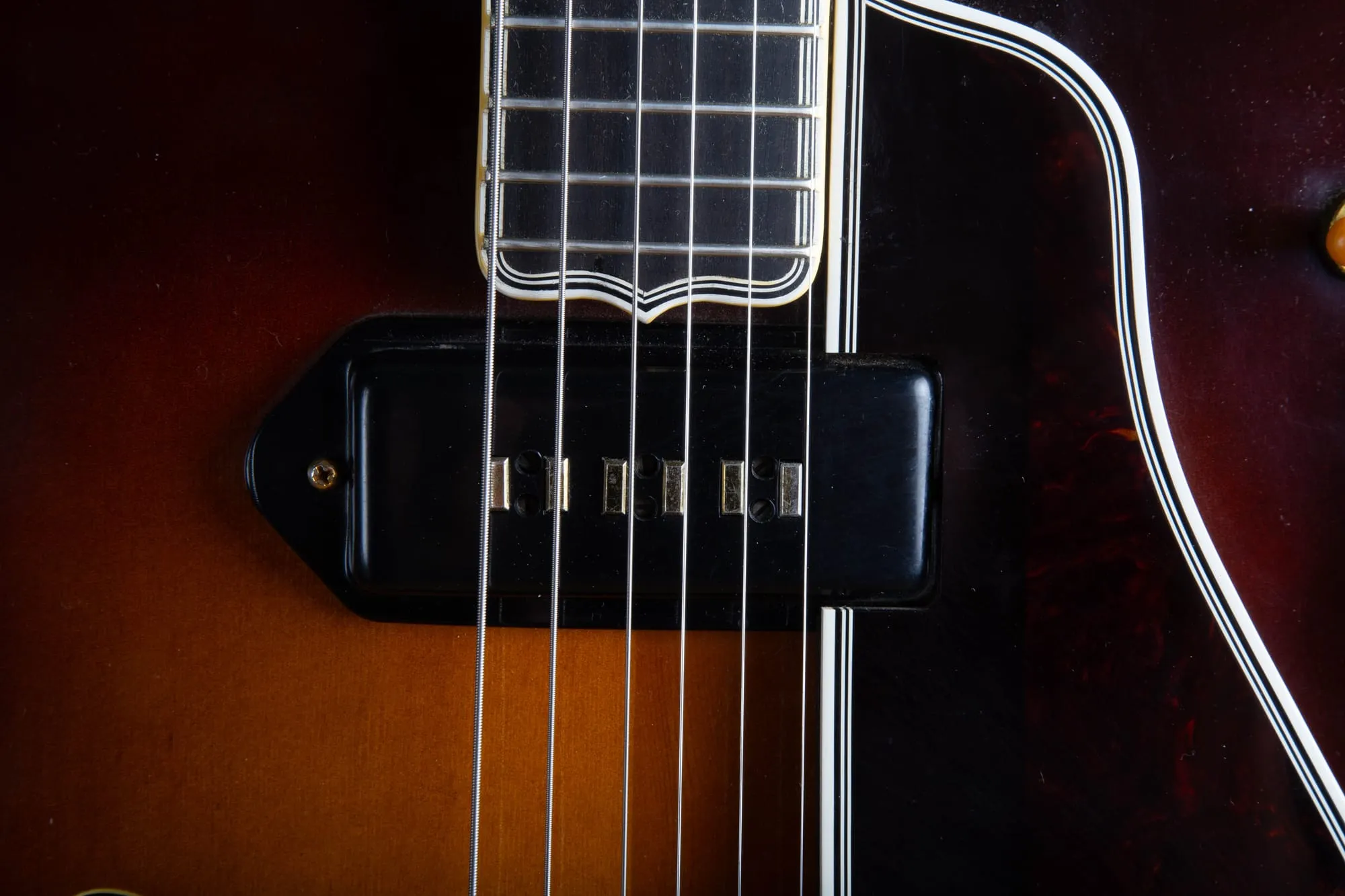
There is one more thing about 1957 that makes this guitar a nice little time capsule. It was built the same year the modern electric guitar was taking shape at that same Kalamazoo factory. 1957 is when Gibson began fitting Seth Lover’s new humbucking pickup, the famous “PAF,” to its guitars, the pickup that went into Les Pauls and changed electric music. The Byrdland itself switched to humbuckers in early 1958. Don’s, built in 1957, still wears the pickups from just before that change: Gibson’s gold Alnico “staple” pickups, the same units used on the L-5CES and Super 400CES. So this guitar sits right on the hinge between two eras, wearing the last of the old design in the last year it was used.
Here is a small thing we love about it. Don idolized Chet Atkins, a Peoria kid’s window into what a guitar could really do. The Byrdland he saved up for had been dreamed up by Hank Garland and Billy Byrd, two of Chet’s own Nashville circle, and Garland in particular was one of the finest guitarists of the era. Don probably never knew it, but the guitar he chose came straight out of the world he was listening to.
If you want the full breakdown of how to date and identify any Byrdland, we put together a separate Gibson Byrdland authentication guide that walks through it year by year.
A Closer Look at This One
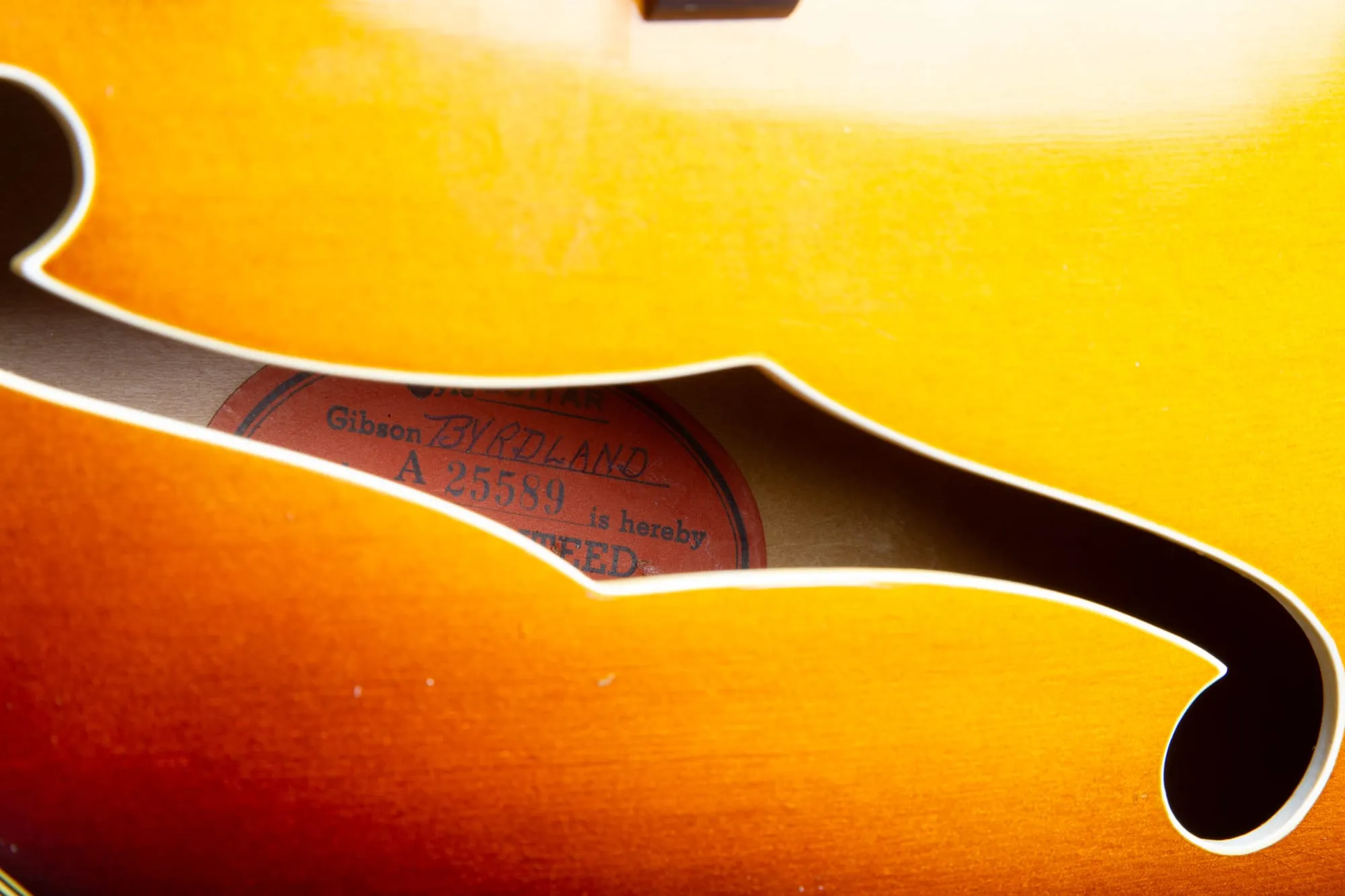
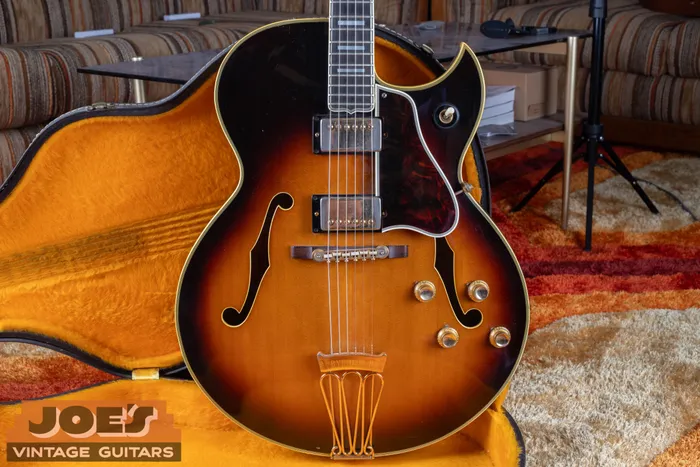
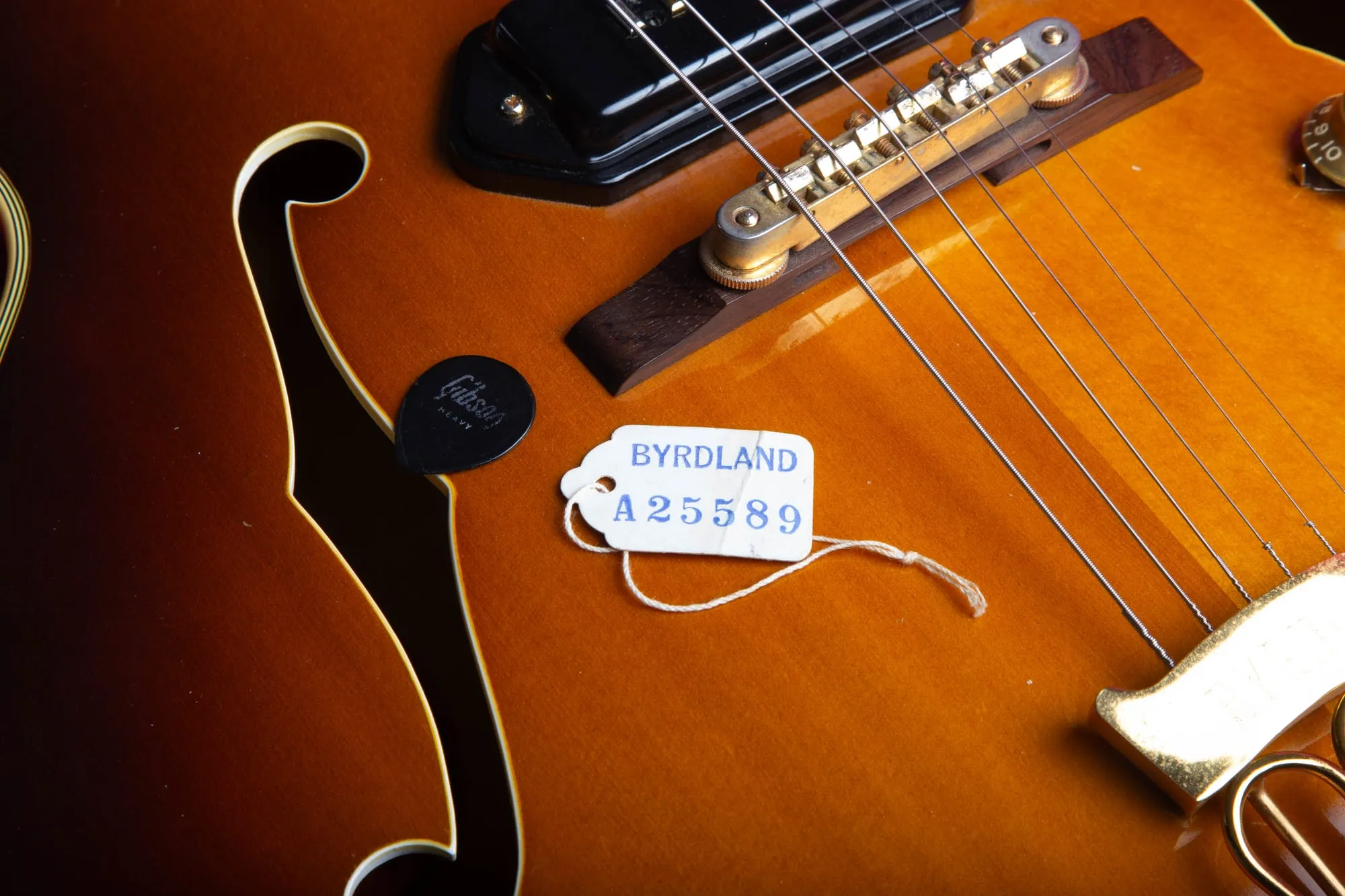
The story checks out against the guitar. The orange oval label inside the body reads Byrdland, serial number A 25589. That A-series number places it firmly in 1957. It even still carries an old paper hang tag stamped “BYRDLAND A25589.”
Everything else is right for the year and the grade:
- Finish: original sunburst over a hand-carved solid spruce top
- Back and sides: solid, beautifully flamed maple
- Body: the thinline 2¼-inch depth and rounded Venetian cutaway of a 1955 to 1960 Byrdland
- Neck: 23½-inch short scale with the narrow Byrdland nut
- Pickups: gold Alnico “staple” pickups, correct for a 1957
- Hardware: all gold, including the engraved “Byrdland” tailpiece, the no-wire ABR-1 bridge on its fitted rosewood base, and Kluson Sealfast tuners with tulip buttons
- Headstock: pearl flowerpot inlay and the pearl “Gibson” script
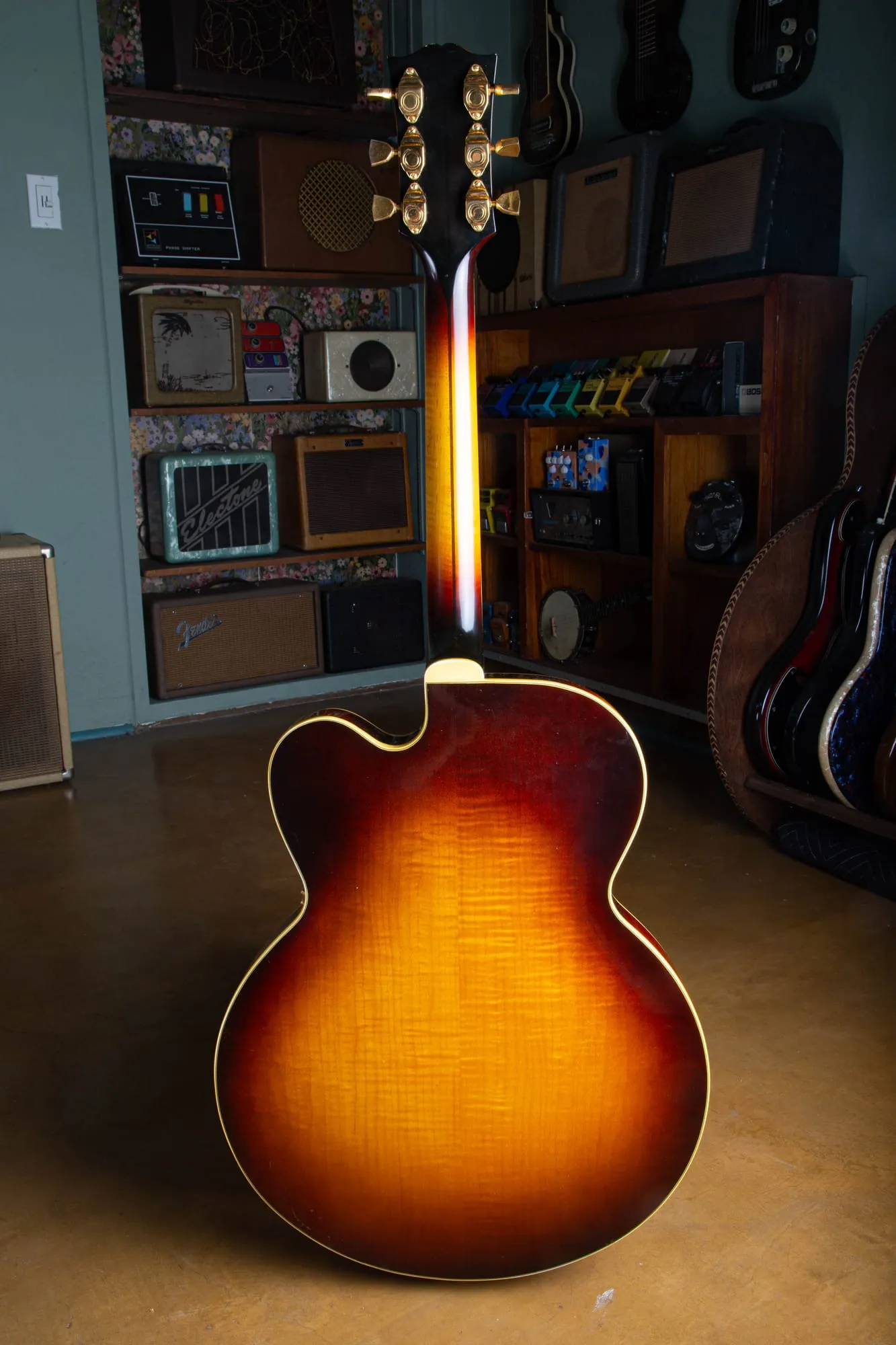
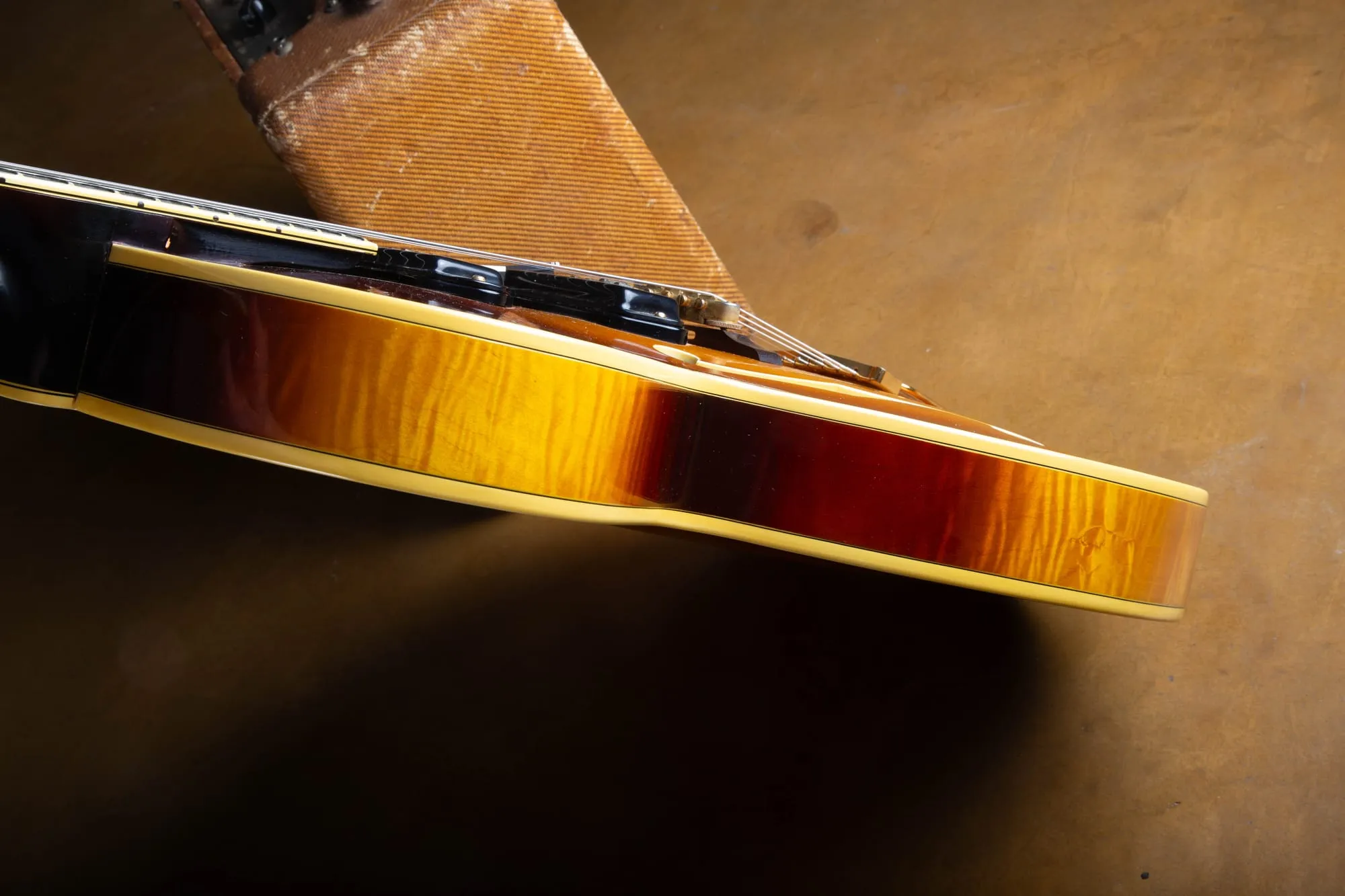
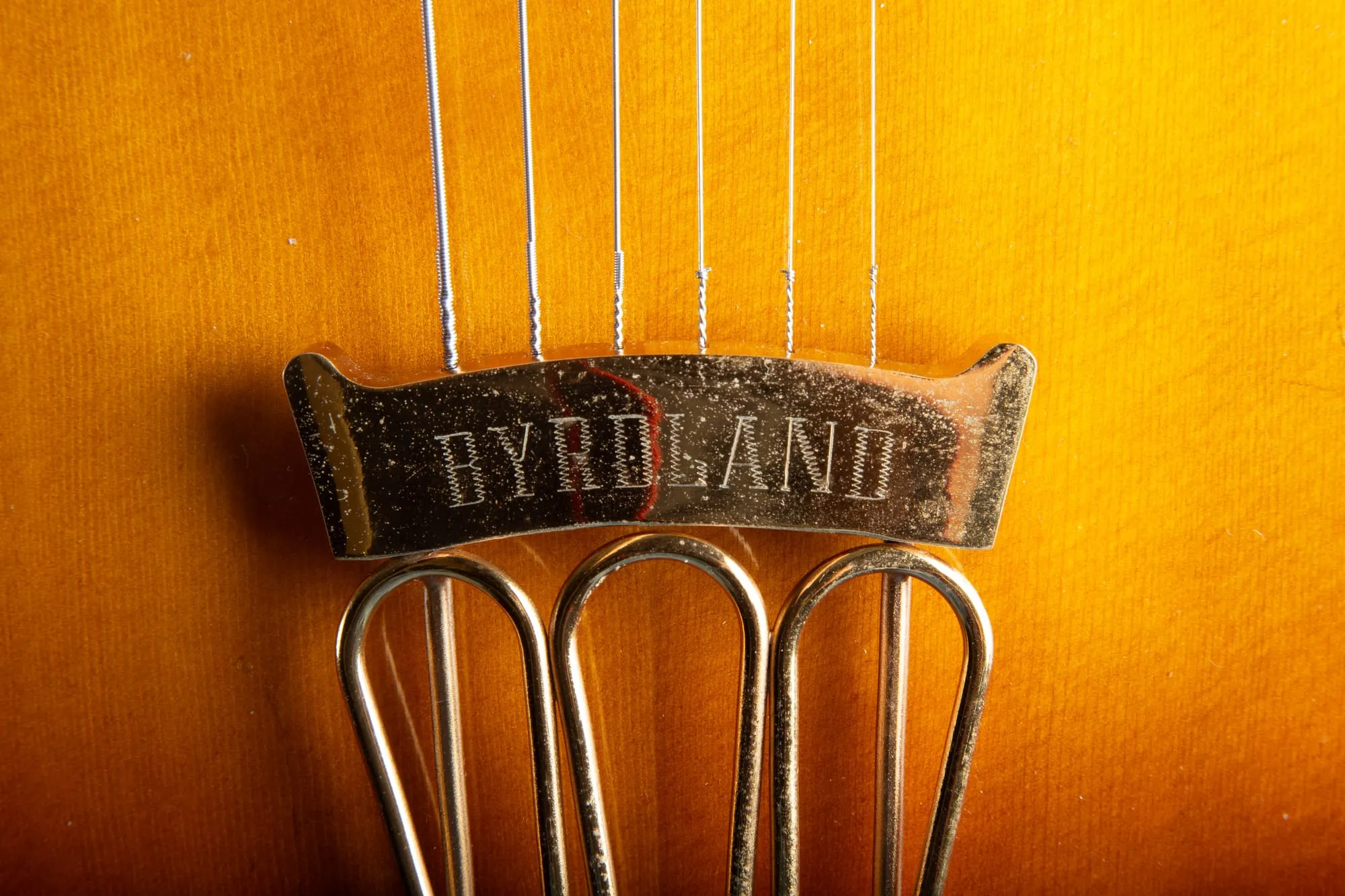
The gold plating has worn through in the spots a right hand and a set of fingers naturally land, which is exactly what you want to see. That is not damage. That is sixty-eight years of a real person playing a real guitar. Under the honest wear it is remarkably clean and original, right down to that brown case with the pink lining his kids still talk about.
If you want to read these numbers yourself, our Gibson serial number guide explains the A-series orange labels and how to date one.
Why the Story Is the Point
We handle a lot of vintage guitars, and after a while the spec sheets start to blur together. What never gets old is a guitar that still has its life attached to it.
Most instruments this age have passed through a dozen hands, and every owner took a little of the history with them when they let it go. A one-owner guitar is already rare. A one-owner guitar that arrives with the owner’s whole story, the paper routes, the teaching, the church group, the kids petting the pink case lining, the wife finally deciding it was time, is the rarest thing we deal in. The maple and spruce are wonderful. The story is what makes it a Byrdland that could only be this Byrdland.
So thank you to Don’s family for trusting us with it, and for writing it all down. We hope it goes to someone who plays it and adds the next chapter.
If you have an instrument like this in your own family, one with a story you are afraid will get lost when the guitar moves on, we would genuinely love to hear about it. If you are trying to work out what you have, or thinking about selling, you can start with a free appraisal, and if it happens to be an old Gibson, here is how we buy them. Tell us the story too. Around here, that is at least half of what makes these guitars worth saving.