

Triumph And Triumph Regent · American Archtops
Epiphone Triumph Value Guide
Price the acoustic guitar first. An added pickup, a cutaway or a factory change each needs its own description.
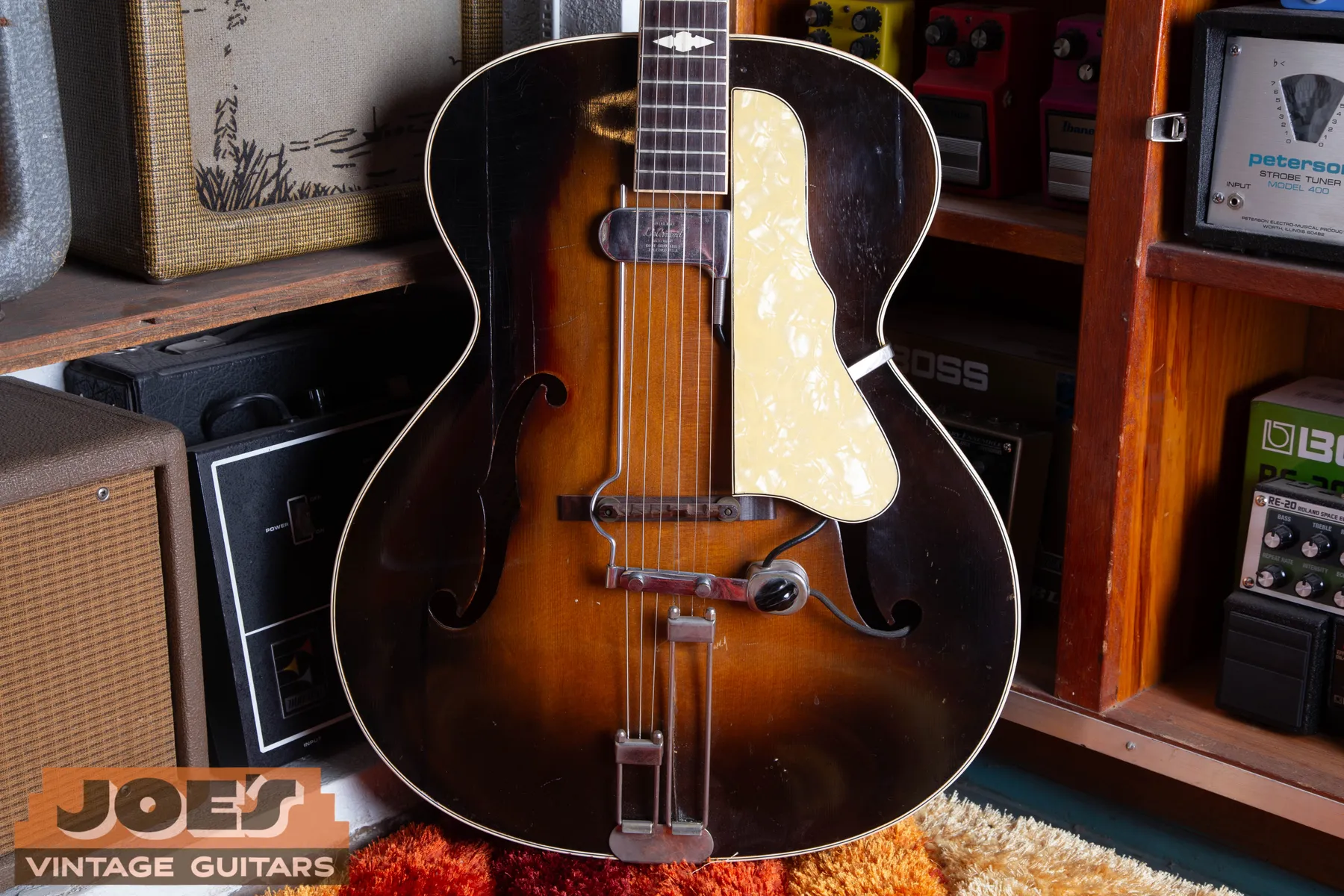
A vintage Epiphone Triumph in excellent, original condition with its original case is estimated at $2,950 to $4,450 for a 1941 to 1957 sunburst non-cutaway, and $3,450 to $5,150 for a 1958 to 1964 Kalamazoo cutaway. Earlier sizes and Regent versions have separate rows below. Use the Triumph authentication guide to establish the body, factory period and alterations before treating a price as a match for your guitar.
This Is An Estimate Of Market Value, Not An Offer To Buy And Not A Guarantee. Market Values Fluctuate; Have Your Specific Item Appraised.
Excellent, Original Examples
Triumph Values From New York To Kalamazoo
On a phone, swipe across the chart to see the estimated values.
| Model | Pricing Year Group | Configuration | Estimated Value |
|---|---|---|---|
| Triumph | 1931 to 1932 | Sunburst, laminated walnut body | $2,600 to $3,900 |
| Triumph | 1933 | Sunburst, laminated maple body | $2,550 to $3,850 |
| Triumph | 1934 to 1935 | Sunburst, solid maple body | $2,850 to $4,350 |
| Triumph | 1936 to 1940 | Sunburst, 17 3/8-inch body | $2,950 to $4,450 |
| Triumph | 1941 to 1957 | Natural | $2,850 to $4,350 |
| Triumph | 1941 to 1957 | Sunburst | $2,950 to $4,450 |
| Triumph Regent | 1948 to 1952 | Natural, acoustic cutaway | $3,450 to $5,150 |
| Triumph Regent | 1948 to 1952 | Sunburst, acoustic cutaway | $3,500 to $5,300 |
| Triumph Cutaway | 1953 to 1957 | Natural | $3,250 to $4,700 |
| Triumph Cutaway | 1953 to 1957 | Sunburst | $3,100 to $4,600 |
| Triumph Cutaway | 1958 to 1964 | Kalamazoo, sunburst | $3,450 to $5,150 |
| Triumph Cutaway | 1965 | Kalamazoo, sunburst | $3,300 to $5,050 |
| Triumph Cutaway | 1966 to 1969 | Kalamazoo, sunburst | $3,100 to $4,900 |
U.S. dollars. Joe’s October 2026 estimates start with published reference-guide ranges and apply his pricing adjustment. They are not averages of completed sales. Estimates assume excellent, original condition and the original case where applicable. These are market estimates, not purchase offers. An individual appraisal accounts for repairs and changes.
The year groups are tied to the configurations written beside them. The early walnut-bodied entry isn’t a substitute for the later maple-bodied instrument, and a rounded cutaway has a separate comparison from a non-cutaway. Read the whole row even if a family label supplies a year that appears to fit.
These figures assume the guitar is structurally sound and retains the original features described. An altered top, broken neck or broad refinish needs a different assessment. The chart doesn’t provide a factory electric Triumph range or a separate 1970 figure. If your instrument falls outside the listed configuration, send it for review instead of borrowing the nearest-looking number.
Size And Original Materials
How The Early Triumph Groups Differ
The Earlier Body Configurations
The 1931 to 1932 walnut-bodied range is $2,600 to $3,900, while the 1933 maple-bodied row is $2,550 to $3,850. Identifying the wood and period matters more than selecting a year from an uncertain number. Good photographs of the back and sides help, but a construction question may require an in-person inspection.
Larger Maple Archtops
The 1934 to 1935 estimate is $2,850 to $4,350; the 1936 to 1940 group is $2,950 to $4,450. Measure the lower bout and show the full instrument so the size change isn’t hidden by a tight crop. The price groups don’t make a repaired later guitar equivalent to a clean earlier one.
Natural, Sunburst And Philadelphia-Era Examples
Natural non-cutaways are estimated at $2,850 to $4,350, with sunburst examples at $2,950 to $4,450. This period extends across the older factory history, including Philadelphia. Preserve the label wording, but don’t assign a premium from the city name alone. Finish originality and the condition of the carved top remain central to the comparison.
Preserve The Original Outline
Value A Regent As A Cutaway
The natural 1948 to 1952 Triumph Regent range is $3,450 to $5,150, and the sunburst range is $3,500 to $5,300. Later pre-Gibson cutaways have their own rows. The cutaway needs to be part of the factory body, not a later conversion. If the rim, binding or finish around that area looks different from the rest of the guitar, photograph it before assigning the Regent description.
A cutaway can be a useful playing feature without outweighing condition. A stable non-cutaway with documented repairs may be a clearer purchase than a cutaway with an unexplained neck joint or altered top. The chart gives a comparison for the stated condition, not a rule that every Regent must be worth more than every ordinary Triumph.
Gibson-Built Acoustic Cutaways
Kalamazoo Triumph Prices Need Their Own Comparison
The Earlier A412 Instruments
The 1958 to 1964 sunburst cutaway estimate is $3,450 to $5,150. Start with the Gibson-built acoustic specification and verify the factory markings. An older New York Triumph with a pickup fitted later does not enter this group because it resembles an electric guitar in a photograph.
For a Kalamazoo appraisal, include the headstock serial, internal label, bridge and a full side view. The neck angle and remaining bridge adjustment are useful condition evidence. A playable guitar still needs its original parts and finish reviewed before the excellent, original range can be applied.
The Mid And Late 1960s
The 1965 row is $3,300 to $5,050, followed by $3,100 to $4,900 for 1966 to 1969. A narrow difference between neighboring rows should not distract from a major repair. Confirm the year with the guitar’s features, then assess its actual condition.
The Kalamazoo charts here cover sunburst. A cataloged natural-finish guitar still deserves identification, but it should not receive an invented natural-finish premium. Send the finish evidence and model marking for an individual estimate. Catalog availability and a published price estimate answer different questions.
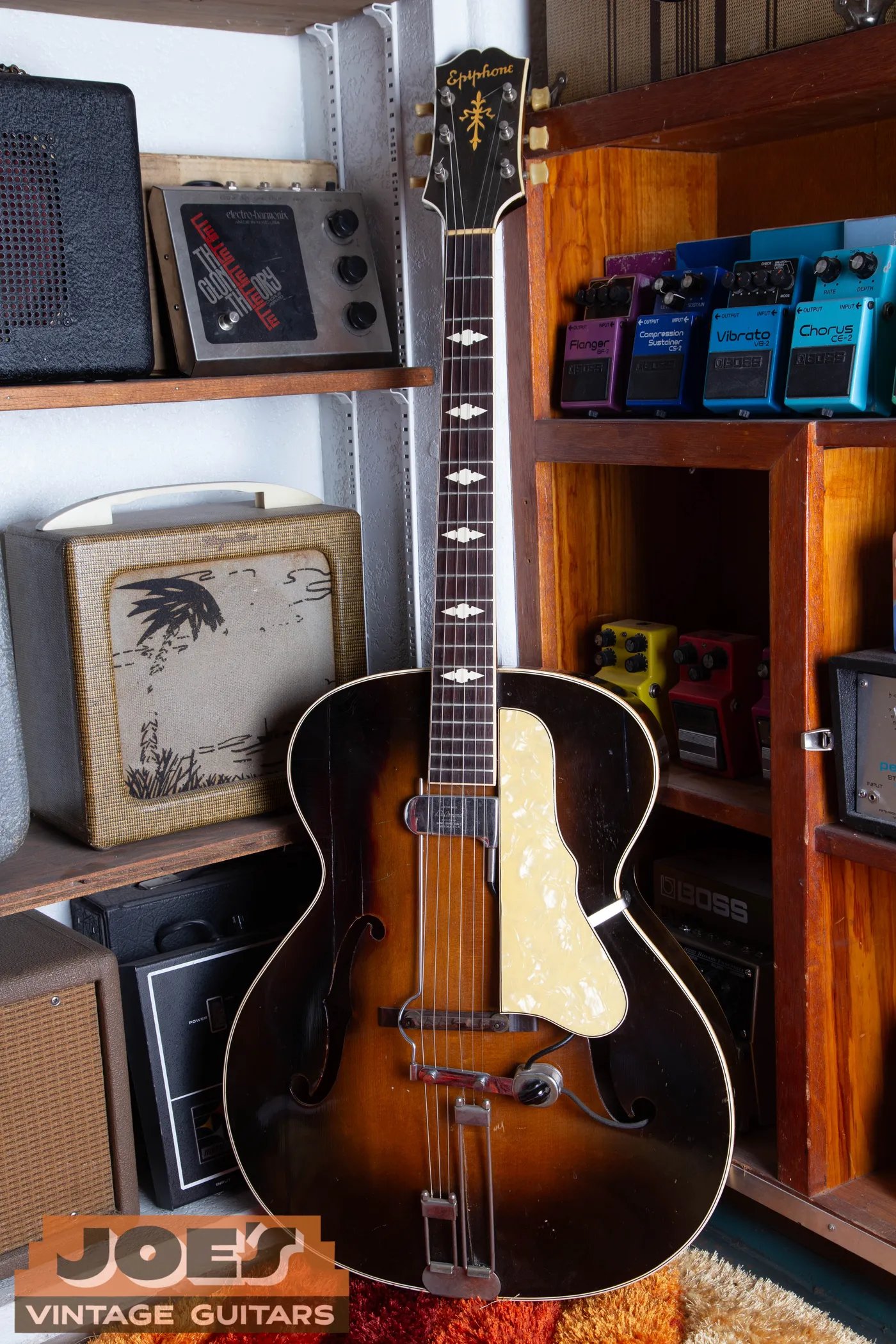
Original hardware can be difficult to evaluate from a full-body view. Add close-ups of the Frequensator, bridge base, tuner backs and pickguard mounts. If a part is a replacement, say so and include the removed component if it survives. A functioning replacement may help playability, but an appraisal should not silently count it as the factory part.
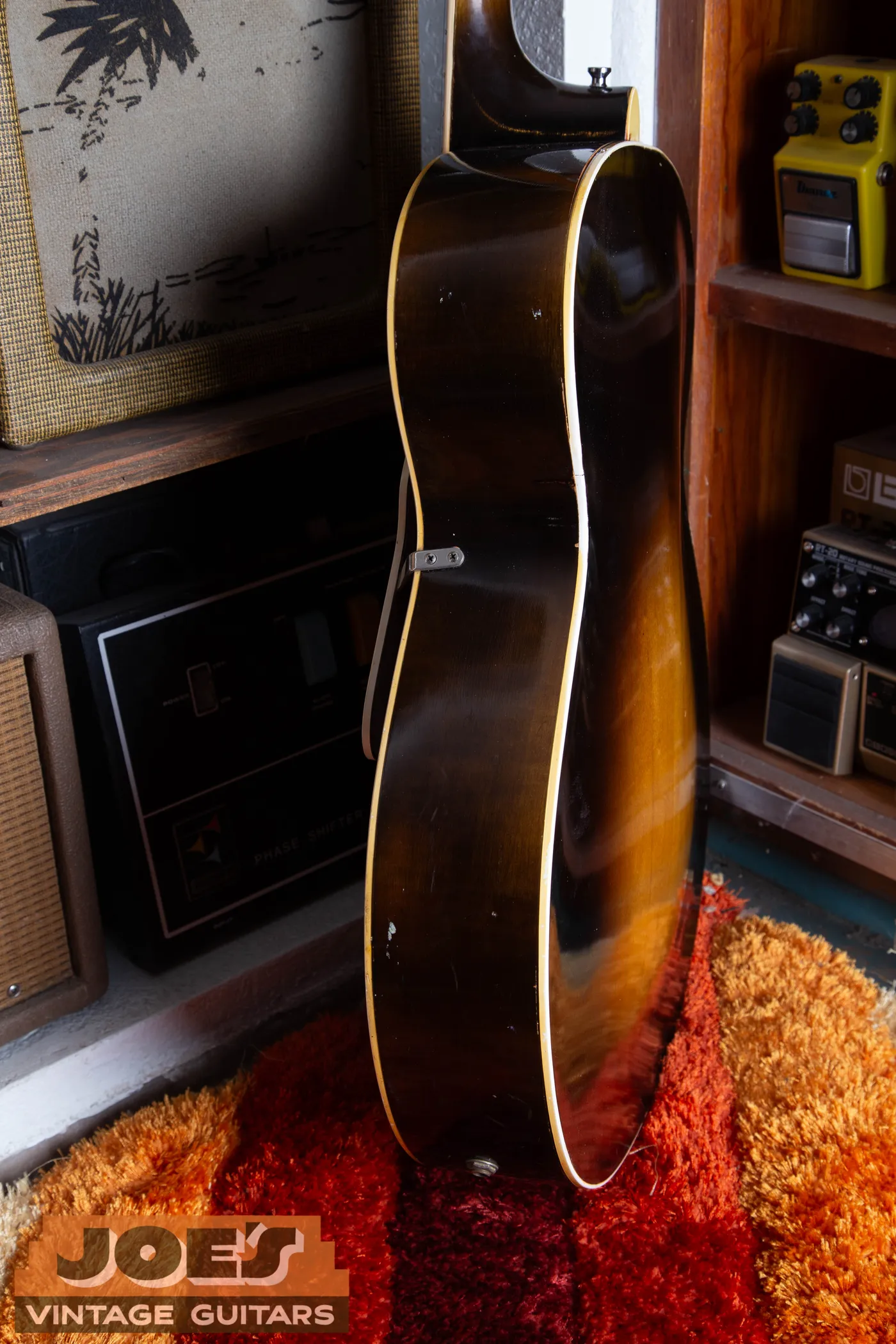
The side view helps explain the neck angle and body condition behind an attractive front photograph.
Six-String And Tenor Comparisons
More Triumph Examples From Joe’s Shop
Six-String Acoustic
1940s Sunburst Triumph
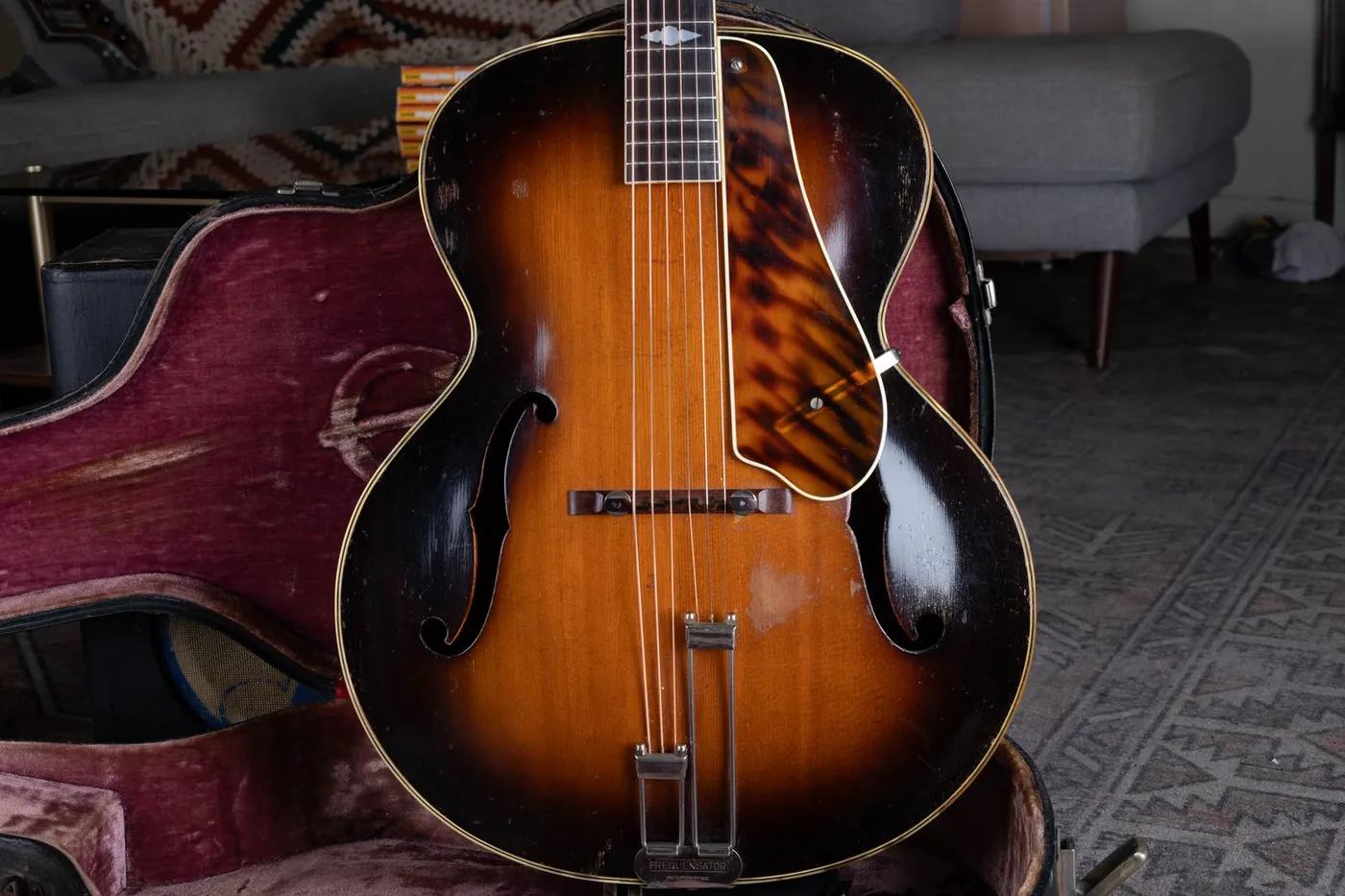
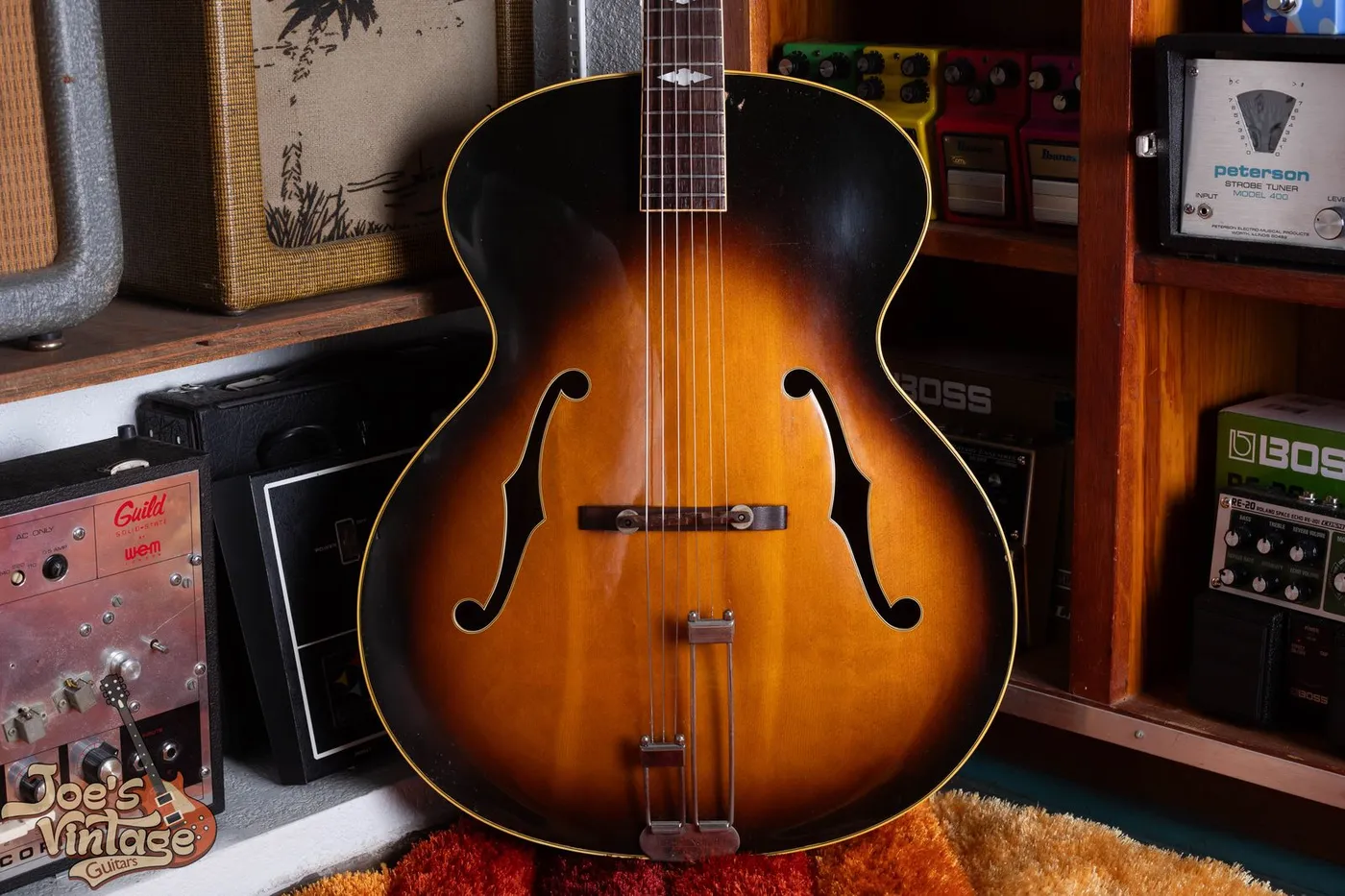
This 1940s six-string Triumph is a sunburst non-cutaway acoustic. Joe’s sold listing records a professional refret. Include that work in a condition assessment rather than assuming that an attractive front view establishes complete originality.
Refinished Six-String Acoustic
1950s Sunburst Triumph With Repair History
This 1950s six-string Triumph is refinished and has had a neck reset and replacement neck binding. Those changes need an individual assessment. The guitar is not an example of the excellent, original condition assumed by the chart.
Four-String Tenor
Blonde Triumph Tenor
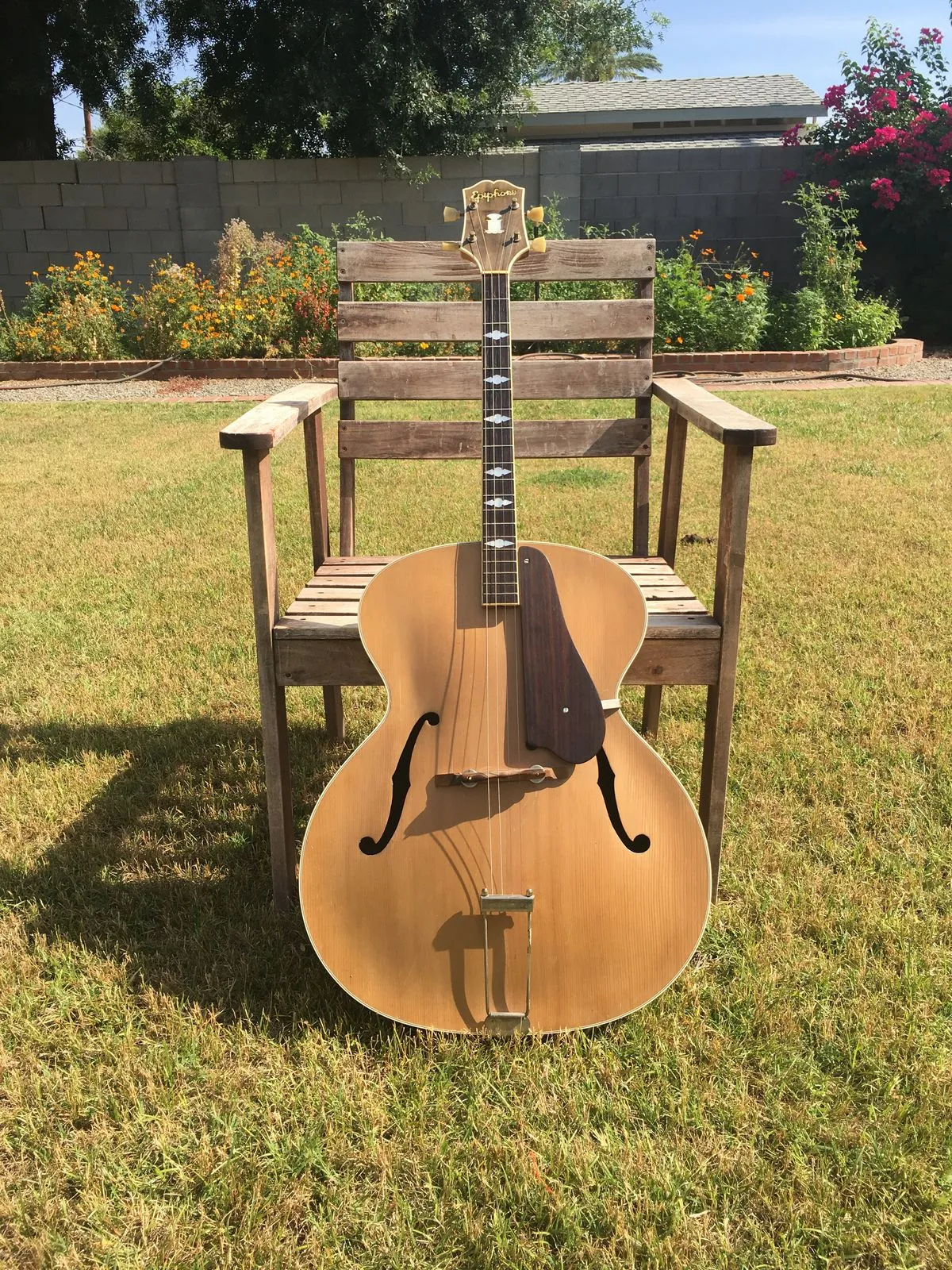
This blonde Triumph is a four-string tenor with a replacement rosewood pickguard. Its listing gives an approximate 1950s date and records rear-headstock issues. A tenor needs its own appraisal; the six-string ranges above do not price this version.
See the Triumph photo archive for the additional headstock, label, heel, back and tenor condition views from these three instruments.
Structural And Cosmetic Changes
What Can Move A Triumph Outside Its Chart Range
A Pickup Installation
Show how the pickup is attached and where its cable and controls run. A removable accessory and a routed top are different alterations. Do not remove a fragile old installation just to improve the appearance for sale. The pickup guide helps frame the questions about original and replacement components.
Neck And Top Repairs
Describe a reset, repaired heel, headstock break or distorted top directly. Include repair paperwork when available. A guitar can play well after serious work, but the repair remains part of its value description. Use angled photographs to show the repaired area and its relationship to the rest of the instrument.
Finish And Binding Work
Replaced binding and added finish should be visible in the submission. Review condition factors and refinish effects before treating a cleaner surface as a more original guitar. Preservation and cosmetic improvement are not always the same decision.
Frets, bridge saddles and tuners also affect a buyer’s immediate needs. Describe the guitar as it sits: whether it has been played recently, whether the action is comfortable and whether all tuners work. If it has been stored for decades, that is useful information. There is no need to promise playability you have not checked.
Before spending money on a restoration, read whether to restore before selling and request an appraisal in the present condition. The goal is to understand the instrument before choosing work, especially when old hardware or finish might be discarded in the process.
Identity, Condition And History
Send A Triumph Photo Set That Answers The Basics
Start With Front, Back And Side Views
Show the entire body and neck in even light. Add a low side view along the strings and bridge. Include a lower-bout measurement if the instrument may belong to an early size group.
Photograph The Label And Alterations
Make the model and serial readable without removing the label. Show every pickup mount, extra hole and known repair. Keep original image files so small details remain available if Joe needs a closer look.
Include What Came With The Guitar
Photograph the case, old strings or accessories, loose parts and receipts. Explain the ownership history without assigning an exact year from memory alone. A dated photograph is strongest when the instrument can be identified within it.
Tell Joe whether the case is original, later or unknown. A sturdy replacement can protect the instrument without satisfying the original-case assumption in the chart. Photograph its fit around the headstock and body, and keep any old case labels or purchase paperwork with the guitar’s history.
Send The Evidence
Get An Appraisal For Your Triumph
Use the free appraisal form for a value assessment, or send your Epiphone for an offer review if you plan to sell. Include the pickup installation and repair history at the start so the estimate addresses your actual guitar.
Questions AboutEpiphone Values
What Is A 1940s Epiphone Triumph Worth?
Does A DeArmond Pickup Make A Triumph A Factory Electric?
Are Kalamazoo Triumphs Included?
Should I Replace Old Hardware Before Asking For A Value?
The Last Word
A Value For Your Guitar
Match the Triumph’s size, period and cutaway configuration, then describe its condition without hiding the added pickup or old repairs. The authentication guide helps resolve the identity. An appraisal can then address the guitar you own instead of an ideal example from a chart.
This Is An Estimate Of Market Value, Not An Offer To Buy And Not A Guarantee. Market Values Fluctuate; Have Your Specific Item Appraised.