

New York, Philadelphia And Kalamazoo · Triumph Archtops
Epiphone Triumph Authentication Guide
An acoustic Triumph can carry an added pickup. Establish the original guitar before evaluating the electrical accessory.
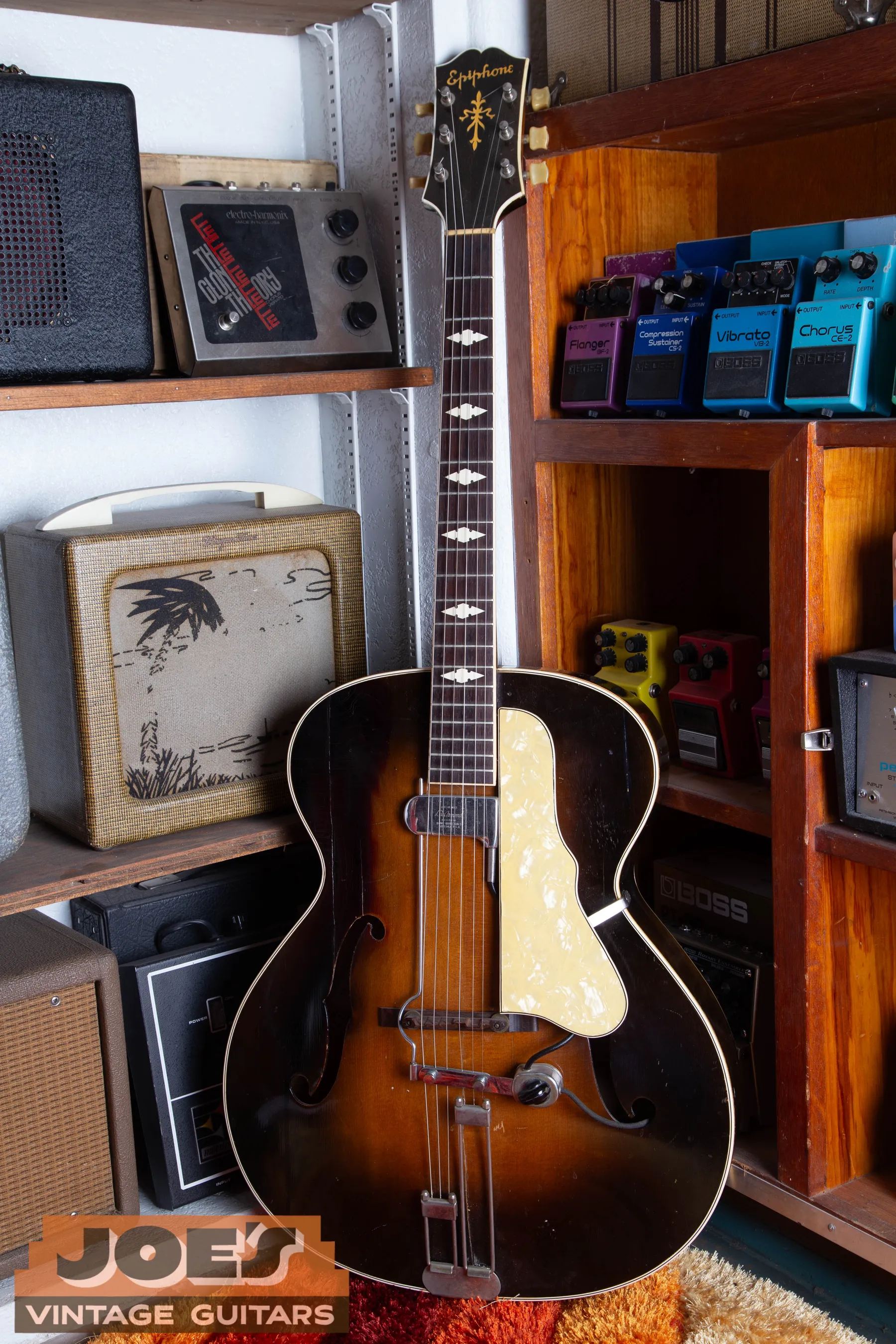
An Epiphone Triumph is identified first as an acoustic archtop, even when an owner has fitted a pickup. The original body, neck, label and hardware establish the model; the pickup installation is a separate question. This guide follows the early New York instruments through Philadelphia and into Gibson’s Kalamazoo A412. Once that identity is supported, the Triumph value guide supplies the appropriate price groups.
Authenticity And Originality Are Assessed From The Information Provided. A Hands-On Inspection Can Change The Conclusion.
Read The Body Before The Serial
Triumph Features By Factory Period
| Period Or Version | Construction | Identification Focus |
|---|---|---|
| Early New York | Smaller acoustic bodies; walnut and maple configurations change during the early 1930s | Width, back and side construction, early decoration and label |
| Later New York And Philadelphia | Large spruce-top acoustic archtops, including cutaway Regents | Original outline, period headstock decoration, tailpiece and approximate serial dating |
| Kalamazoo A412 / A412N | Carved spruce top, arched maple back and rims, mahogany neck in the 1961 catalog | Cutaway body, adjustable truss rod, Epiphone appointments and Gibson-era serial system |
| Added-Pickup Instrument | Underlying acoustic model remains the starting identity | Pickup mounting, cable routing and any permanent changes to the top |
Don’t force a later specification onto an early Triumph. A different lower-bout width or headstock decoration may fit an earlier catalog. Conversely, an old-looking pickup doesn’t establish an early factory electric version. The useful identification names the acoustic model, its likely period and the alterations that can actually be seen.
New York And Philadelphia
The Triumph Before Gibson Ownership
The New York Acoustic Sequence
The Triumph was part of Epiphone’s 1931 archtop line. Its early history includes changes in body size and in the wood used for the back and sides. The 1934 catalog documents a carved spruce top with maple for the body and neck. Measure a surviving guitar rather than assuming that every prewar example has the later large outline.
Compare the headstock, fingerboard markers and f-hole shape with a catalog from the relevant period. An elaborate decorative pattern isn’t enough to distinguish a Triumph from the more expensive Epiphone archtops. The complete set of body, ornamentation and label evidence should support the name.
The Philadelphia Continuation
The 1954 catalog preserves the Triumph as an acoustic model and shows cutaway and non-cutaway options. Natural and shaded finishes appear in the period catalog listings, with a tenor version also listed. The move to Philadelphia therefore belongs within the pre-Gibson Triumph story rather than being treated as a new Gibson production period.
Record a label’s address and model wording exactly, but avoid turning the printed address into a precise build date. Labels and parts can outlast a catalog season. An approximate date supported by construction is more defensible than a single year chosen only because the label looks familiar.
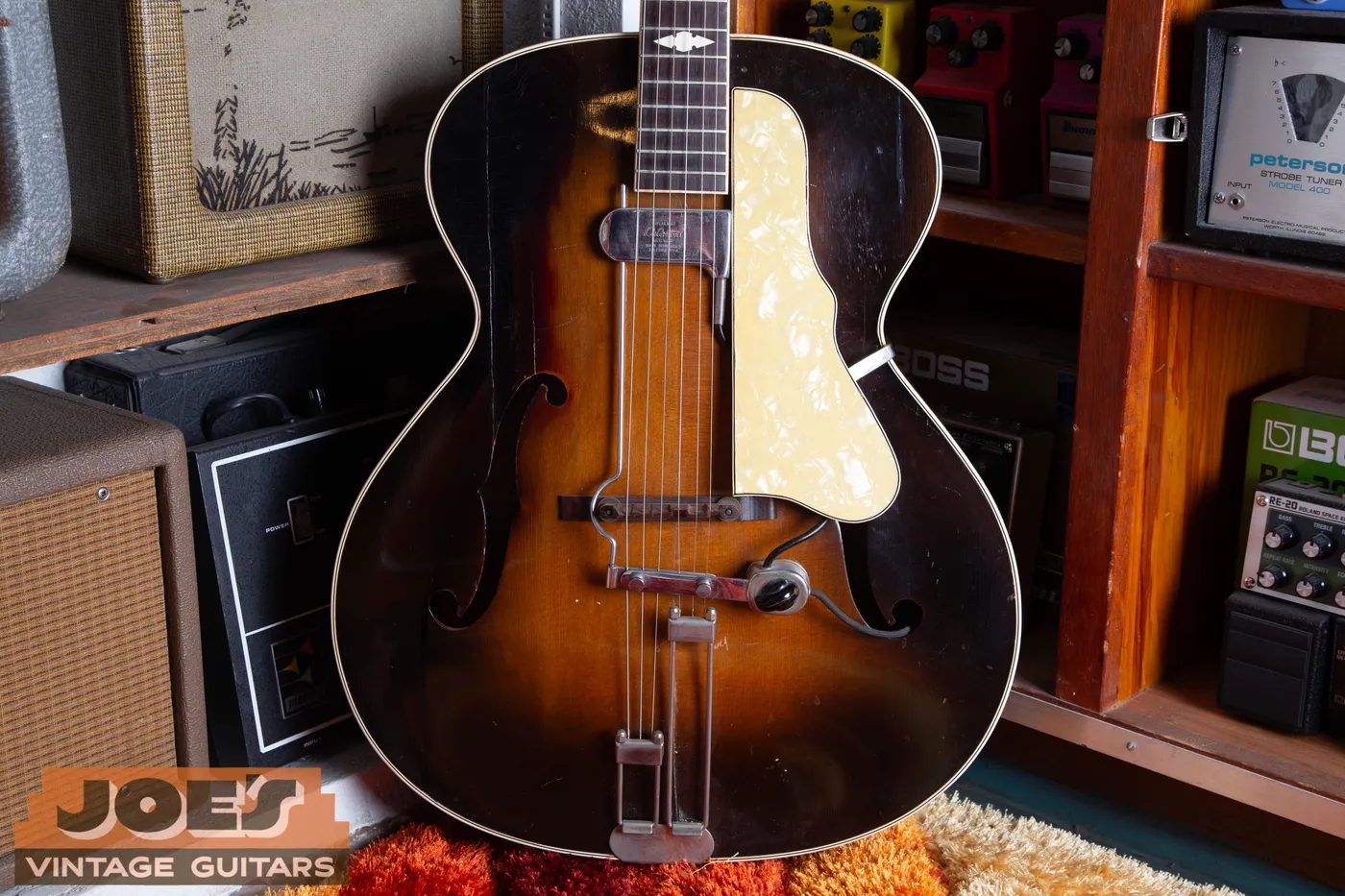
This Triumph’s label and acoustic body identify the guitar separately from the added pickup.
Model Development And Factory Transition
Triumph Changes To Check In Order
Body And Material Changes
The early model groups include walnut and then maple constructions. Treat dimensions and materials as identification evidence, not merely a finish description. A dark sunburst can hide the wood in a front photograph, so the back and rim views matter.
The Larger Acoustic Format
The later pre-Gibson Triumph has the large archtop format familiar from Joe’s 1946 example. Its non-cutaway outline remains distinct from the Regent. Photograph the original bridge and tailpiece arrangement even if an accessory pickup now attracts most of the attention.
Regent Cutaways
The acoustic cutaway appears within the Triumph family. Compare the rim and binding around the cutaway with period catalog drawings and photographs. The Regent name identifies the body option; it doesn’t promise factory-installed electronics.
The Change To Gibson Ownership
CMI purchased Epiphone in 1957, with Kalamazoo production beginning in 1958. The Sheraton history establishes that chronology. A late pre-Gibson guitar and an early Gibson-built Triumph need different construction and serial comparisons.
The A412 Acoustic Cutaway
The 1961 catalog lists shaded A412 and natural A412N versions. The 1966 acoustic matrix still includes the Triumph. That supports the model’s continued place in the Kalamazoo line without supplying a production total for every year.
Construction And Gibson Comparisons
Identifying A Kalamazoo A412 Triumph
The Kalamazoo Triumph is a full-depth acoustic cutaway. The 1966 catalog gives a 17⅜-inch body width, 20¾-inch body length, 3⅜-inch depth and 25½-inch scale. Measure the rim rather than including the arch of the top in the depth measurement. A ruler photographed in place helps explain a measurement that differs slightly from a printed specification.
The 1961 description specifies a carved spruce top, maple back and rims, and a mahogany neck with an adjustable truss rod. It also identifies a bound rosewood fingerboard, a rosewood bridge and a Frequensator tailpiece. Those features establish an acoustic construction; the model doesn’t become a laminated electric hollowbody because a magnetic pickup was added later.
What It Shares With A Gibson L-7C
The contemporary L-7C provides a useful Gibson comparison: the 1960 catalog specifies a carved spruce top, maple back and rims, mahogany neck, rosewood fingerboard and 25½-inch scale. The shared materials and long scale explain the relationship between the Kalamazoo acoustic families. They don’t make the two models identical.
The Epiphone keeps its own headstock decoration, fingerboard pattern and Frequensator. Compare the entire instrument with the Triumph catalog image rather than authenticating it from a Gibson feature list. A Gibson replacement bridge or tuner set may fit physically while still being a change that belongs in the description.
What Did Not Change Into An Electric Specification
The New York pickup to mini-humbucker transition described for Kalamazoo electric Epiphones doesn’t turn the A412 into a factory electric model. The cataloged Triumph is acoustic. A fitted DeArmond, floating pickup or later routed installation must be assessed on its own evidence.
Document whether the pickup hangs from the fingerboard, attaches to the pickguard or uses holes in the body. Follow the cable to its control and output location. Do not assume an old component was installed when the guitar was new. The installation can be period work, later work or unresolved without changing the underlying acoustic model identification.
The Kalamazoo headstock and label should be read together with the guitar’s serial. Use the Gibson serial-number guide, because Gibson-built Epiphones follow the broader Kalamazoo numbering systems. Reused number ranges and replaced components make a serial-only conclusion inadequate. Photograph the front and back of the headstock, including the tuner mounts and any finish changes.
The published chronology places the end of original American Epiphone production in 1970. That is the boundary of this guide, not a claim that a Triumph was built in every month up to the move. A surviving catalog or price list documents an offering; a particular guitar still needs its own evidence.
String Count, Cutaway And Finish
Separate The Triumph’s Factory Variants
Six-String Non-Cutaway
Begin with the uninterrupted upper-bout outline and confirm that the instrument has a six-string neck. The non-cutaway body does not supply an exact year: it covers different early sizes and later pre-Gibson configurations. Check the lower-bout measurement, headstock and label together. A modern replacement guard or pickup may dominate the appearance, but neither should replace those basic checks.
Acoustic Regent Or Cutaway
The cutaway body should have a coherent rim, binding and finish around the neck access area. Inspect that construction rather than accepting Regent as an owner-supplied nickname. A repair near the cutaway is not automatically a conversion, so describe the visible evidence and seek an inspection when the work is unclear. Keep the older Regent terminology separate from the Kalamazoo A412 model code.
The Cataloged Tenor
The 1954 catalog includes a Triumph tenor. Count the original tuner positions and inspect the neck, nut and bridge arrangement before calling a four-string instrument a tenor. A six-string guitar with two strings missing remains a six-string model. If the neck or hardware has been converted, record that work instead of assigning the factory tenor identity from the present string count alone.
Natural And Shaded Kalamazoo Versions
The 1961 catalog distinguishes A412N natural from A412 shaded. A faded or stripped sunburst should not be relabeled natural without finish evidence. Photograph protected edges and the label before reaching a conclusion. The catalog confirms the finish option, while the instrument’s surface and records determine whether your example still wears that factory finish.
A Documented Acoustic Example
Joe’s 1946 Triumph With A DeArmond Pickup
New York Acoustic With Added Pickup
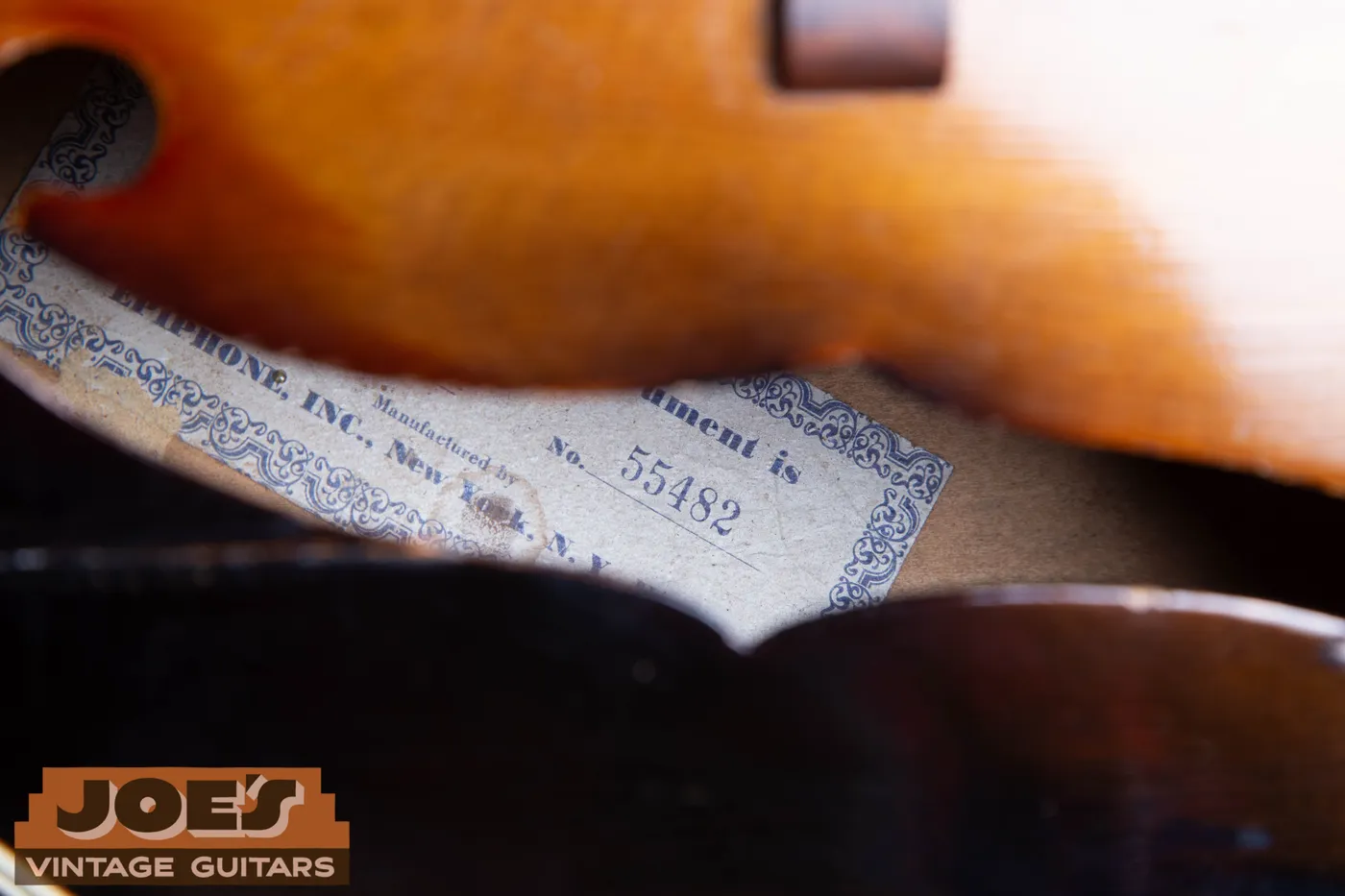
1946 Triumph, Serial 55482
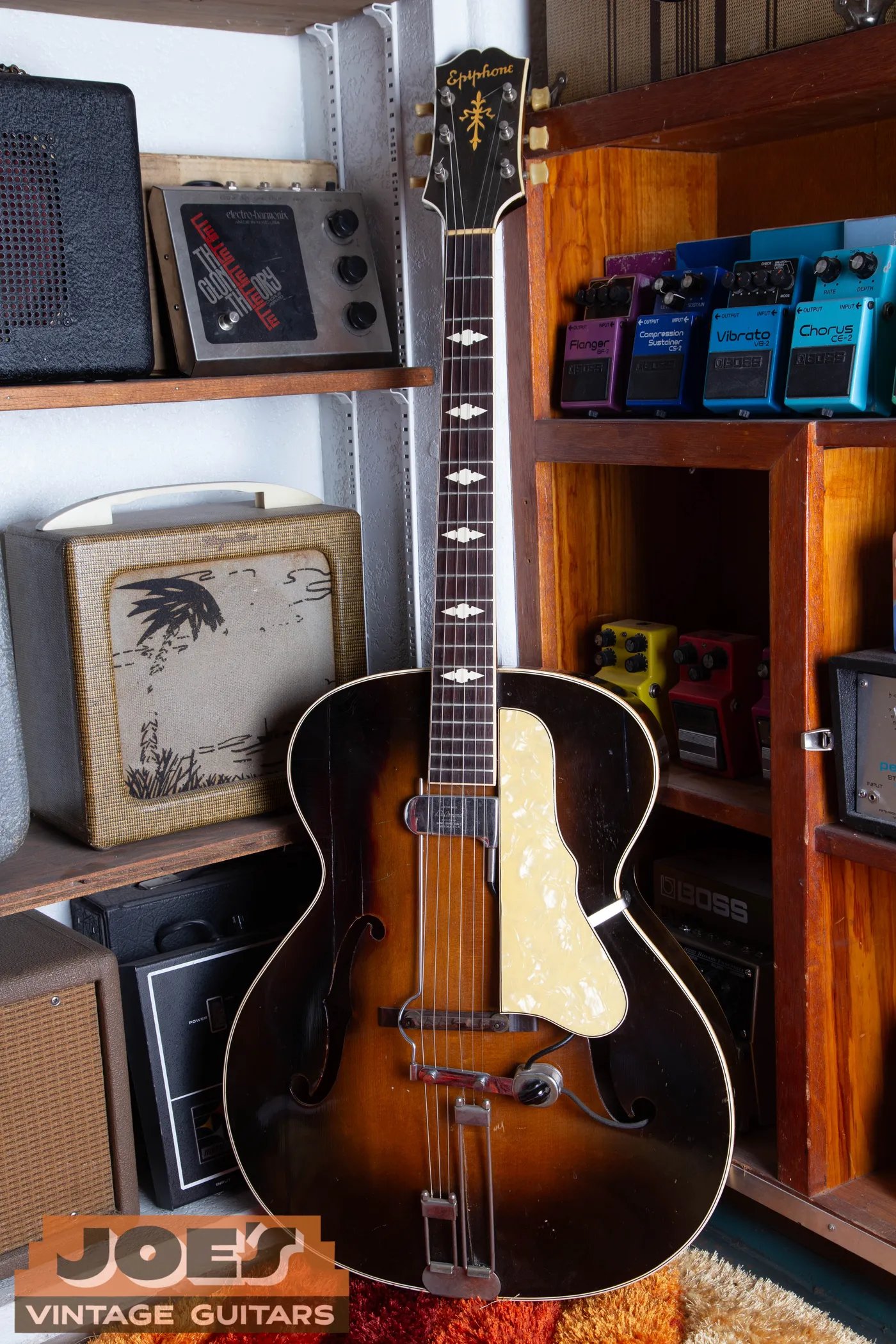
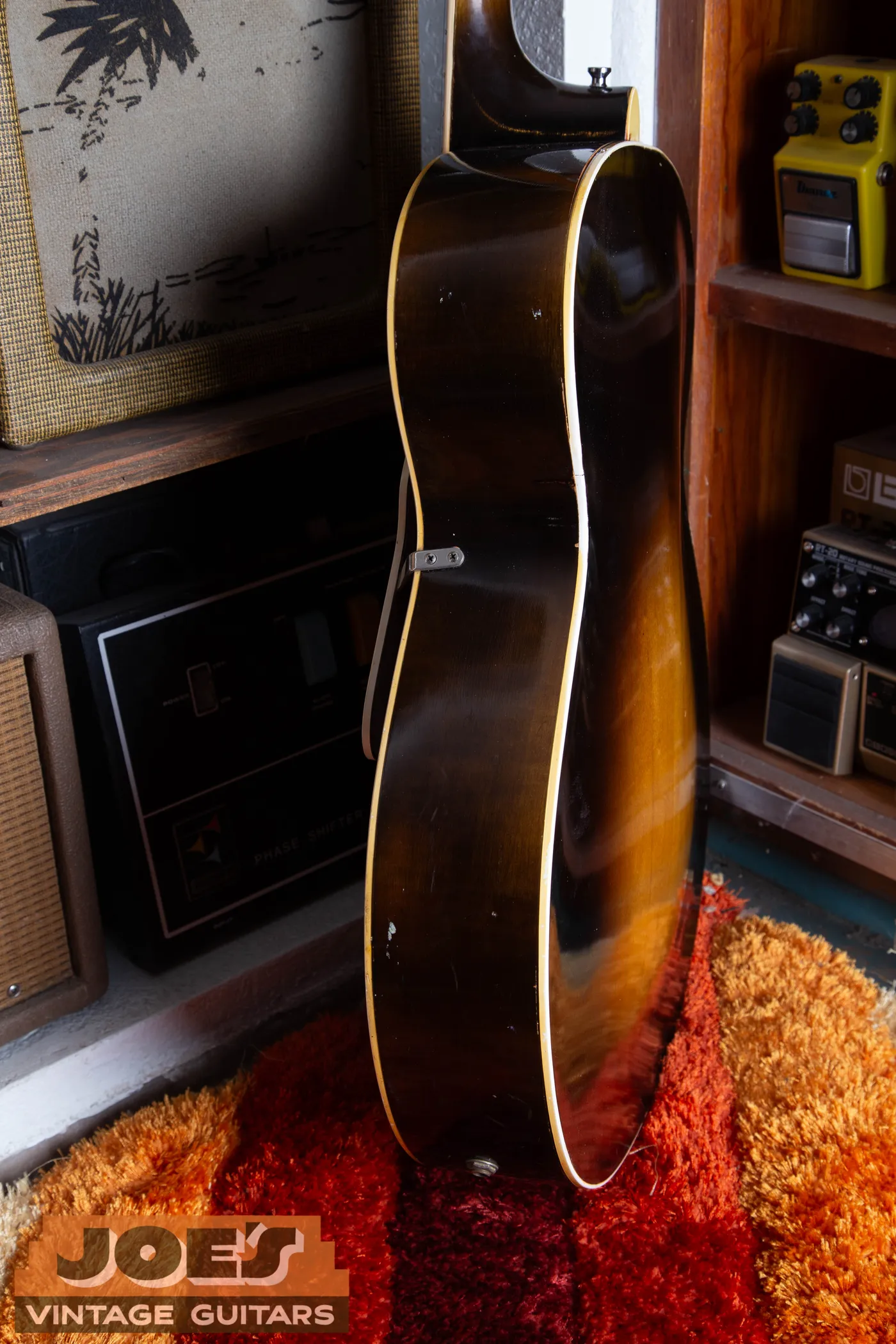
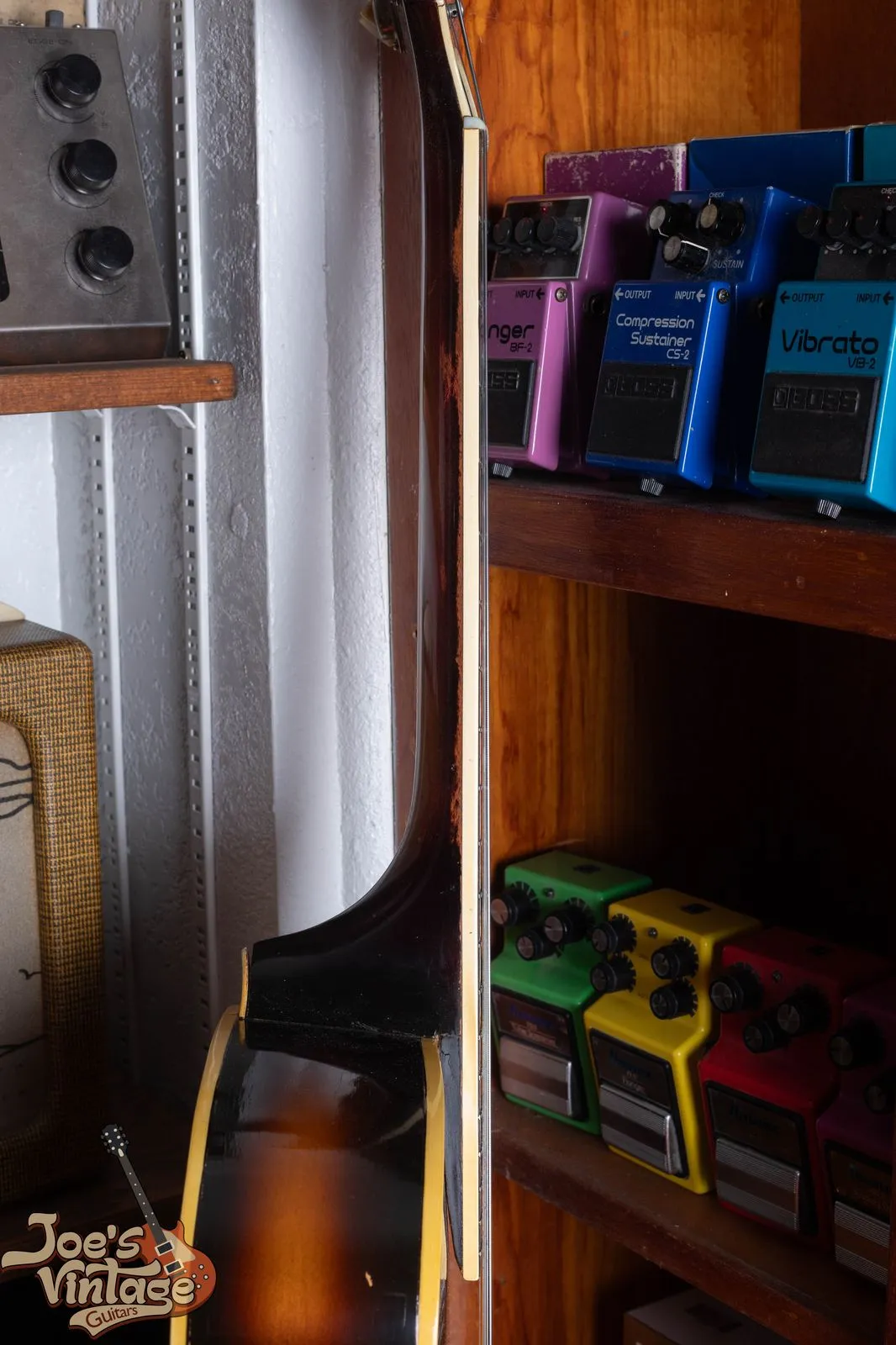
Joe’s photographs show a sunburst non-cutaway Triumph with a DeArmond pickup and its associated controls. The side view shows the deep acoustic body. The label photograph reads Triumph and serial 55482. The date comes from the documented archive identification; the serial itself should not be presented as an exact calendar code.
Use this guitar to understand the distinction between model and accessory. Its pickup is visible, but the body remains the acoustic Triumph being identified. The photographs do not prove the installation date or certify every component as original. A useful description preserves that distinction instead of calling the whole instrument a factory electric.
Sold And Ended Listing Examples
More Triumph Photos From Joe’s Shop
Six-String Acoustic
1940s Sunburst Triumph
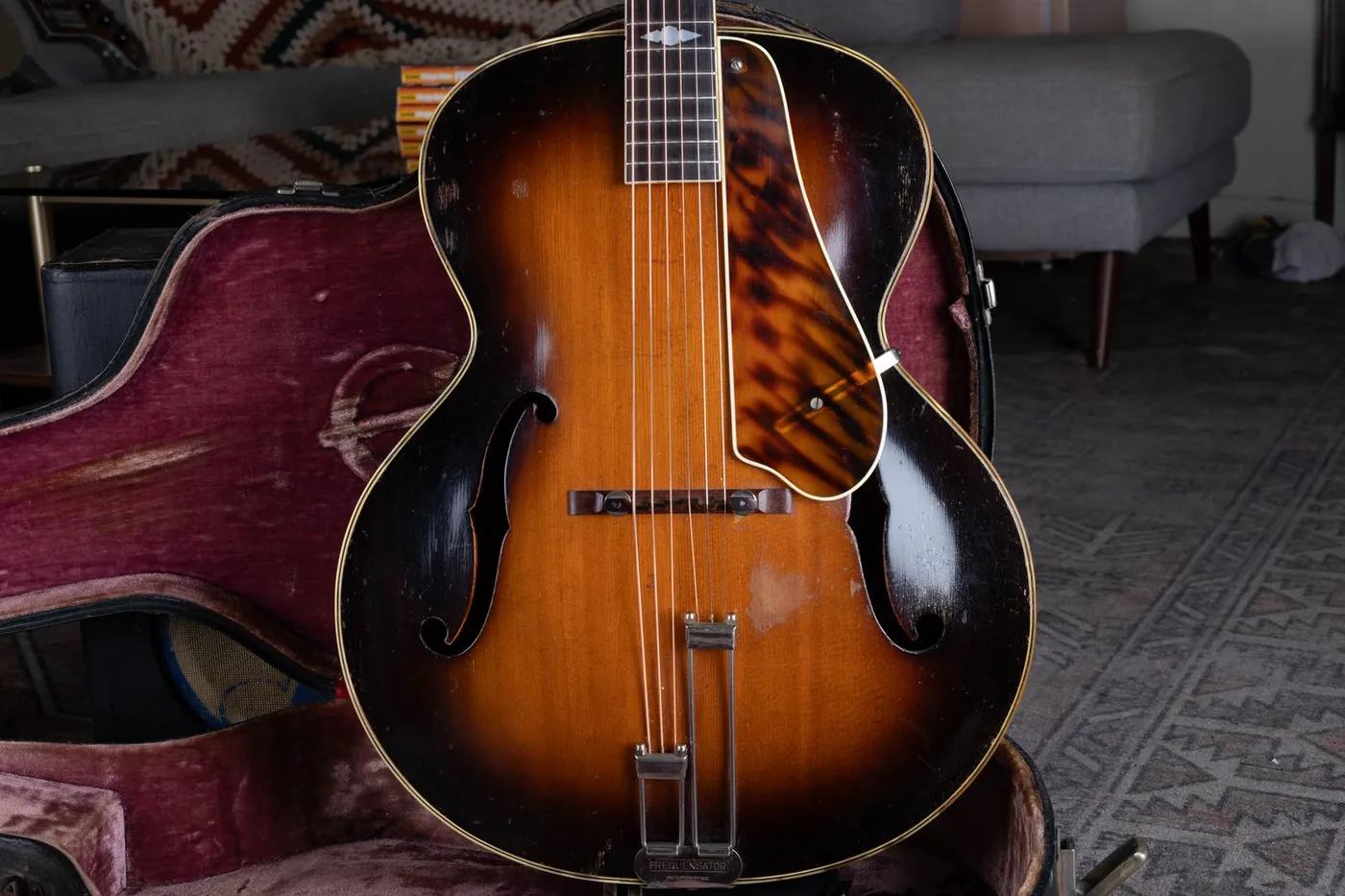
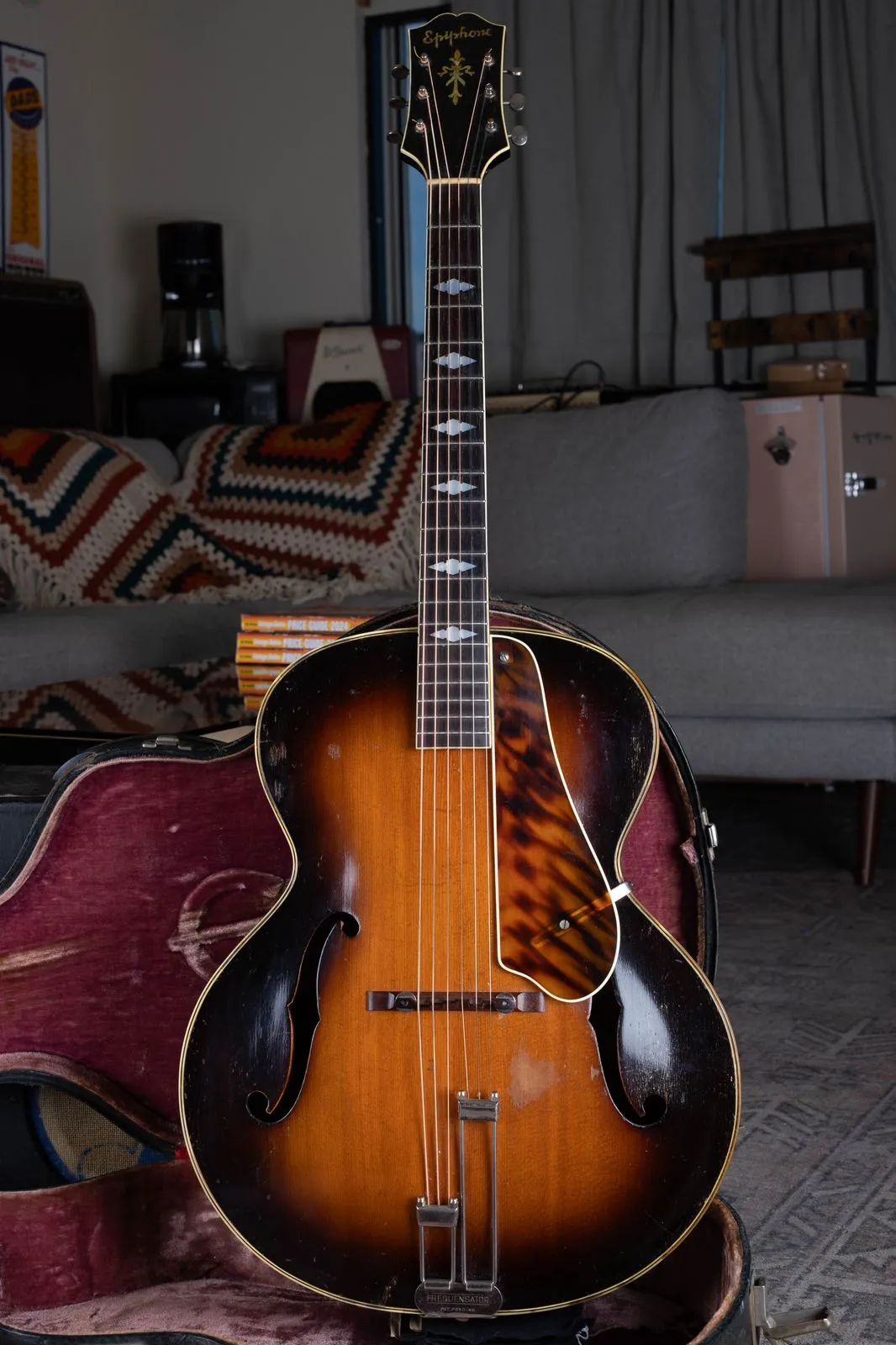
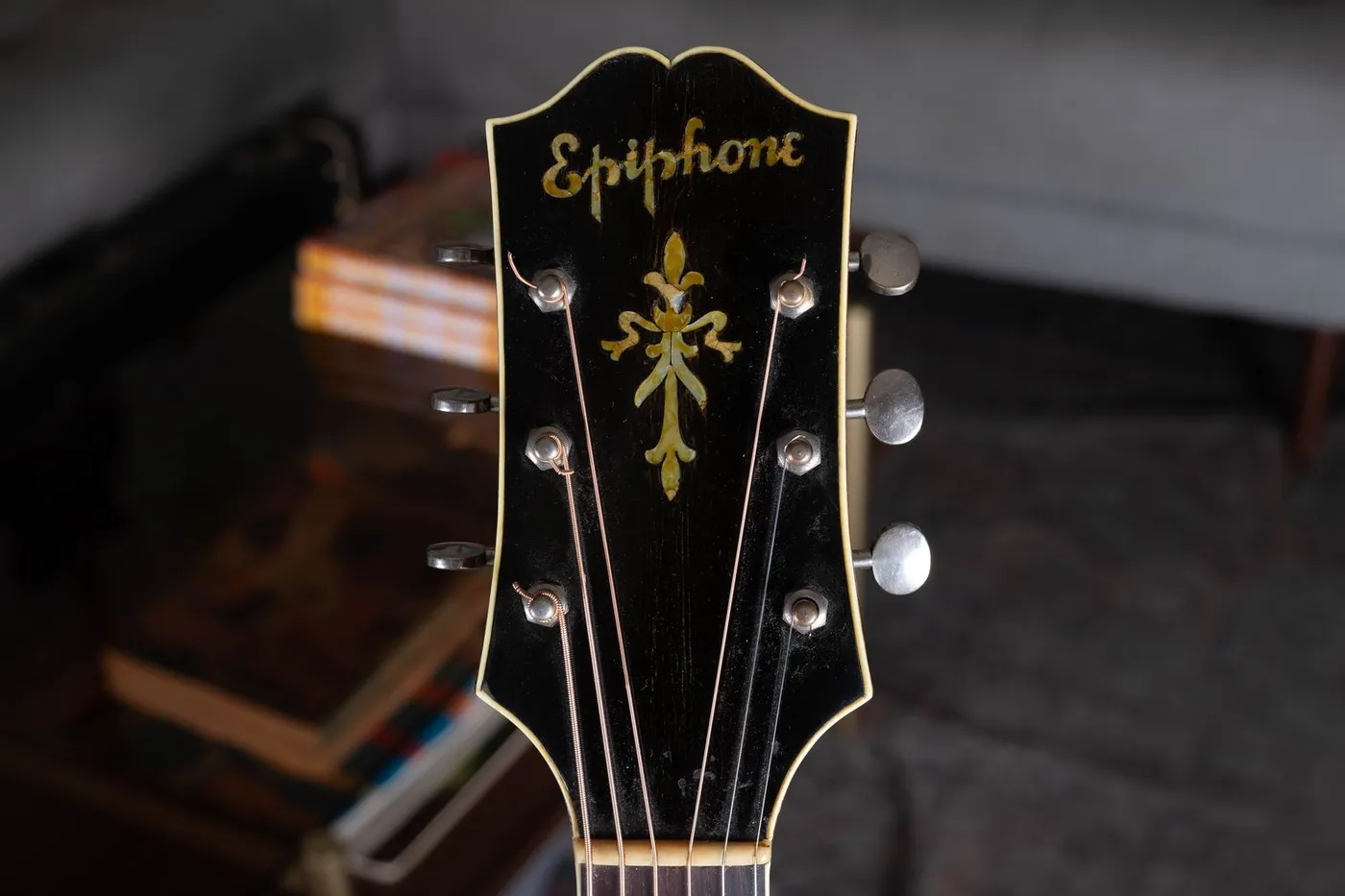
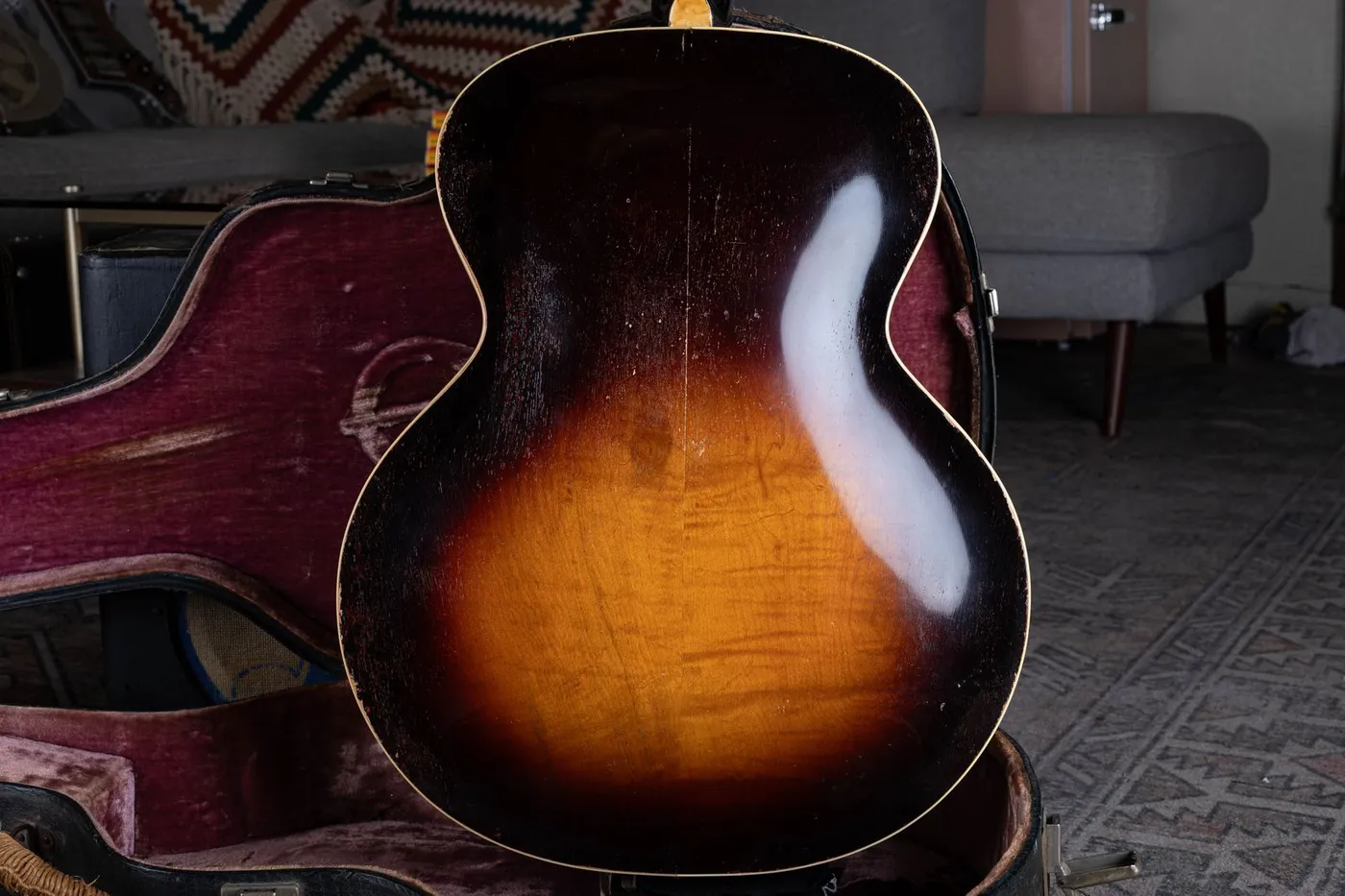
This 1940s Triumph has a non-cutaway acoustic body, patterned pickguard and six-string neck. The body, full front, headstock and back photographs give a comparison with the existing 1946 example carrying an added DeArmond pickup. Joe’s sold listing records a professional refret. The photographs show the visible configuration without establishing that every part is original.
Refinished Six-String Acoustic
1950s Sunburst Triumph With Repair History
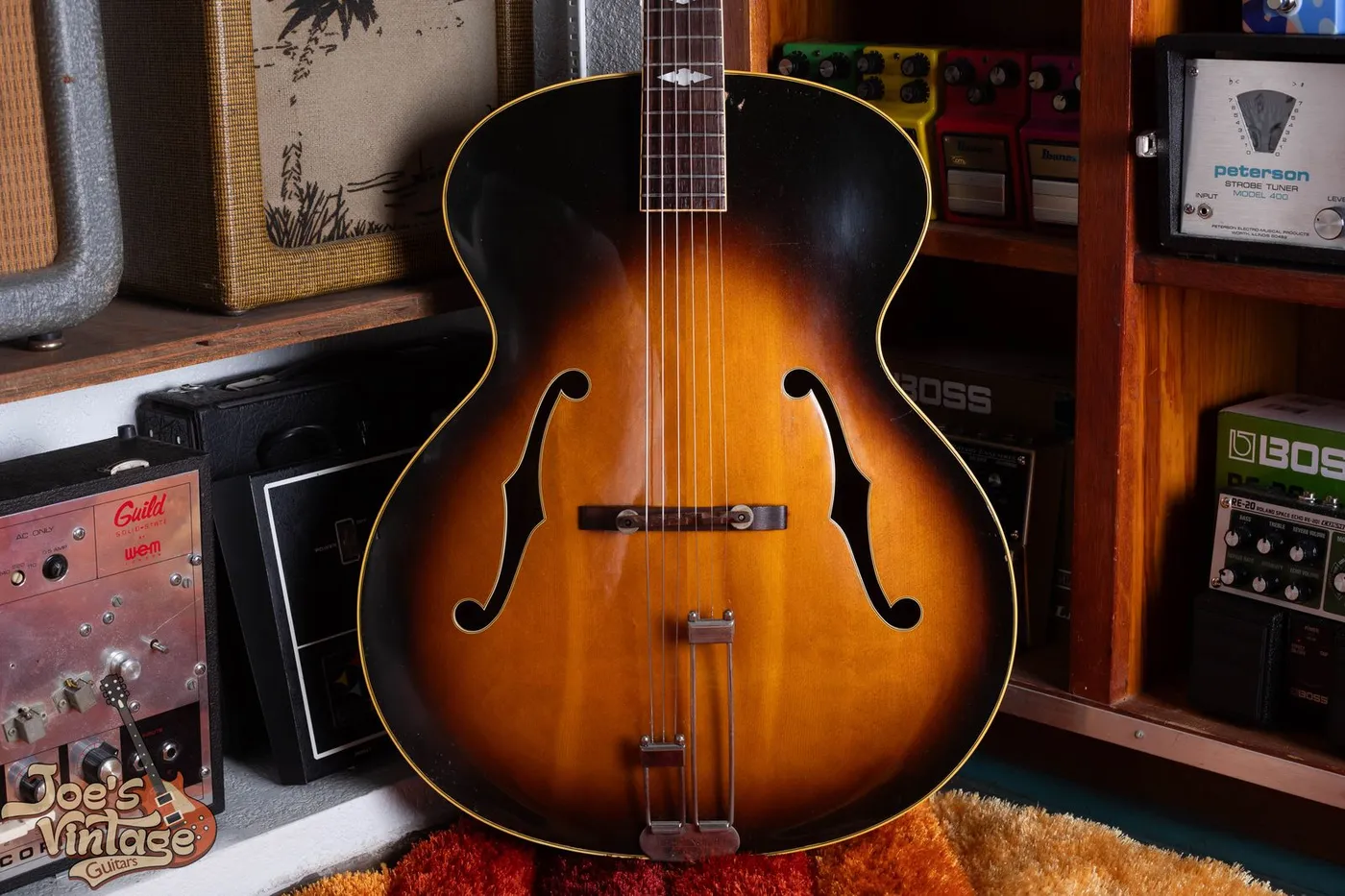
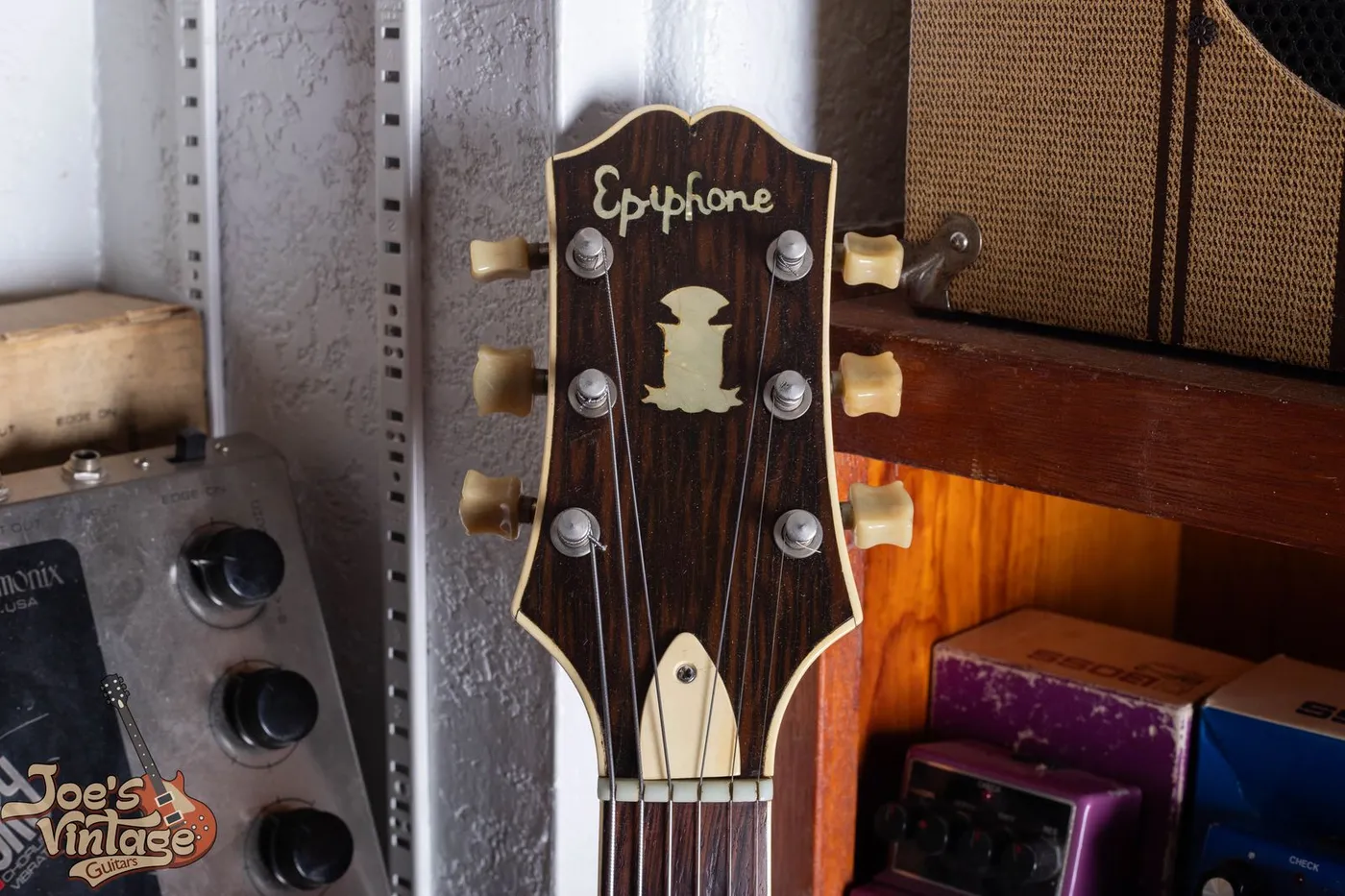
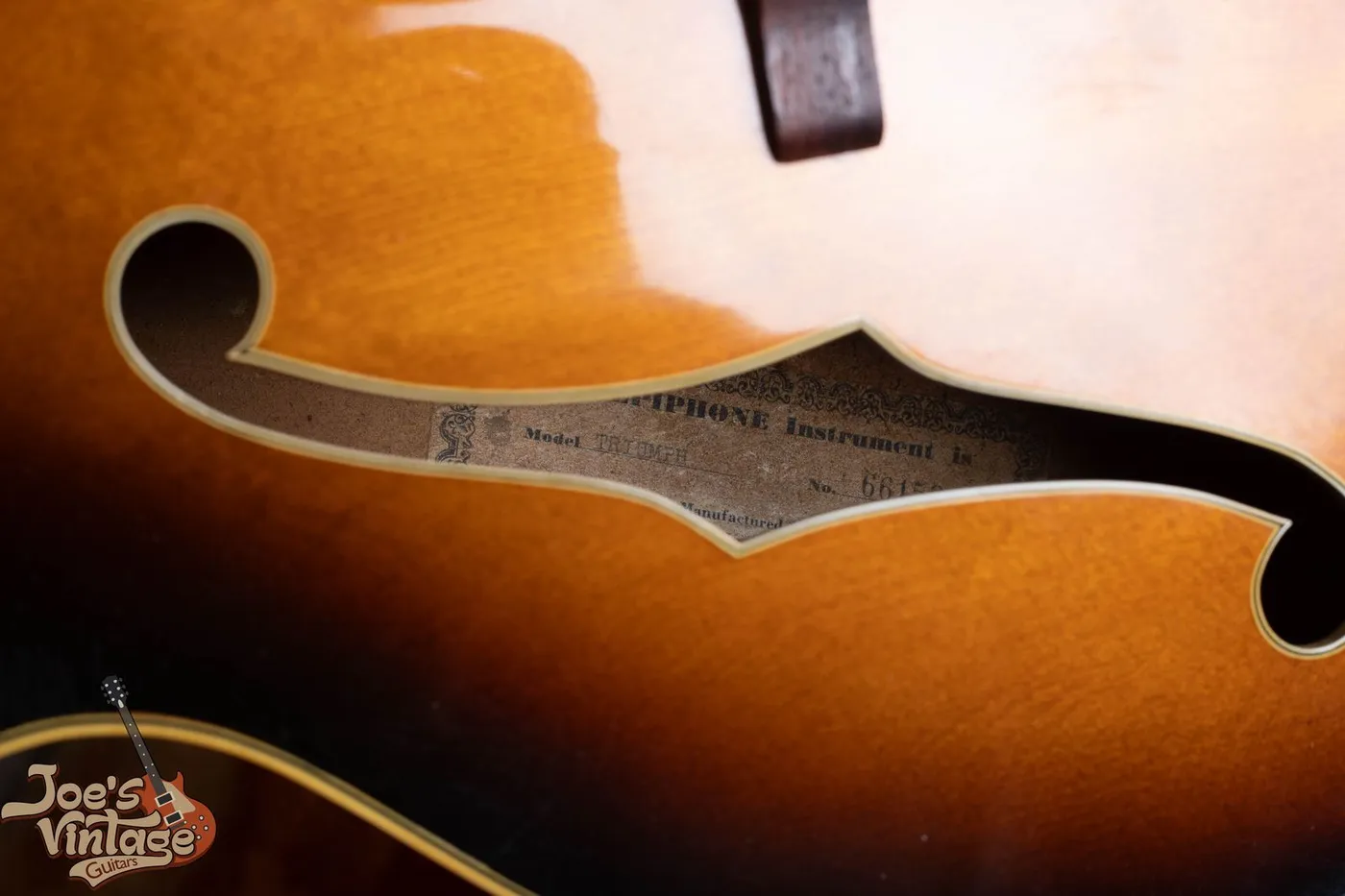
This pre-Gibson 1950s Triumph is refinished. Joe’s sold listing also documents a neck reset and replaced neck binding. The body, headstock, internal label and heel photographs belong to that same guitar. Its repair history needs an individual condition assessment; it is not an example of the excellent, original condition assumed by the value chart.
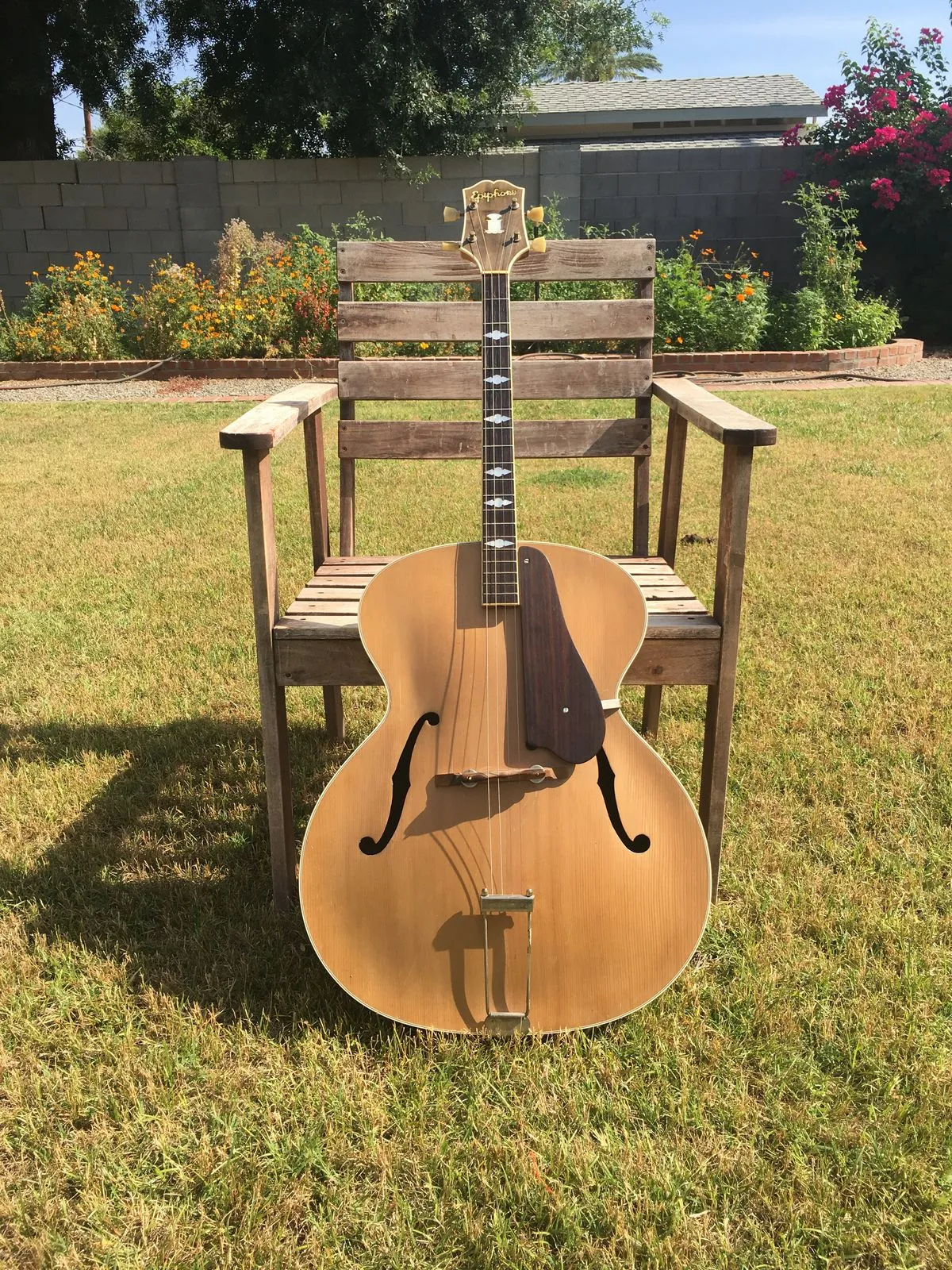
Four-String Tenor
Blonde Triumph Tenor
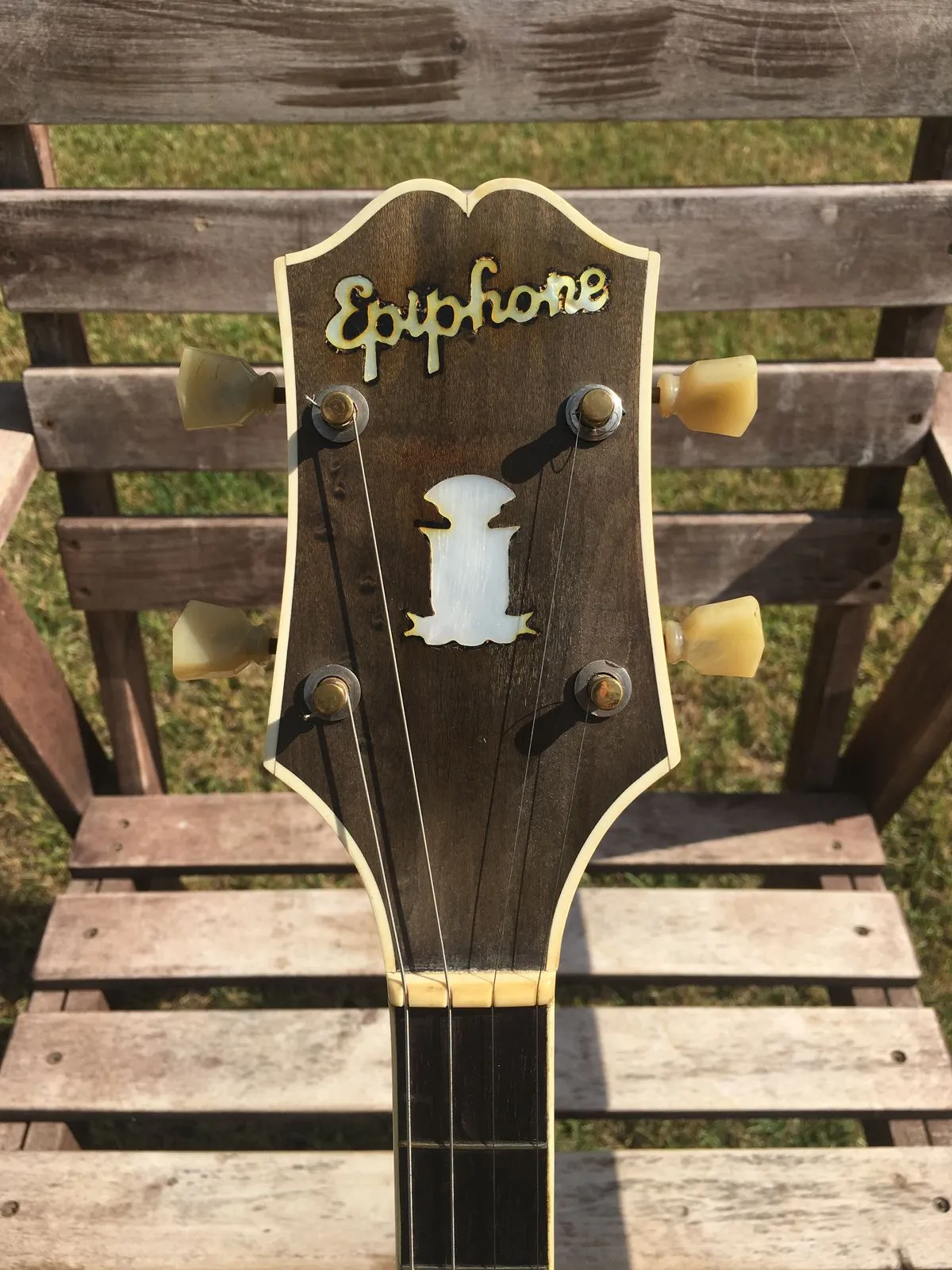
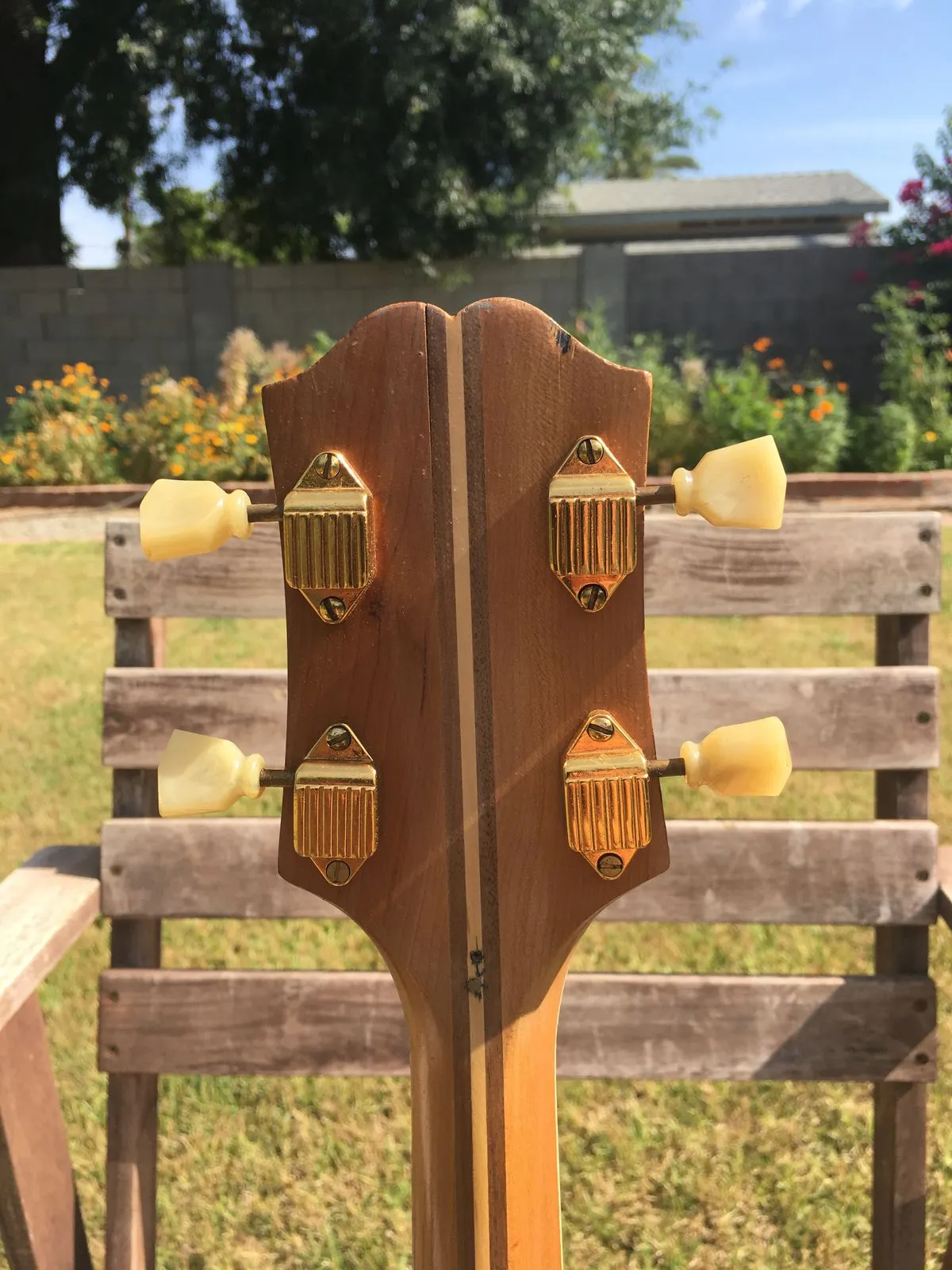
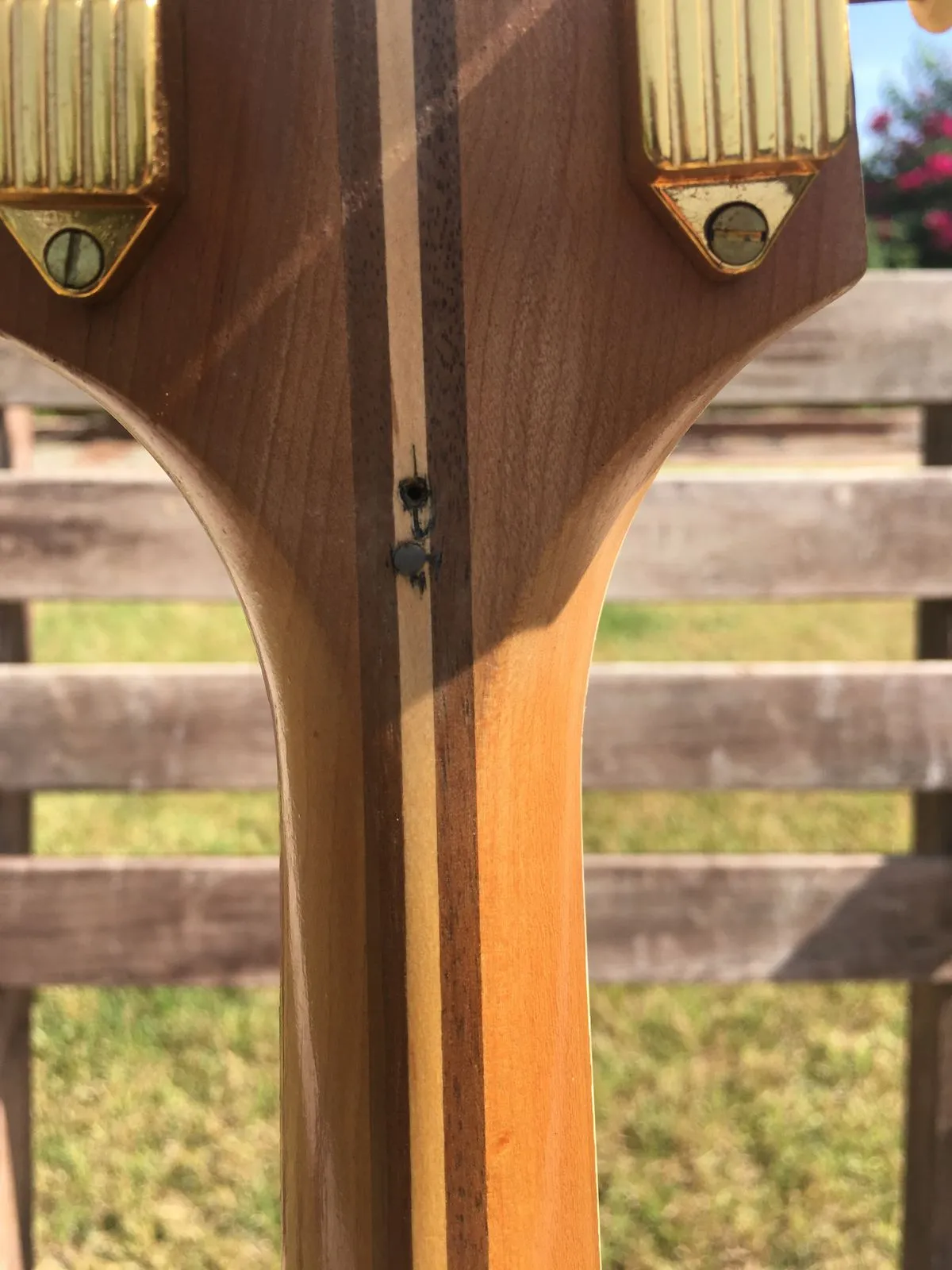
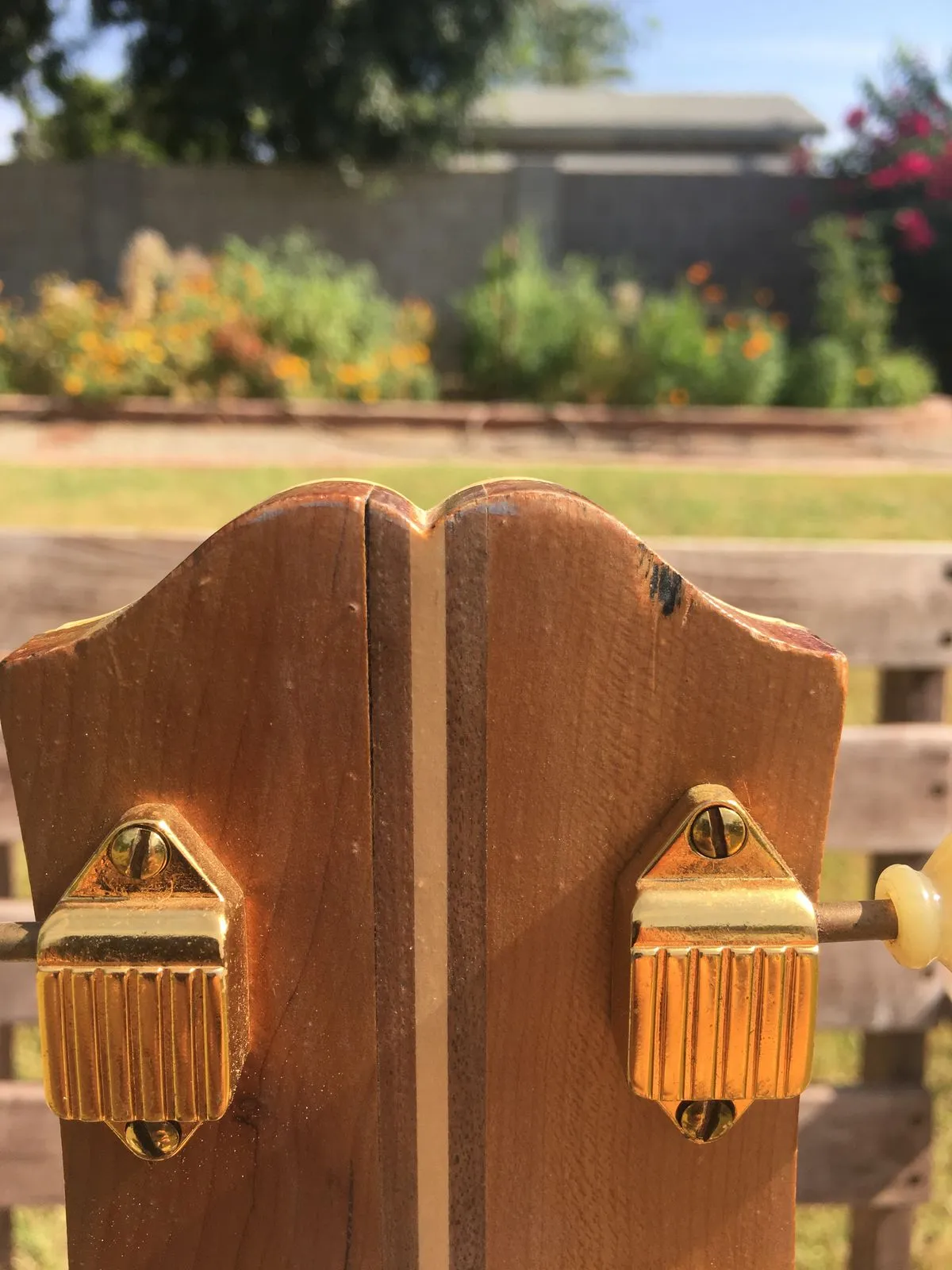
The blonde Triumph tenor has a four-string neck and four tuner positions. Its rosewood pickguard is a replacement. The rear-headstock photographs show extra holes and the center seam; Joe’s ended listing also notes slight separation at the back of the headstock. The listing gives an approximate 1950s date, so these photos do not establish an exact year. This tenor needs its own appraisal rather than a price taken from the six-string Triumph chart.
Approximate Pre-Gibson Dating
Reading A Triumph Label And Serial
Early Kalamazoo hollowbodies need a separate first check: an A followed by four digits on the interior label belongs to Epiphone’s early A-series, not the similarly named Gibson A-prefix chart. Photograph the whole label and keep any factory order number separate. A model code is not a serial number. Later impressed numbers can be compared with the shared Gibson system, with the guitar’s construction used to check the result.
A Readable Number On Joe’s Triumph
The full-size image supports all five digits. The label and model features identify the instrument together. Do not convert this example into a rule that every nearby serial was finished in the same year.
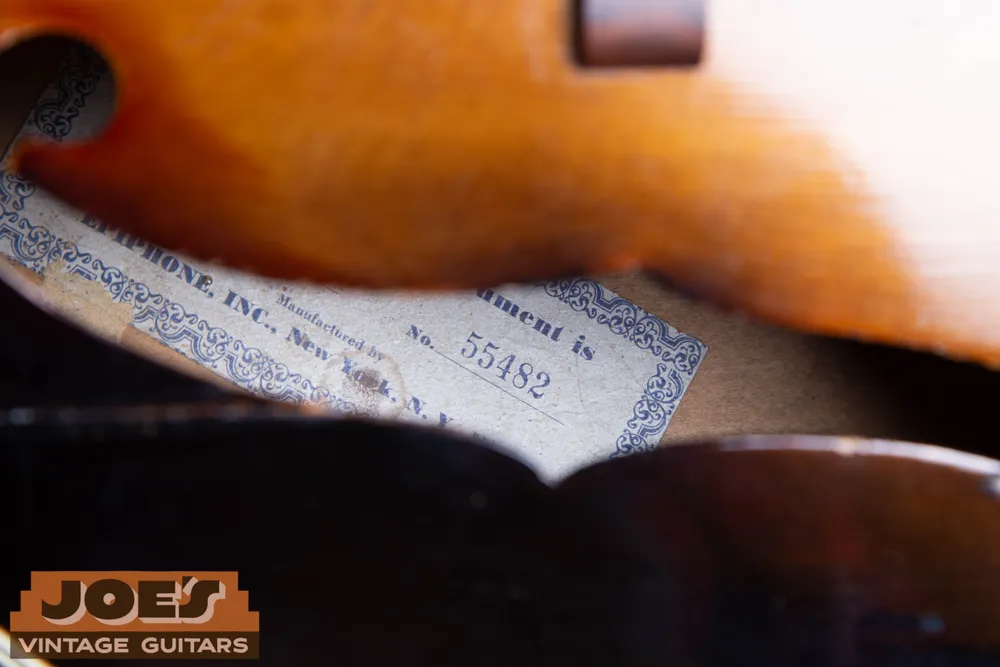
Pre-Gibson New York Epiphones in the 50000-series acoustic run were numbered in model batches. No complete surviving factory ledger supplies exact completion dates for every instrument. The year remains an estimate supported by catalogs and physical features, as explained in the registry’s published study of model batches and surviving instruments.
A Kalamazoo number needs a different reference. Retain prefixes, spaces and all digits when photographing it, and compare the headstock marking with any internal label. If the readings disagree, report both. Do not choose whichever one produces the desired year or replace a damaged label to make the records look consistent.
The A412 In Your Hands
A Kalamazoo Triumph Authentication Checklist
Confirm A Full-Depth Acoustic Cutaway
Measure width and depth, inspect the arched top and back, and document the cutaway. Compare the body with the A412 catalog rather than a shallow Epiphone electric. A photograph through an f-hole may help, but concealed construction can require a qualified inspection.
Match Neck, Decoration And Hardware
Show the truss-rod cover, fingerboard markers, headstock decoration, bridge and Frequensator. Check for extra tuner holes and changed mounts. One correct component is not enough when the rest of the instrument points to a different model.
Identify Every Electrical Addition
Photograph the pickup support, controls and jack. Record any cutting or drilling. Keep the installation separate from the acoustic identity, and avoid removing parts that could damage an old pickguard or fragile finish.
Cross-Check The Serial And Label
Use the Gibson system for Kalamazoo examples and the pre-Gibson research for earlier instruments. A number that seems inconsistent should prompt another look at the guitar, not an automatic rejection or an invented explanation.
List Repairs Independently
Inspect the heel, headstock, binding and top for repairs. State which are known from invoices and which are only suspected from photographs. Model authentication and an all-original claim are different conclusions.
Keep The Scope Clear
Repairs And Later Name Reuse
A neck reset, refret or replacement bridge may leave the guitar readily identifiable as a Triumph. Describe the work rather than treating every changed part as a false instrument. Conversely, an old label and a correct tailpiece cannot certify a rebuilt body. The extent of the original structure matters to the final description.
Later Japanese, Korean or Chinese Epiphones, Elitist releases and signature instruments are outside the original American production covered here. Do not use a historical name, Masterbilt wording or an old-style headstock as proof of a 1930s or Kalamazoo date. Establish the actual series from the guitar’s own label, origin marking, serial system and paperwork.
For the financial effect of a repair, continue to the condition guide and the Triumph price guide. Keep a value judgment separate from the evidence identifying the model, especially when the guitar has an added pickup that may be useful to a player.
Send The Evidence
Have Joe Review The Triumph Details
Send the complete instrument, label, serial and pickup installation for a free appraisal. To discuss selling, use Sell My Epiphone and include the known repair history.
Original Catalogs And Serial Research
Triumph Research References
- Joe’s 1940s Sunburst Triumph
Sold six-string example supplying the photographs, decade and refret history.
- Joe’s Refinished 1950s Triumph
Sold example with a disclosed refinish, neck reset and replaced neck binding.
- Joe’s Blonde Triumph Tenor
Ended four-string listing with an approximate date, replacement guard and rear-headstock condition notes.
- Epiphone Serialization Reference
Epiphone section, page 1071: the early hollowbody A-label sequence differs from Gibson’s A-prefix series; later impressed numbers require feature checks.
- 1934 Epiphone Catalog
Original Triumph materials and early acoustic specification.
- 1954 Epiphone Catalog
Triumph acoustic, cutaway, finish and tenor versions during the Philadelphia period.
- 1961 Epiphone Catalog
A412 and A412N construction, neck, bridge, hardware and finish designations.
- 1966 Epiphone Acoustic Catalog
Original specification matrix for the Kalamazoo Triumph.
- 1960 Gibson Catalog, Page 38
Original L-7C specification used for the limited Gibson comparison.
- New York Epiphone Research
Model-batch numbering and limits of precise pre-Gibson serial dating.
- JVG Sheraton History
House ownership and factory chronology.
Questions AboutEpiphone Identification
What Does Triumph Regent Mean?
Did Kalamazoo Continue The Triumph Name?
Can A Pickup Be Older Than The Guitar’s Current Wiring?
Does Serial 55482 Prove An Exact 1946 Completion Date?
The Last Word
Keep The Evidence Together
Identify the acoustic Triumph, establish the factory period and record any pickup installation separately. Use the label, construction and serial together. The Triumph value guide then helps you choose a comparison that fits the actual instrument.
Authenticity And Originality Are Assessed From The Information Provided. A Hands-On Inspection Can Change The Conclusion.