

Kalamazoo Sorrento · One Or Two Mini-Humbuckers
Epiphone Sorrento Value Guide
The factory pickup count sets the first price comparison. Finish originality, neck condition and altered wiring decide how well it fits.
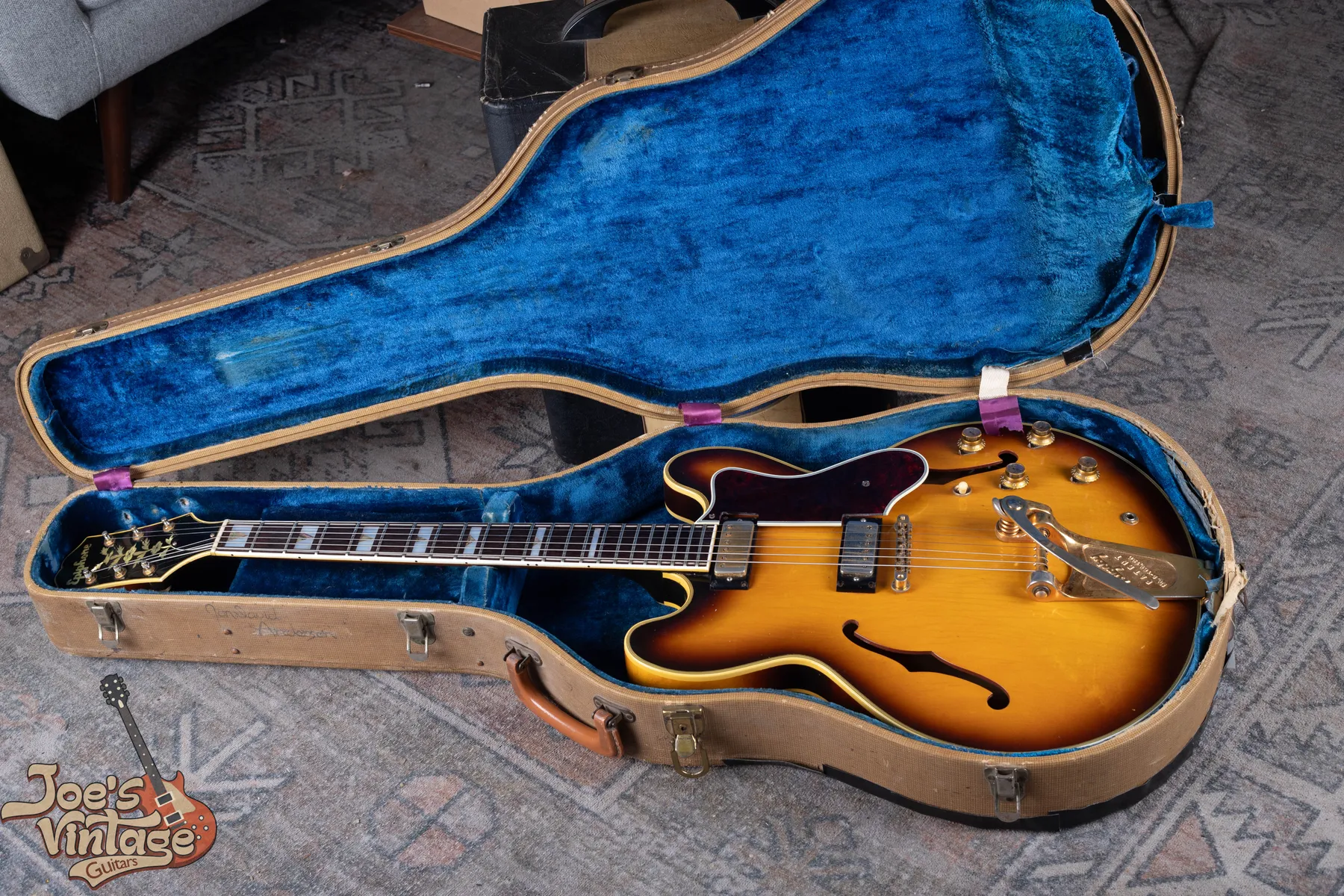
A vintage Kalamazoo Epiphone Sorrento is estimated at $2,250 to $3,100 with one pickup or $2,650 to $3,950 with two pickups for the 1960 to 1964 group. Later examples have their own rows below. These estimates assume excellent, original condition and the original case. Use the Sorrento authentication guide to establish the original pickup configuration and American production before comparing values.
This Is An Estimate Of Market Value, Not An Offer To Buy And Not A Guarantee. Market Values Fluctuate; Have Your Specific Item Appraised.
Joe’s Estimates For Original Instruments
Kalamazoo Sorrento Price Ranges
On a phone, swipe across the chart to see the estimated values.
| Model | Pricing Year Group | Configuration | Estimated Value |
|---|---|---|---|
| Sorrento | 1960 to 1964 | One mini-humbucker | $2,250 to $3,100 |
| Sorrento | 1965 | One mini-humbucker | $1,850 to $2,700 |
| Sorrento | 1966 to 1970 | One mini-humbucker | $1,800 to $2,650 |
| Sorrento | 1960 to 1964 | Two mini-humbuckers | $2,650 to $3,950 |
| Sorrento | 1965 | Two mini-humbuckers | $2,400 to $3,600 |
| Sorrento | 1966 to 1970 | Two mini-humbuckers | $2,200 to $3,350 |
U.S. dollars. Joe’s October 2026 estimates start with published reference-guide ranges and apply his pricing adjustment. They are not averages of completed sales. Estimates assume excellent, original condition and the original case where applicable. These are market estimates, not purchase offers. An individual appraisal accounts for repairs and changes.
The six rows separate pickup count and production group. They don’t assign a distinct premium to every color, neck shape or headstock detail. Record those features with the condition photographs; a finish or neck difference may require a separate assessment rather than a fixed surcharge.
The short-scale Sorrento listed in the 1961 catalog has no separate estimate here. Don’t silently apply a full-scale row to it. Likewise, a later reissue is outside this American chart even when its model name or advertised historical year resembles the years shown above.
Factory Single And Double Pickup Versions
Early Sorrento Values
One Mini-Humbucker
The 1960 to 1964 single-pickup estimate is $2,250 to $3,100. Confirm that the guitar began with one pickup and retains the appropriate control arrangement. A filled bridge-pickup opening or changed pickguard needs explanation before the guitar can be described as an original single.
One pickup is a factory configuration, not automatically a missing component. Photograph the whole top and both sides of the neck pickup so Joe can distinguish the original layout from an altered instrument. A simple arrangement still deserves a careful wiring and pickup review.
Two Mini-Humbuckers
The corresponding two-pickup range is $2,650 to $3,950. The comparison assumes the factory double-pickup version rather than a later conversion. Include both mounting areas, the control layout and selector, along with any repair documentation.
If a pickup has been rewound or replaced, say which one and whether the removed part remains. Matching metal covers can conceal different internals. A guitar may sound balanced and play well while still requiring an originality adjustment.
Date The Guitar Before Choosing The Row
Separate The 1965 And Later Price Groups
The Middle Production Group
A one-pickup Sorrento is estimated at $1,850 to $2,700, and a two-pickup example at $2,400 to $3,600. The separate row doesn’t make a serial number conclusive. Reconcile it with the neck, headstock and hardware before assigning this narrow period.
The Later American Comparison
The one-pickup estimate is $1,800 to $2,650, while the two-pickup range is $2,200 to $3,350. A clean later guitar should be judged on its actual condition, rather than automatically ranked below a more altered early instrument.
When the serial supports several possible years, preserve that uncertainty. Joe can review the neck proportions, logo, inlays and electrical evidence together. Picking the earliest possible date simply to reach a higher row turns an unresolved identification question into an unsupported value claim.
A purchase receipt may show when an owner acquired the guitar, not when it was built. Include the receipt because it can establish useful history, but keep its date separate from the factory date. The same distinction applies to an inherited description or a handwritten tag in the case.
Document Color Without Assuming A Premium
Royal Olive, Natural And Shaded Finishes
The Sorrento’s cataloged finishes include Royal Olive, natural and shaded versions. The chart doesn’t split those colors into separate price rows. A distinctive-looking finish should prompt clear photographs and an originality check, rather than an automatic rare-color surcharge.
Photograph the back, rims, heel and headstock as well as the face. Color can look very different under indoor lamps and direct sun. Use even daylight and avoid a filter that shifts green, brown or red. Those pictures can show color and wear differences around hardware; finish chemistry and concealed restoration may require a hands-on inspection.
Disclose stripping, overspray or a complete refinish even if the result resembles a catalog color. A natural-looking guitar may have started with a shaded finish. The refinish value guide addresses that distinction. Finish evidence should be reviewed before the instrument is described as an excellent original example.
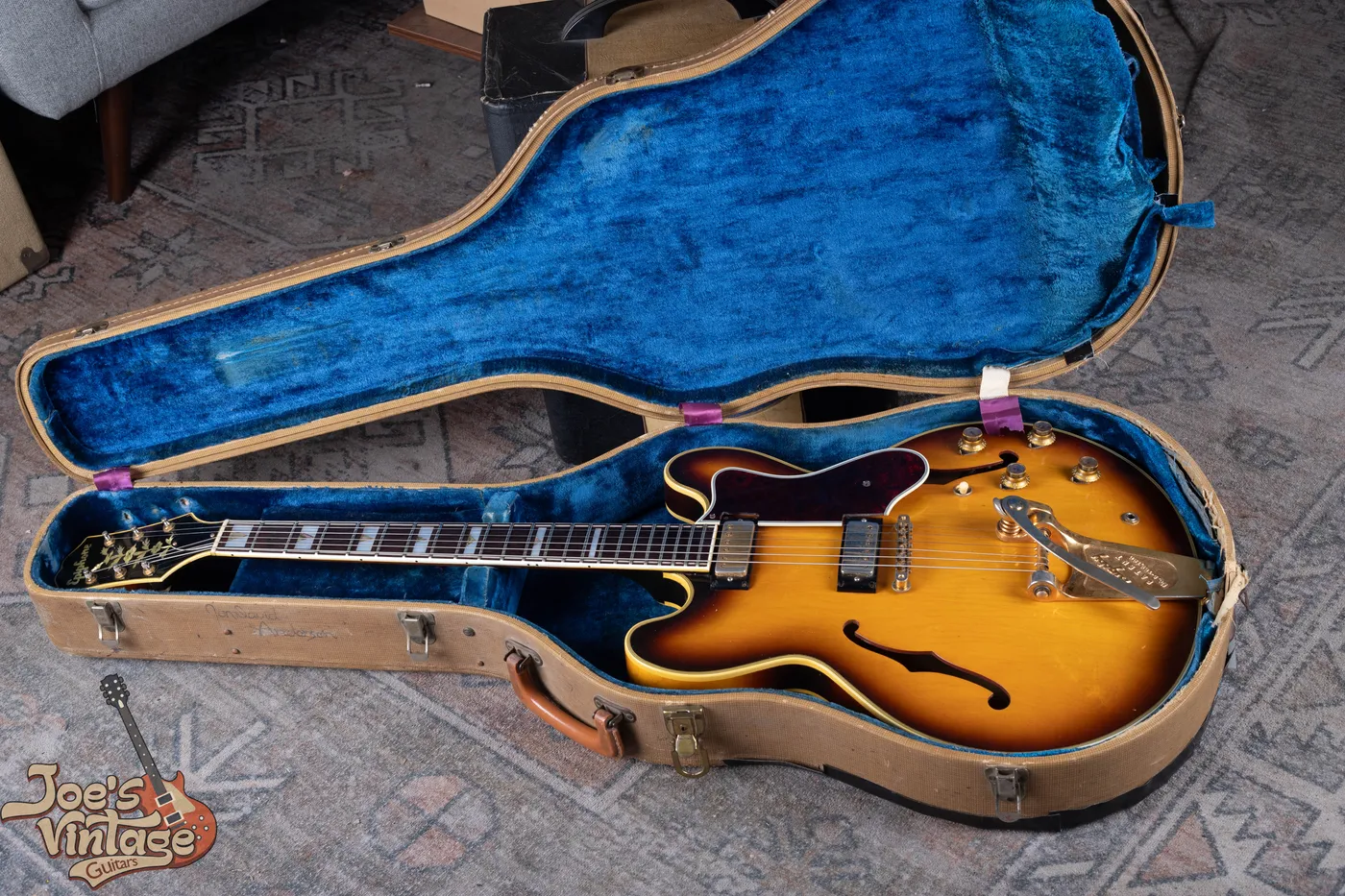
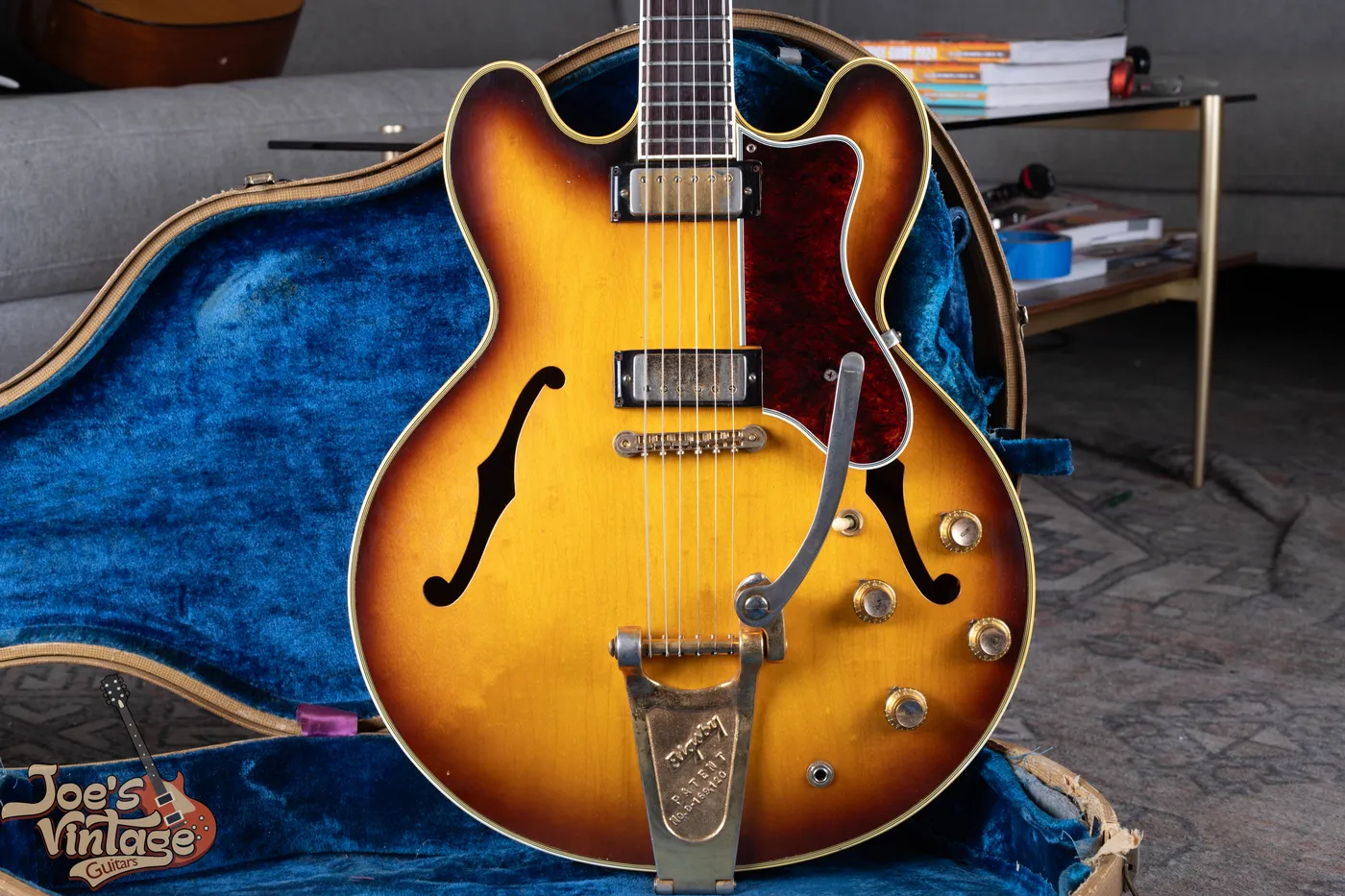
Comparison photos: this 1961 Sheraton shows period Epiphone mini-humbuckers, not a Sorrento body or a Sorrento price example.
Keep Playability And Originality Separate
Condition Questions That Change A Sorrento Estimate
Headstock And Heel Repairs
Show repaired breaks from several angles, including any added finish. A stable professional repair is still part of the value discussion. Provide the invoice or explain what is known instead of hiding the repaired area in a distant photograph.
Pickup Routing And Wiring
Document enlarged cavities, extra controls and changed switches. Read how replacement pickups affect value before assuming that a desirable replacement cancels the effect of altered wood.
Bridge Height And Neck Angle
Include the bridge, string height and neck joint in a side view. Good-looking frets do not answer a neck-angle question. Explain whether the guitar has been recently set up and whether the work involved replacement parts.
The condition guide provides broader context for changed parts and repairs. Avoid adding several guessed percentage penalties together. Some changes overlap, and the appraisal should consider the complete instrument instead of treating every screw as an independent calculation.
Before paying for restoration, read whether to restore before selling. Replacing worn hardware may make sense for a player’s needs, but it should not be undertaken solely on the assumption that the expense will return in a sale. Send the current condition first.
Original Equipment And Documented Work
Compare Complete Guitars At The Same Condition Level
When comparing two Sorrentos, begin with the same factory pickup count and production group. Then list the differences that remain: a repaired headstock, replacement harness, changed tuners, missing guard or uncertain finish. This makes the comparison specific enough to discuss without assuming that two guitars with similar front photographs deserve the same estimate.
Repair documentation can resolve a question that appearance cannot. A receipt may identify a pickup rewind or a refret without implying that the rest of the guitar was restored. Read what the work actually covered, and do not expand a narrow repair record into a general all-original claim.
Photographs, Measurements And Repair History
What Joe Needs For A Sorrento Appraisal
Show The Factory Layout
Send the full front, back and side, plus close-ups of each pickup and control. Include the complete cutaway and neck joint. These views help determine whether the one- or two-pickup configuration is original.
Photograph The Markings
Include the headstock face and back, serial and label. Photograph any visible internal stamp without moving or cleaning it. If a digit is unclear, send another angle rather than replacing it with a guess.
Describe What Has Changed
List repairs, refinishing, replacement tuners, altered pickups and any missing parts. Include the case and loose original pieces. State when the information comes from paperwork and when it comes from a former owner’s recollection.
If the guitar feels unusually small, include a scale measurement rather than assuming it is the regular model. Measure from the nut to the twelfth fret and double that distance, keeping the endpoints visible in a photograph. A short-scale version needs its own review because this chart does not provide a separate figure for it.
A case should be photographed open and closed, with the guitar seated inside. A period case that fits poorly is not necessarily the guitar’s original case. Identify replacement latches, damaged hinges and loose lining when known. Those details help Joe understand completeness and plan the next step without treating any old case as the one assumed in the chart.
Send The Evidence
Get An Individual Sorrento Estimate
Send your photographs for a free appraisal. If you want to sell, use the Epiphone seller page to review the process. The published market ranges are not guaranteed purchase offers.
Questions AboutEpiphone Values
Is A Two-Pickup Sorrento Worth More?
Does Royal Olive Have A Separate Price?
Is The Short-Scale Sorrento Included In The Chart?
Can I Use These Values For A Reissue?
The Last Word
A Value For Your Guitar
A supported factory pickup layout, date and condition description make the Sorrento chart useful. If any of those remain uncertain, start with the Sorrento authentication guide and send Joe the unresolved details with the photographs.
This Is An Estimate Of Market Value, Not An Offer To Buy And Not A Guarantee. Market Values Fluctuate; Have Your Specific Item Appraised.