

Original American Sorrento · 1960 To 1970
Epiphone Sorrento Authentication Guide
Check the pointed-cutaway body, original pickup count and period neck details before assigning a year from the serial.
An original Kalamazoo Epiphone Sorrento is a thin hollow electric with a pointed single cutaway and one or two mini-humbuckers. Its body, neck details and factory pickup configuration should agree before a serial is used to narrow the date. The Sorrento value guide separates the American price groups once those features are established.
Authenticity And Originality Are Assessed From The Information Provided. A Hands-On Inspection Can Change The Conclusion.
Body, Neck And Factory Layout
Sorrento Specifications From The Original Catalogs
| Feature | Period Reference | Inspection Question |
|---|---|---|
| Body | Thin arched maple body with pointed Florentine cutaway | Does the outline and depth match, without a second cutaway or center block? |
| Standard Neck | Mahogany, rosewood fingerboard, 24¾-inch scale | Are the neck, joint and scale consistent with the model? |
| Pickups | One or two mini-humbuckers | Was the current layout factory installed or converted? |
| 1961 Appointments | Dot fingerboard illustration and Epiphone headstock badge | Do later parts or a changed neck explain any mismatch? |
| 1966 Appointments | Catalog illustration shows oval markers and longer headstock | Does the feature group agree with the proposed period? |
| Bridge And Tailpiece | Adjustable bridge and simple trapeze | Are changed parts or additional mounting holes present? |
The catalog images are dated reference points, not proof of the exact day a feature changed. A transition should be supported by several details rather than one illustration. The guitar’s serial, neck, inlays and hardware should be assessed together, particularly when a repair may have replaced the most conspicuous feature.
A Smaller Electric With Its Own Specification
The Sorrento’s Place In The Kalamazoo Line
Gibson-Era Epiphone Production
The Sorrento belongs to the Gibson-era electric line that followed CMI’s 1957 purchase of Epiphone and the start of Kalamazoo production in 1958. The house Sheraton history establishes that sequence and the move of production to Japan in 1970. This guide follows the original American Sorrento through that boundary.
Don’t create an older Philadelphia Sorrento history from an unrelated instrument with a similar name. Identify the actual model before applying the broader Epiphone chronology. The Sorrento’s relevant evidence is the Kalamazoo body, neck, electronics and numbering system.
The Gibson ES-125 Cutaway Comparison
The contemporary ES-125TC and ES-125TDC share the thin pointed-cutaway electric format, maple body description, mahogany neck and 24¾-inch standard scale. The original Gibson catalog provides that comparison. Their P-90 pickup equipment differs from the Sorrento’s mini-humbuckers.
A Gibson comparison explains the construction without making the names interchangeable. An Epiphone badge fitted to another body can’t establish a Sorrento. Check the complete model features, including pickup installation, neck decoration and markings, before drawing a factory conclusion.
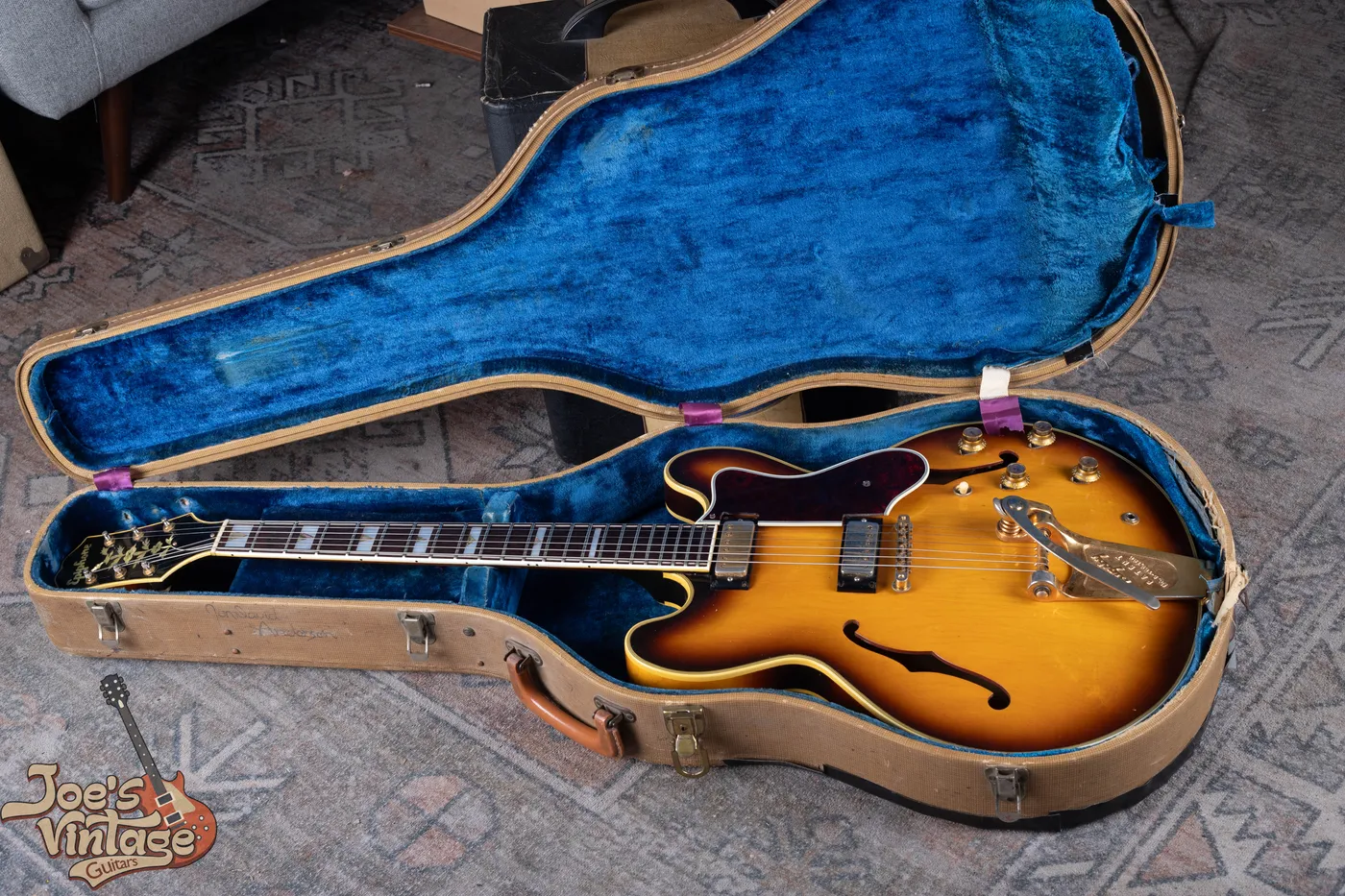
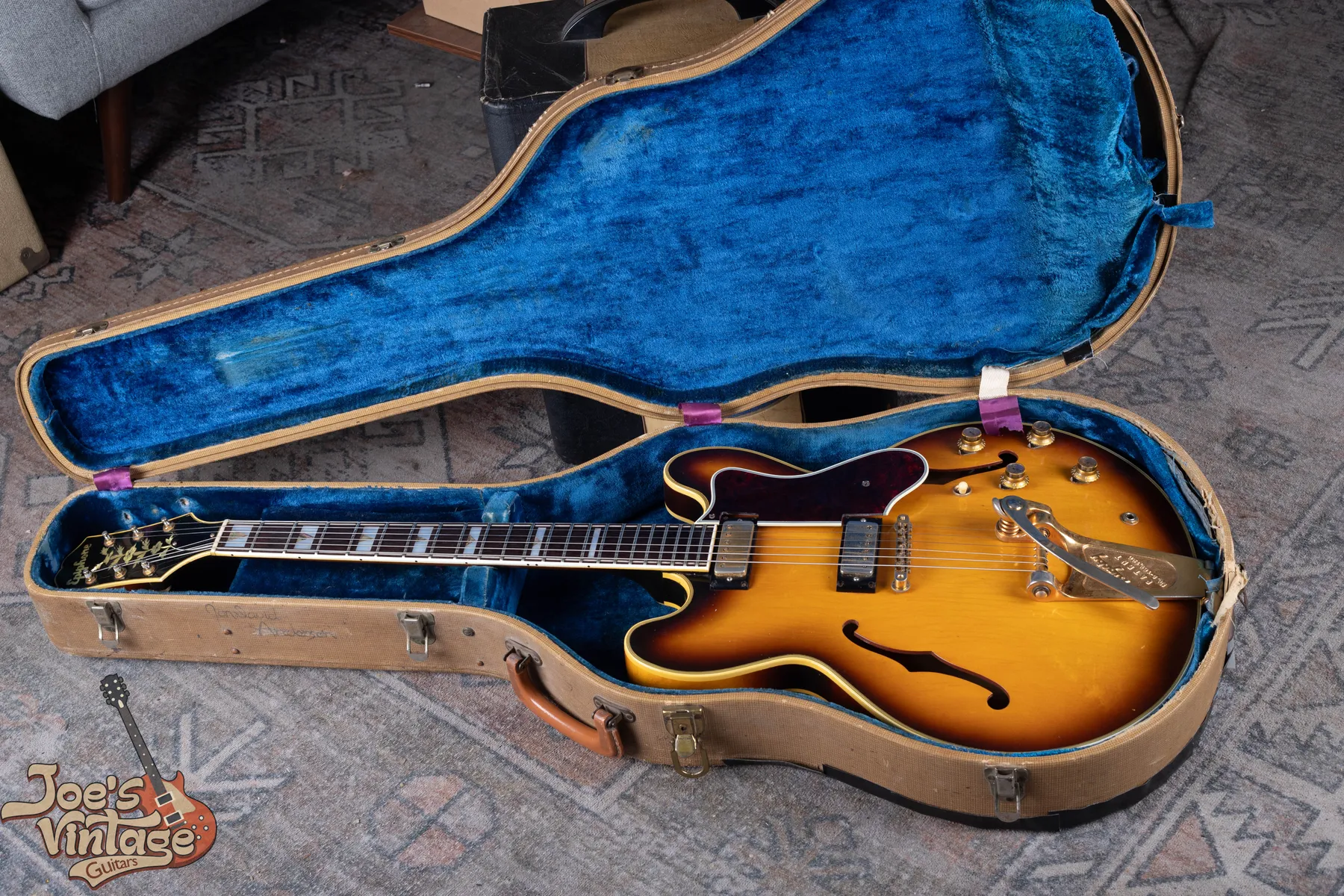
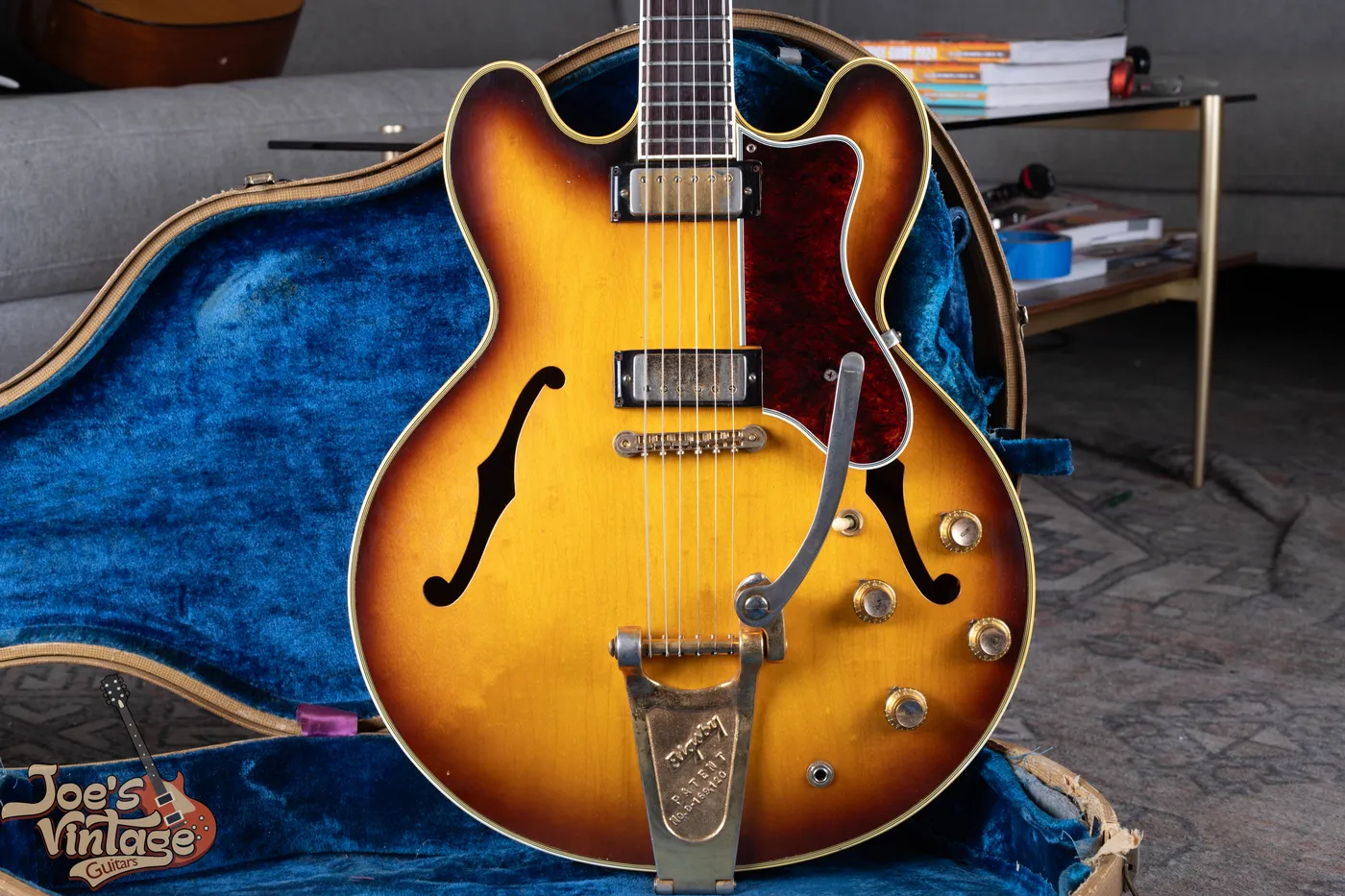
The pictured Sheraton is a period comparison for mini-humbuckers. Its center-block body and double cutaway aren’t Sorrento features.
Use Dated Catalog Snapshots
Sorrento Features Across The American Run
The Shorter Headstock And Dot-Marker Reference
The 1961 catalog illustrates a pointed cutaway, dot markers, headstock badge and two covered pickups. It also lists the single-pickup version. Treat the picture and model listings together rather than assuming only the photographed configuration existed.
Royal Olive And Additional Options
The original listing includes Royal Olive, shaded and natural finishes, plus an E452T three-quarter version. The short-scale entry matters when a guitar’s proportions differ from the regular model. Measure it instead of labeling the neck incorrect from a distant picture.
Oval Markers And A Longer Headstock
The later illustration shows oval fingerboard markers and a longer headstock while retaining the pointed single cutaway. Those features help define a later comparison, but the catalog date alone doesn’t establish an exact changeover year.
Confirm The Whole Feature Group
Keep neck measurements, hardware and serial evidence together through the final American period. Don’t call a guitar early merely because it has a replacement badge or an old pickup. A later body with earlier parts needs its own description.
Single, Double And Converted Instruments
Authenticate The Factory Pickup Configuration
The regular Sorrento was offered with one or two mini-humbuckers. A factory single should not be described as a double with a missing pickup, and a second pickup added later doesn’t create a factory double. Examine the control arrangement and any visible evidence around the pickup openings before assigning the version.
The 1961 catalog gives the double-pickup model separate tone and volume controls with toggle selection. The single-pickup guitar has a simpler electrical arrangement. Match the model and original controls before interpreting a replaced switch or a pickguard that hides an opening.
Pickup Construction Matters
The Sorrento’s mini-humbuckers belong to the Epiphone electric pickup family, with a different internal design from Firebird pickups. Do not call them the same design because their covers appear narrow. A cover, label or resistance reading by itself is not a complete authentication.
Ask for repair records when a pickup has been rewound or replaced. If a technician examines the underside, preserve the photographs and written findings. An intact cover can remain with altered internal parts, so describe the level of inspection behind an originality claim.
Look For Added Controls And Woodwork
Photograph mismatched rings, additional holes, enlarged openings and unused selector positions. A neatly installed full-size humbucker is still a change from the factory mini-humbucker configuration. The extent of the routing is a separate question from whether the replacement functions well.
Do not pull a fragile harness through an f-hole for an initial inquiry. Start with accessible evidence and known history. Joe can identify which concealed details need a qualified inspection after seeing the guitar as a whole.
Construction Before Decoration
Inspect The Body, Cutaway And Neck Together
The Sorrento’s pointed Florentine cutaway differs from the Zephyr’s rounded cutaway and the Sheraton’s double-cutaway body. A single front view should show the entire outline. Add a side view to establish the thin rim and to reveal repaired binding, neck-joint work or a changed heel contour.
The 1961 specification describes arched maple top and back with maple rims and a mahogany neck. Its regular scale is 24¾ inches, with 20 frets listed. Measure the scale from the nut to the twelfth fret and double that distance. A bridge saddle’s adjusted position is not the most reliable endpoint for that measurement.
Fingerboard And Headstock Details
Compare dot or oval markers, fingerboard binding, logo and headstock proportions with the correct catalog period. Replaced inlays or a repaired headstock can remove evidence. The presence of an Epiphone name does not resolve a mismatch between the neck and body.
Photograph the tuner backs and mounting holes. A modern tuner can cover an older hole pattern, while a period replacement may look convincing from the front. Keep any conclusion about the tuners separate from the conclusion about the underlying guitar.
Bridge And Trapeze
The Sorrento uses a simple trapeze rather than the ornate Frequensator associated with other Epiphones. Compare the bridge assembly and tailpiece with the period catalog, noting replacements and extra attachment holes. Do not treat a more elaborate tailpiece as evidence of an undocumented higher model.
Show the bridge height, top arch and fingerboard extension in one side photograph. That view helps assess whether a changed bridge is simply a replacement or part of a larger setup or neck-angle issue. Describe repairs before assigning an all-original condition.
Read The Complete Catalog Entry
Sorrento Model Numbers And Finishes
E452T And E452TN
The 1961 single-pickup listings distinguish the regular model from the natural-finish N version. Royal Olive and shaded finishes are listed for E452T. The code supports a configuration only when the guitar and surviving finish agree with it.
E452TD And E452TDN
The D listings identify the two-pickup versions, with N again indicating natural in that catalog. Check both original pickup positions and the controls. A later conversion can reproduce the visible count without reproducing the factory installation.
The Three-Quarter Sorrento
The 1961 catalog includes an E452T three-quarter entry. Keep that version distinct from a shortened or replacement neck. The 1961 listing names that version but does not print a separate scale measurement beside it. Record the nut-to-twelfth-fret distance and double it; send that result with the full guitar and neck photographs before applying a standard-scale specification.
The 1966 listing also uses E452TC and E452TDC designations. Preserve the full code from paperwork rather than expanding an uncertain suffix from memory. The instrument’s actual finish, pickup count and catalog context are stronger evidence than a guessed explanation of a letter.
Finish assessment needs photographs of the back, rim and neck as well as the top. Royal Olive can be difficult to judge under colored lighting. A color name on a tag does not establish original finish, and a refinished natural guitar should not be treated as a factory natural simply because the wood is visible.
Illustrations, Text And Surviving Instruments
Read Catalog Evidence Without Inventing A Changeover
The Illustration And Description Can Differ
The 1961 Sorrento illustration shows a headstock badge, while its prose describes an inlaid name. That difference is a reason to compare actual instruments and their dates, not to declare every badge or every inlaid logo incorrect. A catalog can describe a developing product line without documenting the assembly sequence of each guitar.
Keep the source date attached to the feature it supports. Saying that an appointment appears in the 1966 illustration is narrower than claiming that it first appeared in 1966. The latter would require additional evidence that this catalog alone does not supply.
The Short-Scale Listing Needs A Separate Inspection
The three-quarter designation establishes that a smaller version was offered, but it does not excuse an unexplained neck replacement on a regular body. Record scale, fret count, neck joint and the complete instrument together. Compare those observations with period documentation before deciding which factory version is present.
If the measurements disagree with the description supplied by an owner, retain both in the record until the discrepancy is resolved. The physical guitar should determine the identification; a familiar model name should not force the measurements into a convenient category.
The Model Difference Remains Explicit
Period Details In Joe’s Comparison Photographs
Pickup-Family Comparison
1961 Epiphone Sheraton
The Sheraton photograph shows two mini-humbuckers and their visible mounting arrangement. It is useful for recognizing the pickup family, but its body, Bigsby and decorative package are not Sorrento specifications. These photographs do not supply a serial or a dated original Sorrento specimen.
Headstock-Badge Comparison
1961 Epiphone Zephyr
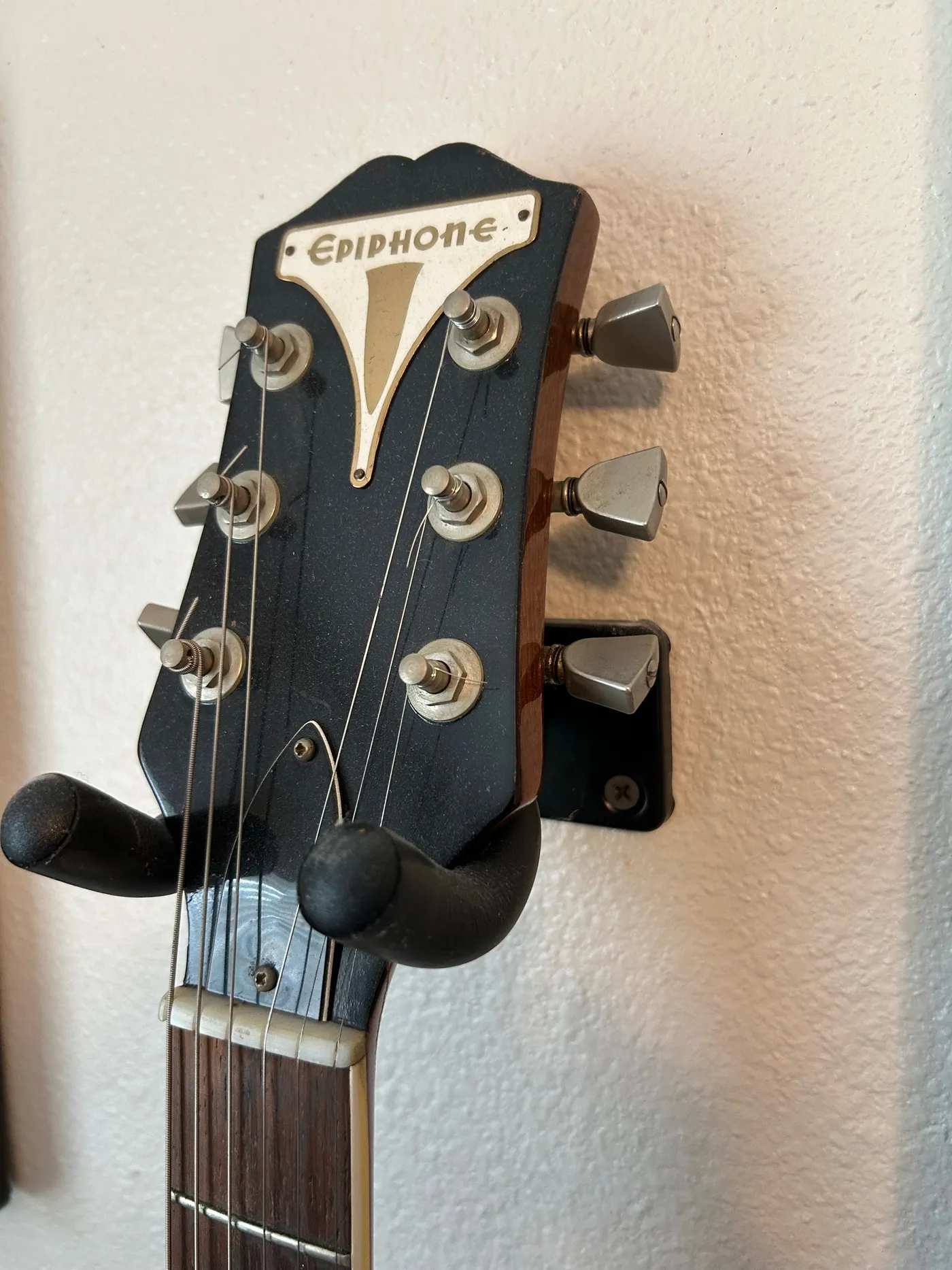
This Zephyr headstock shows the period Epiphone badge and metal-button tuners. Use the badge as a comparison detail while keeping the Zephyr’s model identity intact. It cannot prove that an otherwise undocumented Sorrento has the same year or original tuners.
Kalamazoo Numbers And Physical Evidence
Date A Sorrento With More Than The Serial
Early Kalamazoo hollowbodies need a separate first check: an A followed by four digits on the interior label belongs to Epiphone’s early A-series, not the similarly named Gibson A-prefix chart. Photograph the whole label and keep any factory order number separate. A model code is not a serial number. Later impressed numbers can be compared with the shared Gibson system, with the guitar’s construction used to check the result.
From 1961, Kalamazoo Epiphones used the shared Gibson numbering system. The Gibson serial guide explains why some sequences need physical corroboration. Record the complete stamp, label and any visible factory order number separately. A missing mark is a gap in the evidence, not permission to invent a replacement number.
Use the headstock shape, markers, pickup mounting and neck dimensions to evaluate the dates the number could support. Original component codes can supply additional context when inspected, but a replaced pot cannot date the whole guitar. Keep the component date and proposed assembly period separate.
Comparison Photos Are Not A Dating Sample
The archive photographs on this page show a Sheraton and a Zephyr. Their identities are explicit, and no number from either is used as a Sorrento serial example. Send the actual Sorrento markings for an individual reading.
Confirm The American Factory Configuration
A Sorrento Authentication Checklist
Establish The Pointed-Cutaway Thinline Body
Show the complete outline and thin rim. Compare the neck joint and scale with the regular or short-scale version, rather than relying on a seller’s model label.
Confirm The Original Pickup Count
Document both the electrical layout and any altered wood. A one-pickup body converted to two needs to retain that history in its description.
Match Neck Details To The Proposed Period
Compare logo, markers, binding, tuners and neck measurements. Explain repairs or replacements that could make one feature misleading.
Photograph The Numbers And Finish
Read markings from the images, preserve uncertain digits and record refinishing separately. A correct serial does not certify the finish or the pickup internals.
Country, Series And Repair History
How To Exclude Later Sorrentos
Later Japanese, Korean and Chinese Epiphones, Elitist models and signature editions belong to their actual manufacturing series. A historical year in a reissue name is a specification reference, not its manufacturing date. Check country markings, serial format and paperwork before calling a guitar Kalamazoo.
A valid American identification also does not mean every part is original. Neck repairs, replacement electronics and refinishes remain separate findings. The condition guide and Sorrento value guide explain how to continue after the factory identity is settled.
Send The Evidence
Send The Sorrento Details For Review
Request a free appraisal with the full guitar, markings and altered areas. The Epiphone selling page explains how to discuss an offer after the evidence is reviewed.
Catalogs And House Dating Guidance
Sorrento Research References
- 1961 Epiphone Catalog
Sorrento pickup variants, finish codes, scale, materials and short-scale listing.
- 1966 Epiphone Catalog, Page 3
Later headstock and oval-marker illustration with model matrix.
- 1960 Gibson Catalog, Page 9
ES-125TC and TDC comparison for construction and standard scale.
- JVG Sheraton History
Ownership, Kalamazoo production and the 1970 factory boundary.
- Epiphone Serialization Reference
Epiphone section, page 1071: the early hollowbody A-label sequence differs from Gibson’s A-prefix series; later impressed numbers require feature checks.
- JVG Gibson Serial Guide
Serial interpretation and corroborating physical features.
Questions AboutEpiphone Identification
Did The Sorrento Come With One Pickup?
Was There A Short-Scale Sorrento?
Can Oval Inlays Prove An Exact Year?
Are Sorrento And Firebird Pickups The Same?
The Last Word
Keep The Evidence Together
Authenticate the body and original pickup layout, then reconcile the neck details and serial. Keep finish and repair findings separate from the model conclusion. The Sorrento value guide provides the next comparison once those facts are supported.
Authenticity And Originality Are Assessed From The Information Provided. A Hands-On Inspection Can Change The Conclusion.