

Two Different Guitar Families · One Olympic Name
Epiphone Olympic Value Guide
The New York Olympic is an acoustic archtop. The Kalamazoo Olympic is a solidbody electric. Their prices belong in separate groups.
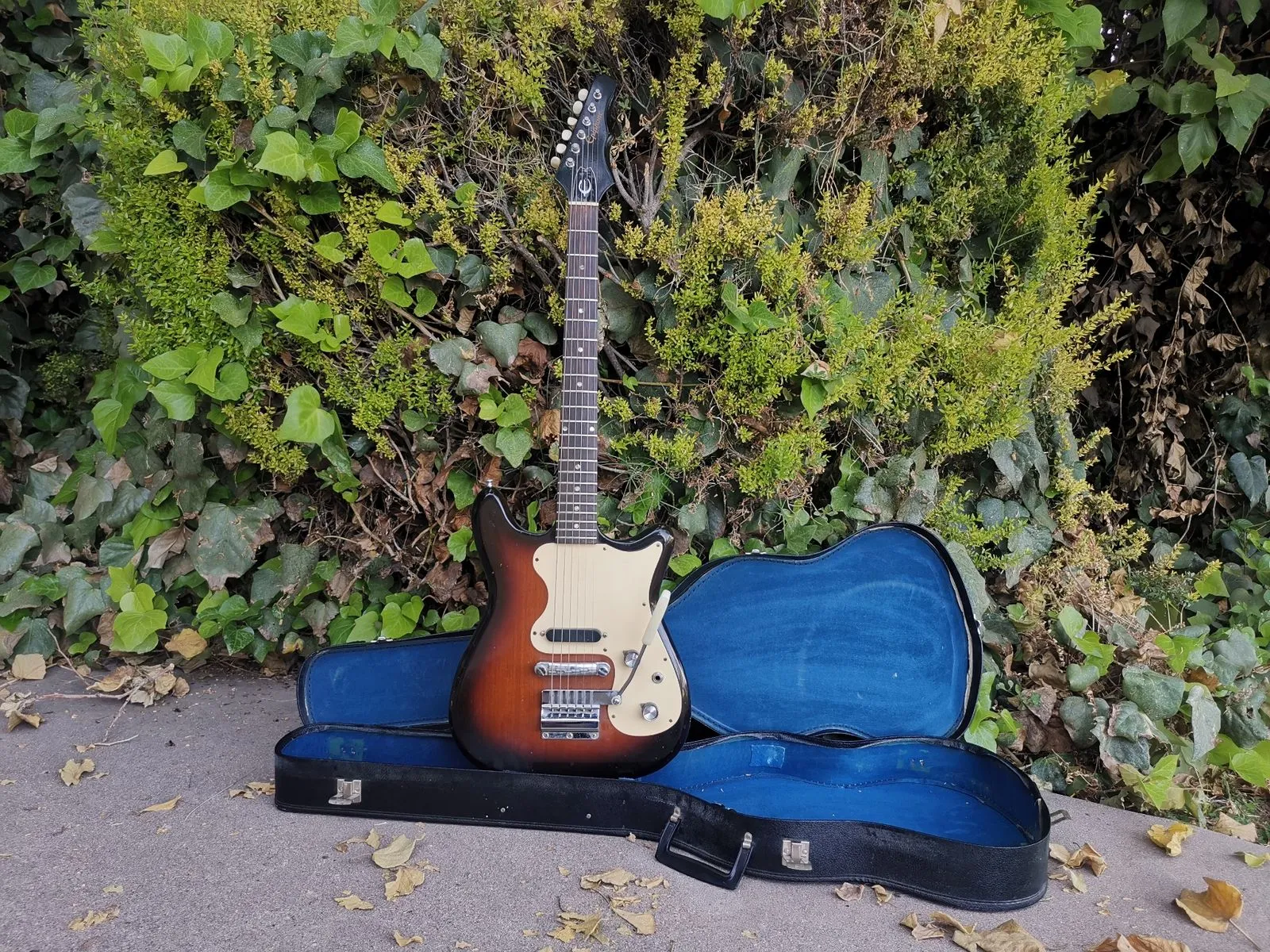
The later New York acoustic Epiphone Olympic price group is estimated at $1,700 to $2,550, while a 1963 to 1964 Kalamazoo Olympic Double solidbody is $1,750 to $2,600. The shared name covers different kinds of guitars. These ranges assume excellent, original condition with the original case. Start with the Olympic authentication guide if you are unsure which family, pickup count or scale length you have.
This Is An Estimate Of Market Value, Not An Offer To Buy And Not A Guarantee. Market Values Fluctuate; Have Your Specific Item Appraised.
Joe’s Estimated Market Values
Olympic Prices By Instrument Type
On a phone, swipe across the chart to see the estimated values.
| Model | Pricing Year Group | Configuration | Estimated Value |
|---|---|---|---|
| Olympic Acoustic | 1931 to 1936 | Acoustic; 1936 body-size crossover needs appraisal | $2,200 to $3,050 |
| Olympic Acoustic | 1937 to 1939 | Acoustic; later pricing group | $1,700 to $2,600 |
| Olympic Acoustic | 1940 to 1949 | Archtop; documented production ends in 1944 | $1,700 to $2,550 |
| Olympic Tenor | 1937 to 1949 | Four-string archtop; pricing group extends beyond production | $1,300 to $2,200 |
| Olympic Single | 1960 to 1962 | Single-cutaway solidbody | $1,350 to $2,250 |
| Olympic Single | 1963 to 1964 | Double-cutaway solidbody | $1,050 to $1,550 |
| Olympic Single | 1965 to 1970 | Solidbody | $850 to $1,300 |
| Olympic Double | 1960 to 1963 | Single-cutaway solidbody | $2,250 to $3,100 |
| Olympic Double | 1963 to 1964 | Double-cutaway solidbody | $1,750 to $2,600 |
| Olympic Double | 1965 to 1969 | Cherry or sunburst | $1,550 to $2,400 |
| Olympic 3/4 Scale | 1960 to 1963 | Short scale, sunburst | $1,300 to $2,150 |
| Olympic Special | 1962 to 1964 | Symmetrical double cutaway | $900 to $1,300 |
| Olympic Special | 1965 to 1970 | Asymmetrical double cutaway | $800 to $1,050 |
U.S. dollars. Joe’s October 2026 estimates start with published reference-guide ranges and apply his pricing adjustment. They are not averages of completed sales. Estimates assume excellent, original condition and the original case where applicable. These are market estimates, not purchase offers. An individual appraisal accounts for repairs and changes.
The acoustic rows lead the chart, followed by the Kalamazoo electrics. Documented acoustic body widths progress from 13⅝ inches in 1931 to 14¾ inches in 1935 and 15¼ inches by 1936. A large-body 1936 example needs individual appraisal; the early pricing bracket does not make it a smaller-body guitar. The 1940 to 1949 six-string and 1937 to 1949 tenor ranges are pricing categories, not independent proof of manufacture through 1949. The authentication guide explains the earlier end found in documented-instrument research. “Single” and “Double” describe pickup count in the electric family; the configuration column separately describes the cutaway. An Olympic Double doesn’t simply mean any Olympic with two cutaways. Keep those two uses of “double” separate when choosing a range.
A factory pickup arrangement must be verified from the body and wiring evidence. Installing a second pickup in a Single doesn’t make it an original Double. Likewise, a short-scale guitar needs to be measured rather than identified from a photograph of its overall length. The earlier double-cutaway Olympic shown in the 1962 catalog has no separate price row here. Do not put it in a single-cutaway row just because its year overlaps. Send its body, pickup layout and markings for an individual estimate; the later asymmetrical double-cutaway rows are not a substitute.
Small Archtops And Tenors
Value The New York Acoustic On Its Own Terms
Early And Later Acoustic Sizes
The earlier 1931 to 1936 acoustic group is $2,200 to $3,050. Later 1937 to 1939 examples are $1,700 to $2,600, and the 1940 to 1949 group is $1,700 to $2,550. These are acoustic instrument comparisons. An added pickup doesn’t move the guitar into the 1960s electric rows.
Photograph the bridge, neck joint, top and back carefully. A small archtop can need significant structural work even when its finish looks attractive. Show any repaired cracks and explain whether the action has been checked. Size and age don’t replace a condition assessment.
Four-String Olympic Tenors
The 1937 to 1949 tenor range is $1,300 to $2,200. Verify that the four-string neck is the factory configuration rather than a conversion or a six-string guitar missing strings. The headstock, nut and bridge should be shown together.
Keep the tenor separate from the six-string comparison even when both guitars share similar body appointments. A repaired neck or altered string spacing needs to be disclosed. If you do not know whether the neck is original to the body, send clear joint and label photographs before selecting a value row.
The acoustic Olympic’s run ends before the Philadelphia and Gibson periods discussed for other Epiphone archtops. A claimed Philadelphia-era acoustic Olympic needs its model and year checked against the label and body. A family story placing an instrument in the 1950s may describe when it was purchased rather than when it was built.
Pickup Count, Scale And Body
How Kalamazoo Olympic Versions Compare
Single-Pickup Olympics
The early single-cutaway Single is $1,350 to $2,250. The 1963 to 1964 double-cutaway group is $1,050 to $1,550, followed by $850 to $1,300 for the later row. Confirm the factory pickup opening and controls; a replaced guard can conceal a modification beneath it.
Olympic Double
The early single-cutaway Double range is $2,250 to $3,100, with the 1963 to 1964 double-cutaway group at $1,750 to $2,600. Later cherry or sunburst examples are $1,550 to $2,400. The year should be corroborated by the body and headstock features rather than chosen from the higher range.
Short Scale And Olympic Special
The short-scale row is $1,300 to $2,150. Olympic Specials have separate early and later entries. Measure the scale and identify the model before comparing prices. A small-looking guitar in a large case is not enough to establish the short-scale version.
For a Kalamazoo solidbody, originality questions often involve the pickup openings, tuners and bridge hardware. Photograph the instrument before changing anything. An old replacement part can have wear that resembles the rest of the guitar, so age alone does not establish that it left the factory there.
Unusual colors need a separate finish review. The ordinary ranges are not automatic custom-color appraisals, and a faded or stripped surface should not be assigned a rare finish name from a photograph alone. Show the edges, neck joint and protected areas that can be reached without disassembly. Leave an unresolved color unresolved until the evidence supports it.
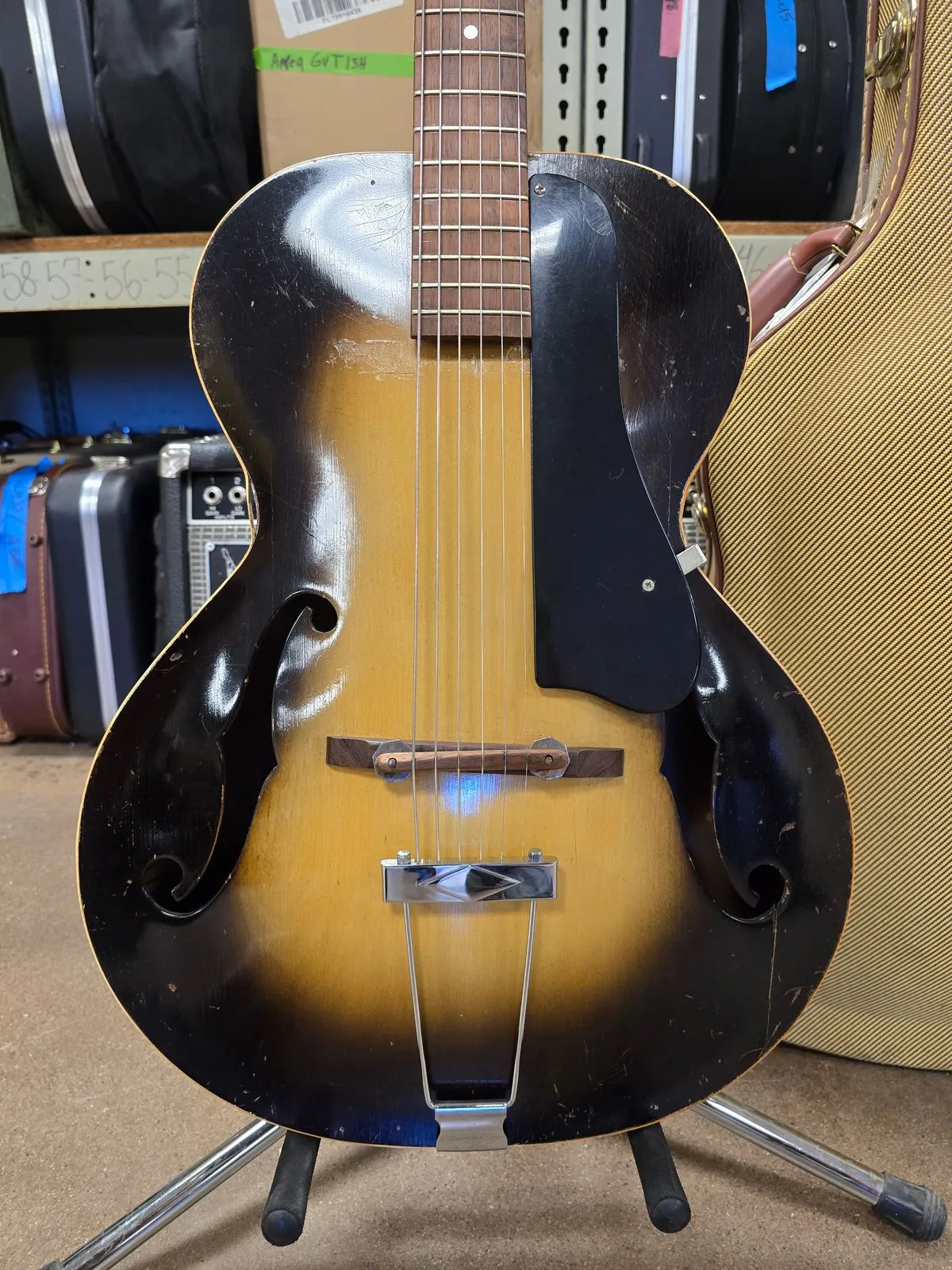
A 1940s acoustic Olympic and a 1965 single-pickup solidbody belong in separate value groups.
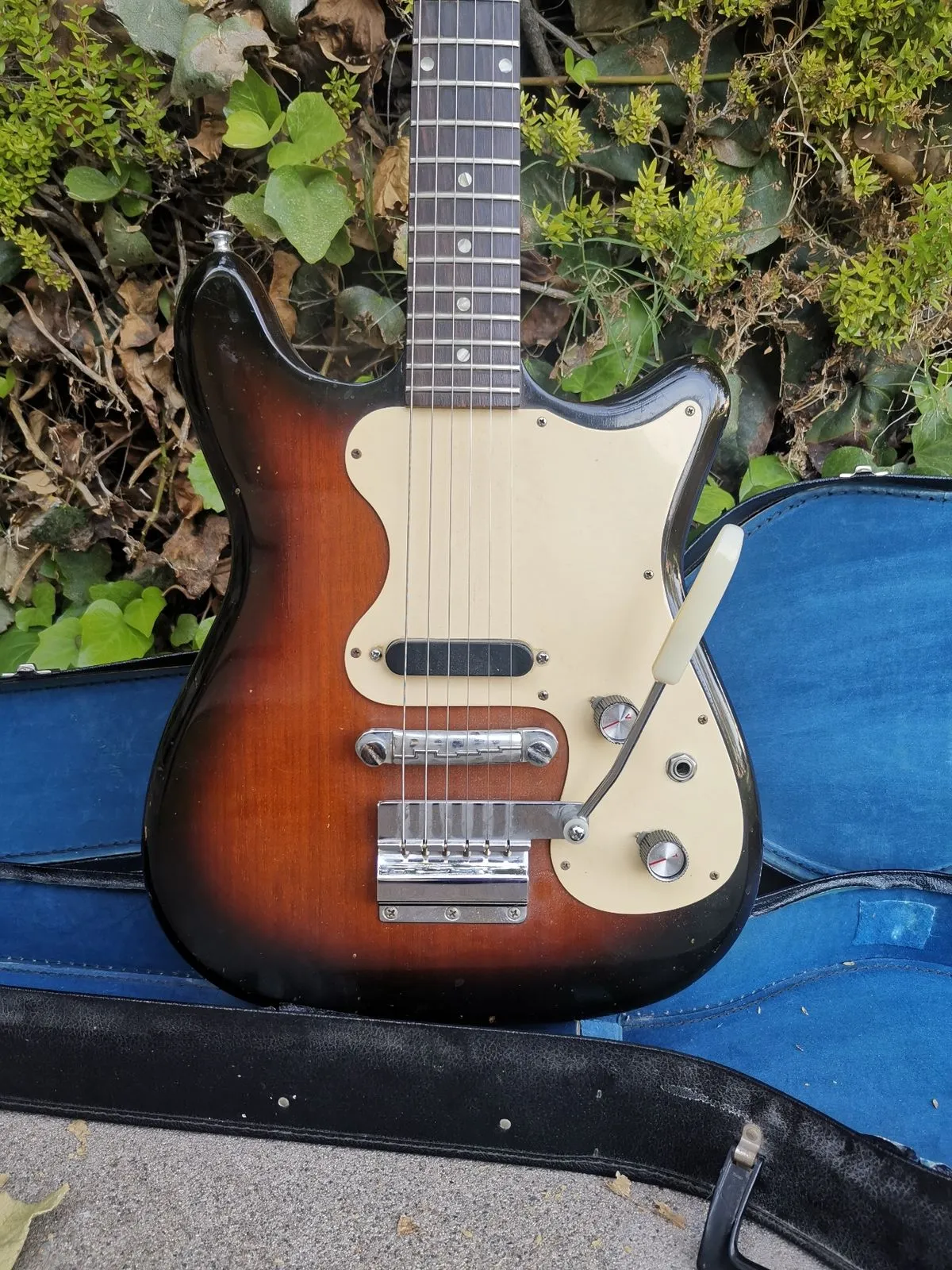
Acoustic And Single-Pickup Solidbody
The Olympic Examples In These Photos
The yellow-burst archtop is a 1940s Olympic from Joe’s shop. It has cracks and lifted binding, plus a replaced pickguard and tailpiece. Those condition issues need an individual appraisal rather than the chart’s excellent, original-condition estimate. The sunburst electric is a 1965 single-pickup Olympic with two controls and a vibrato. Its one-pickup configuration belongs with the Single family, not the two-pickup Double rows.
The Olympic photo archive shows both guitars in detail, including the acoustic label, binding and replacement tailpiece, and the electric’s full front, back and six-in-line headstock.
Look Under The Familiar Outline
Changes That Affect An Olympic Estimate
Routing For Larger Pickups
A larger pickup may require enlarging the original opening. The visible cover does not reveal the extent of that work. Include technician photographs or repair records if available. Read how pickup replacements affect value before assuming that returning a small pickup restores untouched condition.
Tuners And Headstock Work
Show both sides of the headstock, including unused screw holes and any plugs. Replacing tuners may have enlarged the shaft holes as well. A repaired break is a separate issue from a tuner swap, so document each instead of grouping everything as normal wear.
Finish And Neck-Joint Repairs
Photograph a refinished surface, repaired heel or damaged joint directly. Use the condition guide and the refinish guide for the appraisal questions. New paint does not remove the need to explain the underlying work.
A missing vibrato arm, changed bridge or replacement pickguard should be listed even when the guitar plays properly. Those parts affect completeness and can help explain earlier modifications. Include any old pieces retained in the case. They may clarify what happened, although they cannot undo a filled hole or routed cavity.
Before restoring a guitar for sale, review whether repairs should come before an appraisal. A working replacement can be a sensible player choice, but an owner should understand the original-condition comparison before spending money to chase the upper figure in a chart.
A Few Clear Views Beat A Guess
Build A Useful Olympic Appraisal Submission
Identify The Body And Scale
Send complete front and back views. For a solidbody, include a measurement from the nut to the twelfth fret and explain where you measured. For an acoustic, include the lower-bout width and a side view of the body.
Show Serial, Pickups And Hardware
Photograph the serial at several light angles, the front of the headstock, all pickup positions and the bridge. Include the rear control cover and any visible alterations. Do not dismantle an instrument just to complete the first photo submission.
Explain Repairs And Ownership
List known changes and supply receipts if you have them. Photograph the case and loose parts. Separate the year someone bought the guitar from the year it was made, and tell Joe when either date is uncertain.
Describe whether the instrument currently tunes and plays, or whether it has been stored without a recent check. A short recording can demonstrate a working pickup or noisy control, but it does not replace clear condition photographs. Keep the original image resolution so the serial and small mounting details remain readable.
Case condition also belongs in the submission. A later case may be perfectly useful for protection, but it is not the original case assumed by the chart. Show the inside and the outside, and explain any damaged latch or poor fit before discussing shipment.
If the guitar came from a family member, keep the inherited paperwork together. A purchase date and a build date can differ, so preserve both without silently substituting one for the other.
Send The Evidence
Ask Joe To Value Your Olympic
Send the instrument details for a free appraisal. If you are selling, use Sell My Epiphone and include the condition history. An offer is based on the individual guitar, not an automatic application of the chart’s upper endpoint.
Questions AboutEpiphone Values
Is An Olympic Always An Electric Guitar?
Does Olympic Double Mean Double Cutaway?
Does A Second Added Pickup Increase A Single To Double Value?
Are These Figures Purchase Offers?
The Last Word
A Value For Your Guitar
Choose the Olympic family first, then its factory configuration and condition. The Olympic identification guide helps with the name changes, scale and pickup layout. Clear photographs let the appraisal account for the instrument’s actual history.
This Is An Estimate Of Market Value, Not An Offer To Buy And Not A Guarantee. Market Values Fluctuate; Have Your Specific Item Appraised.