

New York Acoustic · Kalamazoo Solidbody
Epiphone Olympic Authentication Guide
The Olympic name changed instruments. A 1930s archtop and a 1960s solidbody share a name, not a construction checklist.
An acoustic Epiphone Olympic and a Kalamazoo Olympic solidbody are different instruments. Establish that distinction before interpreting a serial or comparing parts. The older archtop did not continue unchanged through Philadelphia into Gibson production; the Olympic name returned on a solidbody line. The Olympic value guide keeps those families separate, along with the Single, Double, short-scale and Special versions.
Authenticity And Originality Are Assessed From The Information Provided. A Hands-On Inspection Can Change The Conclusion.
Two Starting Points
Olympic Identity By Construction
| Family | Construction | Useful Evidence |
|---|---|---|
| New York Acoustic | Small archtop with f-holes and an acoustic bridge | Body size, early appointments, label and approximate serial context |
| Olympic Tenor | Four-string acoustic variant | Original four-string neck, tuner layout and bridge arrangement |
| Kalamazoo Olympic | Solid mahogany body and set mahogany neck in the original catalog | Pickup count, body outline, headstock, scale and Gibson-era serial |
| Olympic Special | Separate SB721 solidbody entry in the 1960s catalogs | Model designation and construction rather than the word Special alone |
| Three-Quarter Olympic | Short-scale version shown alongside full-scale models in 1961 | Measured scale and factory configuration |
A front photograph should quickly distinguish an archtop from a solidbody. It will not necessarily distinguish a factory Single from a modified Double or a full-scale guitar from a shorter version. Those questions need measurements and closer views. Keep the model description provisional until the relevant evidence is available.
An Acoustic Name That Was Reused
The New York Olympic And The Gap Before Kalamazoo
The Original Acoustic Olympic
The Olympic entered Epiphone’s acoustic line in 1931. Original catalog material and instrument research document its smaller archtop role and changes in body dimensions during the 1930s. The 1934 catalog is a useful period reference for the acoustic model. Compare its outline and appointments with the actual guitar instead of assuming that every inexpensive old Epiphone is an Olympic.
Inspect the f-holes, top, back and neck together. An added magnetic pickup doesn’t turn this guitar into a Kalamazoo solidbody. The tenor also needs a factory four-string neck; merely counting the strings currently installed isn’t sufficient identification.
No Continuous Philadelphia Archtop Run
The New York Epiphone Registry places the last documented acoustic Olympics in 1944. The value chart retains a broader 1940 to 1949 pricing category, which should not be read as proof of production in every listed year. It should not be extended through the Philadelphia years simply because other Epiphone archtops continued. A later purchase receipt can document ownership without proving that the guitar was built during that same year.
CMI acquired Epiphone in 1957 and Kalamazoo production began in 1958, as described in the Sheraton history. The solidbody Olympic belongs to the new Gibson-built line. Its body, pickups, headstock and serial system must be assessed on that basis, not as incremental changes to the old acoustic.
Both are Olympics: a 1940s acoustic archtop and a 1965 single-pickup Kalamazoo solidbody.
Body, Neck And Hardware
What The Kalamazoo Olympic Is Built From
The 1961 catalog describes a solid mahogany body and mahogany neck with an adjustable truss rod, rosewood fingerboard and a combined bridge and tailpiece. It lists single-pickup and double-pickup full-scale models as well as a three-quarter version. These are shallow solid instruments, not deep acoustic bodies with a pickup added.
The full-scale catalog specification is 24¾ inches. The 1966 solidbody matrix continues that full scale and lists the Olympic and Olympic Double with double cutaways, 22 frets and a 1⅜-inch body thickness. Treat those as a dated catalog specification, then compare the individual guitar. An earlier catalog photograph should not be used as proof that all later bodies kept the same outline.
The Melody Maker Comparison
The Olympic’s narrow single-coil pickup format and simple solidbody construction belong in a different comparison from the mini-humbucker-equipped Crestwood. The Gibson Melody Maker is the useful contemporary reference for the narrow pickup and student solidbody approach. The Epiphone still needs its own body and model identification, particularly as the Olympic and Olympic Special designs separate.
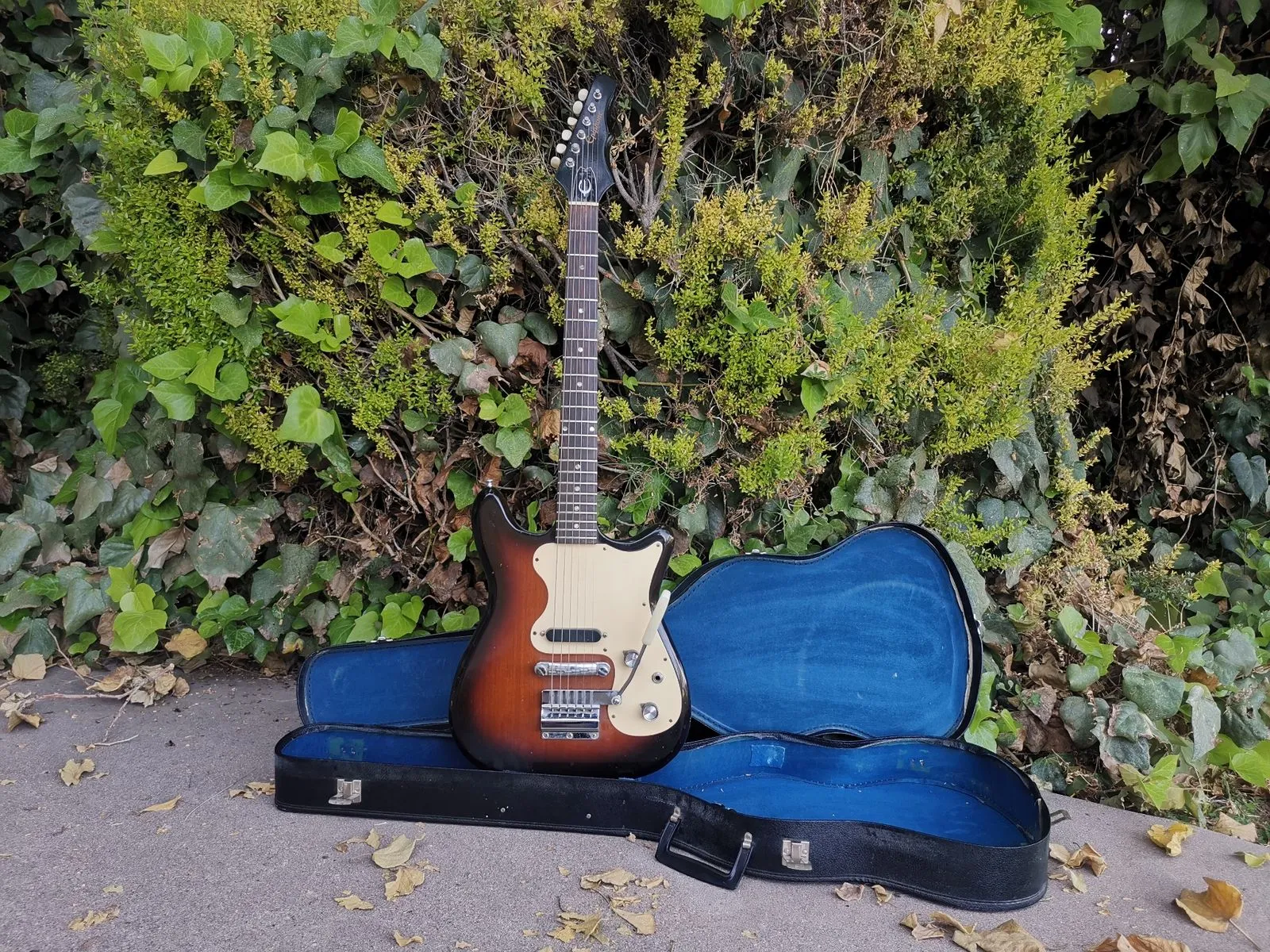
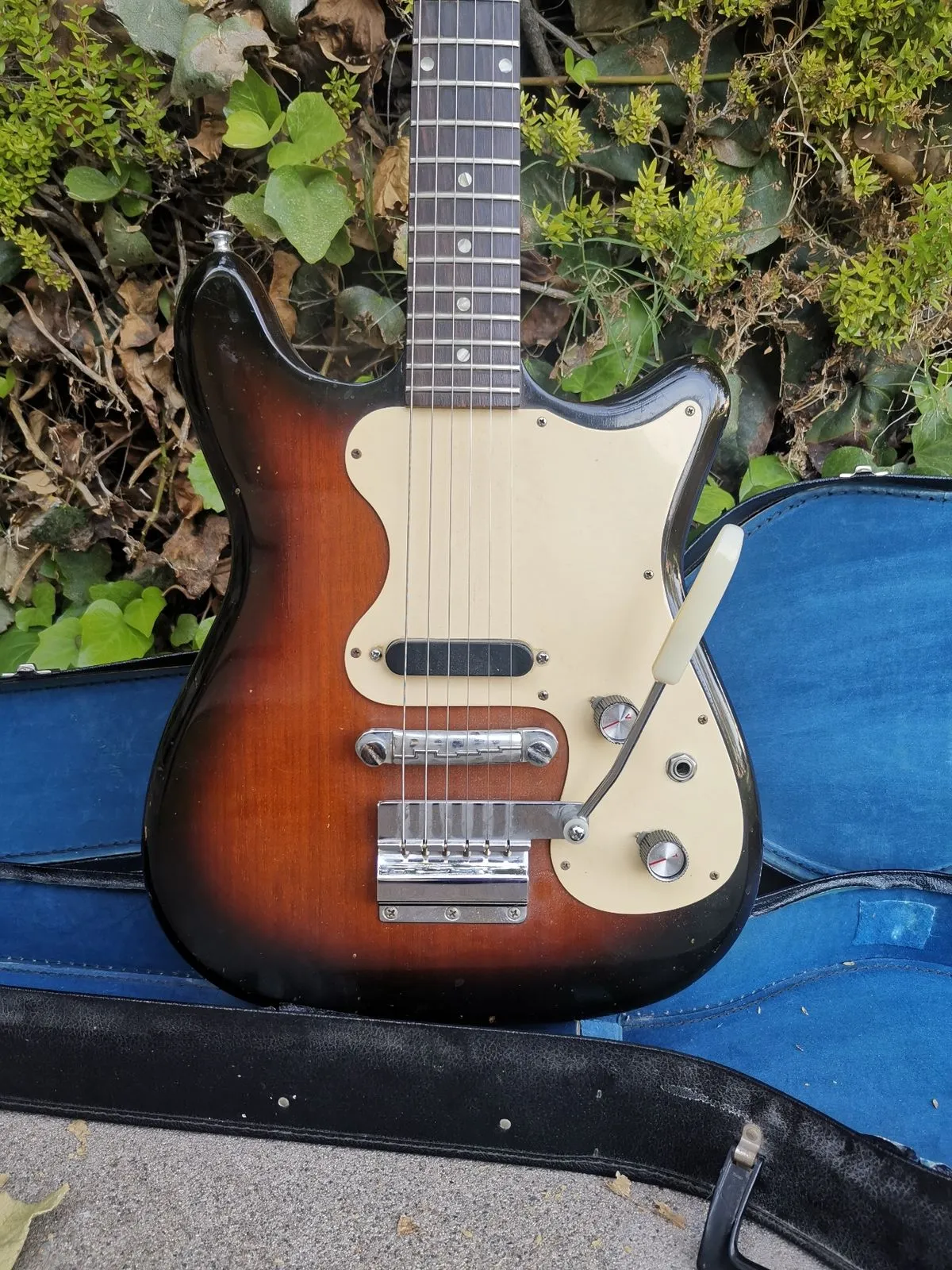
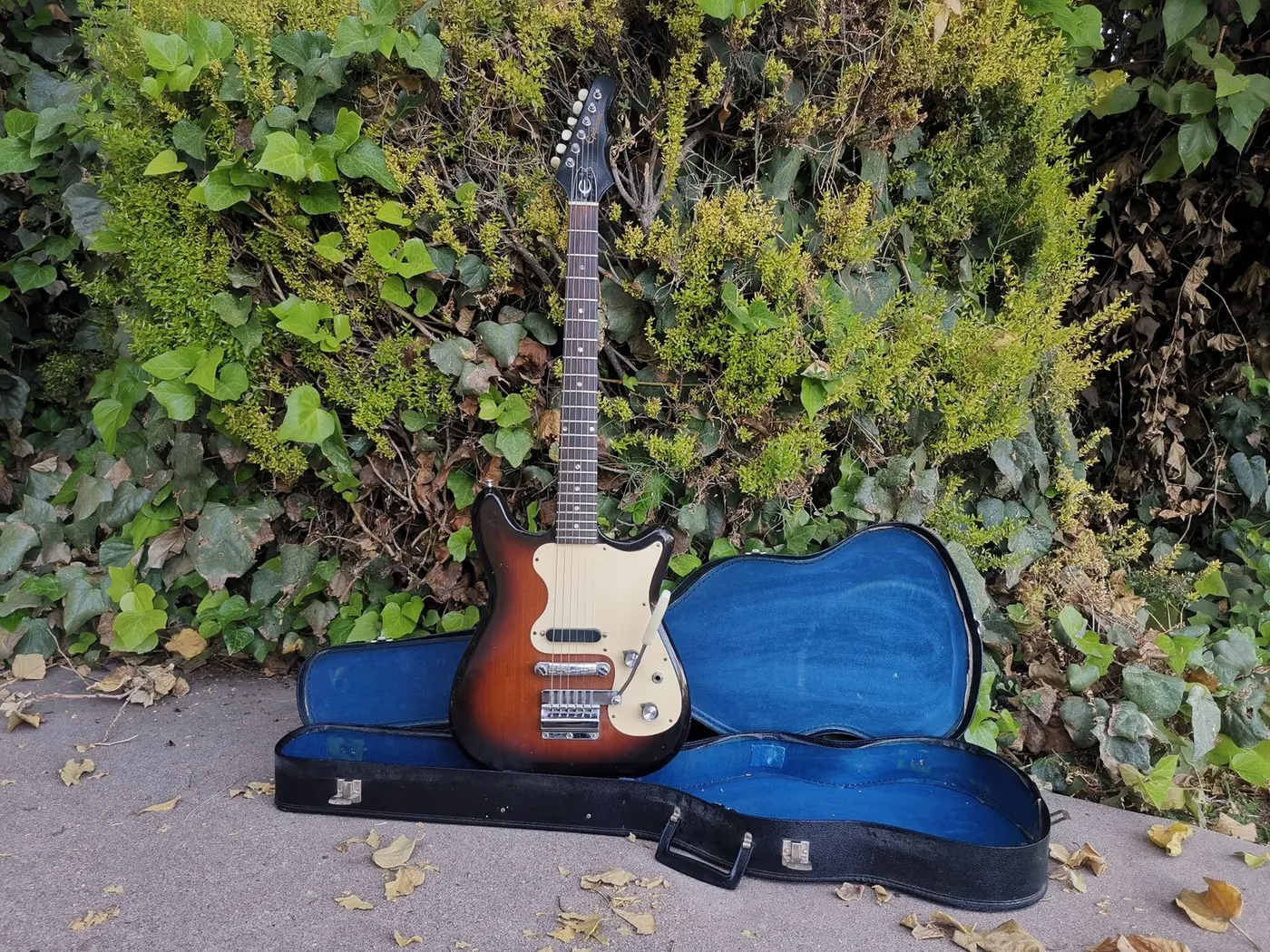
Don’t apply the New York pickup to mini-humbucker transition from the Sheraton or Crestwood to every Olympic. A small pickup isn’t automatically a mini-humbucker. The 1965 Olympic pictured here has one narrow single-coil pickup and two controls. A Crestwood’s mini-humbuckers are a different pickup type. Replacement covers or an enlarged route can complicate that first visual check.
Headstock And Tailpiece Changes
The original catalogs show both the earlier three-a-side approach and the later extended six-in-line headstock within the solidbody family. The Crestwood history explains the broader Kalamazoo design changes. Don’t turn a feature from that model into a universal cutoff date for every Olympic.
Inspect the bridge studs, any vibrato mounting and unused holes. These solidbody bridges and vibratos are different from the Frequensator used on Epiphone archtops. A modified Olympic carrying unfamiliar hardware needs an alteration description, not an attempt to fit an acoustic tailpiece rule to a solidbody.
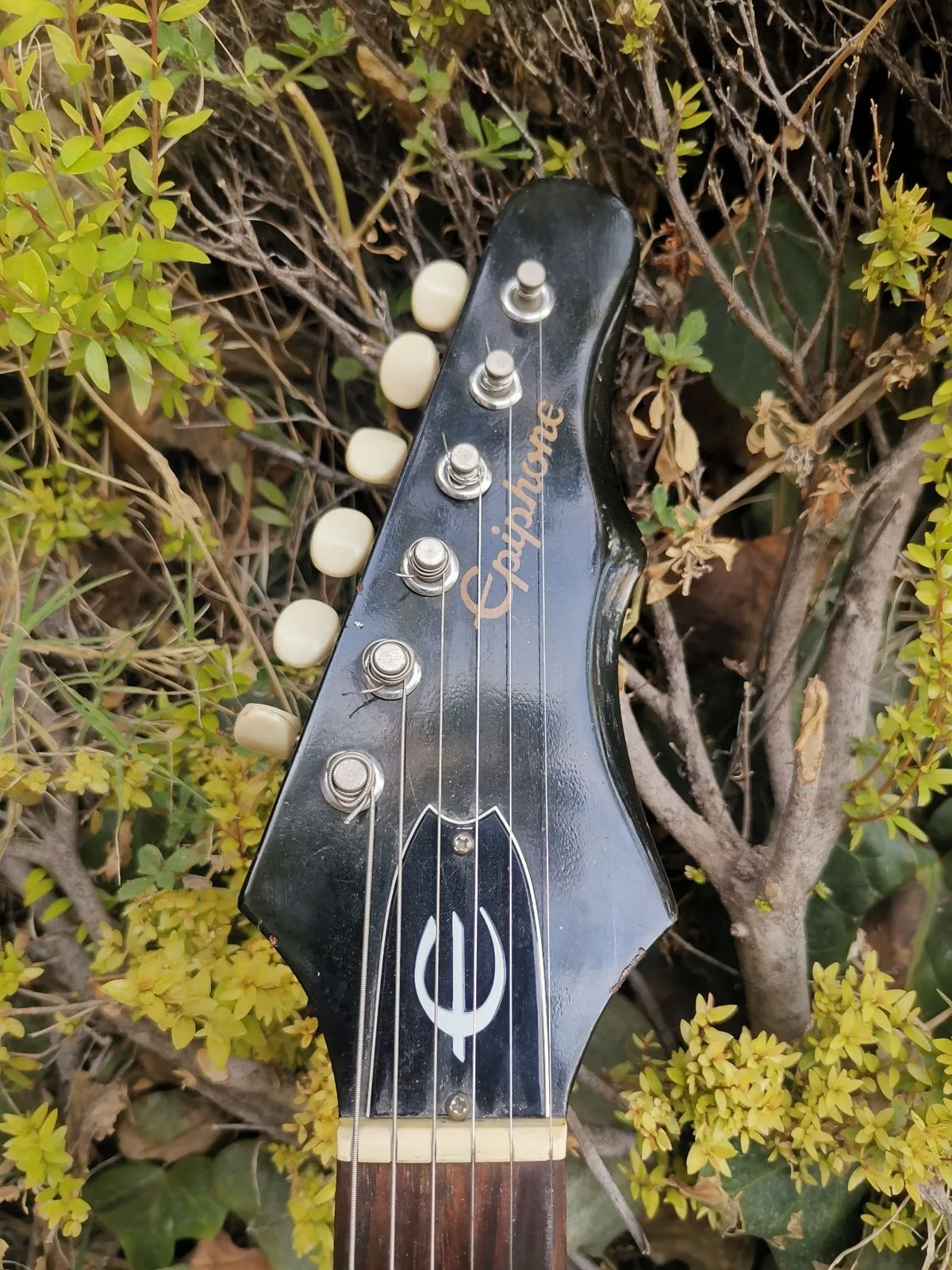
A neck replacement or repaired headstock can preserve an old serial while changing the visible outline and tuners. Photograph the neck joint and the back of the headstock so those possibilities can be evaluated. The combination of features matters more than one isolated clue, especially on a guitar that has been altered for playing.
Factory Layout Before Year
Separate The Solidbody Olympic Versions
Olympic Single
The Single has one factory pickup. The 1965 sunburst example in these photos has one narrow pickup and two knobs. Confirm the pickup opening and control layout, and look for evidence of a removed second pickup beneath an altered guard. A guitar currently carrying one pickup might have started as a Double, so the present count is the first observation rather than the final conclusion.
Olympic Double
The Double has two factory pickup positions. A Double’s two-pickup layout differs from the single-pickup 1965 guitar pictured here. Inspect the openings, mounting and wiring history if a part appears mismatched. Two period pickups installed later don’t establish a factory Double configuration.
Three-Quarter Scale
The 1961 catalog gives the short-scale instrument its own designation. Measure from the nut to the twelfth fret and double that distance to establish scale length. Overall guitar length is affected by the headstock and body shape, so a small case or short-looking neck is not an adequate substitute.
Olympic Special
The Special is a distinct SB721 catalog entry. It should not be confused with a seller’s informal description of an unusual Olympic. Compare its body, neck joint, pickup count and hardware with the appropriate catalog. The 1966 catalog matrix and illustrations need to be read together rather than treating one photograph as a precise changeover calendar.
Avoid A Single-Feature Date
A Practical Olympic Production Sequence
The Acoustic Family
Use acoustic catalogs and pre-Gibson serial research. Preserve the distinction between smaller early bodies, later acoustic configurations and tenors. There is no reason to apply a Gibson headstock serial table to this part of the model’s history.
Single-Cutaway And Short-Scale Catalog Models
The 1961 catalog supplies an early solidbody reference, including full-scale and short-scale listings. Match the scale and pickup arrangement before comparing a guitar with that illustration. The catalog is evidence of an offering, not proof that every photograph represents the final specification of every instrument shipped that year.
The Earlier Double-Cutaway Olympic
The 1962 catalog illustrates an Olympic with two cutaways and lists the Single, Double and three-quarter versions. This precedes the later asymmetrical body. A 1962 double-cutaway therefore should not be rejected because a price category describes an overlapping year group as single-cutaway. The value chart does not provide a separate estimate for this transitional configuration.
Double-Cutaway Olympic And Separate Special
The later catalogs distinguish Olympic, Olympic Double and Olympic Special. Body asymmetry, headstock shape and hardware should be assessed as a group. A guitar combining an earlier headstock with a later-looking body needs further comparison rather than an automatic accusation of a replaced neck.
End Of The Original American Scope
The house history places the move to Japanese production in 1970. Later imports, revived acoustic models and signature instruments belong to other production families. Their historical styling is not evidence of a 1960s build.
1940s Acoustic And 1965 Electric
Olympic Photos From Joe’s Shop
New York Acoustic
1940s Yellow-Burst Olympic Archtop
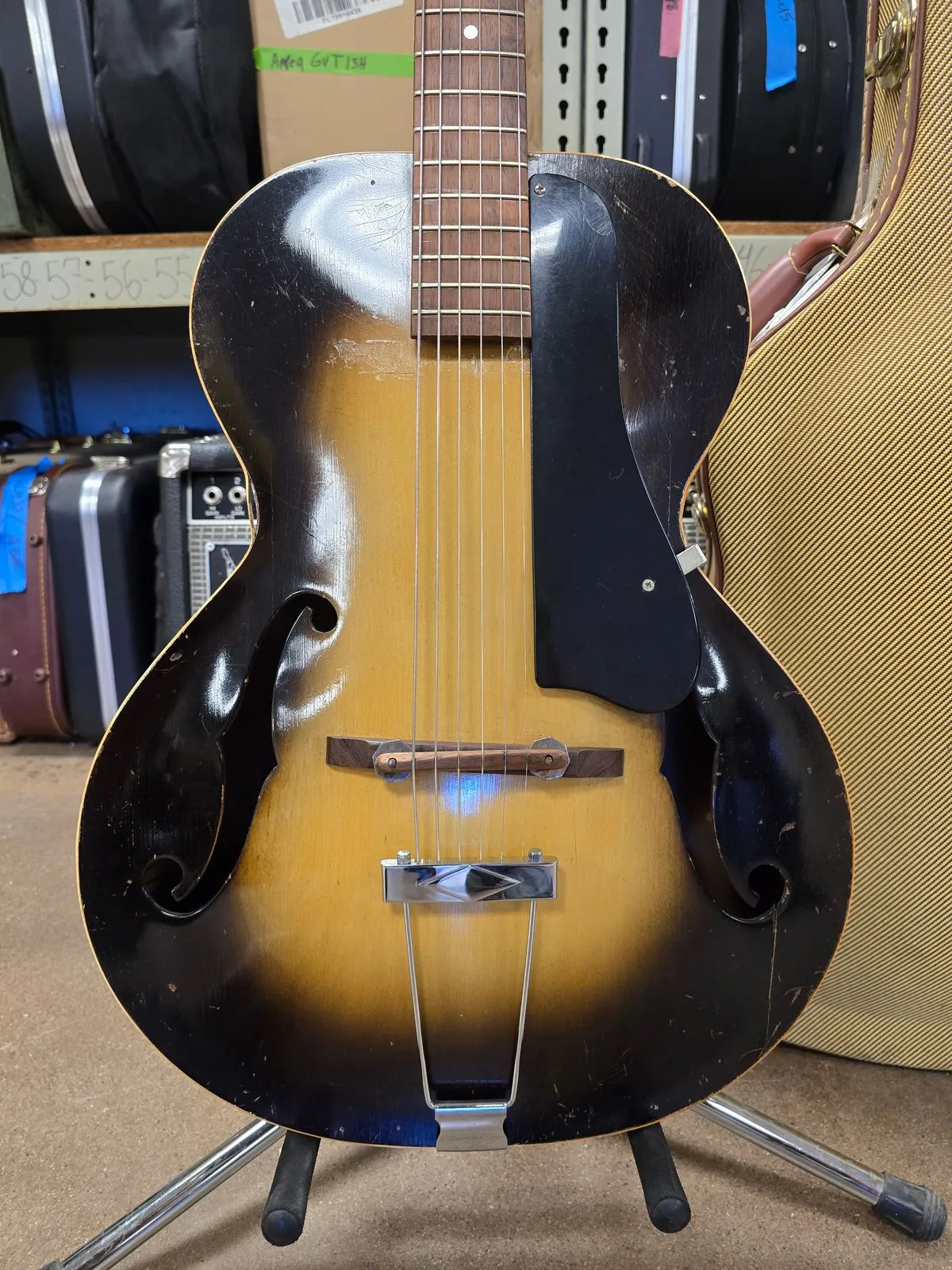
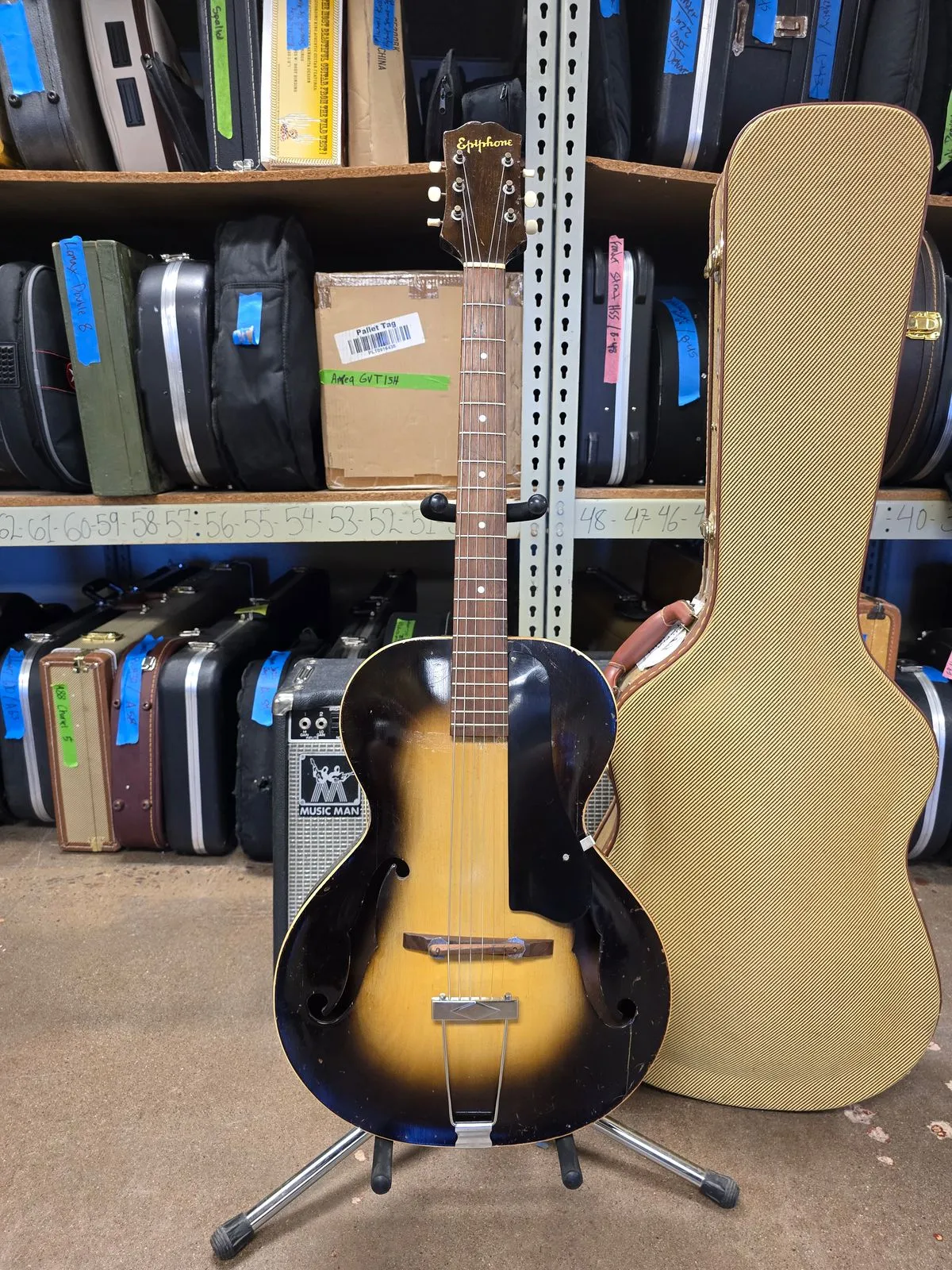
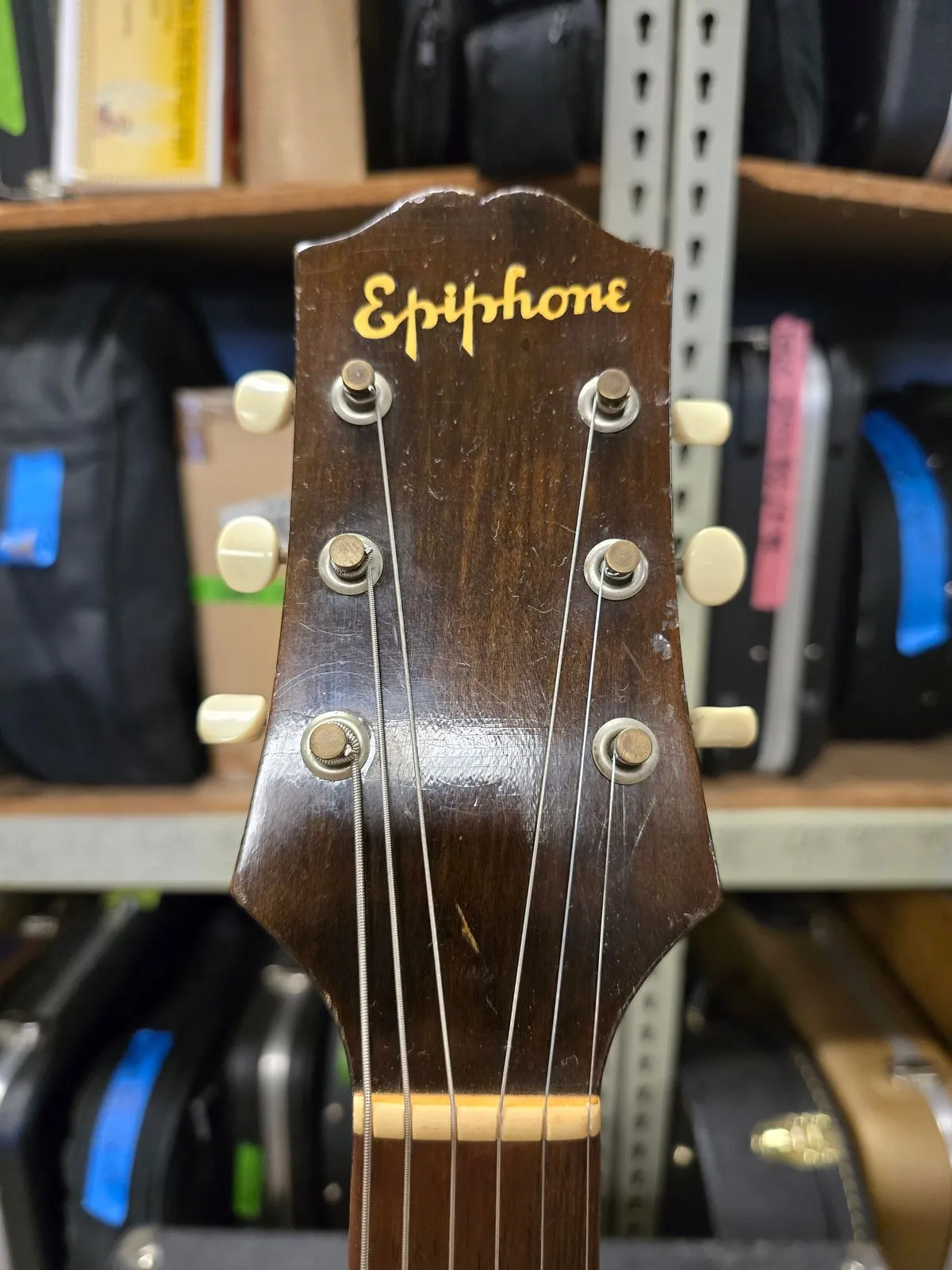
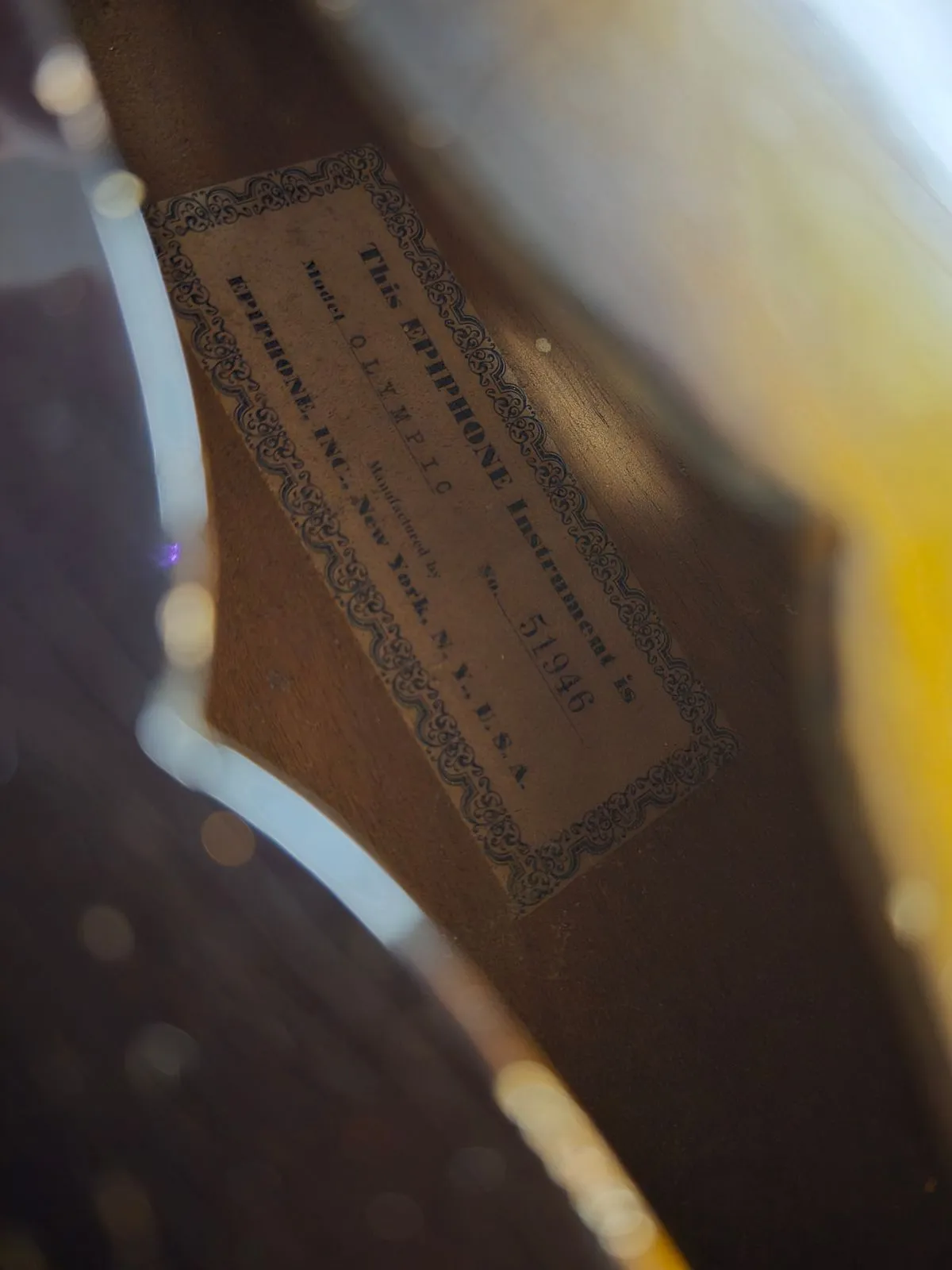
This six-string Olympic shows the older acoustic construction: a non-cutaway body, f-holes, acoustic bridge and separate tailpiece. The headstock has a script Epiphone logo and three tuners on each side. The internal label names the model Olympic and shows serial 51946 with Epiphone’s New York address.
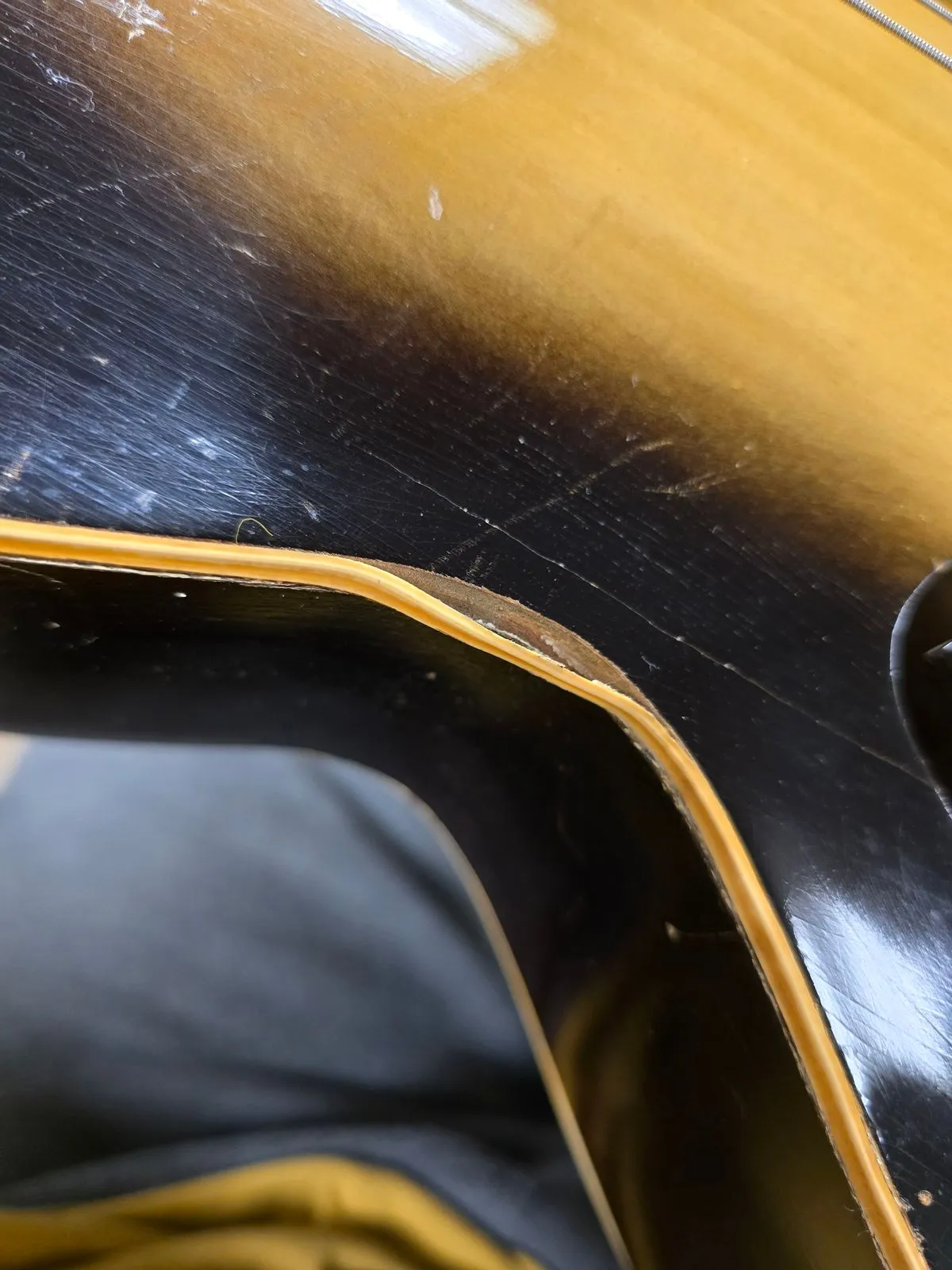
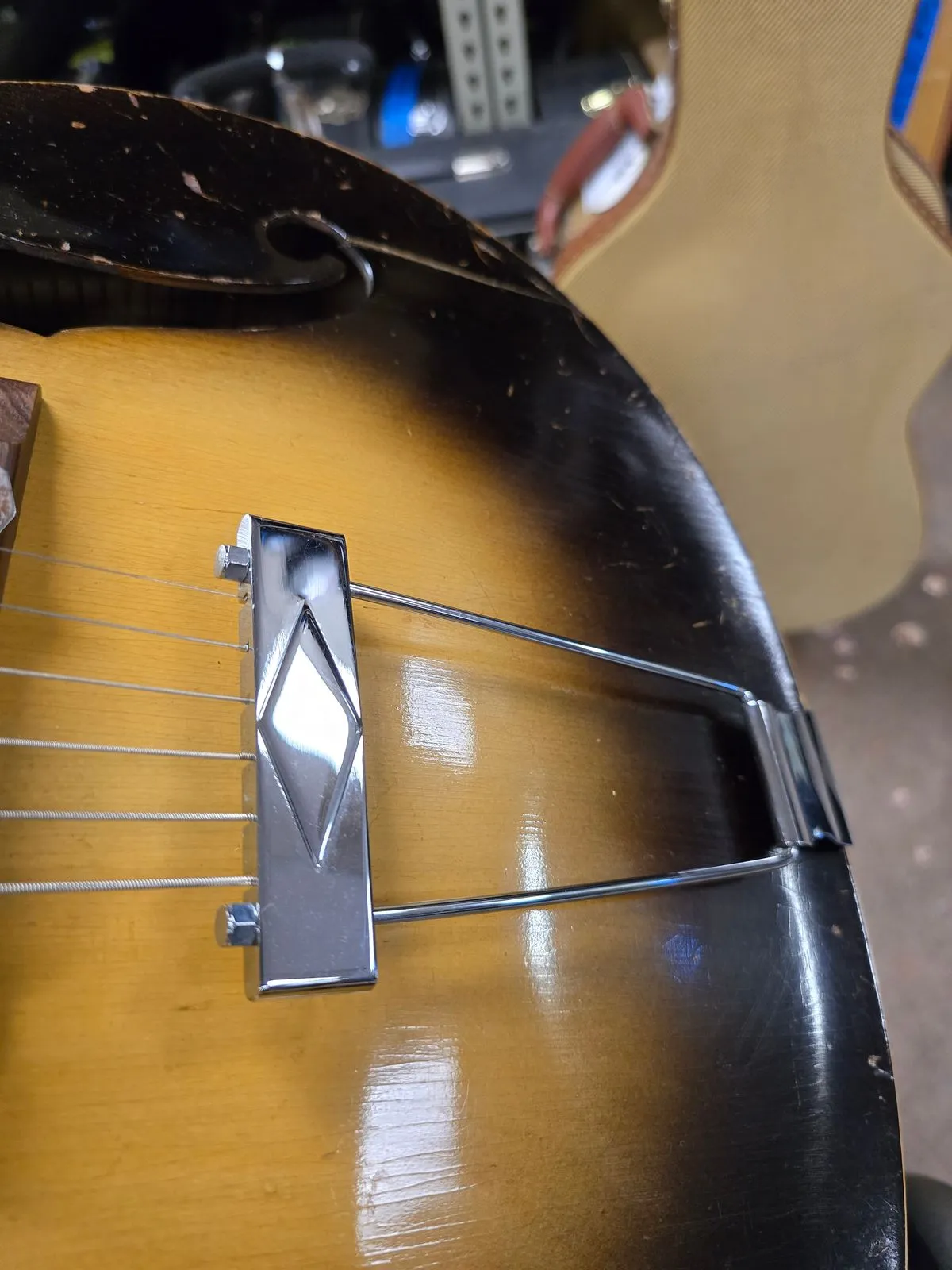
Joe’s sold listing records cracks, lifted binding, and a replaced pickguard and tailpiece. The binding and tailpiece close-ups keep those condition details visible. The installed parts should not be used as a factory-original hardware reference. The listing identifies the guitar as a 1940s instrument; these photographs do not establish a more precise year.
Kalamazoo Solidbody
1965 Sunburst Single-Pickup Olympic
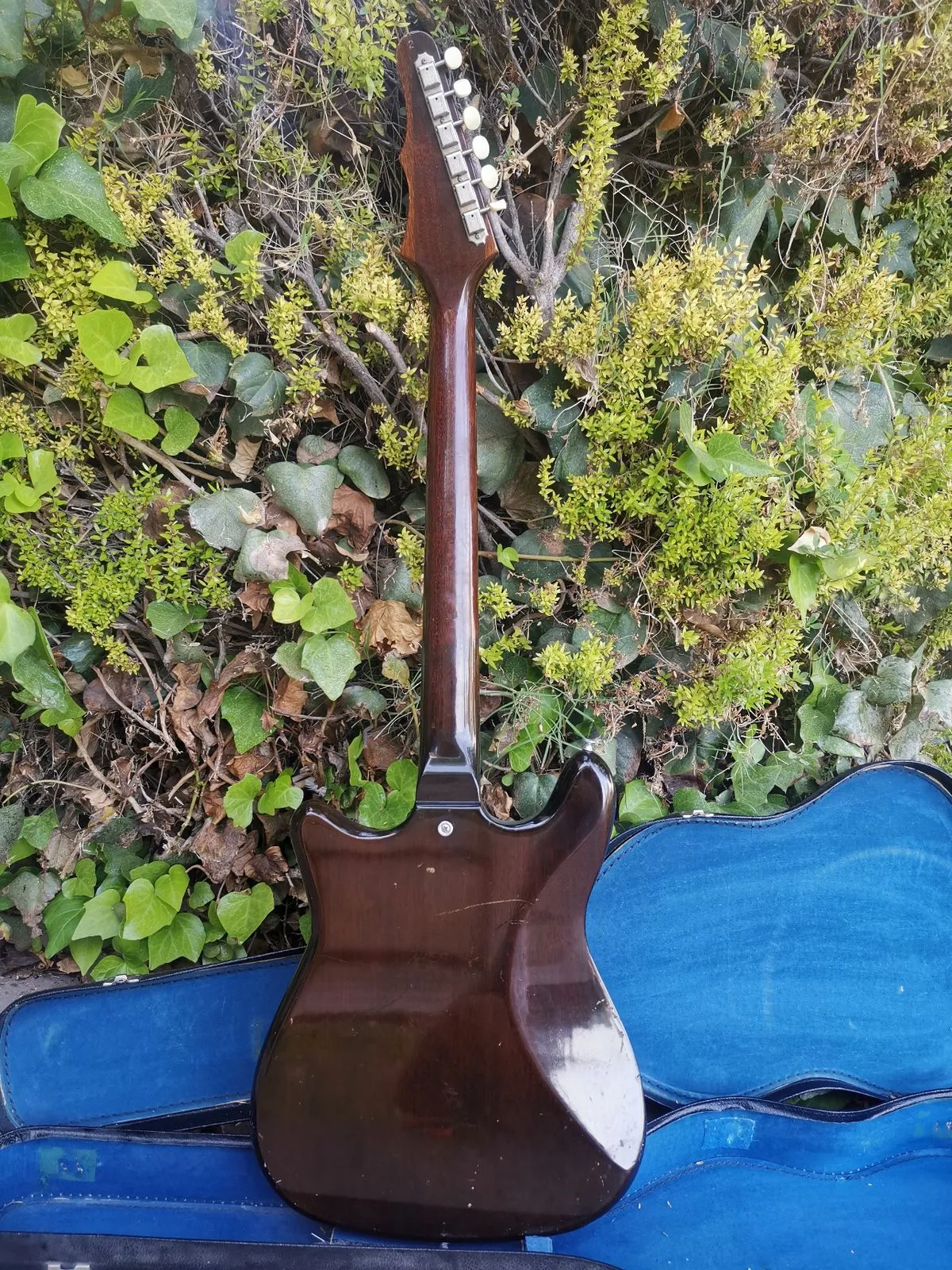
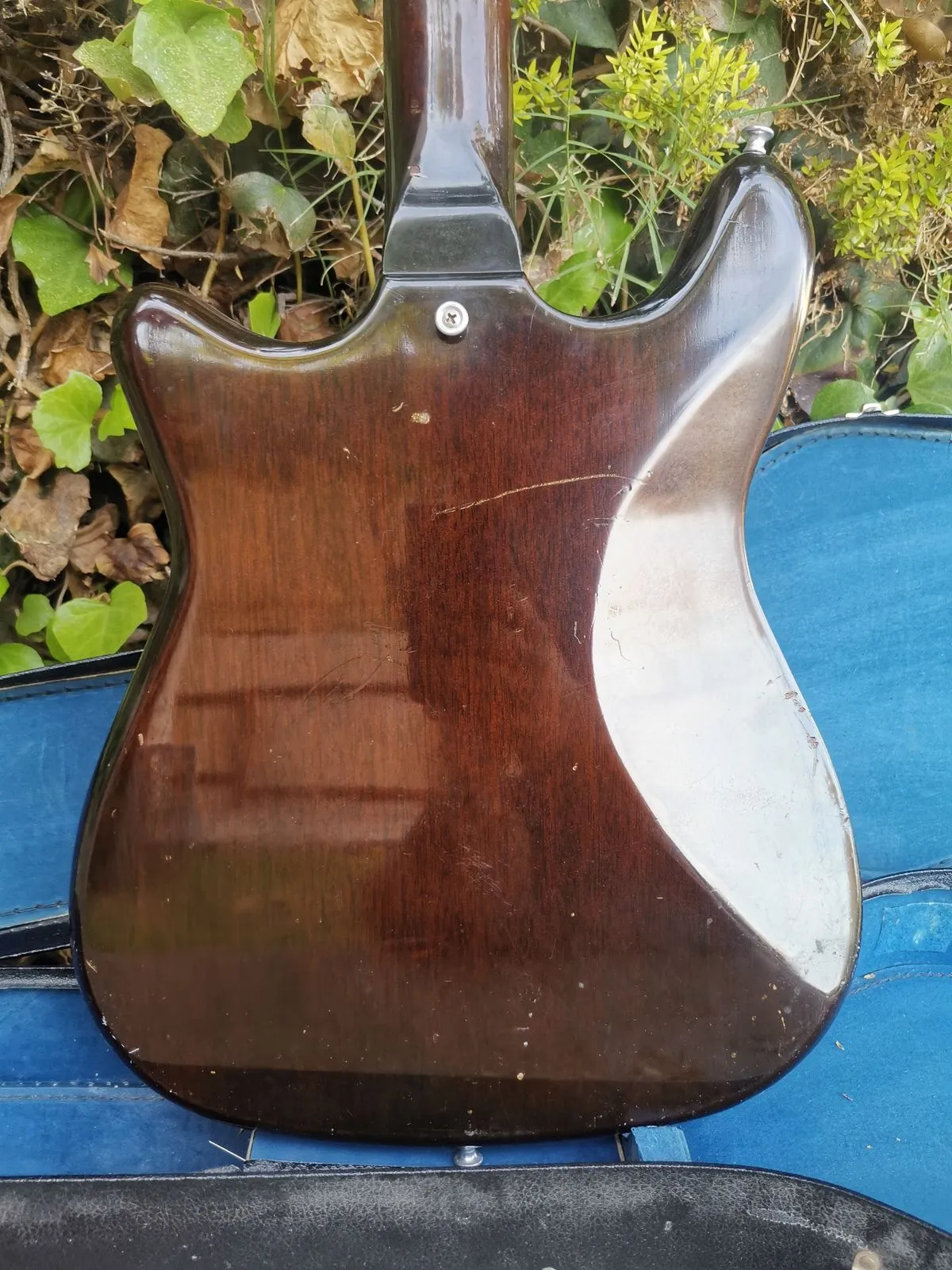
The 1965 Olympic has an asymmetrical double-cutaway body, one narrow single-coil pickup, two control knobs, a vibrato and a six-in-line headstock. The full front, body close-up, full back, headstock and rear-body views show how different it is from the acoustic Olympic. Its two cutaways do not make it an Olympic Double; Double refers to the two-pickup version.
Joe’s sold listing describes a wide nut but gives no numeric measurement. Measure the actual guitar when checking that feature. The visible case is included in the photograph without an original-case claim, and the five views do not provide a readable serial close-up. Use the body, pickup layout and headstock as the visible comparison points.
New York And Kalamazoo Use Different References
Olympic Labels And Serial Systems
The New York Acoustic Olympic Label
The acoustic label reads Olympic and serial 51946. Its New York address identifies the pre-Gibson context. Keep the whole label in the record, including the model and address, rather than separating five digits from the guitar they describe.
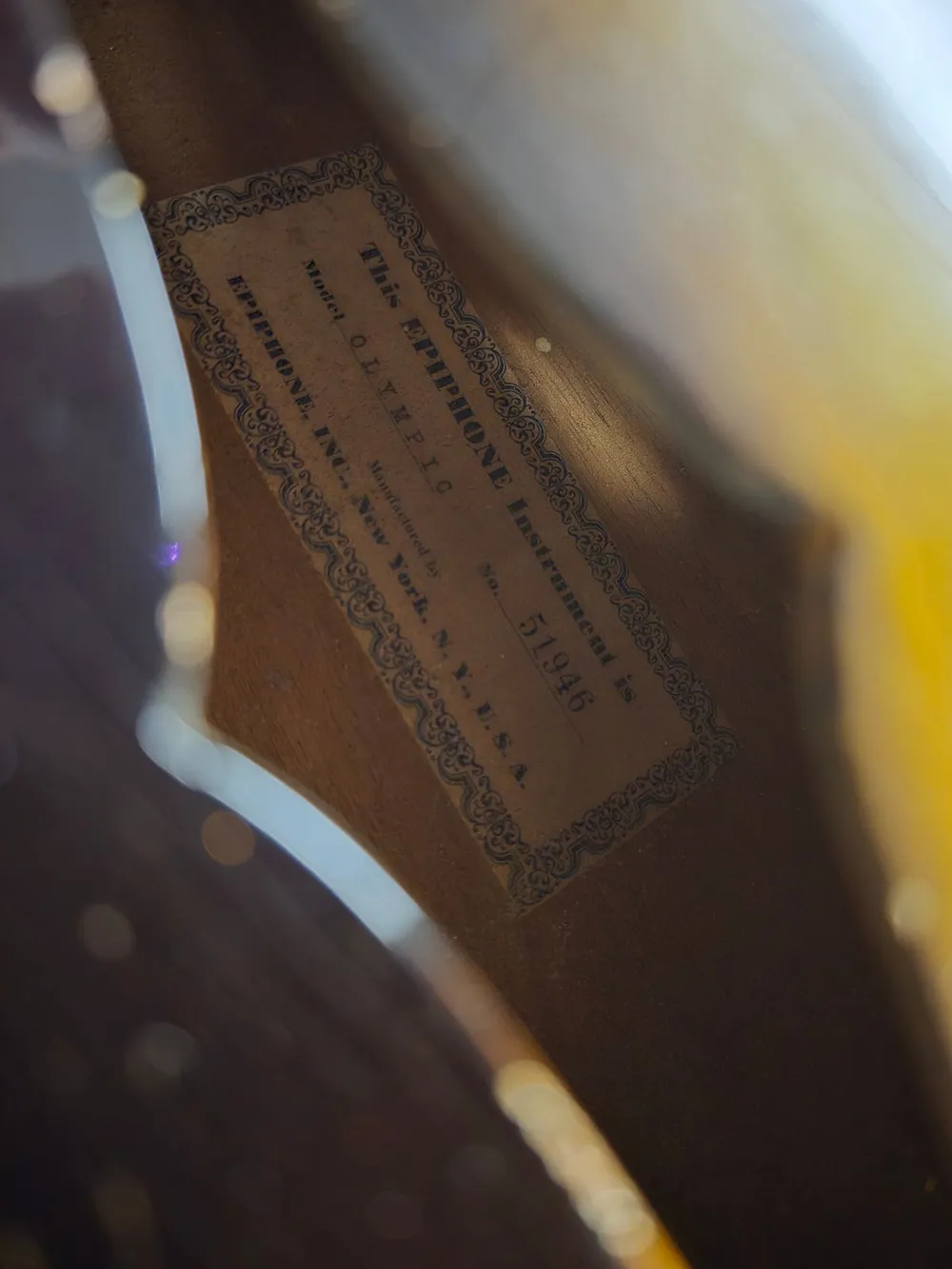
Use pre-Gibson research for this acoustic Olympic. Model-batch numbering and incomplete surviving records limit the precision of serial estimates. Photograph the label, body and neck details, and retain every character that can actually be read. Do not restore missing digits from a number that seems close in an online list.
Kalamazoo Epiphones use Gibson-era numbering, so the Gibson serial guide is the appropriate reference for the solidbody family. A candidate year still has to fit the body, headstock and other features. The 1965 electric shown here comes from Joe’s dated listing; its gallery does not supply a readable serial photograph. Request a clear rear-headstock view before making a serial-based dating comparison.
Evidence Of A Changed Configuration
Read The Pickguard And Control Layout
Separate The Guard From The Wood Beneath It
A replacement guard can be cut for a different pickup layout without revealing what happened to the body. Start by photographing the guard’s outline, screw positions and pickup openings. Look for exposed unused holes or a cover that does not sit squarely in its opening. Those observations identify questions for a closer examination; they do not by themselves prove a particular conversion.
For the 1965 Olympic, the photograph records one narrow pickup and two knobs in one view. Keep that complete view with any later close-ups so the parts can be related to the same instrument. A detached pickup photograph without its original location is less useful for establishing the factory configuration.
Document The Circuit Without Guessing From Sound
Working pickups and controls establish that the present system functions. They do not establish that the wiring, pots or pickups are original. If a technician opens the control area for a necessary inspection, retain photographs of the component markings and connections before any repair.
Do not date the entire Olympic from one replaced potentiometer or from an unverified claim about how an original pickup should sound. Component evidence belongs beside the body and neck evidence. A changed circuit can be described precisely while leaving the broader model identification intact.
Construction, Configuration And Changes
Inspect A Kalamazoo Olympic In This Order
Measure The Scale And Identify The Body
Record the nut-to-twelfth-fret distance, both cutaways and the neck joint. Compare the body with the appropriate Olympic or Special catalog entry. Keep the measurement method in the photo record.
Check Factory Pickup Openings
Count the pickups and controls, then inspect visible edges for enlarged routes or altered guard openings. Technician photographs are useful when concealed work needs to be examined. Do not remove fragile parts for a first appraisal request.
Photograph Headstock And Tuners
Include logo, outline, serial and tuner backs. Note plugs, extra screw holes, enlarged shafts and any repaired break. A changed tuner set should not disappear behind a statement that the guitar is original.
Review Bridge And Vibrato Mounts
Show the studs, tailpiece area and any unused holes. Compare the installed hardware with the period model specification, while keeping later player modifications separate from factory options.
Reconcile The Evidence
When a serial candidate conflicts with the physical features, retain the broader period and ask for a closer review. The task is to identify the instrument accurately, not to produce a single year at any cost. Preserve the inspection photographs alongside any repair invoice.
Originality Is A Separate Finding
Repairs And Later Olympic Names
A routed body, replaced neck or refinished surface requires a specific description. A legitimate Kalamazoo instrument can have substantial changes, and an old serial alone cannot certify the remaining structure. Follow the condition guide once the model and alterations have been established.
Post-1970 Japanese, Korean and Chinese production, Elitist instruments and signature models must be identified as their actual later series. Modern acoustic name reuse also needs that distinction. A recreated Olympic outline or historical model year in a product name does not date the physical guitar. The full serial system, country marking and original paperwork are better starting points.
Include a side photograph of the neck joint and bridge together, so a repair or changed setup can be assessed in context.
Send The Evidence
Send Your Olympic For A Closer Review
Send the body, scale measurement, serial and modification photos for a free appraisal. The Olympic value guide follows the confirmed configuration. Use Sell My Epiphone to discuss a purchase offer.
Original Catalogs And House Dating Guides
Olympic Research References
- Joe’s 1940s Olympic Archtop
Sold yellow-burst acoustic example with cracks, lifted binding, and replaced pickguard and tailpiece.
- Joe’s 1965 Sunburst Olympic
Sold single-pickup solidbody example supplying the 1965 date and wide-nut description.
- 1934 Epiphone Catalog
Original acoustic Olympic listing.
- New York Epiphone Model Research
Acoustic Olympic introduction, size development and end of the original acoustic run.
- 1961 Epiphone Catalog
Original Olympic solidbody materials, full-scale and short-scale variants, pickup counts and hardware.
- 1962 Epiphone Catalog, Page 9
Original illustration of the earlier double-cutaway Olympic with Single, Double and three-quarter listings.
- 1964 Epiphone Catalog, Page 5
Original Olympic and Olympic Special catalog entries and illustrations.
- 1960 Gibson Catalog, Page 12
Original Melody Maker description and illustration for the narrow-pickup student-solidbody comparison.
- 1966 Epiphone Catalog, Page 4
Solidbody specification matrix and comparison of Olympic pickups with the Crestwood family.
- JVG Crestwood History
Broader Kalamazoo solidbody design chronology and Gibson-era serialization.
- JVG Gibson Serial Guide
Number-system reference for Gibson-built Epiphones, checked against physical features.
Questions AboutEpiphone Identification
Did The Acoustic Olympic Become The Kalamazoo Solidbody?
Does An Olympic Have Mini-Humbuckers Like A Crestwood?
How Do I Identify A Short-Scale Olympic?
Can I Use One Serial Chart For Both Olympic Families?
The Last Word
Keep The Evidence Together
Start with acoustic or solidbody, then establish the factory version and its alterations. Let the serial support that identification rather than overrule it. The Olympic value guide provides separate comparisons once those questions are settled.
Authenticity And Originality Are Assessed From The Information Provided. A Hands-On Inspection Can Change The Conclusion.