

Kalamazoo Casinos · 1961 To 1970
Epiphone Casino Value Guide
Original American Casino prices, with separate ranges for one-pickup and two-pickup guitars.
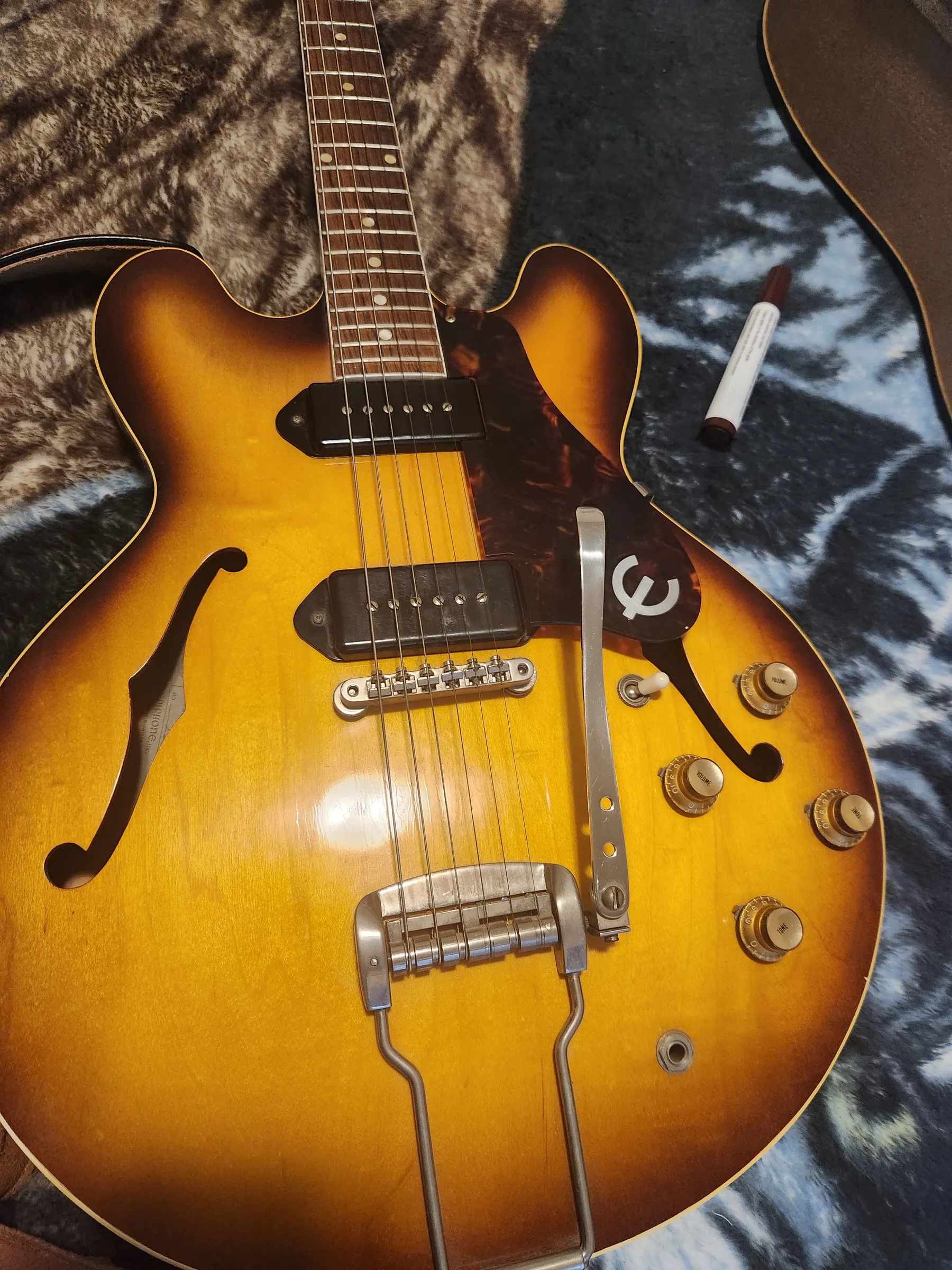
A vintage Kalamazoo Epiphone Casino with two original P-90 pickups is estimated at $6,150 to $8,800 for 1961 to 1962, $4,900 to $7,550 for 1965, and $4,300 to $6,450 for 1966 to 1970. Those ranges assume excellent condition, original parts and the original case. A one-pickup Casino belongs in its own row. Before comparing prices, use the Casino authentication guide to establish the production period and factory configuration. A familiar outline or a sunburst finish doesn’t settle either question.
This Is An Estimate Of Market Value, Not An Offer To Buy And Not A Guarantee. Market Values Fluctuate; Have Your Specific Item Appraised.
Joe’s Market Estimates
Casino Values By Year And Pickup Count
On a phone, swipe across the chart to see the estimated values.
| Model | Pricing Year Group | Configuration | Estimated Value |
|---|---|---|---|
| Casino | 1961 to 1964 | One P-90 pickup | $4,250 to $6,400 |
| Casino | 1965 | One P-90 pickup | $3,500 to $5,300 |
| Casino | 1966 to 1969 | One P-90 pickup | $3,150 to $4,750 |
| Casino | 1961 to 1962 | Two P-90 pickups | $6,150 to $8,800 |
| Casino | 1963 to 1964 | Two P-90 pickups | $5,100 to $7,650 |
| Casino | 1965 | Two P-90 pickups | $4,900 to $7,550 |
| Casino | 1966 to 1970 | Two P-90 pickups | $4,300 to $6,450 |
U.S. dollars. Joe’s October 2026 estimates start with published reference-guide ranges and apply his pricing adjustment. They are not averages of completed sales. Estimates assume excellent, original condition and the original case where applicable. These are market estimates, not purchase offers. An individual appraisal accounts for repairs and changes.
Read across one complete row. The early two-pickup range should not be applied to a later guitar just because it has a short headstock or a replacement set of black pickup covers. Dates, construction and parts need to agree. The chart also separates single-pickup instruments from the more familiar double-pickup version, so count the factory pickup openings as well as the pickups presently installed.
A price range leaves room for differences between otherwise comparable guitars. It doesn’t absorb every repair. A broken headstock, a replaced neck or a stripped finish takes an instrument outside the excellent, original assumption. Send those details with the guitar’s photos so the estimate can account for what is actually there. There is no separate 1970 single-pickup figure in this chart; that gap needs an individual assessment.
Compare Like With Like
How The Casino’s Period Affects Its Price
The Earliest Kalamazoo Casinos
The first two-pickup group carries a $6,150 to $8,800 estimate. Buyers evaluating an early guitar will want the complete instrument documented, including its fingerboard markers, logo, pickup covers and tailpiece mounting. The earliest year on a seller’s handwritten tag isn’t enough. If one of those details was changed, preserve the old part and any record of the work. A corrected identification is more useful than an optimistic date that can’t be supported.
Match The Middle Years Carefully
The two-pickup estimates are $5,100 to $7,650 for 1963 to 1964 and $4,900 to $7,550 for 1965. A guitar near that boundary needs more than a serial lookup. Measure the neck, photograph the headstock and explain any replacement hardware. Small differences in the chart ranges should not distract from a major repair or a missing original pickup. Those can matter more to the final assessment than assigning a guitar to an adjacent year.
Later American Examples
The later two-pickup group is $4,300 to $6,450. Its position in the chart doesn’t make a clean later guitar interchangeable with a worn early one. A complete guitar with an intact finish and a useful repair history is easier to assess than an earlier instrument with uncertain parts. Keep the late American production period separate from subsequent instruments using the Casino name; those other periods aren’t priced here.
Finish, Hardware And Evidence
What Makes Two Casinos Different Purchases
One Pickup Or Two
Record the original arrangement before discussing demand. A single-pickup guitar with a second pickup added has both a changed electrical layout and possible woodwork to inspect. Removing the added part doesn’t restore the untouched top. Photograph any filled holes and keep invoices describing when the alteration happened.
Original Color And Surface
A light-colored Casino may have its original finish, later clear lacquer or stripped wood. Those are different conditions. Ask for pictures around the binding, inside the cutaways and where hardware meets the top. Do not assume a natural appearance is a factory finish because it resembles a famous player’s guitar.
Tailpiece, Case And Loose Parts
A vibrato, trapeze tailpiece or changed bridge needs its own history. Photograph the lower rim and any unused mounting holes. Include the case open and closed, plus the parts stored inside it. An original component kept in the case can help explain a reversible change, although it doesn’t erase damage from installation.
Artist association helps explain why owners recognize the Casino, but a resemblance is not ownership provenance. A guitar shaped or finished like an artist’s instrument should be valued as the guitar it is. A claimed personal connection needs documents that identify the specific instrument. Family recollections are worth preserving, but keep them separate from a verified serial, dated receipt or identifiable photograph.
There is no automatic custom-color premium in these figures. If your Casino appears to have an unusual original finish, send photographs before deciding which ordinary finish is the closest match. A broad color label can hide overspray, fading or a later refinish, and those differences need a closer look than a chart can provide.
Look Beyond The Front Photograph
Repairs That Change A Casino Estimate
Neck And Headstock Repairs
A repaired break should be shown from both sides and from behind. Explain whether the repair remains stable and whether finish was added to disguise it. A clean-looking face can conceal a repair on the back. Written work records let an appraiser assess the repair itself instead of guessing from a dark photograph.
Pickup And Wiring Changes
A pickup may retain an old cover while the coil underneath has been replaced or rewound. Include the technician’s notes when you have them. Avoid pulling a hollowbody harness out simply to get a picture. Start with accessible details and use the pickup replacement guide to understand the questions a changed set raises.
Finish Work And Top Damage
Cracks, patched holes and enlarged pickup openings need individual photographs. A polished top is not a condition grade. Review what lowers vintage guitar value and the separate refinish guide before adding cosmetic work to an instrument you intend to sell.
Playability also belongs in the description. Say whether the guitar tunes up, whether notes fret cleanly and whether the bridge has adjustment room. If it has been stored for years, say that instead of describing it as ready to play. A future buyer may need setup work even when the guitar is structurally sound. The useful distinction is between an ordinary setup and a repair that changes the neck angle, top or original parts.
Do not start a restoration to reach the high end of a price row. New finish and replacement hardware can remove the evidence a collector wants to see. Read whether to restore a guitar before selling, then get the instrument assessed in its present state. You can still choose repairs afterward with a clearer idea of their purpose.
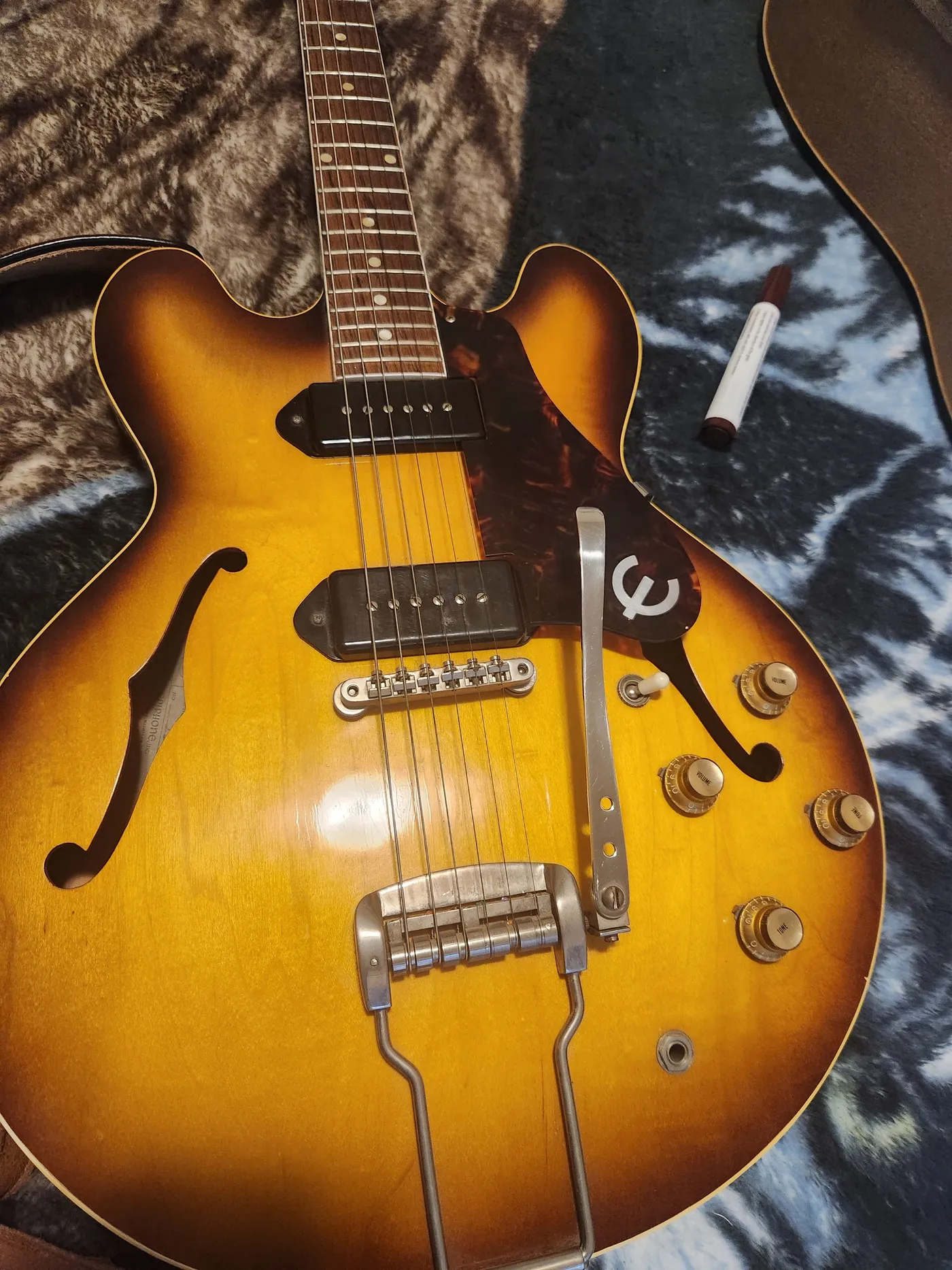
Document the guitar’s original configuration before choosing a price row.
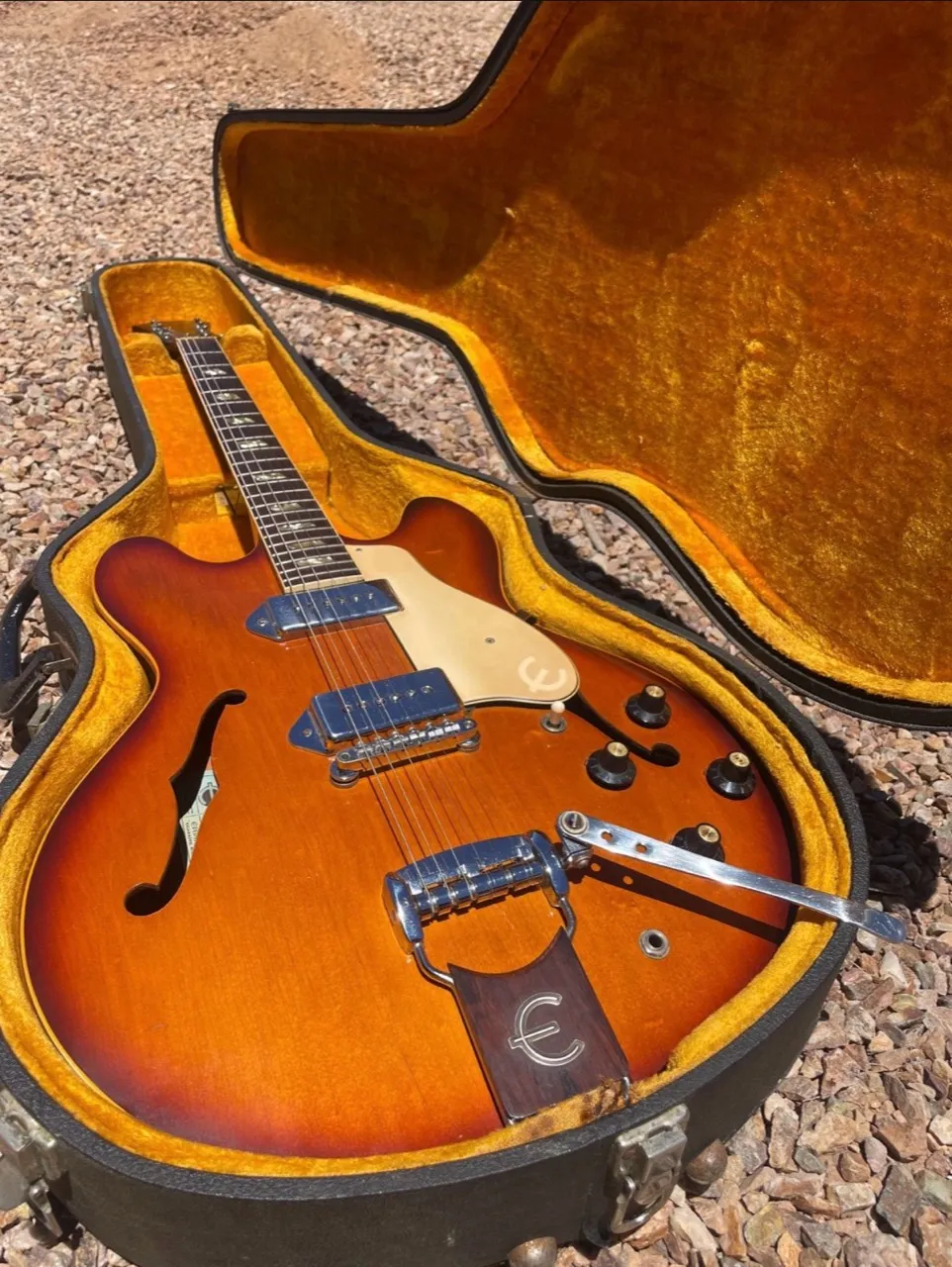
Show The Details Together
Photos That Make A Casino Appraisal Useful
Show The Complete Guitar
Take straight front and back photographs in even daylight. Leave the entire headstock and lower body in the frame. Add a side view so body depth and the neck joint are visible. A short set of clear pictures is more useful than many tightly cropped images that cannot be connected to one instrument.
Record Numbers And Hardware
Photograph the headstock serial and the complete internal label. Include pickups, controls, bridge and tailpiece in a single body view, then take close-ups where a part appears changed. Send the characters you can read and leave unclear ones as unclear. Do not sand or trace a faint number.
Include Repairs And Accessories
Show every known crack, filled hole, changed tuner and finish patch. Add the case, receipts and any removed components. Tell Joe what your family knows about the guitar and which parts of that history are uncertain. That gives the appraisal a useful starting point without turning a memory into a production claim.
Send The Evidence
Get A Value For Your Casino
Send the pictures and a short condition history for a free appraisal. If selling is your goal, the Epiphone seller page explains the offer and shipping process. A market estimate and a purchase offer answer different questions, so tell Joe which one you need.
Questions AboutEpiphone Values
What Is A 1965 Epiphone Casino Worth?
Does Adding A Second Pickup Raise A Casino’s Value?
Is A Stripped Casino Priced Like An Original Finish Guitar?
Are The Chart Figures Cash Offers?
The Last Word
A Value For Your Guitar
Choose a Casino price by its verified period, pickup layout and condition. Then account for the finish, repairs and completeness that distinguish your instrument. Revisit the Casino identification guide if any of those basics remain uncertain, or send Joe your Casino details for help with the next step.
This Is An Estimate Of Market Value, Not An Offer To Buy And Not A Guarantee. Market Values Fluctuate; Have Your Specific Item Appraised.