

Broadway Acoustic, Regent And Electric · American Models
Epiphone Broadway Value Guide
The older carved-top Broadway and the Kalamazoo electric have different construction, condition questions and price rows.
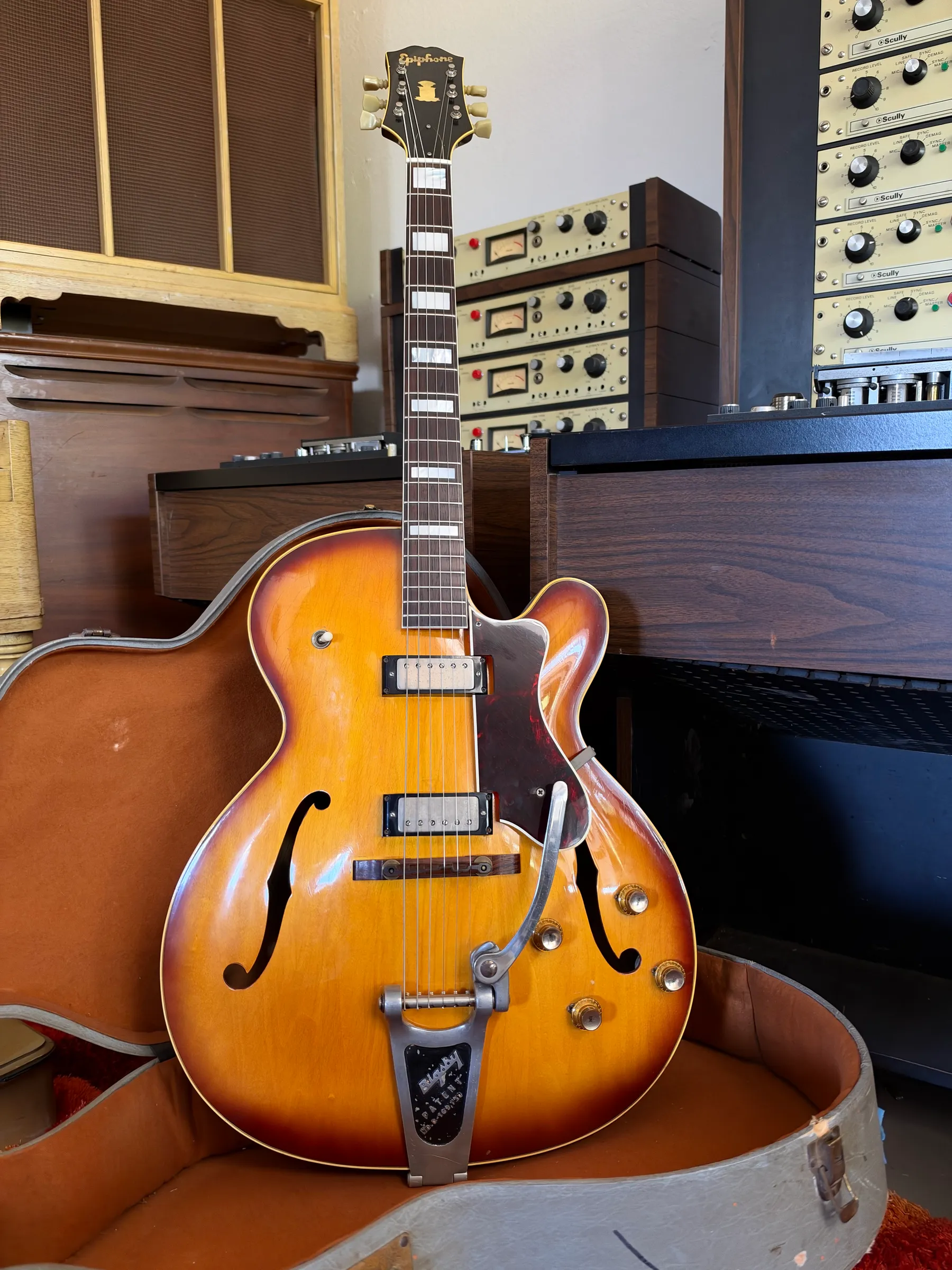
A vintage Epiphone Broadway is estimated at $2,700 to $4,100 for a 1931 to 1938 walnut-bodied acoustic, $2,100 to $3,150 for a postwar sunburst acoustic, and $2,200 to $3,350 for a 1960 to 1964 sunburst Kalamazoo electric. These figures assume excellent, original condition with the original case. The Broadway authentication guide helps establish which construction and factory period apply before you compare prices.
This Is An Estimate Of Market Value, Not An Offer To Buy And Not A Guarantee. Market Values Fluctuate; Have Your Specific Item Appraised.
Joe’s Estimated Market Values
Broadway Prices By Era And Finish
On a phone, swipe across the chart to see the estimated values.
| Model | Pricing Year Group | Configuration | Estimated Value |
|---|---|---|---|
| Broadway Acoustic | 1931 to 1938 | Sunburst, walnut body | $2,700 to $4,100 |
| Broadway Acoustic | 1939 to 1942 | Sunburst, maple body | $2,750 to $4,150 |
| Broadway Acoustic | 1946 to 1958 | Natural | $2,400 to $3,600 |
| Broadway Acoustic | 1946 to 1958 | Sunburst | $2,100 to $3,150 |
| Broadway Regent | 1950 to 1958 | Acoustic cutaway, sunburst | $2,100 to $3,150 |
| Broadway Electric | 1958 to 1959 | Natural, New York single-coil pickups | $2,600 to $3,850 |
| Broadway Electric | 1958 to 1959 | Sunburst, New York single-coil pickups | $2,200 to $3,350 |
| Broadway Electric | 1960 to 1964 | Natural | $2,500 to $3,750 |
| Broadway Electric | 1960 to 1964 | Sunburst | $2,200 to $3,350 |
| Broadway Electric | 1965 | Natural | $2,200 to $3,350 |
| Broadway Electric | 1965 | Sunburst | $1,950 to $3,100 |
| Broadway Electric | 1966 to 1967 | Natural or cherry | $1,950 to $3,100 |
| Broadway Electric | 1966 to 1967 | Sunburst | $1,950 to $3,100 |
| Broadway Electric | 1968 to 1969 | Natural or cherry | $1,950 to $3,100 |
| Broadway Electric | 1968 to 1969 | Sunburst | $1,850 to $3,000 |
U.S. dollars. Joe’s October 2026 estimates start with published reference-guide ranges and apply his pricing adjustment. They are not averages of completed sales. Estimates assume excellent, original condition and the original case where applicable. These are market estimates, not purchase offers. An individual appraisal accounts for repairs and changes.
The chart separates the older acoustic family from the Kalamazoo electric line. Match the construction, cutaway and finish before reading the range. A date supplied by a former owner may be a purchase date, so it should be checked against the guitar itself rather than carried directly into the appraisal.
Natural and cherry appear together in some later rows. That grouping doesn’t authenticate the finish on a particular guitar or prove that every listed color was offered throughout every year in the interval. A questionable cherry finish needs its own evidence. There is no separate 1970 estimate here, and a missing row should not be filled by extending a neighboring range.
Walnut, Maple And Regent Versions
Pricing The Earlier Acoustic Broadway
The New York Acoustic Groups
The 1931 to 1938 walnut-bodied group is $2,700 to $4,100, while the 1939 to 1942 maple-bodied group is $2,750 to $4,150. Photograph the back, sides and full instrument to support that distinction. A dark finish can make the wood difficult to judge from a single front view.
For these guitars, inspect the carved top, bridge and neck geometry before treating an attractive finish as excellent condition. A repaired crack or altered bridge may be difficult to see in a distant photograph. Include those details directly, along with any repair history you have.
Postwar And Philadelphia-Era Examples
The postwar natural acoustic estimate is $2,400 to $3,600; sunburst non-cutaways are $2,100 to $3,150. The acoustic Regent has its own cutaway row. Confirm the original outline rather than assuming that Regent is simply another name for any old Broadway.
The factory move belongs in the history, but a city printed on a label isn’t a stand-alone value premium. Preserve the wording and photograph it clearly. If the date remains approximate, describe the supported period and let the construction establish the correct comparison.
Original Pickups And Finish Matter
Kalamazoo Broadway Values By Period
The Early New York Pickup Electrics
The natural estimate is $2,600 to $3,850 and the sunburst estimate is $2,200 to $3,350. These rows describe the early factory pickup configuration. A later pickup set should be disclosed even if it fits neatly and sounds good. Include removed parts and any record of the change.
Verify The Guitar Within The Year Group
The 1960 to 1964 natural range is $2,500 to $3,750, with sunburst at $2,200 to $3,350. The 1965 rows are separate. A broad price interval doesn’t establish one pickup type for every guitar inside it; date and electrical details still need to agree.
Later Kalamazoo Examples
The later sunburst ranges are $1,950 to $3,100 for 1966 to 1967 and $1,850 to $3,000 for 1968 to 1969. These are original-condition comparisons. A clean later Broadway can be easier to assess than an earlier instrument with unexplained repairs, so don’t let age eclipse the actual condition.
On a Kalamazoo Broadway, the neck, pickups, bridge and tailpiece each deserve close photographs. The body’s full depth can hide an electrical repair that is not apparent from the front. A technician’s invoice describing rewiring or a pickup rewind is more useful than a broad statement that the electronics were serviced.
Keep a claimed factory option separate from a later modification until it is supported. An unusual tailpiece, extra switch or rare-looking color should prompt documentation, not an automatic premium. Old parts can be installed later, and normal wear can develop around an alteration over decades.
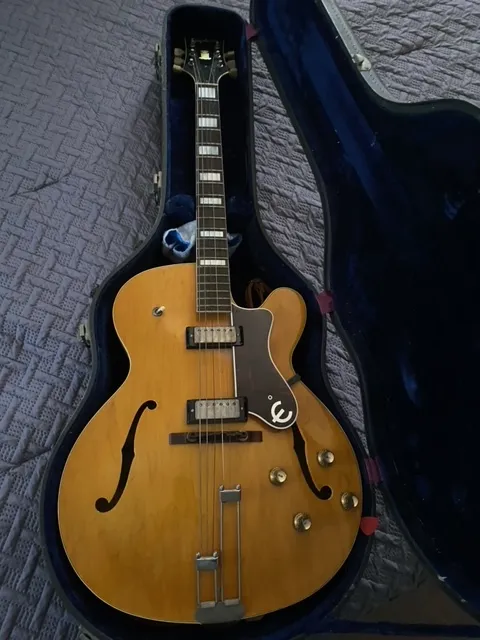
A 1964 natural-finish Broadway and the original owner with a 1966 sunburst Broadway.
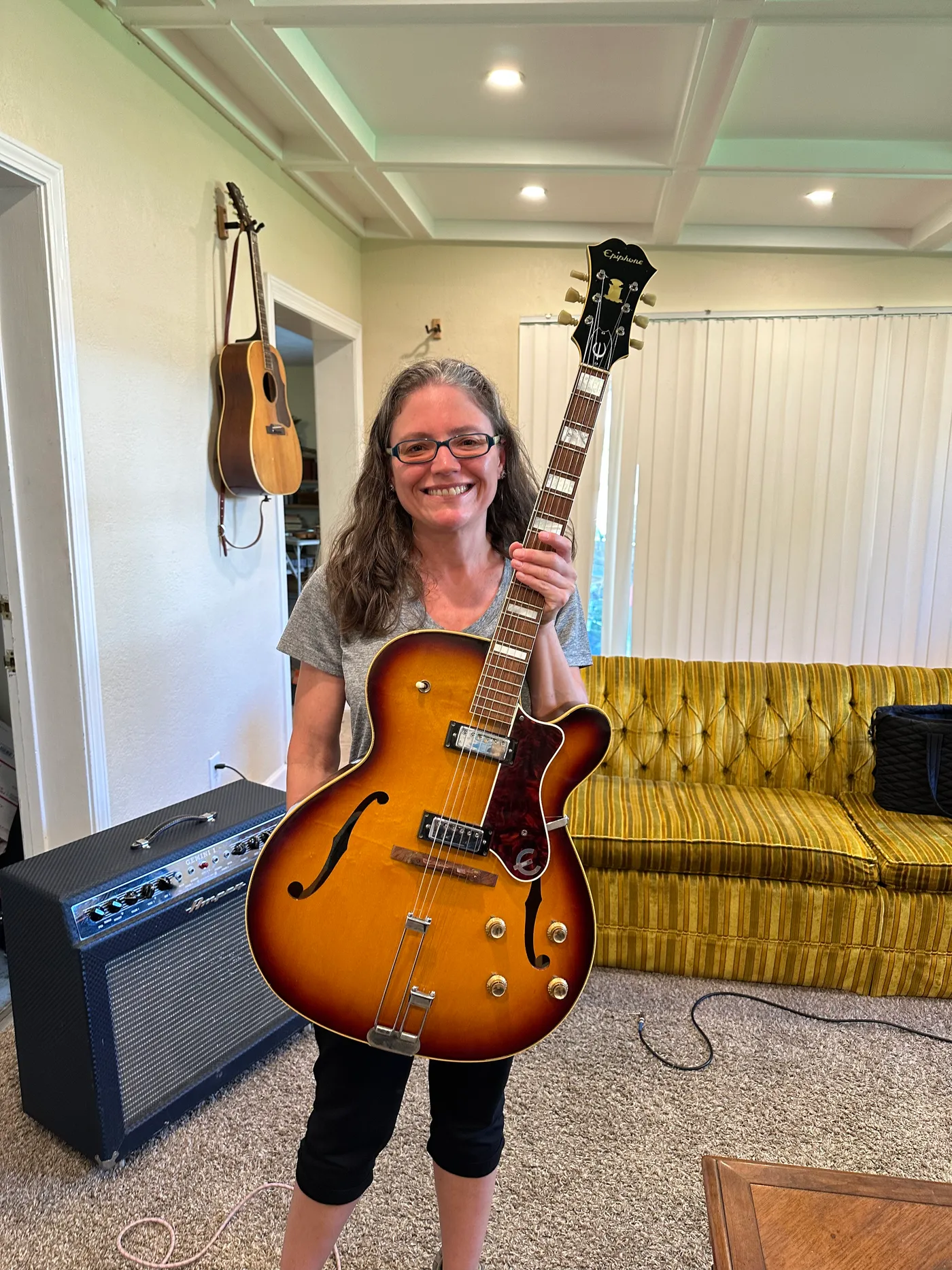
1961, 1964 And 1966 Examples
Broadway Photos From Joe’s Archive
The featured 1961 Broadway has two mini-humbuckers and a Bigsby vibrato. Its label reads Broadway, E252 and serial 16102. The natural-finish guitar pictured above is a 1964 Broadway, and the owner portrait shows a 1966 Broadway with its original owner. The Broadway photo archive includes the 1961 headstock, pickup and label close-ups, plus the full owner photograph.
Use these examples to compare the electric Broadway’s visible configuration. Assess the installed tailpiece and other components against the individual guitar’s history before applying the chart’s original-condition assumptions. Keep ownership records with the serial and condition photographs.
Structure, Finish And Completeness
What Changes A Broadway Appraisal
Neck Angle And Repairs
Show the string height, bridge adjustment and heel from the side. A headstock or heel repair remains relevant even when the guitar plays well. Explain whether the work is documented and stable, and photograph any added finish around the repaired area.
Pickups And Wiring
Original covers can conceal repaired or replaced coils. Include what is known and leave uncertain components unclaimed. The pickup replacement guide explains why a working electrical system and an original system are different descriptions.
Refinish And Binding Work
Show stripped areas, overspray, replaced binding and repaired edges. Use the refinish guide and the condition guide to understand how those changes affect the comparison.
The Frequensator, bridge, pickguard and tuners contribute to completeness. If one has been replaced, explain whether the original survives. A part retained in the case may help document the guitar’s history, but it does not erase an extra hole or a modified mounting. Photograph the attachment points as well as the loose component.
Do not begin cosmetic restoration simply to make the instrument appear closer to the chart’s condition assumption. Read whether restoration should precede a sale and get the guitar assessed as it stands. That allows a repair decision to address a known problem rather than an imagined increase in value.
Describe current playability accurately. If the guitar has not been tuned or checked recently, say that. A low action claim without a side photograph or inspection may leave a neck-angle question unanswered. An appraisal benefits from the limits of what you know as well as the positive details.
Show What The Name Leaves Unsaid
Photograph Your Broadway For An Appraisal
Document Construction And Identity
Send full front, back and side views, followed by the headstock and complete label. Include the serial at its original resolution. Show the body depth so a thin electric or another model cannot be mistaken for the Broadway being described.
Include Electrical And Structural Work
For an electric, show both pickups, all controls and the bridge area. For an acoustic with an added pickup, show the installation. Add close-ups of repaired cracks, joint work and any altered hardware mounts.
Add Case And Ownership Records
Photograph the case open and closed, and include any original parts stored inside. Receipts and identifiable family photographs can support the history. Separate a documented date from a recollection that has not been confirmed.
A replacement case may be useful for protection, but it should not be described as the original case assumed in the chart. Explain its fit and condition before discussing shipping. Keep fragile loose parts secured and labeled so their connection to the guitar is not lost.
Keep a written list of the questions the photographs cannot answer. You may know that the guitar belonged to a relative while not knowing whether its pickups were ever repaired. You may have a receipt for fretwork but no finish history. State those limits directly. They let Joe distinguish an established fact from an area that needs inspection, and they prevent a missing detail from becoming an accidental all-original claim. The same approach is useful if you are comparing an inherited Broadway with a guitar advertised by someone else.
Send The Evidence
Ask Joe About Your Broadway
Submit the photos for a free appraisal. If you want to sell, the Epiphone seller page explains the next step. A purchase offer follows review of the actual instrument; the chart itself is not an offer.
Questions AboutEpiphone Values
Were All American Broadways Electric?
Does A Natural Finish Always Mean A Higher Value?
Are The Early New York Pickup Broadways Included?
Can A Later Pickup Set Be Ignored If The Guitar Plays Well?
The Last Word
A Value For Your Guitar
A Broadway estimate starts with the correct acoustic or electric identity, then accounts for finish, original equipment and repairs. Use the Broadway authentication guide when the factory period or configuration is uncertain, and send Joe the complete evidence for an individual assessment.
This Is An Estimate Of Market Value, Not An Offer To Buy And Not A Guarantee. Market Values Fluctuate; Have Your Specific Item Appraised.