

Original Metal-Body Nationals · Late 1920s And 1930s Designs
National Resonator Guitar Authentication Guide
Identify the resonator system, body model and neck configuration, then compare the number and construction with the period evidence.
Identify a National resonator by the mechanism and construction before reading its decoration as a model name. A Triolian is a single-cone model despite the “tri” in its name. A tricone uses a different resonator arrangement. Round necks, square necks and four-string versions also need to remain separate in the description. This guide covers original metal-body Style O, Duolian, Triolian and Style 1 through 4 tricones, including related grades where relevant. Wood-body Nationals and later electric models are outside its scope. Modern National Reso-Phonic instruments appear only to explain exclusions. For prices, use the separate National resonator value guide.
Authenticity And Originality Are Assessed From The Information Provided. A Hands-On Inspection Can Change The Conclusion.
Mechanism, Body And Neck
The Core National Model Differences
| Model Family | Resonator And Surface | What To Establish |
|---|---|---|
| Style O | Single cone; plated body and scenic decoration | Neck form, 12- or 14-fret join, body and decoration variant |
| Duolian | Single cone; painted steel-body family | Finish, neck construction and period features |
| Metal-Body Triolian | Single cone; painted metal body | Exclude early wood-body versions and verify the finish |
| Tricone Styles 1 To 4 | Three cones linked by a bridge system; plain or engraved metal body | Style grade and round- or square-neck construction |
| Tenor And Plectrum Variants | Four-string configurations in several families | Original neck, scale and tuner arrangement |
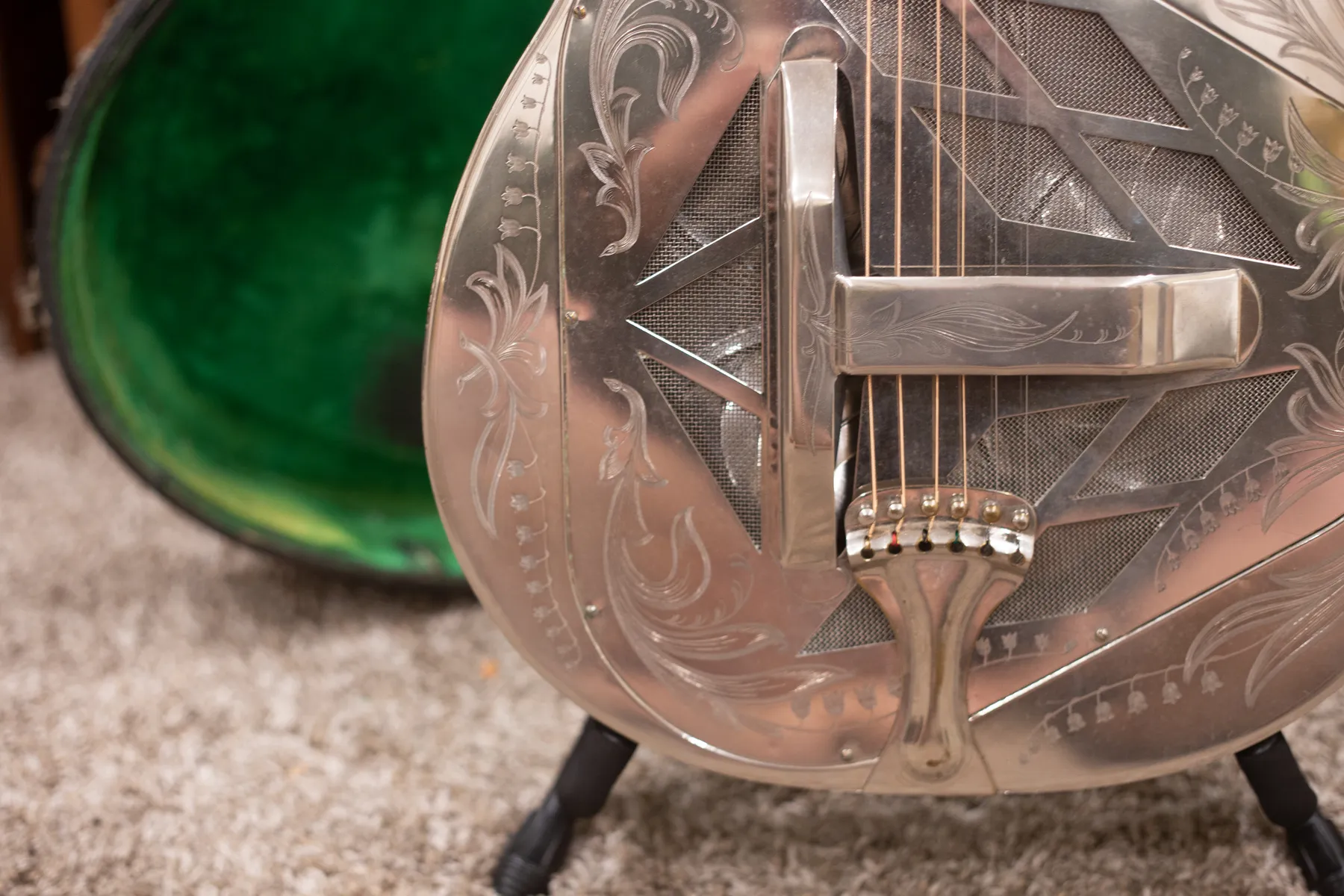
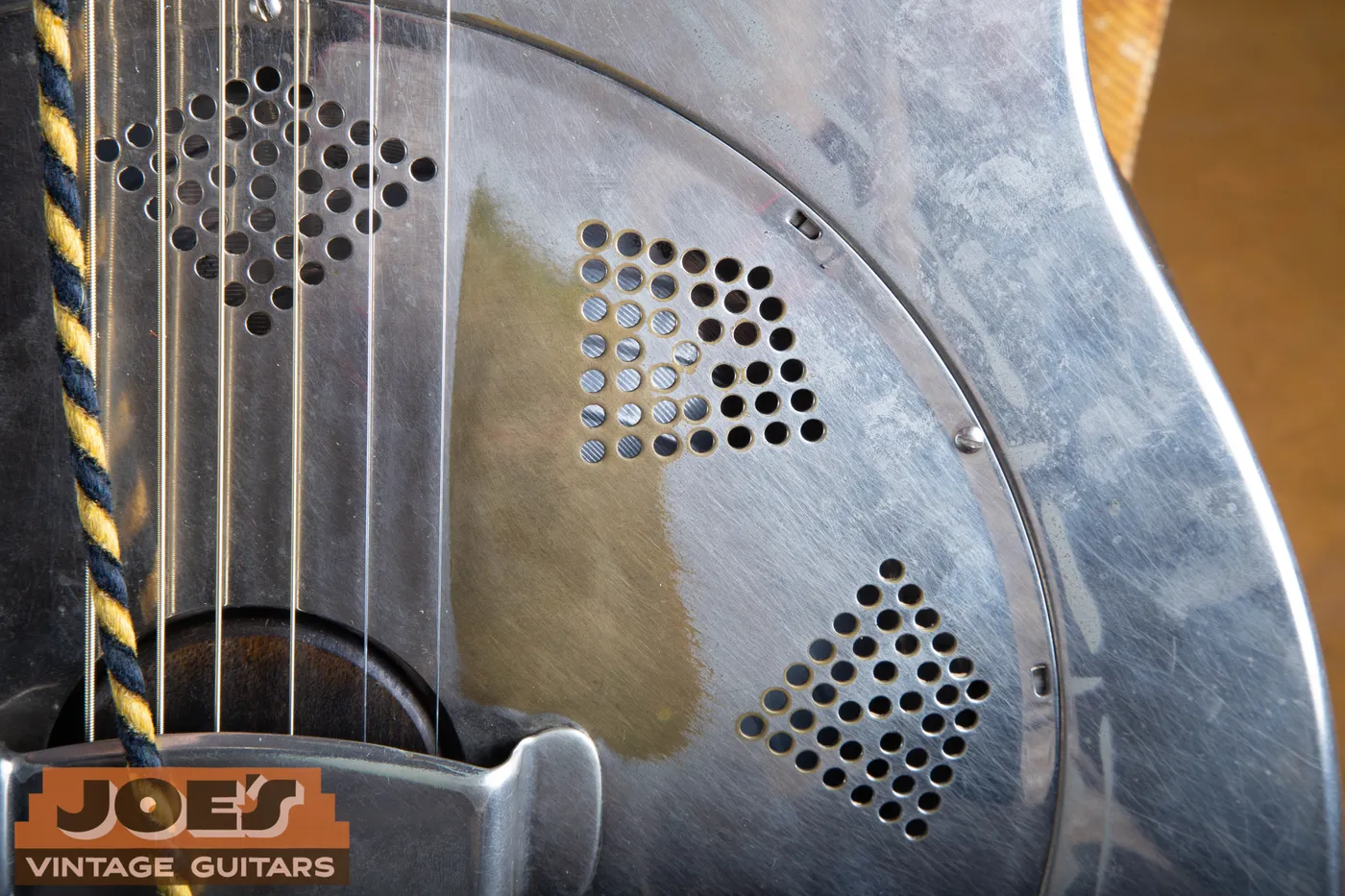
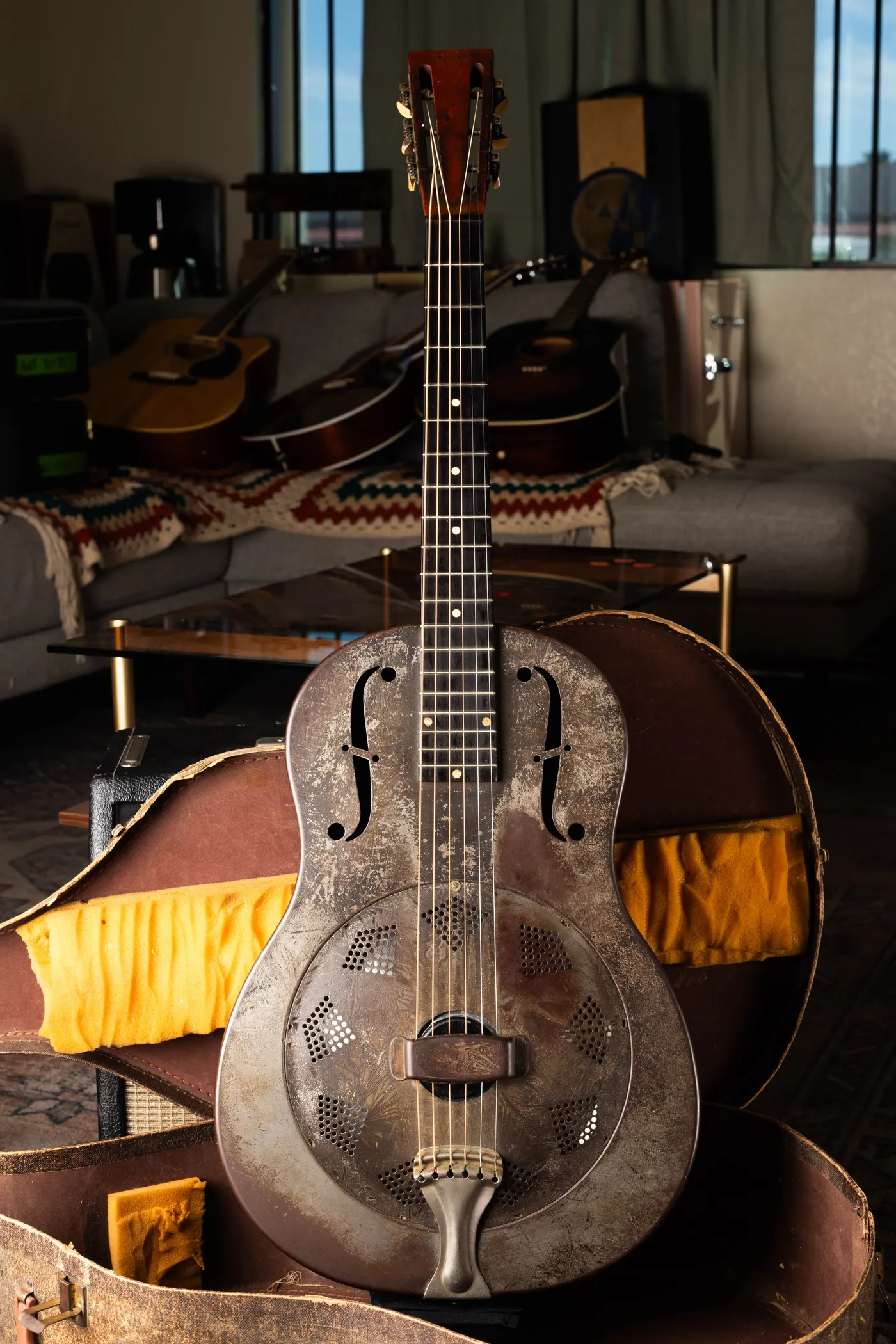
A single-cone National has a circular coverplate over its resonator. The tricone layout uses three smaller cones connected by a T-shaped bridge arrangement. The coverplate and upper-body grilles provide visible clues, but the appearance of a cover does not certify that the internal assembly is original or complete.
Style O bodies include early steel examples as well as brass; firsthand records document both materials on instruments identified as 1930. Duolian and metal Triolian comparisons generally involve painted steel bodies. Tricones include nickel-silver, commonly called German silver, construction. The term does not mean solid silver. Determine the exact variant before identifying metal from surface color, especially if plating or paint has been replaced.
Why The Mechanism Matters
The Tricone And The Single-Cone Branch
The Original Resonator Idea
National Reso-Phonic’s company history credits John Dopyera’s late-1920s work with the original tricone design and the National String Instrument Corporation. Its purpose was mechanical amplification before electric amplification became the ordinary solution for a louder guitar.
The bridge carries string vibration to the resonator cones. That makes cone condition and bridge fit part of a playing assessment, alongside the body and neck. Decoration identifies a style grade more readily than it proves how an instrument will sound.
The Single-Cone Models
Style O, Duolian and Triolian instruments use the single-cone branch of the design. Their finishes and body specifications differ. A sunburst Triolian shouldn't become a tricone in a description because of its name, and a polished Duolian shouldn't automatically be renamed Style O.
Early Triolian history also includes wood-body instruments. This page follows the metal examples shown in Joe’s archive. Establish the body material before using either the identification comparisons or the matching price rows.
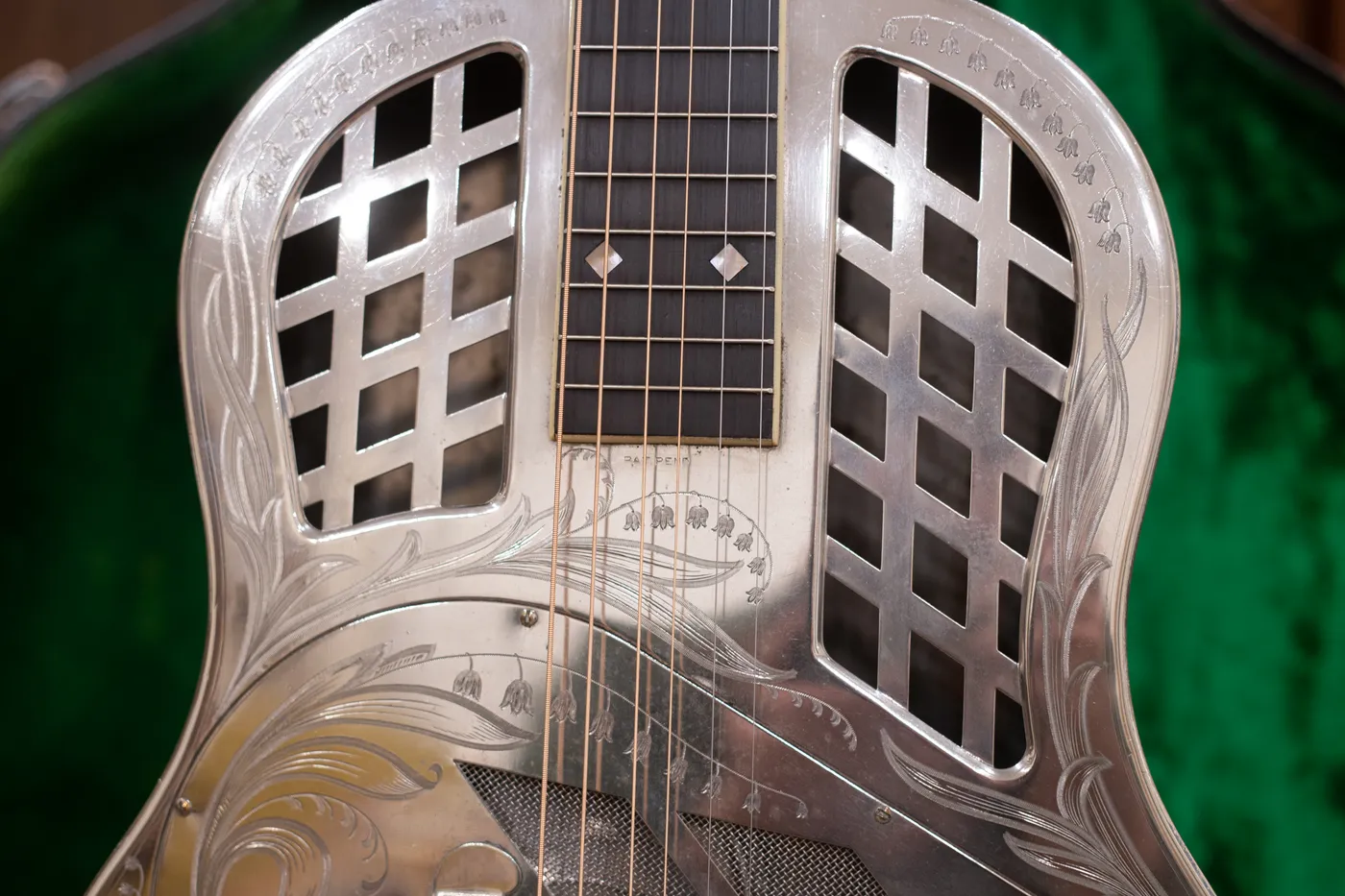
Compare the tricone cover and grilles with the circular single-cone coverplate before choosing a model family.
Construction Landmarks
Changes To Check Across The Original Era
The Tricone Styles
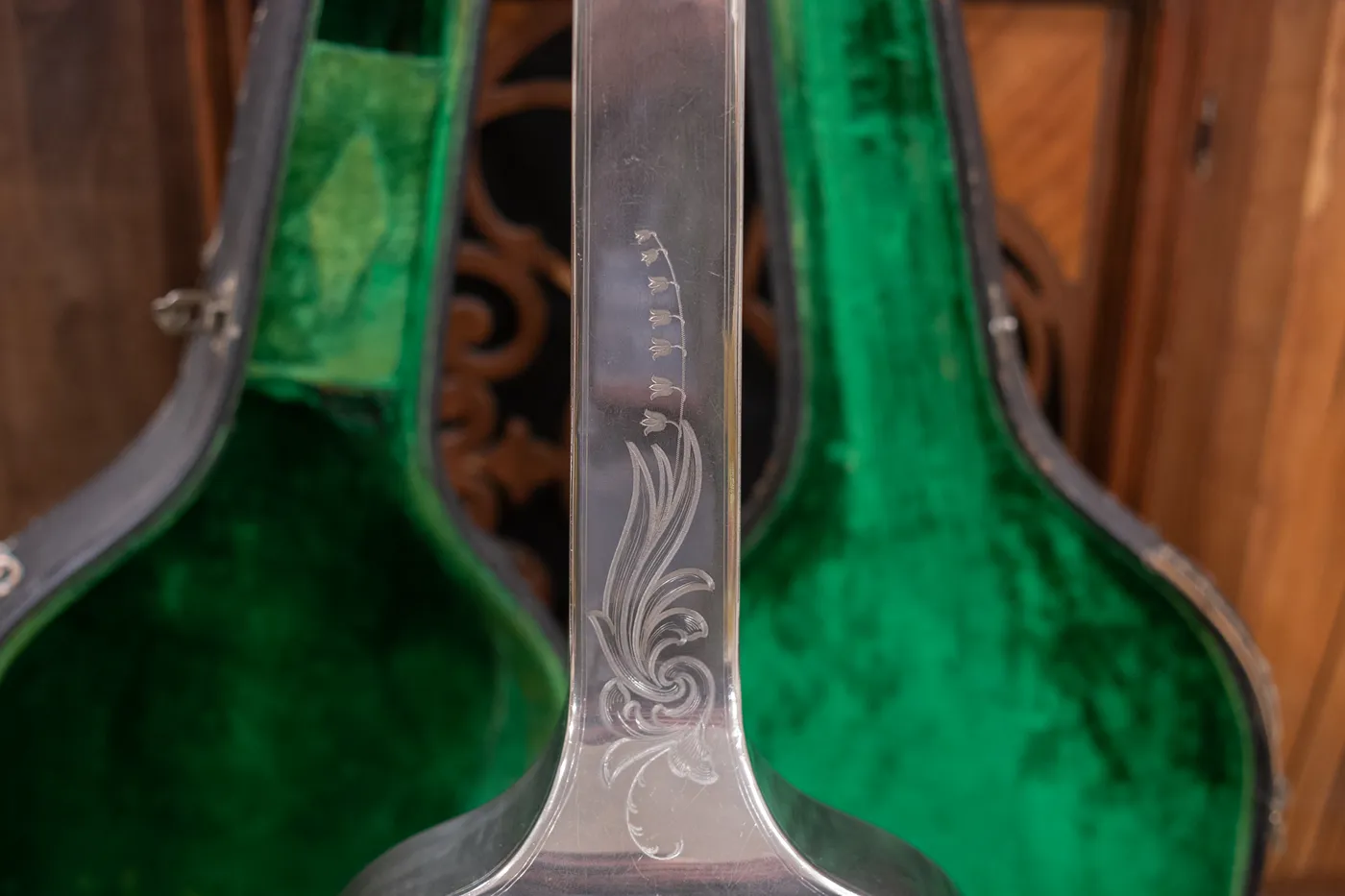
Original tricones established plain and increasingly decorated grades. Round-neck Spanish and square-neck Hawaiian configurations require separate identification. Joe’s Style 3 archive example is a square-neck instrument.
The Metal Single-Cone Family
Style O, Duolian and metal Triolian examples form distinct model comparisons. Finish treatment, body details and neck construction are more useful than calling every metal resonator a Dobro.
Twelve And Fourteen Frets Clear
The single-cone family moved through changes in the number of frets clear of the body. Count to the neck-to-body join, not the final fret on the fingerboard. Compare a 12-fret instrument separately from a later 14-fret version.
F-Hole Edges And Neck Joins
The research chronology places rolled f-hole edges around 1933 and the single-cone move toward 14 frets clear in late 1934. Earlier openings have flat-cut edges. These are approximate construction landmarks; tricones retained the 12-fret arrangement.
National Reso-Phonic Is A Separate Production Era
The present manufacturer dates its founding to 1989. Its later instruments deliberately revisit earlier National designs. That historical styling does not make an individual modern guitar an original prewar example.
Model Variants
Style Grades And The Neck Under Your Hand
Plain And Engraved Tricones
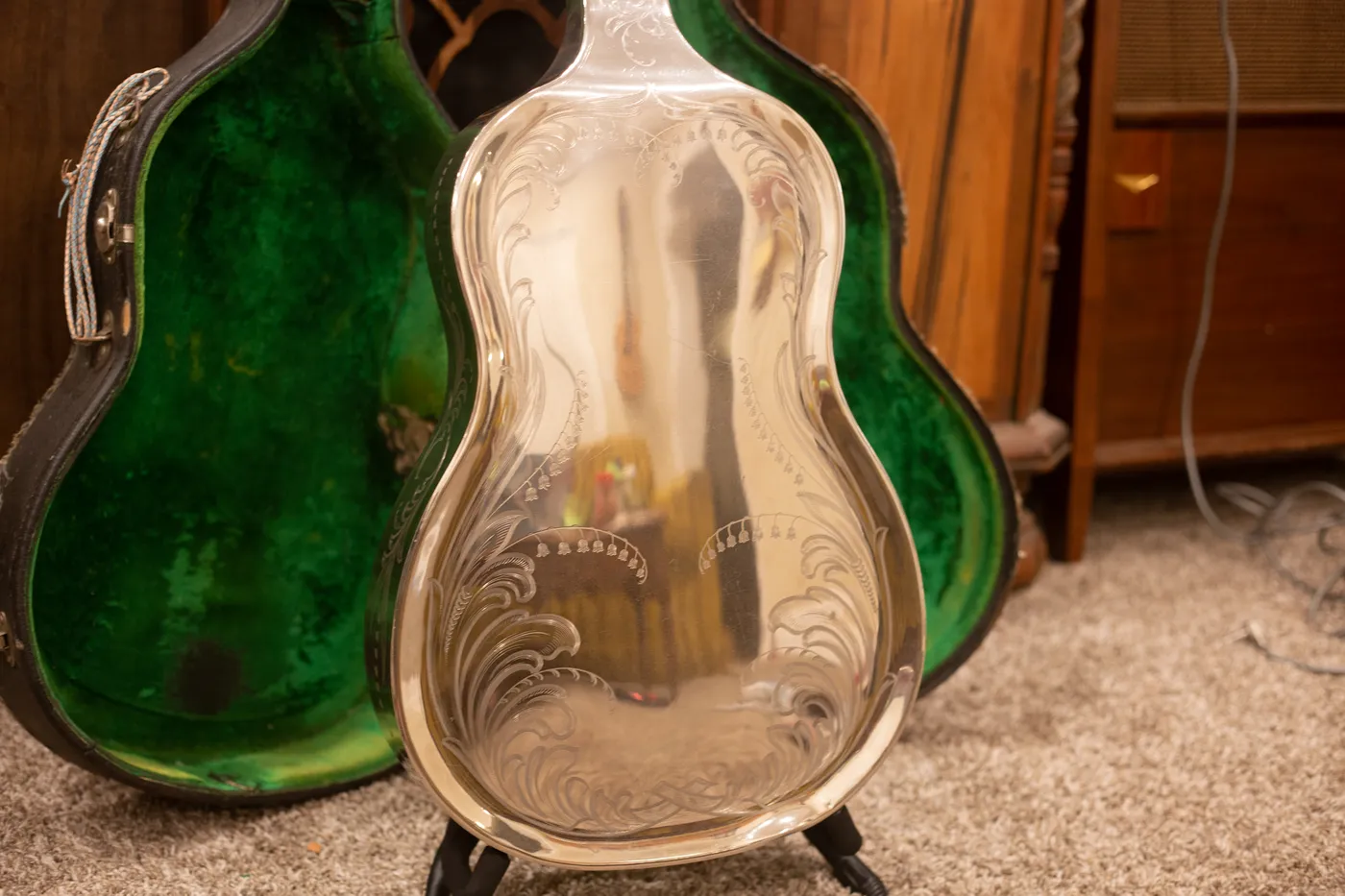
Style 1 supplies the plain comparison. Style 2 is associated with the wild-rose design, Style 3 with lily-of-the-valley engraving and Style 4 with chrysanthemum decoration. Intermediate 1.5 and 2.5 grades also require their own documented comparison rather than rounding to the nearest whole-number style.
Round Neck And Square Neck
A round neck is shaped for ordinary fretting. A square-neck Hawaiian instrument is configured for playing with a bar. The archive Style 3’s square metal neck is visible from the side and rear. Do not identify it from an ornate front photograph alone.
Tenor And Plectrum Forms
Four-string versions are separate instruments, with neck and scale differences to establish. Missing strings do not change a six-string into a tenor. Count original tuner positions and retain any evidence of a replacement or converted neck.
A raised nut can adapt a round-neck guitar for slide use without giving it the construction of an original square-neck model. Conversely, reshaping a square neck or fitting a replacement round neck doesn't make an untouched factory round-neck example. Describe the current setup and the surviving construction separately.
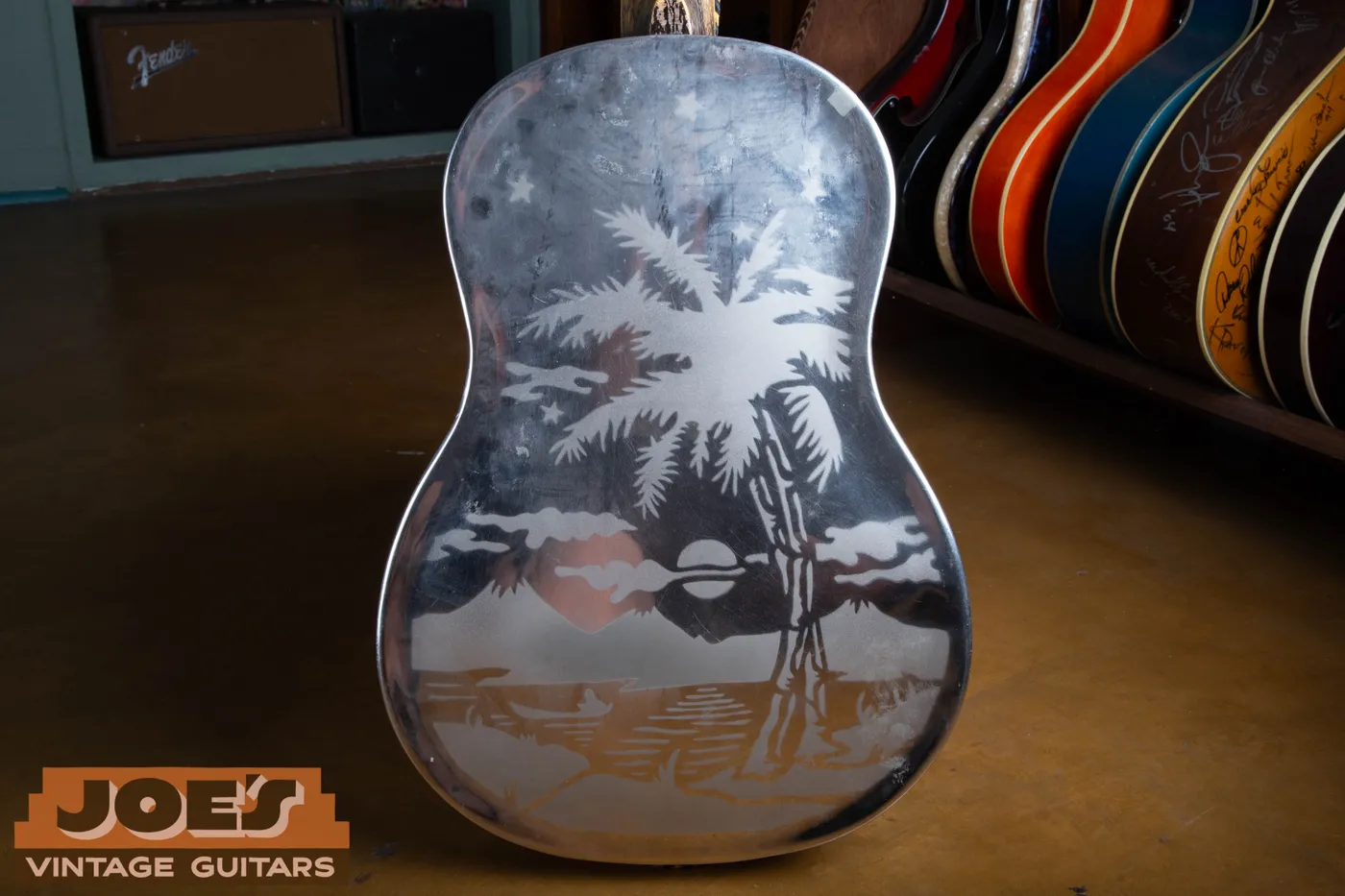
For a Style O, photograph the entire front and rear pattern. A partial view of a palm tree cannot resolve every decorative variation. F-hole shape and edge treatment also deserve a close view, with the neck joint and body proportions alongside them. Avoid assigning a special variant from one isolated feature.
Photo Timeline
Original Nationals In Joe’s Photographs
1928 · Style 3 Tricone
Engraving And A Square Metal Neck
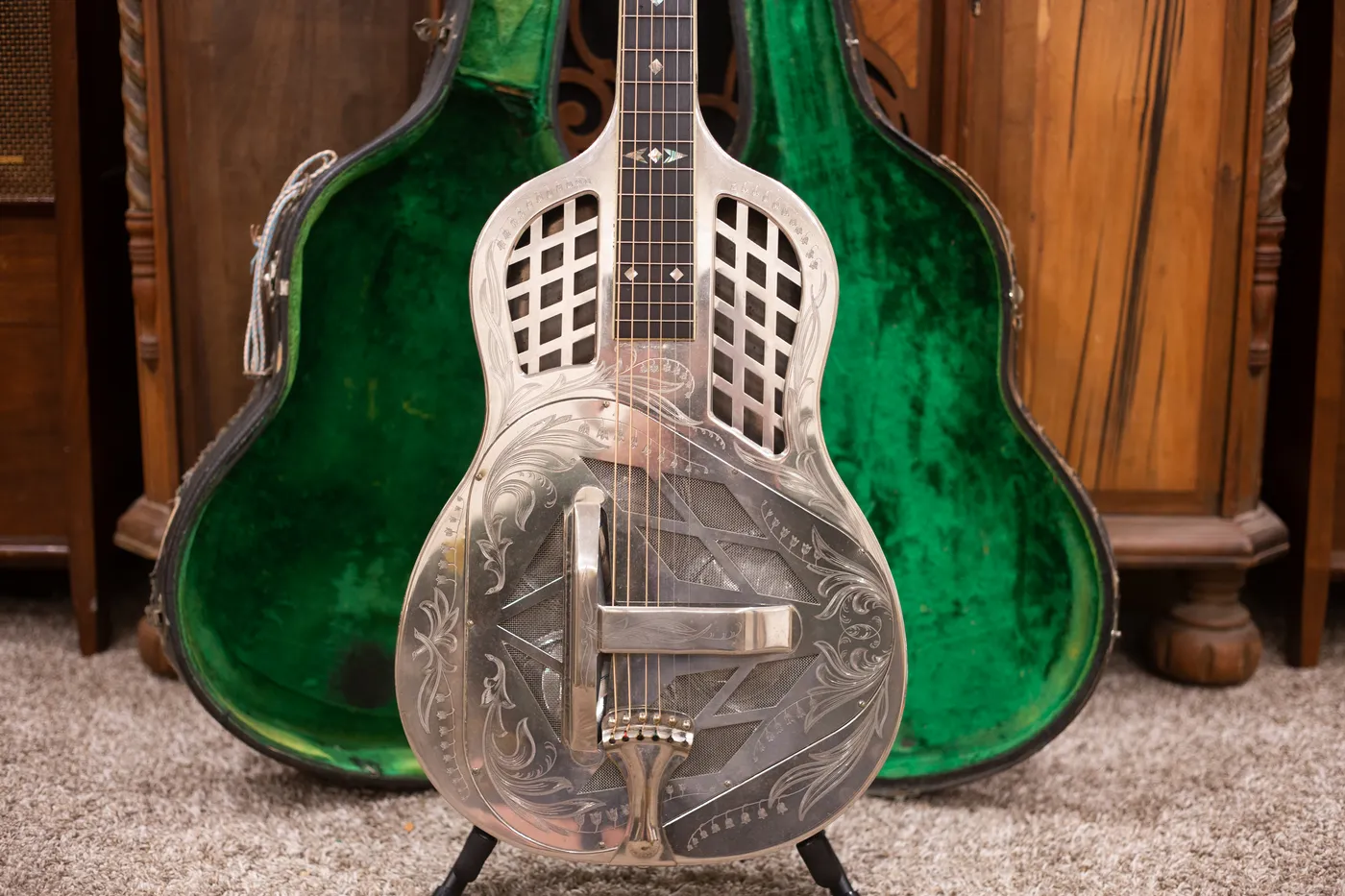
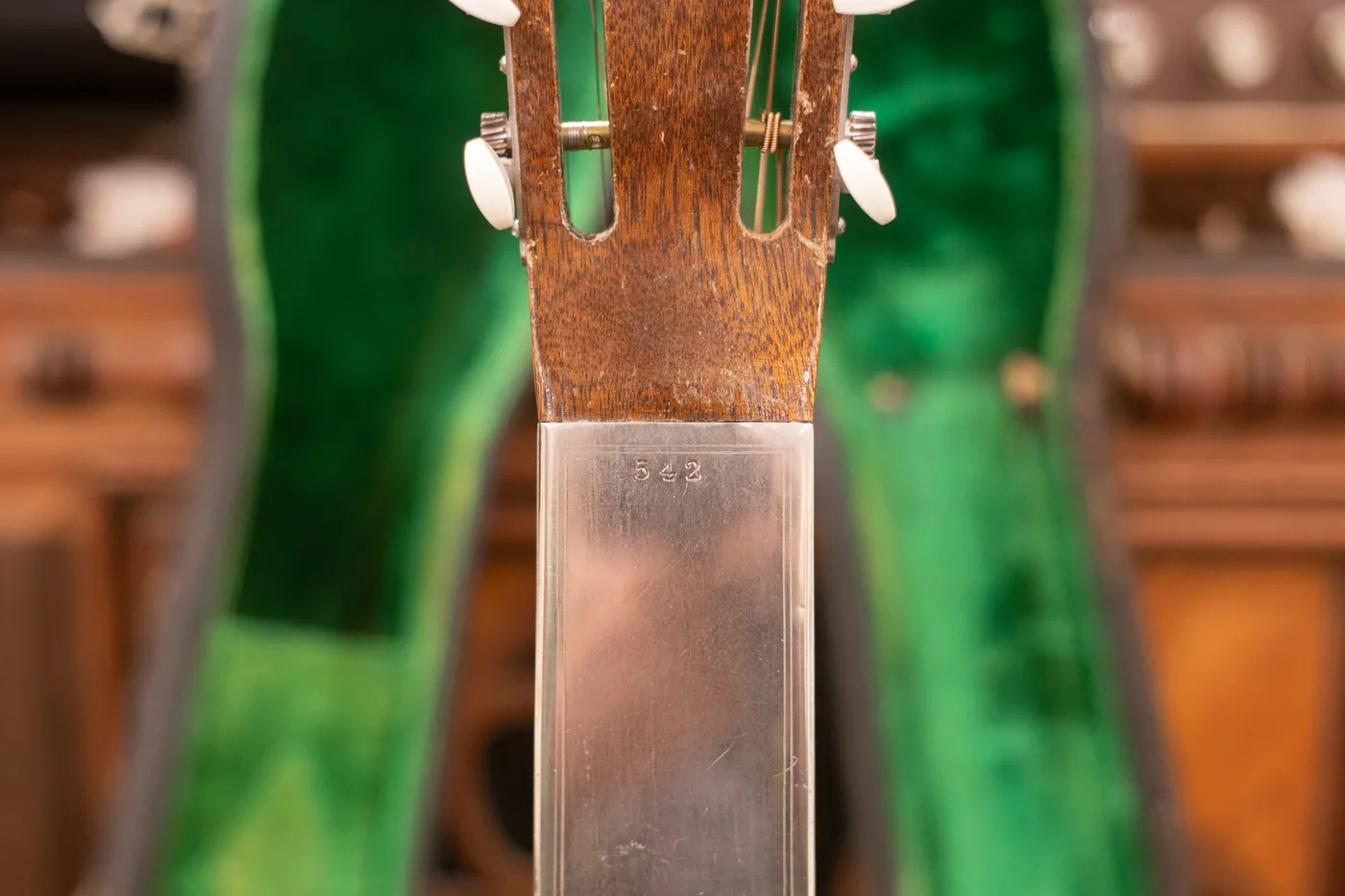
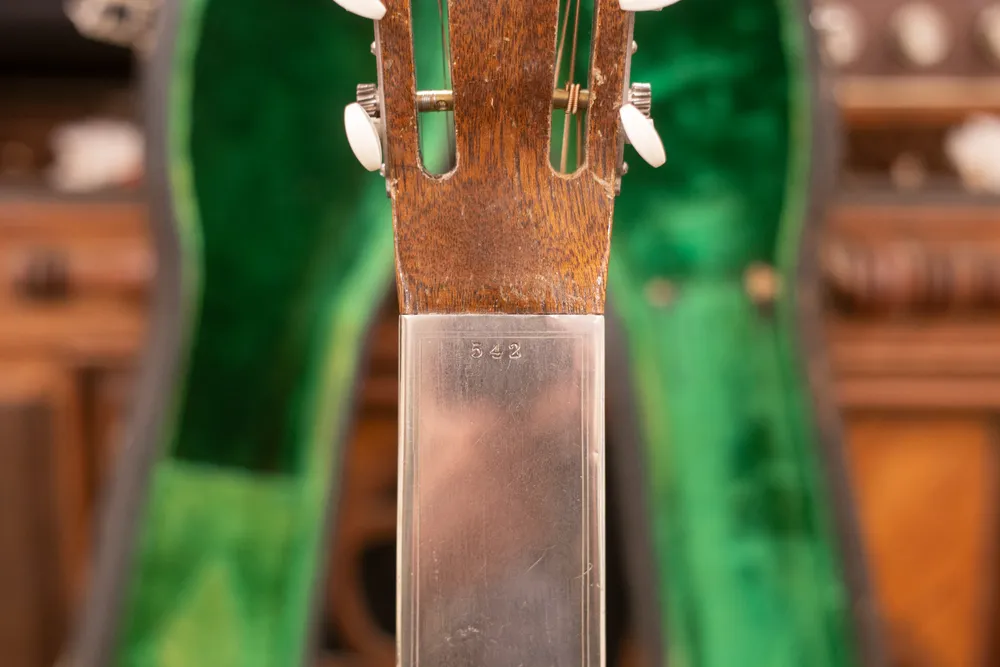
The Style 3 set shows the engraved body, grilles, bridge cover and square neck as parts of one instrument. The number 542 appears at the rear headstock-to-neck area. Its archived year is retained as provenance; the stamp alone is not treated as a calendar code.
The side view is particularly useful because it prevents the decorated front from being mistaken for a round-neck configuration. An identification set should include that profile whenever neck form affects the model or value comparison.
1930s · Style O
A Scenic Plated Single Cone
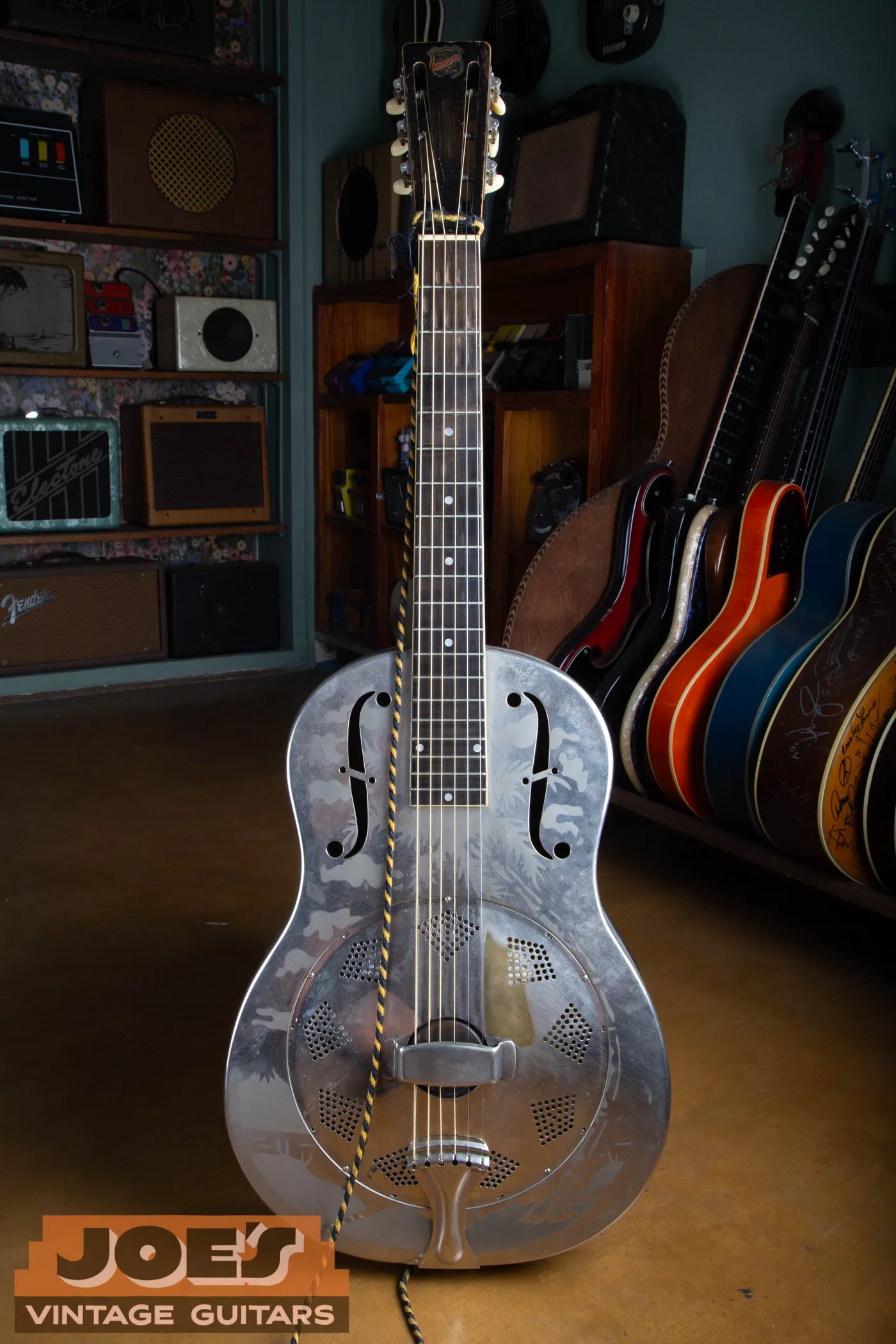
The Style O photographs preserve the complete front and the palm-tree scene on the back. Inspect the coverplate separately from the body and note any known replating, repair or substituted hardware. The archive view is not used here to certify a rare decorative pattern.
1932 · Duolian
Painted Metal And A Slotted Headstock
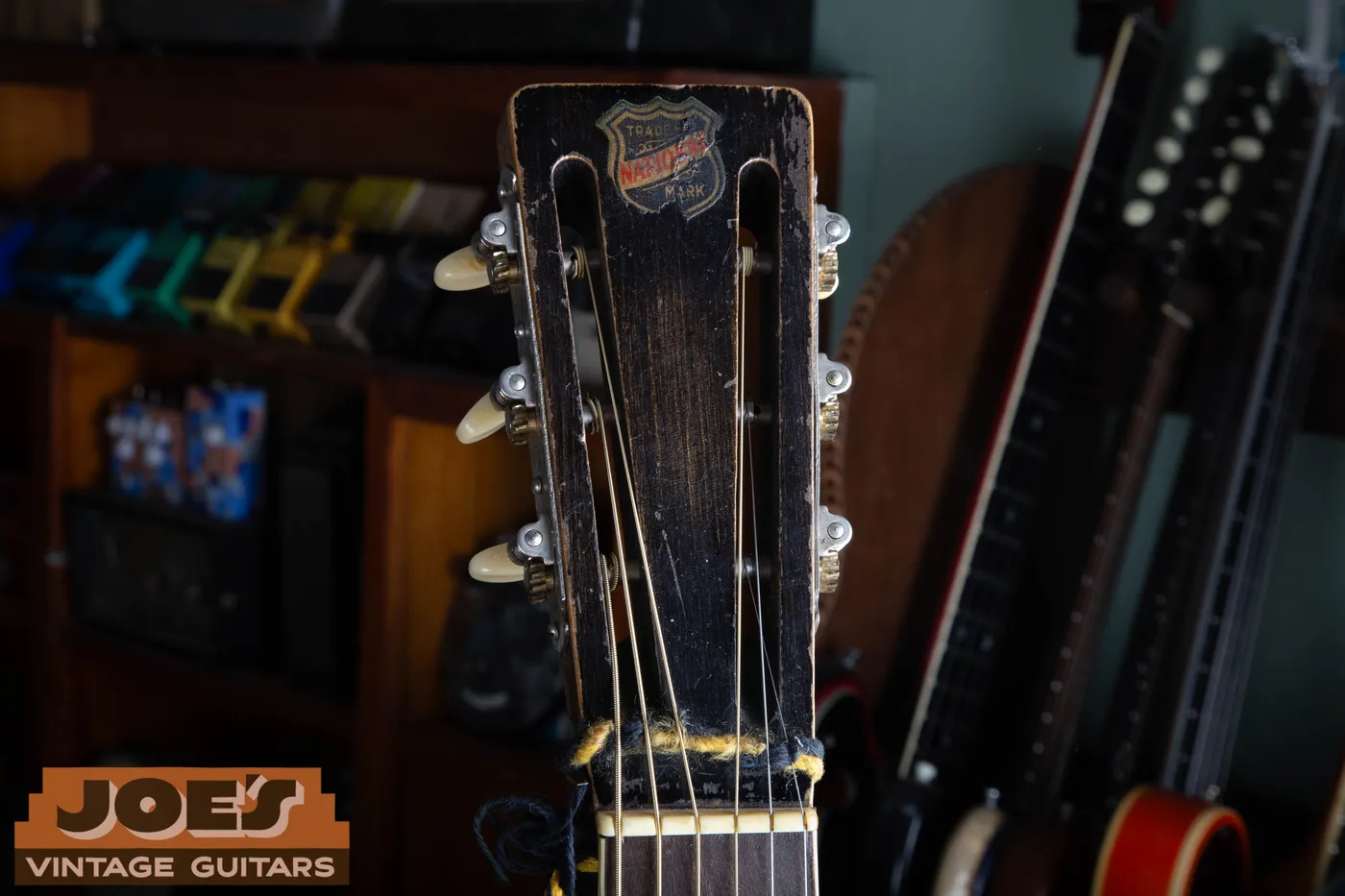
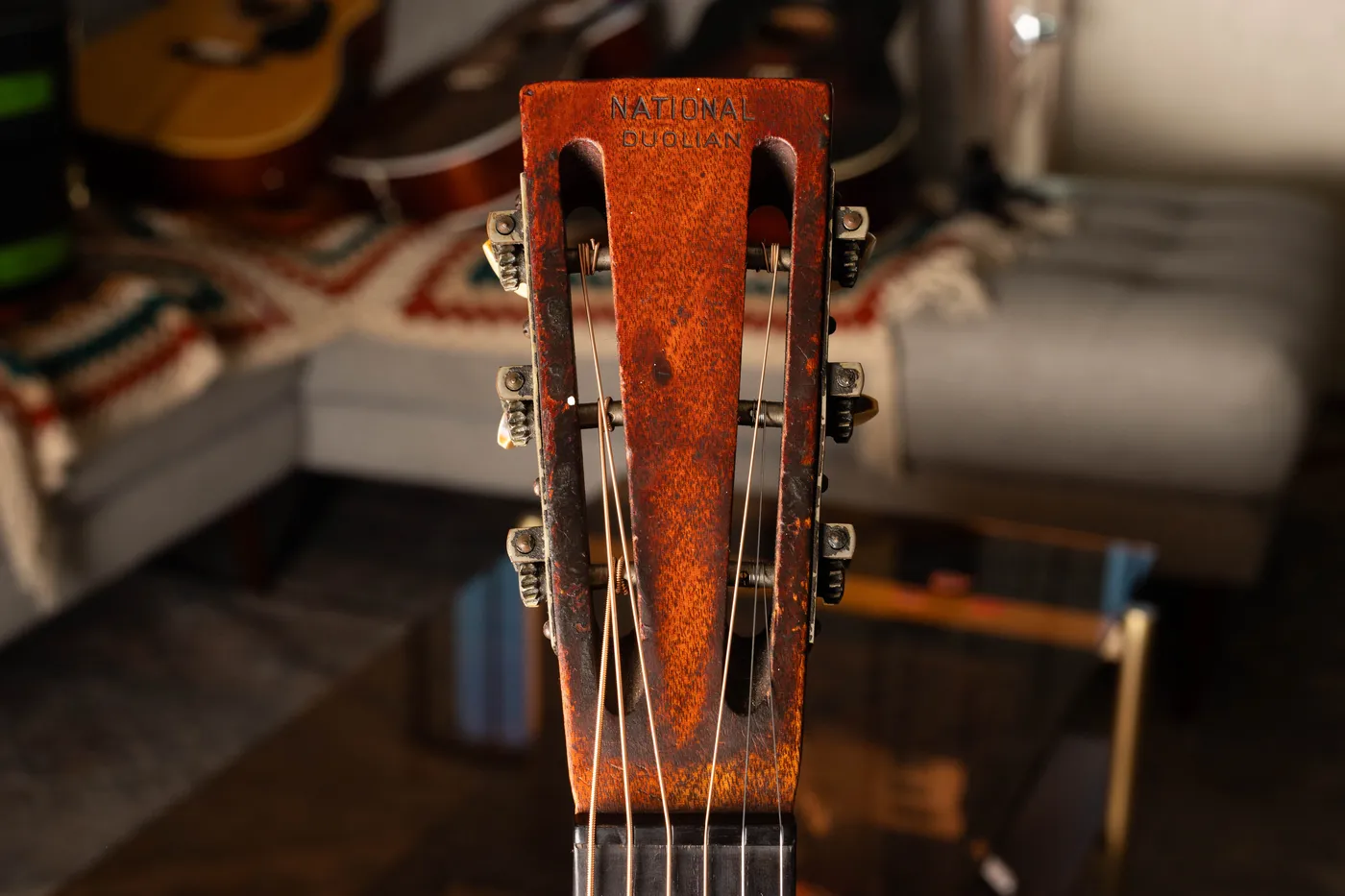
Joe’s Duolian archive supplies front, side and headstock views. The painted body is recorded as found. A photograph can show a dent or wear area, but it cannot establish the soundness of an internal joint or resonator assembly.
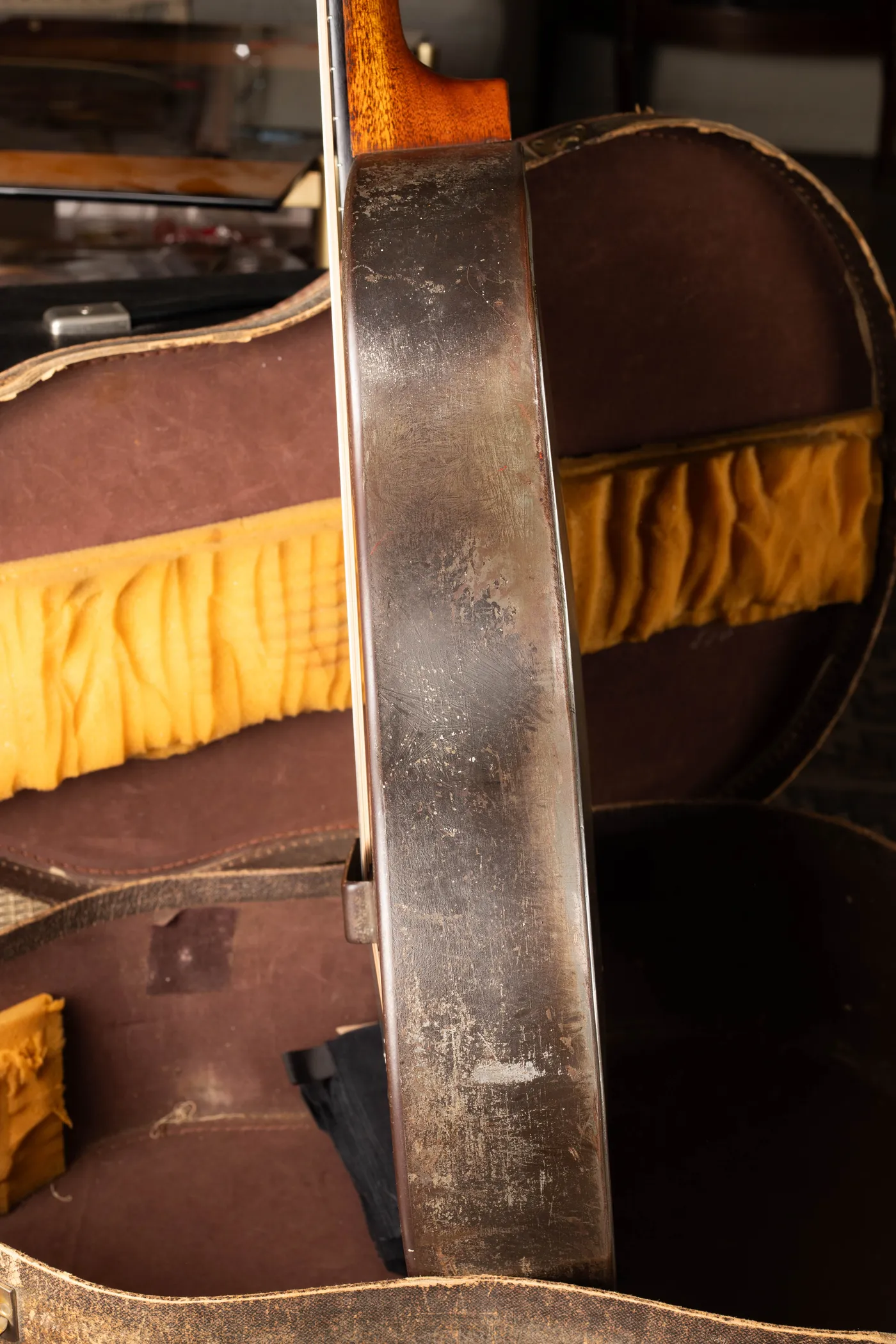
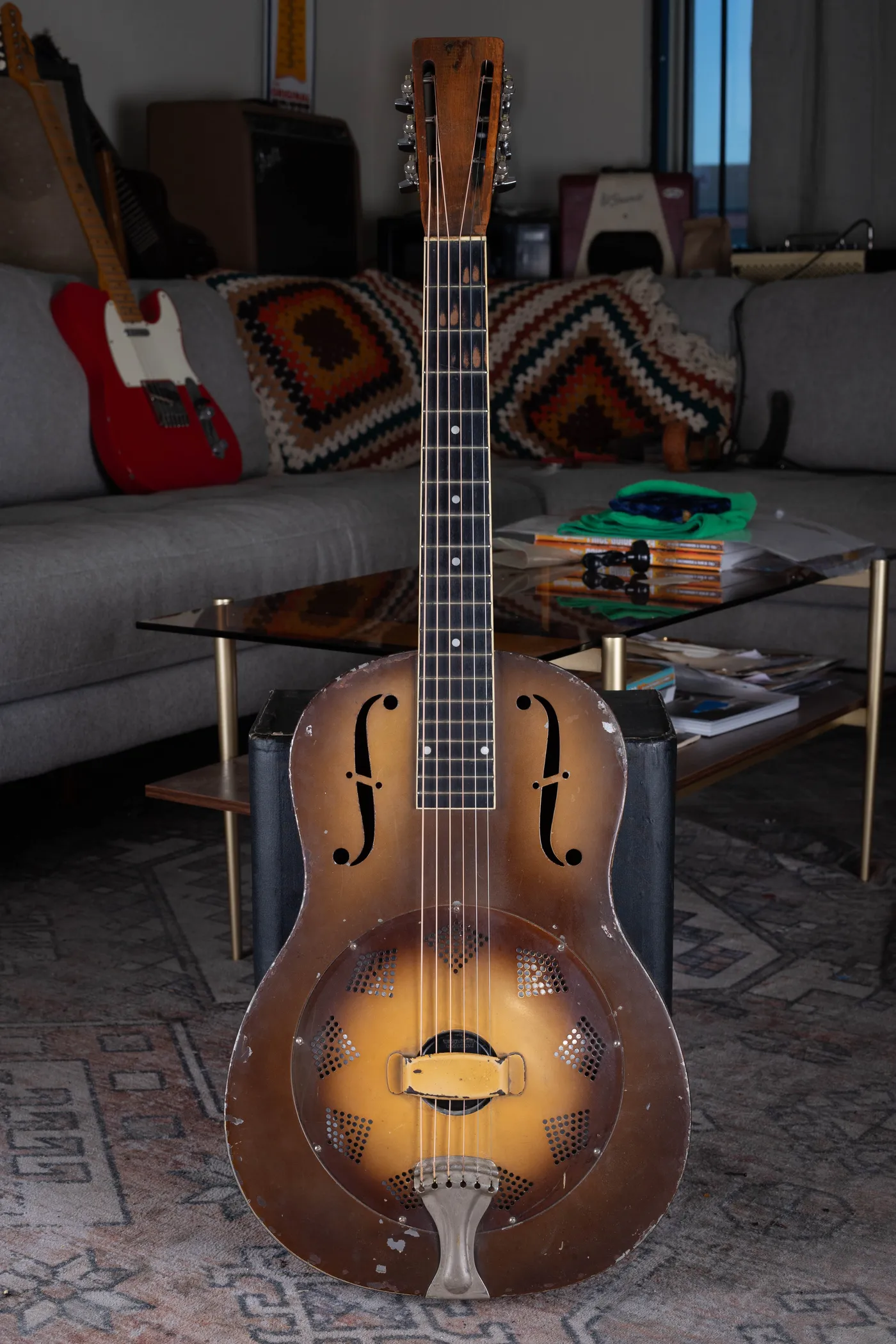
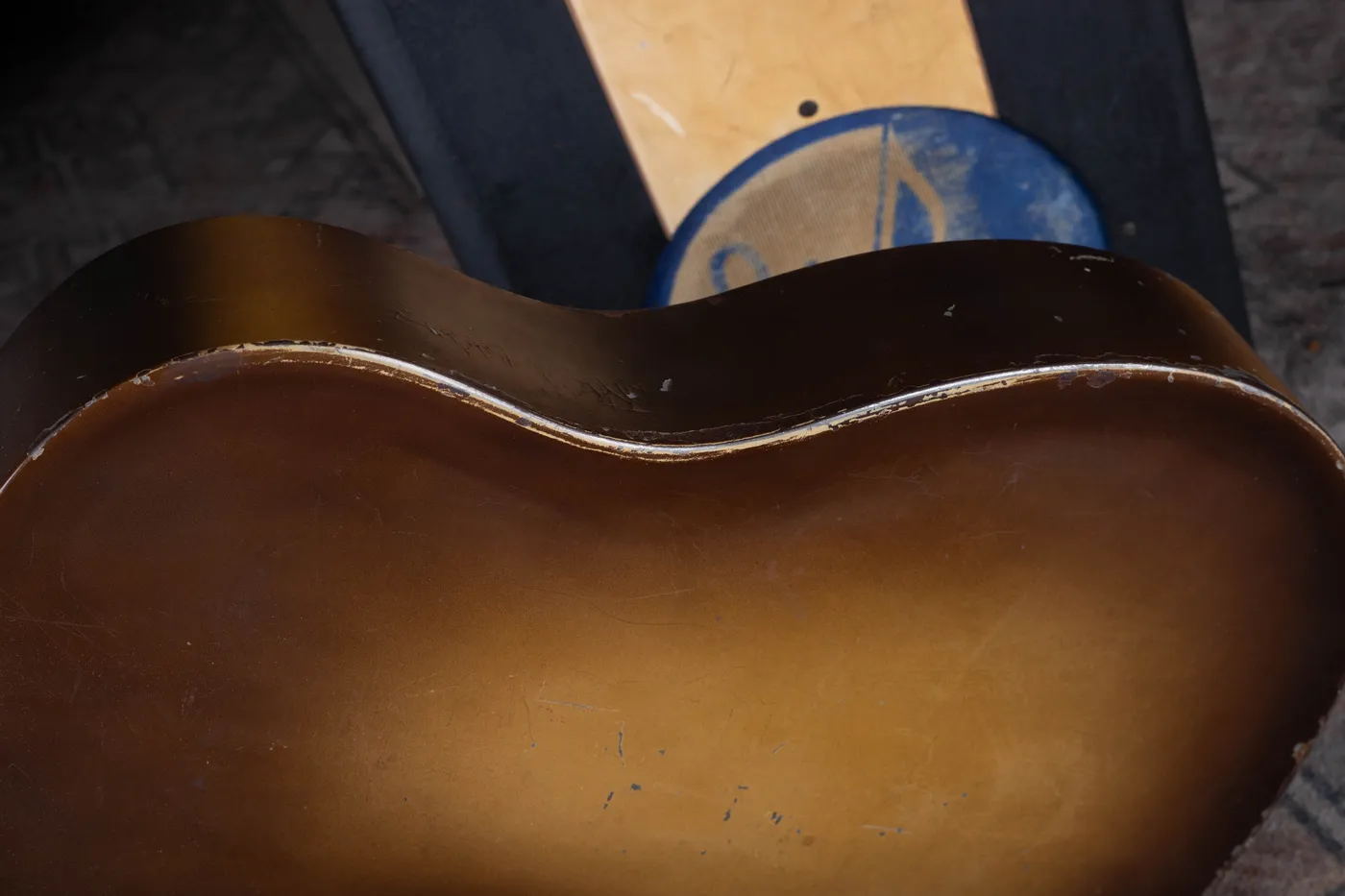
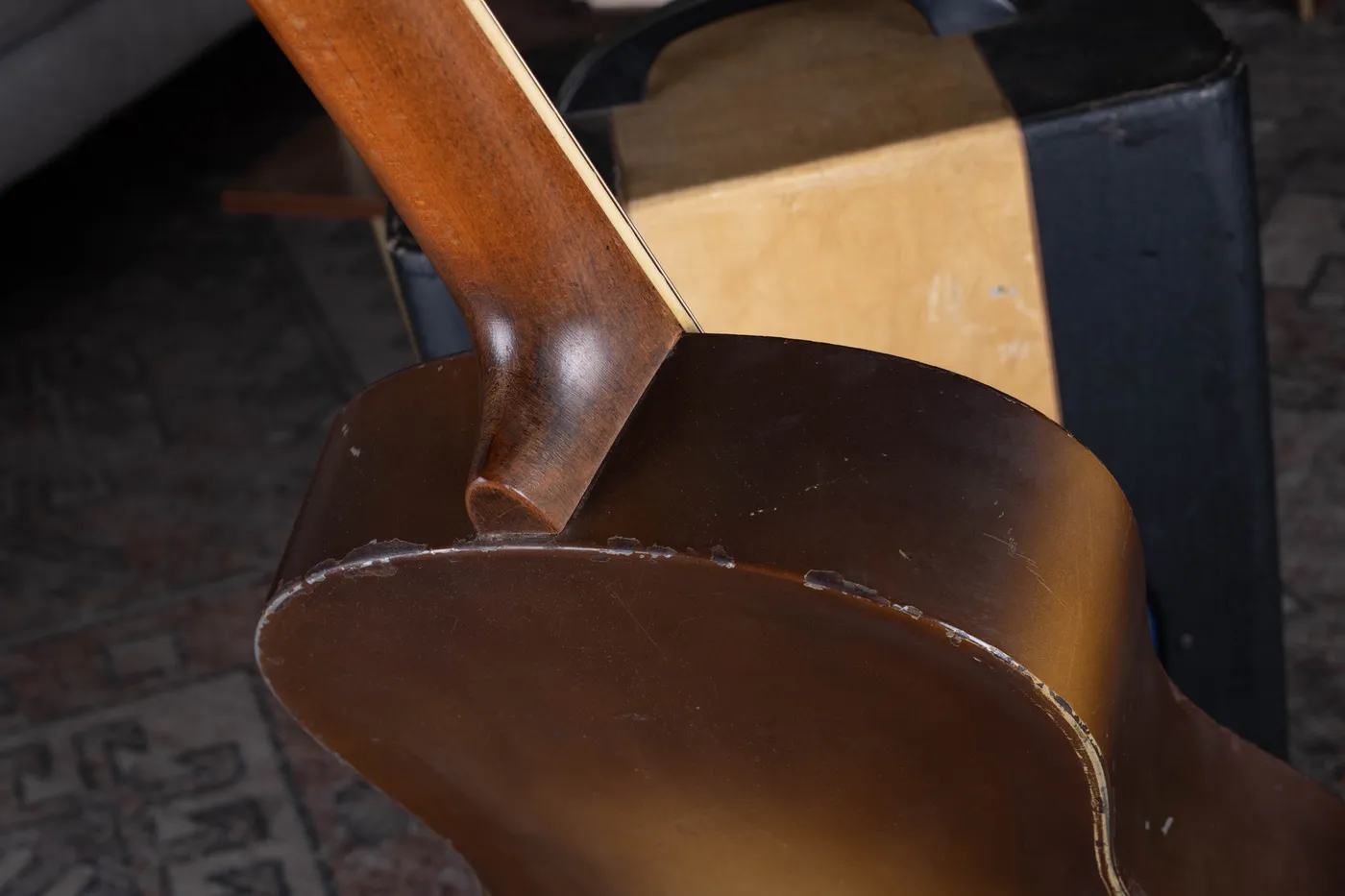
1930s · Triolian
The Metal-Body Sunburst Example
The Triolian’s front, back and heel distinguish it from the plated Style O in the same archive. Keep its model identification attached to these views with its own neck and body details.
A Real Number And Its Context
Read Marks Without Inventing A Universal Decoder
Joe’s Archived 1928 Style 3
The stamp at the rear of the metal neck reads 542. The published square-neck tricone sequence places 393 to 1136 around 1928, consistent with Joe’s archive date. This is an approximate comparison based on historical instrument research, not a month-and-year code.
Keep the engraving, square neck and complete headstock with the serial photograph so the correct family sequence remains identifiable.
| Instrument Group | Common Location |
|---|---|
| Steel Single-Cone Models | Top edge of the headstock |
| Style O | Body near the endpin |
| Early Square-Neck Tricones | Rear of the metal neck near the headstock |
| Early Round-Neck Tricones | Body near the endpin |
| Tricones After About Number 2400 | Top of the headstock |
Photograph the location and any prefix. These are historical family patterns, not interchangeable number systems.
Prewar National families used different serial sequences and markings. Prefixes and suffixes can be part of the identification. Copy them exactly and photograph the entire marked area, including the material on which the stamp appears. A short number by itself can be ambiguous.
Do not apply later National/Valco electric-guitar charts to these earlier resonators. A shared brand name is not evidence of a shared serial system. Nor should a modern National Reso-Phonic number be forced into a prewar range. If a stamp is unreadable, leave the uncertain characters open rather than reconstructing the number from an assumed age.
Historical serial compilations can contain approximate ranges and gaps. Use the model-specific research as a comparison, while keeping the physical evidence and archive documentation visible. A date estimate should become more precise only when additional evidence supports it.
Originality And Repair Evidence
Inspect The Resonator Without Disturbing It
Record The Body Surface
Show paint, plating, engraving, dents and seams in diffuse light. Note known refinishing or replating. Avoid abrasives and polishing before the original surface has been assessed.
Check The Neck Configuration
Photograph the rear profile, heel, fingerboard and string height. Distinguish a square-neck instrument from a round neck set up with high action. Include any evidence of reshaping or replacement.
Describe The Installed Assembly
Photograph the coverplate, bridge opening and tailpiece. List known cone or bridge replacements. A familiar coverplate doesn't prove the concealed parts are original.
Preserve Service Documentation
Keep repair invoices, earlier photographs and removed components. If a repairer opens the instrument for necessary work, those inspection photographs can record details without repeated disassembly.
Explain Symptoms Precisely
Report a buzz, rattling part, difficult fretting or unstable tuning as an observed symptom. Don't diagnose a collapsed cone or neck problem solely from an online sound description.
Model identification and a playing assessment are different tasks. A correct old body can contain a serviced resonator assembly, and a well-preserved square-neck instrument can have action unsuitable for ordinary fretting by design. Once the construction is understood, the National value guide explains which condition comparisons apply.
A Revived Design Has Its Own Date
Exclude Modern National Reso-Phonic Instruments
National Reso-Phonic's own history dates the company's founding to 1989 by Don Young and McGregor Gaines. Its current range includes Style O, Triolian and tricone designs that intentionally resemble earlier instruments. A palm-tree scene, slotted headstock or National shield logo therefore cannot establish prewar manufacture.
Check the complete maker identification, serial location and accompanying paperwork. Modern specifications may describe materials or appointments chosen to recreate a historical model. Read that as a current manufacturing description, not proof that the guitar was made in the year the design first appeared.
Later replacement components can also appear in an original body. That situation requires a parts history, not a blanket conclusion that the whole guitar is new. Preserve the distinction between a modern complete instrument and an older National that has received service. Prices for modern instruments are outside this original-era guide.
The Whole Guitar And The Uncertain Detail
Ask Joe About A National Identification
Send The Evidence
Send Your National Photos
Include the neck profile, front and rear body, serial location, headstock and any repair history. Tell Joe which identification came from paperwork and which is an estimate. A photo review can establish the likely family and identify what still needs an in-person examination.
Sources And Their Limits
National Research And Manufacturer References
- National Reso-Phonic Company History
Original Dopyera context and the separate manufacturer founded in 1989.
- National’s Current Tricone Description
Resonator design context and later instruments explicitly presented as reissues.
- Documented National Tricone Examples
Firsthand Style 3 and Style 4 examples, engraving names and square-neck construction.
- National Model And Serial Research
Observed body, neck, resonator and serial distinctions; approximate chronology is not treated as a universal decoder.
- Joe’s National Buying Guide
The model families and photo information used for an individual appraisal.
- Documented Early Steel Style O
Firsthand construction description of a steel-bodied example identified as 1930.
- Documented Early Brass Style O
Firsthand construction description of a brass-bodied example identified as 1930.
Questions AboutNational Identification
Is A Triolian The Same Thing As A Tricone?
Is Joe’s Style 3 Example A Round-Neck Guitar?
Does The Number 542 Independently Decode As 1928?
Can A Modern National Have Palm-Tree Decoration?
The Last Word
Keep The Evidence Together
Begin with the resonator family and neck construction, then add the serial and repair history. Decoration can help identify a style, but it cannot replace those checks. Keep uncertainty visible so an appraisal or hands-on inspection can resolve it without first undoing an unsupported description. For the matching price ranges, see the National Resonator Guitar value guide.
Authenticity And Originality Are Assessed From The Information Provided. A Hands-On Inspection Can Change The Conclusion.