

Tweed Combos And Original Piggyback Amps
Vintage Fender Bassman Values By Model
Match the cabinet, circuit and included equipment before putting a value on a vintage Bassman.
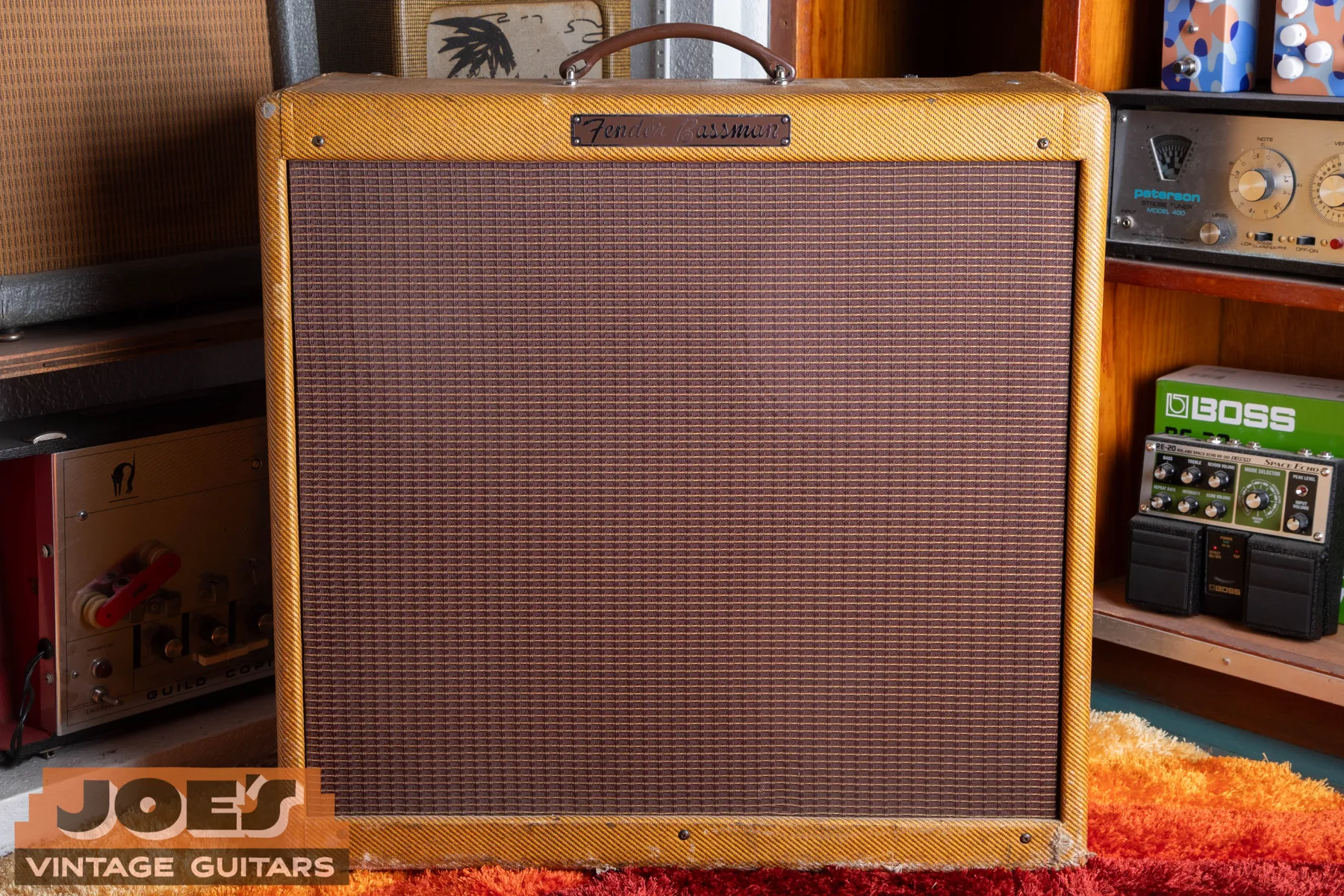
A 1959 to 1960 tweed 4x10 Fender Bassman is estimated at $7,300 to $9,450 in excellent, original condition. A 1965 to 1966 blackface head alone falls in a separate group at $1,000 to $1,300. The Bassman identification guide explains how to establish that difference. A complete piggyback set also includes a speaker cabinet, so an estimate for the head shouldn’t be compared directly with an estimate for both pieces.
This Is An Estimate Of Market Value, Not An Offer To Buy And Not A Guarantee. Market Values Fluctuate; Have Your Specific Item Appraised.
Match All Four Columns
Bassman Values From Tweed To Silverface
| Model | Years | Configuration | Estimated Value |
|---|---|---|---|
| Bassman | 1952 | TV front, 1x15 | $2,650 to $3,500 |
| Bassman | 1953 to 1954 | Wide panel, 1x15 | $2,650 to $3,500 |
| Bassman | 1955 to 1957 | Tweed, 4x10, 2 inputs | $5,950 to $7,650 |
| Bassman | 1957 to 1958 | Tweed, 4x10, 4 inputs | $7,250 to $9,350 |
| Bassman | 1959 to 1960 | Old style cabinet, pink brown covering | $7,400 to $9,550 |
| Bassman | 1959 to 1960 | Tweed, 4x10, 4 inputs | $7,300 to $9,450 |
| Bassman | 1961 | White 1x12, 6G6, tube rectifier | $3,100 to $4,000 |
| Bassman | 1962 | Late 1962, white 2x12 | $1,850 to $2,400 |
| Bassman | 1962 | White 1x12, 6G6A, solid-state rectifier | $2,600 to $3,450 |
| Bassman | 1963 to 1964 | Smooth white 2x12, 6G6A/B | $2,200 to $3,050 |
| Bassman | 1963 to 1964 | Smooth white 2x12, 6G6A/B, head only | $1,300 to $1,750 |
| Bassman | 1964 | Transition, black, white knobs | $1,550 to $2,000 |
| Bassman | 1965 to 1966 | AA165/AB165, black knobs | $1,300 to $1,750 |
| Bassman | 1965 to 1966 | AA165/AB165, head only | $1,000 to $1,300 |
| Bassman | 1967 to 1969 | Silverface, vertical 2x15 | $700 to $900 |
| Bassman | 1967 to 1969 | Silverface, head only | $600 to $850 |
| Bassman | 1970 to 1971 | Silverface, 2x15 | $600 to $850 |
| Bassman | 1970 to 1971 | Silverface, head only | $450 to $600 |
| Bassman 10 | 1972 to 1980 | 50 watts, 4x10 combo | $650 to $900 |
| Bassman 50 | 1972 to 1977 | 50 watts, with 2x12 cabinet | $550 to $850 |
| Bassman 70 | 1977 to 1979 | 70 watts, with 2x15 cabinet | $550 to $800 |
| Bassman 100 | 1972 to 1977 | 100 watts, 4x12 | $600 to $850 |
| Bassman Solidstate | 1968 to 1971 | Solid-state piggyback | $450 to $600 |
U.S. dollars. Original cover where applicable. Condition, repairs and replacement parts affect an individual appraisal. Overlapping dates identify distinct entries. Modern reissues are excluded.
Choose a row by its full description. The early single-fifteen combos, two-input tweed four-tens and later four-input versions have separate entries. Some blonde and blackface groups include head-only estimates. A cabinet bought separately years later needs to be described as a separate cabinet, even when its covering matches the head.
The chart doesn’t assign a range to every production change. The first four-ten transition, some early black-panel variations, the Bassman 135 and an unmatched late Bassman 10 need individual review. Send photographs if your amp falls between descriptions. These figures don’t cover a ’59 reissue, Bassman LTD or a post-1980 Bassman with a familiar name. The period solid-state entry identifies a different vintage product from the tube heads.
Four Speakers And One Cabinet
What Matters On A Tweed Bassman
For a tweed four-ten Bassman, a rear photograph is as important as the front. Four matching-looking speaker labels can hide a mixed set of dates or replacement cones. Record each speaker separately. If two original speakers remain and two were changed, that is useful information an appraiser can evaluate. Describing the entire set as “vintage Jensen” leaves too much unanswered.
The cabinet deserves close attention around the bottom and the speaker baffle. Water exposure, damaged joints and replacement wood affect the assessment even when the outer tweed looks presentable. Show the inside surfaces that can be seen without removing the chassis. A repaired original cabinet and a new reproduction cabinet should be described differently. Keep photographs taken before any restoration.
A fresh tweed covering can disguise the extent of earlier damage. Don’t recover a worn Bassman simply to make it look better before an appraisal. An owner may prefer a tidy working amp, while a collector may place more weight on surviving factory material. Joe can assess the present covering and discuss what a proposed repair would change.
The early single-fifteen Bassman has its own construction and price group. Converting a later cabinet to hold one fifteen-inch speaker doesn’t create that early model. If the back opening, control arrangement or mounting holes don’t agree with the description you inherited, provide clear pictures of those areas before choosing a value row.
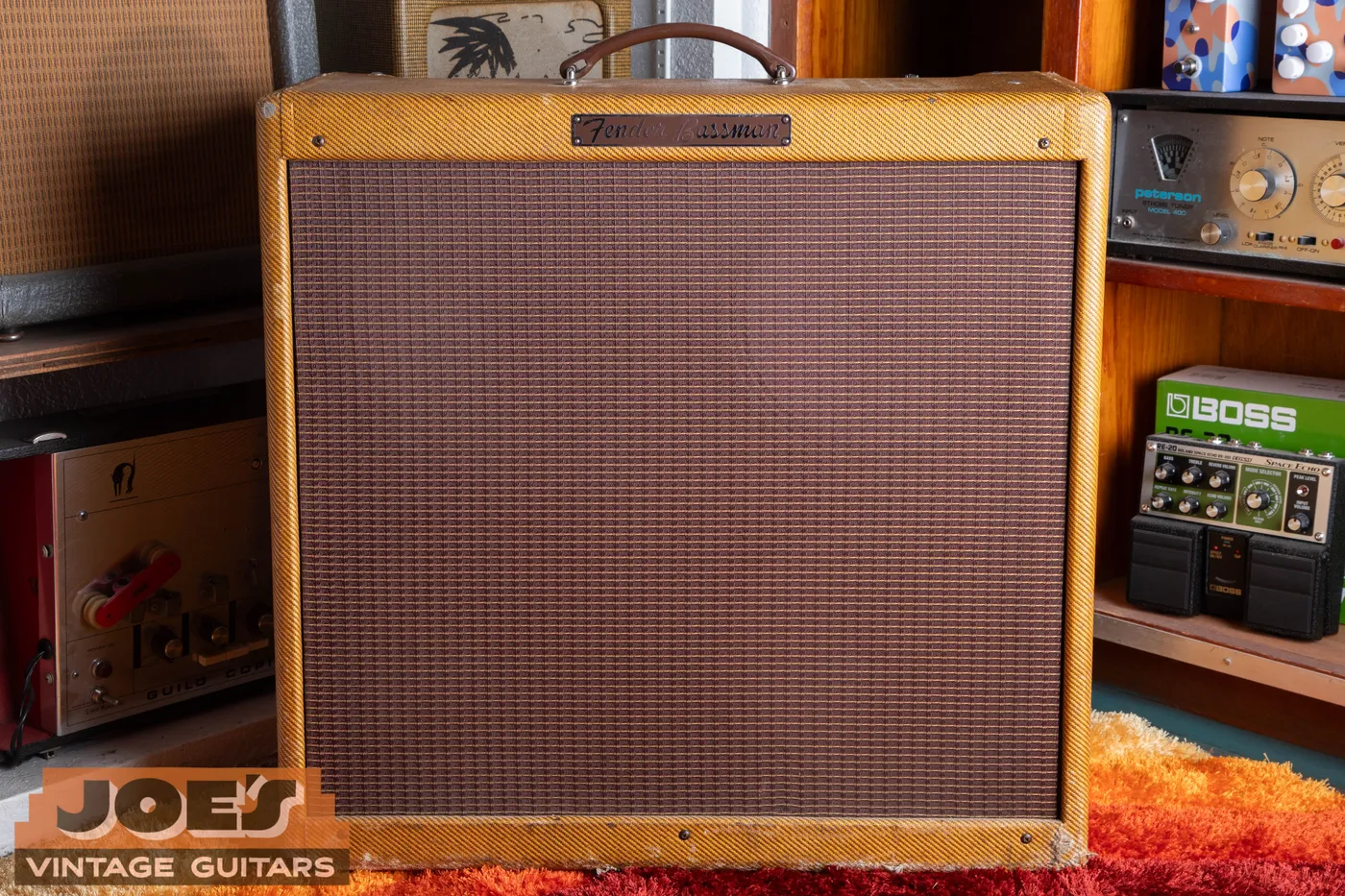
1959 And 1963 Fender Bassman Amplifiers
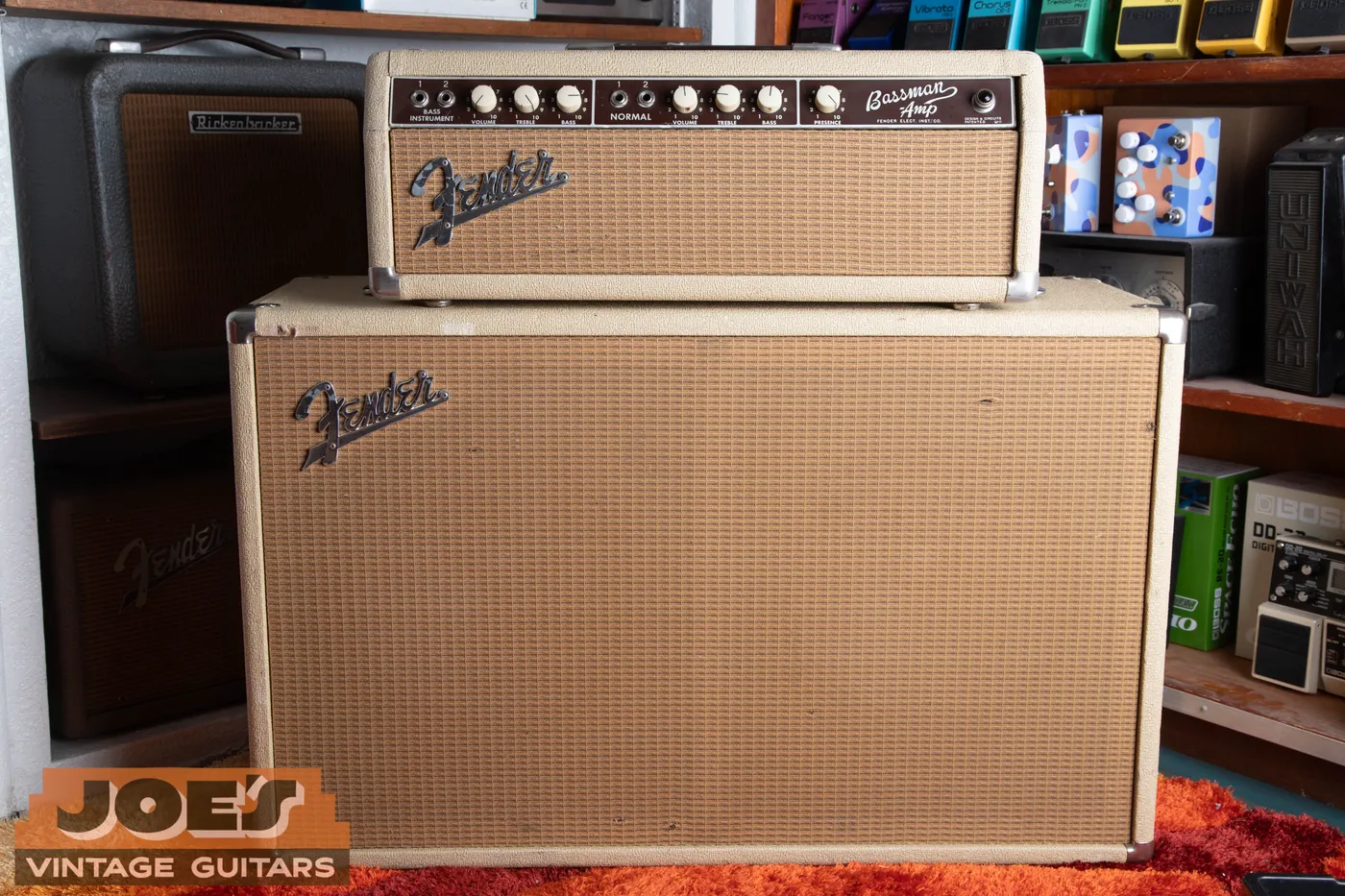
Check Each Piece
Valuing A Head And Cabinet Together
A blonde Bassman head can survive in excellent condition while its original cabinet is missing. The head-only row accounts for that situation where a separate entry is available. Adding any old Fender cabinet doesn’t automatically justify the complete-set figure. The cabinet’s age, speaker configuration, covering and history need to fit the set being appraised.
Joe’s 1961 blonde Bassman listing describes a set with dark oxblood grille cloth and its original 1x12 tone-ring cabinet. Later blonde examples use lighter wheat-colored cloth. Photograph the grille on both pieces and disclose any replacement fabric; color, weave, condition and the surviving cabinet all belong in the appraisal.
Photograph the piggyback mounting hardware and any unused holes. A missing screw is a smaller issue than a cabinet modified to fit a different head, but both belong in the description. If the pieces have been together for as long as you remember, say that. Family ownership can establish a useful history without proving that Fender shipped that head and cabinet together.
Covers are easy to separate from an amp during a move. Check storage areas before selling and photograph each cover next to the piece it fits. A head cover and a cabinet cover aren’t interchangeable accessories. Torn original material may still help document the set; a modern replacement should be identified as such.
Joe’s 1960s blackface Bassman listing describes a head and discloses a replacement blue pilot-light jewel. That is a useful example of recording a small cosmetic change alongside the larger questions about transformers, circuit work and the cabinet included in a sale. The listing gives a decade, so an exact production year still needs supporting evidence.
For a blackface or silverface Bassman, record the exact model name and all controls. A higher output number doesn’t by itself imply a higher collector value. The correct chart entry depends on which version you own, what accompanies it and what has changed. A head fitted into a custom combo cabinet requires an appraisal of that altered configuration.
Describe The Present Amp
Transformers, Speakers And Circuit Changes
Transformer History
Ask for clear markings on the power transformer, output transformer and choke. A replacement may be necessary to keep the amp usable, but it changes the originality record. An old-looking transformer isn’t enough: its identity and installation need to make sense for that circuit. Include any invoice explaining a replacement or rewind.
Speaker Condition
A speaker can retain its old frame and label after reconing. Tell Joe about that work, including which of the four speakers received it. A cabinet loaded with recent speakers may suit regular playing, but the original-speaker estimate needs adjustment. Photograph retained speakers separately and say why they were removed.
Bassman circuits are often discussed by their printed codes. An owner’s claim that a later amp was converted to an earlier circuit doesn’t make it an original earlier production example. Provide the technician’s description of the work. Changed wiring, controls and transformer specifications can affect both its appeal and the amount of work required to understand it.
The cost of a modification isn’t a reliable measure of the amount it adds to a sale. A useful master volume, effects loop or custom cabinet may appeal to a particular player and narrow the group of originality-focused buyers. Describe the result accurately instead of adding the repair bill to a chart figure. Removed factory parts should stay with the amp when possible.
Condition Beyond The Covering
Service Records And An Untested Bassman
Routine electrical maintenance needs a specific record. “Recapped” might mean replacement filter capacitors, or it might describe much more extensive work. Ask which parts changed and retain the invoice. A clear chassis photograph from the technician can show the difference without asking an owner to open the amplifier.
An amp that has been stored for decades shouldn’t be powered up just to prove it works for an appraisal. Explain when it was last used and any known symptoms. A qualified technician can evaluate its electrical condition. Useful photographs and an honest untested description give Joe a starting point without creating a new repair problem.
Wear from use, missing hardware and electrical faults should be listed separately. A clean front panel doesn’t resolve a damaged transformer, and a working demonstration doesn’t establish that the speakers or cabinet are original. The appraisal considers those facts together. There isn’t a single percentage deduction that covers every serviced or modified Bassman.
Include Both Pieces Of A Piggyback Set
Photographs For A Bassman Appraisal
Front And Full Controls
Photograph the entire combo or both pieces of the set. Add a square view of the control panel, including the input count and any model number or added control.
Back And Cabinet Interior
Show the rear panels, cabinet opening and speaker arrangement. For a closed cabinet, use existing service photographs or ask a technician for access; don’t remove the amplifier chassis yourself.
Tube Chart And Chassis
Send the paper label where it is attached, plus any technician-supplied circuit pictures. Include a damaged or partial label without trying to clean or retouch its printing.
Transformer Stamps
Keep each full stamped line in view and identify its location. A close-up alone can leave the appraiser unable to tell which transformer it belongs to.
Every Speaker
Provide one label and frame-code photograph per speaker. Number the positions in your message so a mixed set can be assessed accurately.
Hardware And Service Paperwork
Show covers, mounting hardware, retained components and invoices. A standard vintage Bassman has no built-in reverb tank to inventory; identify any added reverb equipment separately.
For production evidence, use Joe’s tube-chart date decoder or the transformer and speaker code section. Readable control markings can be compared with the pot-code guide. Fender amp serial numbers don’t reliably supply the year.
Send The Evidence
Get A Bassman Estimate From Joe
Send the photographs you have and list what comes with the amp. Include known alterations and any parts you still have in storage.
Questions AboutOriginal Fender Amp Values
Is A Bassman Head Worth The Same As A Complete Set?
Does Recovering A Bassman Increase Its Value?
Can I Price A Bassman LTD With The Tweed Rows?
The Last Word
Get Your Amp Appraised
The most useful Bassman estimate starts with the correct version and a complete inventory. Revisit the Bassman authentication guide if the head, cabinet or controls don’t match the description. The Fender amp eras article provides broader visual context. You can request an appraisal or read about selling your amplifier to Joe.
This Is An Estimate Of Market Value, Not An Offer To Buy And Not A Guarantee. Market Values Fluctuate; Have Your Specific Item Appraised.