

Original Kalamazoo Windsor · Single And Double Pickup Models
Epiphone Windsor Authentication Guide
The Windsor combines a thin pointed-cutaway body with gold hardware and oval markers. Its early New York pickups and later mini-humbuckers need different checks.
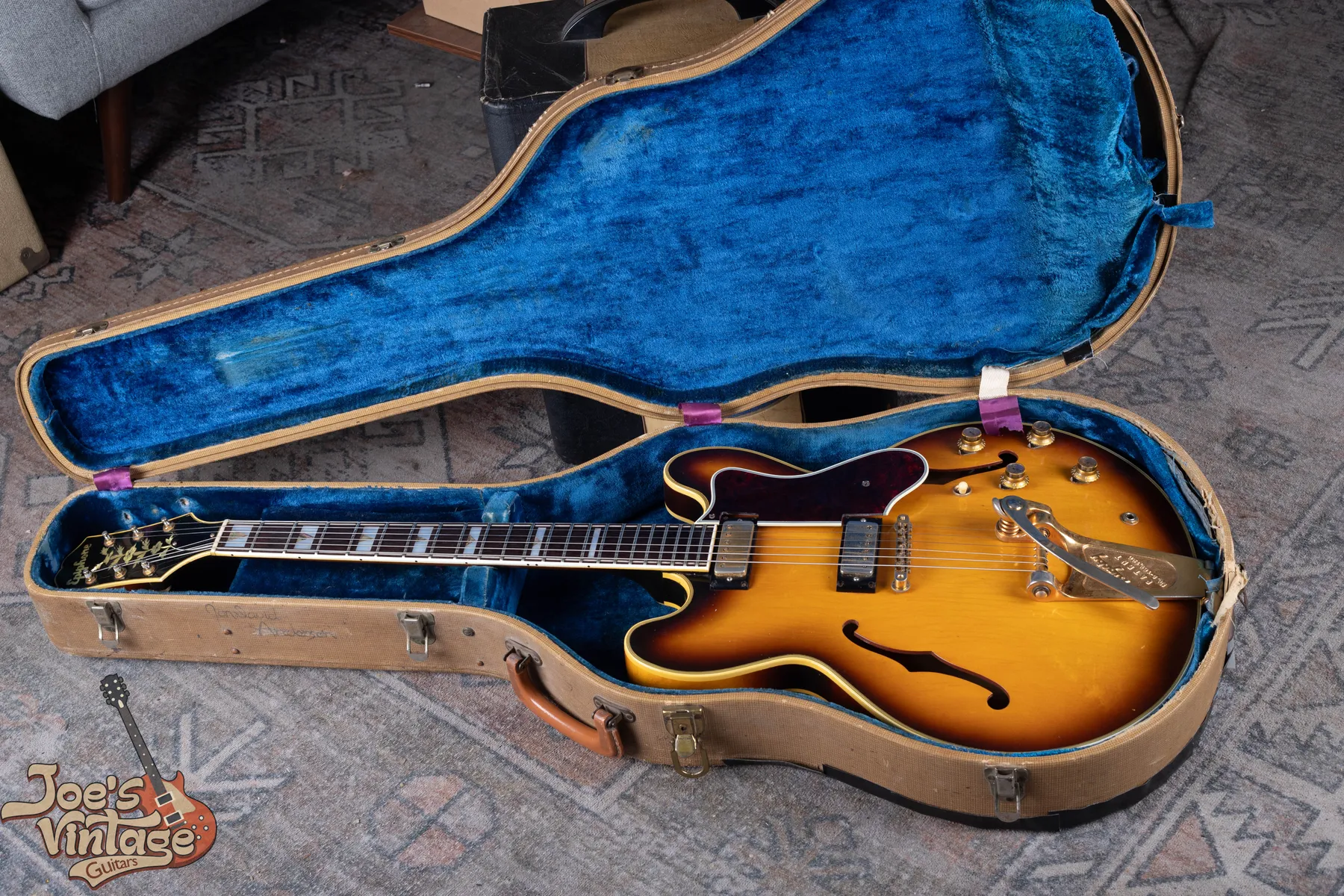
Authenticate an Epiphone Windsor by matching the thin pointed-cutaway body, oval fingerboard markers, gold-plated equipment and original pickup layout. The early New York pickup versions and later mini-humbucker versions belong to the same short Kalamazoo run, with factory single and double configurations. The Windsor value guide separates those combinations after the identity and condition are established.
Authenticity And Originality Are Assessed From The Information Provided. A Hands-On Inspection Can Change The Conclusion.
The Original Kalamazoo Electric
Windsor Features To Establish First
| Area | Original Reference | What To Document |
|---|---|---|
| Body | Thin hollow electric with Florentine cutaway | Full front, rim depth, back and neck joint |
| Construction | Laminated maple top and back, maple rims | Visible construction and any repaired edges |
| Neck | Mahogany, rosewood fingerboard, 24¾-inch scale | Scale, markers, headstock and heel |
| Decoration | Oval pearloid markers and gold-plated metalwork | Inlays, tuner backs, pickup covers and tailpiece |
| Factory Layout | One or two pickups | Original routing, controls and selector arrangement |
| 1961 Model Codes | E352T / TN and E352TD / TDN | Single or double pickup, shaded or natural finish |
The 1961 catalog is the central physical reference. It describes the materials and lists both pickup counts and finishes, even though its illustration shows a single-pickup guitar. Read the whole entry before deciding that a different factory variant is an alteration. Conversely, a listed option doesn’t prove that a particular guitar left the factory in that form.
A Short Run Within A Longer Factory Period
The Windsor Belongs To The Gibson-Era Line
Kalamazoo Origins
The Windsor guitar belongs to the Kalamazoo Epiphone line, while the value chart uses 1959 to 1962 pricing groups. Those groups are not a shipment ledger or evidence of uninterrupted production. A familiar older Epiphone product name doesn’t establish continuity of body construction or serial practice.
The Sheraton history records CMI’s purchase of Epiphone in 1957 and the start of Kalamazoo production in 1958. Early Windsor hardware must be understood within that transfer, when New York pickup equipment appears on Gibson-built Epiphones.
Why The Broader 1970 Boundary Is Different
The Sheraton history dates the move of Epiphone production to Japan to 1970. That doesn’t extend the Windsor’s documented run through every year before the move. Keep the brand chronology separate from this model’s shorter availability.
A short model run alone does not explain the identity or value of an individual guitar. Compare its pickup count, finish and remaining hardware before making a rarity claim. A sparse set of surviving photographs cannot establish the number manufactured or still in existence.
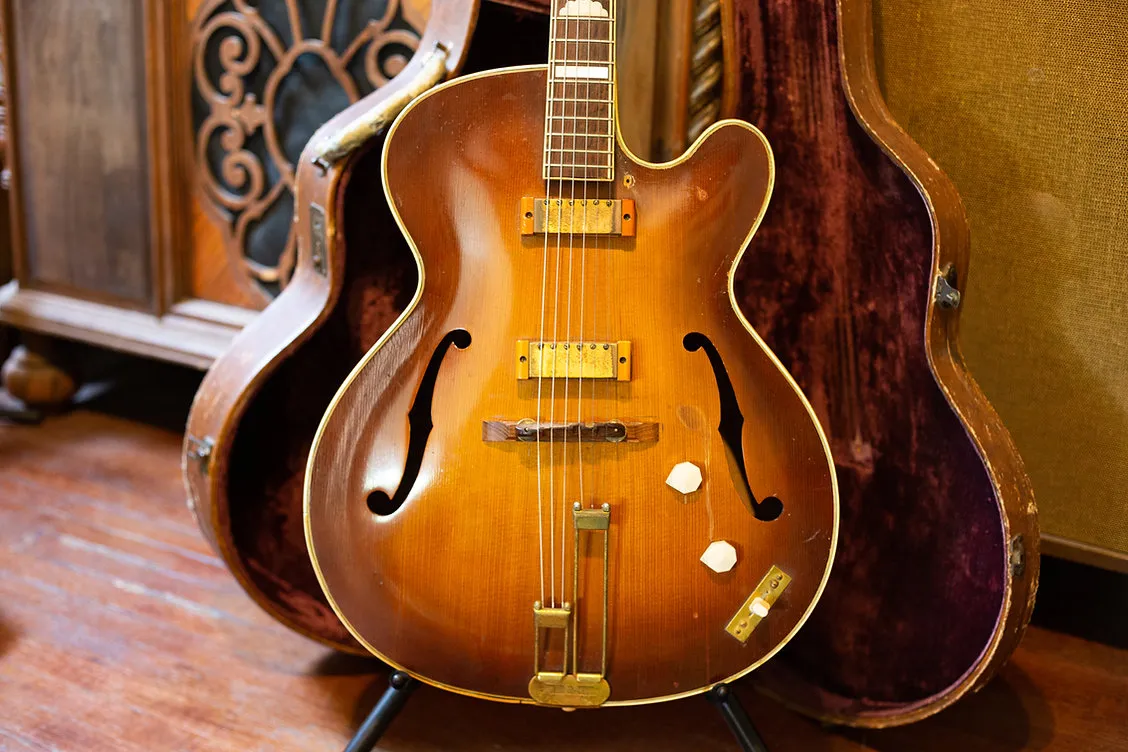
These are comparison instruments: inspect the New York pickup and mini-humbucker families without confusing either guitar with a Windsor.
Follow The Pickup Transition
Windsor Identification Across Its Short Run
New York Pickup Configurations
The early Windsor groups use New York pickups, with single and double versions in natural and sunburst. Confirm the actual pickup construction and installation. A later cover or a moved pickup can make a superficial date match misleading.
Both Pickup Counts Remain Listed
The catalog illustrates the single-pickup pointed-cutaway Windsor and separately lists E352TD and E352TDN doubles. Gold equipment, oval markers and the smaller thin-body format distinguish the model from neighboring Epiphones.
Mini-Humbucker Versions
The later groups use Gibson-made mini-humbuckers. Their internal construction differs from the earlier New York single coil. A model label or serial alone can’t certify which pickup remains inside an old cover.
Check A Claimed Later Example
A guitar described as a later 1960s Windsor needs its identification examined. Check whether it is a Sorrento, a modified instrument or a date-reading error before treating that description as an undocumented factory continuation.
Compare Shape, Depth And Scale
The Windsor’s Thin Maple Body And Mahogany Neck
The 1961 catalog specifies laminated arched maple for the top and back, with maple rims and a mahogany neck. The pointed cutaway is described as Florentine. Its thin rim and 24¾-inch scale differ from the larger, longer-scale Zephyr, so a generic description such as old Epiphone hollowbody is not enough to establish the model.
The catalog lists a 1¾-inch body depth. Take a side photograph and record how a measurement was made rather than estimating from the front. The top and back are arched, so a rim measurement and a measurement across the deepest part of the body are not necessarily the same observation.
Neck, Fingerboard And Logo
The Windsor has a rosewood fingerboard with oval pearloid markers in the catalog reference. Compare the marker shape, headstock, logo and binding as a set. A decorative feature can be replaced, and a headstock repair can remove or obscure the most useful serial evidence.
Record the nut-to-twelfth-fret measurement and double it to check scale. Include the neck joint in a side view so a changed heel or reset is visible. Do not identify a model from fingerboard decoration while leaving the body and neck connection out of the photograph.
Gold Hardware And The Simple Tailpiece
The catalog calls for gold-plated machine heads, tailpiece and metal parts, plus an adjustable rosewood bridge. The illustrated tailpiece is a simple trapeze. A Frequensator taken from another Epiphone should not be treated as an upgrade that establishes a higher Windsor specification.
Show the tailpiece’s bottom attachment, tuner mounting holes and bridge assembly. Replaced gold hardware can look convincing from the front, while worn original plating may appear less uniform. Age and color alone do not prove that a component belongs to this guitar.
The contemporary Gibson ES-125TC offers a useful construction comparison: a thin pointed-cutaway maple-bodied electric with a mahogany neck and the same standard scale. Its pickup and decorative specification differ. The Windsor should retain its Epiphone model identity rather than being authenticated by a Gibson badge, pickup or replacement neck.
The Sorrento is another model to distinguish. It also uses a pointed single cutaway and mini-humbuckers in the Kalamazoo line, but the Windsor’s cataloged gold equipment and decorative package require their own comparison. A gold part fitted to a Sorrento does not by itself create a Windsor.
Count The Actual Instrument
Check The Windsor’s Twenty-Fret Neck
The 1961 Windsor catalog specifies 20 frets and a 24¾-inch scale. Count the actual frets and photograph the fingerboard extension, including where it meets the body. A replacement fingerboard, changed neck or repaired joint needs to be described alongside the model identification. If the count or scale differs from the catalog, keep that measurement in the record and compare the rest of the guitar before concluding that a particular repair explains it.
New York Single Coils And Gibson Mini-Humbuckers
Inspect The Pickups Beyond Their Covers
The early New York pickup and the later mini-humbucker are different electrical designs. Match the model period, mounting and wiring before assuming that a rectangular metal cover identifies the internals. A repaired pickup can retain its cover while having altered coils or other components underneath.
Epiphone mini-humbuckers and Firebird pickups also have different internal construction. Do not use the Firebird name as a synonym for any narrow humbucker. When the distinction affects the identification, preserve a qualified technician’s photographs and findings instead of relying only on the outside dimensions.
Factory Single-Pickup Windsors
A single-pickup Windsor is a cataloged version. Show the whole top, guard and controls before concluding that a second pickup is missing. Filled routing, plugged controls or a replaced guard can reveal a conversion, but those need actual evidence rather than an assumption based on another guitar.
Record the working condition separately from originality. A quiet, functioning pickup may have been rewound, while an original pickup may need repair. Neither electrical test alone determines whether the complete instrument is a Windsor.
Factory Double-Pickup Windsors
The double needs both original pickup positions and its control arrangement checked. Look for enlarged cavities, extra screws or added controls that indicate later work. A tidy conversion is still a conversion, even when period parts were used.
Initial appraisal photos do not require dismantling the guitar. Begin with accessible mounting details and the owner’s repair records. If the body conceals a disputed installation, have it inspected without forcing a brittle harness through the f-hole.
Four Catalog Codes, Two Electrical Periods
Read Windsor Model Numbers And Finish Designations
E352T And E352TN Singles
The 1961 catalog lists E352T in shaded finish and E352TN in natural. The absence of D identifies the single-pickup listing in that entry. Confirm the original top and controls rather than assuming the current pickup count proves the code.
E352TD And E352TDN Doubles
The D versions are the factory doubles, with N designating natural in the catalog. Keep the entire code when transcribing a label or invoice. A shortened description can omit the distinction that matters most for the electrical inspection.
Natural And Shaded Finishes
Both finishes are listed for the pickup variants. That establishes availability, not the originality of a surviving finish. Photograph the back, rims, heel and headstock before treating a natural-looking guitar as a factory natural example.
Do not expand an unclear label into the code you expect to see. Preserve a faint character with a photograph and a cautious transcription. The physical layout may support a probable identification while the written model marking remains unresolved. Record the visible features and leave any unreadable model-code character unresolved.
Pickup Families On Named Instruments
What Joe’s Comparison Photos Demonstrate
New York Pickup Comparison
1950s Zephyr De Luxe Regent
The gold rectangular pickups and mounting arrangement are visible on this older De Luxe-family electric. Its ornate headstock, Frequensator and body do not establish Windsor specifications. Use it to compare the early pickup family while keeping the actual instrument named.
Kalamazoo Mini-Humbucker Comparison
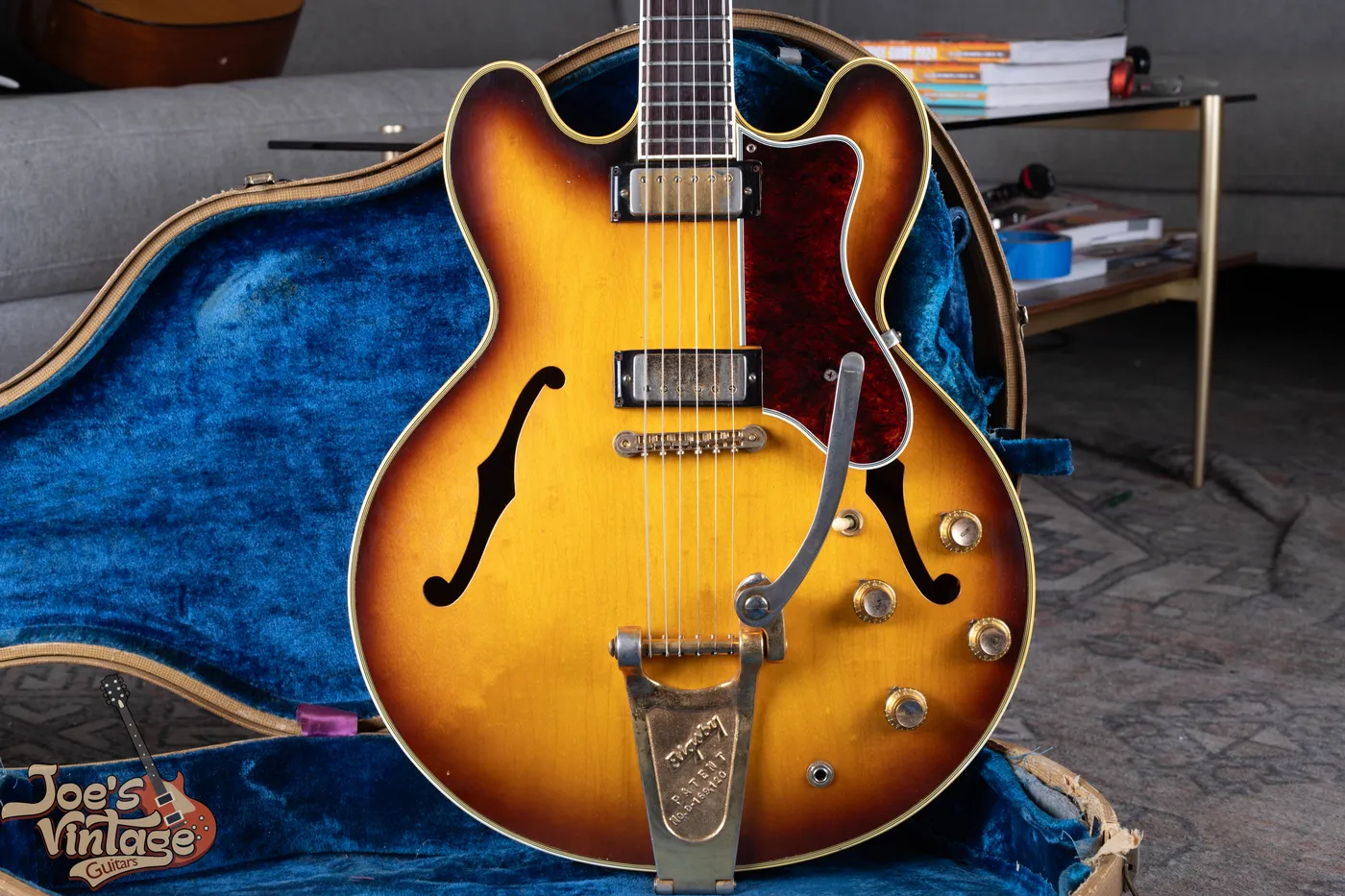
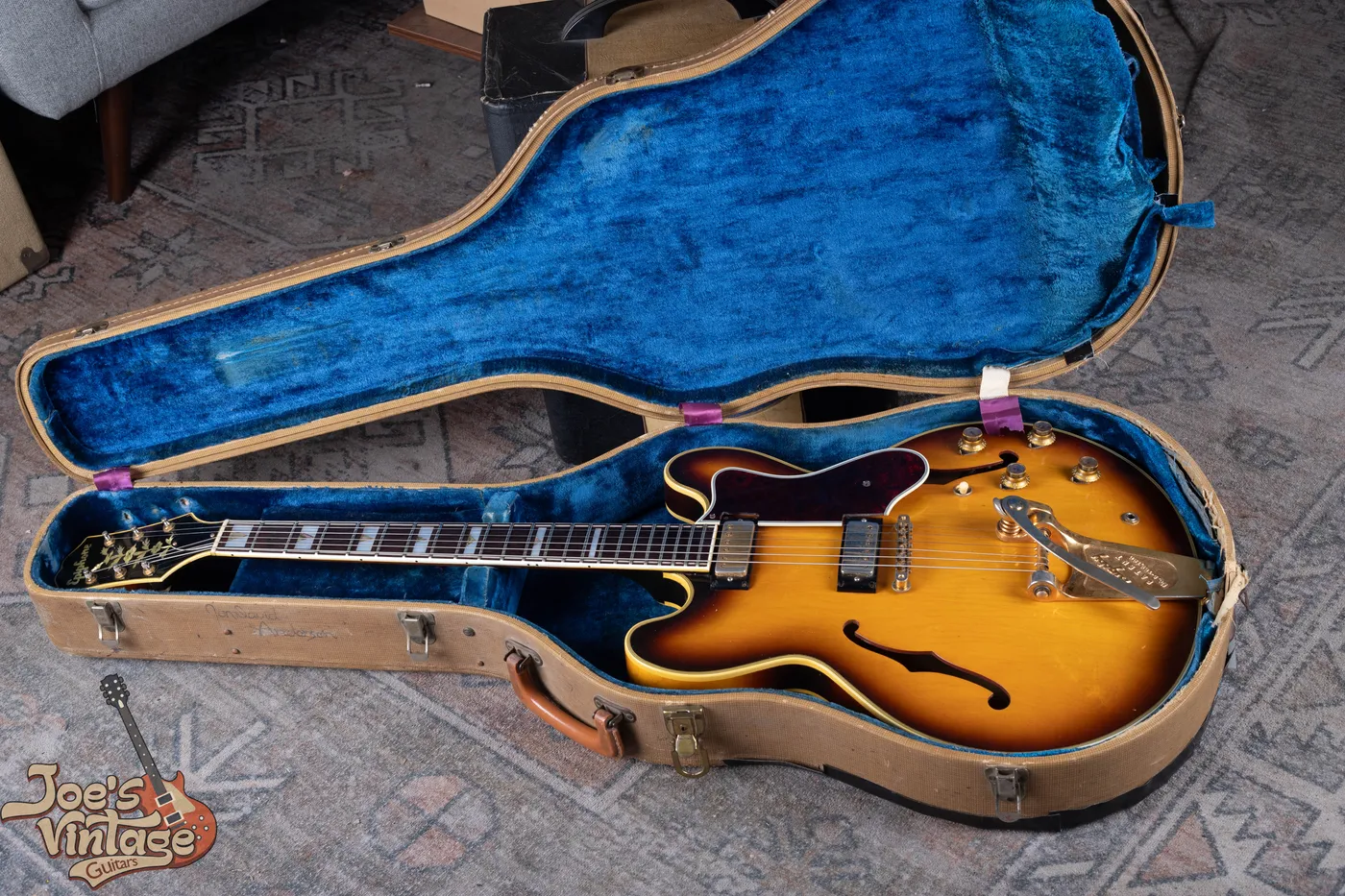
1961 Epiphone Sheraton
The Sheraton shows the later mini-humbucker family on a different Kalamazoo model. Its center-block double-cutaway body and Bigsby are not Windsor features. These photos cannot supply a Windsor serial example or prove the originality of another guitar’s pickups.
Kalamazoo Serials And Catalog Evidence
Windsor Dating Requires The Actual Guitar’s Markings
Early Kalamazoo hollowbodies need a separate first check: an A followed by four digits on the interior label belongs to Epiphone’s early A-series, not the similarly named Gibson A-prefix chart. Photograph the whole label and keep any factory order number separate. A model code is not a serial number. Later impressed numbers can be compared with the shared Gibson system, with the guitar’s construction used to check the result.
From 1961, Kalamazoo Epiphones used the shared Gibson numbering system. Use the Gibson serial guide with clear headstock and label photographs. Record a visible factory order number separately from the serial. Combining two markings into one string can produce a plausible-looking but meaningless lookup.
Compare the proposed date with the pickup family and the rest of the instrument. A changed pickup does not automatically invalidate the body’s date, and a correct early pickup does not prove that it was installed there at the factory. Describe the supported body period and the equipment history separately.
A repaired headstock or missing label may prevent a narrow date from photographs. In that case, use the supported period and identify what additional evidence would resolve it. An ownership receipt, earlier photograph or repair record may help without being treated as a factory completion certificate.
No Windsor Serial Is Shown In These Comparisons
The photographs here show a De Luxe and a Sheraton. Their numbers are not transferred to the Windsor. Send the actual instrument’s serial, label and any visible internal stamp for a model-specific reading.
Match The Model Before Assessing Originality
A Windsor Authentication Checklist
Confirm The Thin Florentine-Cutaway Body
Show the complete outline, rim and neck joint. Compare its scale and proportions with the Windsor reference, rather than confusing it with the larger rounded-cutaway Zephyr.
Check The Oval Markers And Gold Equipment
Photograph the headstock, fingerboard, tuner backs, bridge and tailpiece. Record replaced parts and repairs so decorative similarities do not conceal a different underlying model.
Identify Pickup Type And Original Count
Separate New York pickups from mini-humbuckers, then establish single or double factory layout. Include wiring history and altered openings where documented.
Reconcile Serial, Finish And Repair Evidence
Check the date against the feature group. Keep refinishing and structural repairs in the description even after the model is secure. Authentic identity does not mean untouched condition.
Country Markings And Complete Model Identity
Exclude Later Production And Unrelated Windsor Names
Later Japanese, Korean and Chinese Epiphones, Elitist instruments and signature models belong to their actual series. A historical-looking logo or a reused name does not prove Kalamazoo production. Check the full serial format, country identification and paperwork before applying this guide.
The Windsor name also occurs elsewhere in Epiphone’s product history, including mandolins. A name match does not make those instruments part of this electric guitar family. Establish the type of instrument before consulting a guitar serial or model table.
After identification, use the condition guide for repairs and the Windsor value guide for the correct finish and pickup comparison. Neither the model’s short run nor a correct serial removes the need to assess its present condition.
Send The Evidence
Have Joe Review Your Windsor
Send the body, neck, markings and electrical details for a free appraisal. The Epiphone seller page explains how to discuss selling after the instrument is reviewed.
Catalog Specifications And Dating Context
Windsor Research References
- 1961 Epiphone Catalog
Windsor body, neck, gold hardware, markers and all four model-code listings.
- 2026 Vintage Guitar Price Guide
Windsor model dates and early versus later pickup groups; page 90.
- 1960 Gibson Catalog, Page 9
ES-125TC construction and scale for the limited Gibson comparison.
- New York Epiphone Model Research
Separate Windsor mandolin naming and older electric pickup-family context.
- JVG Sheraton History
Factory ownership chronology and New York pickup to mini-humbucker transition.
- Epiphone Serialization Reference
Epiphone section, page 1071: the early hollowbody A-label sequence differs from Gibson’s A-prefix series; later impressed numbers require feature checks.
- JVG Gibson Serial Guide
Kalamazoo serial interpretation and physical corroboration.
Questions AboutEpiphone Identification
Did The Windsor Continue Throughout The 1960s?
Were Two-Pickup Windsors Factory Models?
Does Gold Hardware Prove A Windsor?
Should A Windsor Have A Frequensator?
The Last Word
Keep The Evidence Together
A Windsor identification rests on its body, decoration, pickup configuration and markings together. Keep replaced parts and repairs visible in the conclusion. Once those details agree, the Windsor value guide provides the relevant original-configuration comparisons.
Authenticity And Originality Are Assessed From The Information Provided. A Hands-On Inspection Can Change The Conclusion.