

DeLuxe And Regent · New York To Kalamazoo
Epiphone Deluxe Authentication Guide
The acoustic DeLuxe, Zephyr De Luxe and Kalamazoo A212 share a family name but need different construction checks.
Start an Epiphone DeLuxe identification by deciding whether the body was built as an acoustic archtop or as a factory electric. Then establish the cutaway, production period and original appointments. The DeLuxe value guide separates those configurations. The Zephyr De Luxe is the electric branch of the DeLuxe family; the ordinary Zephyr and Zephyr Emperor are separate designs.
Authenticity And Originality Are Assessed From The Information Provided. A Hands-On Inspection Can Change The Conclusion.
Acoustic, Regent Or Factory Electric
Which DeLuxe Construction Are You Inspecting?
| Group | Construction Or Outline | Important Distinction |
|---|---|---|
| Early Acoustic DeLuxe | Carved-top acoustic; body size changes over the original run | Don’t assume one width for all New York examples |
| Acoustic DeLuxe Regent | Cutaway version of the ornate acoustic family | Regent doesn’t itself mean electric |
| Zephyr De Luxe And Regent | Factory electric branch, with non-cutaway and cutaway versions | Pickup count and electrical layout must be checked against the period |
| Philadelphia De Luxe Electric | Two-pickup cutaway in the 1954 catalog | Separate from the three-pickup Emperor Electric |
| Kalamazoo A212 / A212N | Carved spruce-top acoustic cutaway | Natural and shaded options in 1961; special-order notation in 1966 |
De Luxe, DeLuxe and Deluxe spellings occur in the historical material. A spelling difference alone doesn’t identify a separate factory or year. Read the actual model context. The FT De Luxe flat-top and Crestwood Deluxe solidbody are different products and should not be authenticated with this archtop checklist.
Body Size And Model Branches
The DeLuxe Through New York And Philadelphia
New York Carved-Top Acoustics
The DeLuxe was introduced in 1931 at the upper end of Epiphone’s acoustic range. Its body dimensions and decoration developed during the 1930s, so an early instrument should be compared with an early catalog rather than a postwar photograph. The Emperor later occupied the larger flagship position, but ornate decoration alone still doesn’t distinguish the two models.
The circa-1950 acoustic catalog describes the DeLuxe as the same body size as the Emperor at that point. That is a useful warning against a universal 17⅜-inch rule. Measure the actual instrument and compare the catalog period. A large DeLuxe isn’t automatically an Emperor, and size must be read with the inlay, headstock and model evidence.
Philadelphia Acoustics And Electrics
The 1954 catalog distinguishes acoustic DeLuxe instruments from the two-pickup De Luxe Electric. The electric has its own construction and controls; it’s not simply an acoustic guitar with a removable pickup. The catalog shows the DeLuxe’s elaborate appointments alongside an even more elaborate three-pickup Emperor Electric.
Preserve the Philadelphia period within the older Epiphone chronology, before CMI’s 1957 purchase. A New York address on a label or a catalog name carried forward through the move should be recorded as evidence, not converted into a precise completion date. The pre-Gibson numbering research supplies estimates rather than a complete factory calendar.
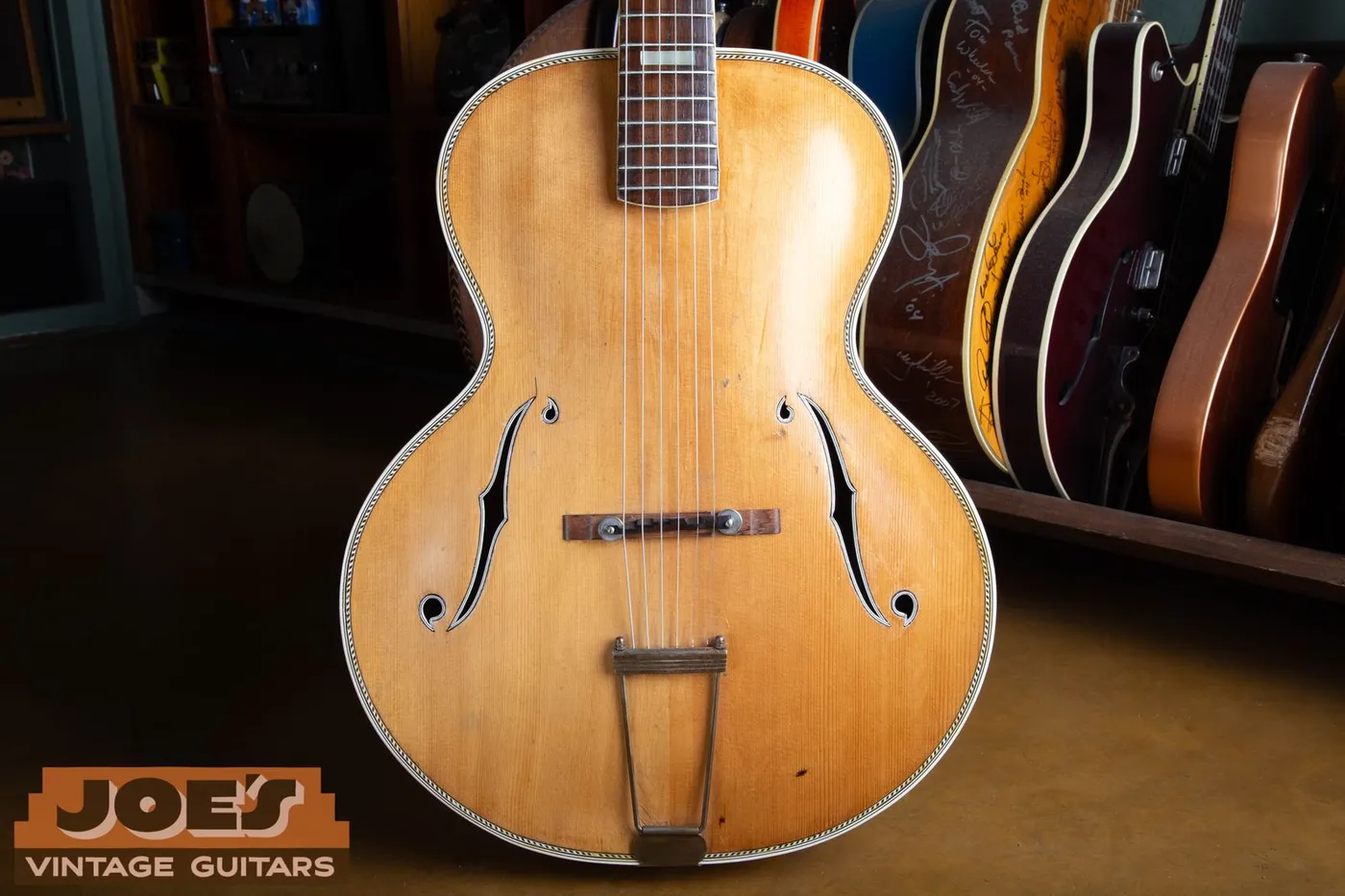
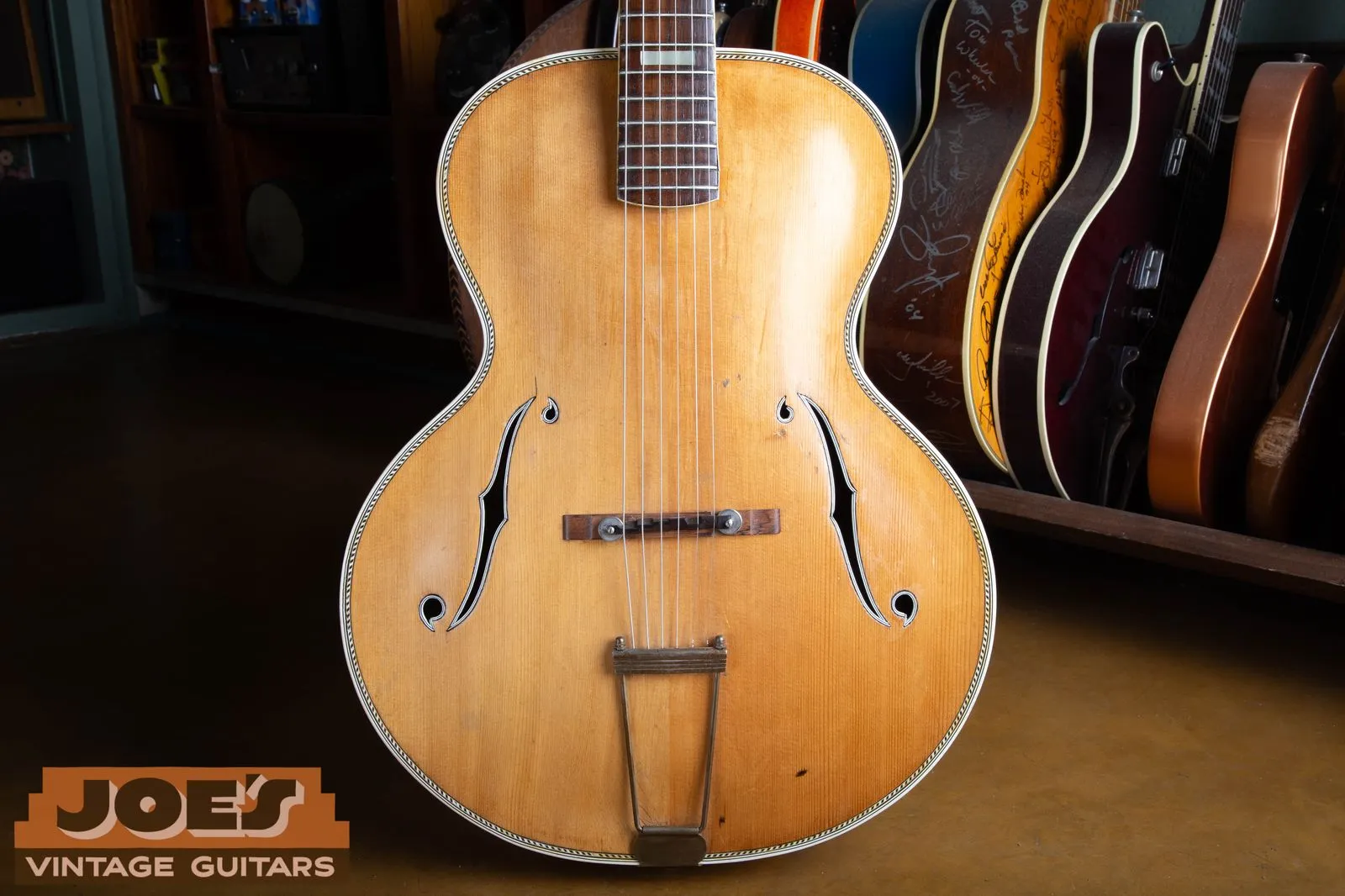
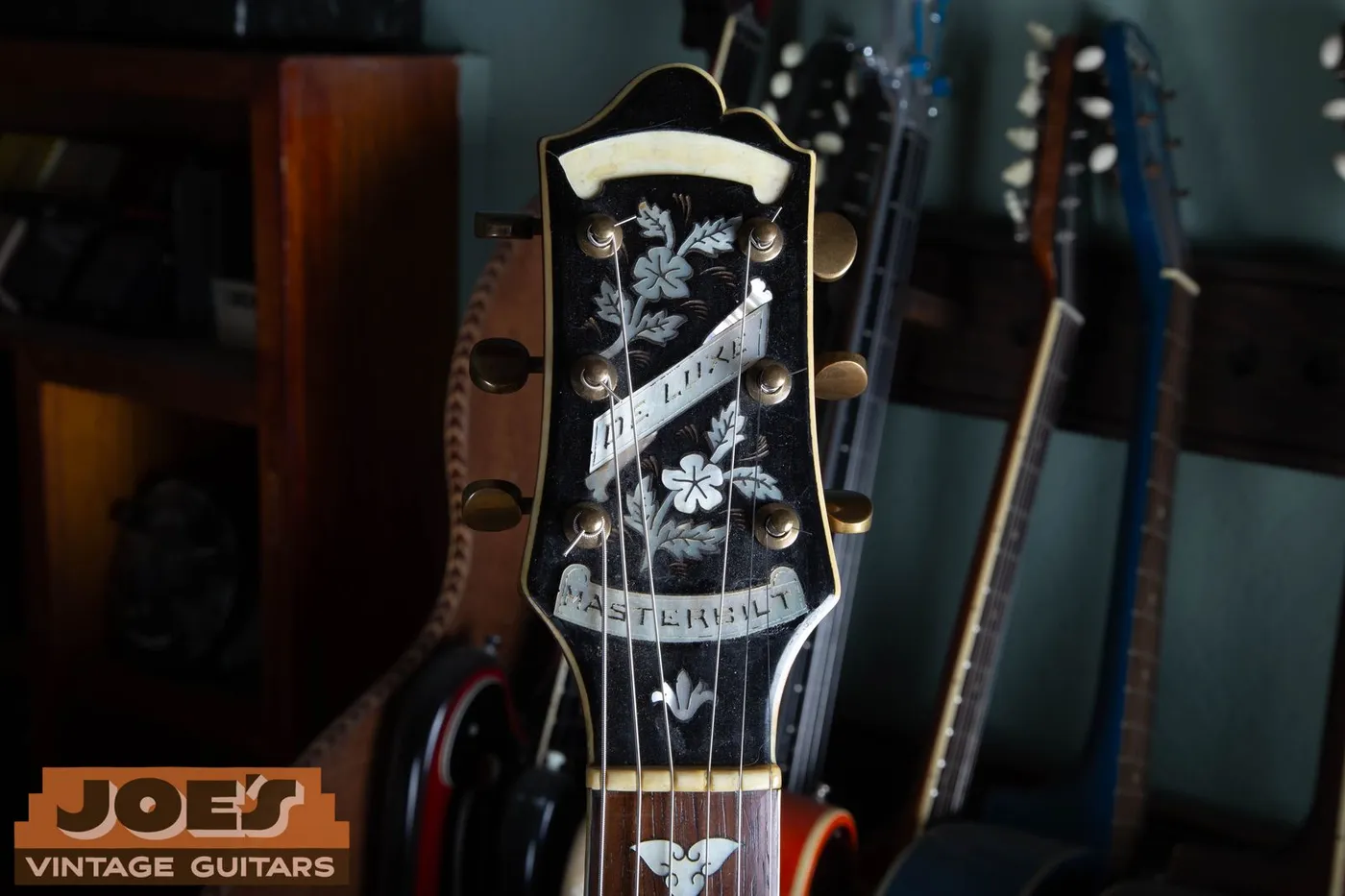
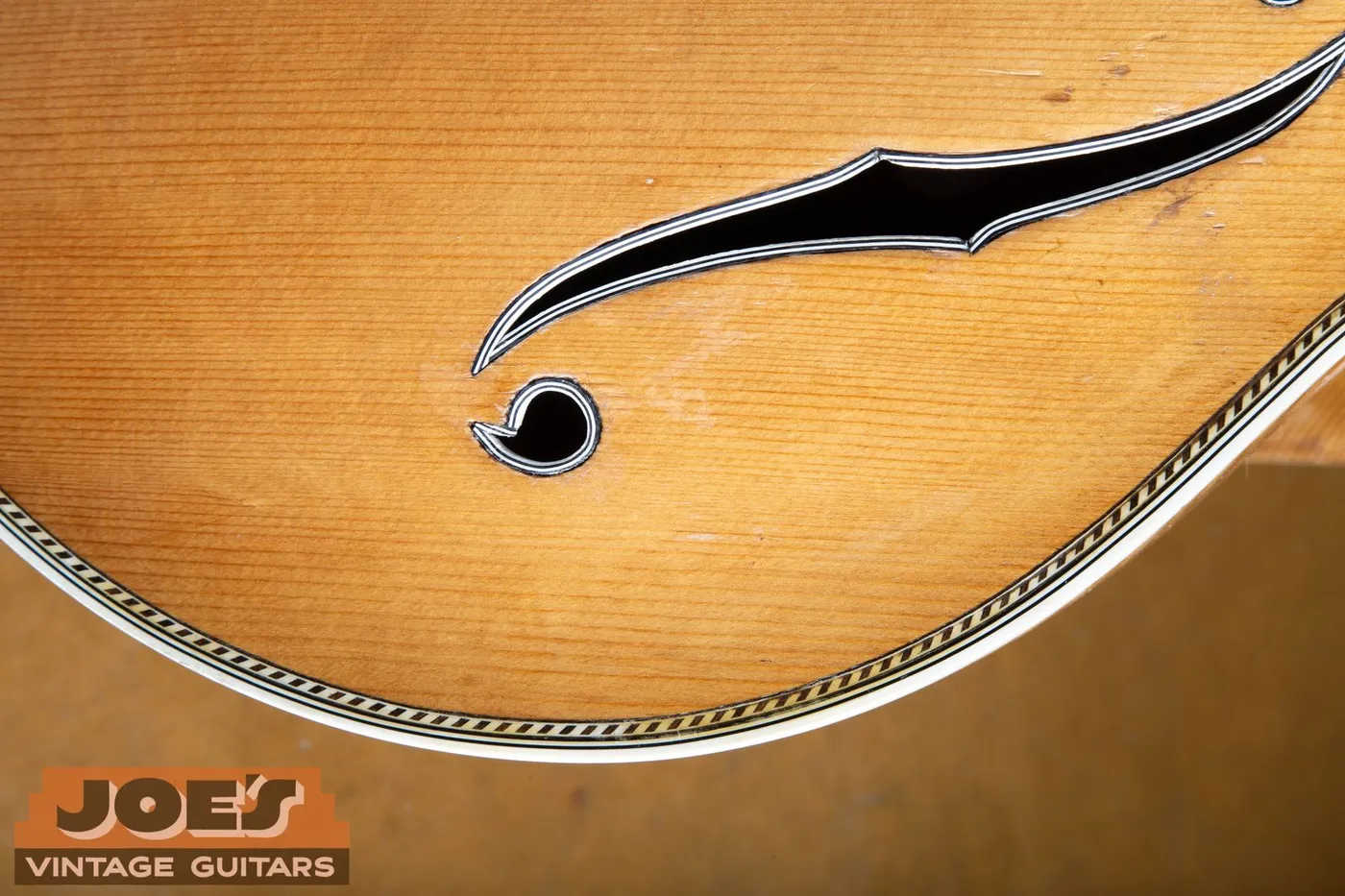
1933 Masterbilt DeLuxe: an early acoustic example with a blonde refinish and missing Epiphone headstock logo.
Use The Relevant Period
DeLuxe Development In Catalog Order
The Original Acoustic DeLuxe
Check the early body size, headstock design and fingerboard decoration. Later ornamentation should not be used as a requirement for the earliest instruments. An old replacement part can complicate that comparison, so record the complete guitar.
Regents And Zephyr De Luxe Electrics
The acoustic cutaway and electrical branches require separate labels. Identify whether the top carries factory pickup openings and whether the guitar was built with a cutaway. A fitted pickup on an acoustic doesn’t answer either question.
A Cataloged De Luxe Electric
The Philadelphia-era catalog shows a two-pickup cutaway electric. Match the controls and body to that design rather than borrowing the Emperor’s three-pickup, six-button layout. Similar decoration is not enough to merge the models.
The Kalamazoo Acoustic A212
After the 1957 purchase and the 1958 Kalamazoo start, the DeLuxe appears as a Gibson-built acoustic cutaway. The 1961 catalog describes its construction explicitly, and the 1966 catalog marks the model as special order.
The Acoustic Construction And Its Appointments
What Defines A Kalamazoo DeLuxe A212
The 1961 catalog specifies a carved spruce top, figured maple back and rims, and a maple neck with an adjustable truss rod. The guitar has a cutaway, a rosewood fingerboard with shell-shaped pearl inlays, an ornate bound headstock and gold-plated metalwork. Those details should be considered together when separating it from a Triumph or a different Gibson-built archtop.
The 1966 matrix gives a 17⅜-inch width, 20¾-inch body length, 3⅜-inch depth and 25½-inch scale for the DeLuxe. These are full-depth acoustic dimensions. Compare a measurement at the rim with the catalog depth, rather than measuring across the domed top and back. Catalog dimensions are a reference for identifying the version, not a substitute for examining its construction.
The Gibson L-5C Comparison
The contemporary Gibson L-5C shares the carved spruce and figured maple acoustic approach, maple neck and 25½-inch scale. The original Gibson catalog provides that comparison. The Epiphone retains different body dimensions, its own decorative pattern and a Frequensator rather than the L-5’s tailpiece design.
Use the relationship to understand the construction, not to authenticate a DeLuxe from a Gibson label or replacement part. A correct period tuner set can fit several instruments. The Epiphone logo, model marking, fingerboard and body should support the same conclusion.
No Automatic Mini-Humbucker Conversion
The A212 is cataloged as an acoustic. The transition from New York pickups to Gibson mini-humbuckers on other Epiphone electric models does not supply a factory pickup specification for it. An installed pickup needs its own mounting history, even when the component itself is old.
Epiphone mini-humbuckers are also not the same internal design as Firebird pickups. If a DeLuxe has been converted or fitted with a floating pickup, identify that actual component instead of applying the name of another Gibson pickup by resemblance. The conversion should remain visible in the final description.
The 1961 catalog gives A212 for shaded and A212N for natural finish. Check the model marking and surface together: a stripped shaded guitar should not be authenticated as an original natural example from its present color alone. Replaced binding or finish around the neck joint also deserves separate documentation.
The 1966 special-order mark documents catalog availability. It does not establish a production total, prove an unusual option was factory-installed or assign an exact year to a surviving guitar. Epiphone production moved to Japan in 1970; do not turn that boundary into a claim of uninterrupted annual production.
A Listing Is Not A Changeover Ledger
Read DeLuxe Catalog Specifications By Date
The 1961 DeLuxe text describes a rosewood fingerboard, while the 1966 specification matrix lists ebony. Record those as dated catalog descriptions. They do not establish the exact day, serial or production batch when a material changed, and they should not be collapsed into one requirement for every Kalamazoo A212.
On the instrument, photograph the fingerboard under even light and record known replacement work. A dark surface can be difficult to identify accurately from a photograph, especially after oiling, staining or decades of use. If the wood species affects the identification, a hands-on examination is more useful than an absolute conclusion drawn from its color on a screen.
The same discipline applies to an illustration showing one bridge or tuner style. A catalog gives a period reference; an invoice, original photograph or untouched mounting can supply evidence about the individual guitar. When the two differ, describe the difference and investigate it rather than inventing a special-order explanation.
Pickup Count And Factory Woodwork
Identifying A Zephyr De Luxe Or De Luxe Electric
Non-Cutaway Zephyr De Luxe
Establish the non-cutaway body first, then the factory pickup count and control layout. One-pickup and two-pickup descriptions occur in the older electric family. A second pickup added by an owner needs to be distinguished from the original two-pickup configuration through mounting, wiring and woodwork evidence.
Zephyr De Luxe Regent
The Regent adds the cutaway distinction within this electric branch. Photograph the rim, binding and top around the cutaway as well as the electronics. Do not assume that any old cutaway Epiphone with two pickups belongs here; the decoration, dimensions and model evidence must also agree.
Philadelphia De Luxe Electric
The 1954 catalog provides a two-pickup cutaway reference with gold hardware. Its name overlaps older Zephyr terminology in descriptions of surviving instruments. Keep the physical specification explicit so a shortened name does not merge it with an acoustic Regent or the three-pickup Emperor.
When a pickup appears replaced, record what can be seen before naming what used to be there. Enlarged openings, altered mounts and changed controls may require inspection under the hardware. Ask a qualified technician to document that work if needed. Do not infer an untouched original system from aged covers alone.
Read The Visible Configuration
DeLuxe And Comparison Photographs
Early Acoustic DeLuxe
1933 Masterbilt DeLuxe With A Blonde Refinish
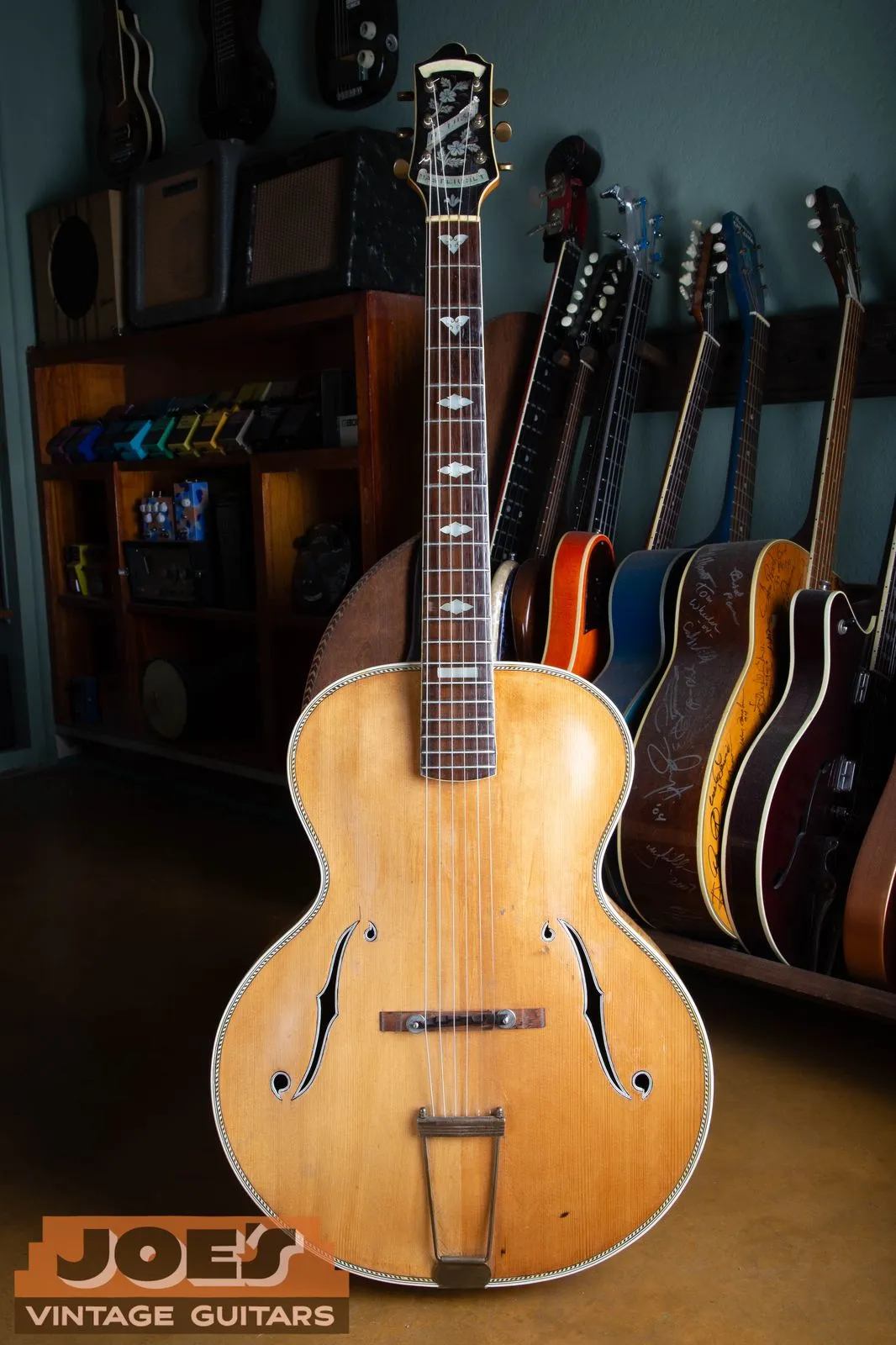
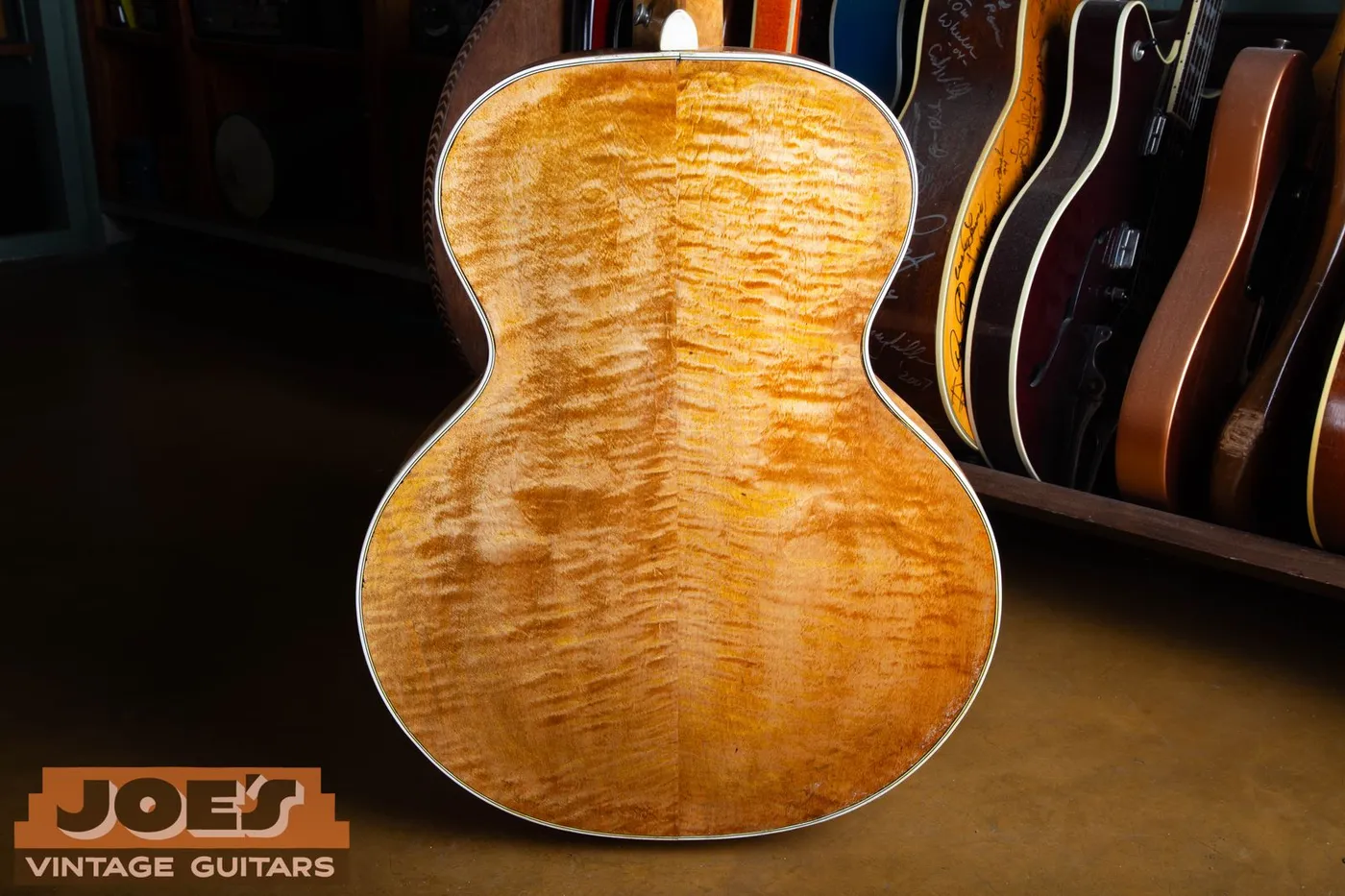
This 1933 Epiphone Masterbilt DeLuxe from Joe’s sold inventory has been refinished in blonde. The full front, decorated headstock and segmented f-hole views show the early acoustic design. The Epiphone headstock logo is missing. The light finish is a later refinish, not evidence of an original natural-finish option. These photographs document this particular guitar and should not be used as an untouched factory specification.
Condition Details On The Same Guitar
Refinish, Shaved Bridge And Pickup Mounting Holes
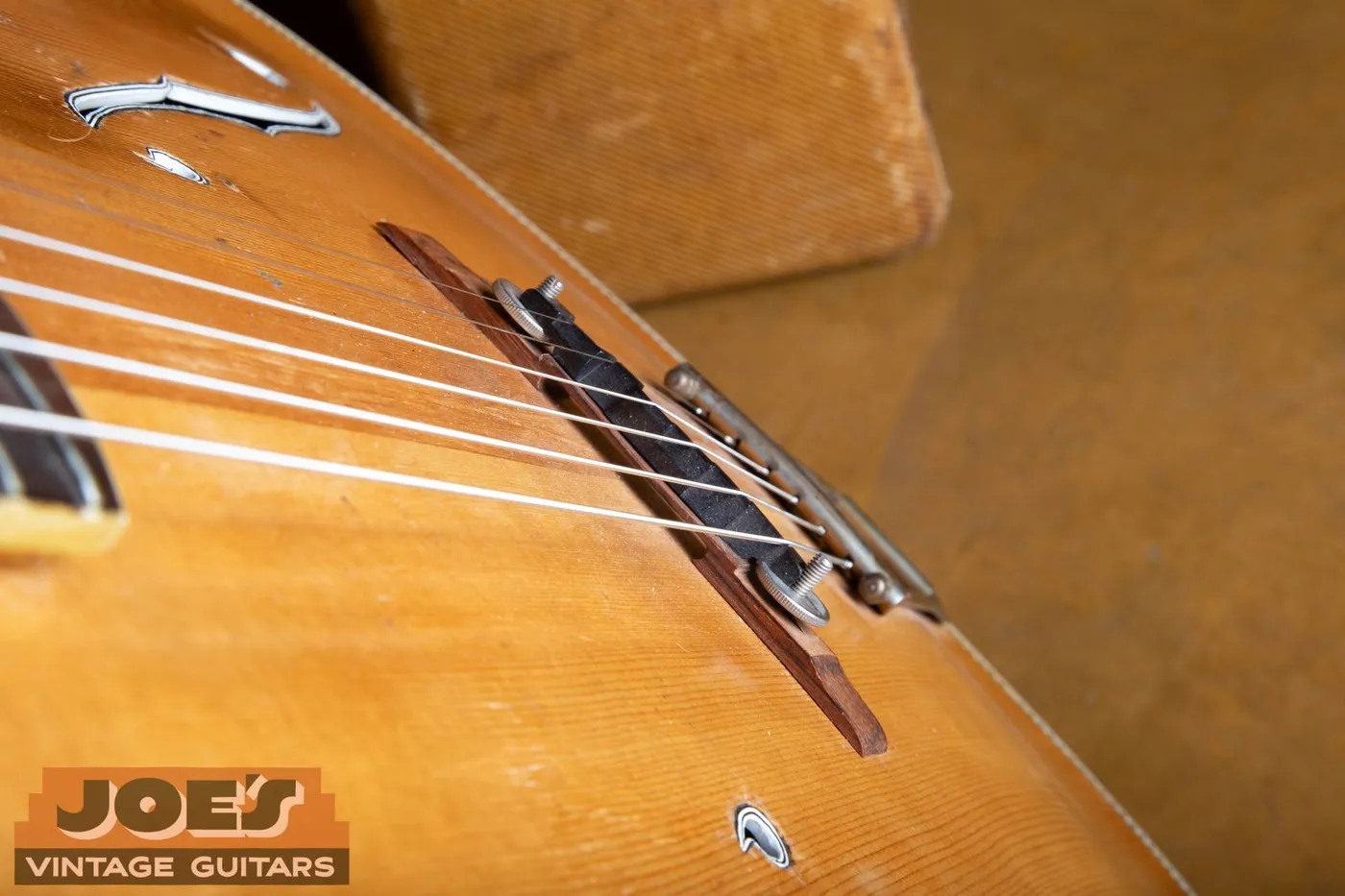
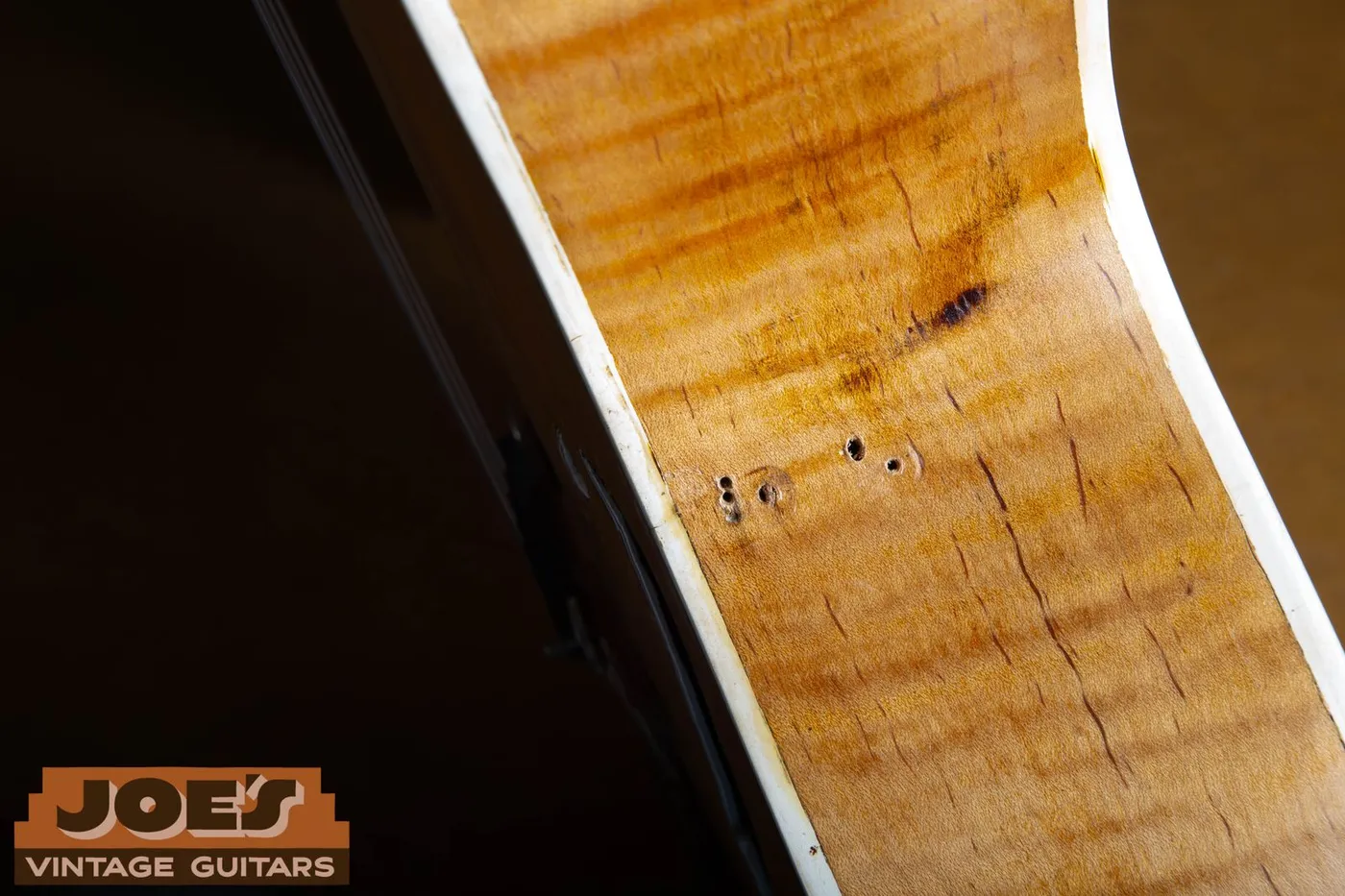
The same refinished 1933 DeLuxe has a heavily shaved bridge and needs a neck reset. Holes beside the fingerboard remain from a former pickup installation. Joe’s listing also records a refret and a non-original case. The bridge, mounting holes and figured back views help keep the guitar’s identity separate from its repair and modification history. Its current condition falls outside the excellent, original-condition assumptions in the value chart.
The Two-Pickup Electric
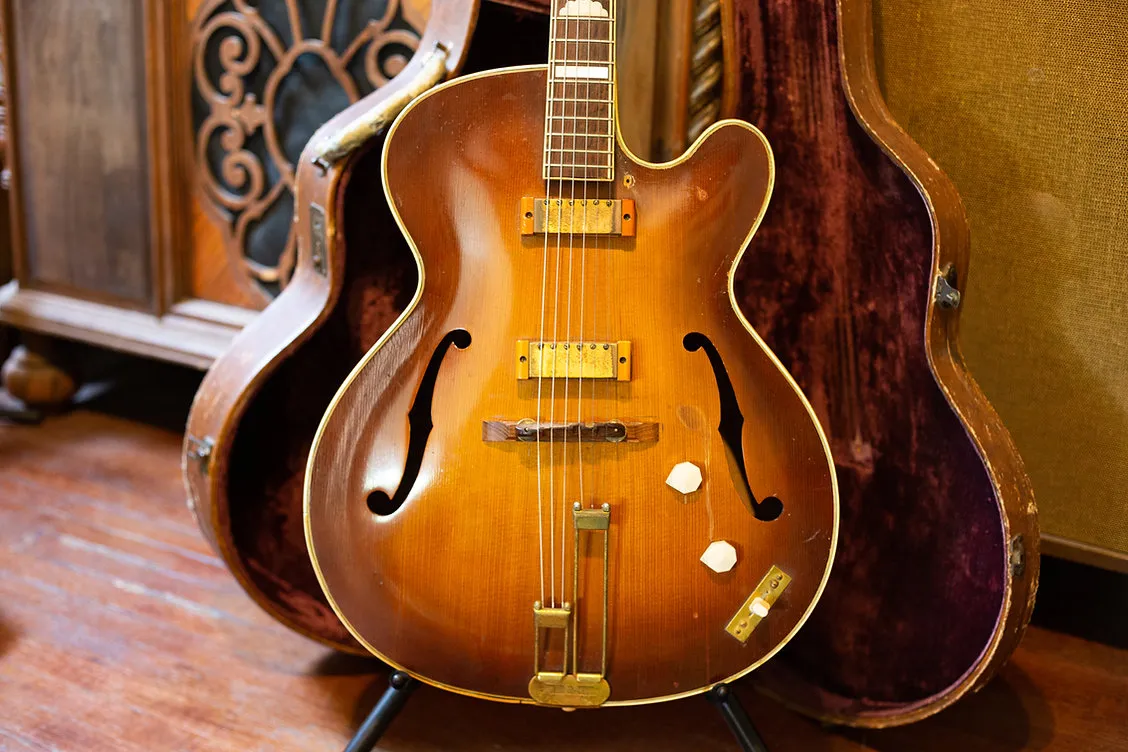
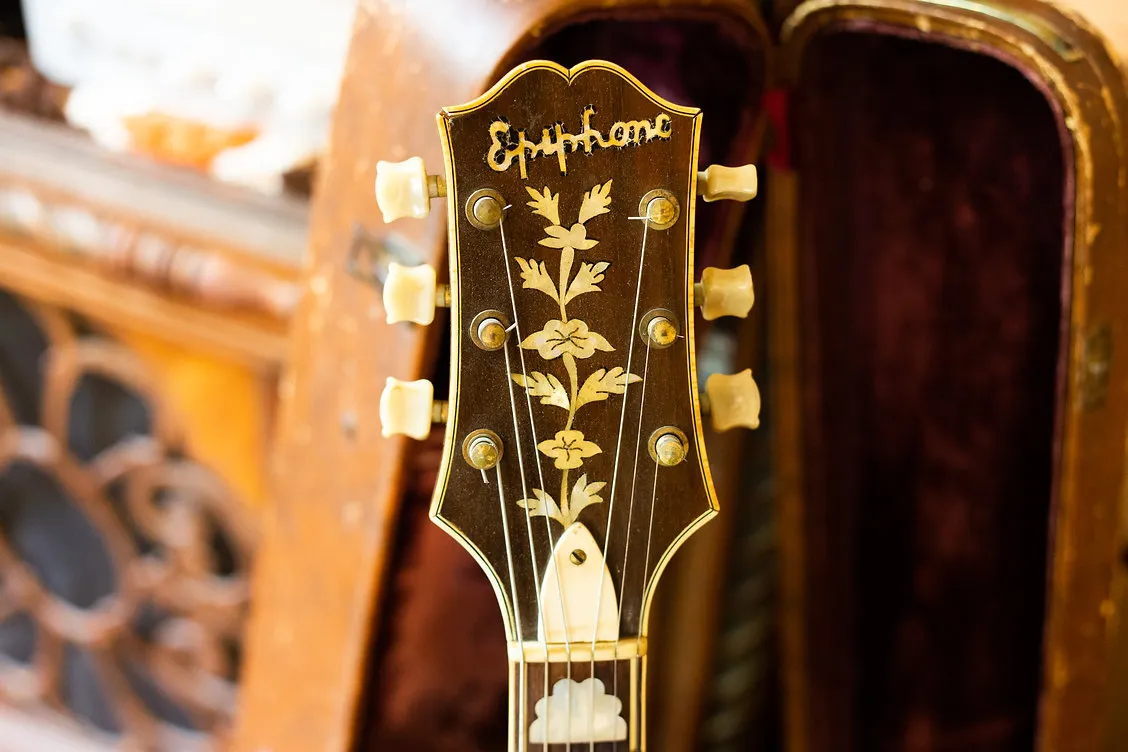
1950s Zephyr De Luxe Regent
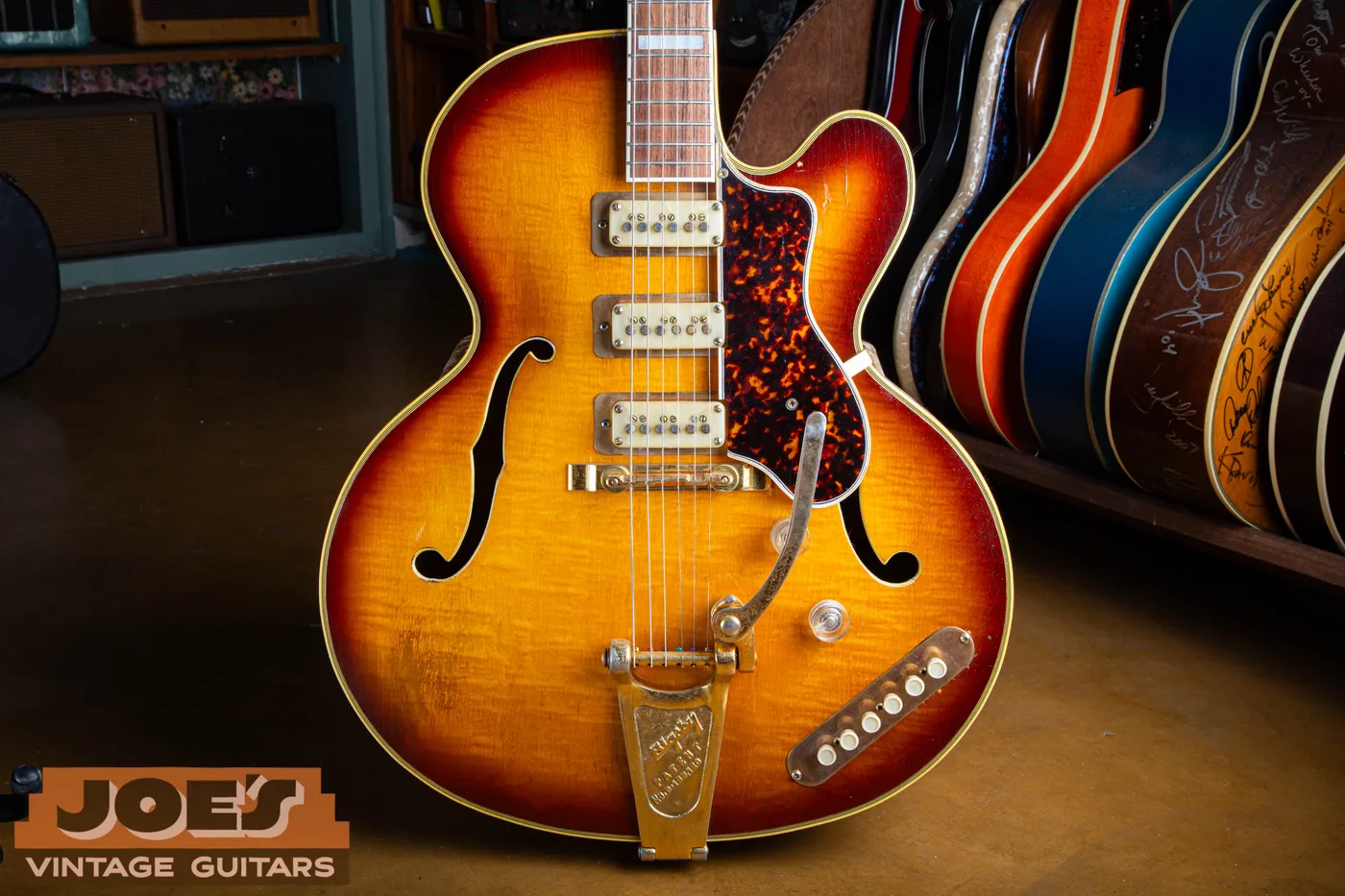
The two gold New York pickups, lower-bout selector, Frequensator and cloud-pattern fingerboard belong to the De Luxe electric comparison. The headstock view shows the elaborate flower-vine decoration. The pickguard is missing, with its mounting point visible on the body. These images establish visible features without proving that every remaining component is original. No readable serial is supplied in this set, so the caption retains the decade rather than deriving a precise year from the decoration.
Acoustic Comparison Only
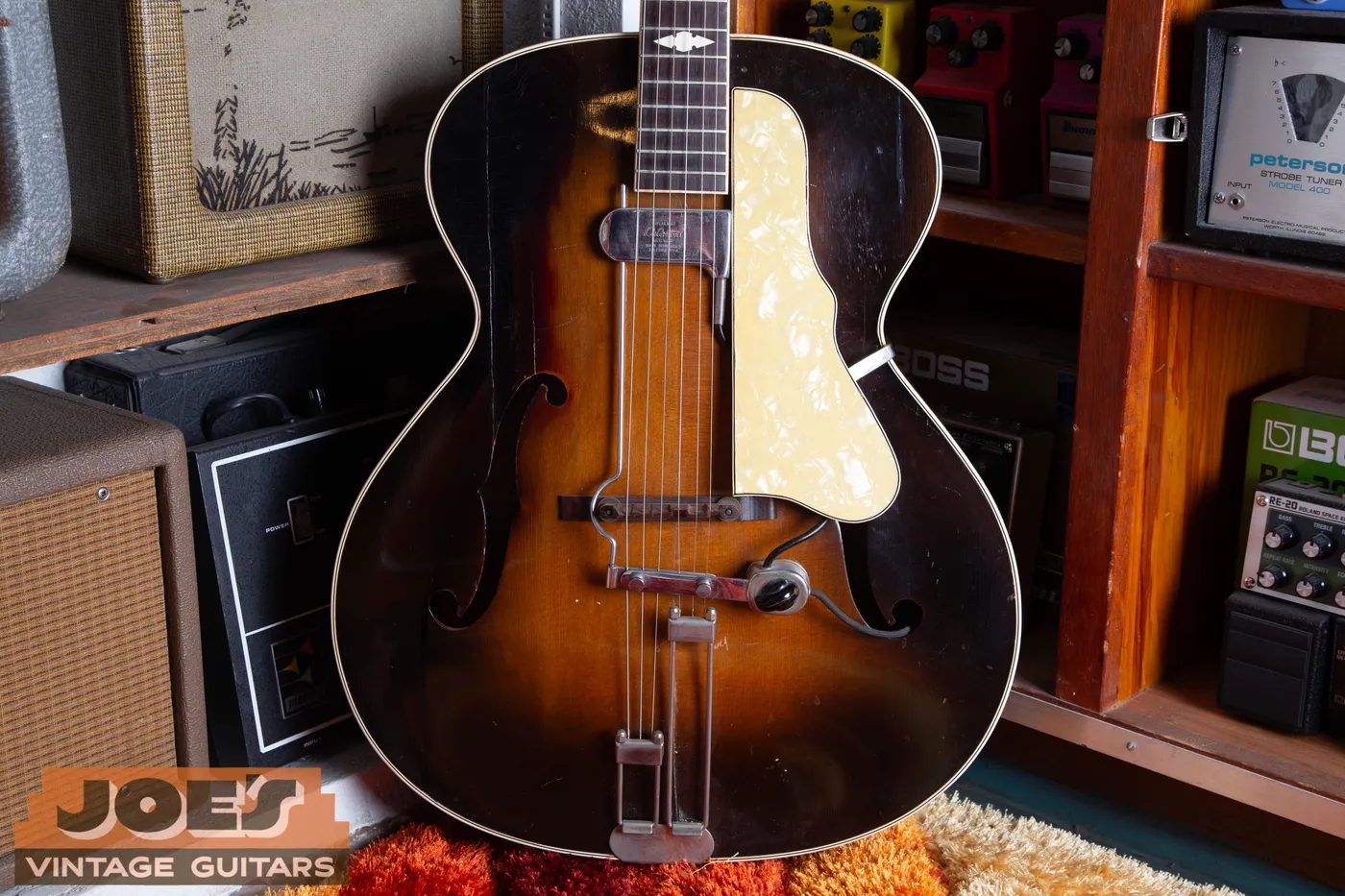
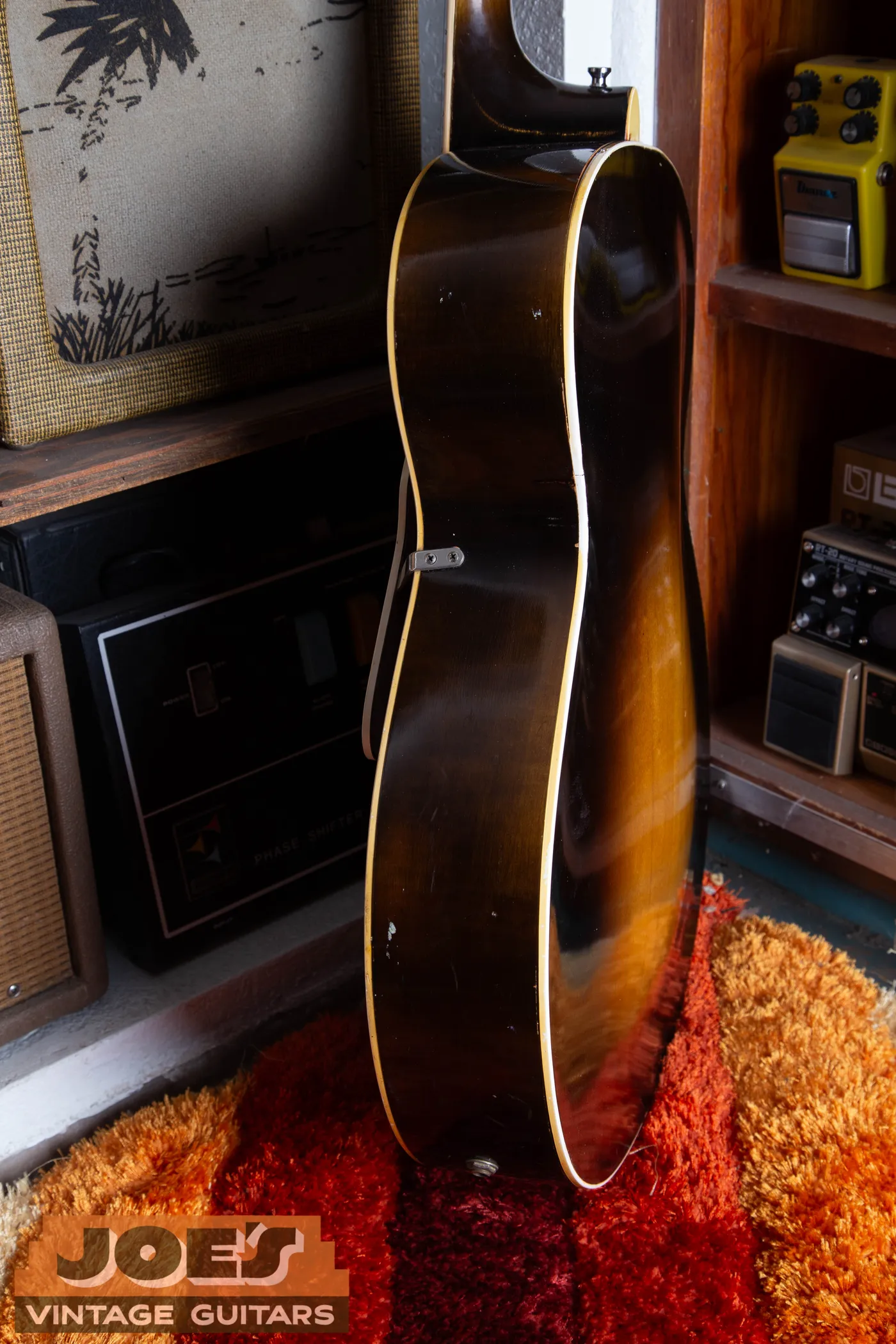
1946 Triumph With An Added Pickup
The Triumph shown here demonstrates why an acoustic body and an electrical accessory need separate descriptions. Its non-cutaway outline, deep rim and pickup mounting are visible. It does not document DeLuxe inlay, dimensions or factory hardware, and it should not be treated as a DeLuxe specimen.
Electric Comparison Only
1950s Zephyr Emperor Regent
This is the larger Emperor-family electric from Joe’s archive. Its three pickups and push-button bank differ from the two-pickup De Luxe Electric reference. The comparison is useful precisely because the model difference remains explicit. Do not use its serial or control layout as a DeLuxe template.
Check The Installed Unit
Later Pre-Gibson Pickup Evidence
The instrument registry documents DeArmond Model 2000 pickups on Zephyr DeLuxe examples from 1954. The earlier New York pickup is not a requirement for every surviving pre-Gibson electric. Compare the actual pickup, mounting and controls with the appropriate period rather than treating a later factory specification as an automatic replacement.
Pre-Gibson Estimates And Kalamazoo Numbers
Date The DeLuxe Within The Correct Serial System
Early Kalamazoo hollowbodies need a separate first check: an A followed by four digits on the interior label belongs to Epiphone’s early A-series, not the similarly named Gibson A-prefix chart. Photograph the whole label and keep any factory order number separate. A model code is not a serial number. Later impressed numbers can be compared with the shared Gibson system, with the guitar’s construction used to check the result.
Pre-Gibson Epiphone serials were assigned in model batches, and surviving research cannot turn every number into an exact year. Photograph the label and any other marking in full. Read uncertain characters as uncertain, then compare the guitar’s construction and appointments with the catalogs. A label address helps the record but cannot settle every factory-transition question.
For the Kalamazoo A212, use the Gibson serial-number reference. The serial range must fit the physical guitar and its model marking. A replacement neck, damaged label or refinished headstock can remove or alter part of that evidence, so record the missing information instead of filling it in from expectation.
Ownership paperwork can corroborate a date when it identifies the particular instrument. A receipt for an unspecified Epiphone is less conclusive than one with a matching serial or an unmistakable photograph. Keep purchase date and manufacture date separate, especially where a guitar may have remained in dealer stock.
Confirm The A212 Features
A Kalamazoo DeLuxe Inspection Checklist
Verify A Full-Depth Acoustic Cutaway
Measure the body and inspect the top construction. Compare it with the A212 specification rather than a thin electric. Photograph the heel and cutaway together so the neck-to-body relationship is clear.
Match The Decorative Package
Document the shell-pattern fingerboard inlays, bound headstock, logo and body binding. Replaced decorative material should be noted. One ornate headstock photograph is not enough when a different body or fingerboard remains out of frame.
Inspect Bridge And Frequensator
Show the bridge base and saddle, tailpiece arms and bottom attachment. Identify changed parts or unused holes. A period-looking replacement can be suitable for playing while still differing from the guitar’s factory equipment.
Record Every Electrical Addition
Show the pickup support, cable path, jack and controls. Distinguish a removable accessory from a routed installation. Do not let an added pickup obscure the original acoustic model or the extent of any woodwork.
Reconcile Label, Serial And Repairs
Compare the serial with the catalog period and construction. List headstock work, neck repairs and finish changes independently. If the evidence does not support one exact year, keep the production interval broad.
Keep The Identification Specific
Exclude Other Deluxe Names And Later Production
The word Deluxe appears on other Epiphone instruments and products. It does not connect a Crestwood Deluxe, an FT De Luxe flat-top or an amplifier to this archtop family. Identify the complete product name and construction before applying the guide.
Later Japanese, Korean and Chinese instruments, Elitist releases and signature editions belong to their actual manufacturing series. Recreated decoration or a historical name does not establish a New York, Philadelphia or Kalamazoo build. Read the country marking, complete serial system and paperwork before making a vintage-American claim.
Once the model is identified, separate authenticity from originality. An American DeLuxe may have a repaired neck, replacement tailpiece or refinished body. The condition guide and DeLuxe value guide address those consequences without changing the evidence used to identify the original instrument.
Send The Evidence
Have Joe Review Your DeLuxe Photos
Send the full guitar, measurements, label and altered areas for a free appraisal. Use Sell My Epiphone when you want to discuss an offer, with repairs and added pickups included from the start.
Catalog Specifications And Factory Chronology
DeLuxe Research References
- Joe’s Refinished 1933 Masterbilt DeLuxe
Sold listing supplying the photographs, year and documented condition of this refinished example.
- Epiphone Serialization Reference
Epiphone section, page 1071: the early hollowbody A-label sequence differs from Gibson’s A-prefix series; later impressed numbers require feature checks.
- Circa-1950 Epiphone Acoustic Catalog
Original acoustic DeLuxe description and its large-body comparison with the Emperor.
- 1954 Epiphone Catalog
Acoustic DeLuxe and two-pickup De Luxe Electric specifications.
- 1961 Epiphone Catalog
Kalamazoo A212 and A212N materials, inlays, finish designations and hardware.
- 1966 Epiphone Acoustic Catalog
DeLuxe acoustic dimensions and special-order notation.
- 1960 Gibson Catalog, Page 37
Original L-5C construction and scale for the limited Gibson comparison.
- New York Epiphone Model Research
Early DeLuxe development and acoustic versus electric model distinctions.
- JVG Sheraton History
House chronology for CMI ownership, Kalamazoo production and the 1970 move.
Questions AboutEpiphone Identification
Did Kalamazoo Make An Acoustic DeLuxe?
Does Regent Mean Factory Electric?
Can Every DeLuxe Be Identified By One Body Width?
Is The Crestwood Deluxe Part Of This Guide?
The Last Word
Keep The Evidence Together
Let construction, cutaway, decoration and factory markings establish the DeLuxe variant. Keep accessories and repairs separate from that identity. Once the evidence agrees, the DeLuxe value guide provides the appropriate condition-based comparison.
Authenticity And Originality Are Assessed From The Information Provided. A Hands-On Inspection Can Change The Conclusion.