

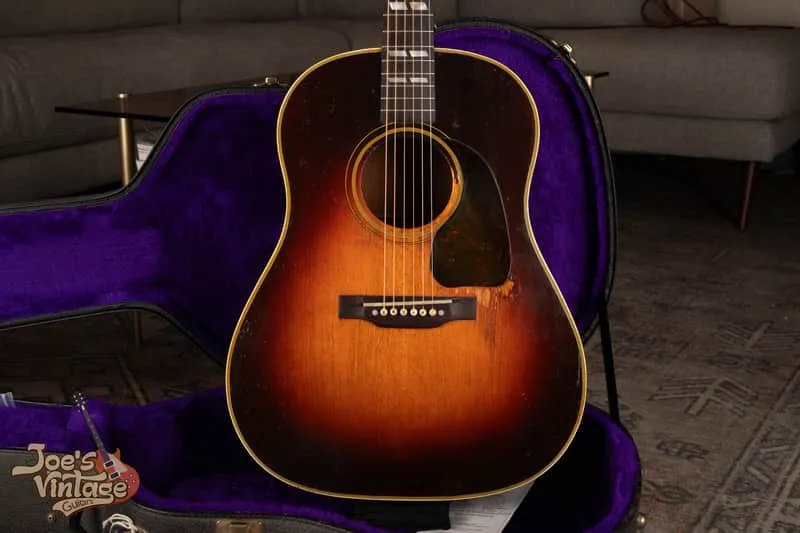
The Southern Jumbo, also called the Southerner Jumbo or SJ, spans wartime guitars, postwar round-shoulder instruments, square-shoulder models and the later SJ Deluxe. The letters “SJ” here mean Southern Jumbo; they do not mean the much larger SJ-200.
Gibson Southern Jumbo Value Table: 1942 to 1978
| Era | Configuration | Adjusted Reference (USD) |
|---|---|---|
| 1942 to 1944 | Banner; Adirondack spruce top | $16,910 to $22,250 |
| 1942 to 1944 | Banner; mahogany top | $12,900 to $17,200 |
| 1945 | Sitka spruce top | $13,760 to $17,200 |
| 1946 | Sitka spruce top | $12,180 to $15,660 |
| 1947 | Sitka spruce top | $11,310 to $13,920 |
| 1948 to 1949 | Sitka spruce top | $9,680 to $12,760 |
| 1950 to 1953 | Southern Jumbo | $6,450 to $8,600 |
| 1954 to 1956 | Natural SJ option; Country Western precursor | $6,600 to $8,800 |
| 1954 to 1959 | Sunburst | $6,375 to $8,500 |
| 1960 to 1962 | Round shoulders | $5,720 to $7,480 |
| 1962 to 1964 | Square shoulders | $5,340 to $7,120 |
| 1965 | Cherry sunburst | $3,060 to $4,675 |
| 1965 | Tobacco sunburst | $3,915 to $5,220 |
| 1966 | Tobacco sunburst | $3,520 to $4,840 |
| 1966 to 1968 | Cherry sunburst | $3,204 to $4,450 |
| 1969 | Belly-down bridge | $2,436 to $3,915 |
| 1970 to 1971 | SJ Deluxe; non-adjustable saddle | $1,780 to $2,670 |
| 1972 to 1973 | SJ Deluxe; unbound fingerboard | $1,566 to $3,045 |
| 1974 to 1978 | SJ Deluxe; four-ply top binding | $1,548 to $3,010 |
How These Ranges Were Prepared
These are adjusted guide references based on The Official Vintage Guitar Magazine Price Guide 2026, pages 201 to 202. Each source row was reduced by one fixed, randomly assigned percentage from 11% through 15%, applied to both endpoints. They are not reported sale prices or a statistical market average. Reviewed October 2026.
The baseline is an all-original instrument in excellent condition, with its original case where applicable. Repairs, replacement parts, refinishing and missing cases require individual assessment. The adjustment is already included; do not subtract it a second time.
Match The Top, Finish And Body Shape
The Banner rows distinguish Adirondack spruce and mahogany tops. A Banner decal cannot select between those categories. The broad standard rows do not separately value rare rosewood-bodied or maple-back wartime instruments; those need specialist comparison. Identify the back separately from the neck, since a maple neck does not establish a maple body.
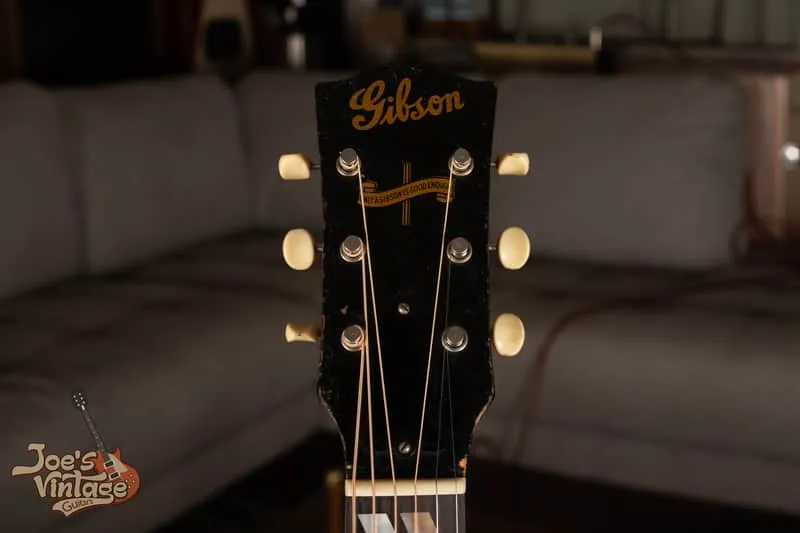
The overlapping 1962 rows reflect the guide’s round-shoulder and square-shoulder categories. Reference histories place the transition around 1962 to 1963. Use the body in front of you, plus its dating evidence, rather than treating January 1 as a universal specification change.
The 1954 to 1956 natural-option row covers the early natural SJ category. The Country Western value guide covers the named Country Western/SJN and SJN Deluxe entries. Do not combine the two tables or choose whichever is higher for the same guitar.
An Original-Finish Banner With A Replacement Bridge
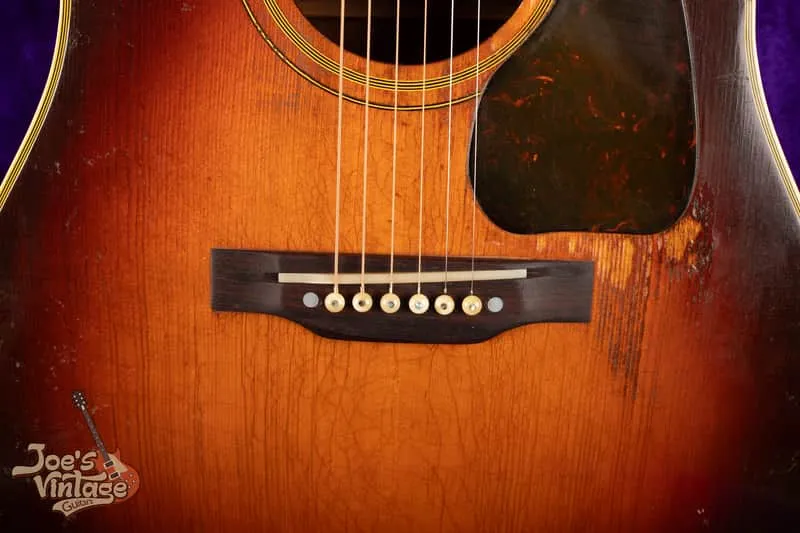
Original finish and original parts are separate findings. The retained old bridge and repair history help document this guitar, but an original-finish instrument with a replaced bridge is still a different comparison from the table’s excellent-original baseline. Its listing is a condition example, not a realized-sale input to these ranges.
What A Refinish Changes
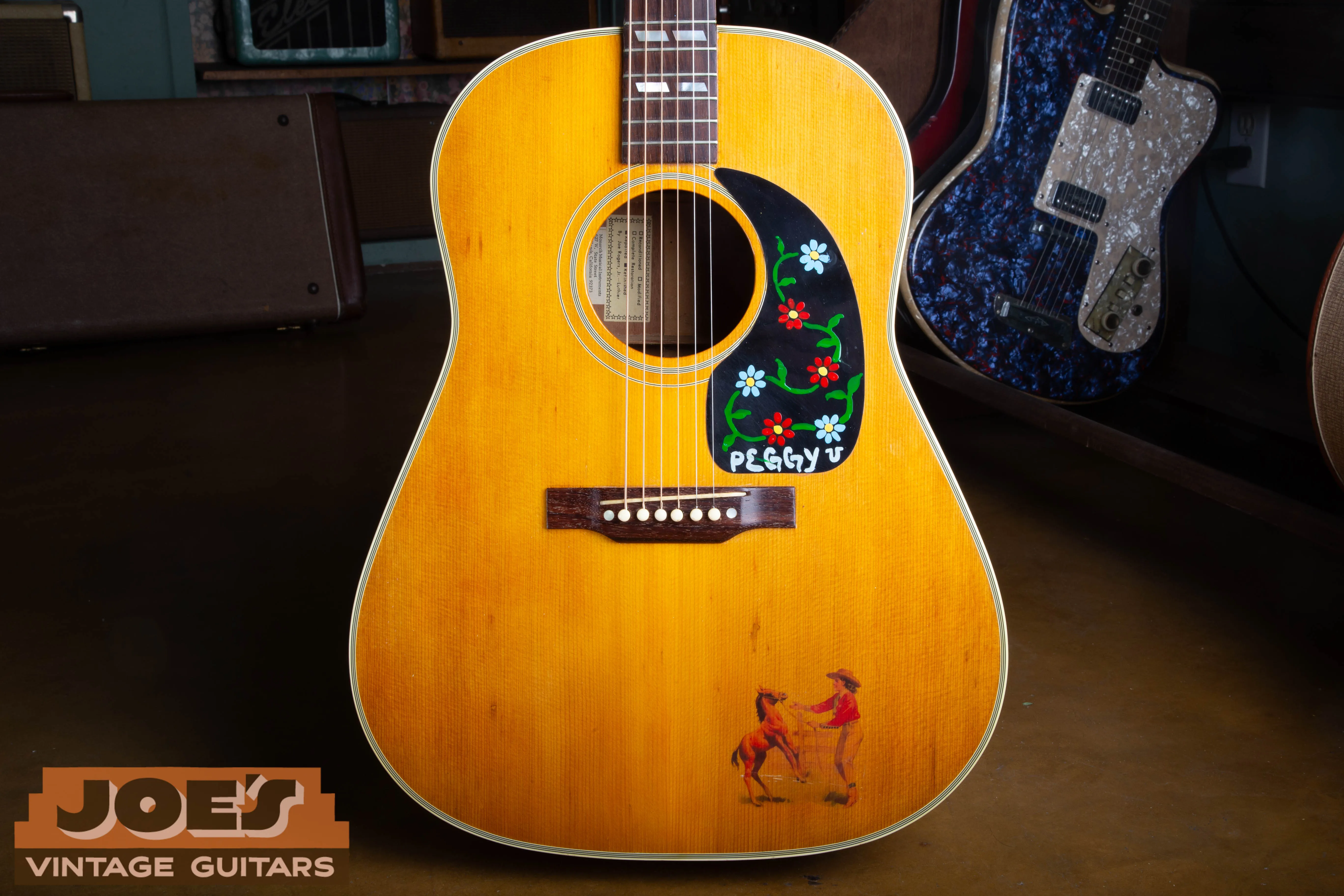
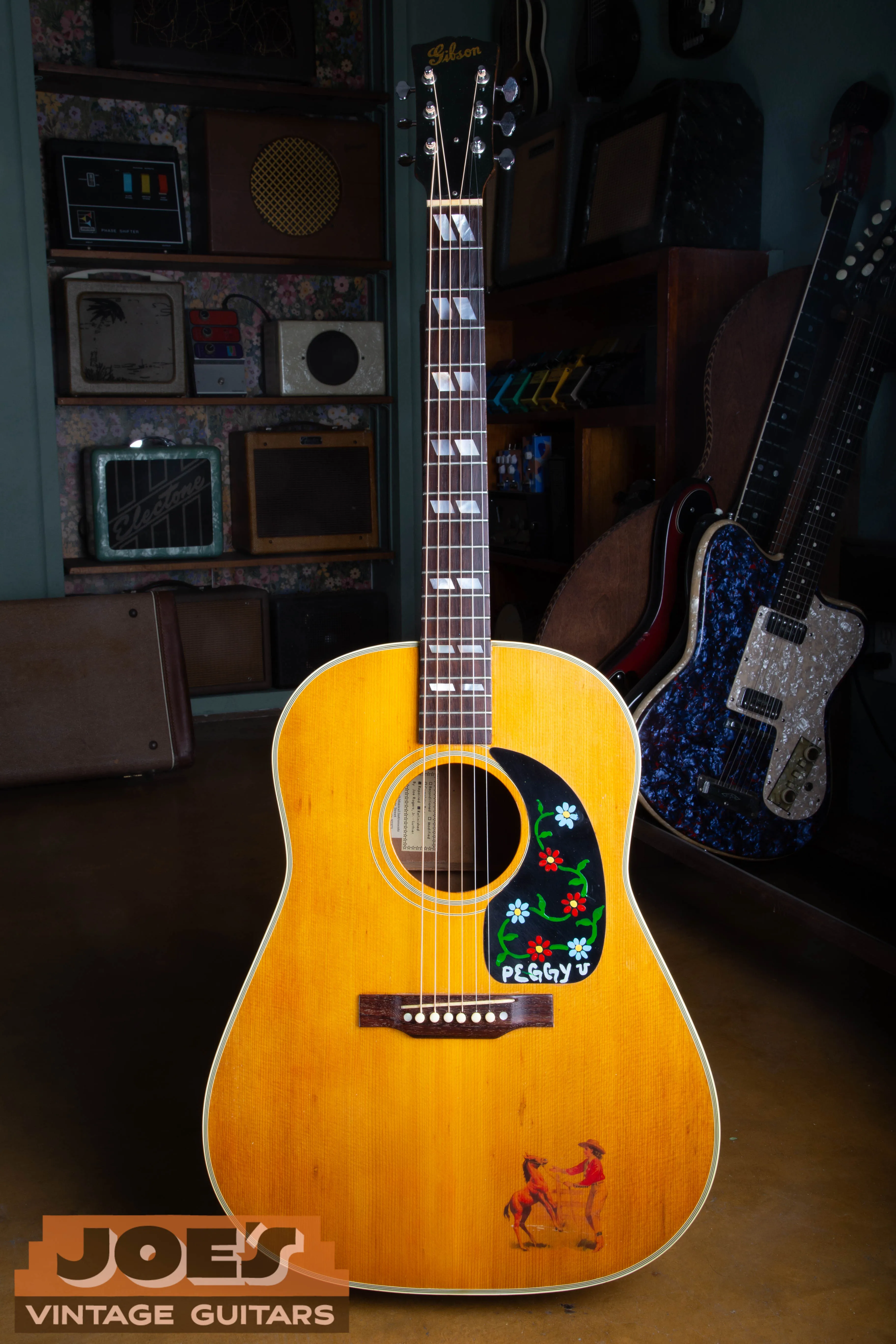
This guitar illustrates why a natural top is not proof of a Country Western. Its model identity and its present finish are separate questions. A refinish removes it from the table’s original-finish benchmark even when the instrument plays well.
Check the bridge height and footprint, neck angle, repaired cracks and interior braces. A recent setup cannot establish whether a bridge was shaved or the top was thinned during restoration.
From A Reference Range To Your Guitar
A dealer asking price, a completed transaction and a direct purchase offer are different figures. These ranges do not promise your selling proceeds or establish an insurance replacement value. I need the guitar’s model, date, condition and repair record before giving a specific appraisal.
A quality refret preserves the all-original classification of an otherwise original guitar in my grading, while removing museum-quality status. A replacement bridge, neck reshaping or a refinish is a separate issue and must be disclosed.
For a free appraisal, send full front and back photos, both headstock faces, all numbers or labels, bridge and saddle, neck heel and known repair areas. You can also read about selling a Gibson.
Common Questions About Gibson Southern Jumbo
What do these Gibson Southern Jumbo prices represent?
They are adjusted references from the 2026 Vintage Guitar price guide for excellent, all-original instruments with the original case where applicable. A fixed 11% to 15% reduction was applied to each source row. They are not recorded selling prices.
Can I use the range for a repaired or refinished guitar?
Not without a condition assessment. Repairs, replaced parts, finish work, neck angle and the case can change the comparison. The photographed repair examples are clearly labeled.
Is this a guaranteed offer for my guitar?
No. A reference range and an offer are different figures. Send photographs and repair details for an individual appraisal.