

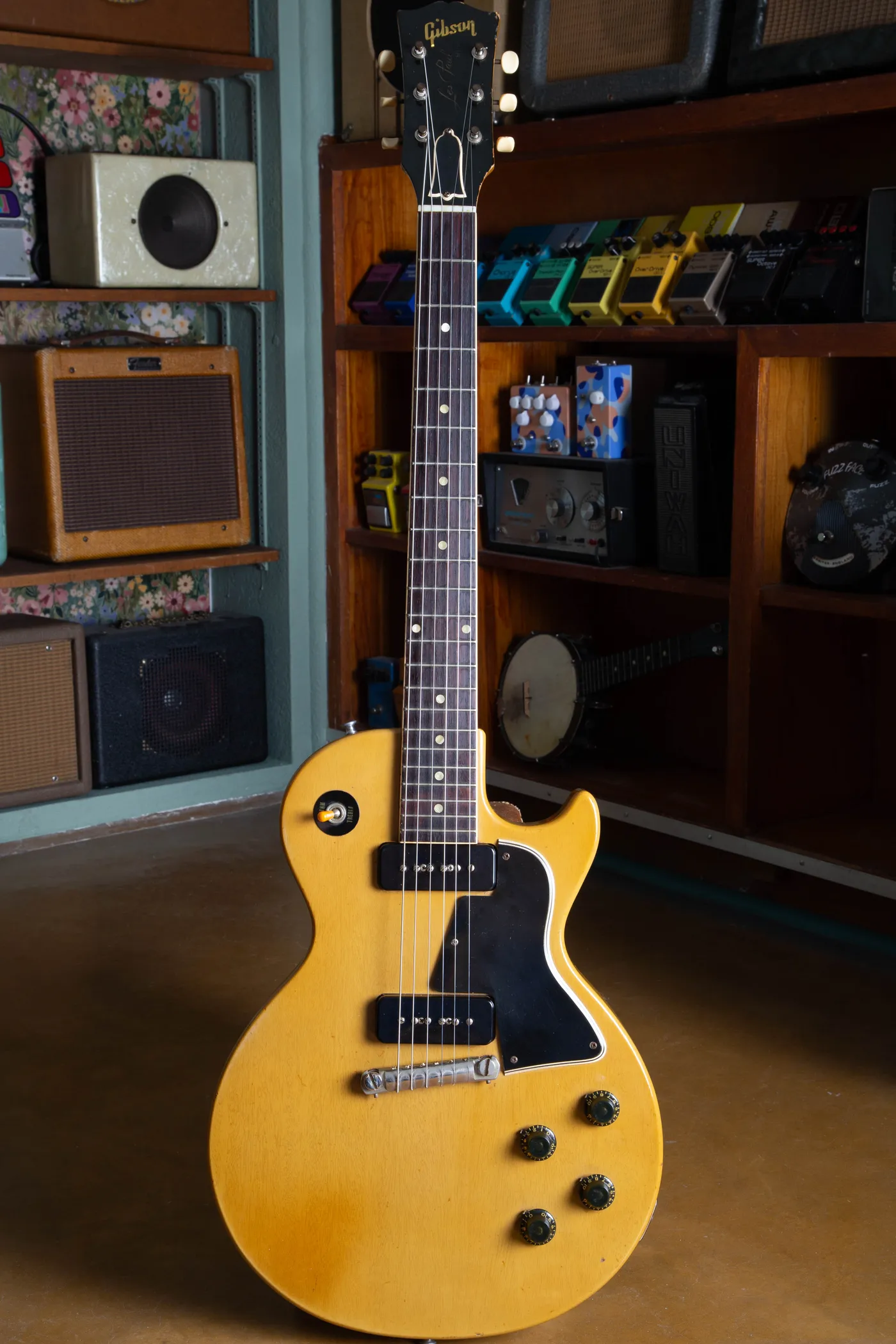
A clean, original TV Yellow Gibson Les Paul Special from 1955 to 1959 carries a $12,000 to $19,000 guide range. The guide range for a 1959 cherry Special is $7,500 to $14,000. Later 1970s single-cutaway reissues belong in a separate price group, covered year by year below.
I buy vintage Specials and first establish which body style, finish and production period I’m comparing. For the original single-cutaway instruments, my 1955 to 1958 Les Paul Special authentication guide covers the construction and original parts. The ranges depend on original finish, parts and structural condition.
Gibson Les Paul Special Values By Year
The table gives U.S. dollar references reviewed as of October 2026. They assume an excellent, all-original instrument with its original case and no structural repairs. A quality refret is accepted maintenance on an otherwise original guitar, but it removes museum-quality status.
Adjacent years can share a range. I still assess the body style, finish and condition before narrowing an appraisal. TV Yellow, cherry and later single-cutaway reissues belong in their own configurations.
| Year | Configuration | Value Range |
|---|---|---|
| 1955 | TV Yellow, single-cutaway | $12,000 to $19,000 |
| 1956 | TV Yellow, single-cutaway | $12,000 to $19,000 |
| 1957 | TV Yellow, single-cutaway | $12,000 to $19,000 |
| 1958 | TV Yellow, single-cutaway or late-year double-cutaway | $12,000 to $19,000 |
| 1959 | TV Yellow, rounded double-cutaway | $12,000 to $19,000 |
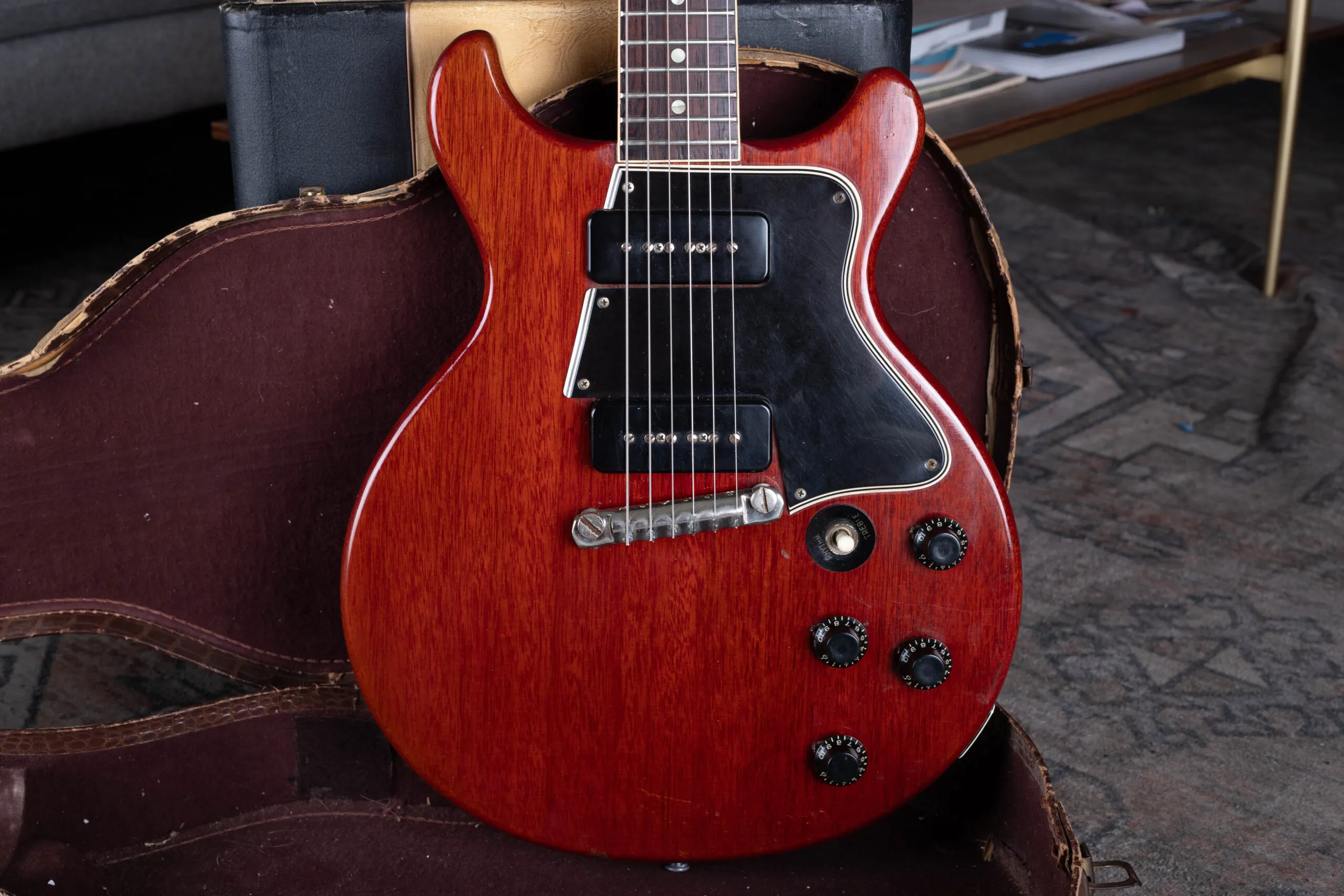
| 1959 | Cherry, rounded double-cutaway | $7,500 to $14,000 |
| 1960 | Cherry, rounded slab body | $9,000 to $12,000 |
| 1974 | Les Paul 55, single-cutaway sunburst | $2,500 to $4,000 |
| 1976 | Les Paul 55, single-cutaway sunburst | $2,500 to $4,000 |
| 1977 | Les Paul 55, single-cutaway sunburst | $2,500 to $4,000 |
| 1978 | Les Paul 55, single-cutaway sunburst | $2,500 to $4,000 |
| 1979 | Les Paul 55, single-cutaway sunburst | $2,500 to $4,000 |
The 1960 cherry row covers the rounded slab-body guitar in excellent, original condition. Its narrower range overlaps the 1959 range, so the higher floor is not a guaranteed premium for the later year. Worn or repaired guitars need a separate appraisal.
The 1970s single-cutaway range covers original sunburst guitars. Repairs, added vibratos and substantial changes can put an example outside that category. I inspect those details before applying the upper end.
The Les Paul 55 rows cover 1974 and 1976 onward, with no 1975 row shown. The later SG-shaped Special belongs in the Gibson SG Special value guide. A 1970s double-cutaway reissue also needs its own appraisal.
Special, Junior And TV Model Are Different Names
The vintage Special has two P-90 pickups and separate volume and tone controls for each. A P-90 is a single-coil pickup, the unit beneath the strings that sends their vibration to an amplifier. On a Special, the familiar rectangular covers are often called soapbars.
The Junior is a one-pickup model. The TV Model is also a one-pickup member of that family. TV Yellow describes a finish found on the two-pickup Special as well, which is why the words “TV” and “Special” need to be read carefully in a listing.
The one-pickup TV Model and the two-pickup Special have separate markets. My Les Paul Junior value guide covers the TV Model; TV Yellow is a finish within the Special family.
If you aren’t sure which one you have, count the pickups and photograph the whole front before focusing on the headstock lettering. That gives an appraisal a useful starting point. The Les Paul family guide compares the related models without assigning one guitar another model’s identity.
Body Shape Sets The First Comparison
The Single-Cutaway Originals
The original Special uses a flat mahogany body with one cutaway, the opening beside the upper end of the fingerboard. It has a bound fingerboard, two pickups and a wraparound bridge. The binding is the narrow contrasting trim along the fingerboard’s edge.
For value, I want the body, finish and pickup arrangement to remain consistent with an original Special. A guitar altered to resemble another Les Paul model doesn’t become that model. Repairs and changed parts need to be compared with other altered examples.
The early TV Yellow reference spans several years. It leaves room for preservation, completeness and individual differences without inventing a price step for each birthday. An unusually clean guitar and one with extensive wear shouldn’t be described as identical merely because they share a year.
The Rounded Double-Cutaway Guitars
The later rounded double-cutaway body has an opening on both sides of the neck. Cherry becomes part of the comparison alongside TV Yellow. That body family also crosses a naming change: the SG Special designation appears before the familiar pointed SG body.
I confirm its construction and originality alongside the headstock markings. A rounded slab-body Special and a thin, pointed SG Special belong in different groups. Their construction needs to be established before their price references are compared.
The 1959 and 1960 cherry rows are listed separately so you can match the guitar’s year and rounded slab-body configuration. I check the finish, neck and retained parts before narrowing either range.
The Les Paul 55 Reissues
A 1970s Les Paul 55 returns to the single-cutaway Special idea. It is a vintage guitar in its own right, but it isn’t a 1955 original. A seller may use “55” to describe the model while the actual production date is decades later.
The table covers the sunburst single-cutaway reissues through 1979. It doesn’t assign every color or hardware arrangement the same premium. For TV finishes, double-cutaway versions or an uncertain configuration, I need to narrow the comparison further.
Keep the full serial number and photographs of the whole guitar together. A listing title can omit a reissue designation or assign the wrong model. I identify the instrument itself before choosing a range.
What TV Yellow Adds To The Valuation
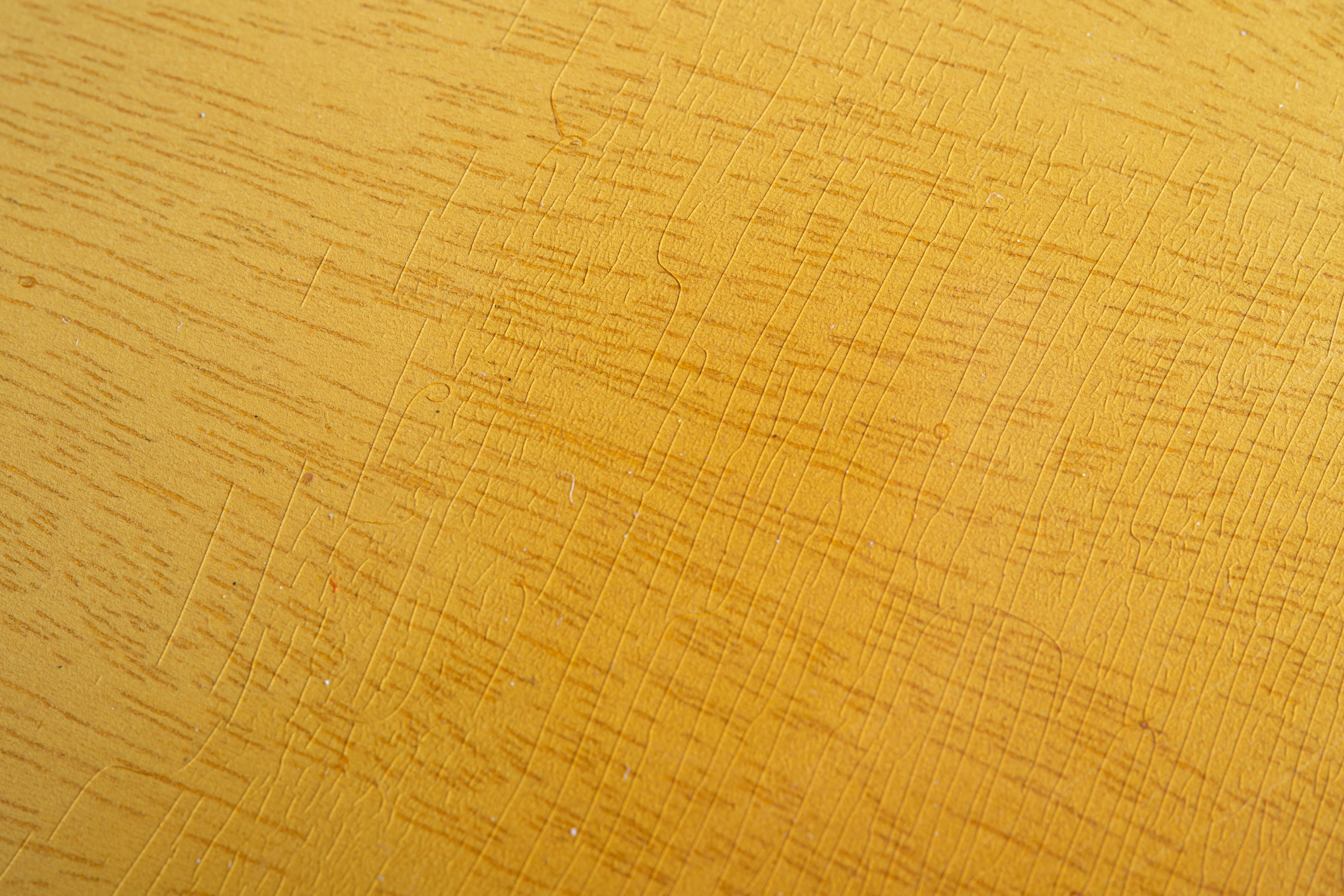
TV Yellow is part of the Special’s identity and part of its market description. An original finish needs to be distinguished from a later recreation before the early TV range can be used. A convincing color in a photograph isn’t enough to settle that question.
Age, lighting and camera settings can make two photographs of the same finish look different. For an appraisal, I prefer natural indirect light and views of the front, back and edges. Natural-light photographs preserve the finish color more accurately than edited images.
An exceptional early configuration needs a closer appraisal. The broad table doesn’t replace an inspection of its finish, condition and original parts.
Pickups, Controls And Changed Hardware
The table assumes the original pickup set. If a pickup has been replaced or rewound, describe that history and keep the removed parts with the guitar. A great-sounding replacement can still leave the instrument outside the original-pickup price category.
A conversion to humbuckers can involve removing wood around the pickup openings. That work is different from replacing a component that fits the existing mounting. I compare an altered instrument on its actual history rather than treating it as a cleaner guitar with a different sound.
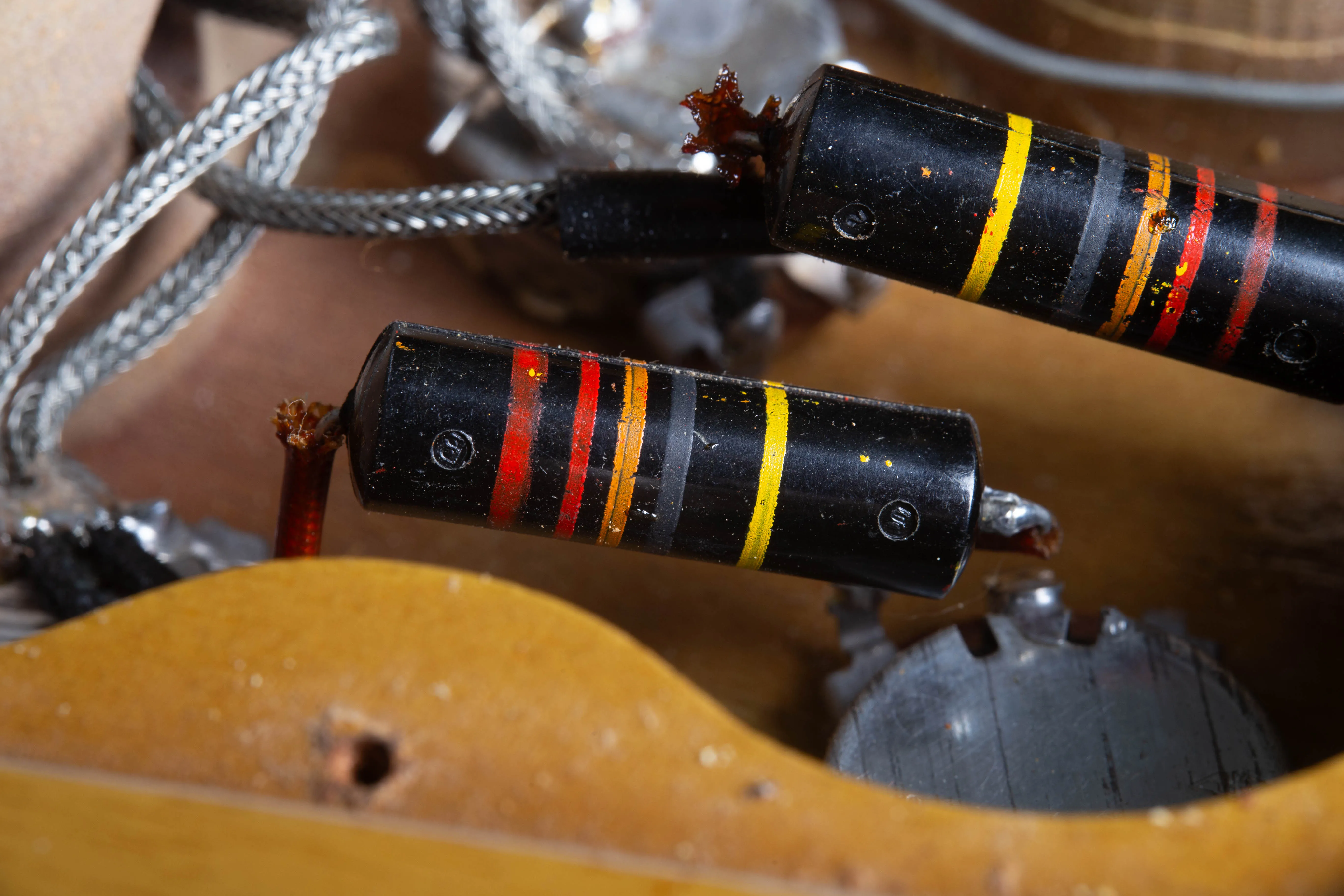
The four controls also belong in the description. Pots are the parts behind the volume and tone knobs; capacitors work with the tone controls. Replacement electronics may keep a guitar working well while changing its collector comparison.
The Wraparound Bridge
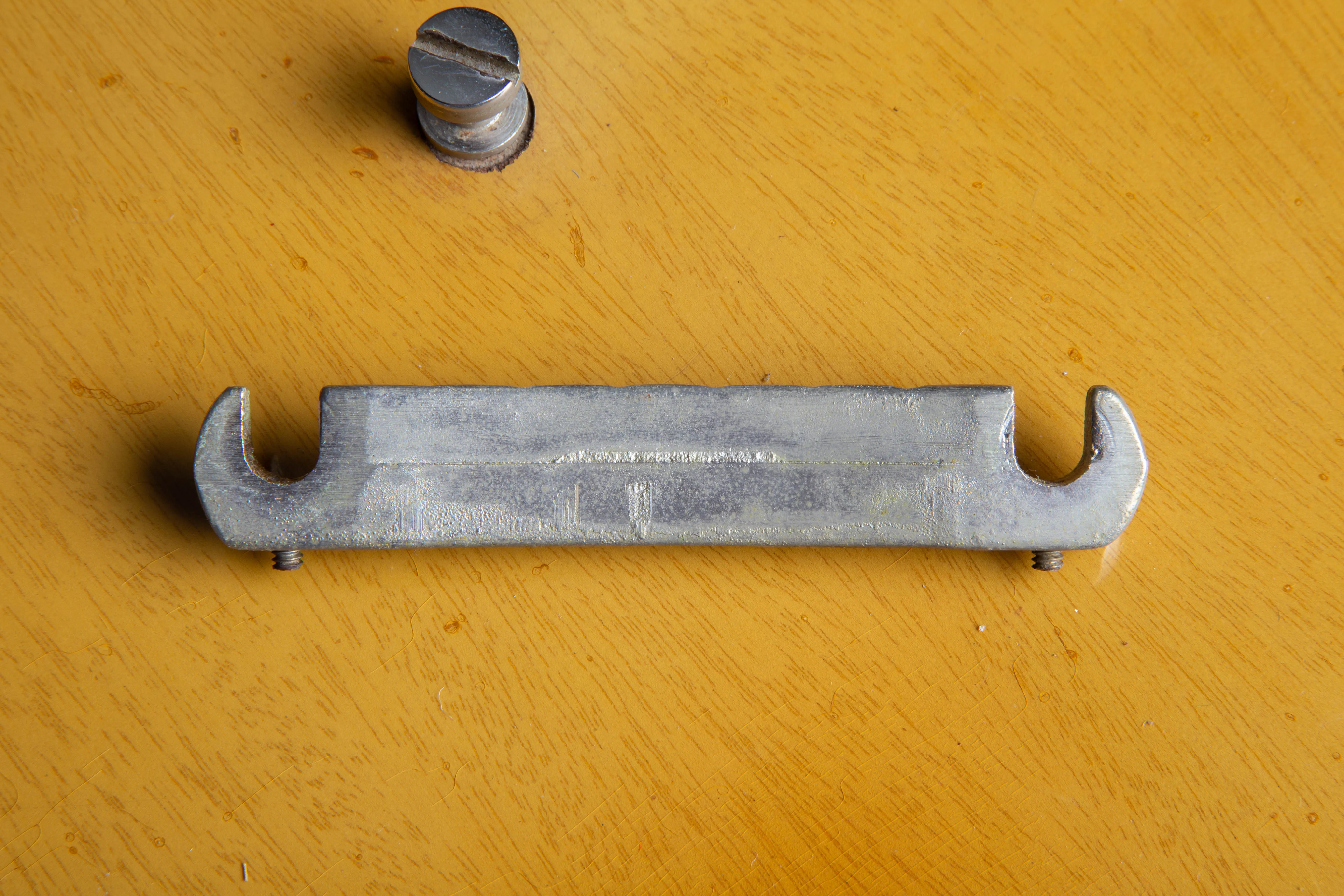
The original-style bridge combines the string anchor and bridge in one piece. A replacement can improve a player’s experience, but the appraisal still needs to record what is fitted. If the old bridge survives, leave it with the guitar.
A photograph of the installed bridge and its mounting points helps establish the situation. You don’t need to remove the bridge or disturb the setup for a first value opinion. Existing repair photographs are useful if the guitar has already been serviced.
Original Wiring And Service History
A clear interior photograph can support a parts assessment when one is already available. It doesn’t turn the price page into an instruction to dismantle a vintage instrument. I can begin with exterior photographs and identify which unanswered questions affect the valuation.
Keep service receipts that describe replaced controls, pickup work or changes to the wiring. The record may explain why a guitar differs from an untouched example. It also helps prevent a minor repair from being confused with a much larger alteration.
Repairs And Playability Need Their Own Description
The price of a repaired Special depends on the actual work. A headstock repair, a neck-joint repair and a refinish aren’t interchangeable conditions. I need to know which happened, how much of the original material remains and whether the instrument is stable and playable.
A repaired guitar can still be a useful instrument. It simply needs comparisons that reflect its history. Giving every repair one automatic deduction can conceal the difference between a localized repair and a guitar with several substantial alterations.
If an old invoice identifies the repairer or the work performed, include it. If you know only that the neck was repaired, say that. An accurate limited description is more useful than an unsupported claim that the guitar has never had work.
Fretwork And The Originality Category
A quality refret preserves the all-original classification of an otherwise original instrument. It removes museum-quality status. That’s different from reshaping the neck or replacing the fingerboard.
Low or worn frets also affect a buyer’s intended use. Collectors and players can have different preferences for fretwork. Describe the present condition and any known work before deciding which comparison fits.
Keep The Case With The Guitar
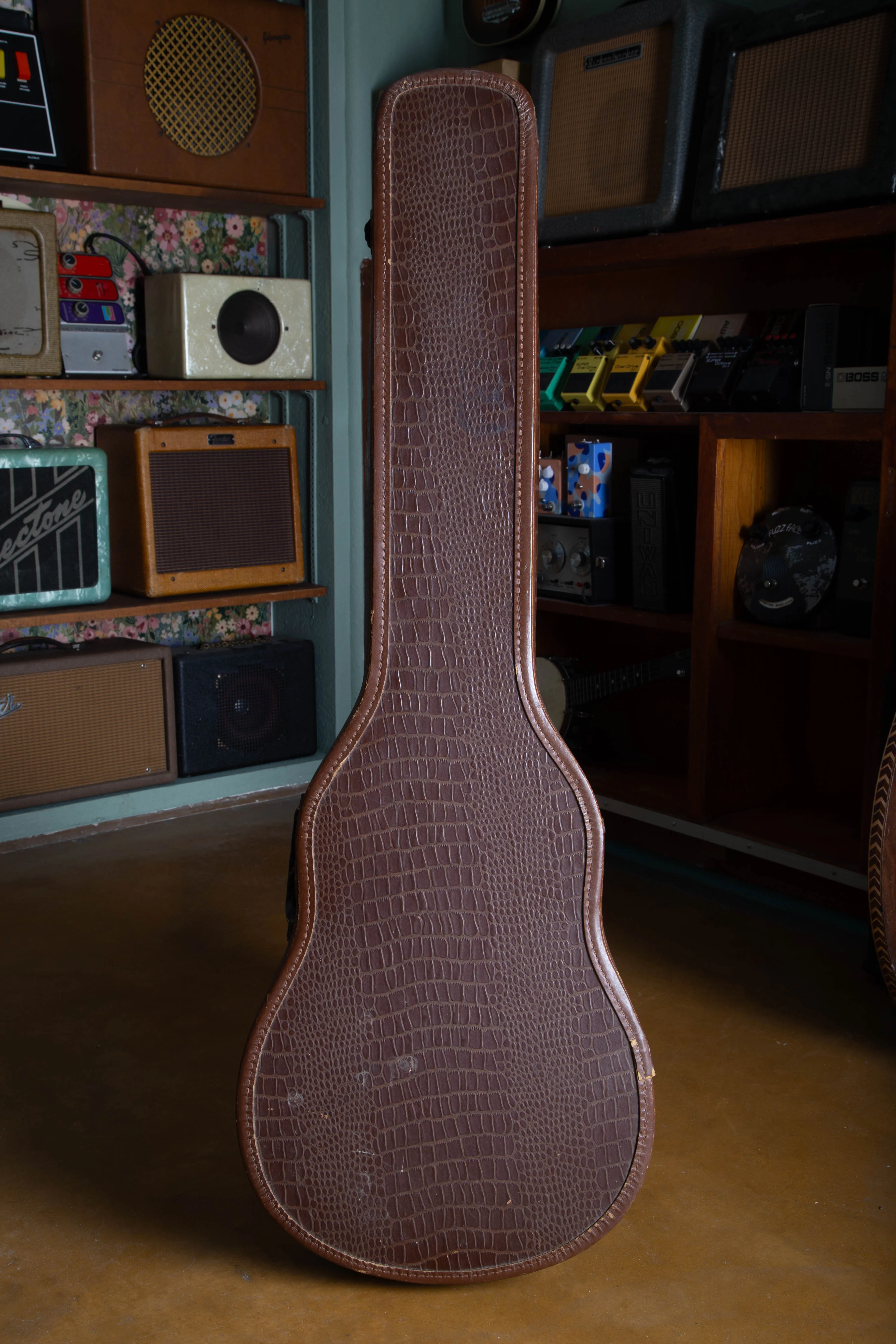
An original case is part of the condition assumed in the table. The early alligator-pattern chipboard cases and period hardshell cases aren’t the same accessory. A later case should be described as later, even if it carries a Gibson name.
Photograph the exterior, lining, handle and latches. If the case contains paperwork or removed parts, show those separately as well. Keep them together until the guitar has been evaluated.
The brown alligator-pattern case covering is visible in my archive photograph. Include the case, its interior and any retained original parts in appraisal photographs.
From A Guide Range To An Offer
Before making an offer on a Special, I check the year, body shape, finish, repair history and parts. Two guitars with the same model name can belong in different condition groups.
The table is a starting point for an appraisal. I assess the guitar as it stands now, including any repairs, replaced parts and missing accessories.
An advertised asking price may differ from the amount a buyer pays. Your proceeds can also differ after selling costs. I explain the offer and its terms when we’ve established the guitar’s condition.
The table is a reference for a category, not a promise of net proceeds. Selling costs and an individual guitar’s needs affect the amount an owner ultimately receives. An offer from me follows an appraisal of the instrument itself.
Send The Special You Have
For a free vintage guitar appraisal, send full front and back photographs, both sides of the headstock, the neck joint, bridge and case. Add the serial number and the repair history you know. If a part has been changed, a photograph is more useful than trying to make it look original again.
Leave the wear and hardware as they stand for the first review. The guitar’s present condition gives me a clearer starting point. Once its model, era and parts are established, I can explain how it relates to the appropriate price range.
For the wider family, my vintage Gibson value guide links the solidbody, ES, archtop and acoustic model comparisons.
My Les Paul market value guide compares the wider family, including Goldtops, Standards and the other original Les Paul models.
Questions About Gibson Les Paul Special Value
What Is A Vintage Gibson Les Paul Special Worth?
A clean original 1955 to 1959 TV Yellow Special has a guide range of $12,000 to $19,000. A 1959 cherry Special sits at $7,500 to $14,000. The annual table separates later guitars; condition, original parts and the case affect an individual appraisal.
Is A TV Model The Same As A TV Yellow Special?
No. The TV Model belongs to the one-pickup Junior family, while the Special has two P-90 pickups. TV Yellow is also a finish on the Special. I identify the model before applying a price range.
Why Is There No 1975 Les Paul 55 Row?
Les Paul 55 is a model name, not a 1955 manufacture date. A guitar represented as a 1975 example needs its serial, pots and construction checked alongside the surrounding reissue years. I can appraise it individually; the gap in this table doesn't establish that none were built.
Why Do Some Years Share A Price Range?
Several years can share an era range. That doesn't make every guitar from the period worth the same amount. I assess condition, finish and configuration before narrowing the appraisal.
How Does A Headstock Repair Affect Value?
A repaired Special needs comparisons with similar repairs and originality. The quality and extent of the work affect the result. The size of the deduction depends on the repair and the remaining original parts.
Does A Refret Make A Special Nonoriginal?
A quality refret preserves the all-original classification of an otherwise original guitar. It removes museum-quality status. Neck reshaping and fingerboard replacement are different alterations.
Should I Restore The Guitar Before An Appraisal?
Send photographs of its present condition first and keep any removed original parts. Leave the finish, hardware and wiring as they stand for the initial review.