

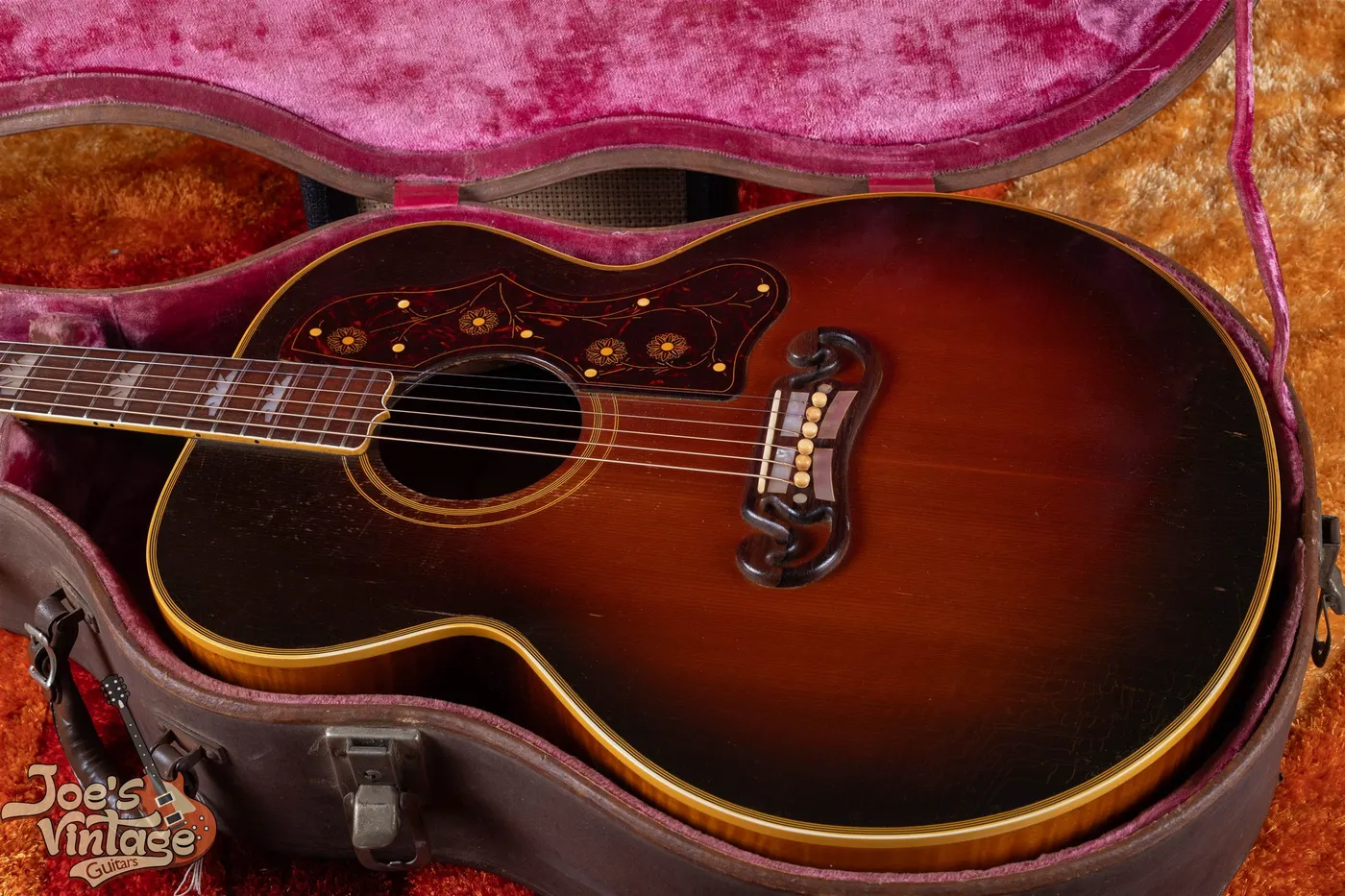
A standard postwar Gibson J-200 has guide ranges from $4,500 to $23,000 in excellent, original condition across the years covered below. A 1952 to 1959 example sits at $15,000 to $20,000, while 1970s examples use $4,500 to $6,000. Those ranges assume the original case and aren’t guaranteed selling prices.
These ranges were reviewed in October 2026. I check the guitar’s exact year, condition and repair history before narrowing an appraisal. Repaired or modified examples may fall outside the clean-original ranges.
For model identity, construction changes and originality checks, use my Gibson J-200 history and authentication guide. I explain price references and the condition details that determine which comparisons fit.
Gibson J-200 Values By Year
The table covers every postwar year from 1947 through 1979. Adjacent years can share an era range. Standard natural and sunburst examples share these bands, with condition assessed individually.
The assumption is all-original, excellent condition, with the original case and no structural repairs. A quality refret preserves otherwise all-original status but removes museum-quality status. A refinished, cracked or substantially modified guitar needs its own assessment.
Prewar coverage: The 1937 custom prototypes and the 1938 to 1943 catalog period need individual appraisals. They aren’t included in the postwar price bands below.
| Year | Configuration | Value Range |
|---|---|---|
| 1947 | Early postwar maple | $18,000 to $23,000 |
| 1948 | Early postwar maple | $18,000 to $23,000 |
| 1949 | Early postwar maple | $18,000 to $23,000 |
| 1950 | Early postwar maple | $18,000 to $23,000 |
| 1951 | Early postwar maple | $18,000 to $23,000 |
| 1952 | Standard natural or sunburst | $15,000 to $20,000 |
| 1953 | Standard natural or sunburst | $15,000 to $20,000 |
| 1954 | Standard natural or sunburst | $15,000 to $20,000 |
| 1955 | Standard natural or sunburst | $15,000 to $20,000 |
| 1956 | Standard natural or sunburst | $15,000 to $20,000 |
| 1957 | Standard natural or sunburst | $15,000 to $20,000 |
| 1958 | Standard natural or sunburst | $15,000 to $20,000 |
| 1959 | Standard natural or sunburst | $15,000 to $20,000 |
| 1960 | Early 1960s standard | $13,000 to $16,000 |
| 1961 | Early 1960s standard | $13,000 to $16,000 |
| 1962 | Early 1960s standard | $13,000 to $16,000 |
| 1963 | Early 1960s standard | $13,000 to $16,000 |
| 1964 | Early 1960s standard | $13,000 to $16,000 |
| 1965 | 1965 transition | $8,500 to $11,000 |
| 1966 | Later 1960s | $6,000 to $8,000 |
| 1967 | Later 1960s | $6,000 to $8,000 |
| 1968 | Later 1960s | $6,000 to $8,000 |
| 1969 | Later 1960s | $6,000 to $8,000 |
| 1970 | J-200 and Artist period | $4,500 to $6,000 |
| 1971 | J-200 and Artist period | $4,500 to $6,000 |
| 1972 | J-200 and Artist period | $4,500 to $6,000 |
| 1973 | J-200 and Artist period | $4,500 to $6,000 |
| 1974 | J-200 and Artist period | $4,500 to $6,000 |
| 1975 | J-200 and Artist period | $4,500 to $6,000 |
| 1976 | J-200 and Artist period | $4,500 to $6,000 |
| 1977 | J-200 and Artist period | $4,500 to $6,000 |
| 1978 | J-200 and Artist period | $4,500 to $6,000 |
| 1979 | J-200 and Artist period | $4,500 to $6,000 |
The ranges assume the stated condition. I wouldn’t apply a clean-original value to a guitar with unresolved repairs, significant changes or an uncertain case history.
A 1965 J-200 has an $8,500 to $11,000 range; 1966 to 1969 guitars sit at $6,000 to $8,000. The neck, bridge, originality and structural condition narrow an individual appraisal.
What The Value Range Assumes
The table describes a collector condition, not simply a guitar that can be played. Original finish, the correct major parts, structural condition and the included case all belong in that description. An instrument can play well while sitting outside the table’s assumptions.
An asking price is what a seller hopes to receive; the amount a buyer pays may differ. An offer depends on the individual guitar’s originality, condition and repair needs.
Your proceeds can differ from the total paid by a buyer. Selling expenses, preparation, shipping and the terms of a direct purchase affect the amount you receive.
Why A Shared Band Appears In Several Rows
A year-by-year table helps you locate a guitar. When adjacent years share a range, the actual configuration and condition determine where an example belongs. The construction and condition determine the comparison within an era.
The earlier and later ends of a broad reference aren’t automatic prices for the first and last year. Condition, configuration and the available comparisons decide where a particular instrument belongs. If those details aren’t established, I keep the appraisal provisional.
Condition Changes That Need A Closer Look
An added pickup, heavy wear, deteriorating parts or unresolved repairs can put a guitar outside the clean-original category. Crack repairs, neck resets and saddle changes need their own assessment. A condition label alone doesn’t describe that work.
Replacement tuners, bridge work, pickup installations and high action can also affect a 1970s J-200’s appraisal. I check what was changed and how the guitar plays before discussing its value.
Postwar Maple Guitars And 1950s Values
The earlier SJ-200 name and the later J-200 name can appear within the postwar family. The actual model and construction determine the comparison. The guitar’s construction, date and originality need to support the comparison.
The 1947 to 1951 postwar maple group sits at $18,000 to $23,000, followed by $15,000 to $20,000 for 1952 to 1959. Both assume excellent, original condition with the original case.
An early guitar with an original-looking exterior can still have bridge-plate changes, an old neck reset or repaired cracks. Those details affect its collector category even when they don’t stand out in a full-front photograph. I want the repair description before assuming it belongs in the clean reference.
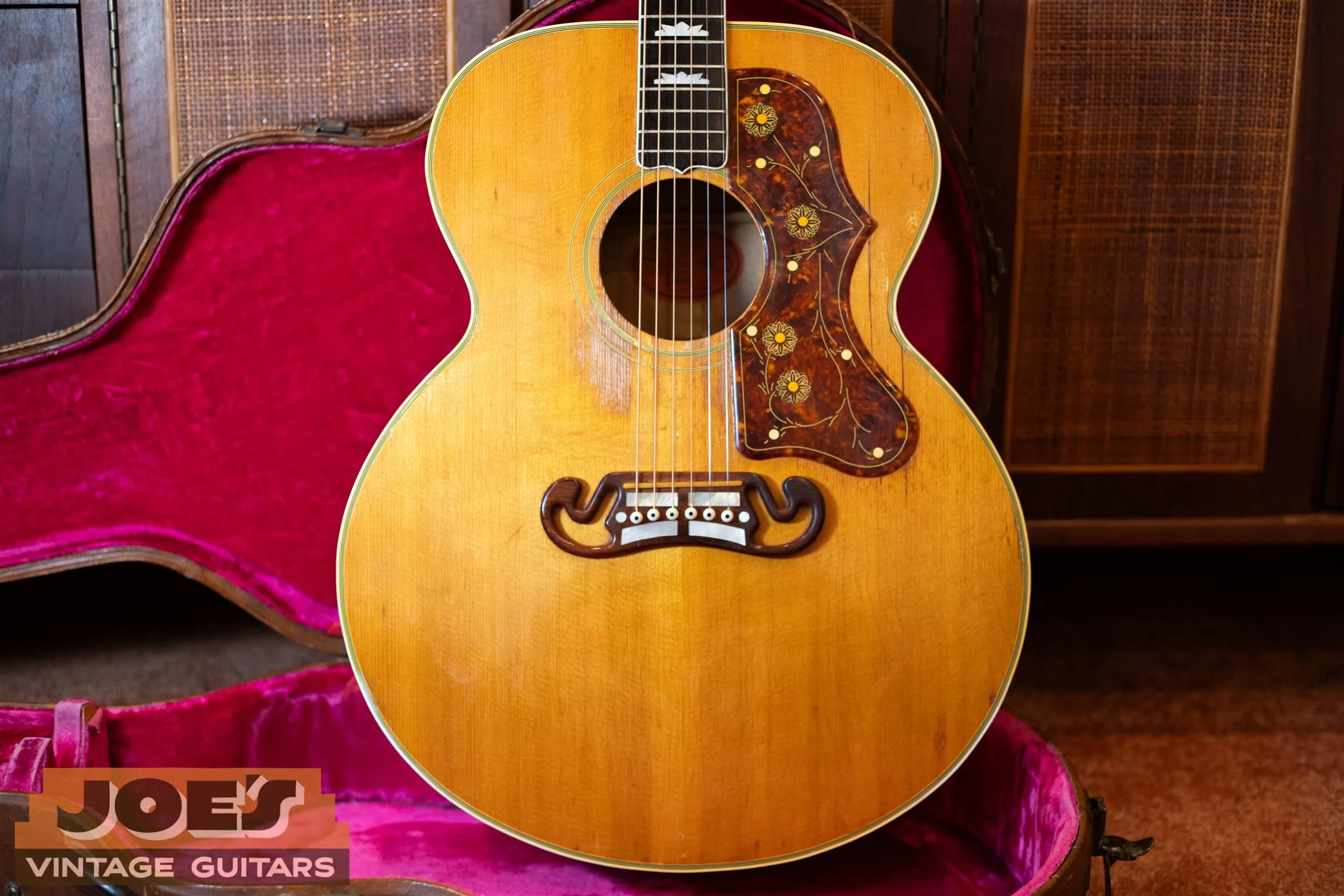
Natural finish doesn’t automatically outrank sunburst in this table. The postwar ranges cover both finishes. The original finish, condition and appearance affect each guitar’s appeal.
The original case is another part of the comparison. A worn original case and a later protective case serve different purposes. If both survive, describe both; the modern case doesn’t erase the value of the original accessory.
The 1960s Bridge And Condition Questions
The early 1960s reference is $13,000 to $16,000 for the standard model in the stated condition. The 1965 range is $8,500 to $11,000, followed by $6,000 to $8,000 for 1966 to 1969. A broad table can’t settle where a transitional or modified example belongs.
Before I use either group, I need to know what bridge and saddle arrangement is present and whether it has been changed. The price question concerns the guitar being offered now. A conversion doesn’t become original because it resembles a familiar earlier design.
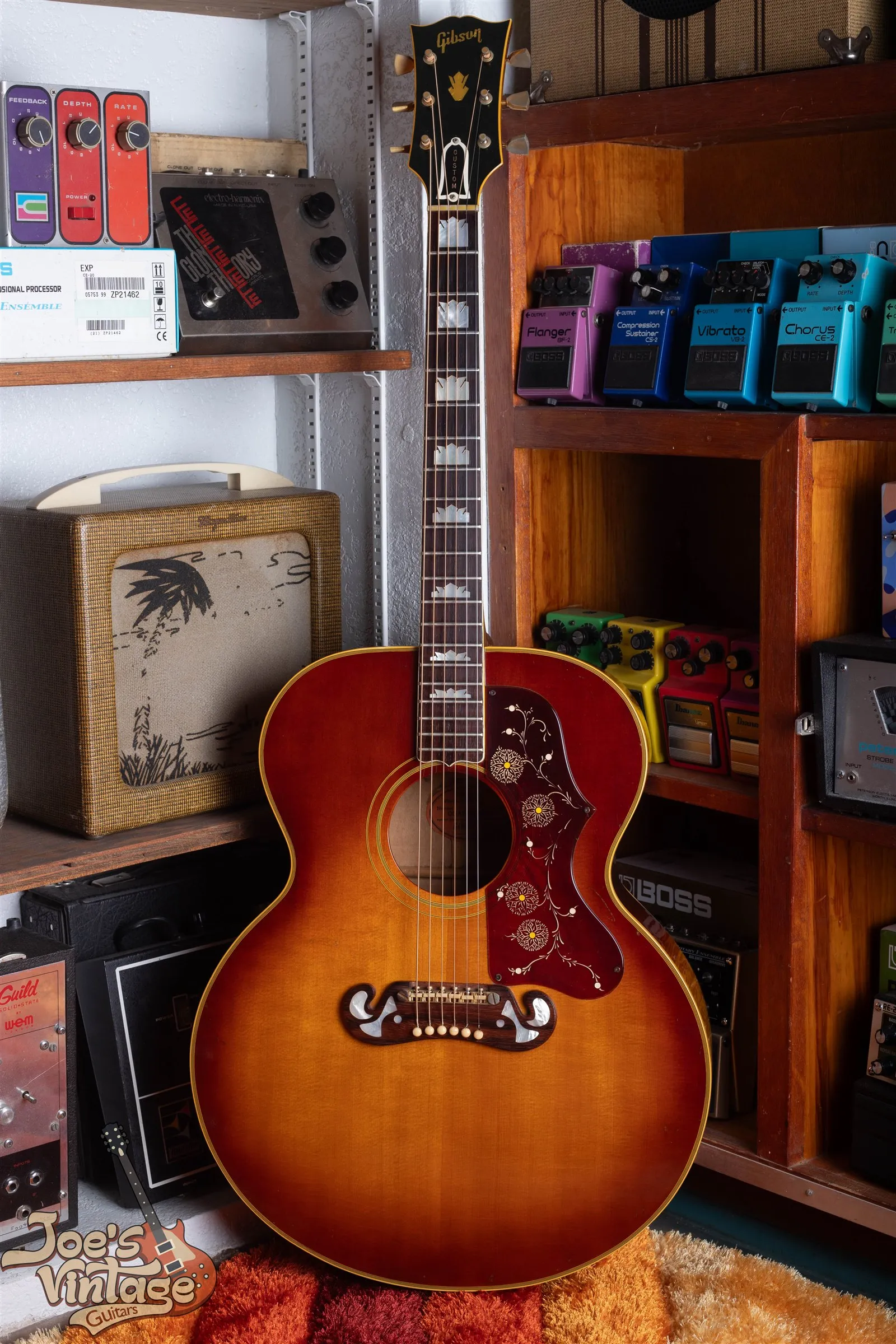
A player may prefer a different saddle or internal arrangement. That preference and collector originality are separate parts of an appraisal. The quality of a modification and the originality it replaces determine its price effect.
Keep any removed parts and repair records with the guitar. They can help explain what happened and what remains reversible. Their presence doesn’t by itself return an altered guitar to the all-original category.
The Bridge Is Part Of A Larger Repair History
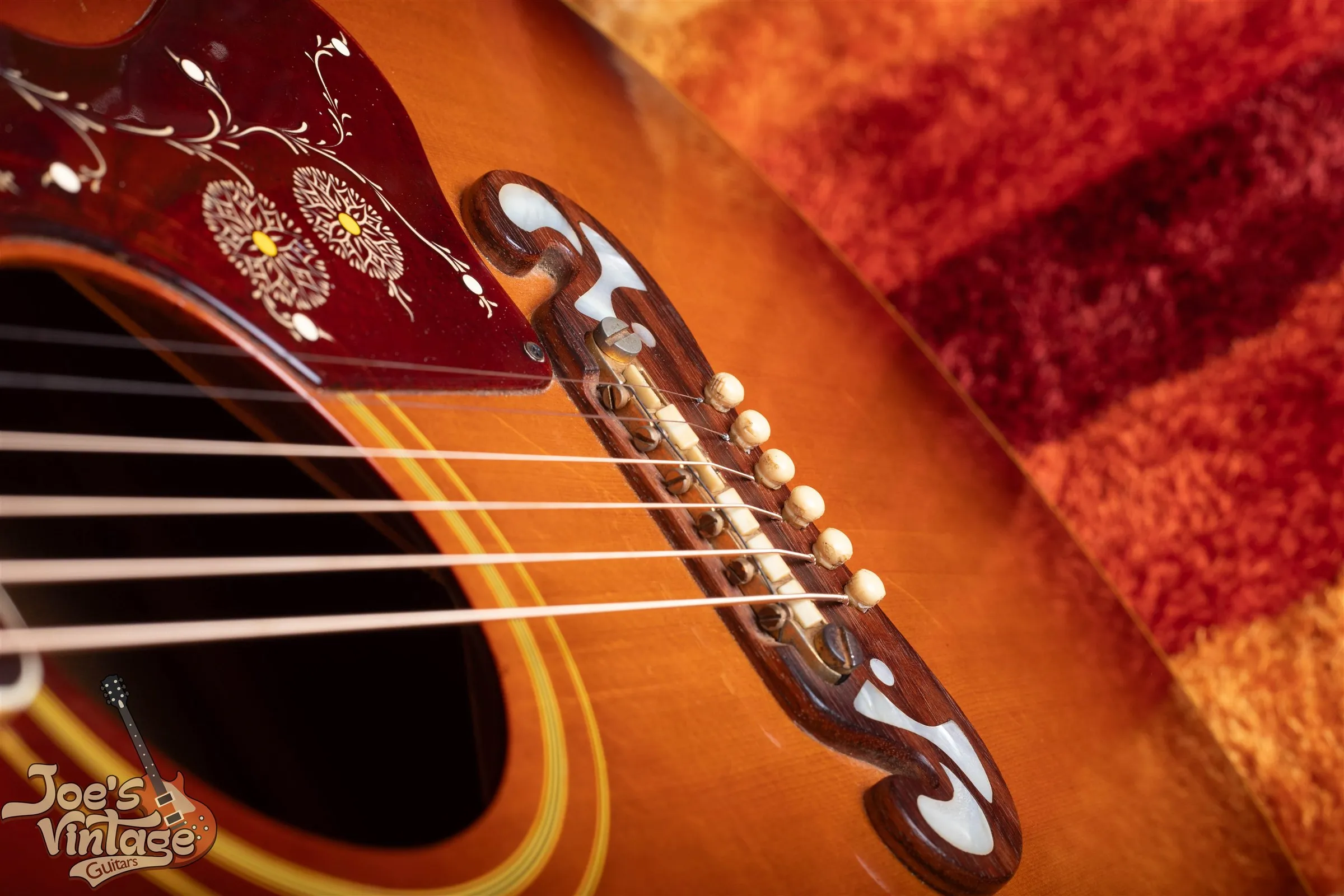
Bridge work can involve the saddle, pins, bridge plate, top or bracing as well as the visible wooden bridge. I read those details together before deciding whether the guitar fits the clean-condition range.
A properly disclosed repair gives a buyer something concrete to assess. An unexplained statement that a guitar has been serviced is less useful. The work, its date and its result should be described as specifically as the available records allow.
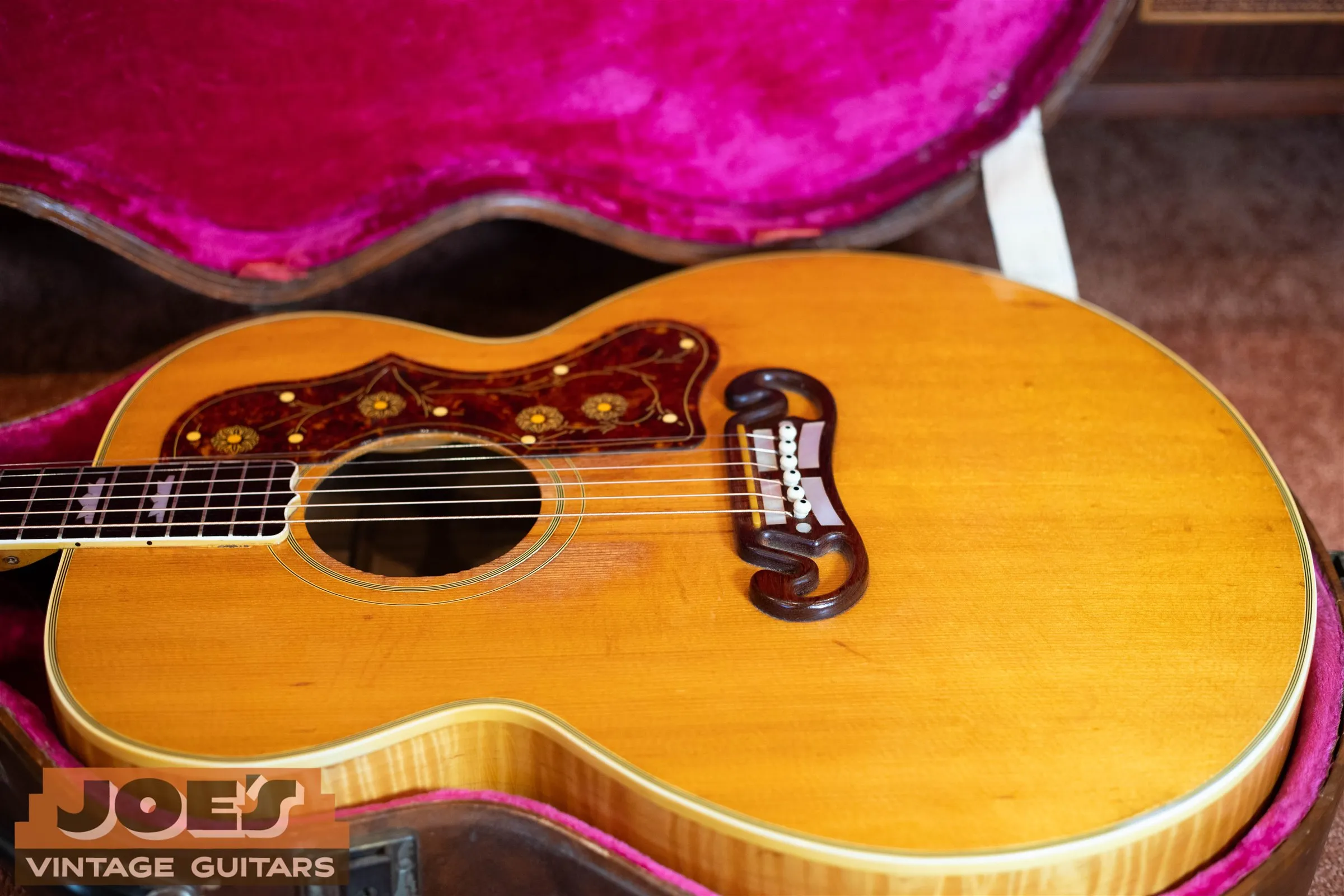
The photograph above records one bridge configuration in my archive. It isn’t a universal originality checklist and doesn’t prove that another guitar should have the same bridge. Use the existing authentication guide for those construction questions.
The 1970s J-200 And Artist Period
The 1970 to 1979 range is $4,500 to $6,000 for an all-original excellent example with its original case. Individual years share that broad range, but condition and configuration still affect the appraisal.
Confirm the complete model name when describing a 1970s guitar. Artist, standard and related family names can appear in listings, sometimes inconsistently. I won’t value a different rosewood model or a later reissue from this standard vintage table.
High action, a changed guard, replacement tuners or a repaired body need to be described even if the guitar is called Excellent or Very Good. I assess the details of the work and the current playing condition.
A later reissue or a guitar from outside this guide’s production span needs its own appraisal. The table’s year coverage ends at 1979.
How Repairs Change The Comparison
There isn’t a supported percentage that can be deducted for every neck reset, crack or replaced bridge. The quality and extent of the work differ. Multiple changes also interact, so adding separate arbitrary deductions can produce a misleading result.
I start with the closest model and era, then describe how the actual guitar differs from the reference. A stable documented repair, an unresolved structural issue and an uncertain repair history are different cases. They shouldn’t receive the same automatic adjustment.
Neck Work And Playing Condition
A guitar can look clean and still need work before it plays comfortably. Action, available saddle height and the repair history help establish the current condition. A photograph of an attractive top doesn’t settle those questions.
An old neck reset also needs context. I want to know how the guitar plays now and whether there are related repairs or alterations. The presence of the phrase neck reset isn’t enough to determine a price by itself.
Original Finish And Local Repairs
A complete refinish and a small documented area of finish touchup aren’t the same description. The affected area and the reason for the work belong in the appraisal. The workmanship and remaining originality determine the deduction.
Wear also differs from repair. Finish wear may be visible without telling the full structural story, while a structural repair can be difficult to see in a general photograph. Describe what is known and leave uncertain details open for examination.
Changed Hardware And Added Electronics
Replacement tuners, an added pickup and a changed saddle belong in the condition record. Some changes may leave extra holes or involve additional work. Others may be simpler to reverse, but reversibility still needs to be established.
Don’t authorize new work solely to make the guitar fit a price table. First document it as it stands and gather any removed parts. I can then explain which details need a closer look before making an offer.
Why Prewar Examples Need Individual Appraisals
The prewar rosewood Super Jumbo belongs to a different comparison group from the familiar postwar maple guitar. A later instrument with a historic model name isn’t a prewar original. A modern reissue date in a listing title can otherwise create a false comparison.
Prewar examples sit outside the postwar table. I examine their construction, condition and documented history individually before discussing a value.
Custom features and documented artist associations require additional care. They can make an instrument less comparable to the ordinary market, even when the sale itself is real. I keep those examples out of the standard postwar ranges.
For an early guitar, begin with clear photographs and any records that came with it. Don’t assume that a family story is false, and don’t turn it into established provenance without documentation. An individual review can separate what the guitar shows from what its history still needs to establish.
Preparing A J-200 For An Individual Appraisal
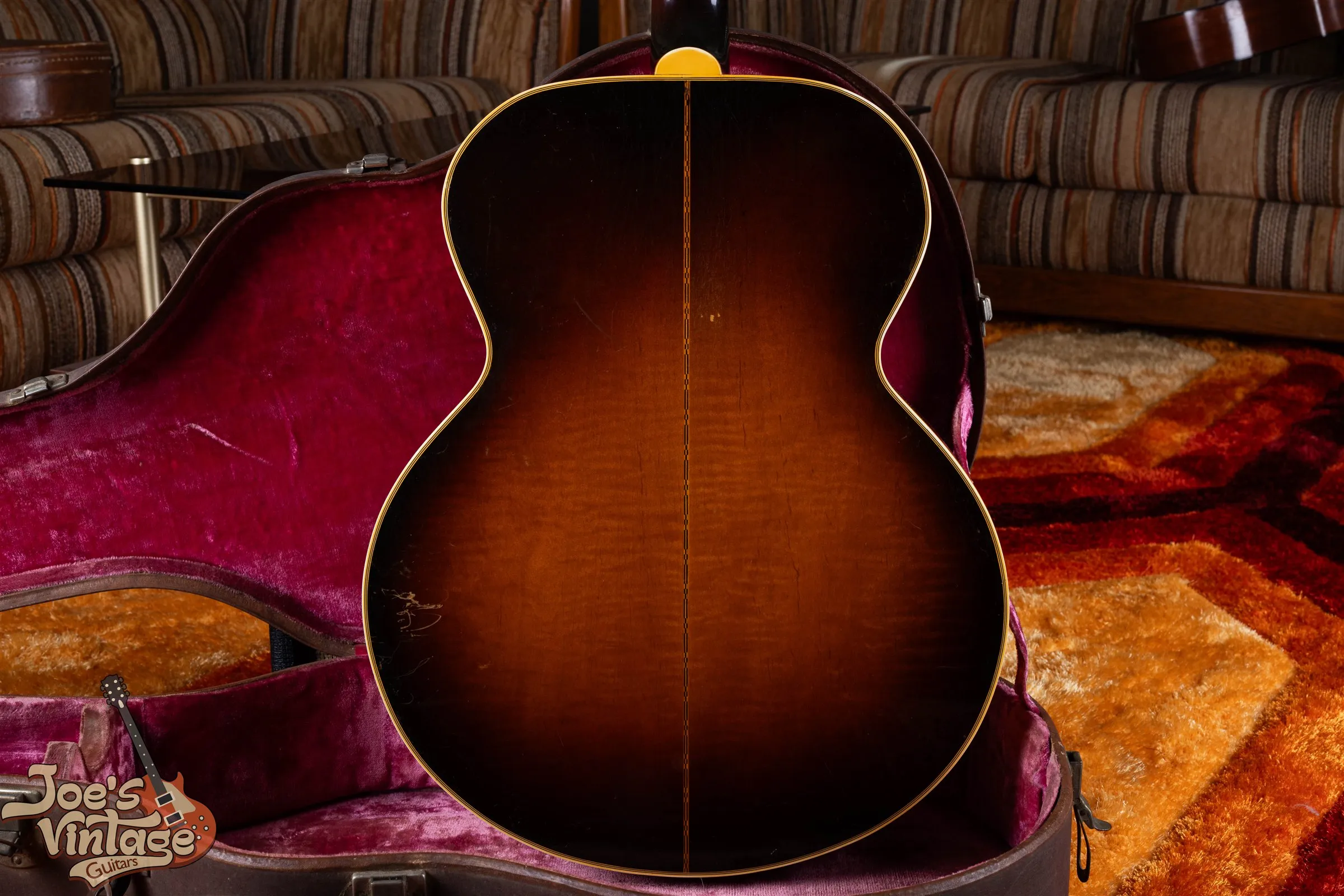
I can begin with photographs of the full front and back, both sides of the headstock, the label, the bridge area and any known damage. A view of the case and any loose original parts helps complete the description. Include repair invoices if you have them.
Tell me what you know about changes and what you’re unsure about. An honest unknown is more useful than an unsupported claim that everything is original. You don’t need to disassemble the guitar for the first conversation.
The table is a starting point for an appraisal. An actual offer depends on the instrument, its condition and the terms of the sale. Send photographs and any known repair history so I can assess your guitar.
For the wider family, my vintage Gibson value guide links the solidbody, ES, archtop and acoustic model comparisons.
For other flat-top models, my Gibson acoustic value guide compares the J-45, J-200, LG family and Hummingbird.
Questions About Gibson J-200 Value
How Much Is A 1950s Gibson J-200 Worth?
A standard 1950 to 1959 J-200 has a guide range of $15,000 to $20,000 in all-original excellent condition with its original case. Repairs, changes and substantial wear need a separate appraisal. The range isn't a guaranteed offer.
What Is A 1970s J-200 Artist Worth?
The 1970 to 1979 range is $4,500 to $6,000 in all-original excellent condition with the original case. Altered and repaired guitars may fall below it. I confirm the exact model and condition before applying the table.
Why Is There No Prewar Price Band?
Prewar examples need individual appraisals because their construction, condition and documented history can put them in a different market from postwar J-200s. They aren't included in the postwar ranges.
Does SJ-200 Mean Southern Jumbo?
No. In SJ-200, SJ identifies the Super Jumbo family. Gibson's Southern Jumbo is a different model. I wouldn't apply this table to a Southern Jumbo merely because a label or description uses the initials SJ.
Does A Converted Saddle Increase Value?
A conversion may suit a player's preferences, but it changes the comparison with an original collector example. I need to know what was changed, what remains inside the guitar and whether the removed parts survive. There isn't a fixed premium for a conversion.
Does A Quality Refret Remove All-Original Status?
A quality refret preserves the all-original classification of an otherwise original guitar and removes museum-quality status. Neck reshaping, refinishing and structural repairs are separate conditions.
Are These Guaranteed Selling Prices?
No. These are guide ranges for guitars in stated condition. An actual offer depends on the instrument and sale terms, and selling costs can affect the owner's proceeds.