Sell Your Vintage Guitar | Joe’s Vintage Guitars — Trusted Nationwide Buyer
The Honest Buyer Who Knows What Your Guitar Is Actually Worth.
- 01 A Buyer Who Knows Vintage Guitars ↓
- 02 Vintage Guitars & Instruments I Buy Across the U.S. ↓
- 03 What Sellers Say About Working With Joe ↓
- 04 Read Some Of My Clients' Wonderful Stories ↓
- 05 How to Prepare to Sell Your Guitar ↓
- 06 How to Ship Your Guitar Once It's Sold ↓
- 07 Other Places to Sell Your Vintage Guitar ↓
- 08 Guitars We've Recently Bought — And the Sellers Behind Them ↓
Selling to Joe’s Vintage Guitars Is Easy
- Top Dollar For Your Vintage Instruments
- Risk-Free – Same-Day Payment
- Easy & Simple Process
- Free Shipping & Insurance – We Handle Everything
- Hundreds of Sellers Have Used This Exact Process – Read Their Google Reviews
- Contact Us At (602) 900-6635 Or Email joesvintageguitars94@gmail.com
Book Your Guitar Selling Consultation Now!
Get The Best Price For Your Vintage Guitar
Sold her prized 1952 Gibson L-5C to Joe
Three Photos. One Offer. Done.
No in-person meetings required, no haggling, no complicated paperwork. Just send us a few photos, get a fair offer, and get paid — anywhere in the U.S. & Canada.
A Buyer Who Knows Vintage Guitars
12 Years of Experience · Thousands of Guitars · I'll Know What Yours Is Worth
Whether you're looking to sell a vintage Gibson, a classic Fender Stratocaster, a pre-war Martin acoustic, or anything in between — I've seen it, I've bought it, and I know what it's worth in today's market. I work with sellers across the entire U.S., from individuals selling a single inherited guitar to families liquidating full estate collections. Whatever you have, I'll give you an honest assessment of its value and a fair offer — no pressure, no runaround.
With over 12 years of experience and more than 10,000 instruments personally appraised, I know vintage guitars at a depth most buyers simply don't reach. I've purchased guitars from all 50 states, served as a traveling appraiser for Treasure Seekers Roadshow, and sourced instruments for Grammy Award-winning artists. I've handled guitars from the estates of musicians who played alongside Hank Williams, The Everly Brothers, and Loretta Lynn — and have earned over 2,100 five-star reviews across Google and Reverb in the process.
Beyond buying and selling, I've invested heavily in free resources for the vintage guitar community. My Gibson serial number decoder and Fender serial number guide are among the most comprehensive tools available anywhere online. For collectors researching rarity, I've also published verified Gibson production totals from 1948–1979. I built these because I believe an informed seller is a better seller — and because this hobby is richer when knowledge is shared freely.
Every guitar has a story. When I buy an instrument, I document its history — so the musician who played it is never forgotten.
Vintage Guitars & Instruments I Buy Across the U.S.
From a single inherited acoustic to a full estate collection, I buy across every major brand, era, and instrument type. While I focus on the brands below, I am familiar with and I buy any cool or collectibel vintage instrument brand.

Stratocasters, Telecasters, Jazzmasters, Jaguars, Mustangs, Esquires, and Precision and Jazz Basses — particularly pre-CBS (pre-1965) examples. Custom colors, original cases, and matching headstocks command a significant premium. See our 1952 Telecaster authentication guide for an example of what we look for.
Sell My Fender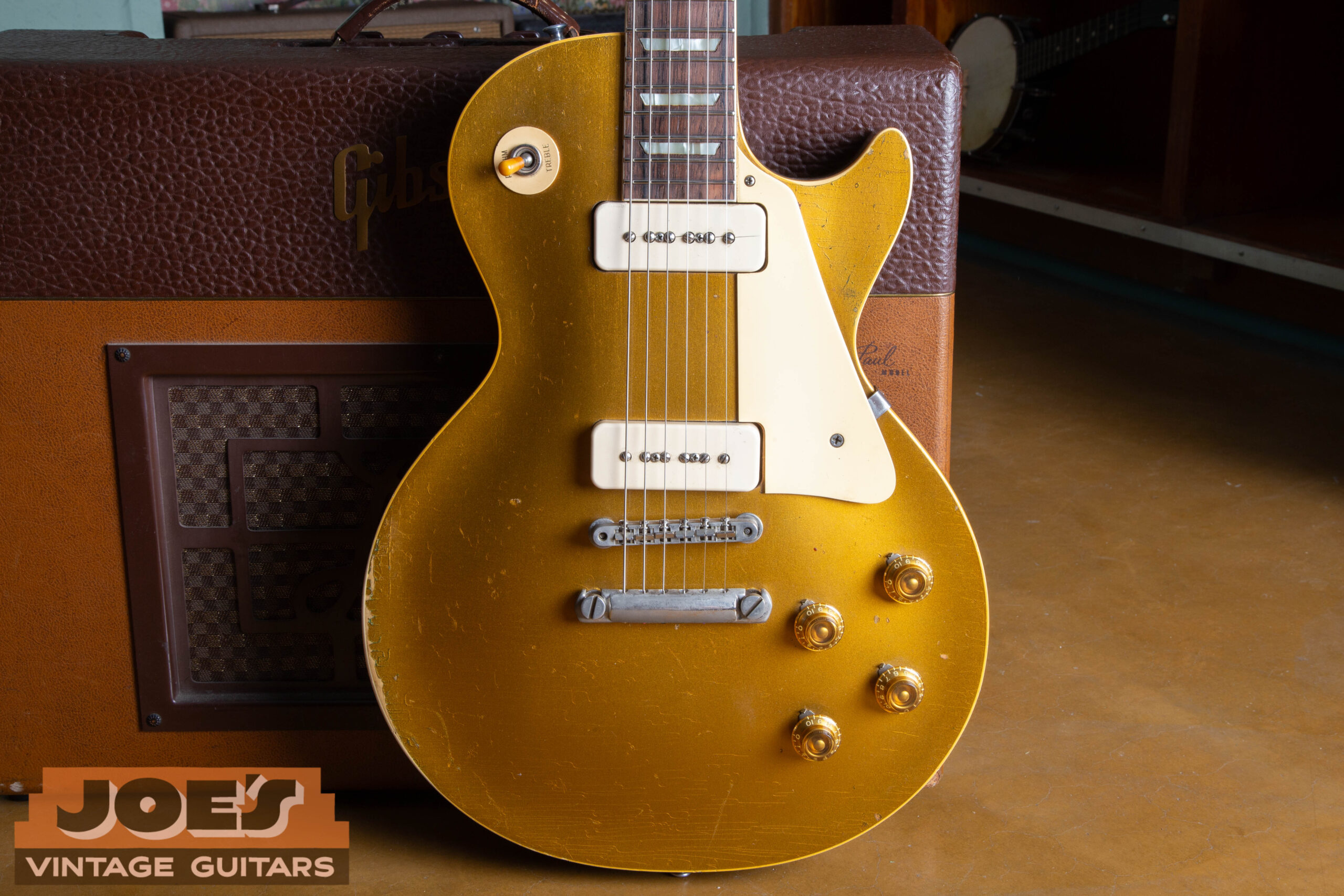
Les Pauls, ES-335s, ES-175s, SGs, Flying Vs, J-45s, J-200s, and archtops from the 1930s–1960s. Golden era electrics are a particular specialty — see our guides on the 1957 Les Paul Goldtop, 1959 ES-335, and Gibson L-5 CES.
Sell My Gibson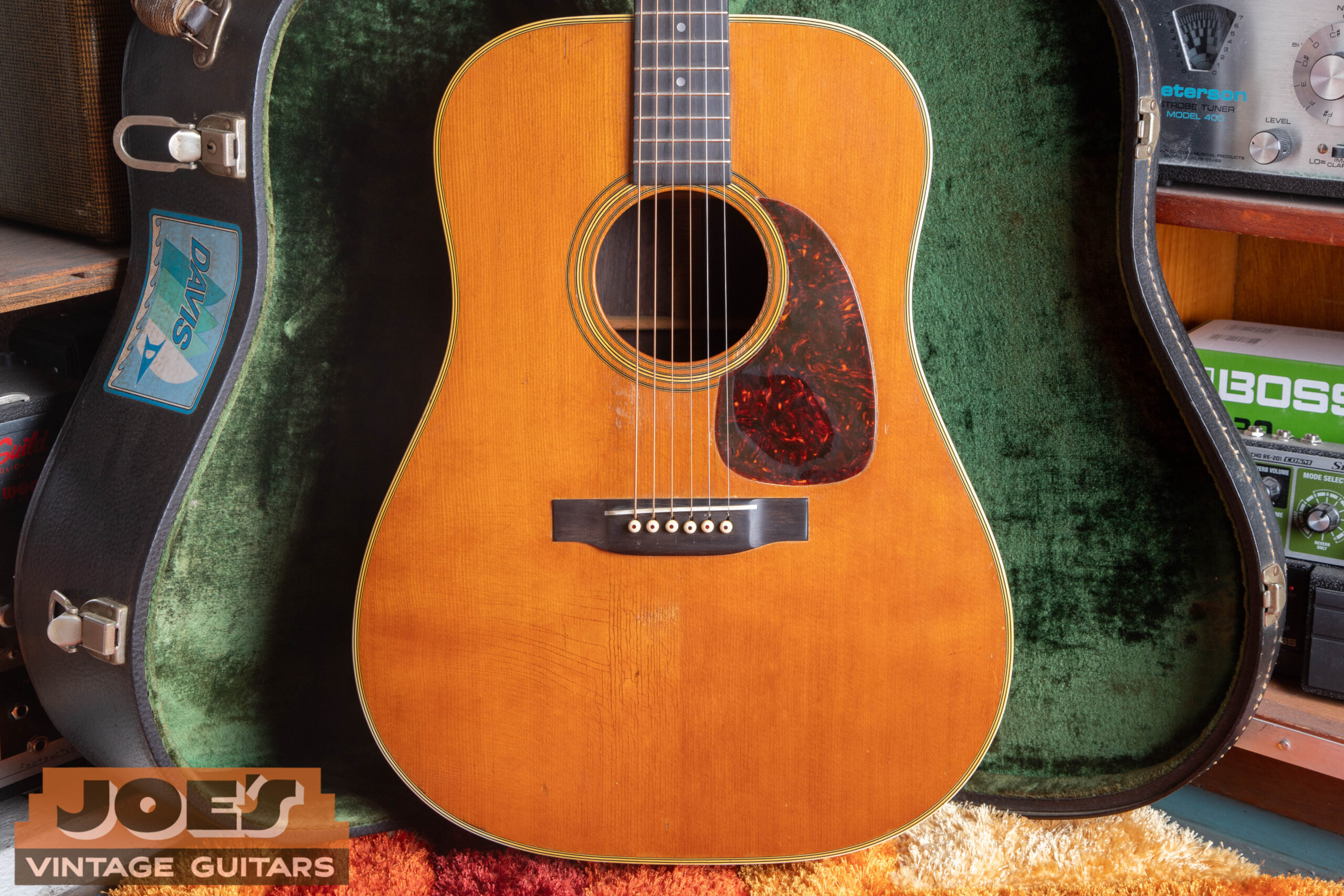
Pre-war herringbone D-28s, D-45s, 000-28s, 0-18s, and OM models with scalloped bracing and Brazilian rosewood are among the most sought. Pre-1970 Martins of all models considered. See our Martin D-18E vs D-28E authentication guide for details on what we look for.
Sell My Martin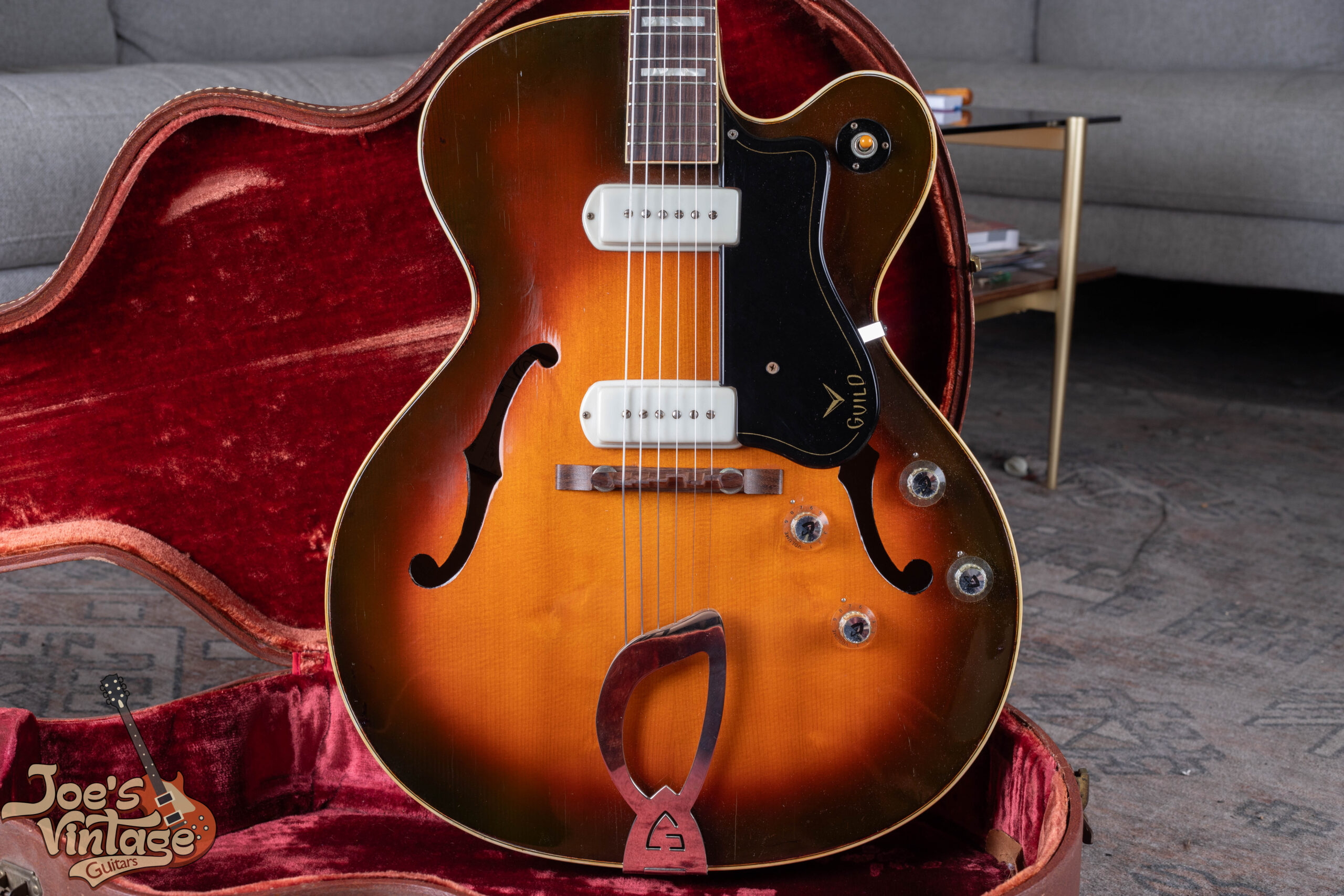
Archtops, flattops, and electric thinlines from Guild's early New York and Hoboken years through the Rhode Island era. F-47s, D-55s, Starfires, and Artist Award models especially sought. An underappreciated brand with serious collector demand.
Sell My Guild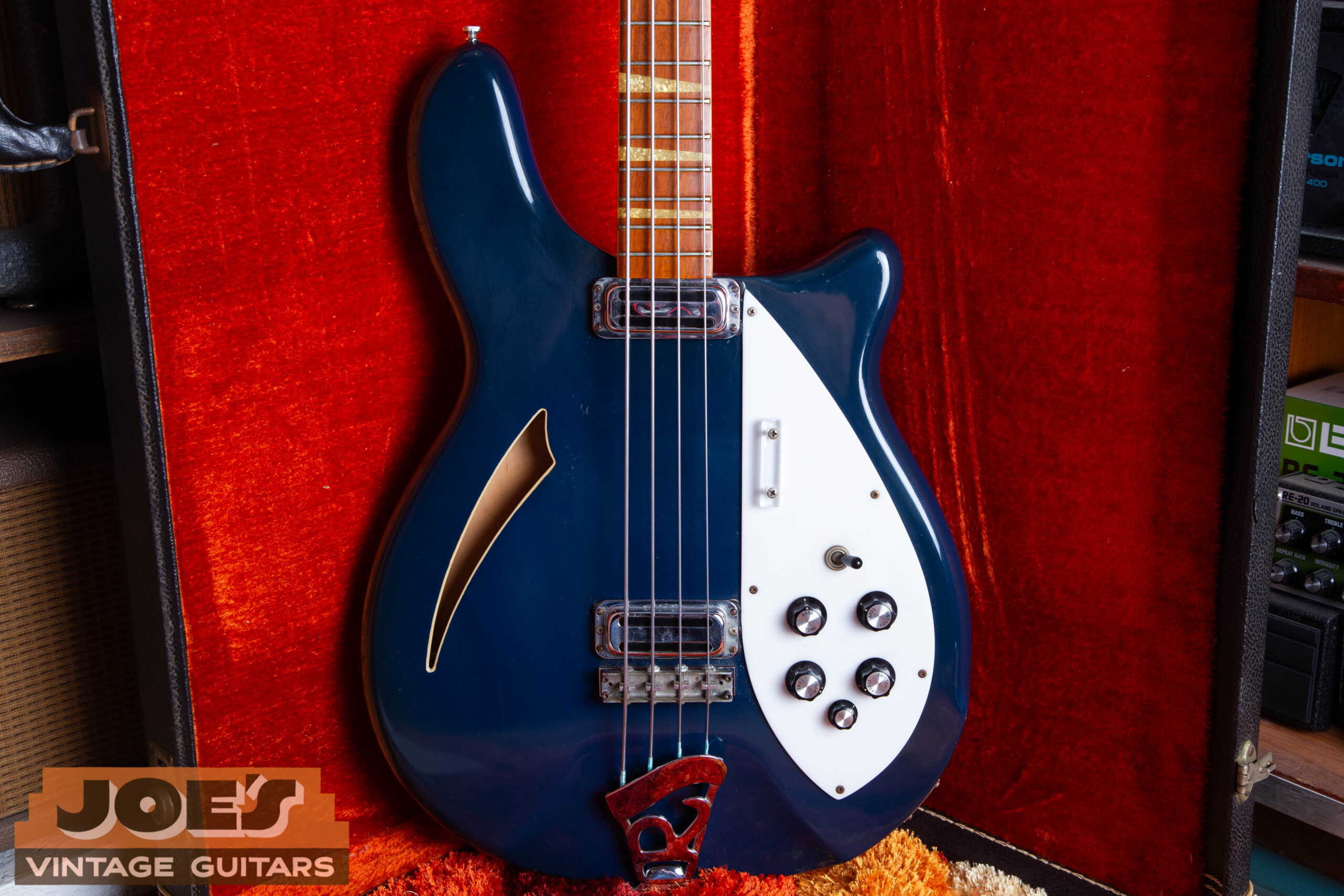
360s, 330s, 325s, 4001 basses, and other models from Rickenbacker's most collectible decades. Fireglo, Mapleglo, and Jetglo finishes all considered. Left-handed examples and export models particularly desirable.
Sell My Rickenbacker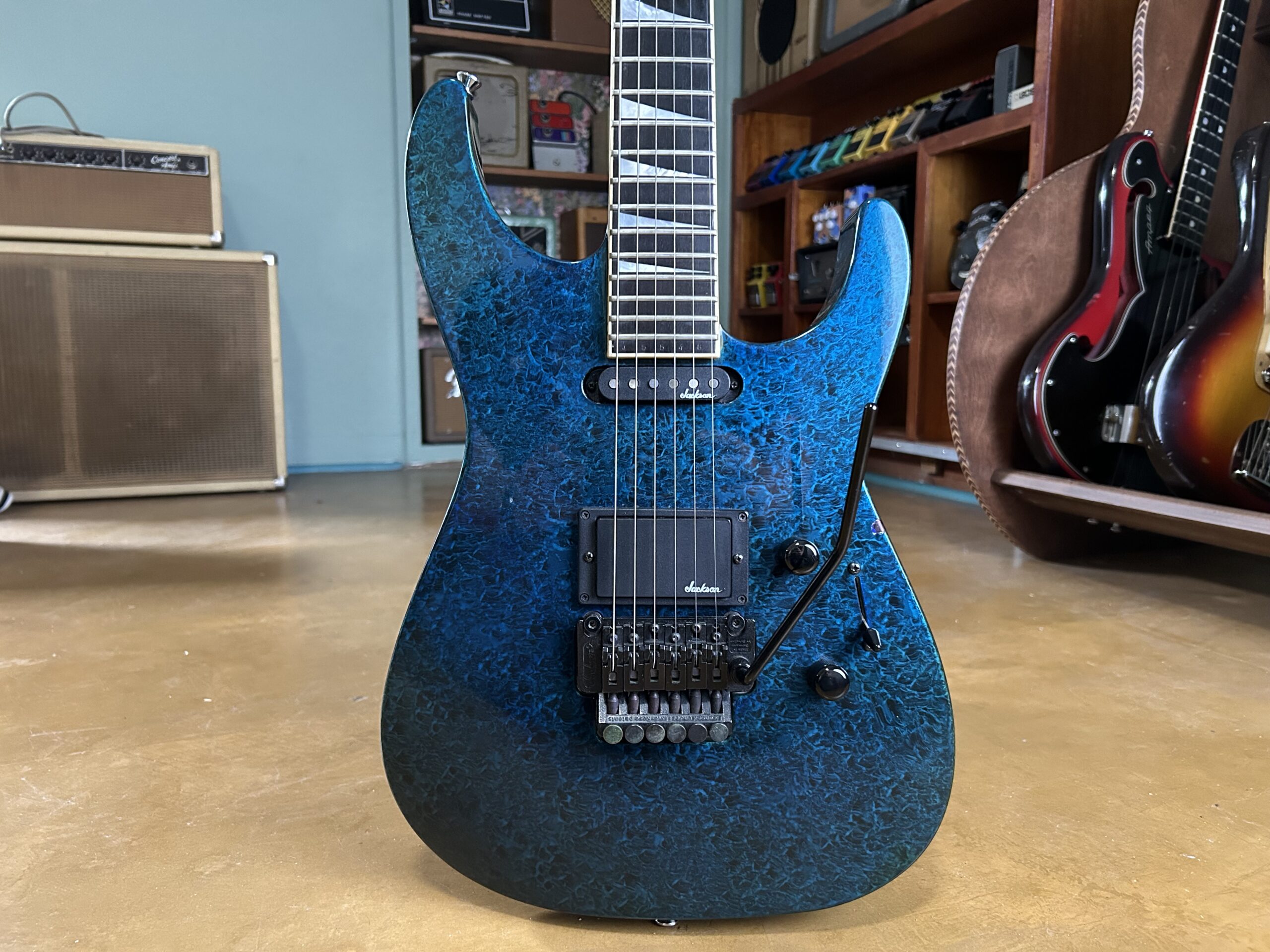
Pre-Fender acquisition USA-made Jacksons — Soloists, Dinkys, Kellys, and custom shop instruments. Early Randy Rhoads models and guitars with original Floyd Rose hardware are among the most valuable. Condition and originality matter significantly here.
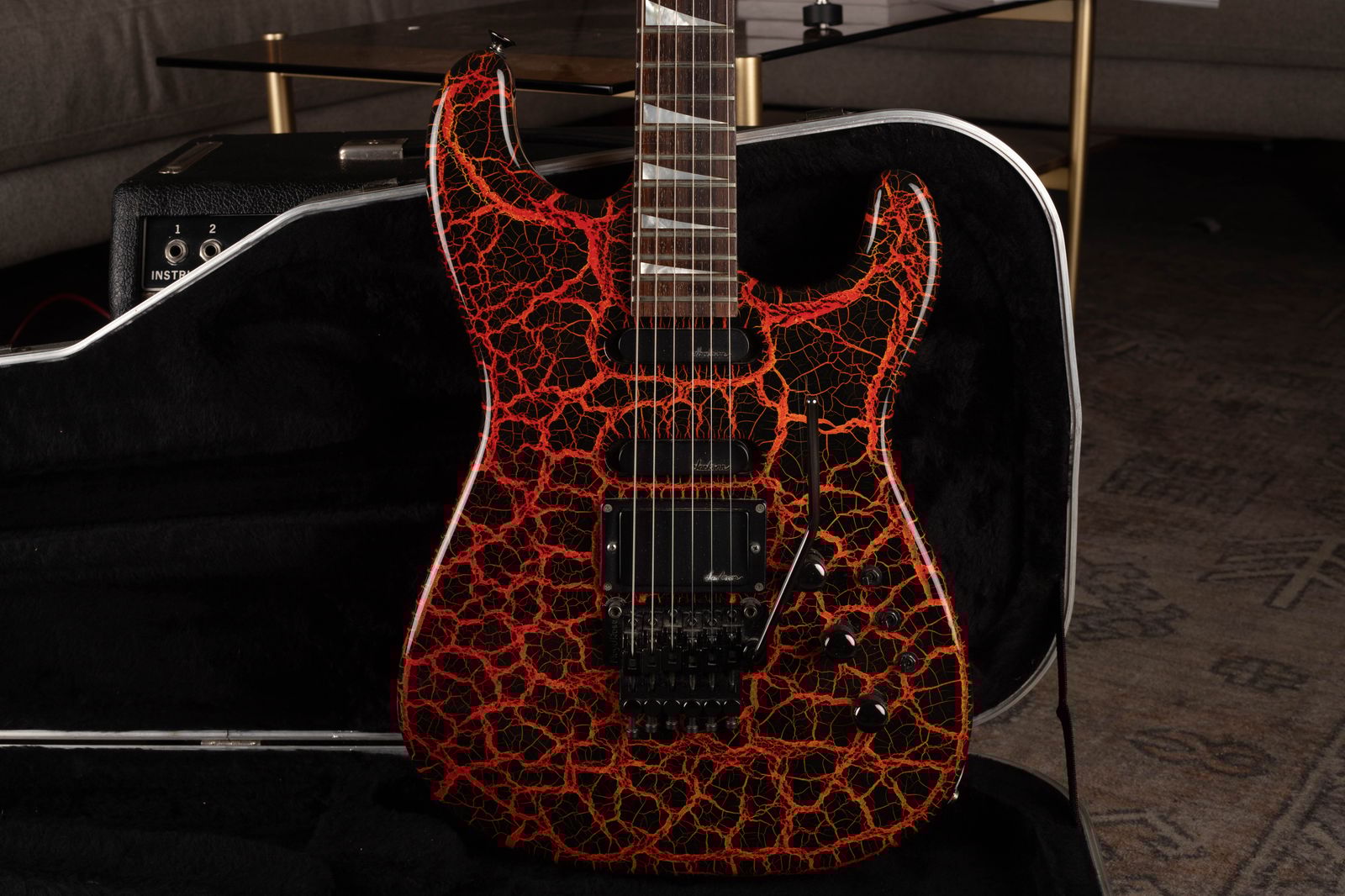
Pre-production and early production San Dimas Charvels, Jackson-era USA models, and custom shop pieces. Highly collectible among hard rock and metal players. Original components, cases, and documentation all add value.
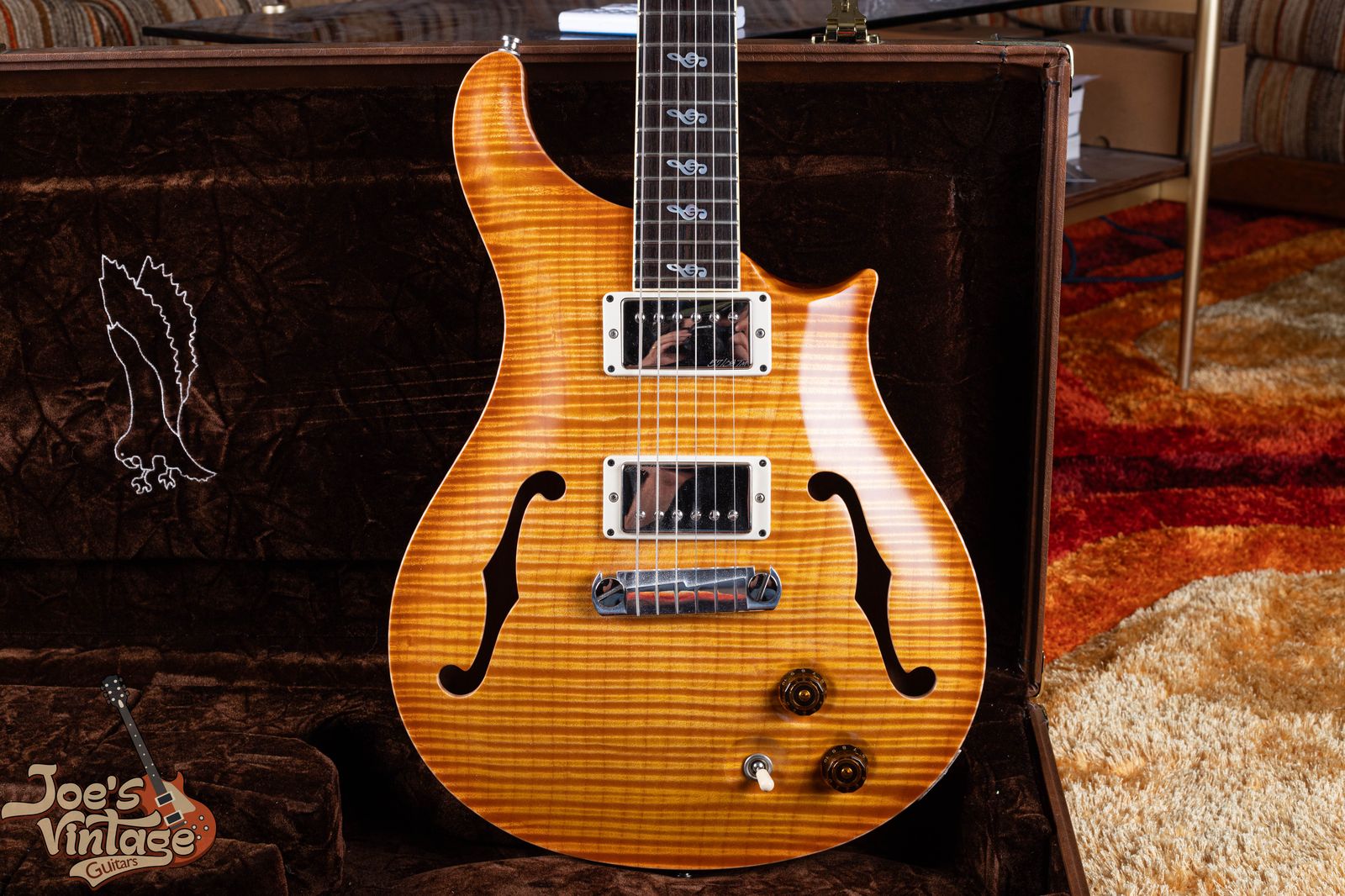
Private Stock, Dragon series, vintage Artist series, and early pre-factory CE models. Brazilian rosewood necks, ten-top figured maple, and original tremolo systems are key value drivers. Older USA-made core models also considered.

Style O, Duolian, Triolian, Tricone, and other National resonator models from the 1920s through the 1940s. Both wood-body and metal-body examples bought. Condition of the cone and coverplate factor heavily into value.
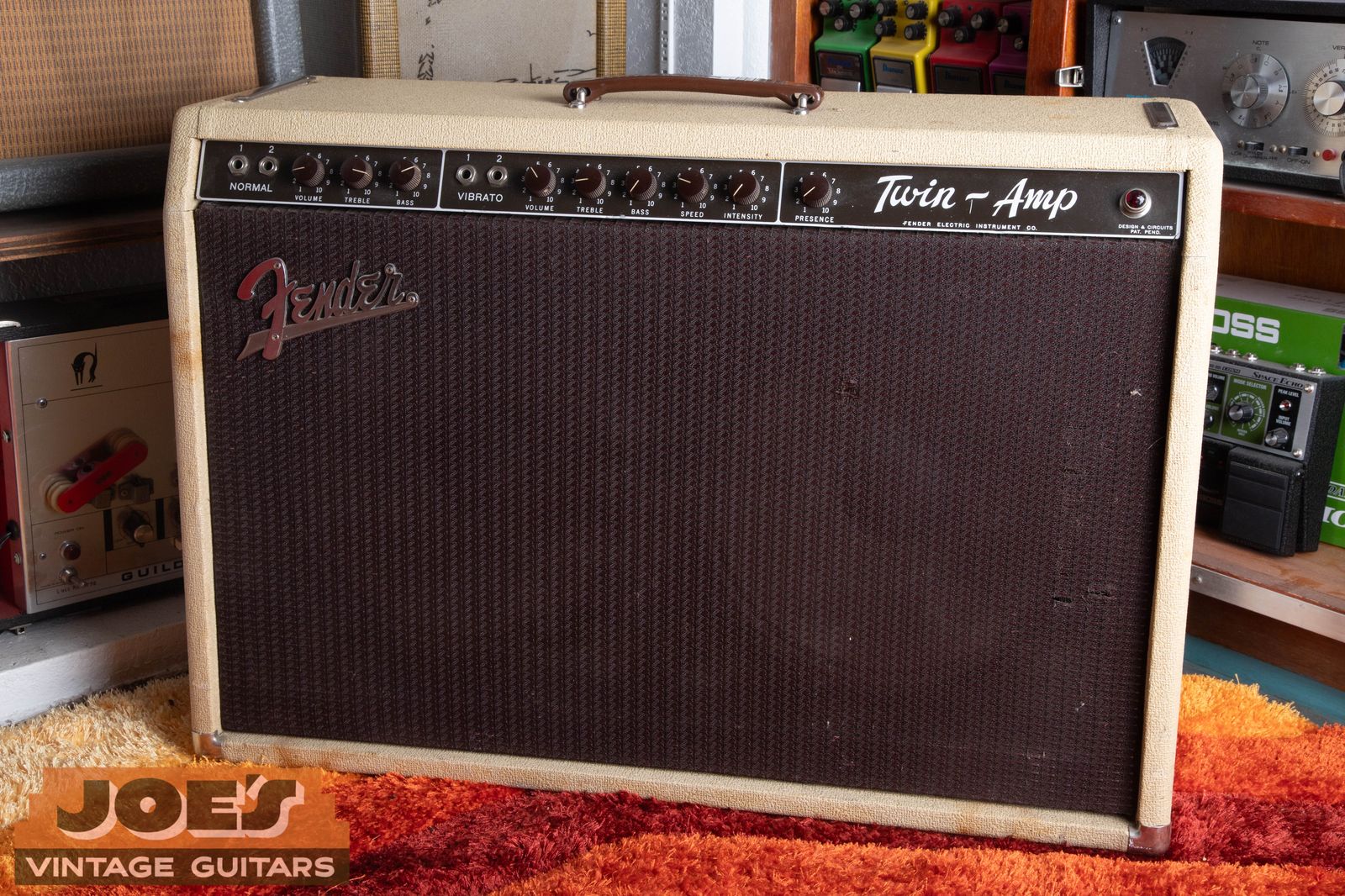
Fender Tweed, Blackface, and Silverface amplifiers, Gibson, Vox, Marshall, Ampeg, and other vintage tube combos and heads. Original speakers, transformers, and intact chassis are key. All-original examples command the strongest prices.
Sell My Amp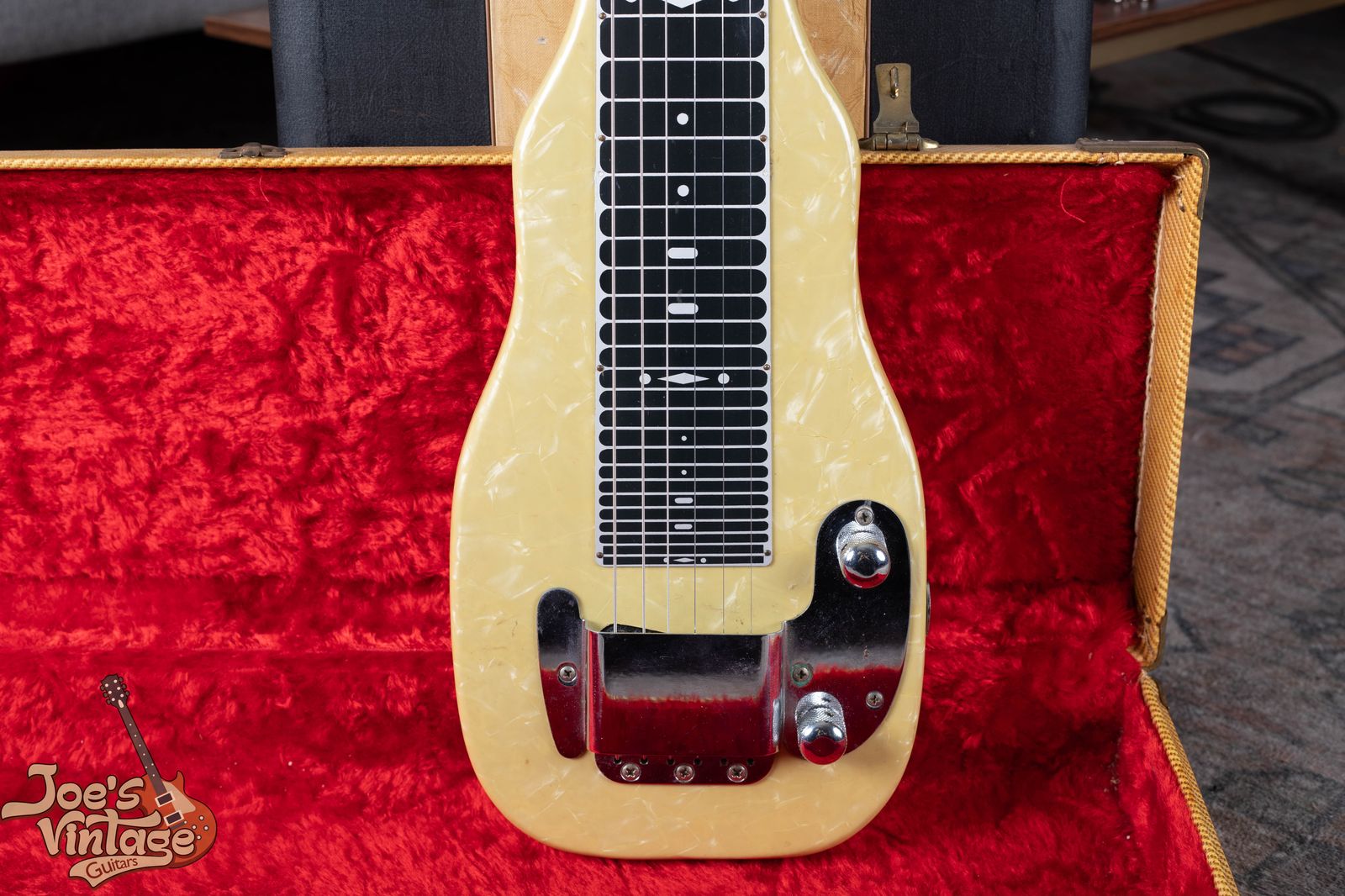
Hawaiian and electric lap steels from the 1930s through the 1960s — Rickenbacker Frying Pans, Gibson Ultratones, Fender Champions, Nationals, and Supros. A niche instrument with a dedicated collector market and often underestimated value.
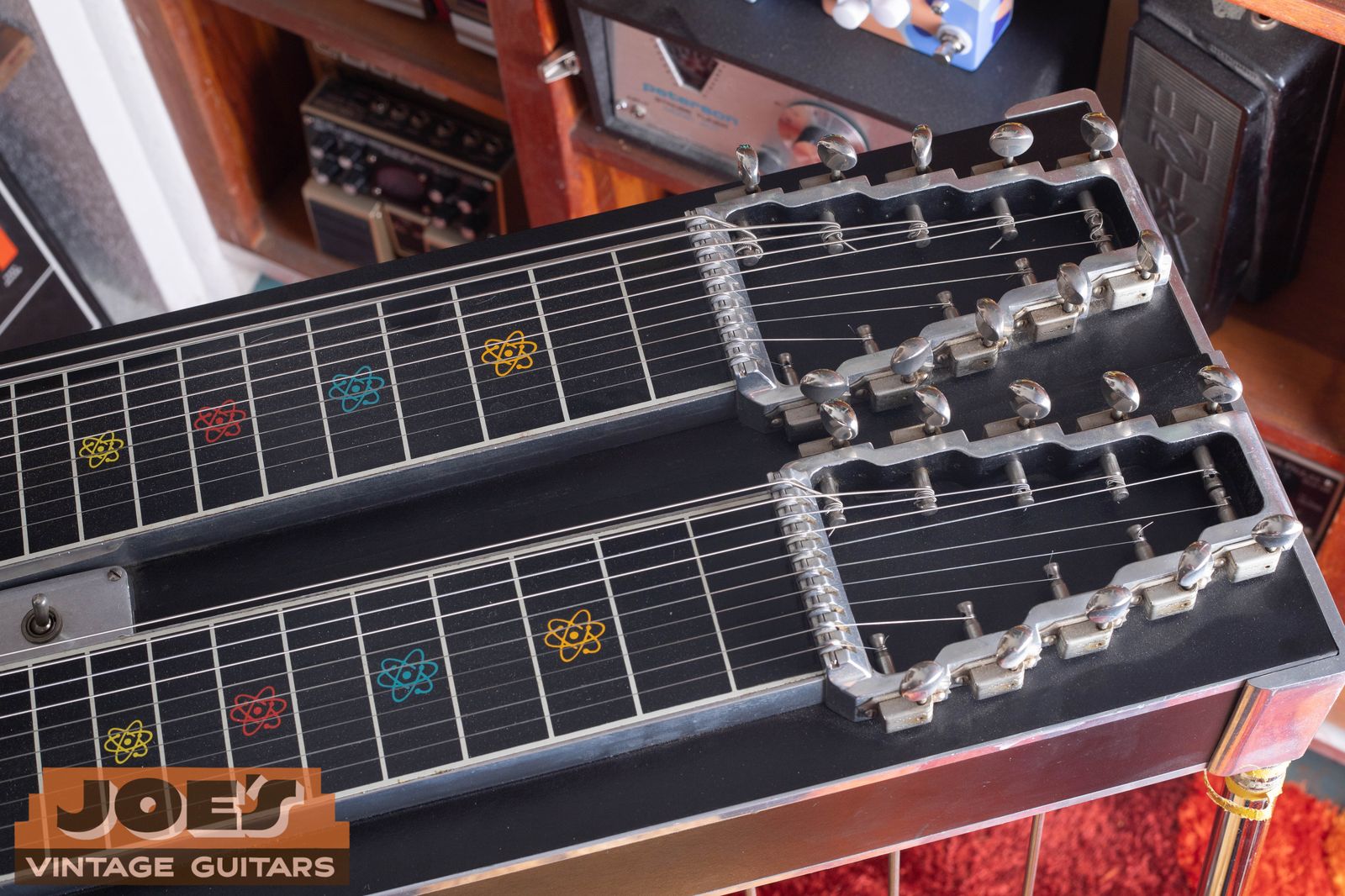
Vintage and professional-grade pedal steels from Sho-Bud, Emmons, ZB, MSA, and other makers. Single and double-neck models considered. Original cases, knee levers, and full pedal setups all factor into value.
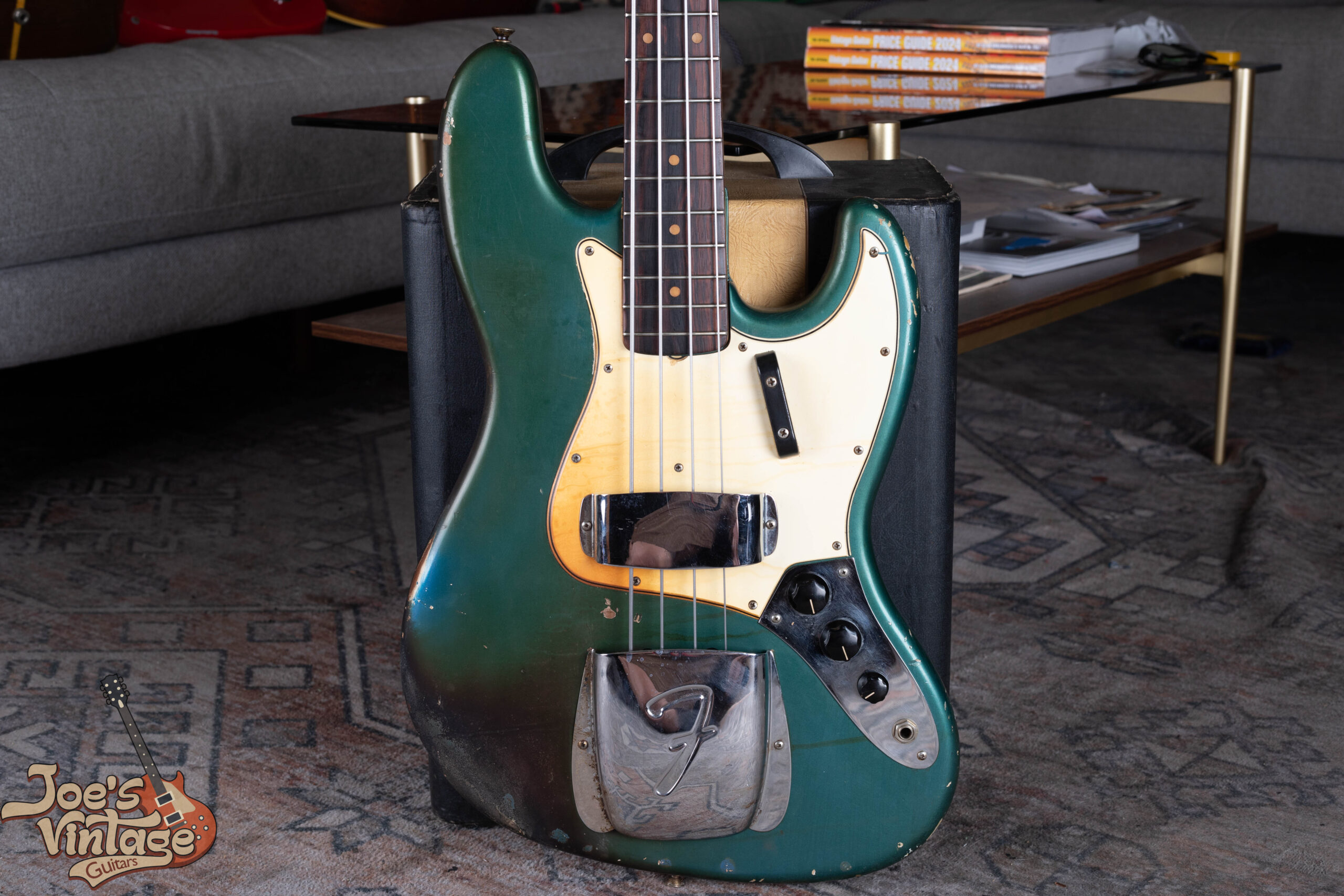
Vintage Fender Precision and Jazz Basses, Gibson EB series, Rickenbacker 4001s, Hofner Violins, and other collectible basses from the 1950s through the 1970s. Original pickups, tuners, and finish integrity are the primary value drivers.
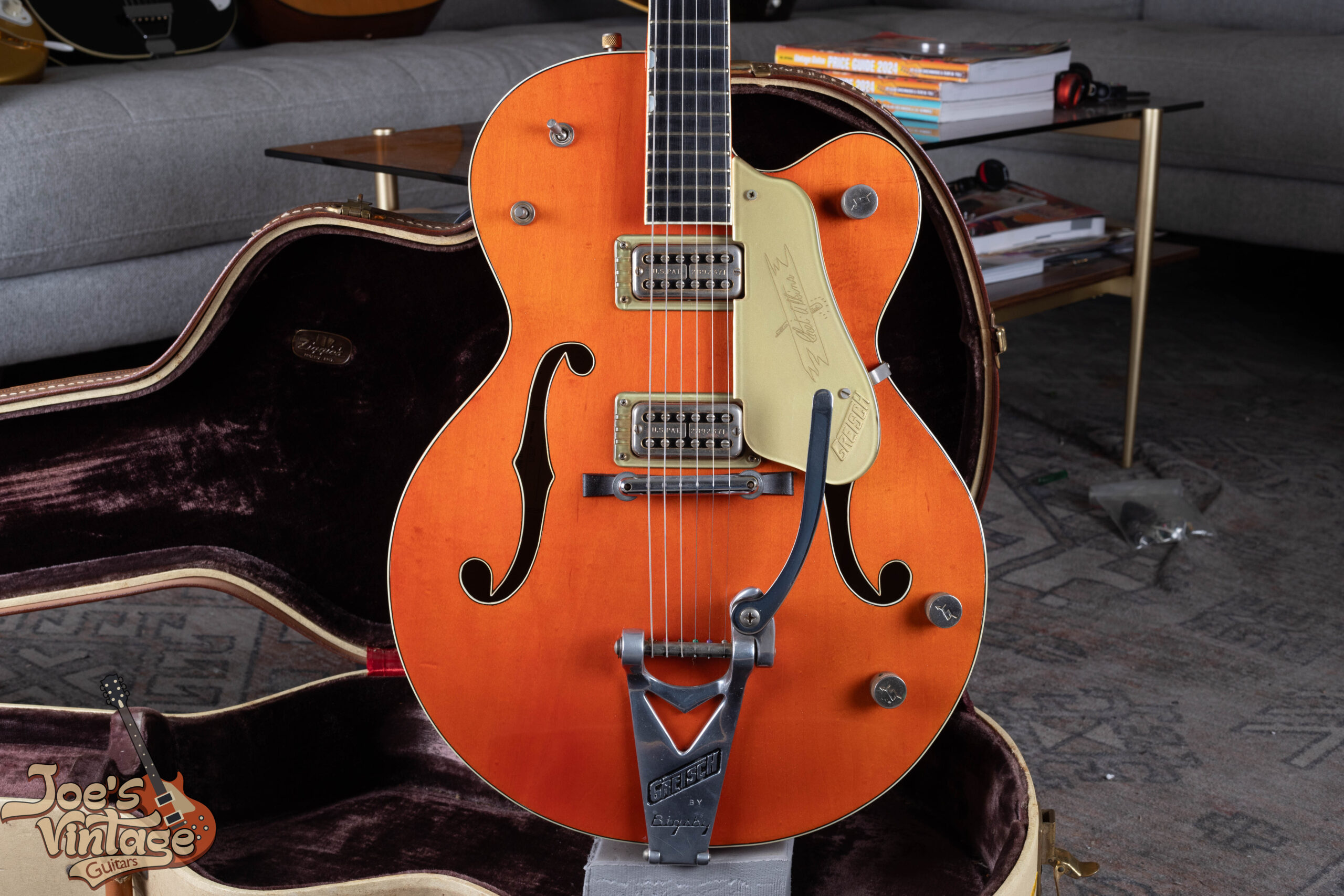
6120s, White Falcons, Country Gentlemans, Jets, and Anniversaries from Gretsch's Brooklyn era (1950s–1960s). Filter'Tron and DynaSonic pickups, original Bigsby vibratos, and case candy all add significantly to value. See our Gretsch 6120 history and value guide.
Sell My Gretsch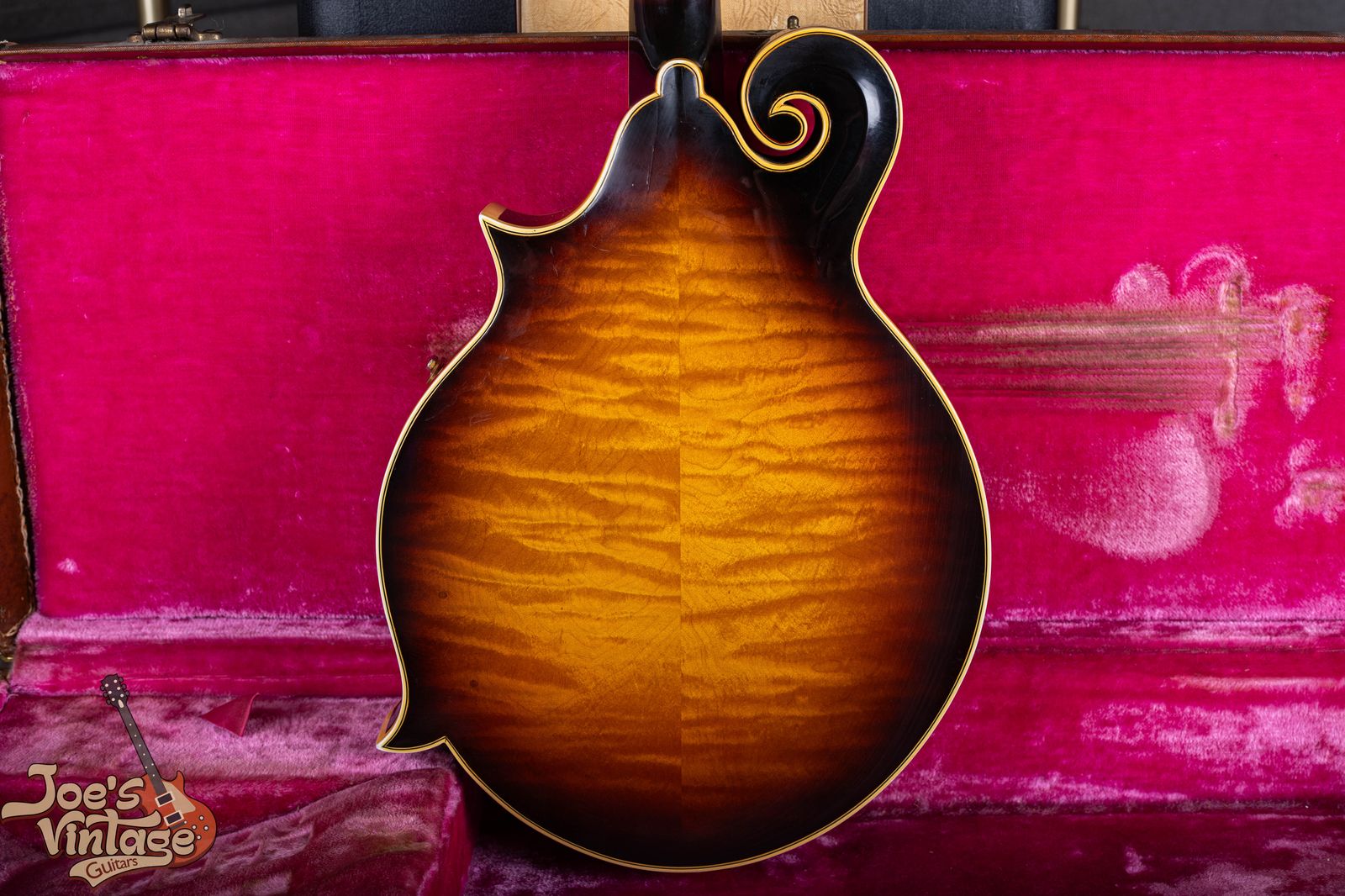
Gibson F-5s, A-5s, F-4s, and Lloyd Loar-era instruments are the pinnacle of the market. Pre-war Martins, Washburns, and other quality American-made mandolins also sought. Condition of the top, tuners, and original finish matter most.
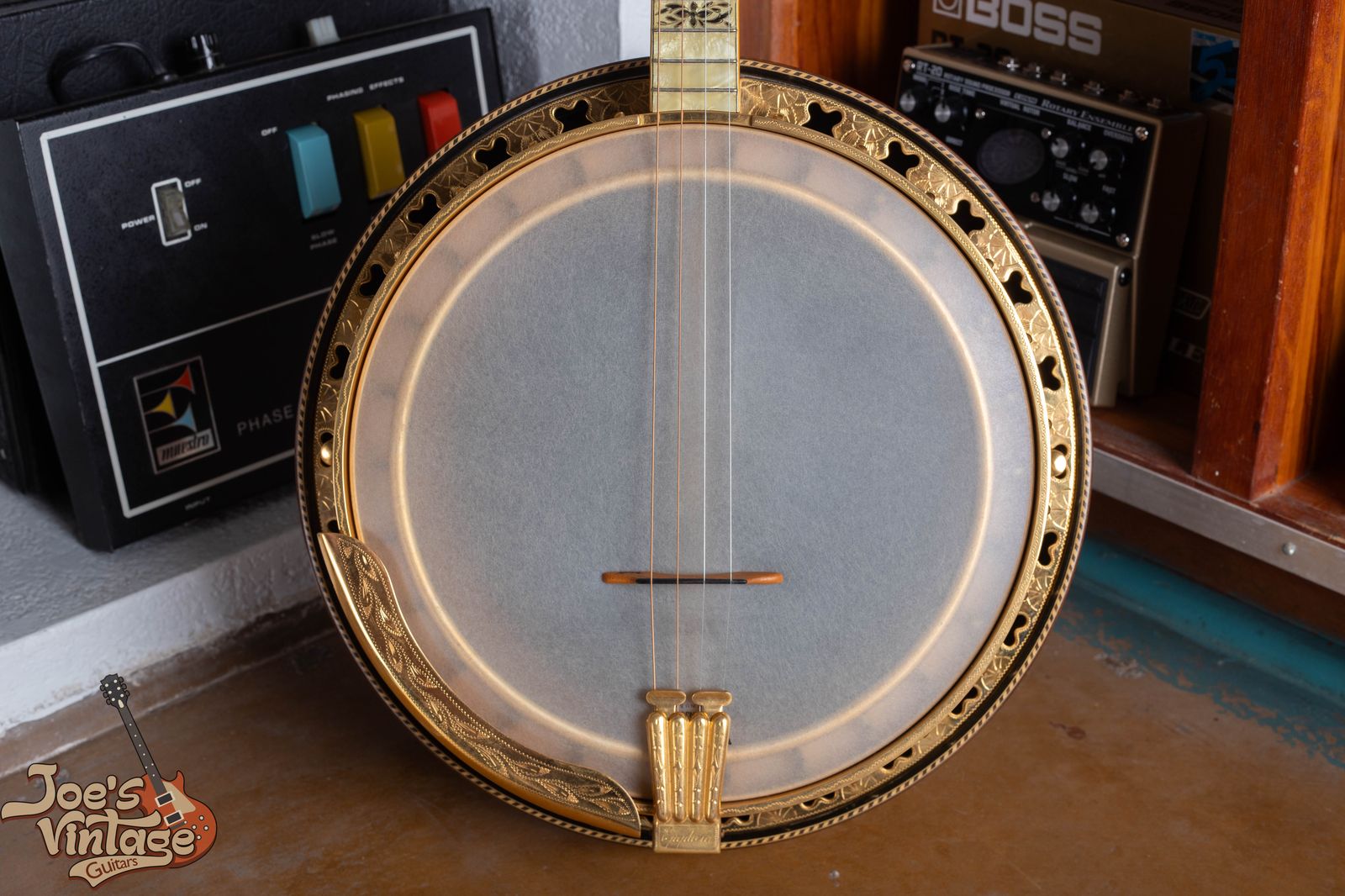
Pre-war Gibson Mastertone banjos — RB-3s, RB-4s, RB-5s — are among the most valuable fretted instruments in existence. Also buying ukuleles, resonator guitars, lap harps, and other vintage American stringed instruments of quality and historical interest.
More Than Just A Guitar
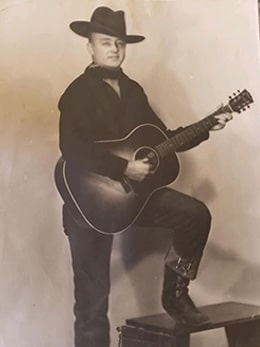
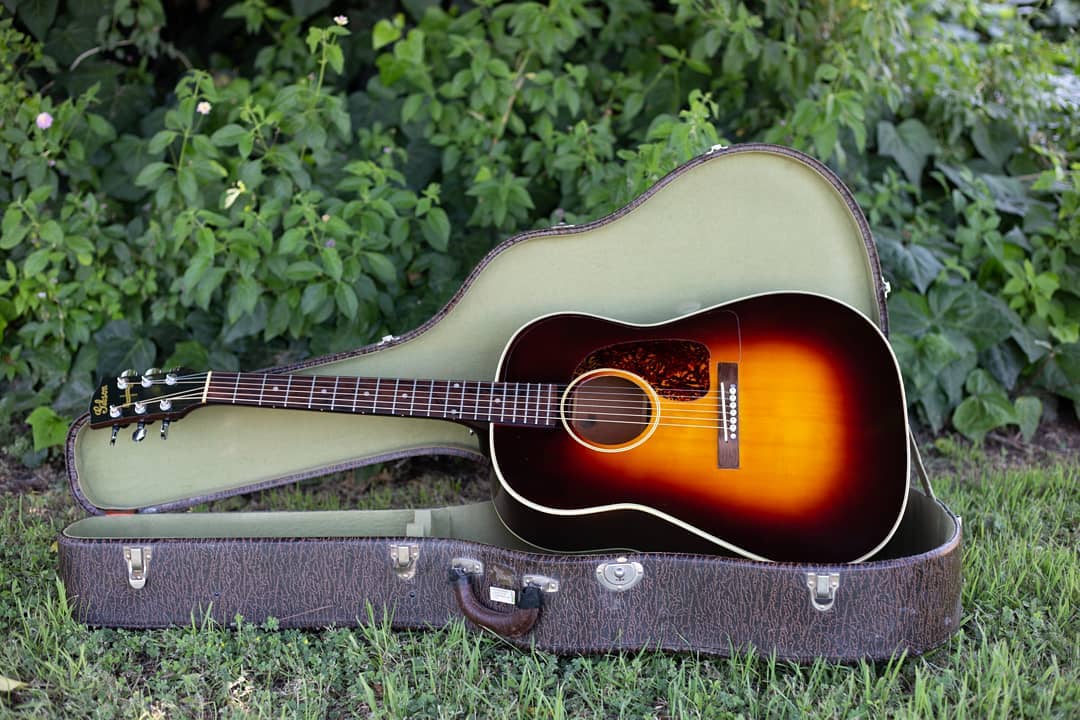
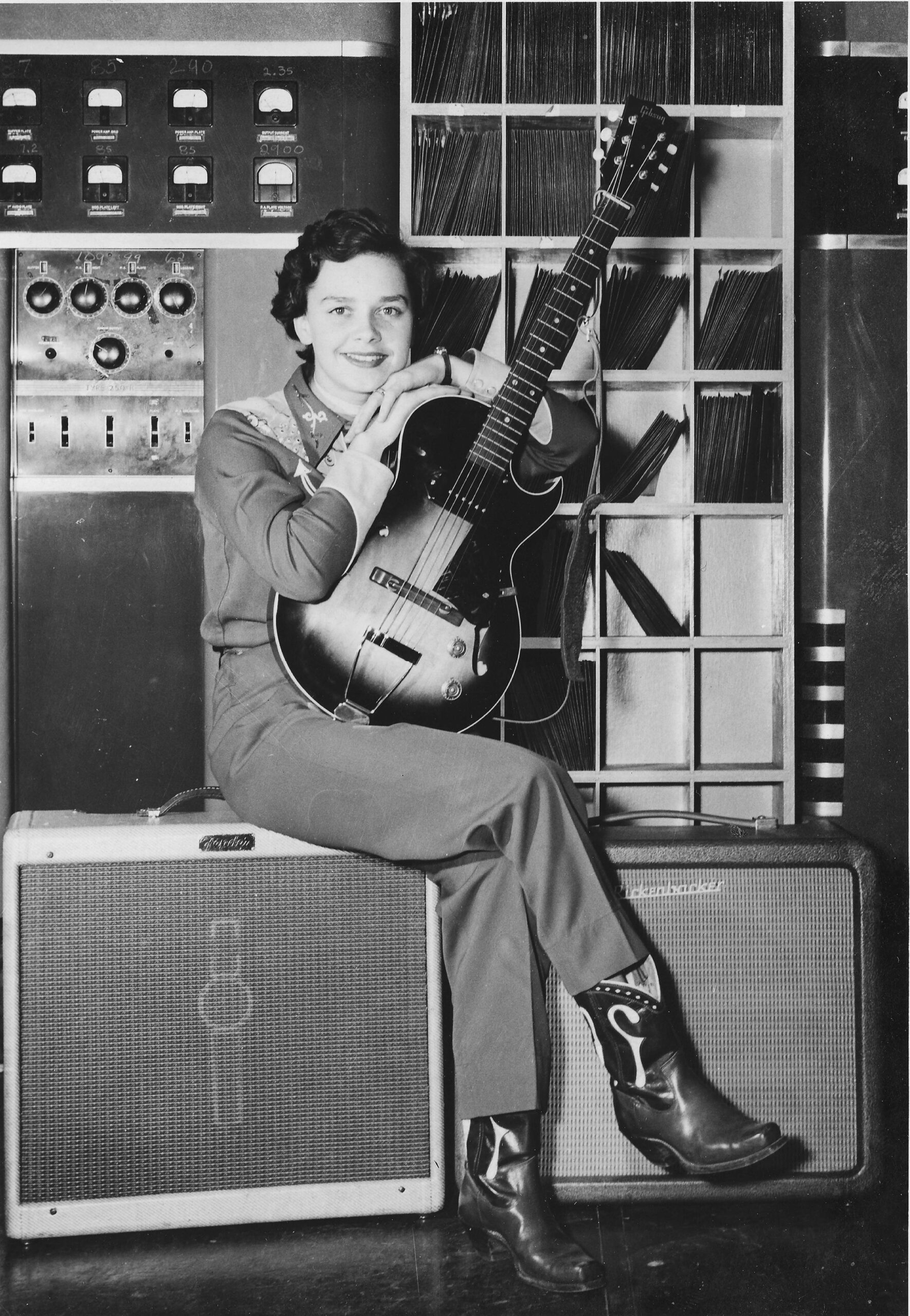
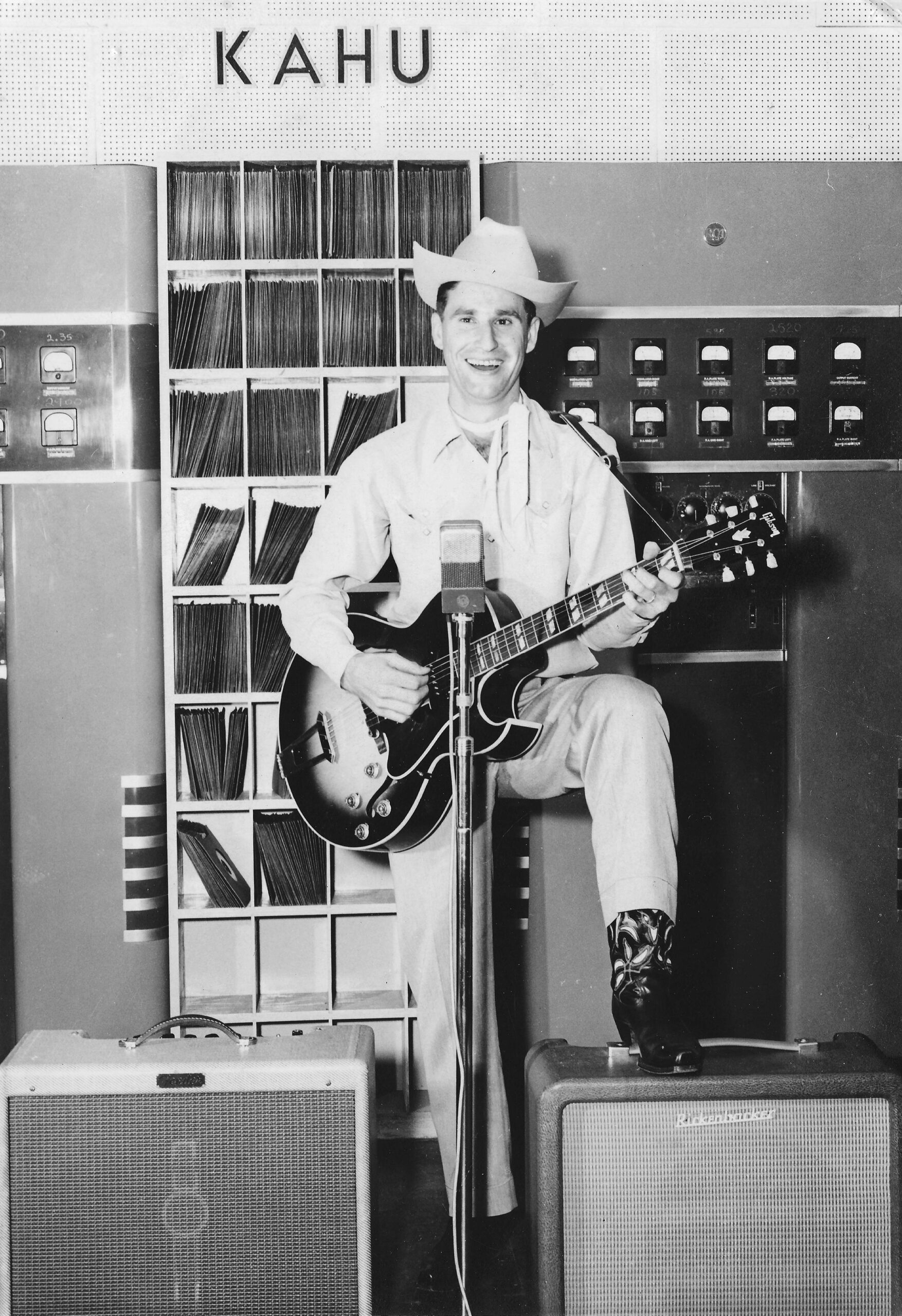
I have a profound passion for these remarkable instruments, and my goal is to ensure they continue to be cherished. I either play them myself or make sure they find their way into the hands of individuals who will care for them just as I do. The stories that accompany these guitars are immensely precious to me. When I acquire a guitar, what I cherish most is often a photograph of its original owner or stories about their life. I take the time to type up these stories, print them out, neatly fold them, and place them into the guitar’s case. I want these incredible musicians from another era to live on through their instruments. One such story is that of Walter M, a cowboy from Belen, NM, whose son sold me a wonderful Gibson J-45. Over to the right, you’ll find photos of a 19-year-old Walter with his beloved guitar while recording at a local radio station in 1945.
A Journey Through Time
I invite you to explore the rich history and evolution of iconic guitar brands and models. From the legendary craftsmanship of vintage Martin acoustics to the revolutionary designs of classic Fender and Gibson electric guitars, I appreciate the historical significance of every instrument I encounter.
Discovering Hidden Gems
My mission is to uncover hidden gems and forgotten treasures. I tirelessly search for guitars with exceptional stories, whether it’s a rare model from the early 20th century or a custom-built masterpiece from a renowned luthier. I believe that every vintage guitar has a tale to tell.

Preserving Musical Heritage
By acquiring and preserving vintage and collectible guitars, I contribute to the preservation of musical heritage. These instruments not only carry the memories of the musicians who played them but also represent milestones in the world of music.
Read Some Of My Clients’ Wonderful Stories
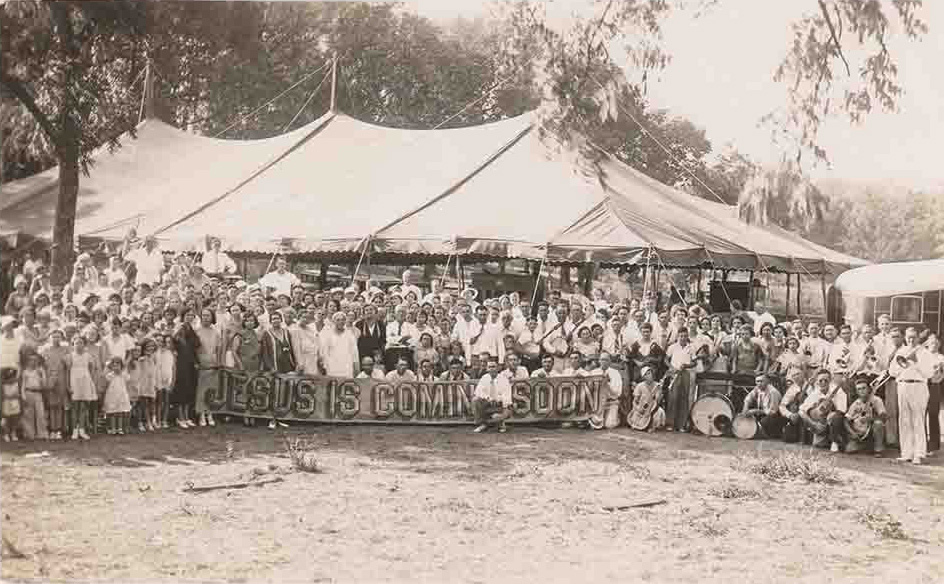
HomerI purchased this beautiful Gibson L-3 from the grandson of the original owner. I was so happy that he was willing to provide a nicely written history of his grandfather and his guitar.
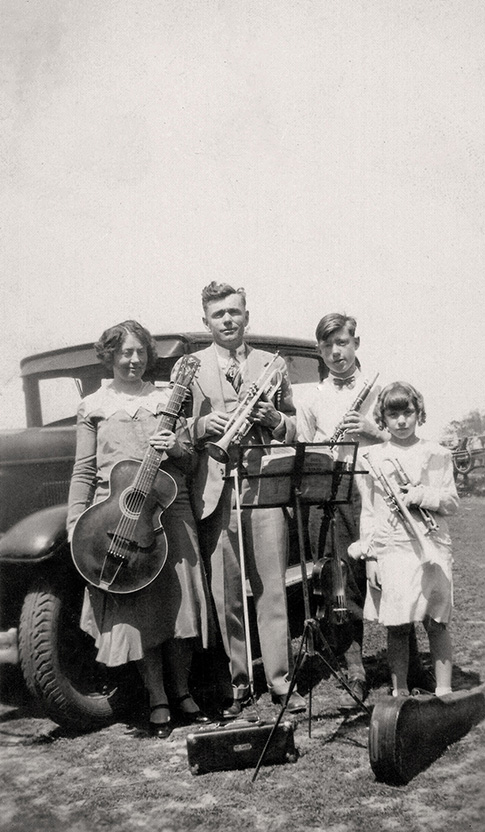
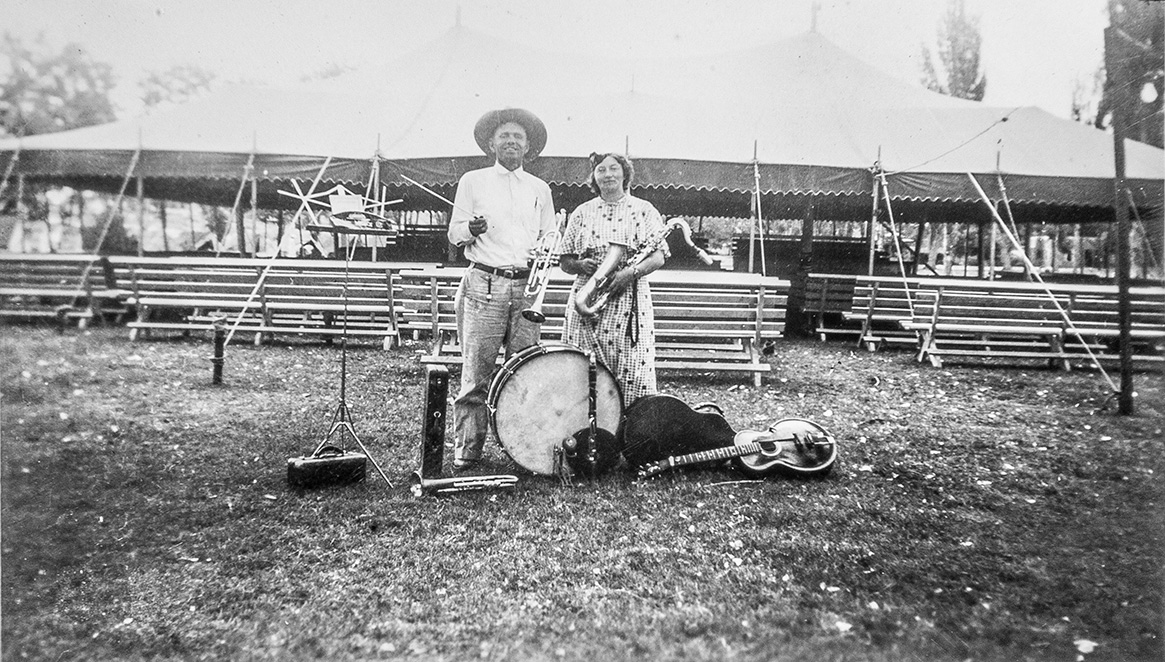
My grandfather Homer grew up a working cowboy. He began preaching around 1910. Because he continued to do ranch work, he became known as the cowboy preacher. The name stuck and off they went. He would assist ranchers around the country on his travels while holding the meetings. As a kid, to me he seemed to know every person in the country, including a few celebrities of his era.
The guitar was purchased new by my grandparents. I have been unable to find any evidence of where they bought it. My grandmother Pearl was the picker in the family, although she and my grandfather gave up playing by the early 50’s. The family business was travelling revivals and camp meetings, a very popular thing since the days of the circuit preacher who made the rounds marrying people and saving souls. Everyone in the family played at least one instrument well, and could make-do with others if needed. Local attendees to the tent revivals would bring their own instruments and turn the services into quite a raucous event sometimes. Any instrument was allowed, no matter your skill level or volume level! Music was extremely important to them. They used it very effectively.
The term camp meeting generally referred to gatherings (revivals) of more than a couple of days. I know the larger ones would last a week or so, and people would bring tents and other accommodations to the site to attend. I’m including a few photos so you can get an idea of what it was all about.
The Gibson is a true survivor, and deserves the respect I know you have for the history of guitars.
Patti & Howard
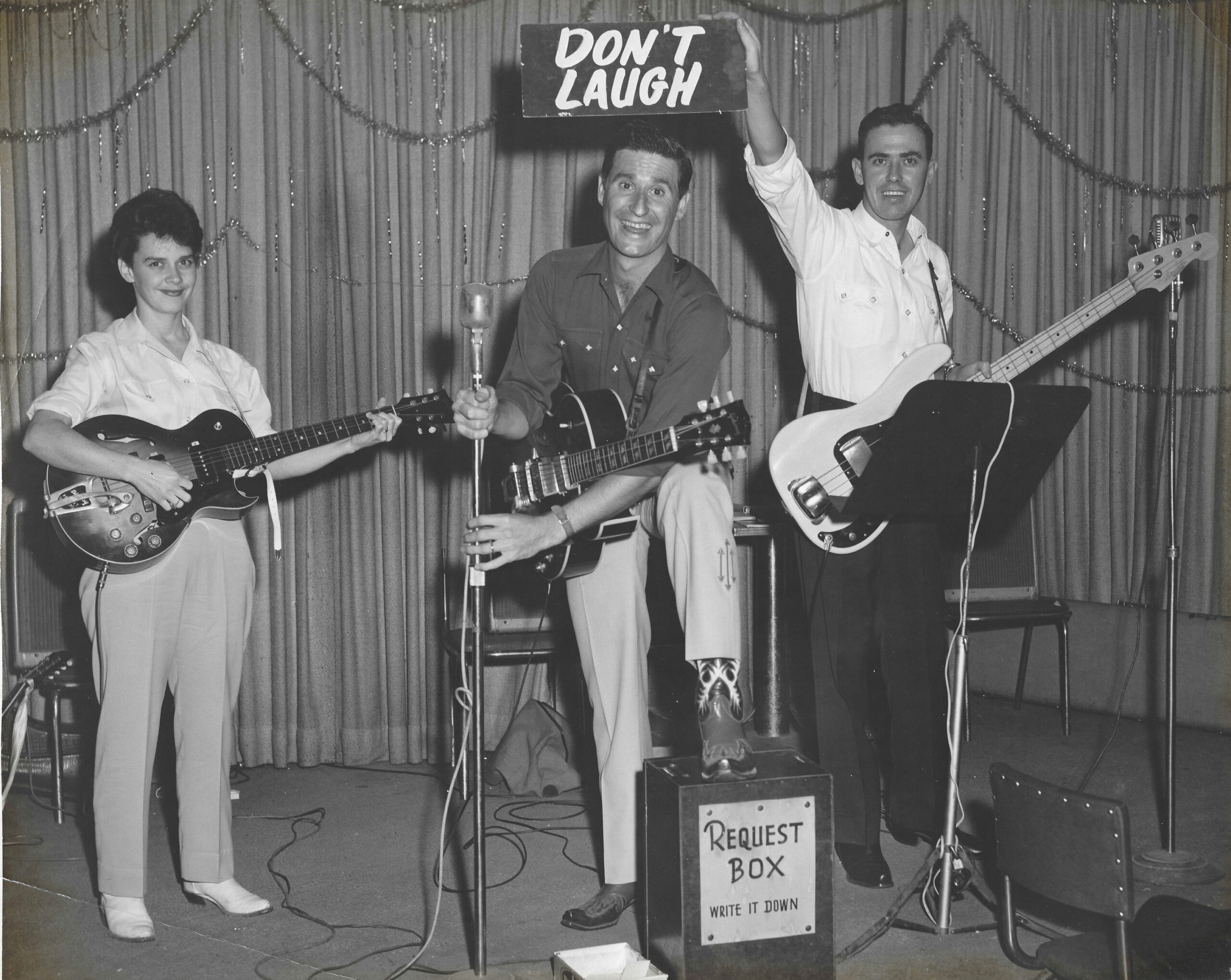
I purchased two Gibson guitars from the daughter of this lovely couple. Patti & Howard both began playing music at a young age and played together their whole married life. They backed many incredible country artists in the 50s, 60s and 70s and were even in Ferlin Husky’s backing band for a while. Patti was an absolutely incredible guitarist who was good friends with Roy Clark (and could play as well as him too!) and Howard was a great singer and rhythm guitar player. I have been helping their daughter scan all of their photos and digitize all of their music from all of the old tapes and records she has.
Linda Gayle
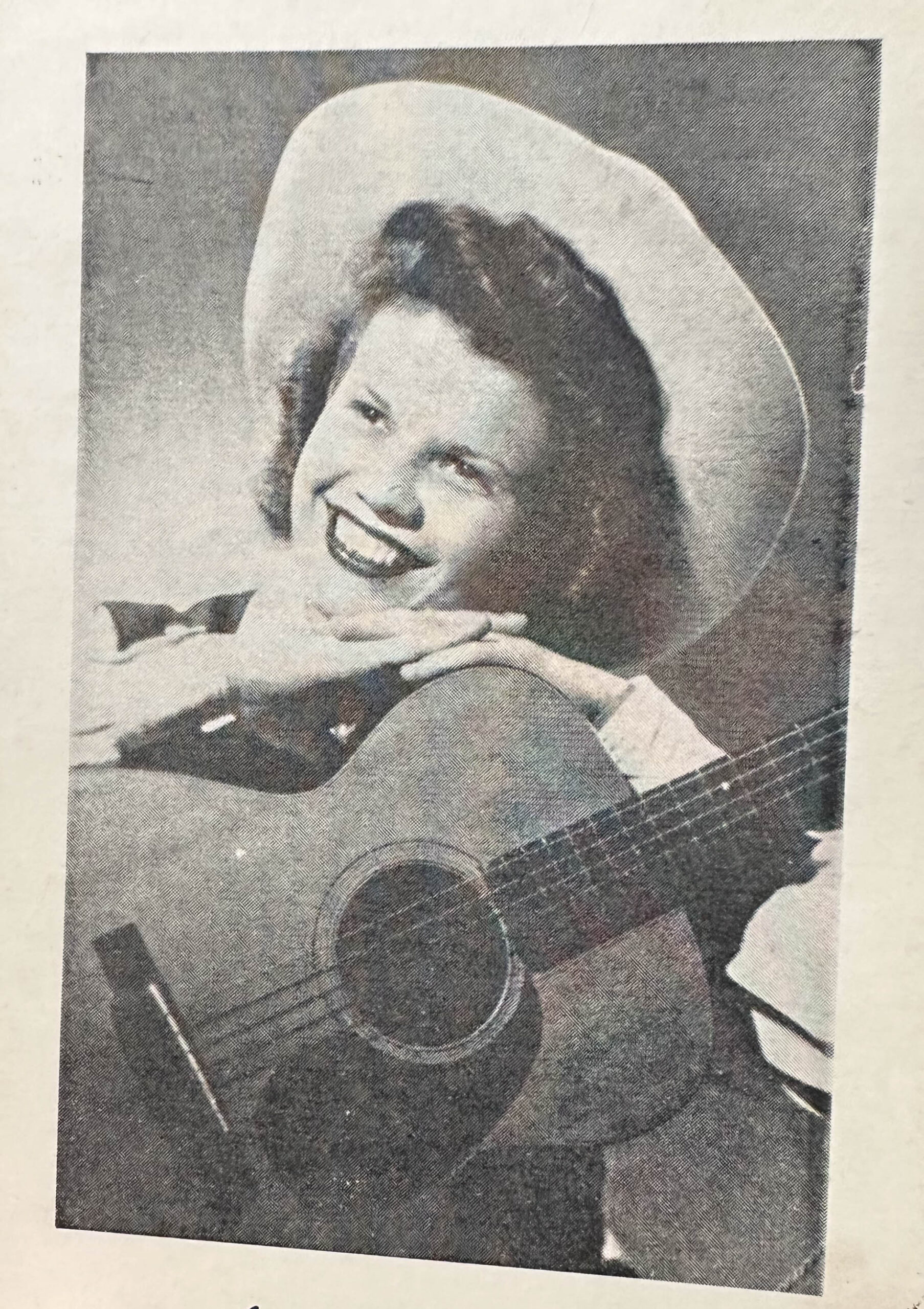
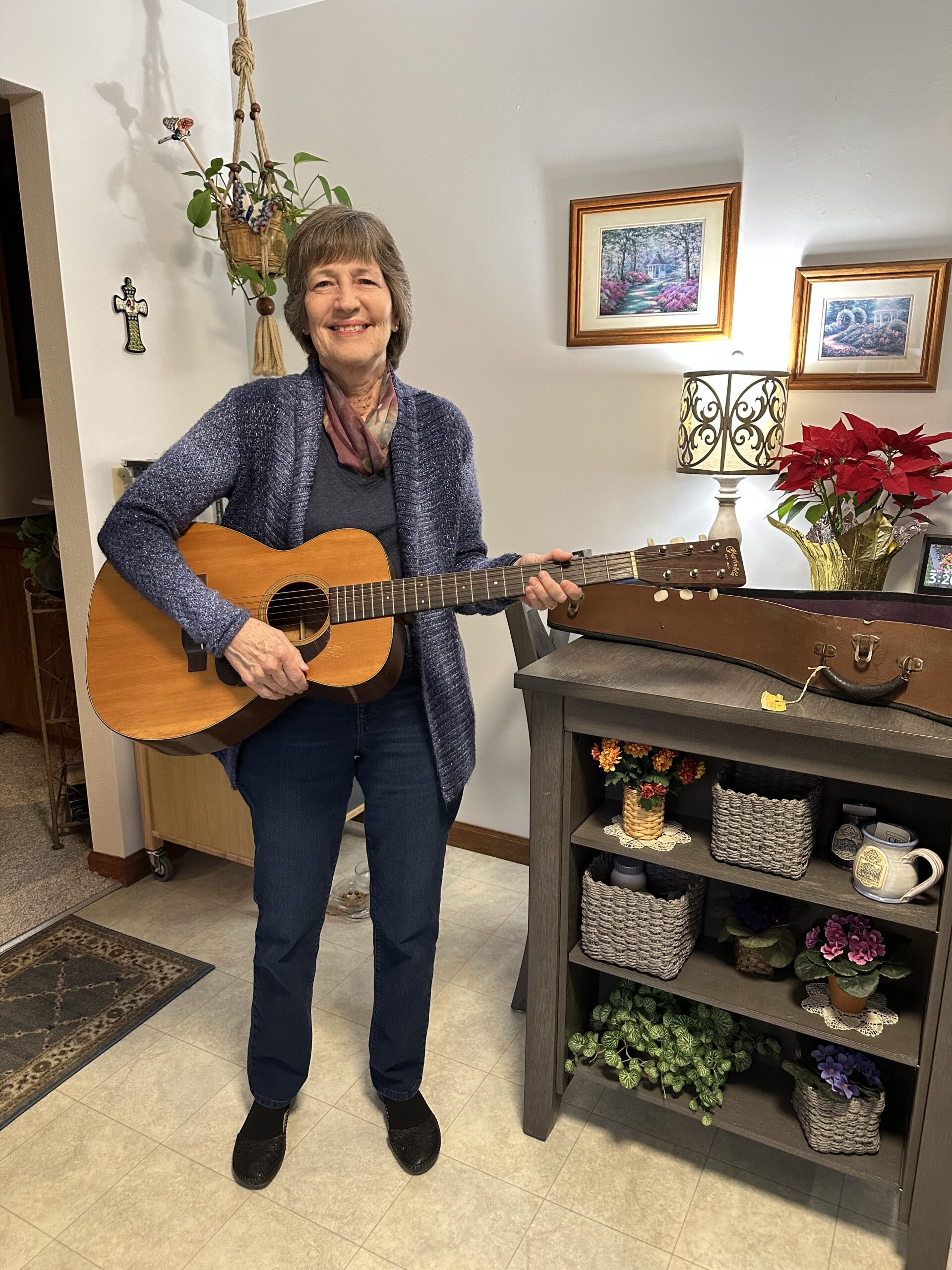
I purchased this lovely Martin 0-18 from the niece of the original owner. Linda Gayle was a country western musician from Iowa who toured around the state and played regularly on several local radio stations from an early age. She continued to play and sing her whole life but stopped performing when she started her family.
How to Prepare to Sell Your Guitar
If you plan to sell your vintage guitar yourself — whether locally, on Reverb, or on eBay — there's a standard set of steps most experienced sellers recommend before listing. This is especially true for higher-value instruments: a pre-CBS Fender Stratocaster, a 1950s Gibson Les Paul, a pre-war Martin D-28, or any guitar where originality and condition are the primary drivers of value. With vintage instruments, buyers can't physically inspect what you're selling — which means the burden of documentation, photography, and honest condition reporting falls entirely on you. Cutting corners at this stage typically results in lower offers, skeptical buyers, or worse, a completed sale that gets disputed after the fact. Here's what the full preparation process actually looks like, and how it compares to selling directly to Joe.
- 1 Research the market value. Spend time on Reverb, eBay sold listings, and guitar forums to understand what comparable instruments have actually sold for — not just asking prices.
- 2 Take a full set of high-quality photos. Buyers expect 15–25 clear images covering the front, back, headstock, serial number, frets, tuners, pickups, electronics, case, and any wear or repairs. Poor photos kill sales.
- 3 Have the guitar evaluated by a technician. A guitar tech can document the guitar's condition, identify any hidden issues, and verify originality — all of which affect your asking price and buyer confidence.
- 4 Consider a professional setup. Most buyers expect a vintage guitar to be playable. A full setup — fret leveling, nut work, intonation — can run $80–$200 and may or may not add that to your sale price.
- 5 Address any repairs. Loose braces, faulty electronics, tuner issues, or finish cracks should ideally be disclosed and, if affecting playability, repaired before listing — or heavily factored into your price.
- 6 Write a detailed, accurate listing. Experienced vintage buyers expect thorough descriptions including year, specs, finish, neck profile, weight, all known repairs, and provenance. Missing details invite low offers and skepticism.
- 7 Wait for the right buyer. Vintage guitars can sit on the market for weeks or months depending on the instrument, season, and platform. Meanwhile your money is tied up.
- 1 Take three photos on your phone. Front, back, and headstock is enough to get started. You don't need professional lighting, a special setup, or 25 angles.
- 2 Send them to Joe. Text or email the photos directly. Joe will respond with an honest assessment and a fair offer — typically within 24 hours.
- 3 Accept or decline — no pressure. If you like the offer, Joe handles everything from there. If you don't, there's no obligation and no hard feelings.
- 4 No setup or repairs needed. Joe buys guitars as-is. He handles all repairs and setups in-house. You don't need to spend money preparing an instrument before selling it.
- 5 Get paid the same day. Once you accept, payment is sent immediately — no waiting for a buyer, no payment holds, no disputes.
How to Ship Your Guitar Once It's Sold
Shipping a vintage guitar safely is one of the most underestimated parts of selling one — and one of the most common places things go wrong. The headstock is the single most frequently broken component in transit, typically from inadequate bracing inside the case. Beyond physical damage, most sellers don't realize that standard carrier declared value coverage — the insurance you purchase at the FedEx or UPS counter — explicitly limits or excludes claims on musical instruments in many circumstances, particularly when damage is attributed to "inadequate packaging." For any guitar worth over $1,000, standard carrier coverage is rarely sufficient on its own. Add to that the humidity and temperature swings in cargo holds during long-distance ground or air shipment, and the risk to an unbraced, over-tensioned neck becomes real. Done correctly, shipping a vintage guitar requires specific materials, a methodical packing process, third-party insurance, and proper documentation. Here's what that looks like — and why most sellers who've done it once are relieved to never have to do it again.
- 1 Detune the strings. Before packing, detune all strings to relieve tension on the neck during transit. Temperature and pressure changes in cargo holds can cause significant neck movement under full string tension.
- 2 Pack the headstock carefully. The headstock is the most commonly broken part in transit. It should be individually wrapped in bubble wrap and braced so it cannot move independently inside the case.
- 3 Use a hard case, then box it. The guitar should be in a hard case, which then goes inside a purpose-built guitar shipping box (or a double-walled cardboard box) with at least 3 inches of packing material on all sides.
- 4 Photograph your packing job. Before sealing the box, photograph every layer of packing as proof of how the guitar was shipped — essential documentation if a damage claim is filed.
- 5 Purchase third-party shipping insurance. Standard carrier insurance typically does not cover musical instruments adequately. You'll need a specialist policy — most sellers use a third-party insurer like DSP (Dallas Specialty) or a rider on their homeowner's policy.
- 6 Choose the right carrier. FedEx and UPS are preferred for vintage instruments. USPS and standard ground services are generally not recommended for high-value guitars.
- 7 Get a signature on delivery. Always require a signature confirmation on delivery for any instrument worth over a few hundred dollars. Without it, "delivered" is the end of your recourse if something goes wrong.
- 1 Take it to any FedEx location. Give them Joe's account number — that's it. No label to print, no box to find, no packing materials to buy. FedEx will professionally pack and ship the guitar on Joe's account at no cost to you.
- 2 Get paid when you drop it off. In most cases, payment is sent the moment the guitar is dropped at FedEx — not when it arrives, not after inspection. Your money is on its way before you leave the parking lot.
- 3 Your liability ends at the door. The moment you hand the guitar to FedEx, the transaction is complete. You have no further responsibility — no tracking to monitor, no damage risk, no waiting for delivery confirmation. It's done.
- 4 Full insurance is covered by Joe. Every shipment is fully insured through transit at Joe's expense. If anything happens in shipping, that's Joe's problem — not yours.
Other Places to Sell Your Vintage Guitar
There's no single right answer to where you should sell a vintage guitar — the best option depends on the instrument, your timeline, and how much risk and effort you're willing to take on. A $400 student-grade acoustic and a $12,000 Jazzmaster from the 60s are not the same selling problem. For lower-value instruments, platform fees are a smaller percentage of the sale and the stakes of a buyer dispute are manageable. For rare, high-value, or historically significant guitars — the kind where authenticity, condition, and provenance drive the price — the calculus changes significantly. Platforms like eBay and Reverb have buyer protection policies that, in practice, heavily favor the buyer in the event of a dispute, including disputes that amount to little more than buyer's remorse. A seller can do everything right — accurate description, thorough photos, honest condition report — and still lose a dispute if a buyer decides they want their money back. That's not a hypothetical: it's a routine experience for sellers of vintage instruments on both platforms. The chart below gives an honest comparison of your options so you can make the right decision for your specific situation.
| eBay | Reverb | Craigslist / FB Marketplace | Local Dealer / Pawn | Joe's Vintage Guitars | |
|---|---|---|---|---|---|
| Seller Fees | ~13.25% final value fee + PayPal/payment fees | ~8% seller fee + 3% payment processing | None but cash-only risk | None — but offer reflects their resale margin (typically 40–60% of retail) | Zero fees — what Joe offers is what you receive |
| Speed of Sale | Days to weeks depending on listing format and demand | Days to months — vintage guitars can sit | Variable — fast if local demand exists, slow otherwise | Same day — but at a significant price discount | Same day — offer within 24 hrs, payment on acceptance |
| Who Sets the Price | You — but market pressure and buyer offers drive final price down | You — but low offers and "watchers" are common | You — but lowball offers are the norm | The dealer — based on what they can resell it for | Joe — based on real current market value, not resale margin |
| Buyer Dispute Risk | High — eBay heavily favors buyers. "Not as described" claims can result in forced returns even months after sale, with seller bearing return shipping costs. | Medium–High — Reverb's buyer protection policy can side with buyers in disputes even when seller descriptions were accurate. Buyer's remorse returns do happen. | Low — cash sales are final, but scams, counterfeit bills, and safety risks are real considerations for high-value instruments. | None — once sold, it's sold. No disputes. | None — Joe assumes all risk once he makes an offer. No chargebacks, no returns, no disputes. |
| Expertise of Buyer | Unknown — buyers range from serious collectors to casual buyers who may later claim misrepresentation | Generally higher than eBay, but still variable | Unknown and unverifiable | Variable — general pawn shops rarely have vintage guitar expertise | 12+ years, 10,000+ instruments appraised. Joe will know exactly what you have. |
| Shipping Responsibility | Seller packs, ships, insures, and bears risk if damaged in transit | Seller packs, ships, insures, and bears risk if damaged in transit | Local pickup — no shipping required | You bring it in — no shipping | Joe provides his FedEx account number — FedEx packs it, ships it, and insures it at Joe's expense. You get paid at drop-off. Your liability ends the moment you leave the store. |
| Best For | Common, lower-value instruments where fees are a smaller percentage of sale price | Mid-range vintage guitars where the buyer base is knowledgeable and the seller has time to wait | Lower-value, easy-to-move instruments where convenience matters more than price | Situations where speed is the only priority and price is secondary | Rare, valuable, or sentimental instruments where fair value, expertise, and a smooth process matter |
* Platform fees and policies are subject to change. eBay and Reverb buyer protection policies have historically favored buyers in disputes, including cases of buyer's remorse. Always review current terms before listing.
Meet Joe Dampt — Vintage Guitar Expert & Nationwide Buyer
12 Years · 10,000+ Instruments · Trusted by Sellers Across the U.S.
Most of the guitars I buy come with a story. A father’s first electric. A guitar that toured the country in the back of a station wagon. An instrument that sat in a closet for 40 years waiting for the right home. Those stories matter to me — I document them, keep them with the instrument, and make sure they don’t get lost.
I’m not just a buyer — I’m a player and a repairman who grew up on the music of Hank Garland, Merle Travis, and Chet Atkins. My guitars of choice are Gibson archtops, Gretsch hollowbodies, and Fender Telecasters and offsets — the same instruments I buy from sellers every day. When you send me a photo of a 1950s ES-175 or a Gretsch Country Gentleman, I’m not looking it up. I already know what it is, what it’s worth, and why it matters.
Every guitar that comes through my shop gets a proper evaluation and any needed repairs done in-house — by me, not a technician I’ve never met. That’s how I’d want my own instruments treated, and it’s how I treat yours.
Guitars We’ve Recently Bought — And the Sellers Behind Them
Every guitar that comes through Joe's Vintage Guitars has a story behind it. Here are a few of the sellers we've worked with recently — real people, real instruments, and the stories that came with them. From a 1952 Telecaster that flew across the country to a near-mint Jazz Bass that spent 40 years with one owner, these are the kinds of transactions we do every day.

This one was special enough that we flew to Washington to pick it up in person. The Telecaster belonged to Joshua's uncle — one of the earliest production Teles ever made, and in remarkable condition. It'll be played for decades to come.
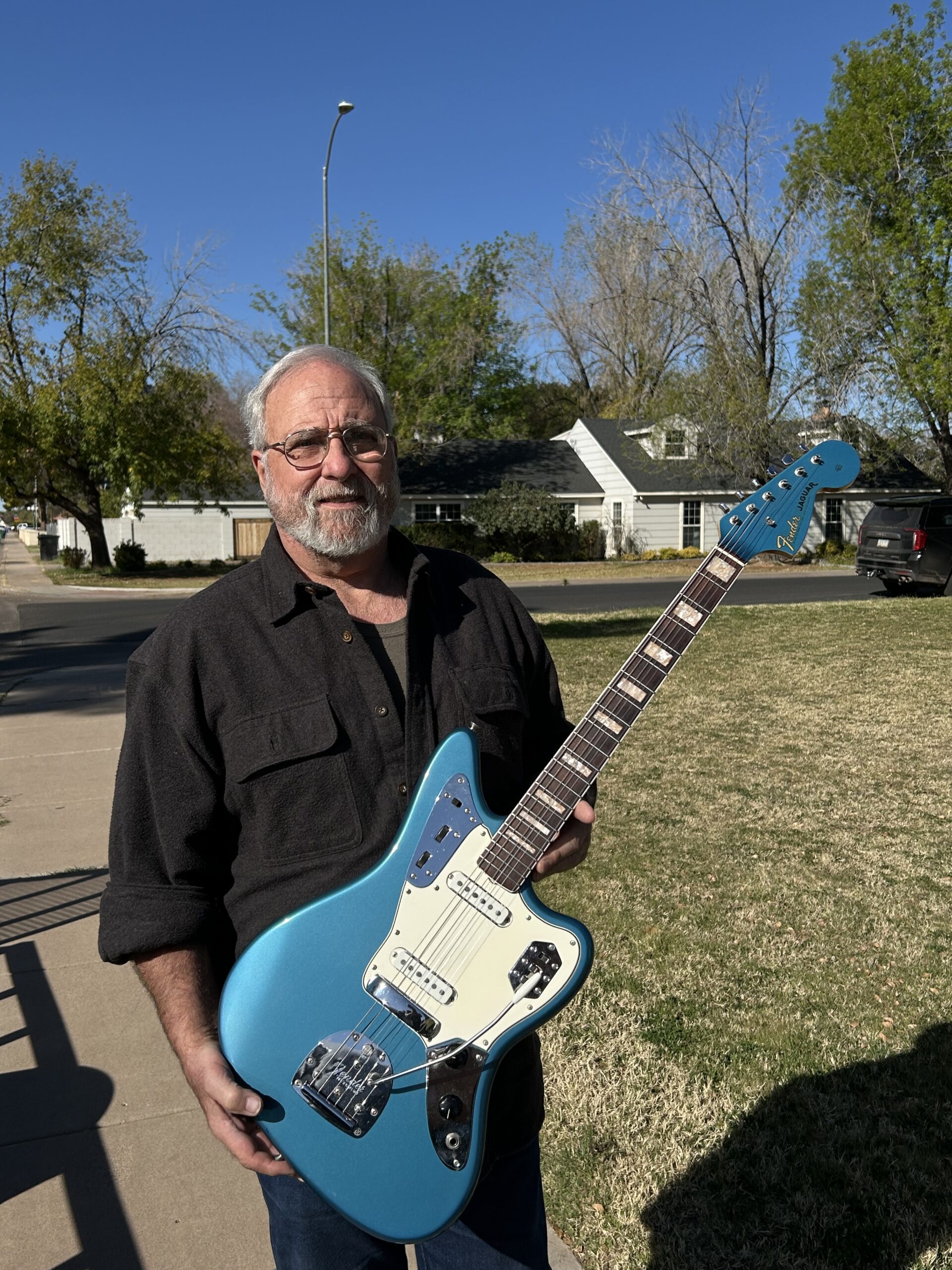
Bill's father bought him this 1966 Jaguar in the rare Lake Placid Blue finish when he was young. Decades later, it came to us in beautiful original condition. Custom color Fenders from this era are significantly rarer than their sunburst counterparts — and that rarity adds meaningful value.
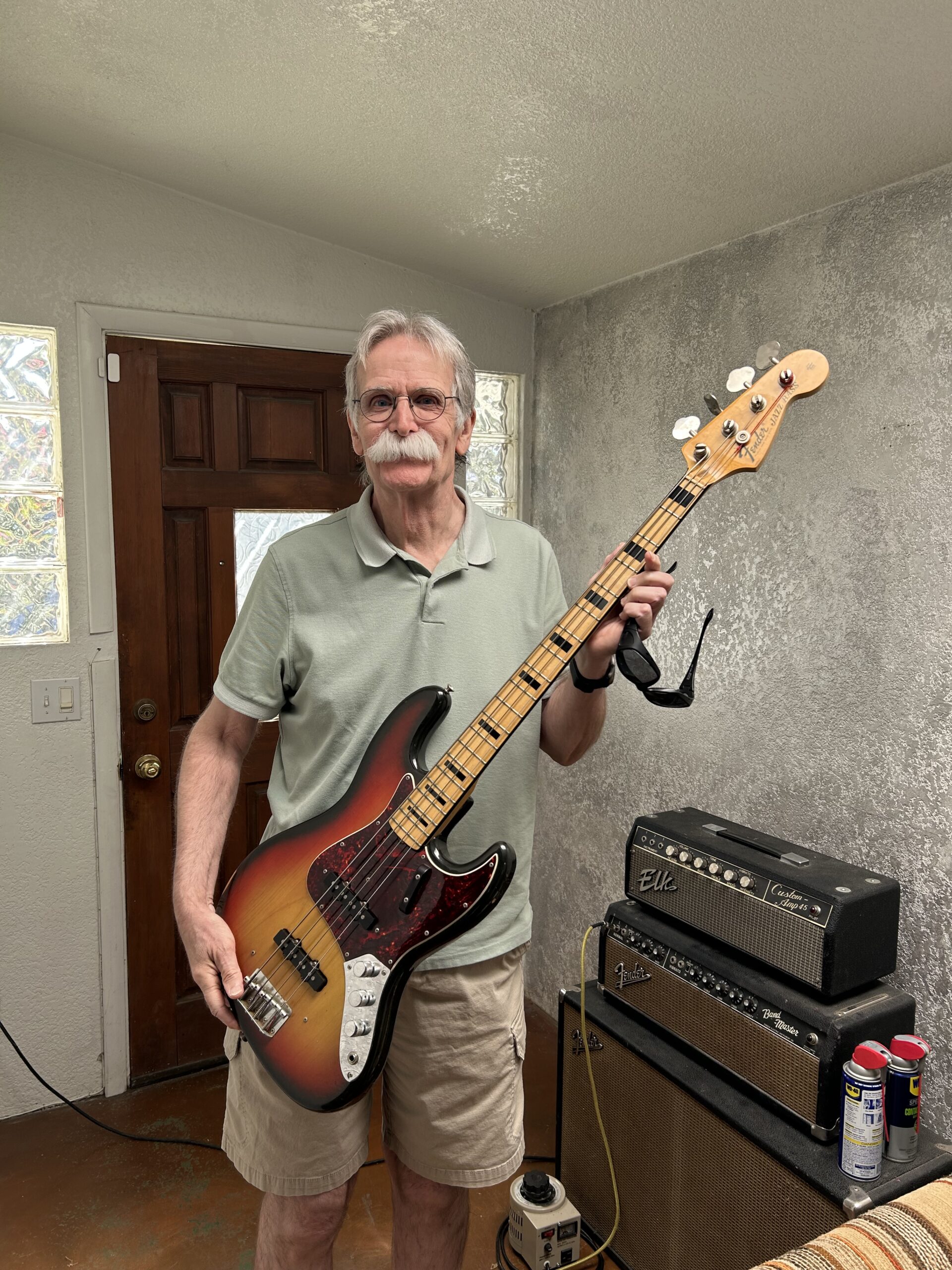
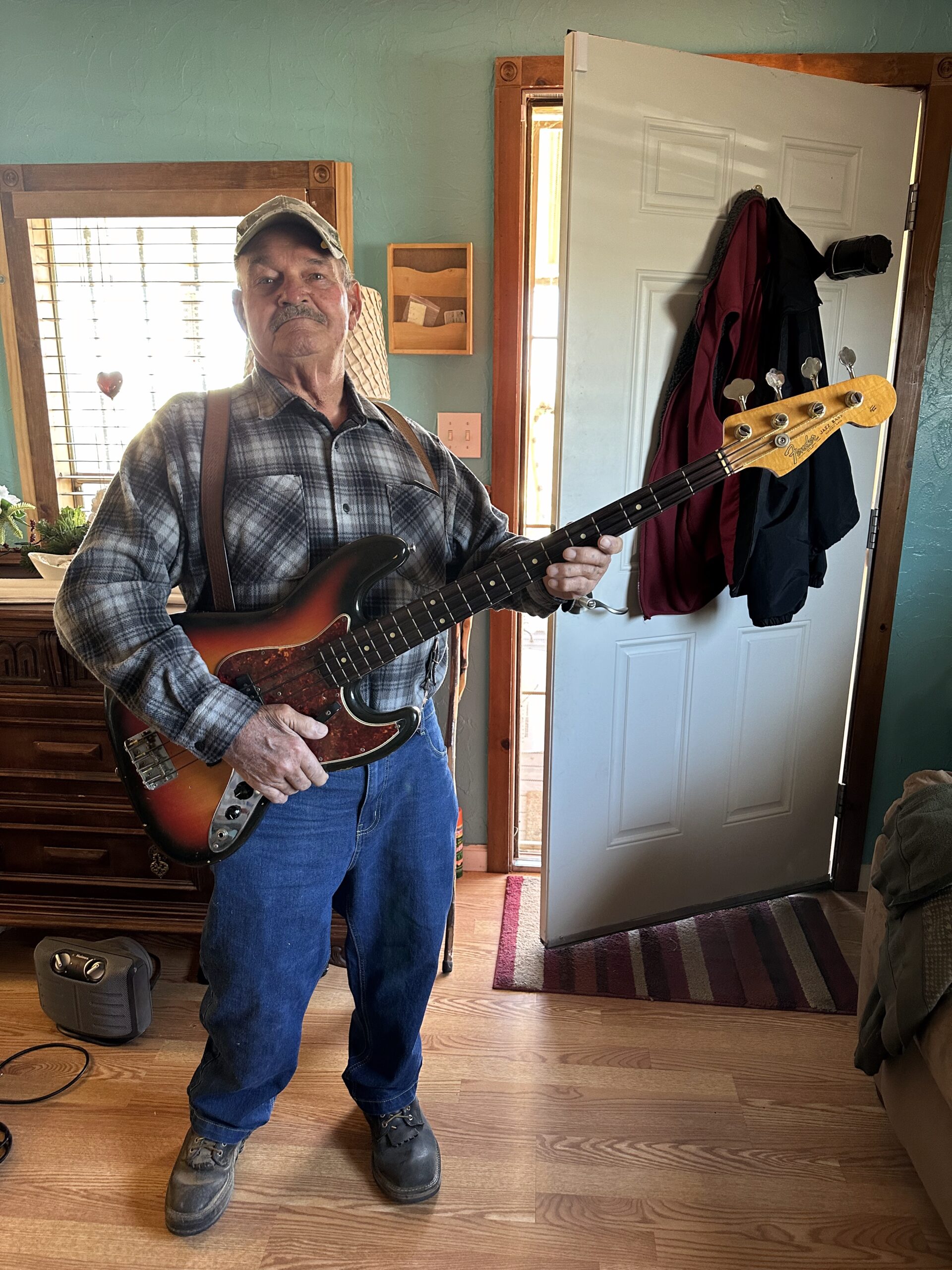
Jim owned this 1972 Jazz Bass for 40 years and kept it in near-mint condition — a genuine rarity for an instrument of that age. He also happens to have one of the finest moustaches of any seller we've ever had the pleasure of working with.
Your Guitar Has a Story Too Whether it's been in your family for decades or you just inherited it, Joe would love to hear about it — and make you a fair offer.
Get a Free Offer

