


A clean 1955 to 1959 Gibson J-45 has a guide range of $7,000 to $9,000 in excellent condition with original parts and the original case. Earlier Banner guitars and later square-shoulder examples sit in different ranges. I reviewed these values in October 2026 and assess repairs and originality separately.
For model identification, use my Gibson J-45, J-50 and Southern Jumbo identification guide. The ranges assume the guitar has been identified and focuses on its value, the condition the ranges require and what an owner needs for an appraisal.
J-45 Values By Year
Every year from 1942 through 1979 appears below. Several years share an era range. I still assess the guitar’s exact configuration and condition before narrowing its value.
The figures assume an all-original guitar in excellent condition with its original case and no structural repairs. A quality refret is accepted maintenance, although it removes museum-quality status. Changed parts, damaged wood and uncertain work histories require different comparisons.
| Year | Configuration | Value Range |
|---|---|---|
| 1942 | Banner, combined wood references | $10,000 to $17,000 |
| 1943 | Banner, combined wood references | $10,000 to $17,000 |
| 1944 | Banner, combined wood references | $10,000 to $17,000 |
| 1945 | Banner, combined wood references | $10,000 to $17,000 |
| 1946 | Early postwar and small-guard era | $8,000 to $14,000 |
| 1947 | Early postwar and small-guard era | $8,000 to $14,000 |
| 1948 | Early postwar and small-guard era | $8,000 to $14,000 |
| 1949 | Early postwar and small-guard era | $8,000 to $14,000 |
| 1950 | Small-guard postwar era | $8,000 to $10,000 |
| 1951 | Small-guard postwar era | $8,000 to $10,000 |
| 1952 | Small-guard postwar era | $8,000 to $10,000 |
| 1953 | Small-guard postwar era | $8,000 to $10,000 |
| 1954 | Small-guard postwar era | $8,000 to $10,000 |
| 1955 | Large-guard sunburst era | $7,000 to $9,000 |
| 1956 | Large-guard sunburst era | $7,000 to $9,000 |
| 1957 | Large-guard sunburst era | $7,000 to $9,000 |
| 1958 | Large-guard sunburst era | $7,000 to $9,000 |
| 1959 | Large-guard sunburst era | $7,000 to $9,000 |
| 1960 | Standard sunburst, including body transition | $3,000 to $7,000 |
| 1961 | Standard sunburst, including body transition | $3,000 to $7,000 |
| 1962 | Standard sunburst, including body transition | $3,000 to $7,000 |
| 1963 | Standard sunburst, including body transition | $3,000 to $7,000 |
| 1964 | Standard sunburst, including body transition | $3,000 to $7,000 |
| 1965 | Standard sunburst, including body transition | $3,000 to $7,000 |
| 1966 | Standard sunburst, including body transition | $3,000 to $7,000 |
| 1967 | Standard sunburst, including body transition | $3,000 to $7,000 |
| 1968 | Standard sunburst, including body transition | $3,000 to $7,000 |
| 1969 | Standard sunburst, including body transition | $3,000 to $7,000 |
| 1970 | Square-shoulder J-45 and Deluxe | $2,500 to $3,000 |
| 1971 | Square-shoulder J-45 and Deluxe | $2,500 to $3,000 |
| 1972 | Square-shoulder J-45 and Deluxe | $2,500 to $3,000 |
| 1973 | Square-shoulder J-45 and Deluxe | $2,500 to $3,000 |
| 1974 | Square-shoulder J-45 and Deluxe | $2,500 to $3,000 |
| 1975 | Square-shoulder J-45 and Deluxe | $2,500 to $3,000 |
| 1976 | Square-shoulder J-45 and Deluxe | $2,500 to $3,000 |
| 1977 | Square-shoulder J-45 and Deluxe | $2,500 to $3,000 |
| 1978 | Square-shoulder J-45 and Deluxe | $2,500 to $3,000 |
| 1979 | Square-shoulder J-45 and Deluxe | $2,500 to $3,000 |
The Banner range covers several top-wood configurations. The 1960s range includes the standard sunburst model’s body transition, with rare factory colors and special provenance assessed separately. I identify those features before placing a guitar within a band.
The ranges assume clean, original guitars in the condition described above. Repairs, replacement parts and substantial wear need separate consideration.
The Banner Years
The 1942 to 1945 Banner range is $10,000 to $17,000 across the wood configurations covered here. The decal alone doesn’t establish that value. Construction, originality and repairs determine which part of the range fits.
I keep the Banner group separate from postwar J-45s. A seller’s broad wartime date can be enough to begin research, but it isn’t enough to claim a precise year or a specific wood premium. The identification page handles those questions before a final valuation.
Changed parts, bridge-plate work and unresolved service needs affect the appraisal. A broad condition label doesn’t erase those details. I want to understand the actual work and current playing condition.
An instrument with a celebrity story also needs separate treatment. A claimed association isn’t an ordinary model characteristic and doesn’t belong in a general price band. Documented ownership must support any provenance premium.
Early Postwar And Small-Guard Guitars
The 1946 to 1949 range is $8,000 to $14,000. The 1950 to 1954 small-guard group sits at $8,000 to $10,000. Both assume excellent, original condition with the original case.
The distinction between an original finish and a refinished guitar can be larger than the difference between adjacent years. I assess the date alongside the complete condition description. A well-repaired instrument may be an appealing player while belonging outside the clean reference.
A replacement bridge, added pickup or more extensive repair can put a guitar below the clean-original range. The quality and extent of the work determine the repair deduction.
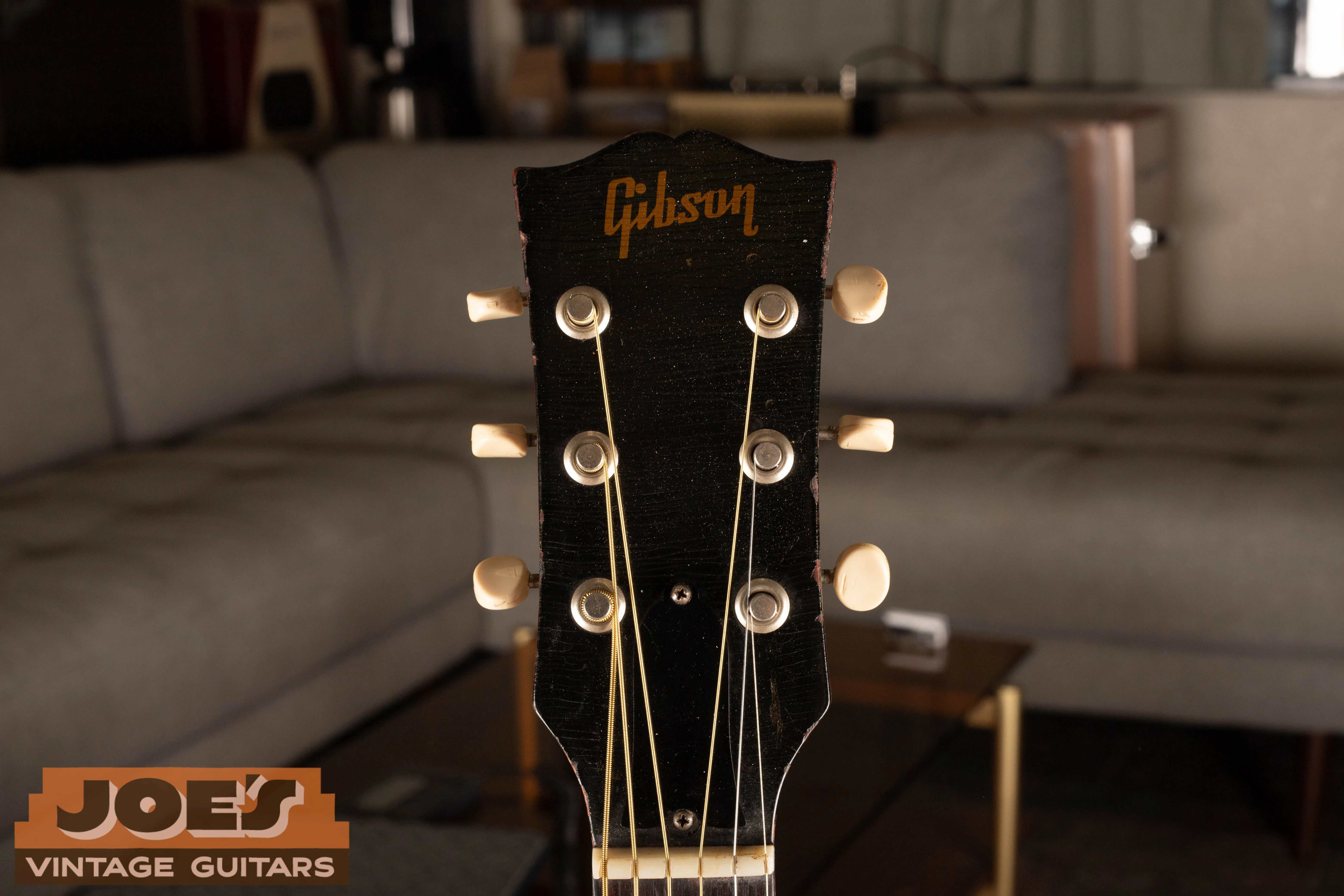
The Case Belongs In The Description
The table assumes the original case. A modern flight case or newer Gibson case can provide good protection, but it doesn’t meet that assumption. A period-looking case also needs more evidence before it is described as original to the guitar.
I keep case details separate from the instrument’s structural condition. A missing original case doesn’t explain a repaired headstock, and a desirable case doesn’t cancel a changed bridge. Both belong in the appraisal record.
Later 1950s Values
For 1955 to 1959, the guide range is $7,000 to $9,000. Non-scalloped bracing arrives in 1955, separating these guitars from the earlier scalloped-brace construction. Each year uses that shared band. I assess condition and originality before assigning a value within it.
This is a useful place to separate a guitar’s age from its present state. An original finish, documented maintenance and a clear parts history make comparisons easier. A listing that says only that the guitar plays well leaves several valuation questions unanswered.
Replacement tuners may be accompanied by the originals, or the original parts may be gone. That distinction should be recorded without assuming the instrument can simply be returned to untouched condition. Any related holes or other alterations are part of the actual guitar.
Send photographs with the guitar and its loose parts as they stand. The first appraisal should describe the instrument as it is. Removed parts and repair receipts can be photographed alongside it.
A 1960s J-45 Needs Its Configuration
The standard sunburst 1960s envelope is $3,000 to $7,000. That is the widest construction span in this table: it includes earlier round-shoulder examples and the later body transition. A confirmed configuration is needed before choosing a narrower comparison.
My identification guide explains the dating markers. Here, the consequence is that a late square-shoulder guitar shouldn’t be compared automatically with an early round-shoulder one. Sharing the J-45 name doesn’t make every specification or market category identical.
Adjustable-bridge examples and guitars converted to fixed saddles also need clear descriptions. A saddle is the piece that supports the strings at the bridge. A conversion can affect the appraisal even when the owner prefers the way the guitar plays.
Factory Colors And Altered Finishes
The main table covers standard sunburst guitars in the configurations described. The original color and condition need to be confirmed before assigning a premium. An unusual finish needs authentication and an individual appraisal.
A faded finish and a replaced finish aren’t the same condition. Nor does a bright-looking guitar automatically belong at the top of the range. The appraisal depends on what the finish is, its history and the rest of the instrument.
A transition-year guitar needs its actual construction checked. I wouldn’t force uncertain features into one category merely because a serial number suggests a particular year.
Square-Shoulder J-45 And Deluxe Values
The combined 1970 to 1979 reference is $2,500 to $3,000. These guitars have their own market and construction details. Each annual row repeats the clearly labeled 1970s reference.
A clean, playable early example differs from one with high action or binding work. The table assumes the guitar is structurally sound and properly playable. I assess repair and service needs separately.
The table stops at 1979 because that is the vintage span covered here. Later originals and modern reissues aren’t included. A model name on a newer guitar doesn’t place it in one of these rows.
The J-50 And Southern Jumbo Are Separate Models
The J-50, Southern Jumbo and J-45 share enough family resemblance to cause mistaken comparisons. I keep their identities separate before discussing price. A natural top or more elaborate trim doesn’t create an automatic addition to the J-45 range.
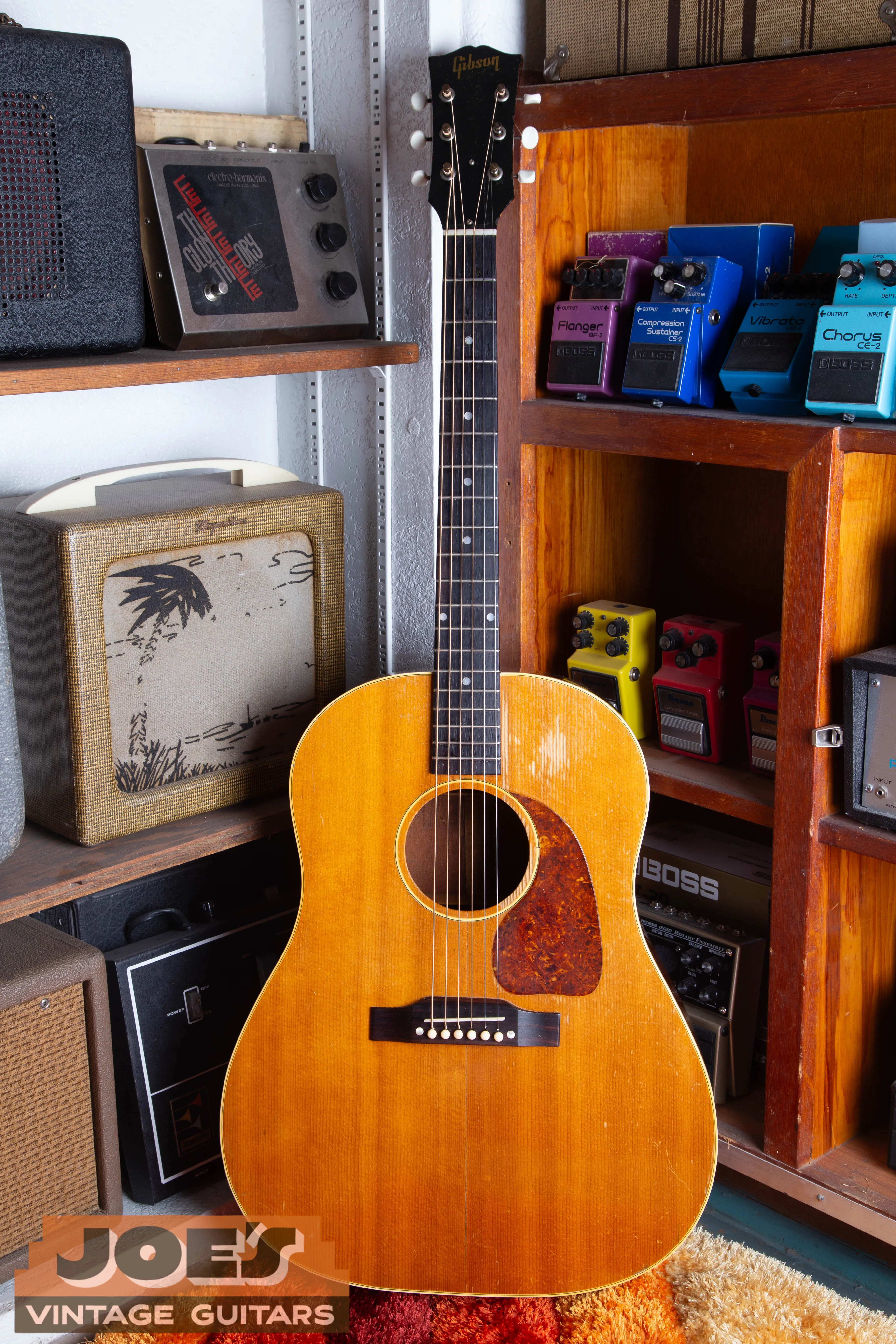
The J-50 has a natural top and its own model history. Its year, construction and condition require a J-50 comparison.
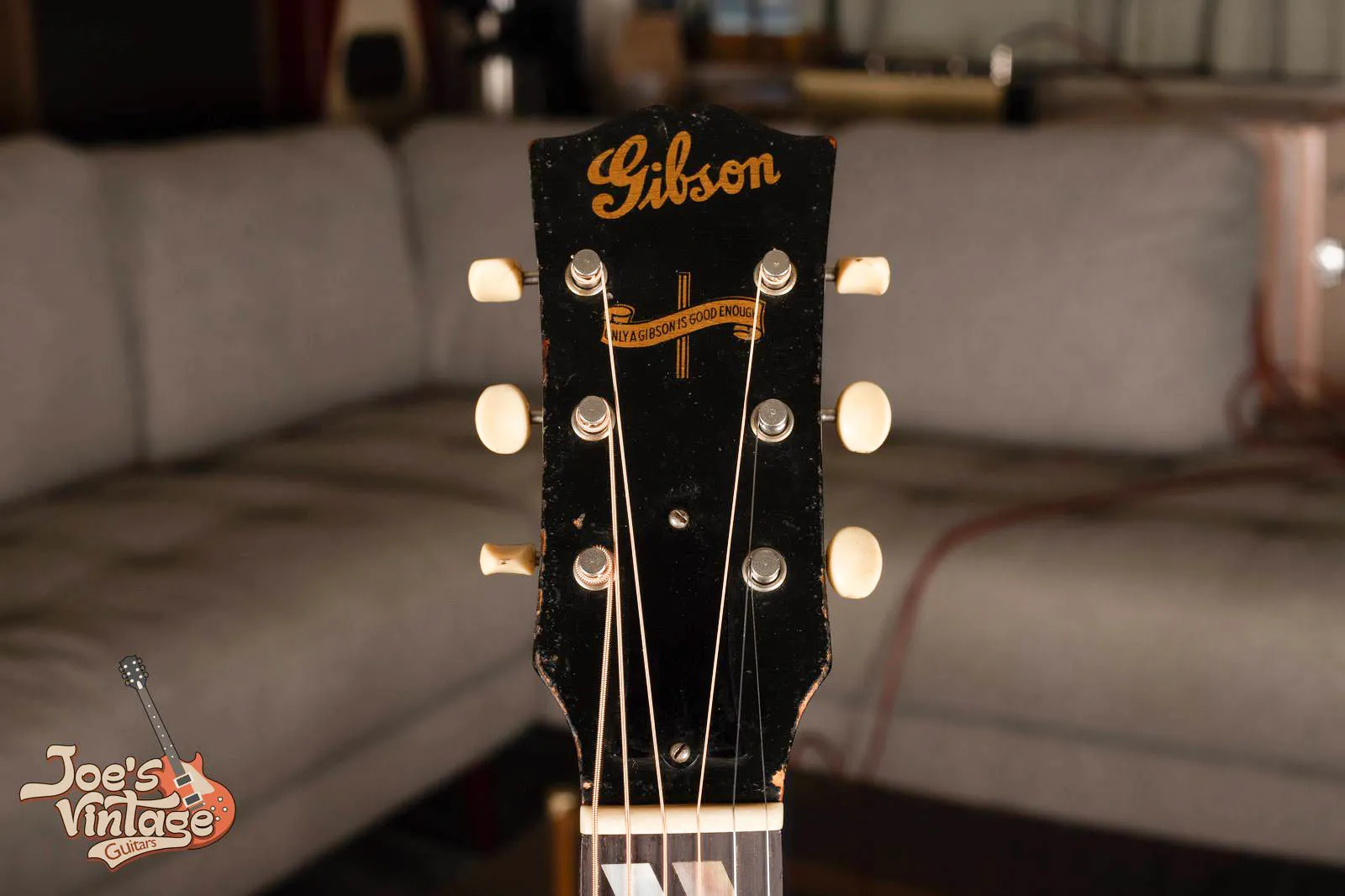
A Banner feature can also appear on another model in the family. The Southern Jumbo headstock shown here demonstrates why the logo alone isn’t a complete identification. Each model needs its own price comparison.
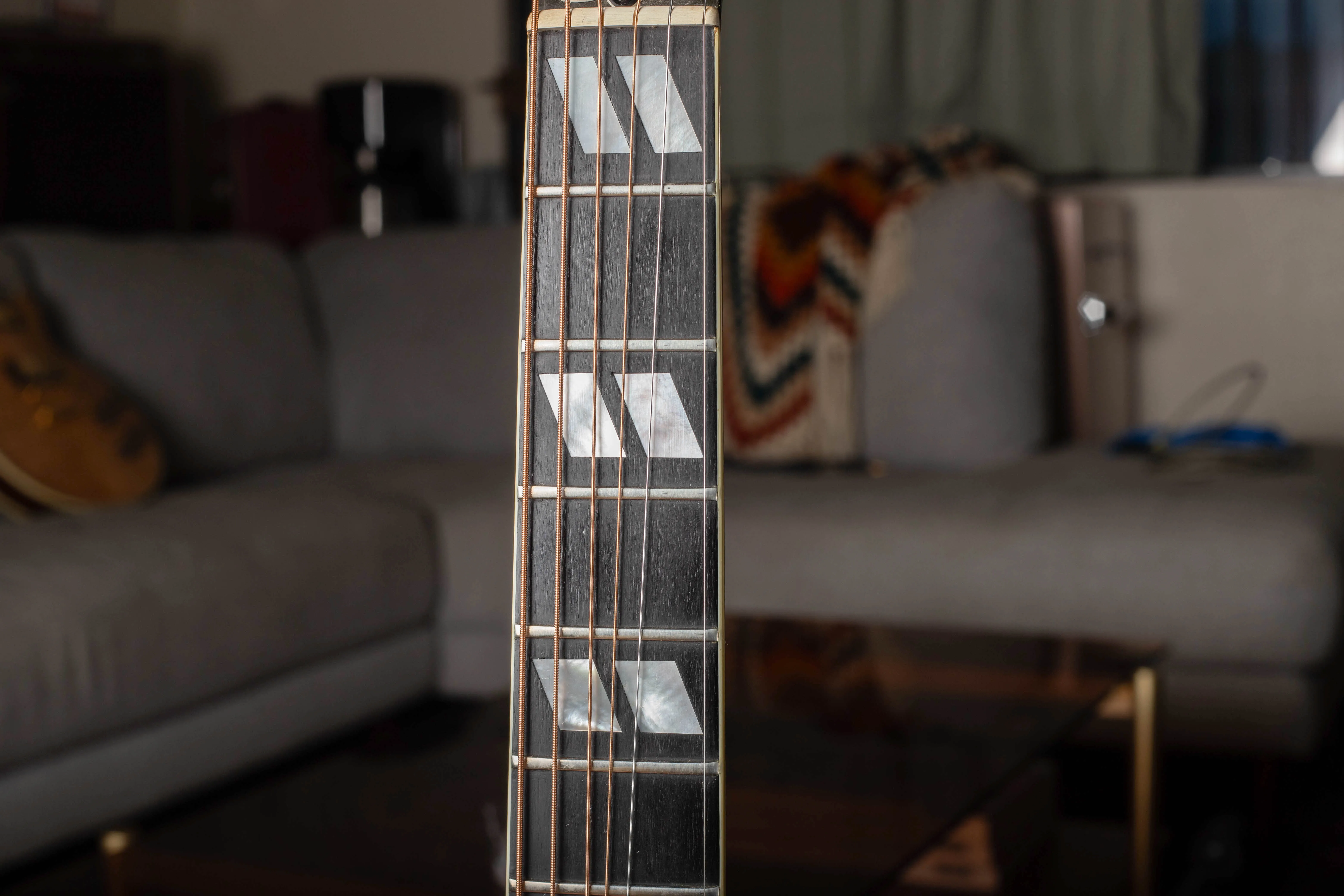
The split-parallelogram inlays in the comparison photograph aren’t J-45 appointments. Their role here is to keep the wrong guitar out of the wrong table. Detailed identification remains with the family guide linked above.
How I Handle Repairs And Changed Parts
I look for a description of the work, its extent and the instrument’s present condition. A professionally repaired guitar can be useful and desirable without matching a clean-original reference. That is a separate comparison category, not a reason to dismiss the instrument.
The word restoration can cover very different work. It might refer to a setup and careful maintenance, or it might conceal a replacement fingerboard, refinishing and altered bracing. The actual work needs to be named before a value range means much.
Neck Resets And Frets
A neck reset adjusts how the neck sits against the body so the guitar can achieve an appropriate setup. A completed, documented reset and a guitar that still needs one present different costs and uncertainties to a buyer. The repair quality and resulting setup determine the effect on value.
A quality refret is accepted maintenance. It preserves the all-original classification of an otherwise original guitar and removes museum-quality status. Neck reshaping, a changed fingerboard or a structural repair must be assessed separately.
Bridges And Bridge Plates
A replacement bridge changes the originality description even when the work was done well. The bridge plate is the reinforcement inside the body beneath the bridge. Changes there can be less visible in ordinary photographs, so repair records help explain the instrument.
Photograph the guitar in its current condition before arranging cosmetic or structural work. Start with photographs of the present guitar and any records you have. That lets the assessment account for the actual condition before money is spent.
Cracks And Finish Work
A repaired crack needs a location, an extent and a description of the repair. It isn’t useful to treat every crack as an identical deduction. The same applies to overspray, which means additional finish over an existing surface, and to a full refinish.
A heavily rebuilt instrument belongs outside the clean-original category. The extent of the repairs, retained parts and current condition determine its appraisal.
Asking Prices, Offers And Selling Proceeds
An asking price is a seller’s requested amount. A completed-sale figure records a transaction, and an owner’s net proceeds may differ after selling expenses. None of those figures automatically equals a direct purchase offer.
The guide ranges are starting points for an appraisal. I examine the guitar and explain the condition assumptions before making an offer.
An old J-45’s future value depends on demand, condition and repair costs. Future repairs, demand and the time required to sell can affect the result. An appraisal describes the guitar in its present condition.
Getting An Appraisal For Your J-45
Send clear views of the front, back, headstock, bridge and any known repairs, along with the case and available paperwork. Describe what you know about changed parts and what remains uncertain. You don’t need to guess a year before asking for help.
I buy vintage guitars nationwide from Mesa, Arizona. My free guitar appraisal is a starting point for an individual review, and the Gibson selling page explains the purchase process. A final offer depends on the guitar’s actual condition and identity.
For the wider family, my vintage Gibson value guide links the solidbody, ES, archtop and acoustic model comparisons.
For other flat-top models, my Gibson acoustic value guide compares the J-45, J-200, LG family and Hummingbird.
Questions About Gibson J-45 Value
How Much Is A 1950s Gibson J-45 Worth?
The 1955 to 1959 range is $7,000 to $9,000 for excellent guitars with original parts and the original case. Earlier 1950s guitars fall within the broader 1946 to 1954 range of $8,000 to $14,000. Repairs and changes need an individual appraisal.
What Is A 1970s J-45 Deluxe Worth?
The 1970 to 1979 range is $2,500 to $3,000 for an excellent original example with its original case. High action, repairs or changed parts need a separate assessment. Adjacent years share that broad range.
Does A Banner Logo Automatically Mean The Highest Value?
No. The Banner range covers different wood configurations, and the guitar's repairs and original parts still need examination. A decal alone doesn't establish its construction, condition or value.
Can I Use This Table For A J-50 Or Southern Jumbo?
No. Those are separate model categories. The comparison photographs show family differences, but the price table is for the J-45. Each model needs a price comparison for its own construction and condition.
How Does A Neck Reset Affect Value?
A completed, well-executed neck reset can restore a comfortable setup. A guitar that still needs the work carries its cost and uncertainty. I assess the neck angle, bridge, saddle and repair quality together.
Will A Quality Refret Make My Guitar Nonoriginal?
A quality refret preserves the all-original classification of an otherwise original guitar, while removing museum-quality status. Neck reshaping, a replacement bridge or structural repair is a separate issue.
Are These Prices My Guaranteed Selling Proceeds?
No. They are dated condition-specific references. A direct purchase offer, a dealer asking price and the amount an owner receives after selling expenses are different figures. I need the actual guitar's details before making an offer.