

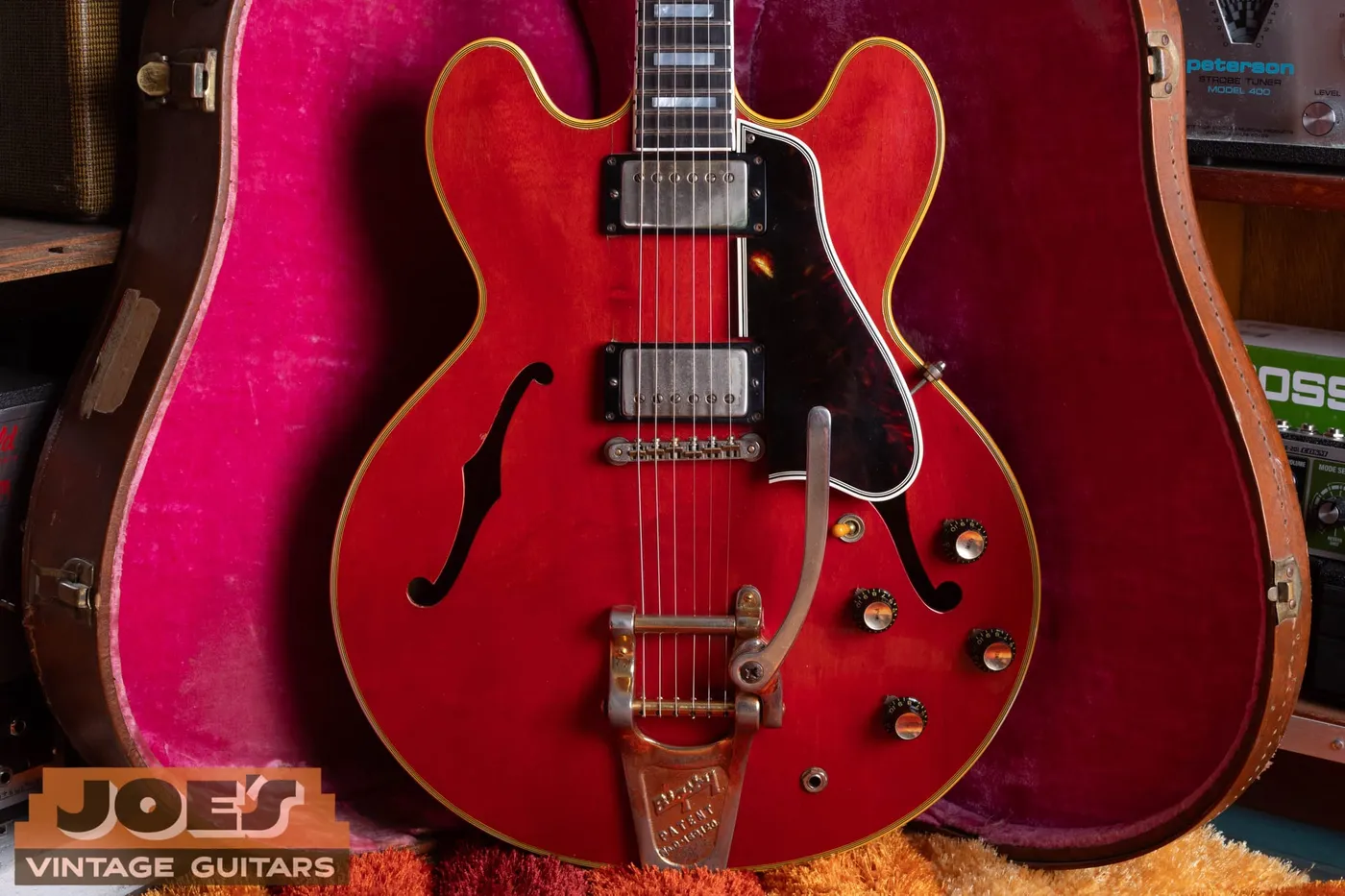
A clean, original 1959 Gibson ES-355 in cherry has a guide range of $27,000 to $41,000 with factory mono wiring and a Bigsby, or $20,000 to $35,000 with stereo Varitone electronics. Standard-finish stereo examples from the 1970s sit at $5,000 to $6,500 in excellent condition. The year alone won’t place a guitar in one of those ranges.
I buy vintage Gibsons nationwide from Mesa, Arizona. This guide separates the price references from the identification work, because a factory mono guitar and a later mono conversion can look similar in a listing. For the construction, electronics and dating details, use my 1959 Gibson ES-355 authentication guide.
Values By Year
These ranges are reviewed as of October 2026. They assume an all-original guitar in excellent condition with its original case and no structural repair. A quality refret is accepted maintenance, although the guitar then falls outside museum-quality condition.
The ranges describe clean original guitars under the condition assumptions above. Changed electronics, repairs or unusual factory configurations need individual appraisals. The final selling price depends on the individual guitar and buyer.
| Year | Configuration | Value Range |
|---|---|---|
| 1958 | Mono, cherry, factory Bigsby | $33,000 to $41,000 |
| 1959 | Mono, cherry, factory Bigsby | $27,000 to $41,000 |
| 1959 | Stereo Varitone, cherry, factory Bigsby | $20,000 to $35,000 |
| 1959 | Factory mono stop-tail | $41,000 to $54,000 |
| 1960 | Stereo Varitone, PAFs, factory vibrato | $20,000 to $25,000 |
| 1961 | Stereo Varitone, PAFs, factory vibrato | $20,000 to $25,000 |
| 1962 | Stereo Varitone, PAFs, factory vibrato | $20,000 to $25,000 |
| 1963 | Stereo Varitone, Patent Number pickups | $14,000 to $17,000 |
| 1964 | Stereo Varitone, Patent Number pickups | $14,000 to $17,000 |
| 1965 | Stereo, wide or narrow neck; combined span | $7,000 to $14,000 |
| 1966 | Stereo, standard finishes; combined span | $5,500 to $8,000 |
| 1967 | Stereo, standard finishes; combined span | $5,500 to $8,000 |
| 1968 | Stereo, standard finishes; combined span | $5,500 to $8,000 |
| 1969 | Stereo, standard finishes; combined span | $5,500 to $8,000 |
| 1970 | Stereo, standard finishes, factory vibrato | $5,000 to $6,500 |
| 1971 | Stereo, standard finishes, factory vibrato | $5,000 to $6,500 |
| 1972 | Stereo, standard finishes, factory vibrato | $5,000 to $6,500 |
| 1973 | Stereo, standard finishes, factory vibrato | $5,000 to $6,500 |
| 1974 | Stereo, standard finishes, factory vibrato | $5,000 to $6,500 |
| 1975 | Stereo, standard finishes, factory vibrato | $5,000 to $6,500 |
| 1976 | Stereo, standard finishes, factory vibrato | $5,000 to $6,500 |
| 1977 | Stereo, standard finishes, factory vibrato | $5,000 to $6,500 |
| 1978 | Stereo, standard finishes, factory vibrato | $5,000 to $6,500 |
| 1979 | Stereo, standard finishes, factory vibrato | $5,000 to $6,500 |
The table covers every year from the model’s 1958 introduction through 1979. Adjacent years can share a range. The 1965 row includes both narrow and wide necks; the 1966 to 1969 rows cover standard finishes.
Match the configuration before using a number. A later PAF-equipped guitar, factory mono example from the 1960s or rare finish can sit outside the main stereo rows. I appraise those configurations individually.
Mono, Stereo And The Price Difference
A factory mono ES-355 sends a conventional combined guitar signal to an amplifier. The stereo version sends the pickups to separate output channels and carries the Varitone, a rotary tone-filter system. That distinction changes the comparison group before wear, repairs or originality enter the discussion.
A stereo instrument converted to mono isn’t a factory mono instrument. It may be convenient for the player, but its wiring history belongs in the description. If the original harness remains with the guitar, keep it together and include it in the photographs.
I check exactly what was changed during a mono conversion. One owner may have changed the output connection while retaining the original components. Another may have installed a complete replacement harness, removed the Varitone or drilled an extra control hole.
Those changes cannot be priced by reading “mono” in a listing title. The appraisal needs the original configuration, the work performed and the parts that survive. A guitar can be an excellent player while falling outside the clean-original reference.
The standard vibrato also needs its own context. A Bigsby was part of the early ES-355 package, so its presence doesn’t automatically call for a discount. A later added vibrato with extra holes is a different situation.
Early Cherry Examples
The first annual row covers a mono guitar because that is the earliest ES-355 configuration. The 1959 rows separate mono and stereo. I establish the original wiring before applying either range.
The 1960 to 1962 main row covers stereo examples with PAF pickups and a factory vibrato. PAF means Patent Applied For, the name taken from the decal used on those early Gibson humbuckers. It identifies a pickup family, not a guarantee that everything under a cover is untouched.
Changed electronics, a repaired neck or separated wood can put an early ES-355 outside the clean-original category. A guitar that plays well can still need a separate appraisal because of its repair history.
Factory mono stop-tail instruments have a separate 1959 guide range of $41,000 to $54,000, with exceptional examples outside it. I establish the original configuration before using that range; a later stopbar conversion doesn’t make a guitar a factory stop-tail example.
An added tailpiece and plugged vibrato holes do not establish factory stop-tail status. I need the construction evidence before deciding which market comparisons belong. Construction evidence separates a factory stop-tail guitar from a later conversion.
The Middle And Late 1960s
The 1963 and 1964 rows use the stereo reference for Patent Number pickups. Some gold-hardware instruments retained earlier pickup stock, so a year label does not settle the pickup configuration. A guitar documented with a different factory pickup set needs a matching comparison.
The 1965 range is broad because the earlier wider nut and later narrower neck share the year. I check the measurement and original configuration before choosing a value within it. A serial number alone doesn’t justify the upper endpoint.
The 1966 to 1969 rows use a combined standard-finish stereo range. I assess the actual finish, vibrato, condition and originality before narrowing it. There isn’t an automatic premium for every color or hardware variation.
A neck reset or conversion to mono changes the condition assumptions. I describe those changes separately and assess the guitar as it exists now.
Sparkling Burgundy and other less common configurations need individual appraisals. A finish name alone doesn’t settle value, and a refinish doesn’t carry the same collector standing as an original custom finish. The original finish, year and condition together determine its effect on value.
A 1970s ES-355 In Context
The 1970 to 1979 rows use a $5,000 to $6,500 range for standard-finish stereo guitars with their factory vibrato. This guide stops at 1979; that doesn’t mean ES-355 production ended then.
A missing pickguard, replacement guard or conversion to mono changes the condition assumptions. I assess those changes individually rather than applying the clean-original range automatically.
I look at the working guitar as well as its parts. A straight neck, usable frets, functional electronics and a stable body help establish what the buyer will receive. A guitar that needs a repair estimate belongs in a separate appraisal, even if its finish photographs beautifully.
Age alone doesn’t turn a replacement into an original part. A replacement installed decades ago may have similar wear to the guitar. The appraisal should describe what it is, what evidence supports that conclusion and whether the removed original survives.
Condition Without A Stack Of Automatic Deductions
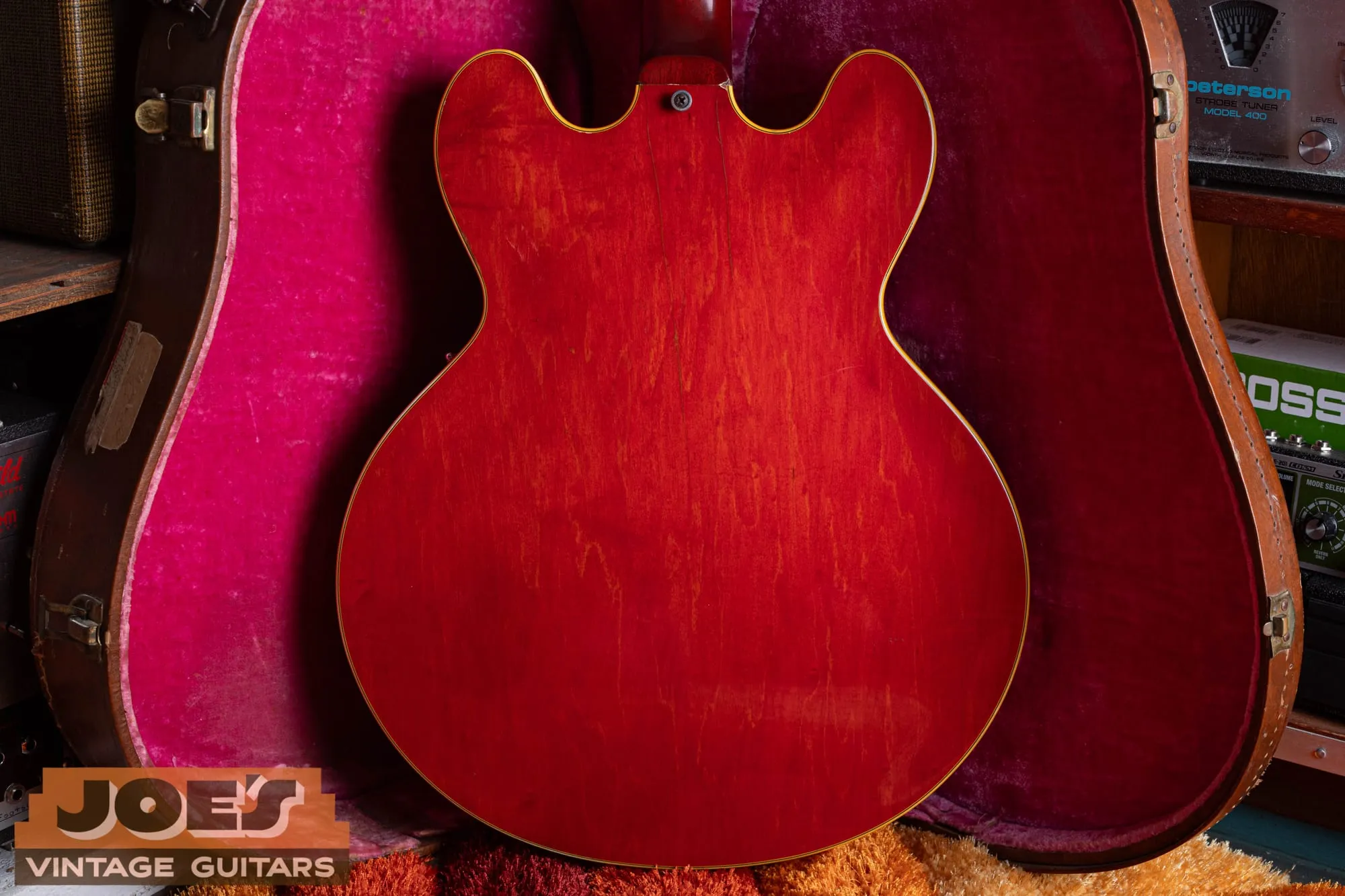
Original finish, original pickups and structural condition are separate parts of the appraisal. A worn original finish and a glossy refinish can represent very different collector positions. Originality and documented history carry more weight than surface shine.
A repaired headstock needs a description of the break, the repair and any related finish work. A stable repair can leave a useful instrument, but it takes the guitar outside the no-structural-repair assumption in the annual table. The appropriate comparison is another documented repaired example.
Multiple changes should be assessed together. Adding a finish deduction, a pickup deduction and a wiring deduction mechanically can produce a number that doesn’t resemble the market for the complete guitar. I compare the resulting instrument with other instruments in similar condition.
Refinishing, replaced pickups and structural repairs can each take a substantial share of an ES-355’s value. Their effect depends on the configuration, repair quality and original parts that remain.
A good refret is handled differently from a reshaped neck or a damaged fingerboard. A quality refret preserves an otherwise all-original classification while removing museum-quality status. The work still needs to be disclosed.
Pickups, Hardware And Included Parts
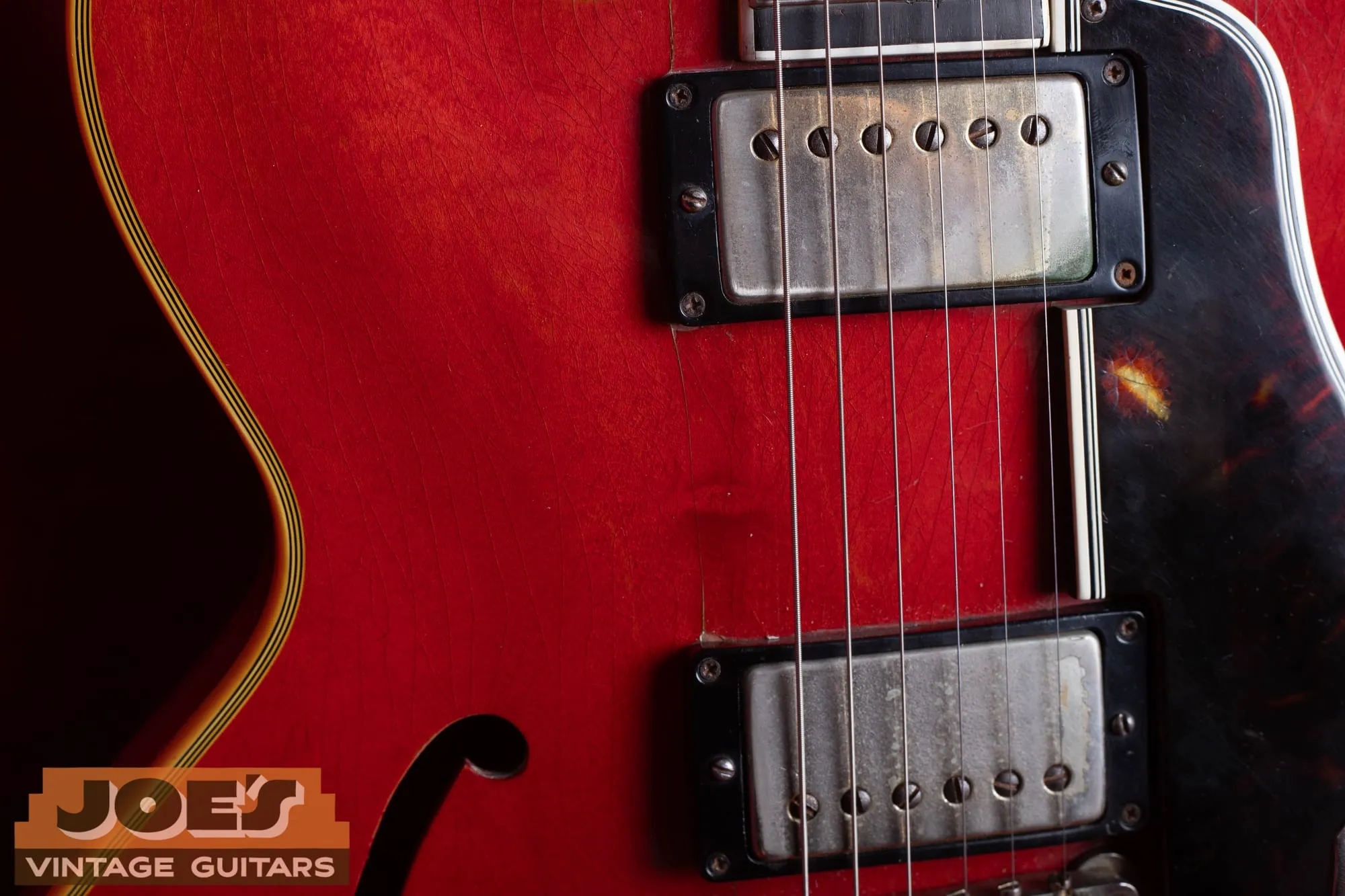
The pickup type can place an ES-355 into a different reference group. Replaced pickups, rewinds and changed wiring should be listed separately where known. An exterior photograph of a metal cover cannot settle all of those questions.
Leave pickup covers in place for the first appraisal. Existing service photographs and written repair records are better starting points than unnecessary disassembly. If further inspection is needed, we can identify the specific question first.
Keep loose original hardware with the instrument. A bridge, pickguard, harness or set of tuners removed during a repair still helps explain the guitar’s history. It should be included in the description instead of being assumed installed.
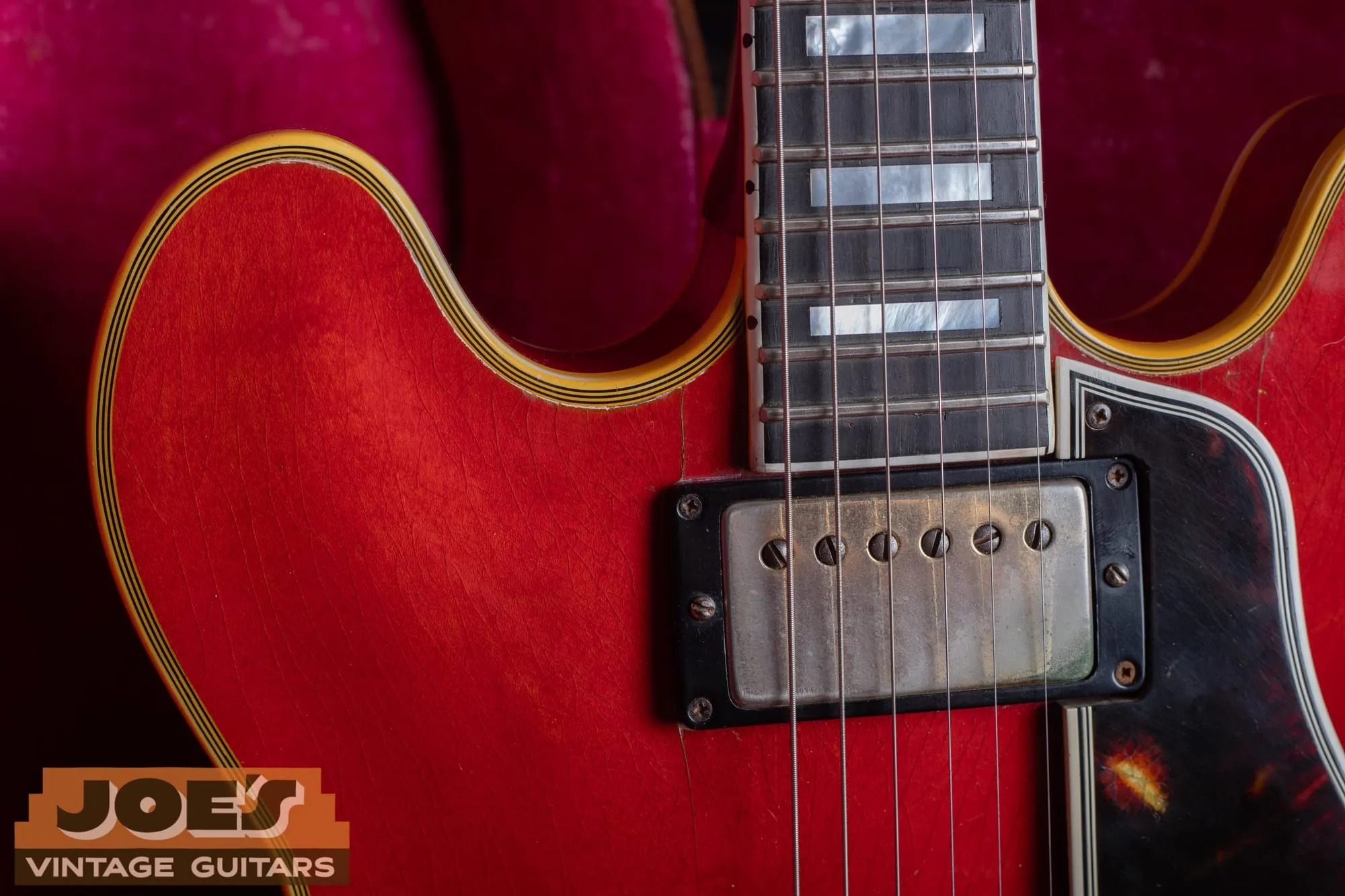
The black reflector knobs on my photographed 1959 ES-355 are most likely replacements, although a late-1959 or 1960 build is another possibility. Its date and parts need to be assessed together.
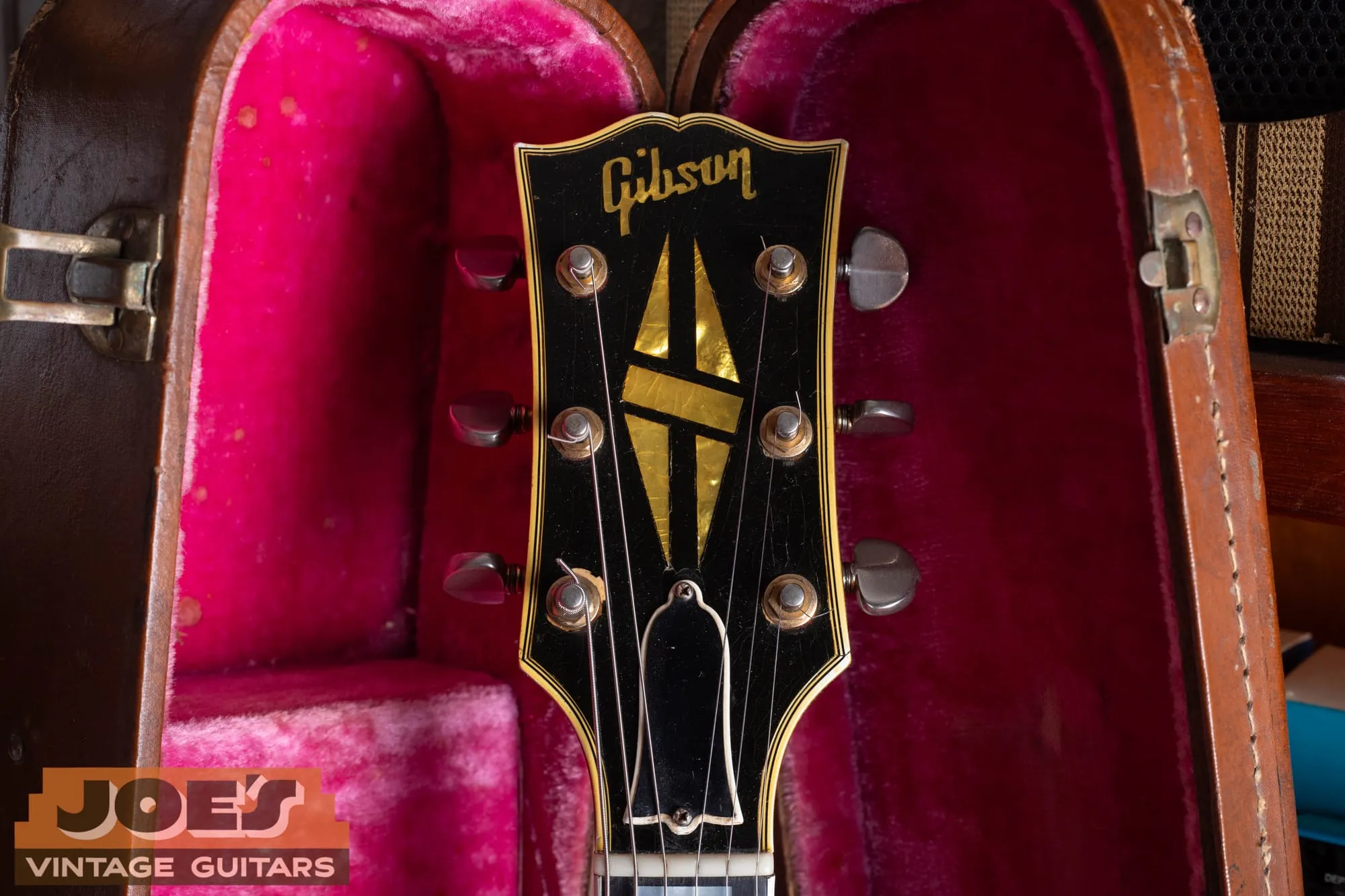
The neck photograph also helps distinguish the model visually without turning this into a dating walkthrough. The ES-355’s ebony fingerboard, block inlays and split-diamond headstock belong to its trim package. They don’t make a stereo conversion equivalent to a factory mono guitar.
The Case And The Guitar’s History
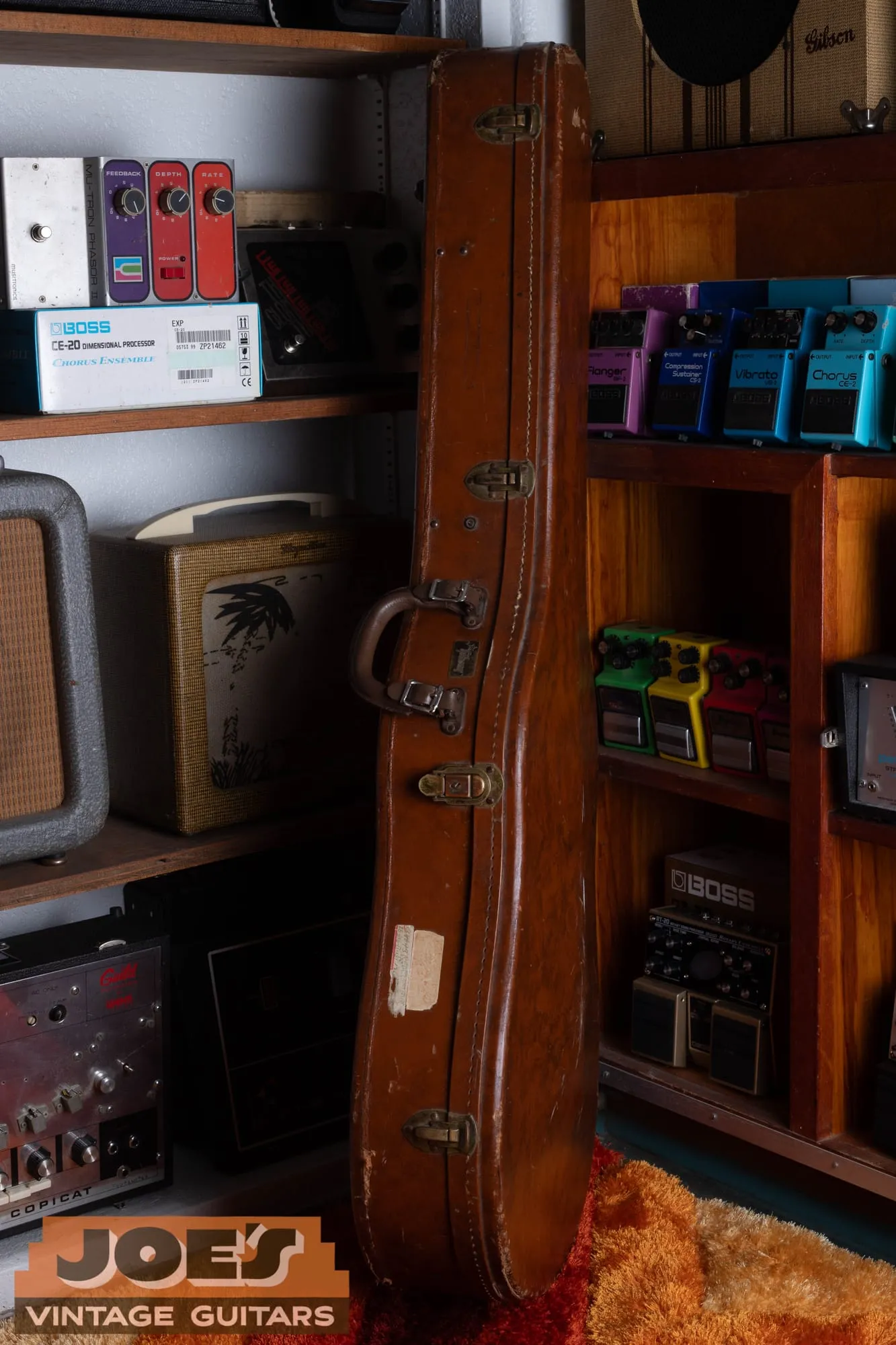
The annual ranges assume the original case. A period-looking case supplied later and the case that accompanied the guitar originally are not necessarily the same thing. If that history is unknown, describe it as unknown.
Photograph the case exterior, interior, handle and latches. A damaged case can still be associated with the instrument, but its condition should be visible before shipping or sale. Documents and removed parts should be recorded separately so they don’t disappear in the transaction.
Family history can help explain repairs and ownership without replacing an inspection. My one-family 1959 ES-355 story documents a specific instrument and its stereo-to-mono conversion. It shows why the actual history belongs beside the model name.
Family records can support the guitar’s history and originality. Documentation can make its condition history clearer. A separate claim about a famous owner needs evidence of its own.
Comparing An ES-355 With Its Relatives
The most decorated model isn’t automatically the most expensive vintage guitar. Buyers distinguish the ES-335’s familiar configuration from the ES-355’s electronics and hardware choices. The models share a family resemblance, but their markets should be compared separately.
Use the vintage Gibson ES-335 value guide for a guitar identified as an ES-335. It has its own annual rows and condition assumptions. A seller’s shorthand description of “like a 335” doesn’t move an ES-355 into that table.
An ES-345 also requires its own model value reference. Trim, electronics and original configuration are part of what the buyer is choosing. I avoid a fixed family-wide percentage that assumes every year behaves the same way.
Getting A Range For Your Guitar
For a first review, send the whole front and back, headstock front and back, neck heel, controls, bridge, vibrato and case. Include the serial or label photograph and any repair history you already have. You don’t need to polish away evidence of wear.
Tell me about known changes even if they seem small. A replaced guard, rewired output or old tuner swap can explain why a guitar doesn’t fit the clean reference. If you’re unsure, an uncertainty is more useful than an unsupported claim that everything is original.
I can begin with a free vintage guitar appraisal. I buy nationwide and can discuss the complete instrument after reviewing the photographs. The annual table gives us a starting point; the final range belongs to the guitar in front of us.
For the wider family, my vintage Gibson value guide links the solidbody, ES, archtop and acoustic model comparisons.
Questions About Gibson ES-355 Value
How Much Is A 1959 Gibson ES-355 Worth?
A clean original cherry 1959 ES-355 has a guide range of $27,000 to $41,000 with factory mono wiring and a Bigsby, or $20,000 to $35,000 with stereo Varitone electronics. These assume excellent condition, original pickups and the original case. Repairs and conversions need a separate appraisal.
What Is A 1970s ES-355 Worth?
A standard-finish 1970 to 1979 stereo ES-355 with its factory vibrato has a guide range of $5,000 to $6,500 in excellent original condition with the original case. I assess repairs and changed parts separately; the range isn't a guaranteed sale price.
Does A Mono Conversion Make A Stereo Guitar Worth The Mono Price?
No. A factory mono guitar and a stereo instrument converted later have different histories. Keeping the removed original harness helps document a conversion, but it doesn't make the guitar factory mono.
Does A Bigsby Automatically Reduce ES-355 Value?
No. A factory vibrato belongs in the standard configuration used by these references. A later installation, removed unit or added holes requires a different comparison. The ES-355's factory equipment differs from an ES-335 stop-tail configuration.
Why Do Several Years Share A Price Range?
Adjacent years can share an era range. The annual rows help you find the year, but the electronics, pickups, condition and original parts still determine the appraisal.
Should I Remove Pickup Covers Before An Appraisal?
No. Start with clear exterior photographs and any existing repair records. Pickup work can damage fragile wiring, and I can explain what further inspection is needed after reviewing the guitar.
Does A Quality Refret Remove All-Original Status?
A quality refret preserves the all-original classification of an otherwise original guitar. It takes the guitar out of museum-quality status. Neck reshaping and structural repairs are separate issues.