Table Of Contents
Are you looking to sell vintage guitars in Mesa? If yes, then you should consider some things first, including the guitar’s quality.
The guitar has become a symbol of music lovers around the globe. There are many types of guitars out there, each one with its unique features.
From colorful guitars with powerful sounds to more minimalistic designs, there are many guitars to choose from, so you must be mindful of what you’re offering.
Whether you want to sell an instrument that matches a specific style or you only want to get cash with a valuable item, we’ve prepared these tips on how to sell a vintage guitar successfully.

You may have heard the word ‘vintage’ before, as it is quite common these days. Sometimes, it refers to the style of an instrument; it could be the modern design of an old model, making it look and sound similar but lacking the heritage of the real guitar.
In short, a vintage guitar refers to guitars from the late 80s, 70s, 60s, and even older. The guitar should be at least 30 years old to be considered vintage.
Whether they’ve been played by expert guitarists or left in the corner of a garage, vintage guitars in Mesa are unique relics representing important eras of music.
Now that you know the basics of selling your guitar check below the seven factors you need to consider to sell it successfully.
Guitars are constantly modified by avid guitarists. Many of them continually modify their instruments to get new sounds and styles. Unfortunately, that means these guitars are far from their original state.
The most common additions include control knobs, bridges, pickups, and tuning machines. These parts might improve the sound quality, but they also reduce the guitar’s value. The more original parts you keep in your guitar, the higher its value.
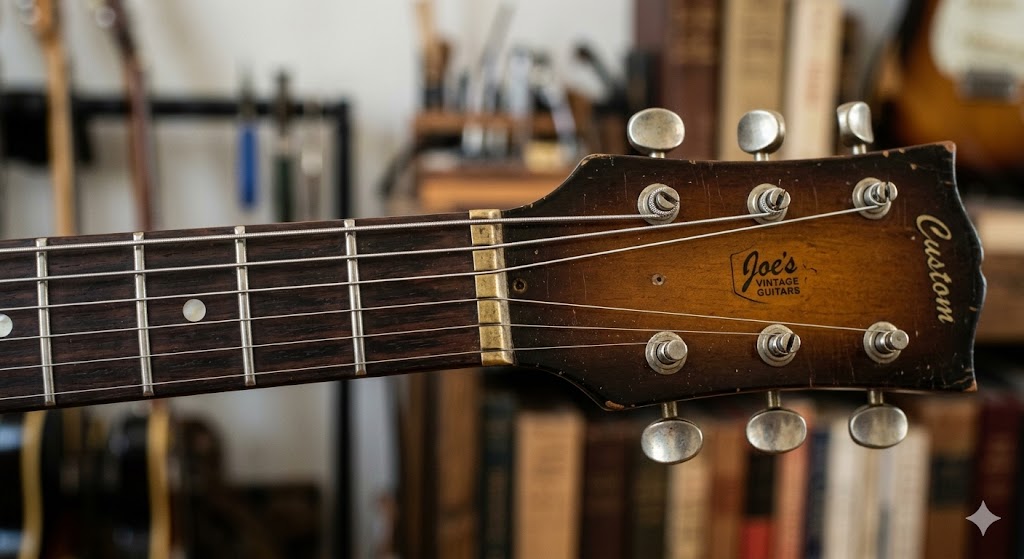
If you are an avid guitarist, you may already know what a headstock is. The headstock is the angle part of the guitar’s head where strings are attached. It must resist a lot of pressure, so it is particularly vulnerable to breaking (a common issue with Gibson guitars).
You can see if that has happened to the vintage guitar by checking if there’s a small fracture line between the neck and the headstock.
If you want to sell the guitar to a guitar player, you should not worry about that; headstock breaks are common, and experts don’t have issues repairing them.
Nevertheless, if you’re trying to sell it to a collector of vintage guitars in Mesa, you should be aware of these fractures as they reduce the value of the instrument.
You should also inform the seller about the finish of the guitar. If your guitar has the ‘refinish’ label on it, it means it has received a paint job at some point in its lifetime. In that case, the guitar’s value will be significantly reduced.
Guitar collectors prefer original finishes because they usually reflect trends of the period in which the guitar was made. For example, Fender offers popular colors like ‘Sherwood Green’ and ‘Candy Apple Red’ in the ’60s to resemble the popularity of the American car industry.
If you want to sell a vintage guitar to guitarists and not collectionists, you shouldn’t worry too much about the finish.
The value of a vintage guitar depends on its condition and provenance. However, some models never seem to decrease their value. One is Gibson’s Cherry Sunburst Les Paul Standards, which was produced in the late 50s.
Their original price was around $280, but they now regularly go to auction for more than $400,000. That’s because they have incredible craftsmanship, and only 650 were ever made.
Are you ready to sell a vintage guitar? Do you simply want to know what your guitar is worth? Luckily, you can count on Joe’s Vintage Guitar. At Joe’s Vintage Guitar, you won’t need more than a few minutes to determine your instrument’s current value. You’ll also be able to choose the best vintage guitar for your collection or your hobby. Visit our website to get started!
Joe’s Vintage Guitars
47 N Fraser Dr E
Mesa, AZ 85203
Phone: (602) 900-6635
Email: joesvintageguitars94@gmail.com
Written by Joe Dampt
“Driven by a love for classic tunes, I specialize in buying, selling, and appraising vintage guitars, bringing music and history together.”
The Fender Jazzmaster changed more times in its first 14 years than almost any other…
The 1966 Gibson ES-335 is a pre-Norlin Kalamazoo instrument built to the same standard as…
The 1962 Fender Stratocaster sits at the end of the first golden age of Fullerton…
The 1959 Fender Telecaster is the most transition-dense year in the instrument's history — slab…
The complete authentication reference for the 1954 Gibson Les Paul Goldtop — the first full…
How to identify and authenticate any Gibson Byrdland — from the first Kalamazoo prototypes in…