
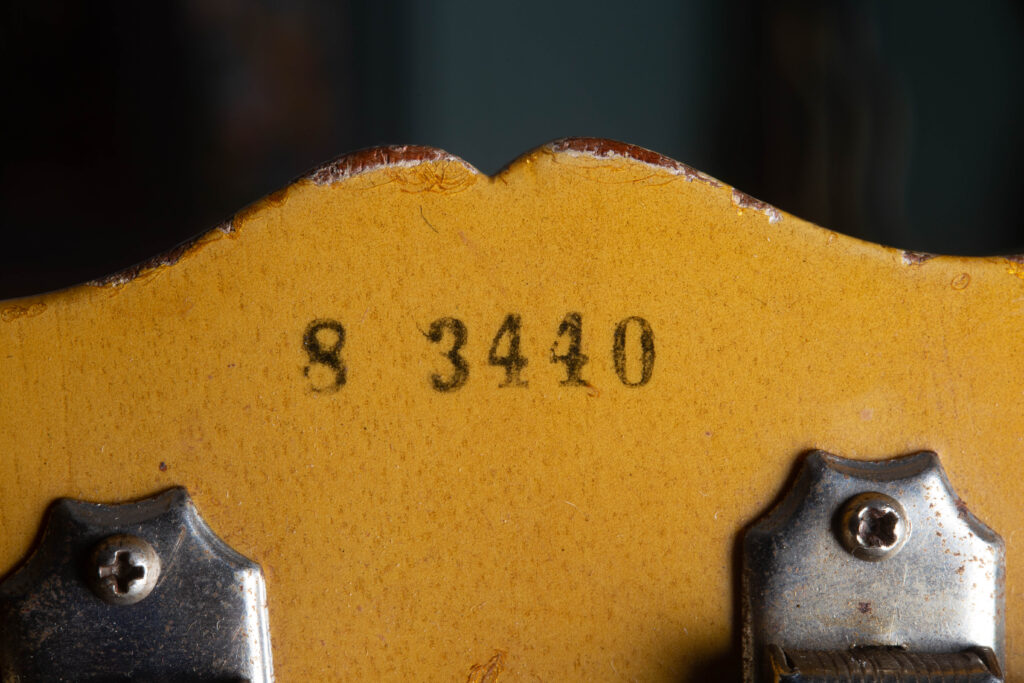
Understanding the true market value of an instrument requires more than just a quick look; it demands a deep dive into the official shipping records that define historical rarity. Whether you are looking to sell your guitar or simply want to document its unique history, our free appraisal service combines these verified production totals with years of hands-on expertise to give you a precise valuation. Before you dive into the production numbers below, make sure to visit our comprehensive Gibson serial number guide to accurately date your instrument and ensure you are referencing the correct era in Kalamazoo’s manufacturing legacy.
Note: Please bear in mind that these shipping totals are not necessarily the exact production numbers. Gibson made other instruments that were not necessarily included in the shippping totals. Additionally, there are some slight inaccuracies reflected in the totals. For example, there is no mention of white SG Juniors, which we know exist in fairly large numbers. Still, these are the best indication we have of Gibson guitar production totals.
Finding the exact Gibson Les Paul Standard shipping totals between 1952 and 1961 is the first step in understanding the true market rarity of your vintage instrument. From the inaugural 1952 “trapeze” tailpiece models to the legendary 1959 “Holy Grail” Sunburst, these production figures illustrate the massive shifts in Kalamazoo’s output during the guitar’s most influential decade. Whether you are verifying if your 1958 is one of the first 434 Sunbursts ever made or tracking the 1961 transition into the SG body style, having these verified numbers is vital for a precise vintage guitar appraisal. For collectors looking to sell, referencing these specific shipping totals provides the transparency
| Model/Year | Goldtop | Sunburst |
|---|---|---|
| LP Std '52 | 1,716 | --- |
| LP Std '53 | 2,245 | --- |
| LP Std '54 | 1,504 | --- |
| LP Std '55 | 862 | --- |
| LP Std '56 | 920 | --- |
| LP Std '57 | 598 | --- |
| LP Std '58 | 247 | 187 |
| LP Std '59 | --- | 643 |
| LP Std '60 | --- | 635 |
| LP Std '61 | --- | 2 |
If you are trying to verify the rarity of a “Black Beauty” from the golden era, these Gibson Les Paul Custom shipping totals from 1955 to 1961 provide the definitive roadmap for collectors and sellers. While the Standard often grabs the headlines, the Custom’s production numbers during the transition from the Alnico V/P-90 setup to the triple-PAF humbucker configuration reveal just how scarce these high-trim instruments truly are. Understanding whether your 1957 Custom is one of the 283 shipped or if your 1961 SG-style Custom is part of that final Kalamazoo run is essential for securing an accurate vintage guitar appraisal. For those looking to sell, these verified shipping figures serve as the ultimate proof of provenance and market value.
| Model/Year | Total Produced |
|---|---|
| LP Cust '55 | 355 |
| LP Cust '56 | 489 |
| LP Cust '57 | 283 |
| LP Cust '58 | 256 |
| LP Cust '59 | 246 |
| LP Cust '60 | 189 |
| LP Cust '61 | 18 |
The shipping totals for the Gibson Les Paul Junior and TV Model from 1954 to 1961 represent the production heart of a “student” line that evolved into a rock and roll powerhouse. These figures are vital for collectors distinguishing the rarity of a first-year 1954 “single-cut” Junior against later double-cutaway versions. To ensure a streamlined user experience, these production charts utilize the “TV” designation as a finish category, even though it was technically listed as a distinct model in the original Kalamazoo-era Gibson catalog.
Because the TV Model—famed for its limed mahogany look—was shipped in significantly lower quantities than the standard Sunburst Junior, these specific production values are essential for a professional vintage guitar appraisal. Verified shipping numbers provide the historical data required to justify market prices and confirm the scarcity of specific instruments in the current vintage market.
| Model/Year | Sunburst | Cherry | TV Yel |
|---|---|---|---|
| LP Jr '54 | 823 | --- | --- |
| LP Jr '55 | 2,839 | --- | 219 |
| LP Jr '56 | 3,129 | --- | 511 |
| LP Jr 3/4 '56 | 18 | --- | --- |
| LP Jr '57 | 2,959 | --- | 552 |
| LP Jr 3/4 '57 | 222 | --- | --- |
| LP Jr '58 | 365 | --- | 429 |
| LP Jr 3/4 '58 | 23 | --- | --- |
| LP Jr 3/4 DC '58 | --- | 158 | --- |
| LP Jr DC '59 | --- | 2,043 | 543 |
| LP Jr 3/4 DC '59 | --- | 199 | --- |
| LP Jr DC '60 | --- | 4,364 | 419 |
| LP Jr 3/4 DC '60 | --- | 96 | --- |
| LP Jr DC '61 | --- | 2,513 | 29 |
| LP Jr 3/4 DC '61 | --- | 71 | --- |
The shipping totals for the Gibson Les Paul Special from 1955 to 1961 trace the production history of the high-trim, dual-pickup sibling to the Junior. These figures are vital for collectors tracking the rarity of the mid-fifties “single-cut” Special compared to the double-cutaway transition that occurred in late 1958.
While the TV Yellow finish remains one of the most iconic looks for this model, production quantities fluctuated significantly across its original run. These specific production values are a key component of an accurate vintage guitar appraisal, particularly when distinguishing between the original 1950s body styles and the 1961 transition into the SG shape. Whether analyzing an early 1955 model with the neck pickup placed close to the joint or a late-run 1961 Special, these verified shipping numbers provide the historical evidence needed to prove scarcity and market value.
| Model/Year | Cherry | White | TV Yel |
|---|---|---|---|
| LP Spec '55 | --- | --- | 373 |
| LP Spec '56 | --- | --- | 1,342 |
| LP Spec '57 | --- | --- | 1,436 |
| LP Spec '58 | 16 | --- | 328 |
| LP Spec DC '58 | 212 | --- | 402 |
| LP Spec DC '59 | 612 | --- | 1,209 |
| LP Spec DC '60 | 322 | --- | 1,065 |
| LP Spec DC '61 | --- | 4 | 412 |
The shipping totals for the Gibson Norlin Era from 1968 to 1979 document a pivotal and frequently debated chapter in Kalamazoo’s production history. These years represent a massive scale-up in factory output, making verified shipping figures essential for collectors attempting to pinpoint the rarity of specific “pancake” body Deluxes or the first official reintroductions of the Les Paul Standard.
Because this era introduced significant structural changes—including the transition to volutes, large headstocks, and multi-piece necks—precise production values are a critical component of a professional vintage guitar appraisal. From the sought-after 1968 “Goldtop” re-issue to late-seventies Customs in rare finishes, these shipping numbers provide the historical data necessary to justify market prices and understand the true scarcity of an instrument within the broader vintage landscape.
| Model & Year | Total Shipped |
|---|---|
| '68 LP Stand. | 1,224 |
| '69 LP Stand. | 2,751 |
| '71 LP Stand. -58 | 25 |
| '72 LP Stand. -58 | 1,046 |
| '73 LP Stand. -58 | 4 |
| '74 LP Stand. -58 | 2,219 |
| '76 LP Stand. | 24 |
| '77 LP Stand. | 586 |
| '78 LP Stand. | 1,640 |
| '79 LP Stand. | 679 |
| '70 LP Dlx. | 2,587 |
| '71 LP Dlx. | 4,403 |
| '72 LP Dlx. | 5,082 |
| '73 LP Dlx. | 10,244 |
| '74 LP Dlx. | 7,229 |
| '75 LP Dlx. | 2,020 |
| '76 LP Dlx. | 34 |
| '77 LP Dlx. | 225 |
| '78 LP Dlx. | 4,289 |
| '79 LP Dlx. | 252 |
| '76 LP Pro | 2 |
| '77 LP Pro | 331 |
| '78 LP Pro | 293 |
| '79 LP Pro | 224 |
| '68 LP Cust. | 433 |
| '69 LP Cust. | 2,353 |
| '70 LP Cust. | 2,612 |
| '71 LP Cust. | 3,152 |
| '72 LP Cust. | 3,934 |
| '73 LP Cust. | 7,091 |
| '74 LP Cust. | 7,465 |
| '75 LP Cust. | 6,229 |
| '76 LP Cust. | 4,013 |
| '77 LP Cust. | 1,431 |
| '78 LP Cust. | 10,171 |
| '79 LP Cust. | 1,219 |
| '76 LP Art. | 2 |
| '77 LP Art. | 1,496 |
| '78 LP Art. | 641 |
| '79 LP Art. | 338 |
If you are trying to track down the Gibson SG Standard and Custom shipping totals between 1962 and 1978, you are digging into the production history of the instrument that took over when the Les Paul shape was temporarily retired. These figures are indispensable for any collector or dealer attempting to verify the rarity of an early “small pickguard” Standard versus the higher-volume production runs of the late sixties. Since the Custom models—outfitted with three pickups and gold hardware—were produced in significantly smaller quantities than the Standard, these shipping numbers are the bedrock of a professional vintage guitar appraisal. Whether you are looking at a 1964 “Maestro” vibrola-equipped model or a mid-seventies SG with a harmonium bridge, having the verified Kalamazoo output on hand allows you to confirm the scarcity of your guitar and set a realistic market price when you’re ready to sell.
| Model/Year | Cherry | Wh/Wal |
|---|---|---|
| SG Stand '62 | 1,449 | --- |
| SG Stand '63 | 1,445 | --- |
| SG Stand '64 | 1,375 | --- |
| SG Stand '65 | 1,731 | --- |
| SG Stand '66 | 1,046 | --- |
| SG Stand '67 | 1,154 | --- |
| SG Stand '68 | 1,340 | --- |
| SG Stand '69 | 3,354 | --- |
| SG Stand '70 | 5,048 | --- |
| SG Stand '72 | 1,009 | --- |
| SG Stand '73 | 3,009 | --- |
| SG Stand '74 | 2,295 | --- |
| SG Stand '75 | 2,042 | --- |
| SG Stand '76 | 2,834 | --- |
| SG Stand '77 | 2,618 | --- |
| SG Stand '78 | 2,503 | --- |
| SG Cust '62 | --- | 298 |
| SG Cust '63 | --- | 264 |
| SG Cust '64 | --- | 130 |
| SG Cust '65 | --- | 236 |
| SG Cust '66 | --- | 125 |
| SG Cust '67 | --- | 43 |
| SG Cust '68 | --- | 264 |
| SG Cust '69 | --- | 451 |
| SG Cust '70 | --- | 317 |
| SG Cust '71 | --- | 395 |
| SG Cust '72 | --- | 400 |
| SG Cust '73 | --- | 775 |
| SG Cust '74 | --- | 939 |
| SG Cust '75 | --- | 149 |
| SG Cust '76 | --- | 376 |
| SG Cust '77 | --- | 279 |
| SG Cust '78 | --- | 217 |
Shipment totals for the Gibson SG Junior and SG Special between 1962 and 1978 offer a transparent look at the production lifecycle of these “workhorse” models. This data is indispensable for collectors and owners seeking to determine the scarcity of specific iterations, such as the early “small pickguard” 1964 Specials compared to the “large guard” versions introduced later in the decade.
The Junior was originally conceived as an entry-level instrument, while the dual-pickup Special occupied a mid-tier position. Both models experienced unique production fluctuations during the transition into the Norlin era. Because of these variations, official shipping numbers serve as the foundation for any professional vintage guitar appraisal. Accurate data is particularly vital when evaluating transitional features, such as the narrower nut widths found in 1965 or the “harmonica” bridges utilized in the mid-seventies.
| Model/Year | Cherry | White |
|---|---|---|
| SG Spec '62 | 959 | 377 |
| SG Spec '63 | 1,017 | 374 |
| SG Spec '64 | 1,704 | 318 |
| SG Spec '65 | 2,099 | 519 |
| SG Spec '66 | 1,841 | 29 |
| SG Spec '67 | 1,517 | 147 |
| SG Spec '68 | 1,269 | 192 |
| SG Spec '69 | 2,378 | --- |
| SG Spec '70 | 2,862 | --- |
| SG Spec '71 | 1,571 | --- |
| SG Spec '72 | 749 | --- |
| SG Spec '73 | 3,534 | --- |
| SG Spec '74 | 2,183 | --- |
| SG Spec '75 | 593 | --- |
| SG Spec '76 | 549 | --- |
| SG Spec '77 | 232 | --- |
| SG Spec '78 | 2 | --- |
| SG Jr '62 | 2,395 | --- |
| SG Jr '63 | 2,318 | --- |
| SG Jr '64 | 3,364 | --- |
| SG Jr '65 | 3,570 | --- |
| SG Jr '66 | 1,928 | --- |
| SG Jr '67 | 1,021 | --- |
| SG Jr '68 | 561 | --- |
| SG Jr '69 | 751 | --- |
| SG Jr '70 | 938 | --- |
When you are tracking down the Gibson TV Yellow SG Special and Junior shipment totals between 1962 and 1968, you are looking at some of the most elusive variations of the SG body style. While Cherry was the standard finish for the era, these “TV” models—originally intended to pop on black-and-white television screens—were produced in remarkably small batches, making them a primary target for high-level collectors. Understanding these specific production numbers is vital for a precise vintage guitar appraisal, especially since many sellers misidentify refinished instruments as original “limed” finishes. Because the TV Yellow finish was often treated as a custom order or limited run during the mid-sixties, having the verified Kalamazoo shipping data is the only way to confirm the extreme rarity of your instrument. Whether you have a 1963 “small guard” Special or a 1965 Junior in this rare hue, these figures provide the historical authority needed to justify a premium market price when you are ready to sell.
Note: Gibson records do not differentiate between the SG Special & the SG Junior in TV Yellow finishes. These numbers include BOTH Juniors and Specials
| Model/Year | TV Yellow |
|---|---|
| SG TV '62 | 457 |
| SG TV '63 | 379 |
| SG TV '64 | 528 |
| SG TV '65 | 716 |
| SG TV '66 | 548 |
| SG TV '67 | 123 |
| SG TV '68 | 54 |
The 1958–1969 shipment totals for the ES-335, ES-345, and ES-355 document the peak production of Gibson’s most iconic semi-hollow body guitars. These figures are indispensable for collectors distinguishing a rare first-year “dot neck” 335 from the high-volume output of the late 1960s.
Historical Data Note: Original Kalamazoo ledgers for the ES-355 typically consolidated all units into the “Cherry” column. While most were indeed Cherry, rare Sunburst and Natural examples exist that the factory records simply did not specify.
Because high-trim models like the 345 and 355—featuring VariTone circuits and gold hardware—shipped in significantly lower quantities than the standard 335, these totals form the backbone of any professional vintage appraisal. Whether evaluating a 1959 “long guard” or a 1964 “block neck” with a factory Bigsby, verified production data is the most reliable way to substantiate historical scarcity and current market value.
| Model/Year | Sunburst | Cherry | Natural |
|---|---|---|---|
| ES-335 '58 | 267 | --- | 50 |
| ES-335 '59 | 521 | --- | 71 |
| ES-335 '60 | 405 | 21 | 88 |
| ES-335 '61 | 466 | 420 | --- |
| ES-335 '62 | 266 | 610 | --- |
| ES-335 '63 | 349 | 807 | --- |
| ES-335 '64 | 349 | 892 | --- |
| ES-335 '65 | 712 | 1,038 | --- |
| ES-335 '66 | 1,468 | 1,056 | --- |
| ES-335 '67 | 2,596 | 3,122 | --- |
| ES-335 '68 | 2,294 | 1,466 | --- |
| ES-335 '69 | 1,055 | 1,142 | --- |
| ES-345 '59 | 446 | --- | 32 |
| ES-345 '60 | 251 | 252 | 18 |
| ES-345 '61 | 174 | 223 | --- |
| ES-345 '62 | 102 | 204 | --- |
| ES-345 '63 | 117 | 161 | --- |
| ES-345 '64 | 218 | 193 | --- |
| ES-345 '65 | 272 | 216 | --- |
| ES-345 '66 | 278 | 186 | --- |
| ES-345 '67 | 501 | 643 | --- |
| ES-345 '68 | 560 | 378 | --- |
| ES-345 '69 | 201 | 213 | --- |
| ES-355 '58 | --- | 10 | --- |
| ES-355 '59 | --- | 300 | --- |
| ES-355 '60 | --- | 317 | --- |
| ES-355 '61 | --- | 291 | --- |
| ES-355 '62 | --- | 220 | --- |
| ES-355 '63 | --- | 163 | --- |
| ES-355 '64 | --- | 252 | --- |
| ES-355 '65 | --- | 257 | --- |
| ES-355 '66 | --- | 269 | --- |
| ES-355 '67 | --- | 405 | --- |
| ES-355 '68 | --- | 318 | --- |
| ES-355 '69 | --- | 214 | --- |
The 1948–1969 shipping totals for the L-5CES, Super 400CES, and L-7 McCarty represent the peak of Gibson’s archtop artistry. Because these were the most expensive models in the catalog, production remained remarkably low, making verified data essential for collectors. Whether tracking the rare L-7 McCarty assembly or a 1950s “non-cutaway” masterpiece, these Kalamazoo ledger totals provide the foundation for an authoritative appraisal and the proof of scarcity needed to justify premium market values.
Note: “L-7e” refers to Gibson L-7 guitars that shipped with a “McCarty” electric pickguard.
| Model/Year | Sunburst | Natural |
|---|---|---|
| L5-CES '51 | 31 | 8 |
| L5-CES '52 | 29 | 17 |
| L5-CES '53 | 25 | 18 |
| L5-CES '54 | 30 | 20 |
| L5-CES '55 | 19 | 31 |
| L5-CES '56 | 23 | 32 |
| L5-CES '57 | 22 | 15 |
| L5-CES '58 | 21 | 27 |
| L5-CES '59 | 26 | 12 |
| L5-CES '60 | 45 | 17 |
| L5-CES '61 | 22 | 13 |
| L5-CES '62 | 30 | 11 |
| L5-CES '63 | 51 | 21 |
| L5-CES '64 | 42 | 10 |
| L5-CES '65 | 34 | 10 |
| L5-CES '66 | 23 | 1 |
| L5-CES '67 | 102 | 5 |
| L5-CES '68 | 189 | 11 |
| L5-CES '69 | 170 | 55 |
| S-400ces '51 | 2 | --- |
| S-400ces '52 | 7 | 11 |
| S-400ces '53 | 16 | 11 |
| S-400ces '54 | 17 | 6 |
| S-400ces '55 | 5 | 16 |
| S-400ces '56 | 20 | 19 |
| S-400ces '57 | 24 | 15 |
| S-400ces '58 | 15 | 15 |
| S-400ces '59 | 22 | 8 |
| S-400ces '60 | 24 | 7 |
| S-400ces '61 | 30 | 15 |
| S-400ces '62 | 24 | 16 |
| S-400ces '63 | 29 | 14 |
| S-400ces '64 | 29 | 13 |
| S-400ces '65 | 31 | 1 |
| S-400ces '66 | 24 | 4 |
| S-400ces '67 | 28 | 22 |
| S-400ces '68 | 52 | 11 |
| S-400ces '69 | 120 | 45 |
| L-7e '48 | 126 | --- |
| L-7e '49 | 224 | --- |
| L-7e '50 | 138 | 18 |
| L-7e '51 | 138 | 26 |
| L-7e '52 | 109 | 33 |
| L-7e '53 | --- | --- |
| L-7e '54 | 1 | 8 |
When you are researching the Gibson ES-175, ES-225, ES-295, and ES-5 shipping totals between 1949 and 1979, you are looking at the production heart of the “Electric Spanish” archtop lineage. These figures are indispensable for collectors trying to verify the rarity of a first-year P-90 equipped ES-175 versus the triple-pickup configuration of a 1950s ES-5. Because the gold-finished ES-295 and the thinline ES-225 were produced in relatively short bursts compared to the decades-long run of the 175, understanding these specific shipment numbers is a cornerstone of any professional vintage guitar appraisal. Whether you are evaluating a 1953 “all gold” model or a late-seventies ES-175 with humbuckers, having the official Kalamazoo ledger data is the most reliable way to confirm the historical scarcity and market value of your instrument.
| Model/Year | Goldtop | Sunburst | Natural | Cherry |
|---|---|---|---|---|
| ES-225 '55 | --- | 468 | 2 | --- |
| ES-225 '56 | --- | 1,648 | 157 | --- |
| ES-225 '57 | --- | 1,753 | 229 | --- |
| ES-225 '58 | --- | 1,291 | 326 | --- |
| ES-225 '59 | --- | 1,395 | 248 | --- |
| ES-175 '49 | --- | 129 | 13 | --- |
| ES-175 '50 | --- | 503 | 30 | --- |
| ES-175 '51 | --- | 559 | 105 | --- |
| ES-175 '52 | --- | 818 | 192 | --- |
| ES-175 '53 | --- | 829 | 181 | --- |
| ES-175 '54 | --- | 599 | 141 | --- |
| ES-175 '55 | --- | 485 | 115 | --- |
| ES-175 '56 | --- | 560 | 146 | --- |
| ES-175 '57 | --- | 353 | 92 | --- |
| ES-175 '58 | --- | 211 | 66 | --- |
| ES-175 '60 | --- | 226 | 5 | --- |
| ES-175D '53 | --- | 182 | 86 | --- |
| ES-175D '54 | --- | 275 | 129 | --- |
| ES-175D '55 | --- | 308 | 143 | 2 |
| ES-175D '56 | --- | 320 | 247 | 3 |
| ES-175D '58 | --- | 285 | 114 | 2 |
| ES-295 '52 | 297 | --- | --- | --- |
| ES-295 '53 | 637 | --- | --- | --- |
| ES-295 '54 | 357 | --- | --- | --- |
| ES-295 '57 | 71 | --- | --- | --- |
| ES-295 '58 | 49 | --- | --- | --- |
| ES-5 '49 | --- | 66 | 22 | --- |
| ES-5 '50 | --- | 111 | 52 | --- |
| ES-5 '56 | --- | 4 | --- | --- |
| ES-5 Swm '55 | --- | 7 | --- | --- |
| ES-5 Swm '61 | --- | 41 | 11 | --- |
The shipping totals for the Gibson ES-300, ES-330, ES-350, and Byrdland (1948–1979) provide a record of the most specialized thinline and archtop models ever produced in Kalamazoo. This data serves as a vital resource for collectors distinguishing a rare first-year 1959 “long neck” ES-330 from the high-volume output of the mid-1960s. Because the Byrdland and ES-350T were engineered with unique short-scale, thin-depth bodies for professional jazz players, their production numbers remained significantly lower than standard models, making these figures a cornerstone of any professional appraisal. Whether verifying a late-1940s ES-300 with a slanted pickup or a 1970s Byrdland with humbuckers, referencing verified shipping totals is the most effective way to prove historical scarcity and justify current market value.
| Model/Year | Sunburst | Natural | Cherry |
|---|---|---|---|
| Byrd '55 | 1 | 2 | --- |
| Byrd '56 | 31 | 25 | --- |
| Byrd '57 | 78 | 52 | --- |
| Byrd '58 | 38 | 23 | --- |
| Byrd '59 | 40 | 34 | --- |
| Byrd '60 | 71 | 39 | --- |
| Byrd '61 | 77 | 20 | --- |
| Byrd '62 | 59 | 17 | --- |
| Byrd '63 | 102 | 32 | --- |
| Byrd '64 | 93 | 15 | --- |
| Byrd '65 | 66 | 11 | --- |
| Byrd '66 | 45 | 3 | --- |
| Byrd '67 | 92 | 7 | --- |
| Byrd '68 | 194 | 24 | --- |
| Byrd '69 | 160 | 60 | --- |
| Byrd '70 | 36 | 21 | --- |
| Byrd '71 | 65 | 27 | --- |
| Byrd '72 | 80 | 48 | --- |
| Byrd '73 | 99 | 20 | --- |
| Byrd '74 | 85 | 6 | --- |
| Byrd '75 | 195 | 11 | --- |
| Byrd '76 | 115 | 93 | --- |
| Byrd '77 | 56 | 42 | --- |
| Byrd '78 | 86 | 25 | --- |
| Byrd '79 | 41 | 2 | --- |
| ES-350T '55 | 1 | 1 | --- |
| ES-350T '56 | 156 | 62 | --- |
| ES-350T '57 | 150 | 74 | --- |
| ES-350T '58 | 104 | 43 | --- |
| ES-350T '59 | 90 | 57 | --- |
| ES-350T '60 | 71 | 15 | --- |
| ES-350T '61 | 61 | 21 | --- |
| ES-350T '62 | 59 | 18 | --- |
| ES-350T '63 | 35 | 23 | --- |
| ES-330D '59 | 270 | 79 | --- |
| ES-330D '60 | 1,198 | 215 | 98 |
| ES-330D '61 | 542 | --- | 645 |
| ES-330D '62 | 496 | --- | 734 |
| ES-330D '63 | 521 | --- | 652 |
| ES-330D '64 | 1,231 | --- | 693 |
| ES-330D '65 | 1,318 | --- | 1,067 |
| ES-330D '66 | 2,000 | --- | 1,151 |
| ES-330D '67 | 2,335 | --- | 2,563 |
| ES-330D '68 | 1,223 | --- | 643 |
| ES-330D '69 | 518 | --- | 515 |
| ES-330 '59 | 349 | 82 | --- |
| ES-330 '60 | 772 | 88 | 37 |
| ES-330 '61 | 267 | --- | 214 |
| ES-330 '62 | 224 | --- | 179 |
| ES-330 '63 | 151 | --- | 152 |
| ES-300 '48 | 190 | 83 | --- |
| ES-300 '49 | 76 | 48 | --- |
| ES-300 '50 | 116 | 41 | --- |
| ES-300 '51 | 114 | 47 | --- |
| ES-300 '52 | 79 | 27 | --- |
| ES-300 '53 | 4 | --- | --- |
| ES-350 '48 | 87 | 55 | --- |
| ES-350 '49 | 76 | 89 | --- |
| ES-350 '50 | 54 | 46 | --- |
| ES-350 '51 | 70 | 57 | --- |
| ES-350 '52 | 122 | 67 | --- |
| ES-350 '53 | 87 | 50 | --- |
| ES-350 '54 | 58 | 31 | --- |
| ES-350 '55 | 44 | 14 | --- |
| ES-350 '56 | 45 | 4 | --- |
When you dive into the Gibson Acoustic L-4, L-5, L-7, and Super 400 shipment totals spanning 1948 to 1979, you are tracing the lineage of the finest carved-top instruments ever built in Kalamazoo. These records are vital for any owner attempting to document the scarcity of a pure “acoustic” Super 400 or L-5, which were often produced in even smaller quantities than their electrified siblings. Because these flagship archtops represented the peak of Gibson’s craftsmanship and price list, their production was always limited, making them a centerpiece for any high-level vintage guitar appraisal. Whether you are holding a 1950s L-7 with its elegant “parallel” bracing or a late-sixties L-4C featuring a Venetian cutaway, referencing these official shipping ledgers is the most effective way to validate the historical rarity and substantial market value of your instrument.
| Model/Year | Sunburst | Natural |
|---|---|---|
| L-4 Series | ||
| L-4 '48 | 125 | 28 |
| L-4 '49 | 118 | 69 |
| L-4 '50 | 85 | 53 |
| L-4 '51 | 163 | 75 |
| L-4 '52 | 87 | 36 |
| L-4 '53 | 87 | 38 |
| L-4 '54 | 41 | 7 |
| L-4 '55 | 20 | 1 |
| L-4 '56 | 2 | --- |
| L-4c '49 | 140 | --- |
| L-4c '50 | 157 | 42 |
| L-4c '51 | 201 | 49 |
| L-4c '52 | 88 | 41 |
| L-4c '53 | 12 | 44 |
| L-4c '54 | 66 | 34 |
| L-4c '55 | 68 | 28 |
| L-4c '56 | 66 | 30 |
| L-4c '57 | 73 | 26 |
| L-4c '58 | 56 | 34 |
| L-4c '59 | 66 | 23 |
| L-4c '60 | 71 | 11 |
| L-4c '61 | 52 | 19 |
| L-4c '62 | 60 | 19 |
| L-4c '63 | 70 | 16 |
| L-4c '64 | 38 | 11 |
| L-4c '65 | 61 | 12 |
| L-4c '66 | 41 | 17 |
| L-4c '67 | 22 | 3 |
| L-4c '68 | 61 | 2 |
| L-4c '69 | 63 | 20 |
| L-4c '70 | 18 | 8 |
| L-5 Series | ||
| L-5 '48 | 49 | 38 |
| L-5 '49 | 29 | 17 |
| L-5 '50 | 17 | 4 |
| L-5 '51 | 29 | 11 |
| L-5 '52 | 20 | 7 |
| L-5 '53 | 15 | 1 |
| L-5 '54 | 12 | 3 |
| L-5 '55 | 5 | 8 |
| L-5 '56 | 7 | --- |
| L-5 '57 | 7 | 4 |
| L-5 '58 | 3 | 2 |
| L-5c '48 | 23 | 21 |
| L-5c '49 | 23 | 22 |
| L-5c '50 | 18 | 23 |
| L-5c '51 | 17 | 9 |
| L-5c '52 | 17 | 15 |
| L-5c '53 | 19 | 4 |
| L-5c '54 | 26 | 13 |
| L-5c '55 | 11 | 25 |
| L-5c '56 | 9 | 11 |
| L-5c '57 | 16 | 16 |
| L-5c '58 | 15 | 3 |
| L-5c '59 | 33 | 22 |
| L-5c '60 | 26 | 13 |
| L-5c '61 | 19 | 13 |
| L-5c '62 | 21 | 11 |
| L-5c '63 | 41 | 21 |
| L-5c '64 | 23 | 10 |
| L-5c '65 | 15 | 10 |
| L-5c '66 | 25 | 1 |
| L-5c '67 | 10 | 5 |
| L-5c '68 | 36 | 11 |
| L-5c '69 | 70 | 55 |
| L-5c '70 | 13 | 24 |
| L-5c '71 | 10 | 2 |
| L-5c '72 | 6 | 6 |
| L-5c '73 | 2 | 1 |
| L-5c '75 | 40 | 4 |
| L-5c '76 | 34 | 29 |
| L-5c '77 | 39 | 23 |
| L-5c '78 | 13 | 19 |
| L-5c '79 | 14 | 4 |
| L-7 Series | ||
| L-7 '48 | 266 | --- |
| L-7 '49 | 153 | --- |
| L-7 '50 | 158 | --- |
| L-7 '51 | 116 | --- |
| L-7 '52 | 56 | --- |
| L-7 '53 | 77 | --- |
| L-7 '54 | 23 | --- |
| L-7 '55 | 27 | --- |
| L-7 '56 | 1 | --- |
| L-7c '48 | 39 | --- |
| L-7c '49 | 97 | 33 |
| L-7c '50 | 115 | 28 |
| L-7c '51 | 99 | 53 |
| L-7c '52 | 70 | 28 |
| L-7c '53 | 172 | 63 |
| L-7c '54 | 62 | 33 |
| L-7c '55 | 52 | 41 |
| L-7c '56 | 56 | 31 |
| L-7c '57 | 49 | 21 |
| L-7c '58 | 34 | 14 |
| L-7c '59 | 89 | --- |
| L-7c '60 | 81 | --- |
| L-7c '61 | 79 | --- |
| L-7c '62 | 66 | --- |
| L-7c '63 | 140 | --- |
| L-7c '64 | 119 | --- |
| L-7c '65 | 49 | --- |
| L-7c '66 | 31 | --- |
| L-7c '67 | 34 | --- |
| L-7c '68 | 95 | --- |
| L-7c '69 | 58 | --- |
| L-7c '70 | 21 | --- |
| L-7c '71 | 6 | --- |
| L-7c '72 | 13 | --- |
| Super 400 Series | ||
| Super 400 '48 | 64 | 27 |
| Super 400 '49 | 31 | 13 |
| Super 400 '50 | 12 | 13 |
| Super 400 '51 | 10 | 8 |
| Super 400 '52 | 19 | 11 |
| Super 400 '53 | 10 | 1 |
| Super 400 '54 | 6 | 6 |
| Super 400 '55 | 2 | 1 |
| Super 400c '50 | 14 | 7 |
| Super 400c '51 | 5 | 17 |
| Super 400c '52 | 10 | 7 |
| Super 400c '53 | 5 | --- |
| Super 400c '54 | 17 | 7 |
| Super 400c '55 | 6 | 6 |
| Super 400c '56 | 11 | 3 |
| Super 400c '57 | 11 | 14 |
| Super 400c '58 | 11 | 9 |
| Super 400c '59 | 16 | --- |
| Super 400c '60 | 10 | 9 |
| Super 400c '61 | 13 | 6 |
| Super 400c '62 | 16 | 5 |
| Super 400c '63 | 14 | 9 |
| Super 400c '64 | 12 | 2 |
| Super 400c '65 | 16 | 4 |
| Super 400c '66 | 3 | 2 |
| Super 400c '67 | 25 | 3 |
| Super 400c '68 | 24 | 3 |
| Super 400c '69 | 33 | 22 |
| Super 400c '70 | 9 | 4 |
| Super 400c '71 | 4 | 5 |
| Super 400 '72 | 5 | 10 |
| Super 400 '73 | 3 | --- |
| Super 400 '74 | 2 | --- |
| Super 400 '75 | 14 | 8 |
| Super 400 '76 | 15 | 13 |
| Super 400 '77 | 21 | 13 |
| Super 400 '78 | 12 | 5 |
| Super 400 '79 | 5 | --- |
Analyzing the Gibson Firebird shipping totals from 1963 to 1969 reveals the turbulent production history of one of Kalamazoo’s most radical designs. These figures are essential for collectors trying to distinguish between the highly coveted “Reverse” body models and the “Non-Reverse” versions that took over in mid-1965. Because production for certain high-trim variations, like the Firebird VII, dropped into the single digits during the late sixties, having access to verified shipment data is a cornerstone of any professional vintage guitar appraisal. Whether you are evaluating a 1964 Firebird III with its original “banjo” tuners or a rare 1967 non-reverse model, these official numbers provide the historical evidence needed to prove the scarcity and market value of your instrument.
| Model | Year | Production Total |
|---|---|---|
| Firebird I | 1963 | 80 |
| Firebird I | 1964 | 497 |
| Firebird I | 1965 | 800 |
| Firebird I | 1966 | 1,164 |
| Firebird I | 1967 | 200 |
| Firebird I | 1968 | 192 |
| Firebird I | 1969 | 34 |
| Firebird III | 1963 | 272 |
| Firebird III | 1964 | 1,254 |
| Firebird III | 1965 | 1,020 |
| Firebird III | 1966 | 935 |
| Firebird III | 1967 | 463 |
| Firebird III | 1968 | 10 |
| Firebird III | 1969 | 27 |
| Firebird V | 1963 | 62 |
| Firebird V | 1964 | 510 |
| Firebird V | 1965 | 353 |
| Firebird V | 1966 | 342 |
| Firebird V | 1967 | 83 |
| Firebird V | 1968 | 50 |
| Firebird V | 1969 | 17 |
| Firebird VII | 1963 | 20 |
| Firebird VII | 1964 | 173 |
| Firebird VII | 1965 | 110 |
| Firebird VII | 1966 | 46 |
| Firebird VII | 1967 | 9 |
| Firebird VII | 1968 | 19 |
| Firebird VII | 1969 | 5 |
| Firebird XII 12-string | 1966 | 248 |
| Firebird XII 12-string | 1967 | 24 |
The Gibson Flying V, Explorer, and Moderne shipping totals from 1958 to 1979 represent some of the most elusive and sought-after production data in the Kalamazoo archives. For any high-level collector, these figures serve as the definitive benchmark for distinguishing original “Korina” era pieces from the limited reissues and second-wave batches of the late seventies. Since the 1958 and 1959 output for these models was famously low—and the Moderne effectively remained a prototype myth for years—verified ledger data is the only reliable way to conduct a legitimate vintage guitar appraisal for these “Holy Grail” instruments. Referencing these specific shipping numbers allows you to confirm the extreme rarity of a “Medallion” V or a first-run 1976 Explorer, providing the historical proof needed to justify a top-tier market valuation.
| Model & Year | Production Total |
|---|---|
| '58 V | 81 |
| '59 V | 17 |
| '66 V | 2 |
| '67 V | 111 |
| '69 V | 15 |
| '70 V | 47 |
| '71 V Med. | 350 |
| '73 V | 2 |
| '74 V | 1 |
| '75 V | 1872 |
| '76 V | 423 |
| '77 V | 110 |
| '78 V | 313 |
| '79 V | 505 |
| '79 V II | 157 |
| '76 Exp. | 2006 |
| '77 Exp. | 1087 |
| '78 Exp. | 274 |
| '79 Exp. | 287 |
| '79 Exp. II | 586 |
| '58 Mod. | 19 |
| '59 Mod. | 3 |
Accessing official Kalamazoo shipping records is the only way to move beyond speculation and pin down the true rarity of a vintage instrument. These Gibson production total charts provide the historical transparency required to understand how spec changes, finish options, and shifting market demands influenced the scarcity of every model from the “Golden Era” through the Norlin transition. Whether you are a dedicated collector documenting a “Holy Grail” Sunburst or a seller looking to verify a rare “TV” finish, having these verified figures ensures you can navigate the market with confidence. At Joe’s Vintage Guitars, we utilize this data to provide the most precise appraisals possible, ensuring that the unique history of your guitar is fully recognized and valued.
Joe’s Vintage Guitars
47 N Fraser Dr E
Mesa, AZ 85203
Phone: (602) 900-6635
Email: joesvintageguitars94@gmail.com
Written by Joe Dampt
“Driven by a love for classic tunes, I specialize in buying, selling, and appraising vintage guitars, bringing music and history together.”
Think of it as the ultimate "Telecaster on steroids." The Fender Hardtail Stratocaster is one…
Explore the history of the Gibson L-5 CES, the instrument that set the standard for…
Discover the forensic details that define the most coveted year in electric guitar history. From…
Is a brass nut a classic sustain upgrade or a vintage value killer? We dive…
The 1962 Gibson ES-335 is the ultimate "transitional" masterpiece, bridging the gap between the 1950s…
In the 'Golden Era' of Gibson production, few instruments carry as much mojo—or as much…


