
Fender Serial Number Lookup:
Quick Tool & Authentication Guide
Fender Serial Number Decoder Tool
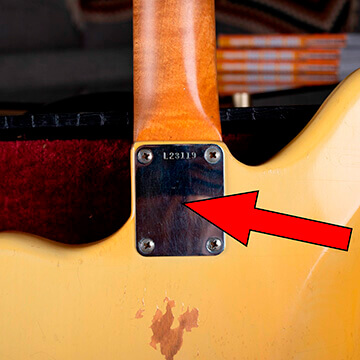 Neck Plate
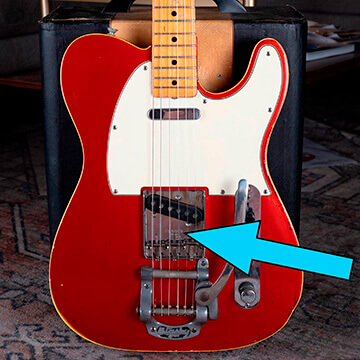 Bridge Plate
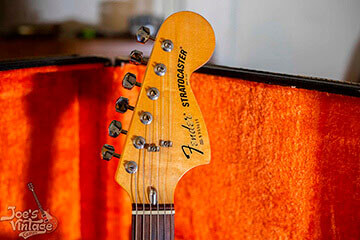 Headstock
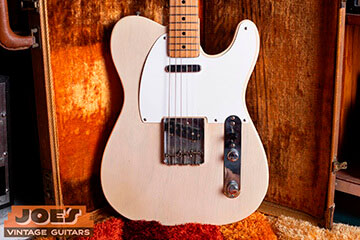 Guitar
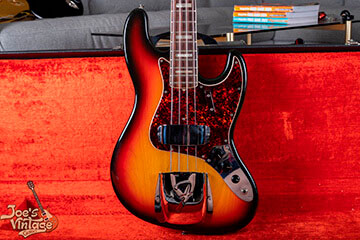 Bass
Bass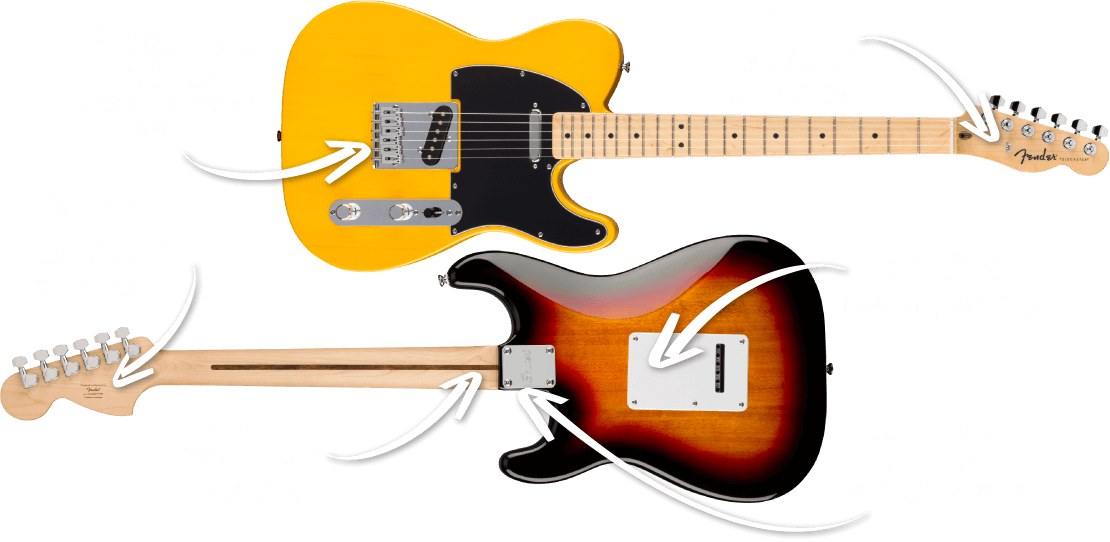
|← Scroll to see the full image
It seems your guitar’s got a few mysteries… Contact us at Joe’s Vintage Guitars more information about your Fender! We’ll give you trusted details about your guitar so that you can learn all about it, especially if you’re planning to sell it. Call or text us at 602-900-6635.
Quickly date and authenticate your vintage Fender with the ultimate expert resource. Use our Instant Serial Number Tool below or jump straight to the Serial Charts (button below) for a fast answer. But remember: serial numbers can be misleading. To truly verify your instrument, you need to check the “specs.” Below our charts, we provide an in-depth authentication guide—covering everything from Spaghetti logos and Slab boards to clay dots and kluson tuner variations—so you can be 100% sure of your guitar’s history and value.

Fender Serial Number Locations

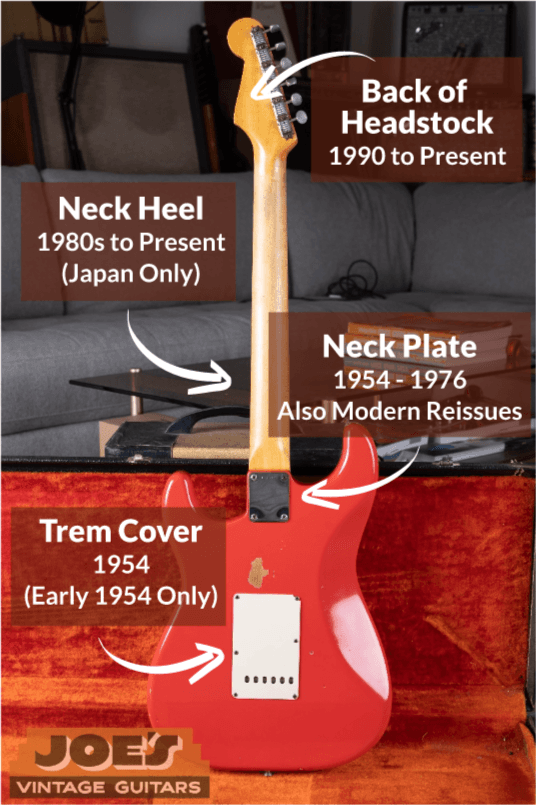
Fender Serial Number Locations: Neck Plate, Headstock, Bridge, & More!
Listed below are the 6 most common Fender serial number locations. In order to find your serial number, check each possible location. You can then click on the location of your number in this body of text to be taken to the corresponding section of this serial number guide. If your guitar does not have a serial number in any of these locations, it is either a parts guitar, severely worn, or not a Fender. As always, you can always contact me and send photos if you need help figuring out what your guitar is.
- Neck Plate: The neck plate is the metal plate on the back of the body that attaches the body to the neck. Depending on the year, you’ll find a 3 screw or 4 screw neck plate. Fender stamped serial numbers on the neck plate from 1955 until 1976.
- Bridge Plate: The bridge plate is located near where the strings of the guitar go into the body. Just follow the strings downwards until they stop, and you will have reached the bridge/bridge plate. Only the earliest Telecaster and Precision Bass models as well as reissues (modern remakes of classic guitar models.) have the serial number stamped into the bridge plate.
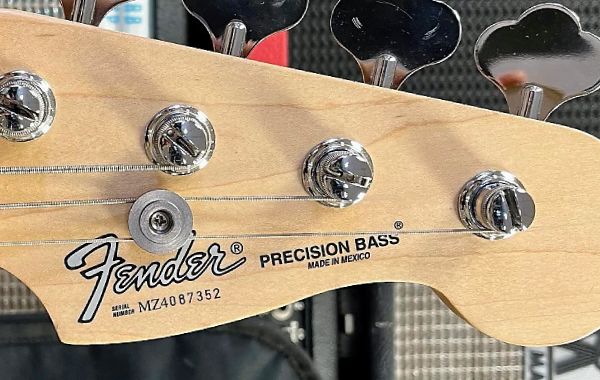
- Front of the Headstock: The headstock is at the very top of the neck, where the guitar tuners are installed. Look for the serial number just below the Fender logo. Fender put serial numbers on the front of the headstock between 1976 and 1995.
- Back of the Headstock: Fender started putting serial numbers on the back of the headstock starting in 1996, and has continued to do so up until today.
- Tremolo Cover Plate (Early Stratocasters): On the very first Stratocasters, Fender stamped the serial number directly into the plastic tremolo cover plate on the back of the guitar. If you see this, you’re looking at a rare and highly collectible piece of Fender history.
Now that you’ve found your Fender serial number location, you can go to the corresponding section on this page to decode your Fender serial number. Learning how to read your Fender serial number will provide valuable insight on the year of manufacture, as well as the market value and collectibility of your vintage Fender guitar.
Fender Serial Number Formats By Era & Model
- Four or five digits on BRIDGE plate (1950-1954)
- Four or five digits on the NECK plate (1954-1963)
- Serial numbers that start with the letter “L” on the NECK plate (1963-1965)
- 6-digit NECK plate serial numbers with large “F” logo underneath (1965-1976)
- Serial numbers on the front or back of the headstock (1977-present)
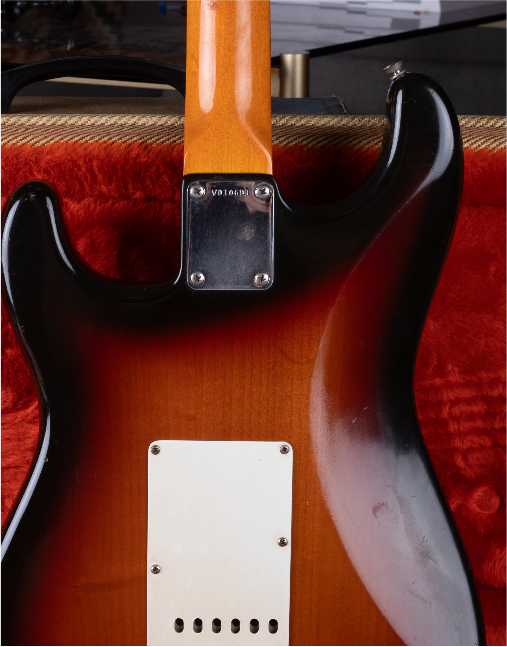
- Serial Numbers on the NECK plate that start with a “V” (1982 and up “reissue” models)
- Import guitars made in Japan and Mexico
Date a Fender by Bridge Plate Serial (4- or 5-digit)
Fender serial numbers from this period can be problematic to decipher, as the company used different numbering schemes for different instruments. Early instruments had their serial numbers on the bridge plate instead of the neck plate or headstock. To help, we’ve posted the serial number ranges per model below. These ranges facilitate narrowing the year of production of your Fender, although for the best possible dating you should also cross-reference neck and body date stamps as well as potentiometer codes. If you want help valuing your early Fender guitar, feel free to contact me or check out our Fender Telecaster Value Guide.
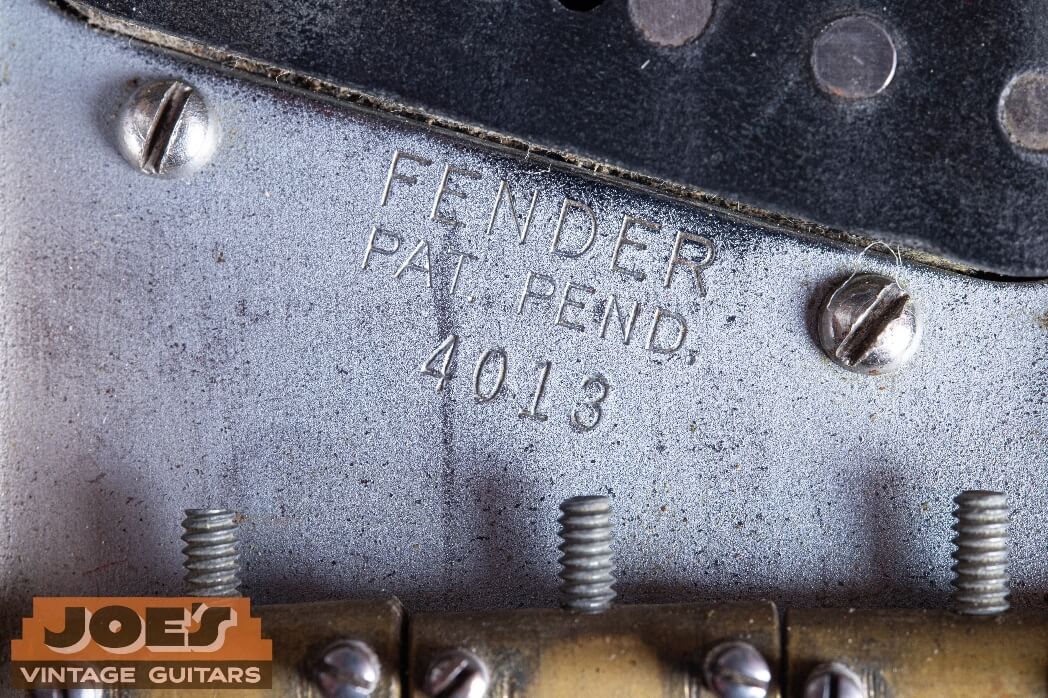
Fender Broadcaster, Esquire and Telecaster
Fender’s first ever electric guitar was the Broadcaster. Its name later had to be changed to “Telecaster” due to a copyright lawsuit. An esquire is just like a Telecaster, but has one pickup instead of two.
| Serial Range | Year of Manufacture |
|---|---|
| 0001 – 1300 | 1950 – 1952 |
| 1300 – 3000 | 1951 – 1954 |
| 3000 – 5000s | 1952 – 1954 |
Fender Precision Bass
On early Fender Precision Basses (1951–mid-1950s), the serial number was stamped directly onto the bridge plate. These numbers are one of the key indicators for dating and authenticating the earliest P-Bass models.
| Serial Range | Year of Manufacture |
|---|---|
| 100 – 600 | 1951 or 1952 |
| 0001 – 0900 | 1952 and 1953 |
| 0900 – 2000 | 1954 |
The 1955 Telecaster Pickup Transition: Flat vs. Staggered Pole Pieces
If you’re trying to pin down a mid-50s Tele, the bridge pickup is one of the first places I look. Up until the summer of 1955, Fender used “flat pole” pickups—meaning all six magnets sit at the exact same height across the top. You’ll see this on all the legendary Blackguards and the very first Whiteguards.
In mid-1955, Fender made the switch to “staggered” poles, varying the magnet heights to help balance out the volume between strings. It’s a small detail, but it’s a massive “tell” for authentication. If your Telecaster bridge pickup is flat across the top, you’re almost certainly looking at a guitar born before the middle of ’55.
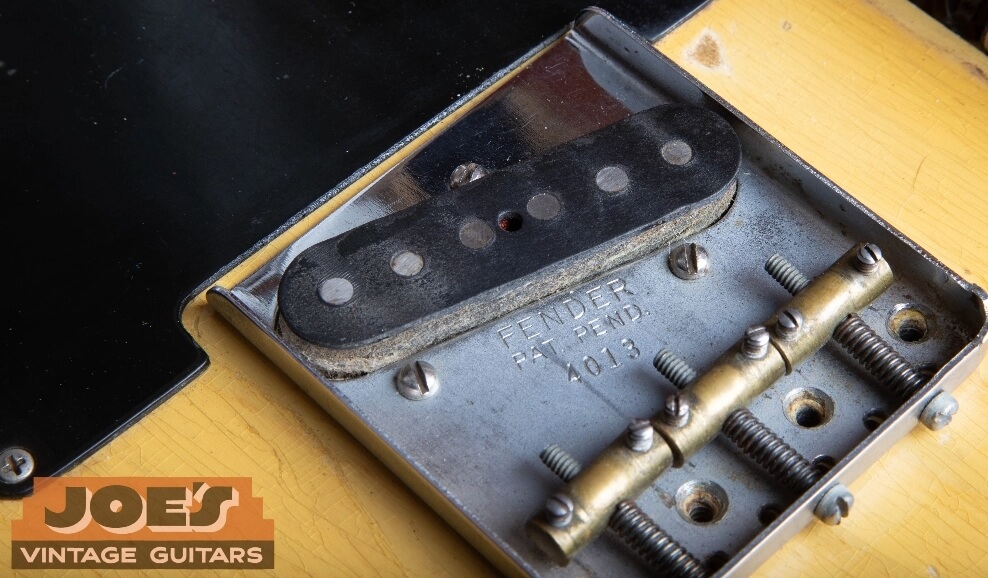
Joe’s Tip: On those early staggered pickups from mid-1955, the magnet under the D-string is the highest pole piece. If you’re looking at a pickup that is ‘staggered’ but the D string pole piece is not higher than the rest, you are looking at a replaced pickup or non-vintage instrument.
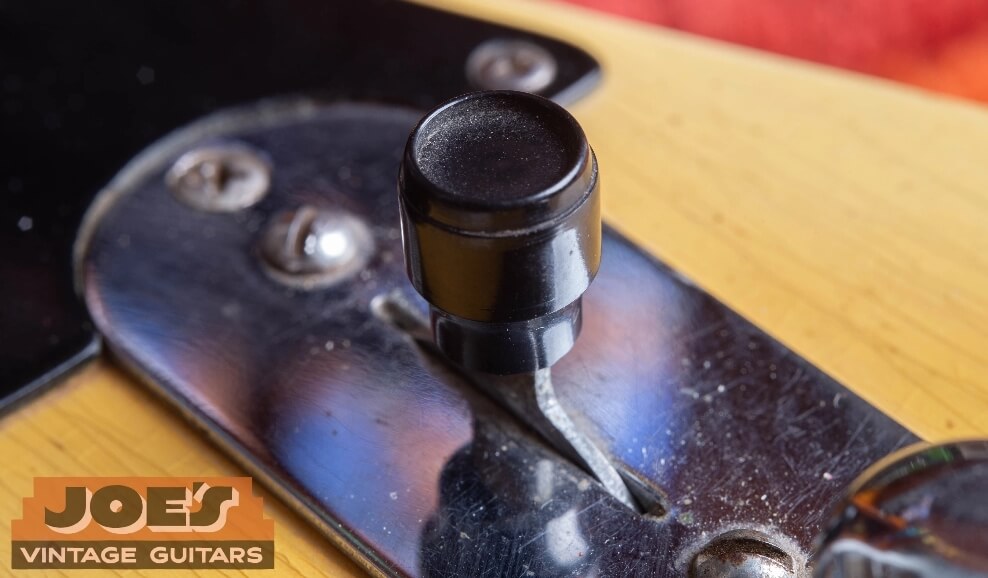
Joe’s Tip (Pun Intended): Flip that round tip over. Many original pre-1955 tips were manufactured by a company called Daka-Ware in Chicago. If you see that tiny branding molded into the bottom of the circle, you’ve likely found a ‘Holy Grail’ original part. Modern ‘Top Hats’ are almost always blank and made of a softer ABS plastic that feels ‘slicker’ to the touch. Finding an original, un-cracked Bakelite barrel is a massive value-add for any Blackguard-era Fender.”
Fender Switch Tips: The 1954 “Round” vs. “Top Hat” Transition
If you’re looking at a 1954 Fender—whether it’s a Tele, an Esquire, or even a Precision Bass—the switch tip is a dead giveaway for dating. Up until the end of 1954, Fender used a simple, round “barrel” style tip.
In late ’54, they made the jump to the iconic “Top Hat” shape that we still see on most Teles today. It’s a tiny piece of plastic, but for authentication, it’s huge. If your guitar still has its original round tip, that’s a rock-solid indicator of a pre-1955 build.
Fender Telecaster Bridge Saddles: The 1954 Brass to Steel Transition
If you’re hunting for an early 50s Tele, the bridge is usually the first place to look for a quick ID. The most obvious visual change happened in mid-1954, when Fender swapped out the original brass saddles for steel ones.
The Brass Era (1950 – Mid-1954): On the legendary “Blackguards” and early “Whiteguards,” those three saddles were made of solid brass. Over the decades, these usually take on a dull, brownish-gold patina. If you see that gold-colored metal, it’s a strong indicator you’re looking at a pre-mid-1954 build.
The Steel Era (Mid-1954 – 1958): > To brighten up the tone and cut costs, Fender switched to steel. These are silver in color and, unlike brass, they are prone to rusting or pitting over time. If your saddles look like weathered chrome or rusted iron, they are the later steel version. It’s a dead-simple visual check: Gold = Early; Silver = Later. While parts can be swapped, finding original brass on a supposed ’52 is exactly what we want to see.
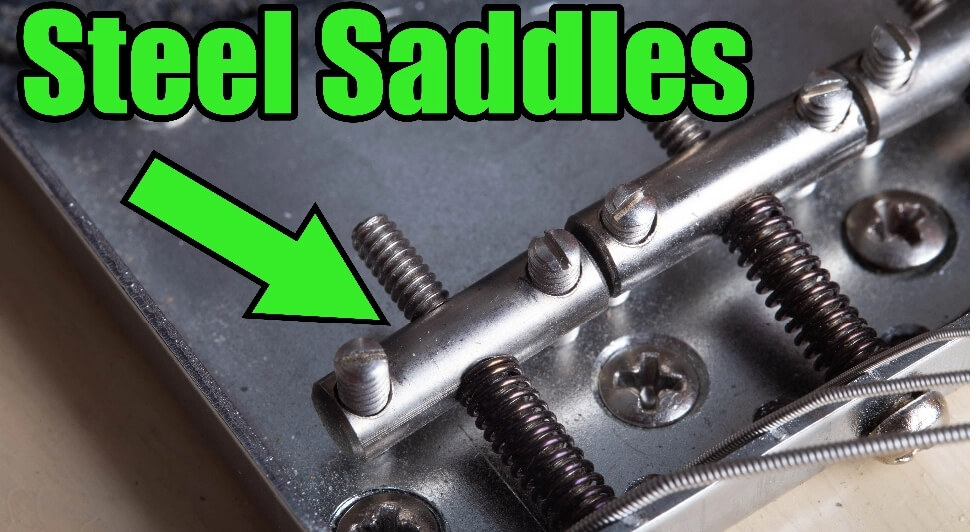
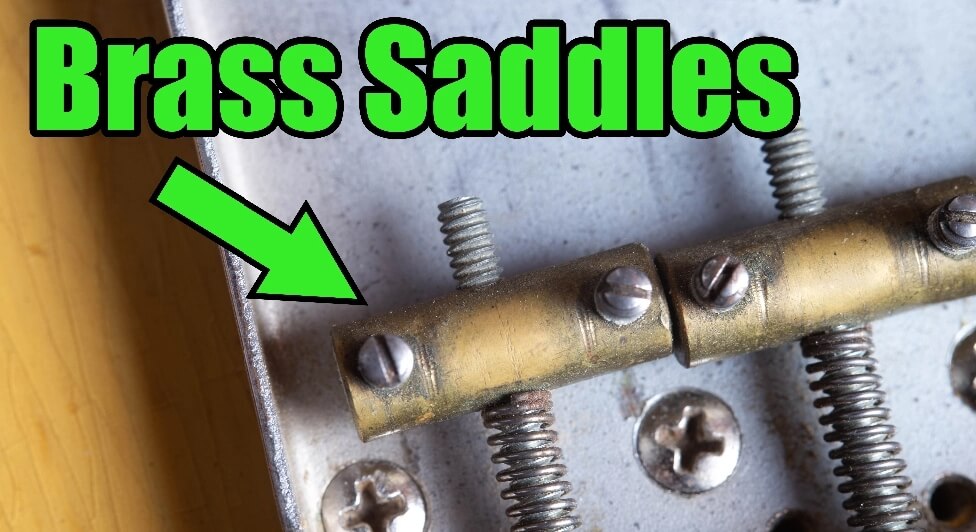
Joe’s Tip: If you want to be 100% sure, grab a pair of calipers. Those early brass saddles are almost always 5/16” in diameter. When Fender switched to steel in mid-’54, they eventually moved to a slightly slimmer 1/4” diameter. If you find a ’52 with thin 1/4″ brass saddles, they’re likely modern replacements, not original Fullerton steel-era survivors.”
Dating Your Fender Guitar Using a 4- or 5-Digit Number on the Neck Plate
Fender used 4- and 5-digit serial numbers on the neck plate from the mid-1950s into the early 1960s. This format applies to nearly all models made at that time, including the Stratocaster, Telecaster, Jazzmaster, Jaguar, Precision Bass, Jazz Bass, Coronado, and more.
To narrow down the date even more, it’s best to also check the neck heel date, pot codes, and the pickup stamps, as Fender serial numbers for this period usually overlap.
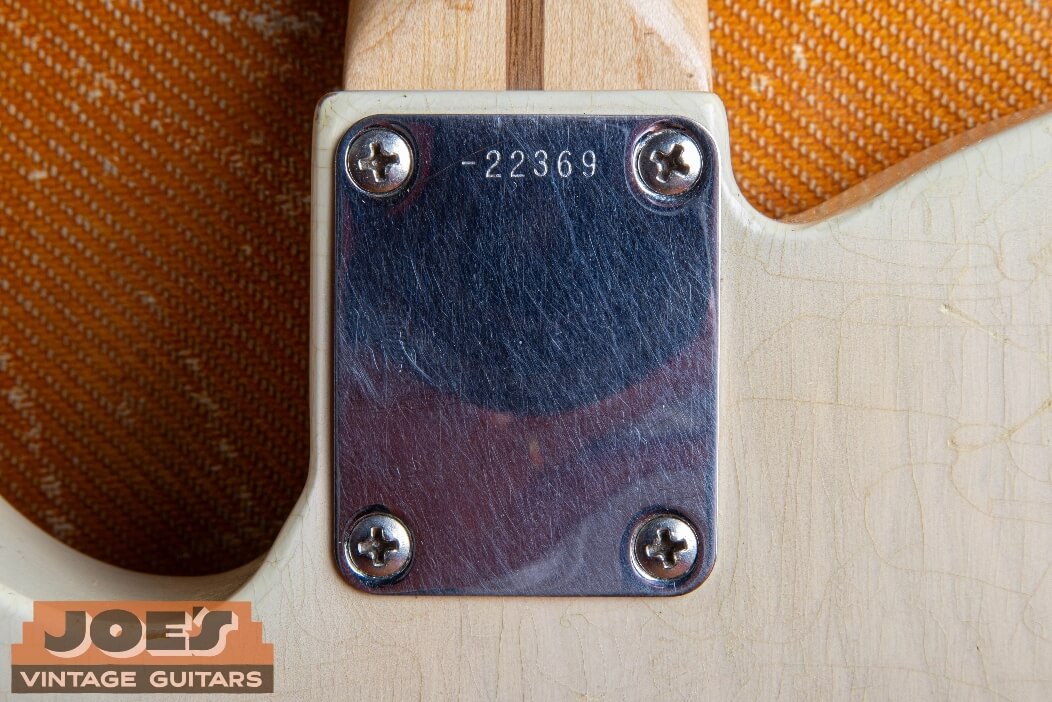
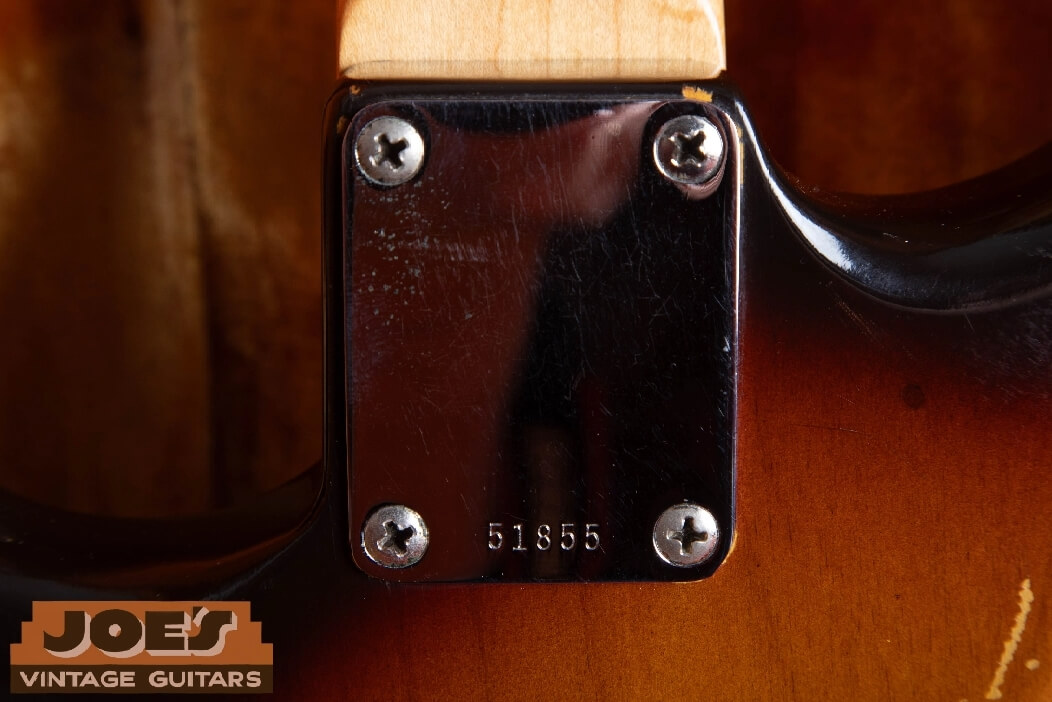
Joe’s Tip: Yes, Fender did sometimes stamp the serial number on the lower end of the neck plate!
| Serial Range | Year of Manufacture |
|---|---|
| 0001 – 8000 | 1954 |
| 6000 – 10000 | 1955 |
| 9000 – 16000 | 1956 |
| 16000 – 25000 | 1957 |
| 25000 – 30000 | 1958 |
| 30000 – 40000 | 1959 |
| 40000 – 58000 | 1960 |
| 55000 – 72000 | 1961 |
| 72000 – 93000 | 1962 |
| 93000 – 99999 | 1963 |
How to Date a Fender Telecaster by Control Knobs: The Pre-1956 Round Top Spec
If you’re checking the hardware on a mid-50s Fender, don’t overlook the knobs. Up until mid-1956, Telecasters, Esquires, and P-Basses featured “Round Top” knobs with a very coarse knurling (the texture on the side).
Later in ’56, Fender moved to a flat-top design with a much finer knurl. It’s a small detail, but it’s a massive help for authentication. If your guitar is sporting those heavy, coarse-textured knobs with the rounded crown, it’s a perfect match for a pre-1956 build.
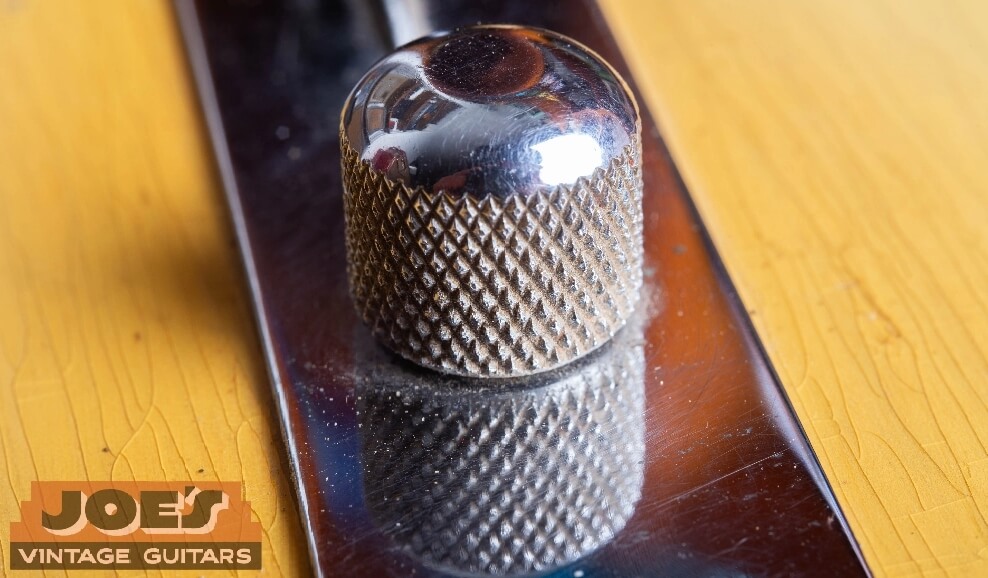
Joe’s Tip: When we’re really scrutinizing a ’54 or ’55 Tele at the shop, we don’t just look at the knurling—we look at the set screw. On original pre-1956 knobs, the slotted set screw is usually a bit beefier and made of steel that patinas differently than the chrome-plated brass of the knob itself.
Identifying Vintage Kluson Deluxe Tuners: The 1956 & 1964 Transitions
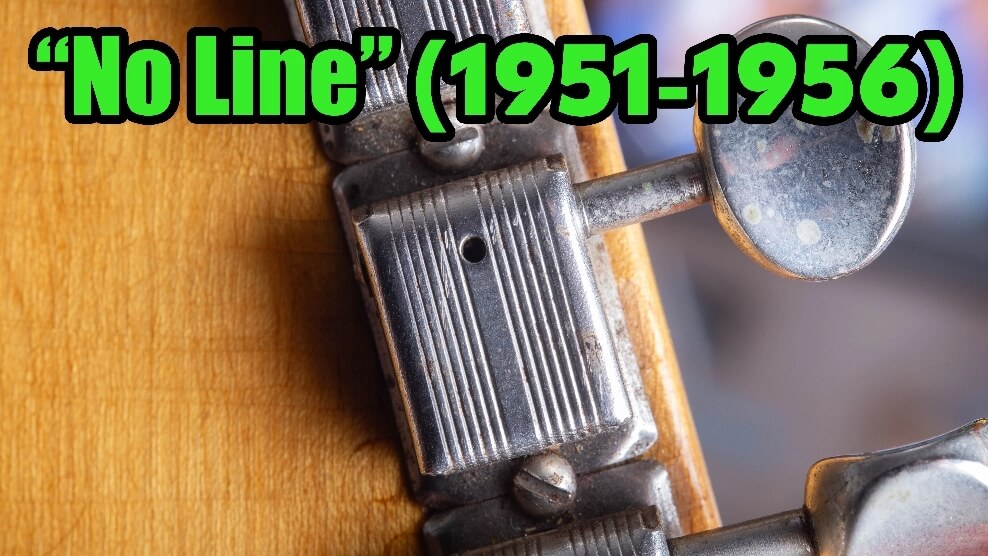
If you want to know if a Fender neck is original to the guitar, the back of the headstock tells the story. Before you even look at the date stamp, look at the Kluson Deluxe tuners. There are three distinct “eras” of stamping that act as a timeline for the Fullerton factory.
1. The “No-Line” Era (1950 – Mid-1956)
On the earliest Teles, Strats, and Precision Basses, the back of the tuner “box” is totally smooth. There is no branding or logo stamped into the metal. If you’ve got a clean set of “no-lines,” you’re looking at a spec consistent with the legendary pre-mid-’56 builds.
2. The “Single-Line” Era (Mid-1956 – Late 1964)
This is the classic “Pre-CBS” look. The words “Kluson Deluxe” are stamped in a single vertical line running down the center of the tuner housing. This is the hallmark of the late-50s and early-60s “Golden Era” Fenders.
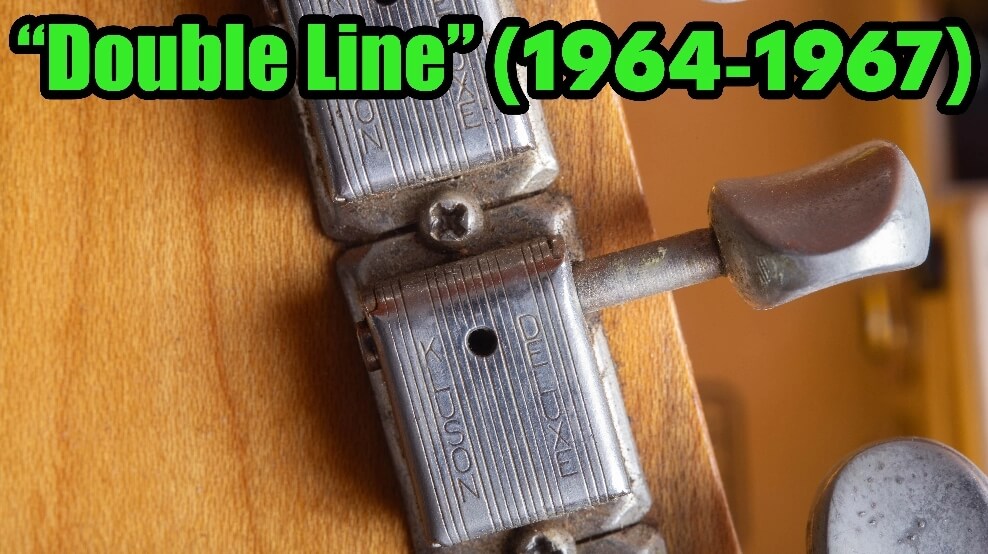
3. The “Double-Line” Era (Late 1964 – 1967)
Right as CBS was taking the reins, the stamping changed. Now, the words are split into two parallel vertical lines: “Kluson” on one side and “Deluxe” on the other. While these are still great tuners, seeing “double-lines” on a guitar marketed as a ’62 is a major red flag.
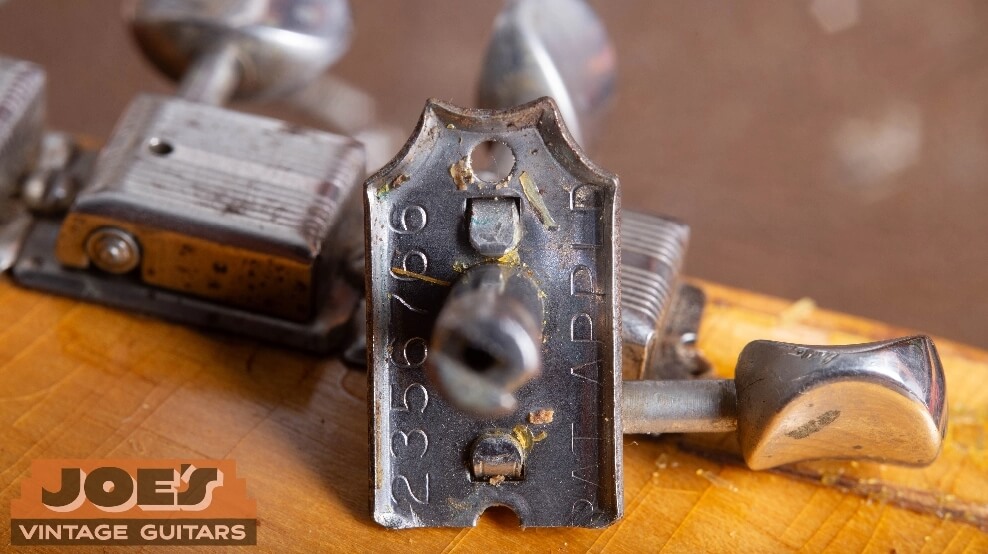
Joe’s Tip: If you’re looking at a 1952 or 1953 ‘No-Line’ tuner, flip it over and look at the bottom of the casing. Before 1954, many of these tuners were stamped with ‘PAT. APPLD.’ on the underside. By 1954, that changed to a full patent number. It’s a tiny detail, but it’s the difference between a ‘Blackguard’ era tuner and a later ‘Whiteguard’ transition piece. We always check this at the shop to ensure the hardware matches the neck date perfectly.
Fender String Trees: The 1956 “Round” vs. “Butterfly” Transition
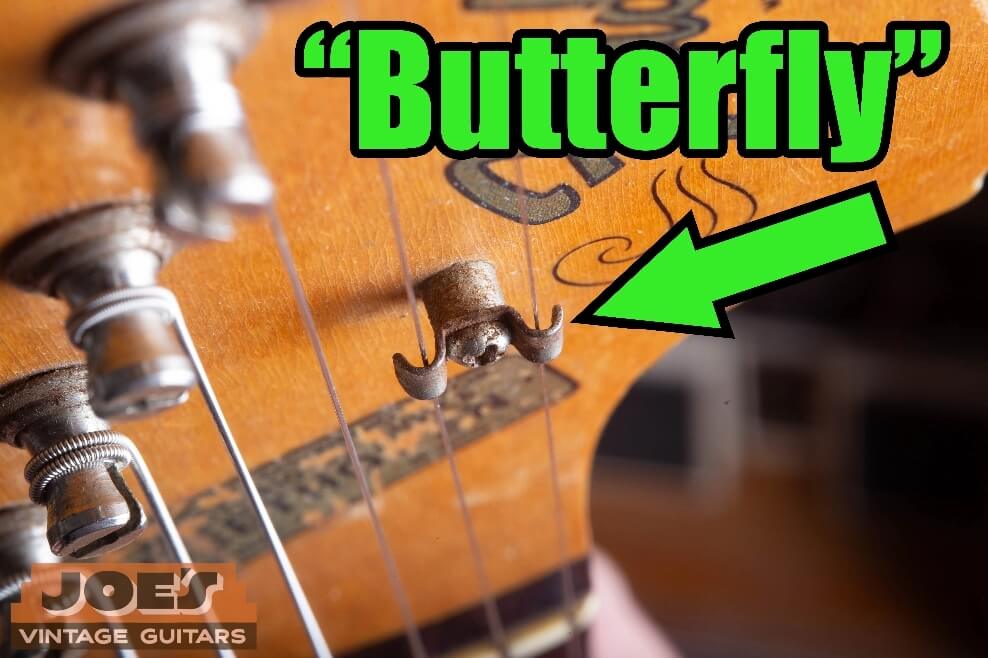
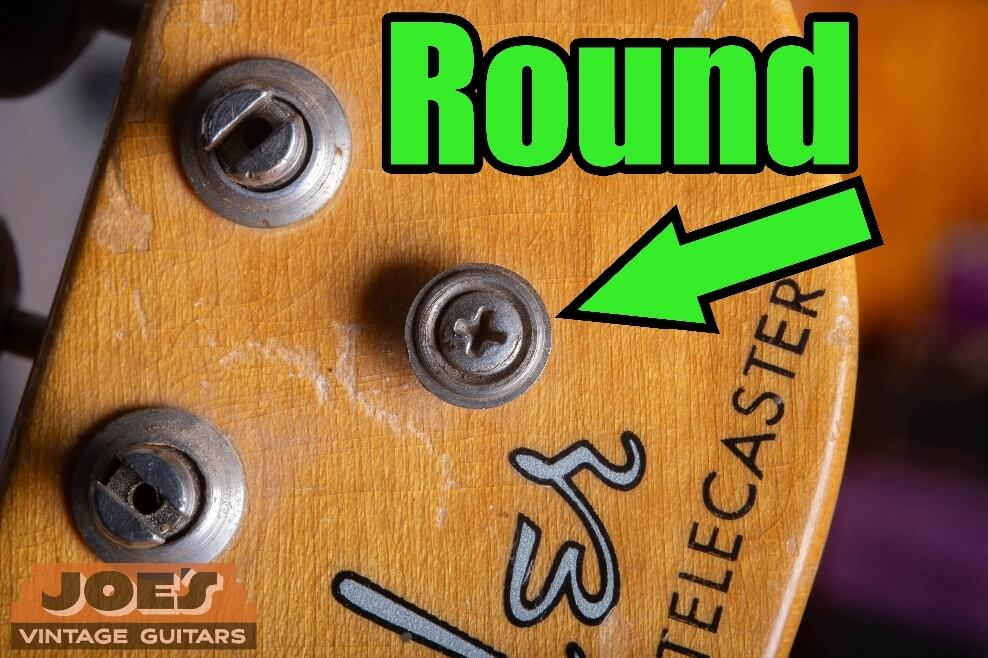
When you’re looking at the headstock of a 50s Strat or Tele, the string tree is one of those tiny parts that tells a huge story about the guitar’s age. Up until mid-1956, Fender used the simple “Round” string guide—it’s exactly what it sounds like: a small, circular piece of metal holding the strings down.
Right around the summer of ’56, they swapped it for the “Butterfly” (or wing-shaped) tree that we still see on most Fenders today. It’s a subtle shift, but if your guitar is sporting that original round guide, it’s a rock-solid indicator that you’re likely holding a spec-correct piece from the early Fullerton years (pre-mid-1956).
Fender Slab Board vs. Veneer: The 1962 Rosewood Transition
If you’re hunting for a vintage rosewood Fender, the “Slab Board” is the holy grail. When Fender first introduced rosewood in mid-1959, they used a massive, thick piece of the wood with a flat bottom—literally a “slab” glued onto the maple neck.
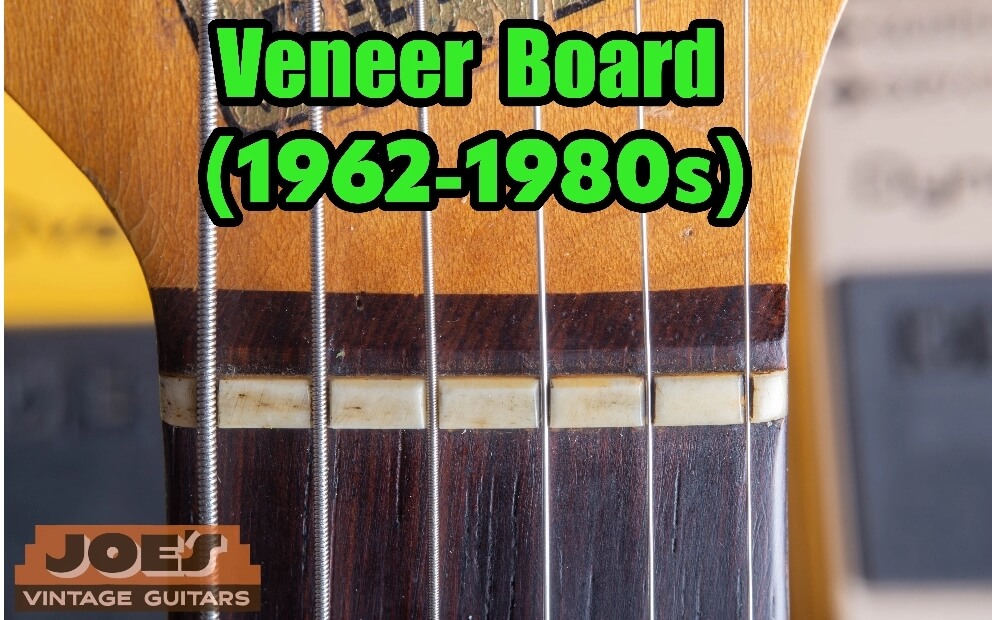
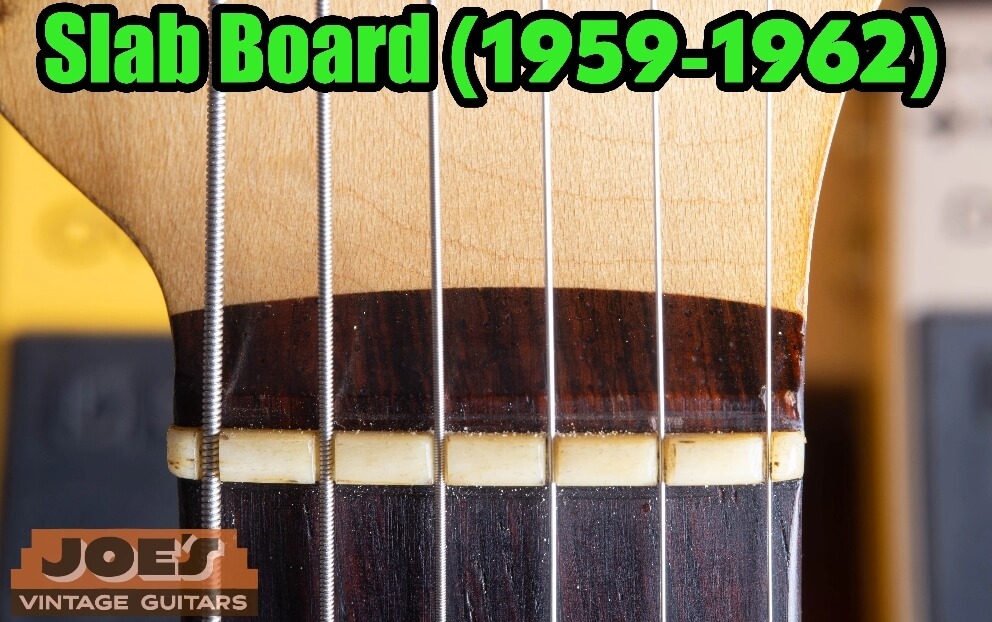
In mid-1962, they made the switch to a thinner “Veneer” (or Round-Lam) board. Because the slab boards were so thick, they sometimes caused the necks to warp as the two woods expanded differently. The veneer board was curved to match the radius of the maple, making it more stable but thinner.
The Quick ID Trick: Don’t look at the side of the neck—look at the headstock transition (where the rosewood meets the maple right above the nut)
- Slab Board: You’ll see a thick, “convex” curve of rosewood that looks like it’s pushing up into the headstock.
- Veneer Board: The rosewood line will look much thinner and flatter across the headstock face.
Joe’s Tip: August 1962 is the ‘Magic Month.’ You can find both slab and veneer boards with an August ’62 neck stamp. If you find a slab board from late ’62, you’ve got a very valuable transition piece!
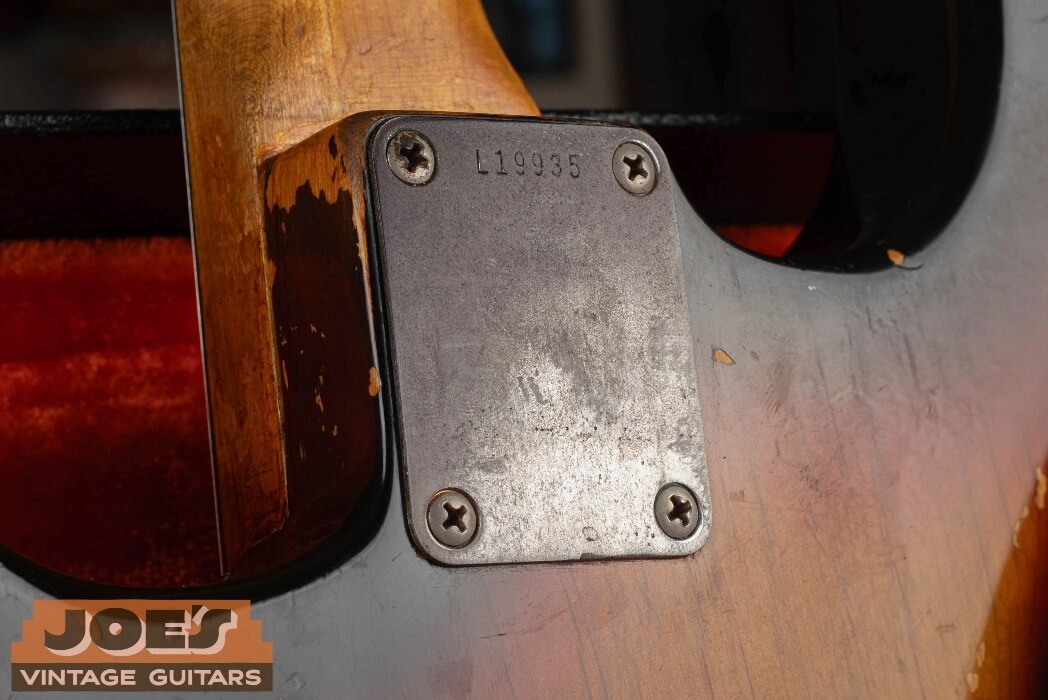
Fender L-Series Serial Numbers (1963–1965)
Fender L-series serial numbers used between late 1962 and 1965 place your guitar squarely in the pre-CBS transition era. Guitars produced then are highly valued for their hand built quality, collectibility, and historical importance. If your Fender has an L-prefix serial number, you can estimate its date of manufacture to around 1963–1965. To determine the specific year, compare your serial number to the list below. If you want an even more accurate way to date your guitar, examine the neck heel date, pickup codes, or potentiometer stamps, since serial numbers themselves may overlap slightly between years.
| Serial Range | Year of Manufacture |
|---|---|
| L00001 – L20000 | 1963 |
| L20000 – L55000 | 1964 |
| L55000 – L99999 | 1965 |
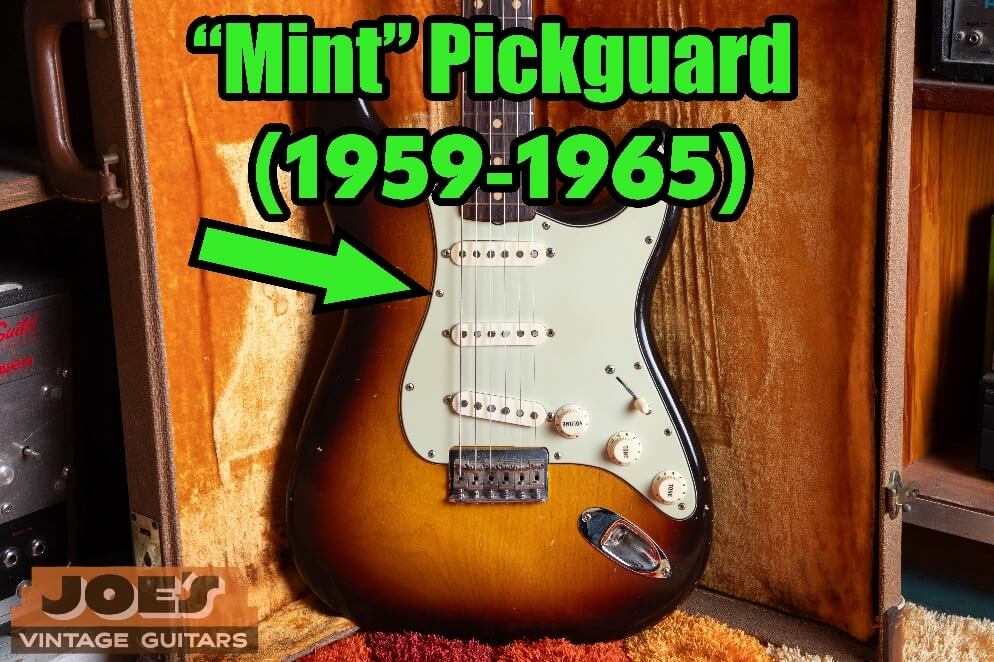
Identifying Vintage Fender Pickguards: Nitrate vs. 3-Ply White PVC
If you’re looking at a rosewood-era Fender, the pickguard is a major piece of the authentication puzzle. From 1959 through late 1964, Fender used Cellulose Nitrate for their 3-ply guards. These are the famous “Mint Green” guards—though they weren’t green when they left the factory! Over time, a chemical reaction in the nitrate causes them to take on that iconic greenish hue.
The Key Transitions:
- The “Mint” Guard(1959 – Late 1964): If it’s got that subtle, smoky green patina, it’s a Nitrate guard. These are highly reactive and sometimes even smell a bit like vinegar or camphor as they age.
- The White 3-Ply (Late 1964 – 1970s): In very late ’64, Fender swapped to a more stable PVC material. These stay white, though they can “parchment” or yellow a bit. Crucially, they will never turn that specific mint green.
- The Tortoise Guard (1959 – 1970s): Fender used tortoise-shell nitrate consistently on models like the Jazzmaster and Jaguar. Like the green guards, these are also nitrate and can shrink or warp over time.
Don’t Get Confused: The 60s 3-ply white guard (White-Black-White) is totally different from the 1950s Single-Ply white guard, which was much thicker and had no visible layers on the edge.
Joe’s Tip: If you’re unsure if a guard is original nitrate, give it a quick sniff near the pickups. Original nitrate guards often have a distinct ‘old’ chemical smell that modern plastic just can’t replicate.


Fender Logo Evolution: Identifying Spaghetti, Transition, and CBS Decals
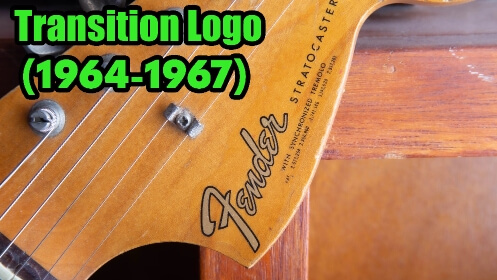
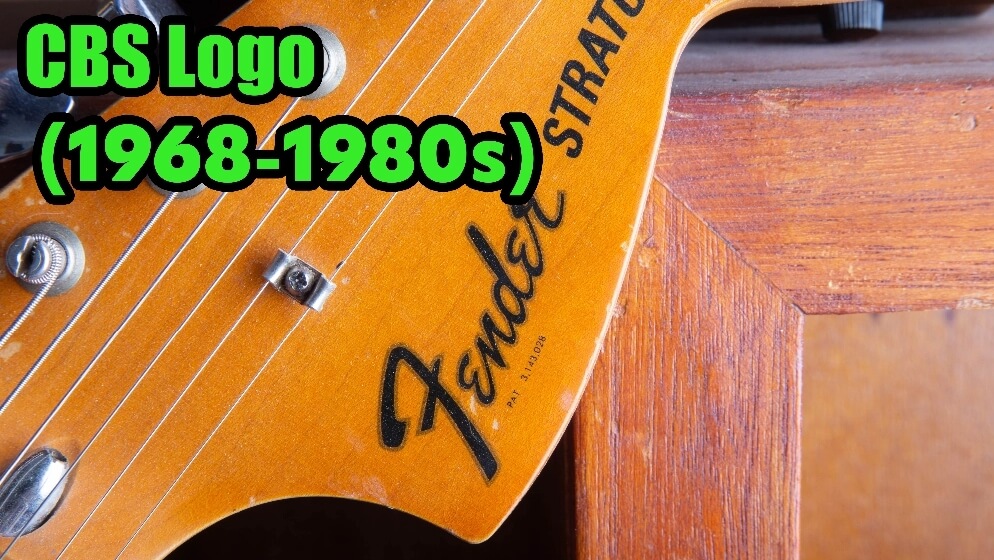
If you want to know which era of Fender history you’re holding, the logo on the headstock is your first and best “tell.” Fender used three distinct logo styles during the vintage years, each representing a major shift in the company’s ownership and production style.
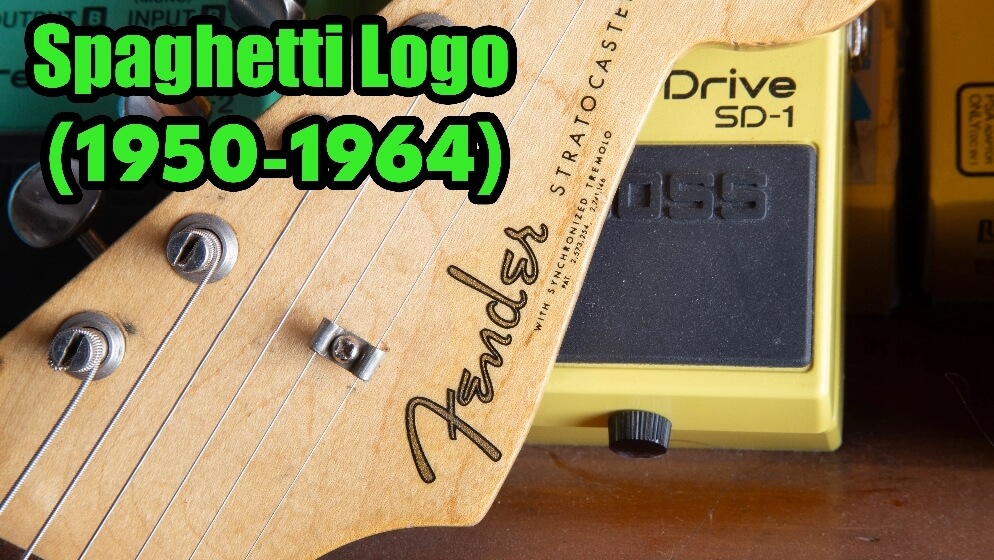
1. The “Spaghetti” Logo (1950 – Early 1964)
This is the “Holy Grail” of Fender branding. Used on all the legendary Pre-CBS instruments, the Spaghetti logo is a thin, delicate script with a fine black outline. It’s elegant and understated—the hallmark of Leo Fender’s original vision. If your guitar has this thin script, you’re looking at an instrument from the most sought-after era of production.
2. The “Transition” Logo (Mid-1964 – 1967)
As Fender prepared for the sale to CBS, they wanted a bolder look. The Transition logo features a much thicker, gold-foil font with a bold black outline. These are found on the “crossover” guitars—like the late-64 Strats with pearl dots but the older small headstocks. It’s the bridge between the hand-built era and the corporate years.
3. The “CBS” or “TV” Logo (1968 – 1980s)
To ensure the branding was visible on a grainy television screen, CBS switched to the boldest logo yet. This features a heavy black “Fender” script with a thin gold outline. On the Stratocaster, this is almost always paired with the oversized “Large” headstock. This logo defines the funk and rock sounds of the 70s.
Joe’s Tip: Don’t just look at the font—check the patent numbers underneath! The number of patents listed changed almost year-by-year and is a vital secondary check for authentication. Compare your numbers to same year guitars online!
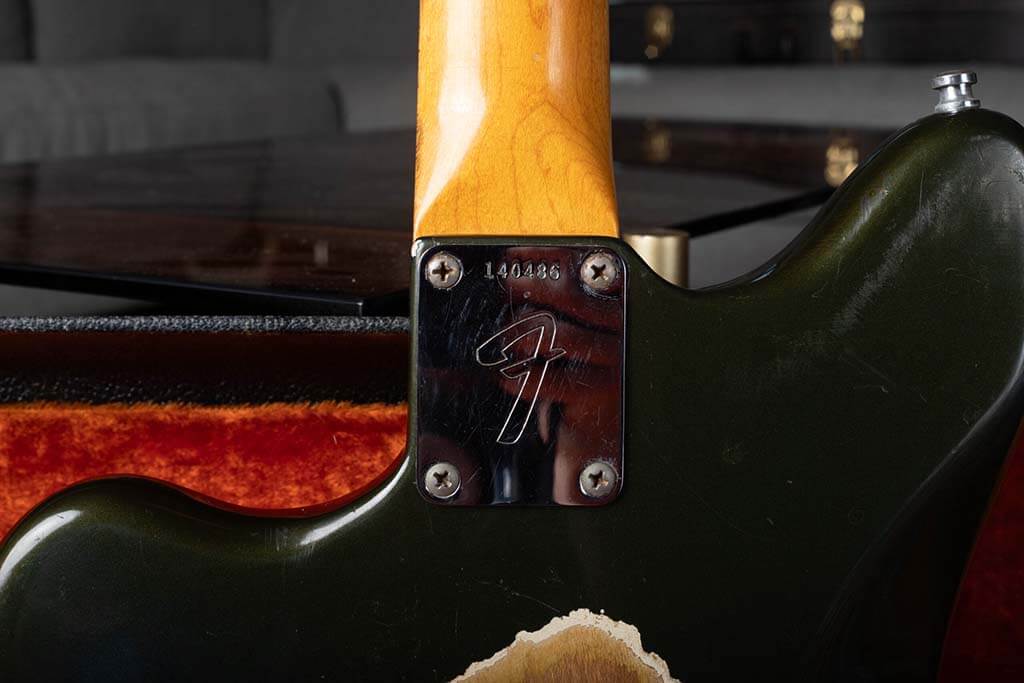
Fender 6-Digit F-Plate Serial Numbers (1965–1976)
Fender started using the 6-digit serial number with “F” logo neck plate in 1965, and it remained in use until 1976. During this period, Fender phased out the earlier L-series serial numbers. F-plate guitars are easy to spot with their big headstocks, CBS-era styling, and model additions like the Telecaster Custom and Coronado.” If your Fender has a 6-digit F-plate serial number, you can date it to somewhere between 1965 and 1976. Use the list below to determine the year. For a more precise identification, it’s helpful to also check the neck heel stamp and pot codes, since serial ranges sometimes overlap.
| Serial Range | Year of Manufacture | Era |
|---|---|---|
| 100000 – 110000 | 1965 | Late ’65 (Transition) |
| 110000 – 200000 | 1966 | CBS Era |
| 180000 – 210000 | 1967 | CBS Era |
| 210000 – 250000 | 1968 | CBS Era |
| 250000 – 280000 | 1969 | CBS Era |
| 280000 – 300000 | 1970 | CBS Era |
| 300000 – 330000 | 1971 | CBS Era |
| 330000 – 370000 | 1972 | CBS Era |
| 370000 – 520000 | 1973 | CBS Era |
| 500000 – 580000 | 1974 | CBS Era |
| 580000 – 690000 | 1975 | CBS Era |
| 690000 – 750000 | 1976 | CBS Era |
When Did Fender Switch to F-Tuners? Dating Late-60s Hardware
If you’re looking at a mid-to-late 60s Fender, the tuners are your roadmap through the CBS transition. Starting in very late 1965, Fender began moving away from the classic Kluson brand and introduced their own proprietary “F-Style” tuners (actually manufactured by Schaller).
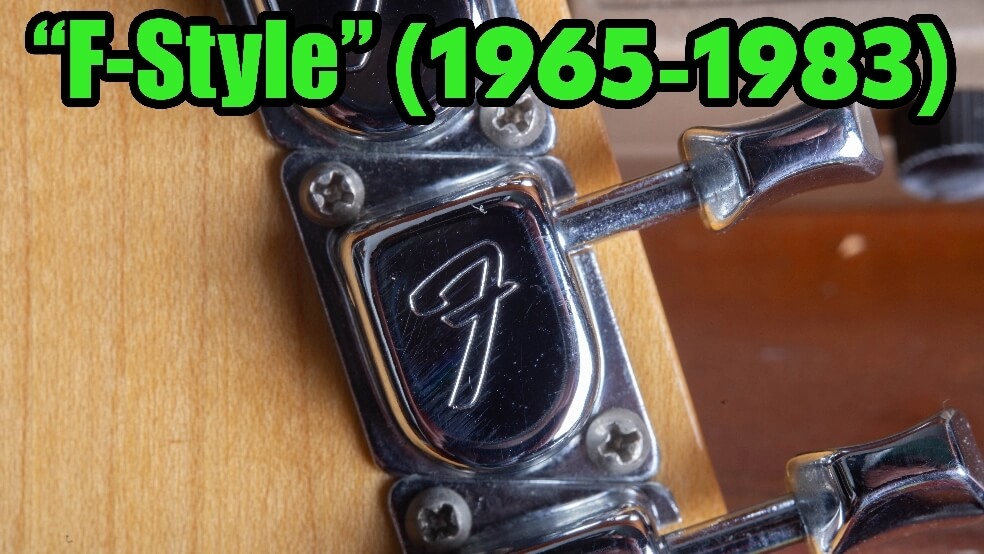
Joe’s Tip: Most F-Style tuners were chrome-plated, while the earlier Klusons were nickel-plated. If you see a tuner that has a very reflective ‘blueish’ shine that doesn’t tarnish like old silver, you’re likely looking at the later F-style chrome. This is a quick way to spot a part-swap from across the room!
- The Crossover Years (1965–1967): This wasn’t an overnight swap. Because Fender never threw away perfectly good parts, there is a “mish-mash” period. It’s completely normal to see the older Kluson-style tuners on 1965 and 1966 models, and they even pop up on some early 1967 guitars.
- The Standard (1968 and Beyond): By 1968, the transition was finished. From this point forward, almost every guitar leaving the Fullerton factory was equipped with the “F-Style” hardware.
- How to Spot Them: Look at the back of the tuner housing. You’ll see a large, stylized “F” stamped right in the center of the chrome plating. Unlike the earlier Klusons, these usually have a much “sharper” feel to the casing and a distinctive 70s look.
Identifying Vintage Strat Saddles: Stamped Steel vs. Die-Cast Zinc
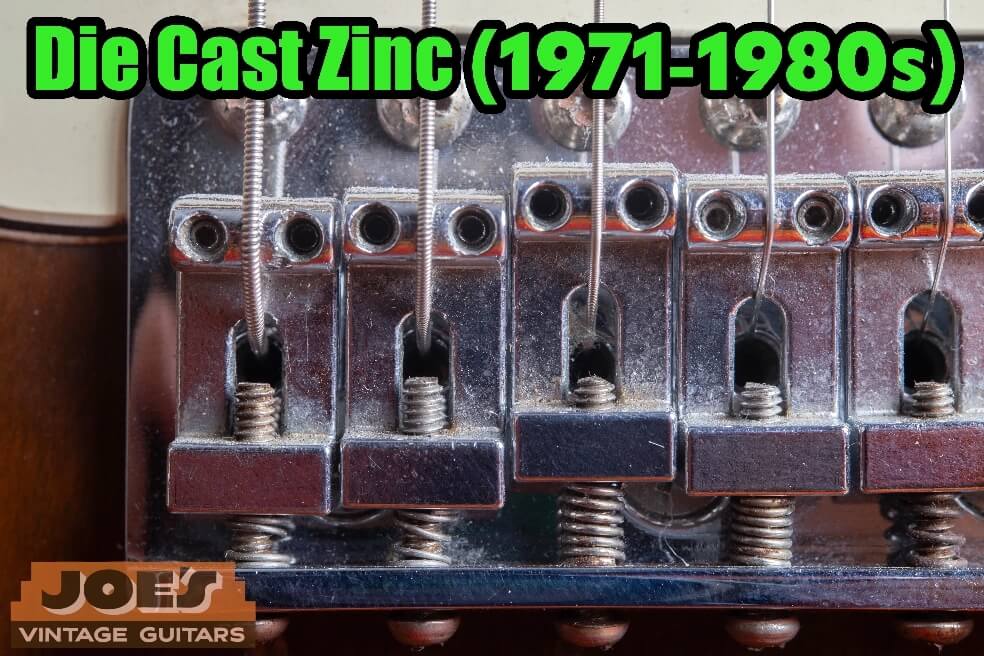
If you’re looking at a Stratocaster that someone is claiming is from the 1960s, the first thing I want you to do is look at the bridge. In late 1971, Fender made a massive hardware change that serves as an “instant identifier” for the 70s era.
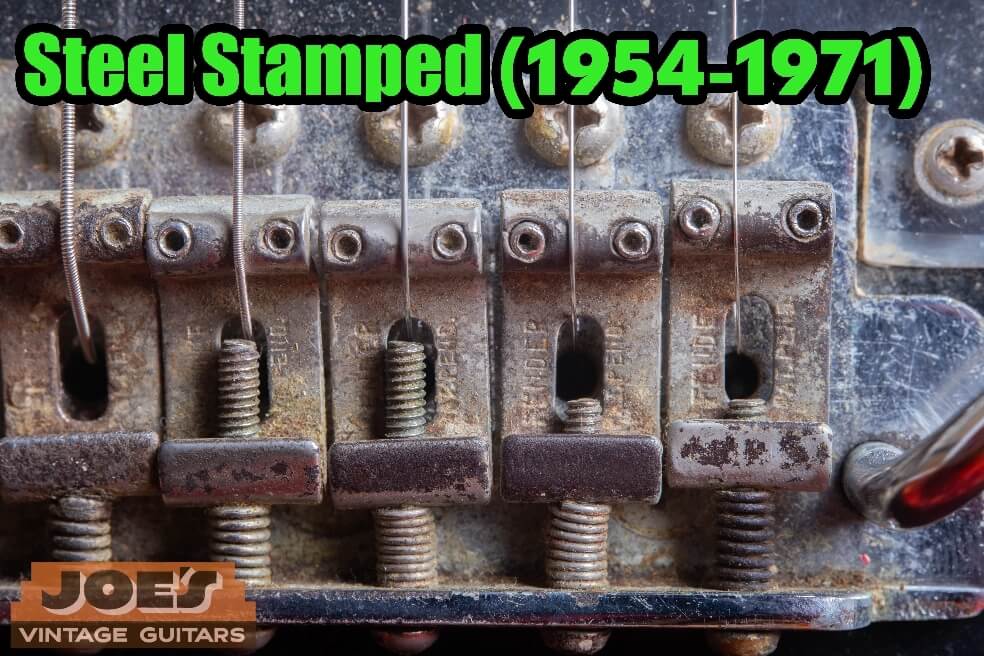
The 1960s Standard: Every single Stratocaster from the 50s and 60s came with stamped steel saddles. These have “FENDER PAT. PEND.” clearly stamped right into the metal. If the saddles don’t have that branding, it’s probably not a 60s guitar.
The 1970s “Red Flag”: Starting in late ’71, Fender switched to die-cast zinc “block” saddles. These are easy to spot from a mile away: they are thick, sharp-edged rectangles, and—most importantly—they are completely blank. No Fender logo, no stamps, nothing.
If you see those unbranded, solid block saddles, you are looking at a 1970s guitar or one with changed parts, plain and simple. It’s the fastest way to verify if that “1965 Strat” you’re looking at is the real deal or a later CBS-era model in disguise.
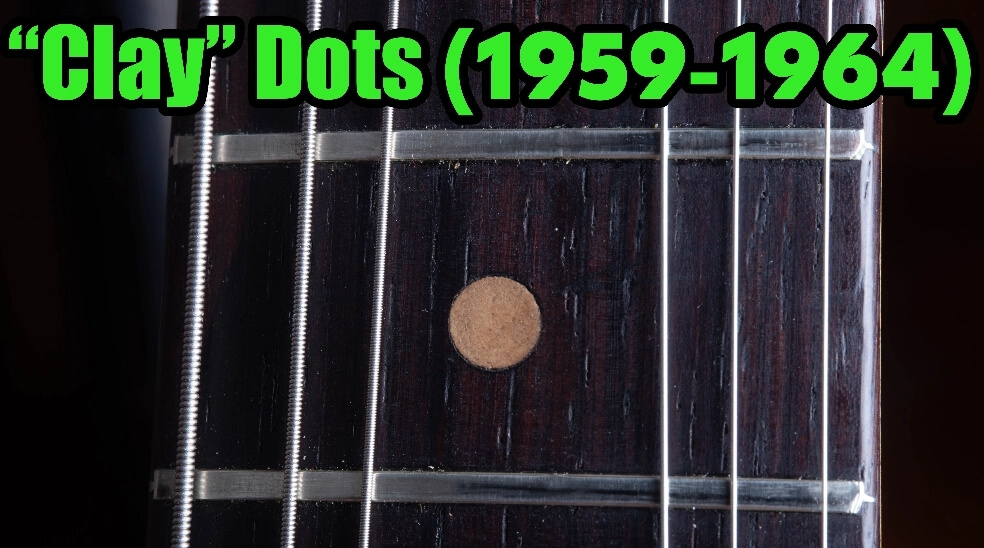
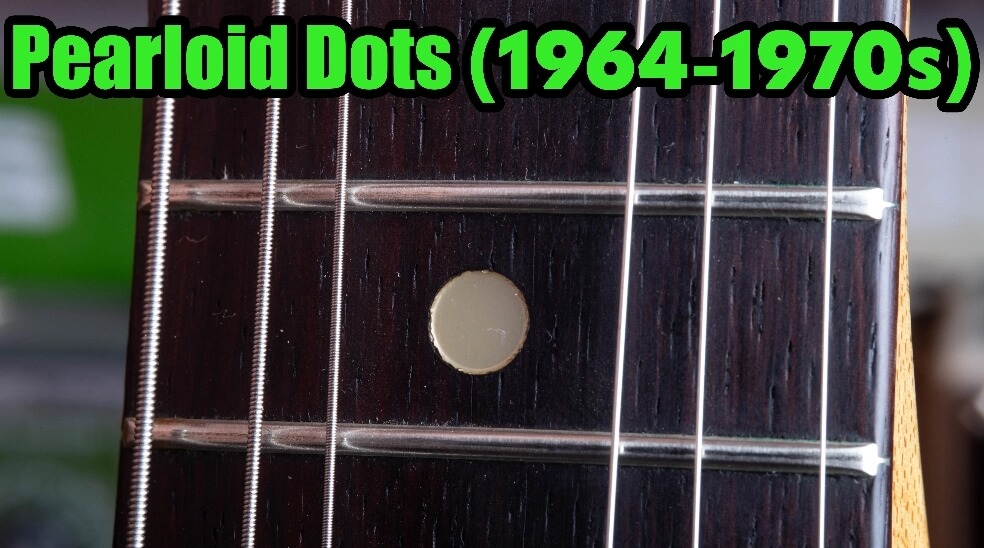
If you’re trying to date a rosewood-neck Fender, the fretboard dots are an essential visual “tell.” Up until late 1964, Fender used vulcanized fiberboard dots—famously known as “clay” dots. They aren’t actually made of clay, but they have a dull, off-white or tannish-gray look that collectors love.
Dating Your Fender by Fingerboard Inlays: The 1964 Clay vs. Pearloid Transition
The Clay Dot Era (1959 – Late 1964): Because fiberboard is porous, these dots are like sponges for decades of sweat, dirt, and cigarette smoke. They usually age into a dingy, brownish color that sits flush and matte against the rosewood. If the dots look “dirty” and dull, you’re likely looking at a Pre-CBS build.
The Pearloid Era (Late 1964 – 1970s): Right as the CBS transition began in late ’64, Fender swapped to pearloid dots. These are bright, shimmering, and have a distinct “swirly” or marbled texture. Unlike the old clay dots, pearloid doesn’t absorb oils, so they stay bright and “pop” against the wood even after 60 years of playing.
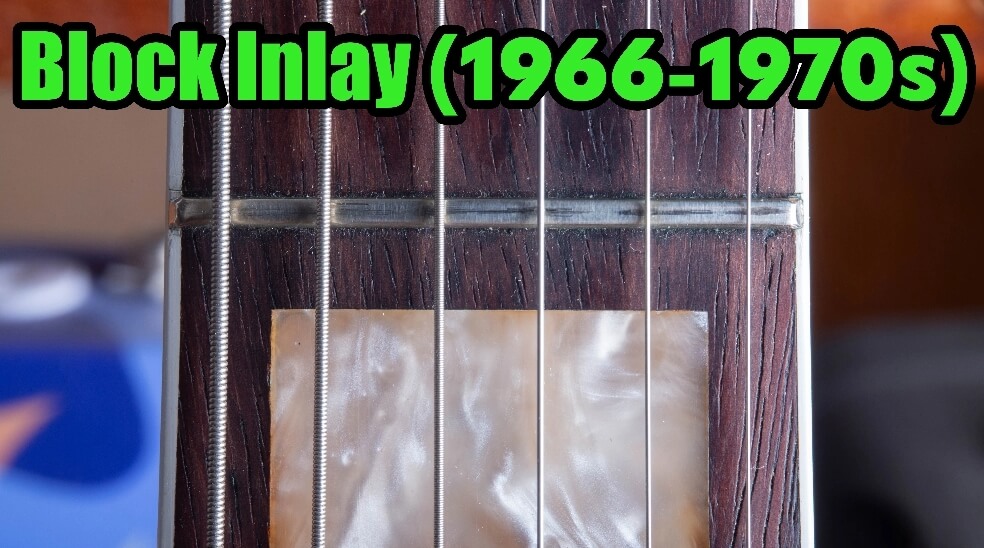
The Block Inlay Exception (1966): If you’re looking at a Jazzmaster or Jaguar from 1966 or later, forget the dots—Fender switched these flagship models to large, pearloid “Block” inlays. It’s a bold, high-end look that defines the late-60s aesthetic for those specific models.
Joe’s Tip: if you aren’t sure if a late-’64 has clay or pearloid dots, look at the side markers. In early ’64, Fender actually switched the side dots from clay to pearloid before they changed the main fretboard dots. If you see shimmering pearloid dots on the side of the neck but dull clay dots on the fretboard, you’ve found a very specific ‘crossover’ neck from the first half of 1964.
How to Determine the Age of Your Fender Guitar Using Headstock Serial Numbers
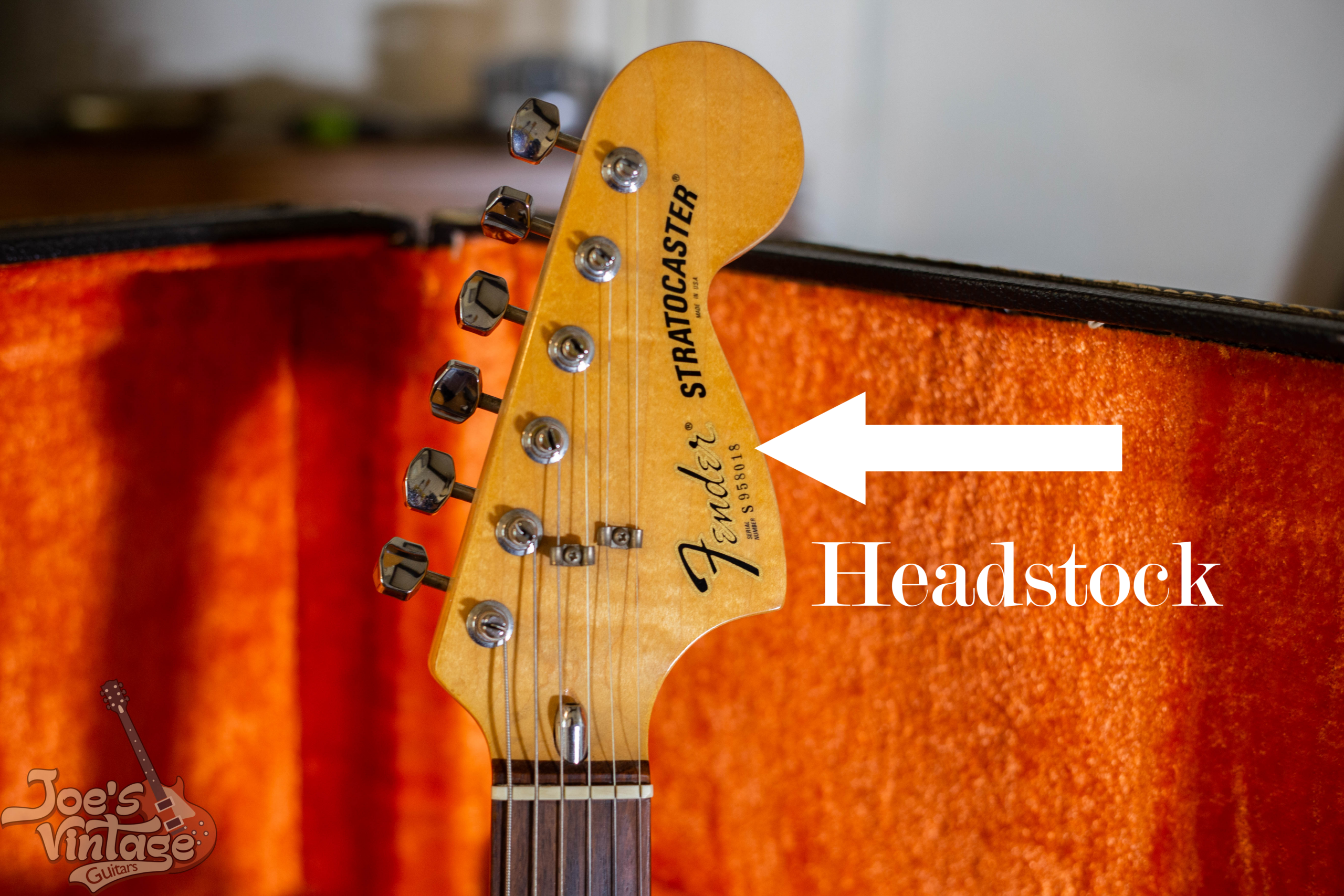
Since 1976, the serial numbers started with a letter that denoted the DECADE of manufacture. S=Seventies, E=Eighties, N=Nineties, and Z or DZ=2000s. The first number following the letter indicates the exact year. For example:
- S958010 = 1979 because S=70s and 9=1979
- E212355 = 1982 because E=80s and 2=1982
- N975436 = 1999 because N=90s and 9=1999
- Z504999 = 2005 because Z=2000s and 5= 2005
Fender Serial Number on Headstock (1976–present)
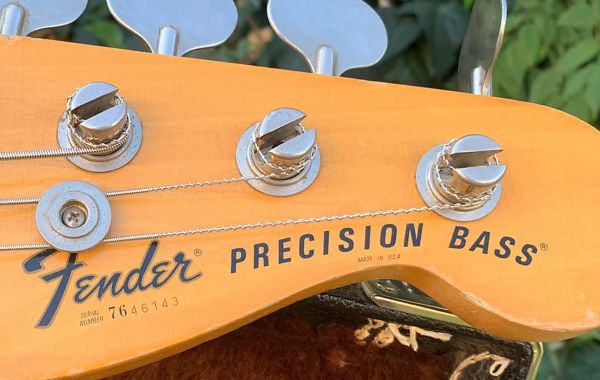
Between 1976 and the mid-1990s, Fender guitars placed their serial numbers on the front of the headstock, beneath the Fender logo. This headstock serial number position is most often used on Stratocasters, Telecasters, and Fender basses produced in this period. The system used letter prefixes to indicate the decade — for example, “S” prefix serial numbers indicate late-1970s Fenders, and “E” prefix serial numbers were used for the entire 1980s.
While headstock serial numbers are a reliable way to date a Fender guitar, the ranges often overlap. To determine a more exact year of manufacture, collectors also look at the neck heel stamp, potentiometer codes, and pickup markings in addition to the headstock serial number.
76 Prefix
76 prefix = 1976 Overlap in 1977 “76xxxxx” = 1976
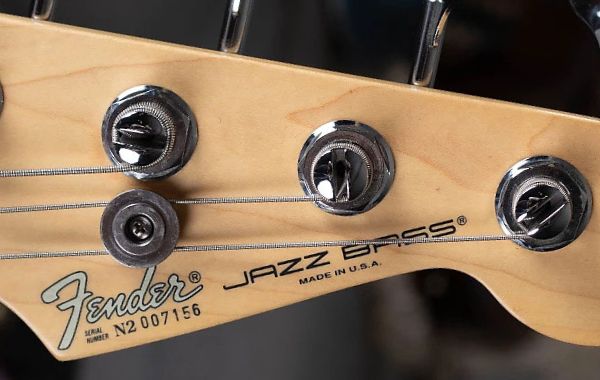
N Prefix
N prefix = 1990s 1st Digit = Year “N1xxxxx” = 1991
S prefix
S prefix = 1970s 1st Digit = Year “S8xxxxx” = 1978
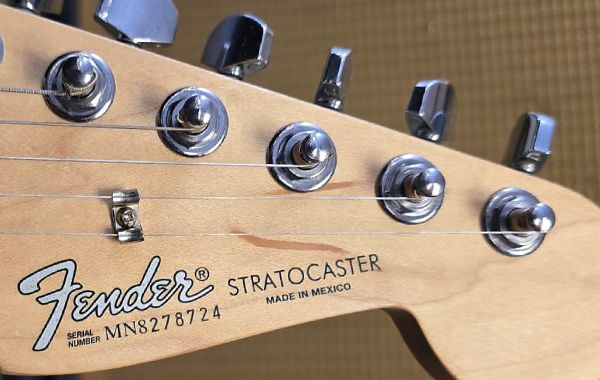
MN Prefix
M = Mexico N Prefix = 1990s 1st Digit = Year “MN0xxxxx” = 1990
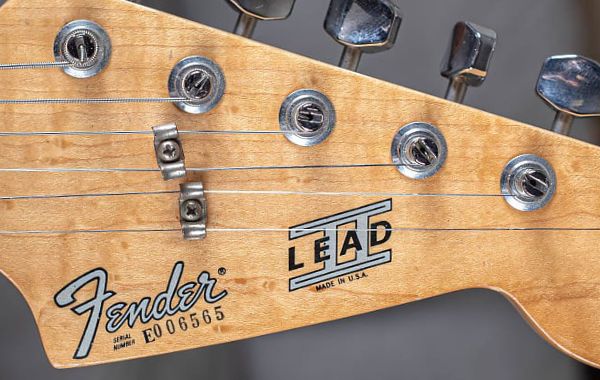
E Prefix
E prefix = 1980s 1st Digit = Year “E4xxxxx” = 1984
MZ Prefix
M = Mexico Z Prefix = 2000s 1st Digit = Year “MZ0xxxxx” = 2000
Fender V-Prefix Serial Numbers: What They Mean
Fender guitars with a V-prefix serial number were produced from the 1980s onward, but these serial numbers are not a reliable method for determining the exact year of manufacture. During this period, Fender V prefix serial numbers had no dating scheme, making it impossible to date a guitar precisely using the serial alone. For a more accurate production date, collectors and buyers should examine the neck heel date, as well as other clues like potentiometer codes, pickup markings, and model-specific features. Understanding the V-prefix can help identify the general era of your Fender guitar, but cross-checking with these physical details is essential for precise dating.
How to Read Fender Serial Numbers on the Back of the Headstock
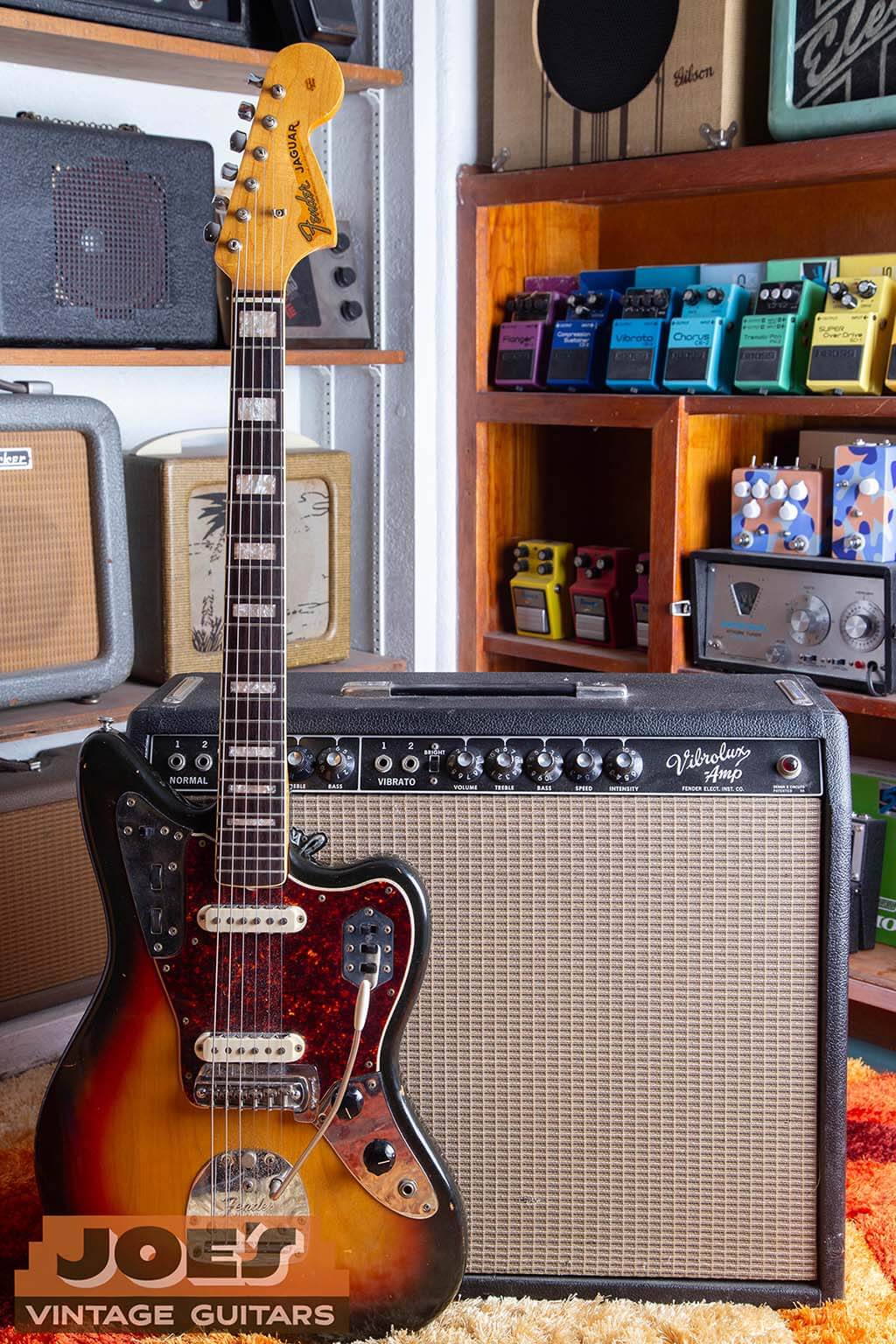
Fender began placing serial numbers on the back of the headstock in the mid 1990s. Fender serial numbers on the headstock are comprised of a prefix to indicate a decade (and sometimes a factory), a preceding bold digit to indicate the year, then a sequential number. This section includes Fender guitars made in the USA, Mexico, and Japan:
| Letter Code | Digits | Year | How To Decode Your Serial Number |
|---|---|---|---|
| MX | 8 Digits | 2010s | “M” = Mexico Ensenada factory, “X”= 2010s, 2nd digit after X = Year. Example: “MX12012345” = 2012. |
| N | 6 Digits | 1990s | “N” = 1990s, First digit after N = Year. Example: “N2123456” = 1992. |
| Z | 6 Digits | 2000s | “Z” = 2000s, First digit after Z = Year. Example: “Z2123456” = 2002. |
| US | 8 Digits | 2010s & 2020s | “US” = USA, First two digits = year. E.g: “US10000001” = The first guitar made in the USA in 2010. |
| JD | 8 Digits | 2010s | Made in Japan – JD = “Japan Dyna.” Pattern: First two digits after “JD” = Year. E.g.: JD11xxxxxx = 2011 |
How to Read Fender Serial Numbers on the Back of the Neck Heel
For some Japanese-made Fender guitars, the serial number is found on the back of the neck heel. These markings are common on vintage and modern Japanese models. Use this chart to help with your Japanese Fender serial number lookup.
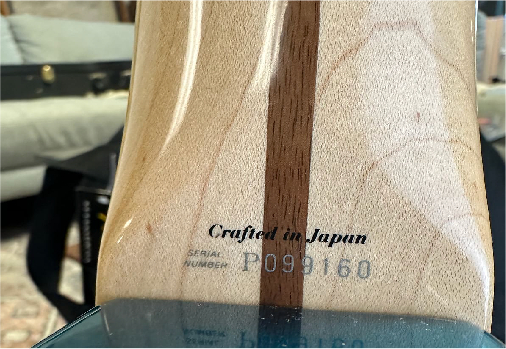
Marked “Made in Japan”
| Letter Code | Digits | Year | Notes |
|---|---|---|---|
| JV | 5 Digits | 1982 – 1984 | Made in Japan |
| SQ | 5 Digits | 1983 – 1984 | Made in Japan |
| A | 5 Digits | Mid 1980s | Made in Japan |
| B | 6 Digits | 1985 – 1986 | Made in Japan |
| F | 6 Digits | 1986 – 1987 | Made in Japan |
| H | 6 Digits | 1988 – 1989 | Made in Japan |
| I | 6 Digits | 1989 – 1990 | Made in Japan |
| J | 6 Digits | 1989 – 1990 | Made in Japan |
| K | 6 Digits | 1990 – 1991 | Made in Japan |
| L | 6 Digits | 1991 – 1992 | Made in Japan |
| M | 6 Digits | 1992 – 1993 | Made in Japan |
| O | 6 Digits | 1993 – 1994 | Made in Japan |
| P | 6 Digits | 1993 – 1994 | Made in Japan |
| Q | 6 Digits | 1993 – 1994 | Made in Japan |
| S | 6 Digits | 1994 – 1995 | Made in Japan |
| T | 6 Digits | 1994 – 1995 | Made in Japan |
| U | 6 Digits | 1995 – 1996 | Made in Japan |
| V | 6 Digits | 1996 – 1997 | Made in Japan |
| N | 6 Digits | 1995 – 1996 | Made in Japan |
Marked “Crafted in Japan”
| Letter Code | Digits | Year | Notes |
|---|---|---|---|
| A | 6 Digits | 1997 – 1998 | Crafted in Japan |
| B | 6 Digits | 1997 – 1999 | Crafted in Japan |
| O | 6 Digits | 1997 – 2000 | Crafted in Japan |
| P | 6 Digits | 1999 – 2002 | Crafted in Japan |
| Q | 6 Digits | 2002 – 2004 | Crafted in Japan |
| R | 6 Digits | 2004 – 2005 | Crafted in Japan |
| S | 6 Digits | 2006 – 2008 | Crafted in Japan |
| T | 6 Digits | 2007 – 2010 | Crafted in Japan |
| U | 6 Digits | 2010 – 2011 | Crafted in Japan |
Authentication Tips:
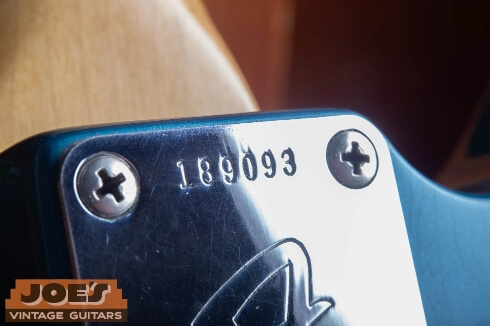
The Neck Plate Test: How to Verify an Original 1950s/60s Stamped Serial
When we’re looking at a neck plate on a high-value vintage Fender, we don’t just read the numbers—we look at the metal itself. Because original serial numbers were stamped using a high-pressure mechanical press, that metal had to go somewhere. This creates a very slight “bulge” or warping effect around the edges of the digits.
If you hold the plate up and catch the light at an angle, you’ll see “shadowing”—the chrome slightly rising around the perimeter of the stamp. It’s the hallmark of a physical tool striking the plate.
Modern fakes are often laser-etched. Laser etching is a process of removal—it burns the metal away. This leaves a perfectly flat surface around the digits with no displacement. If that serial number looks like it was printed on top of the chrome rather than forced into it, that’s a massive red flag.
The “Raised” Decal Test: Authenticating Pre-CBS Fender Headstocks
you’re checking a vintage Fender from the 50s or early 60s, you shouldn’t just look at the logo—you should feel it. During the Pre-CBS years, Fender applied their waterslide decals after the neck had been sprayed with lacquer.
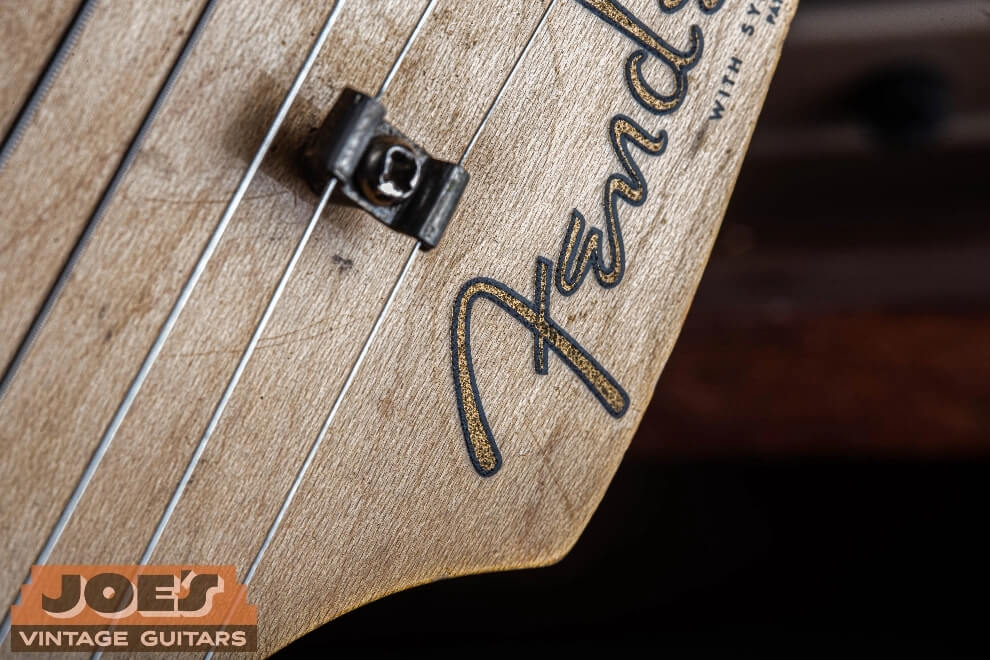
This means the logo isn’t buried under a thick, smooth clear coat. Instead, it sits right on top of the finish. If you run your finger gently across the decal, you should feel a distinct raised edge. Because it was exposed to the air, these decals often “silver” or develop tiny cracks (checking) that match the age of the wood.
By late 1967 and into the 70s, Fender began spraying clear lacquer over the decals to protect them, making the headstock feel smooth and flat. If you’re looking at a “1962 Strat” but the logo is buried under a glass-smooth finish, you’re likely looking at a refinish or a later neck.
Vintage Guitar Authentication: Why Consistent Patina Matters
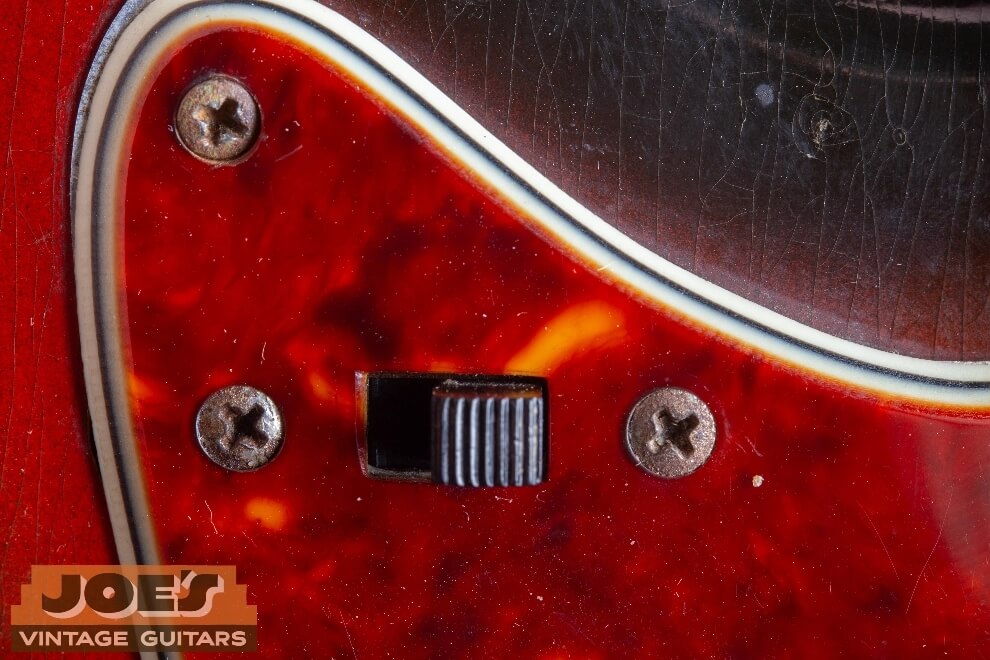
When you’re looking at a 60-year-old guitar, you expect to see some wear—but that wear needs to be consistent. One of the most common red flags we see at the shop is mismatched aging on the screws.
If the pickguard screws are heavily rusted and pitted, but the screws on the bridge or the neck plate look like they just came off the shelf at a hardware store, something is wrong. On an original, untouched Fender, the environment (humidity, sweat, and air exposure) affects the entire instrument relatively equally.
What to Look For:
Forced Aging: Sometimes, “relic” builders will over-age pickguard screws in acid to make a guitar look older, but they forget the smaller, harder-to-reach screws like those on the tuners or the jack plate.
Replacements: If you see five rusted screws and one shiny one, it’s a sign that the guitar has been worked on or parts have been swapped. While not always a deal-breaker, it’s a “thread” you need to pull to see what else has been changed.
Advanced Dating
Vintage Fender Guitar Neck Heel Stamps, Potentiometer Codes, and More
While Fender serial numbers are a fairly straightforward and accurate way to date your guitar, they are not always 100% accurate. For example, sometimes a guitar that was made in early 1963 may have a 1962 neck plate (and consequently, a 1962 serial number.) Fender was necessarily all that methodical or meticulous when it came to the assembly of their guitars, and so the best way to date them is by using a variety of corroborating factors. In addition to the serial number, the Fender neck heel date, Fender potentiometer codes and Fender pickup dates can help you to very accurately date your Fender guitar. Note: Finding these codes requires disassembly of the guitar.
While metal control cavity covers and necks are fairly easy to remove, great care should be taken when removing plastic pickguards, as they have a tendency to shrink, get stuck and crack. I do not recommend removing the pickguard unless you have prior experience doing so.
How To Read Fender Neck Heel Dates
Almost every Fender guitar made before 1970 has a written or stamped neck heel date. These dates are fairly straightforward to decipher, and for most collectors and enthusiasts, are the most accurate way to date Vintage Fender instruments. Because Fender did not always use serial numbers consistently, these neck heel dates are valuable for verifying the authenticity and age of vintage instruments. Collectors and enthusiasts often cross-reference these dates with body markings, pot codes, and pickup stamps to confirm the guitar’s production year. The neck heel stamp can be found by removing the strings and unscrewing the four neck screws that hold the neck plate in place. The neck can then be removed from the body. Never apply force when removing the neck. If the neck is difficult to move or stuck in the neck pocket, move slowly and take your time. Never force anything. Fender neck heel dates come in two formats. The pencil neck dates are read one way, and the ink stamp dates are read another way. Guitars made in 1959 and 1960 will sometimes lack a neck heel date.
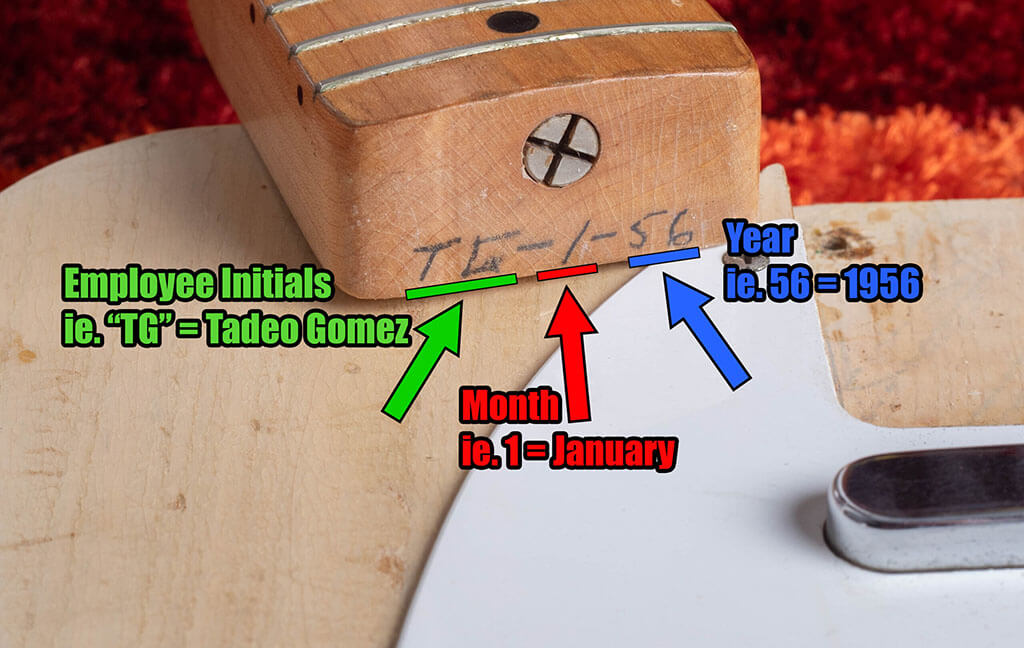
Vintage Fender Guitar Neck Heel Pencil Dates
From the early 1950s through the early 1960s, Fender guitars were marked with the date of manufacture in pencil on the heel of the neck. These pencil neck heel dates are one of the most reliable ways to identify the production month and year of early Stratocasters, Telecasters, Jazzmasters and Precision Basses. The format is simple and easy to read, typically showing the month followed by the year (for example, “5-57” for May 1957). In some cases, you may also see the initials of the employee who finished or inspected the neck, adding an extra layer of historical detail for collectors.
Vintage Fender Neck Heel Ink Stamps
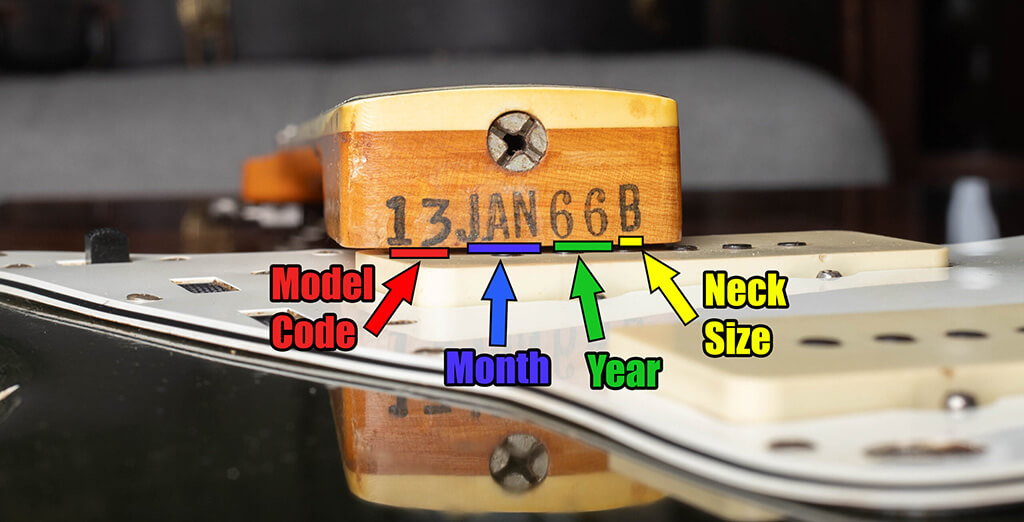
Beginning in the early 1960s, Fender did away with the pencil neck date and switched to an ink stamp. These ink stamps are slightly more difficult to understand than the pencil dates, but not by much! The first one or two digits before the month indicate the model code. Each Fender model (Stratocaster, Jaguar, Telecaster, etc.) had its own one or two digit code. These codes have nothing to do with the year of manufacture. Following this code, we see the month of manufacture, followed by the last two digits of the year (ie. 63 = 1963). The final letter following the year is the size of the neck. While the vast majority of Fender guitars have a “B” sized neck (a medium sized standard) they can sometimes be found with A (small), C (large) and D (x-large) necks. Instruments with such necks are rarer, but not necessarily more valuable than their “B-neck” counterparts.
Fender Guitar Body Date Codes
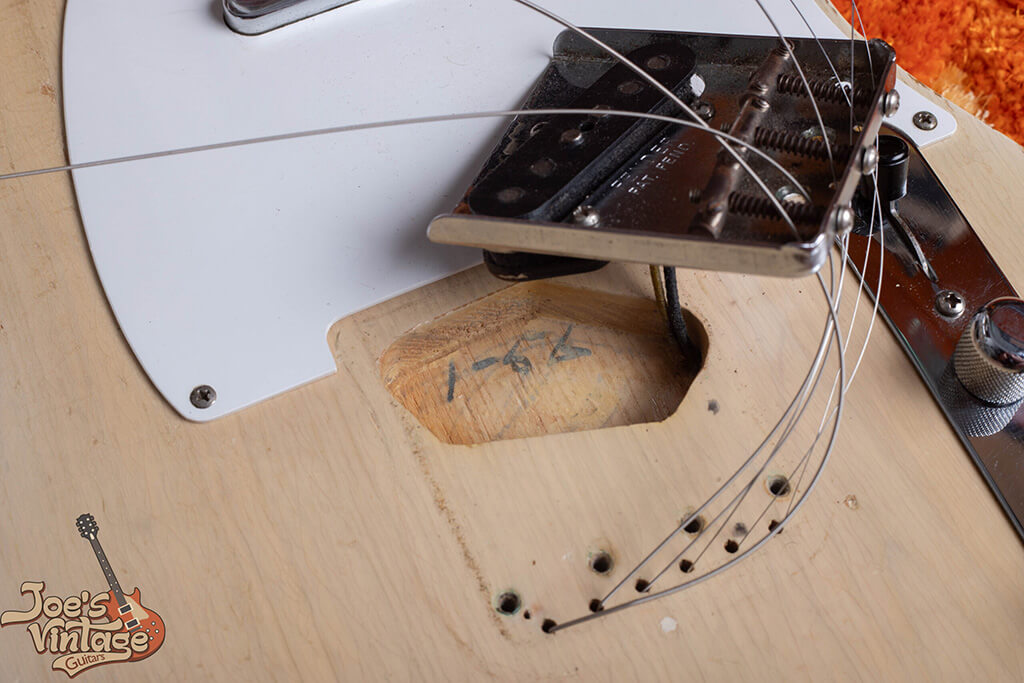
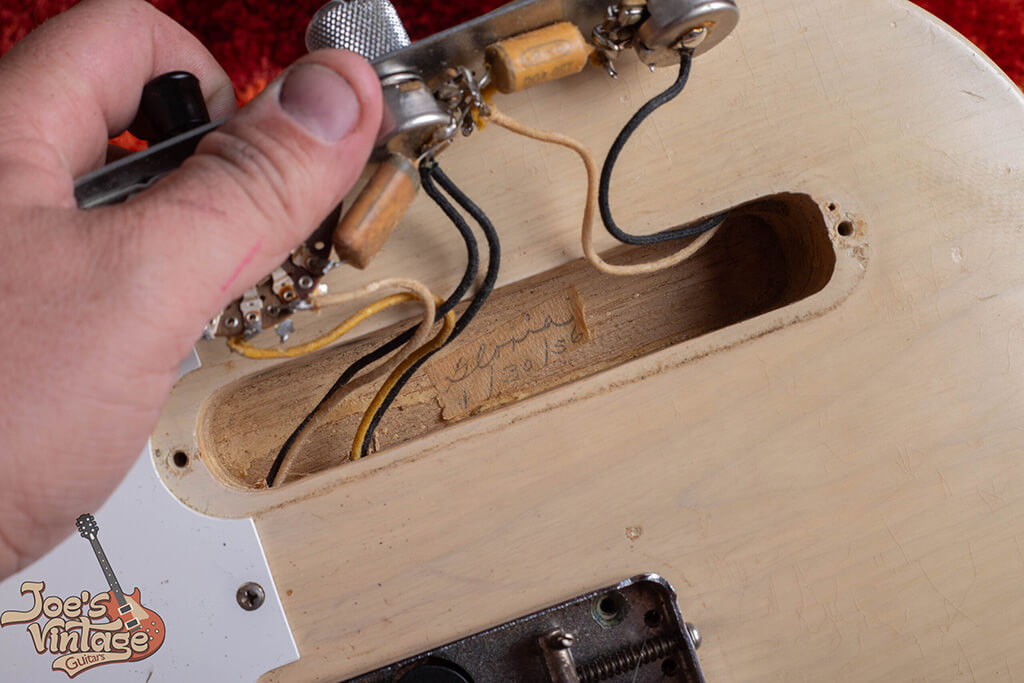
Fender guitars from the 50s and early to mid 60s often bear a written date somewhere on the body of the instrument. The location of this date varies, but it can most often be found in the neck pocket, one of the pickup cavities, or in the rear tremolo cavity for Stratocaster models. The date is a simple month and year format. Sometimes, a date can also be found written in pencil on a piece of masking tape inside one of the cavities of the guitar.
Vintage Fender Pickup Dates & Fender Pickup Codes
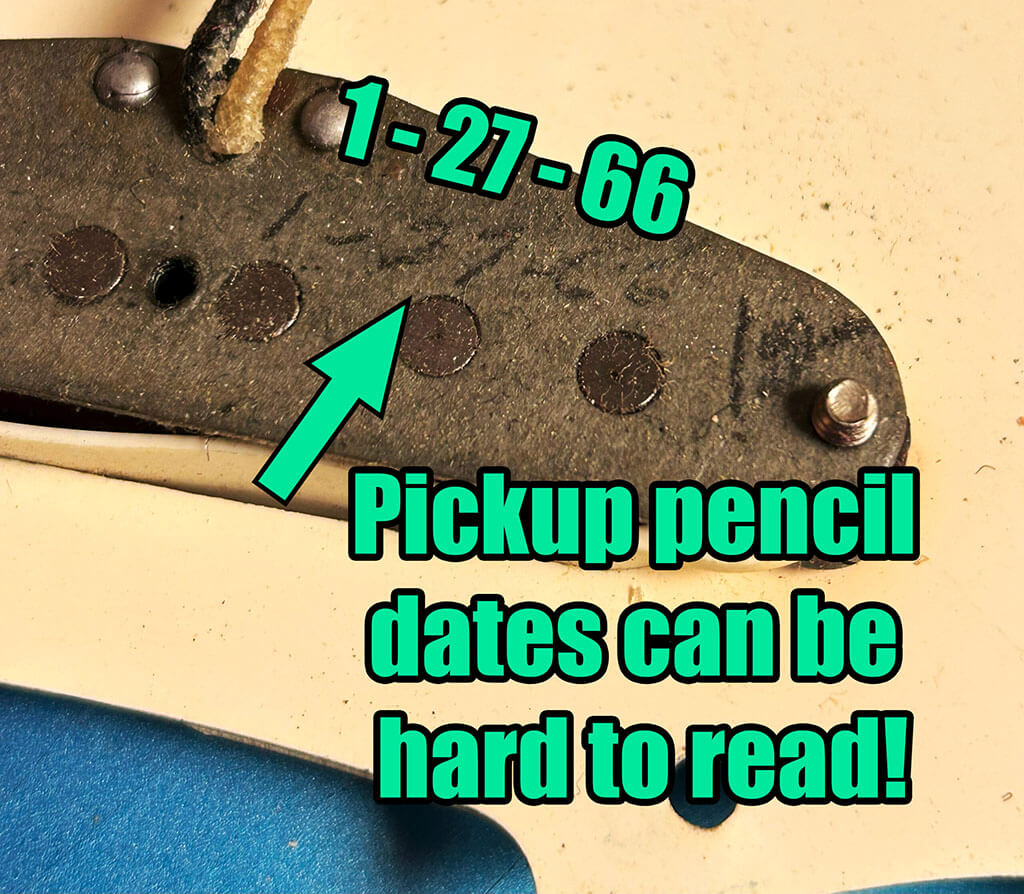
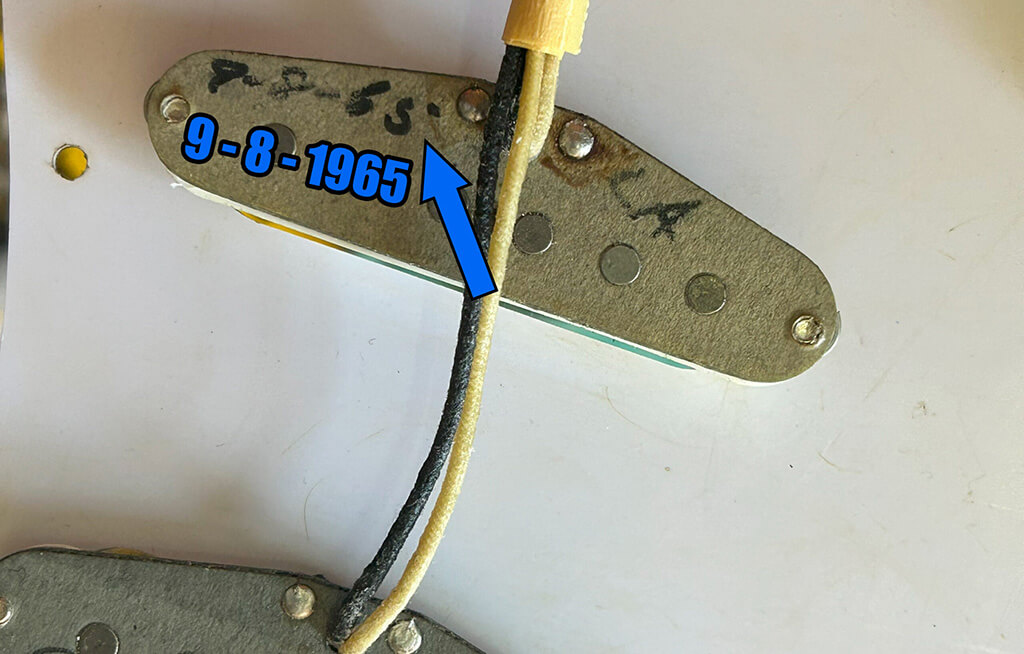
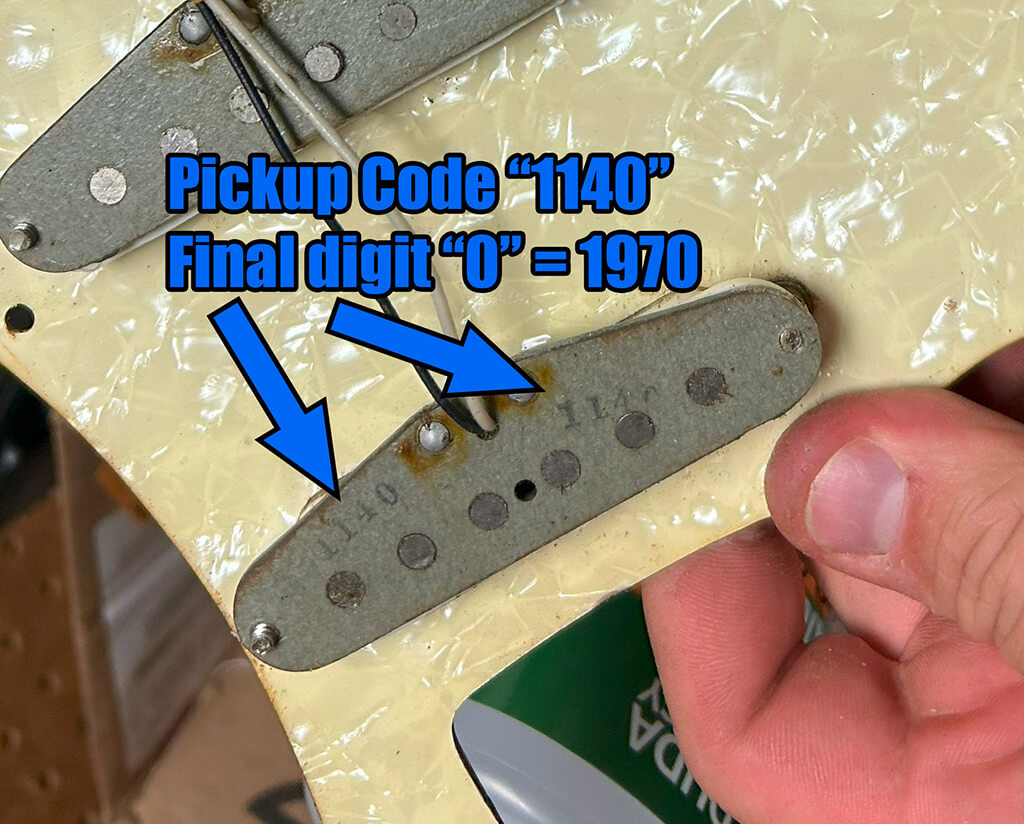
Dating your Fender guitar using pickup codes and pickup dates is not the most reliable way to do so, as the use of pickup dates was very inconsistent, however, when they are present, they certainly can aid in dating your instrument. Pickup dates can be found on the back of the pickups and consist of a pencil or ink date from the 1950s until 1968, or a 3-6 digit code beginning in 1969. To decode the 3-6 digit pickup codes, simply look at the last one or two digits of the code; these are the last one or two digits of the year. For example, 1139 = 1969 or 161377 = 1977. You will sometimes have to use a little bit of deductive reasoning to figure out if you should be looking at the last two digits, or just the last digit alone!
Fender Pot Codes (Fender Potentiometer Codes)
Potentiometers, or pots for short, are small metal cans mounted at the back of the control knobs on an electric guitar. On a Fender, they are found behind the control plate or pickguard and thus must be accessed by gently removing these parts.
Potentiometer codes are a great way to date an antique Fender guitar and verify the originality of its electronic parts. Musicians and collectors often rely on these codes to authenticate vintage Stratocasters, Telecasters, and other Fender instruments.
Please note that dating Fender potentiometers can be more complex than checking a serial number or neck stamp. The codes are sometimes hidden under solder, so they can be difficult or impossible to read. You may have to look at multiple pots in order to piece together the date codes.
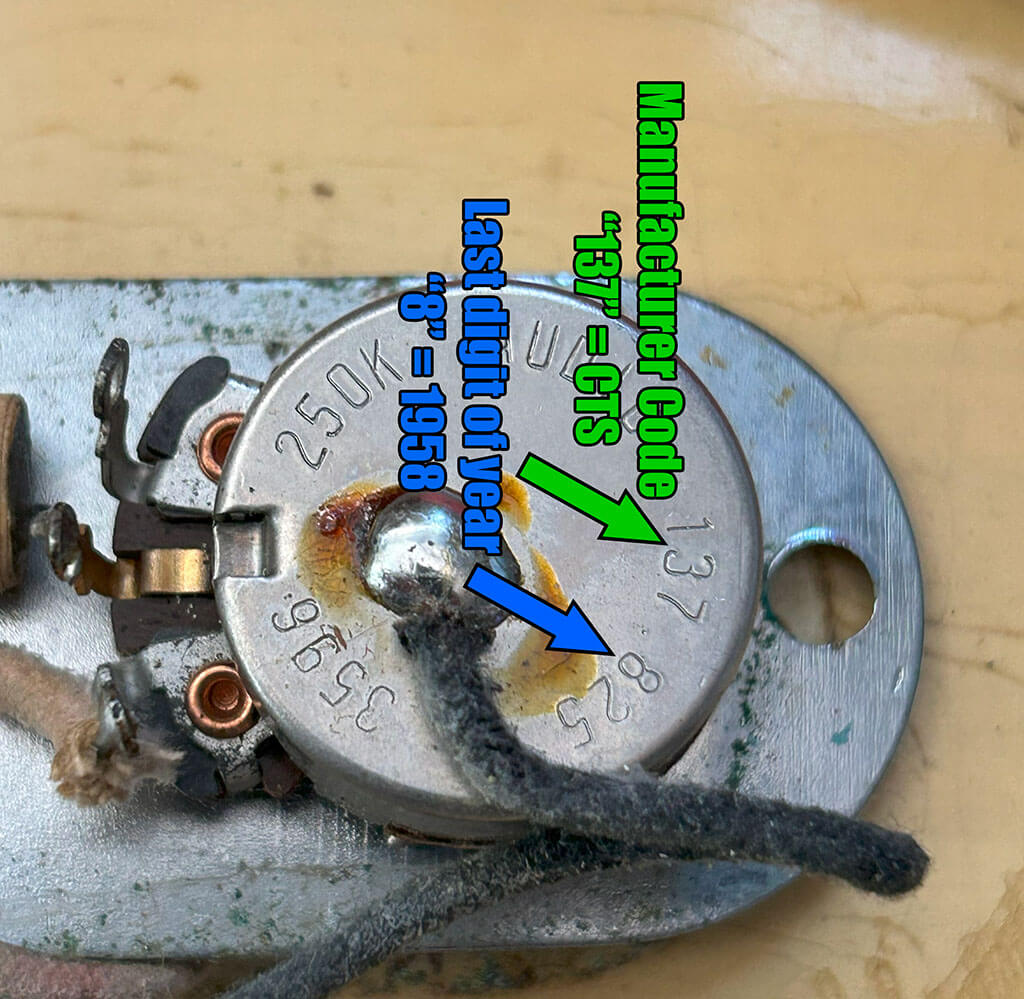
Step 1: Find the Manufacturer Code
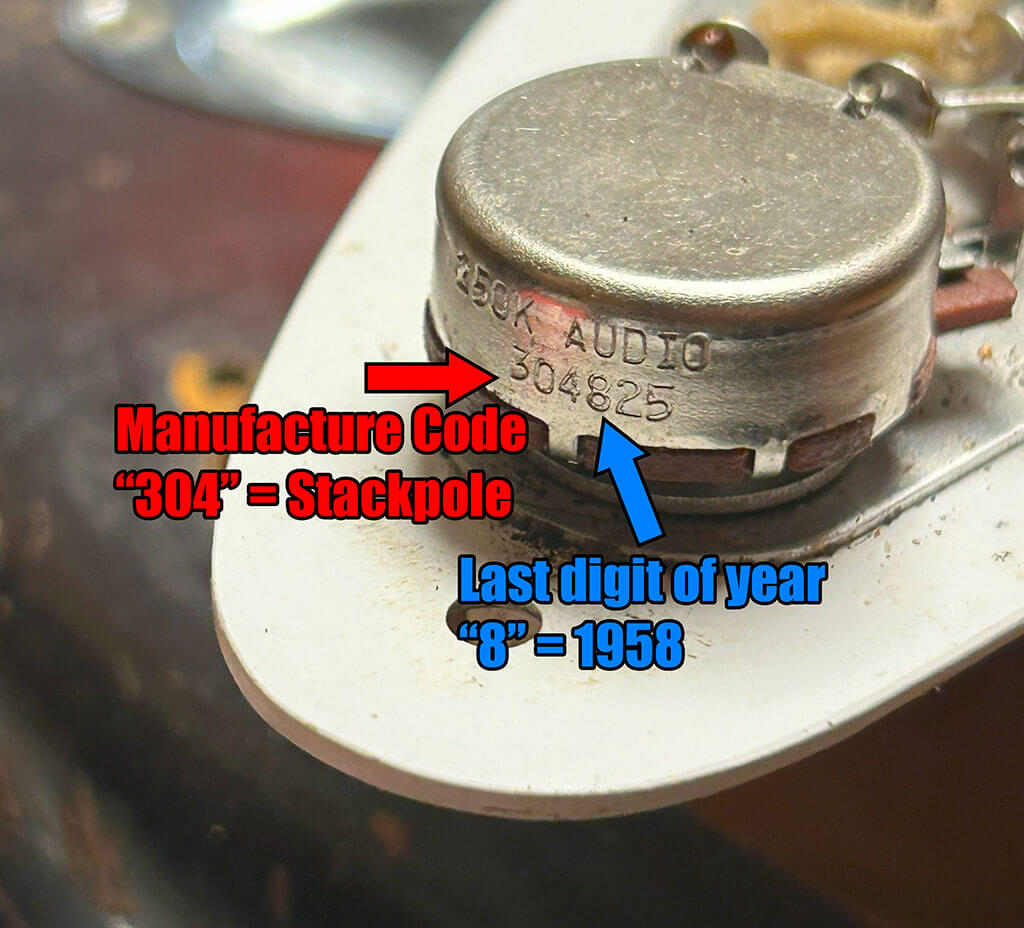
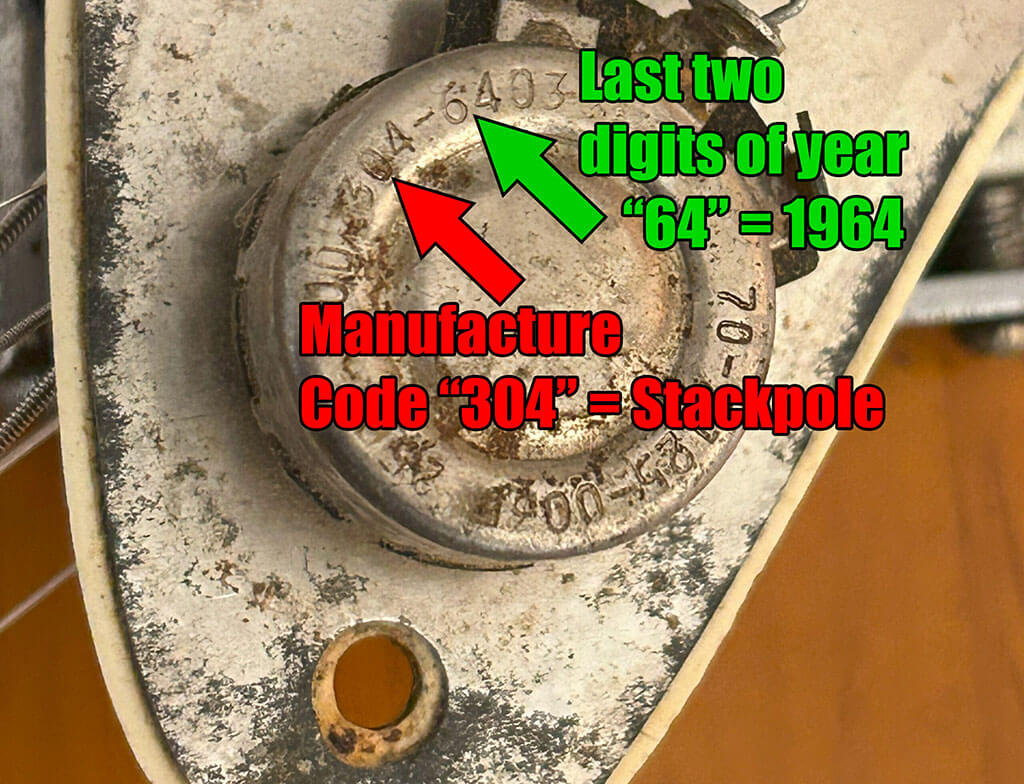
On Vintage Fender potentiometers, the first step is to find one of two manufacturer codes stamped into the back of the pot. You’ll be looking for “304” or “137”:
304 = Centralab
137 = CTS (Chicago Telephone Supply)
The manufacturer code will not aid you in dating the pot, but it will help you to find the digits that DO help to date it.
Why Potentiometer Codes Matter
- Help date your Fender guitar with greater precision
- Check whether the pots are actual vintage components or later replacements
- Provide valuable information for collectors, restorers, and appraisers
Step 2: Decode the Date
Directly following the manufacturer code, there will be three or four numbers which denote the date of manufacture:
Three-digit codes: The first digit is the last digit of the year, and the following two are the week of manufacture.
Example: 632 = 32nd week of 1956
Four-digit codes: The first two digits are the last two digits of the year, and the last two digits are the week of manufacture.
Example: 6243 = Week 43 of 1962
Because pots were occasionally produced months before being put into a guitar, keep in mind that the potentiometer date will usually predate the final assembly of the guitar by a few weeks or months.
Fender Serial Number Lookup Resources
If you’re trying to determine the authenticity, production year, or origin of your Fender guitar, using reliable lookup resources is crucial. While serial numbers can sometimes be tricky due to overlapping sequences and inconsistencies, there are still valuable methods to verify your instrument’s history.
Joe’s Vintage Guitars
Last but not least, you can always contact us at Joe’s Vintage Guitars for more information about your Fender! We’ll give you trusted details about your guitar so that you can learn all about it, especially if you’re planning to sell it. Call or text us at 602-900-6635!

1
2
Online Fender Serial Number Databases
There are several online resources where enthusiasts and collectors like us have compiled extensive databases of Fender serial numbers, including The Guitar Dater Project, GuitarHQ, and The Fender Forum.
Fender’s Official Serial Number Lookup Tool
Fender offers an official Serial Number Lookup tool on their website, where you can enter your guitar’s serial number to retrieve manufacturing details. This is one of the most reliable ways to verify the authenticity and date of your instrument.

3
Get In Touch With Joe
For A Free Fender Guitar Consultation Today!
Decode your Fender’s Past With Joe’s Vintage Guitars
Looking over the history behind your Fender or considering its market value? Joe’s Vintage Guitars , specialized in collecting vintage guitars in Mesa, offers expert evaluations. If you’re thinking it might be time to , specialized in collecting vintage guitars in Mesa, offers expert evaluations. If you’re thinking it might be time to sell your Fender guitar, we can help you determine its worth and make the process simple and stress-free. Reach out for a no-obligation assessment! Contact us today for more help!
Frequently Asked Questions About | Fender Serial Numbers
Read Our Blog For Vintage Guitar Serial Numbers, Values & More
Gibson Guitar Production Numbers: Shipping Totals (1948–1979)
Stop guessing about the rarity of your instrument and dive into the official Kalamazoo records. This comprehensive guide breaks down Gibson shipping totals from 1948 to 1979, providing the essential data needed for an accurate vintage guitar appraisal. Whether you are researching a 1959 "Holy Grail" Sunburst or a rare Norlin-era Custom, these verified figures provide the historical proof required to justify top market value before you sell your vintage guitar.

Top Mistakes To Avoid When Selling a Vintage Guitar
Ready to sell your vintage guitar? Avoid mistakes, get top price, and ensure a smooth, safe transaction.

How To Identify The Manufacture Date Of a Gretsch Guitar
Looking to sell your Gretsch guitar? Learn how to identify its manufacture date from an expert in vintage guitars.


