
Fender Guitar Dating Guide
How To Locate & Decode Your Fender Serial Number
Table Of Contents
Wondering how to decode your Fender guitar’s serial number? Whether you’re trying to date a vintage Fender Stratocaster or find a Fender Telecaster serial number, this simple guide will help you easily understand what your Fender serial number reveals about your guitar’s year of manufacture. Type your serial number into our lookup tool to quickly and easily find the year of your guitar, or use our serial number location chart and click on your serial number location to learn how to read your Fender serial number.
Fender Serial Number Lookup Tool

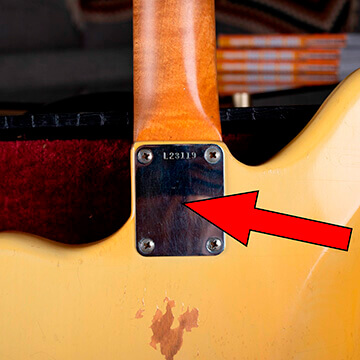 Neck Plate
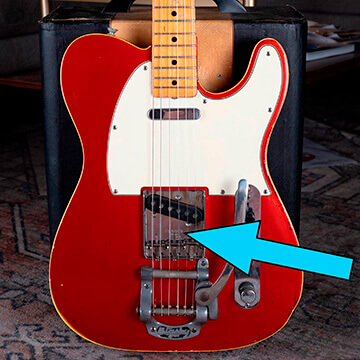 Bridge Plate
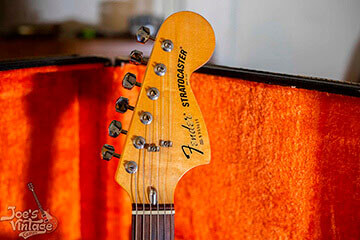 Headstock
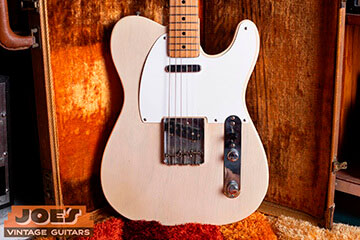 Guitar
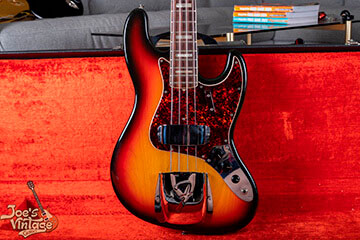 Bass
Bass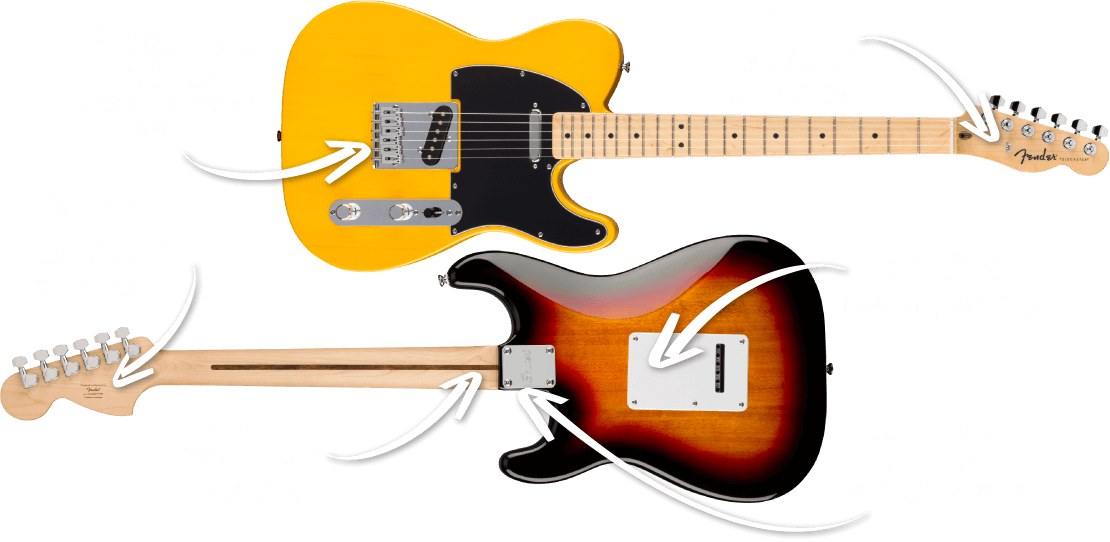
|← Scroll to see the full image
It seems your guitar’s got a few mysteries… Contact us at Joe’s Vintage Guitars more information about your Fender! We’ll give you trusted details about your guitar so that you can learn all about it, especially if you’re planning to sell it. Call or text us at 602-900-6635.
Fender Serial Number Locations

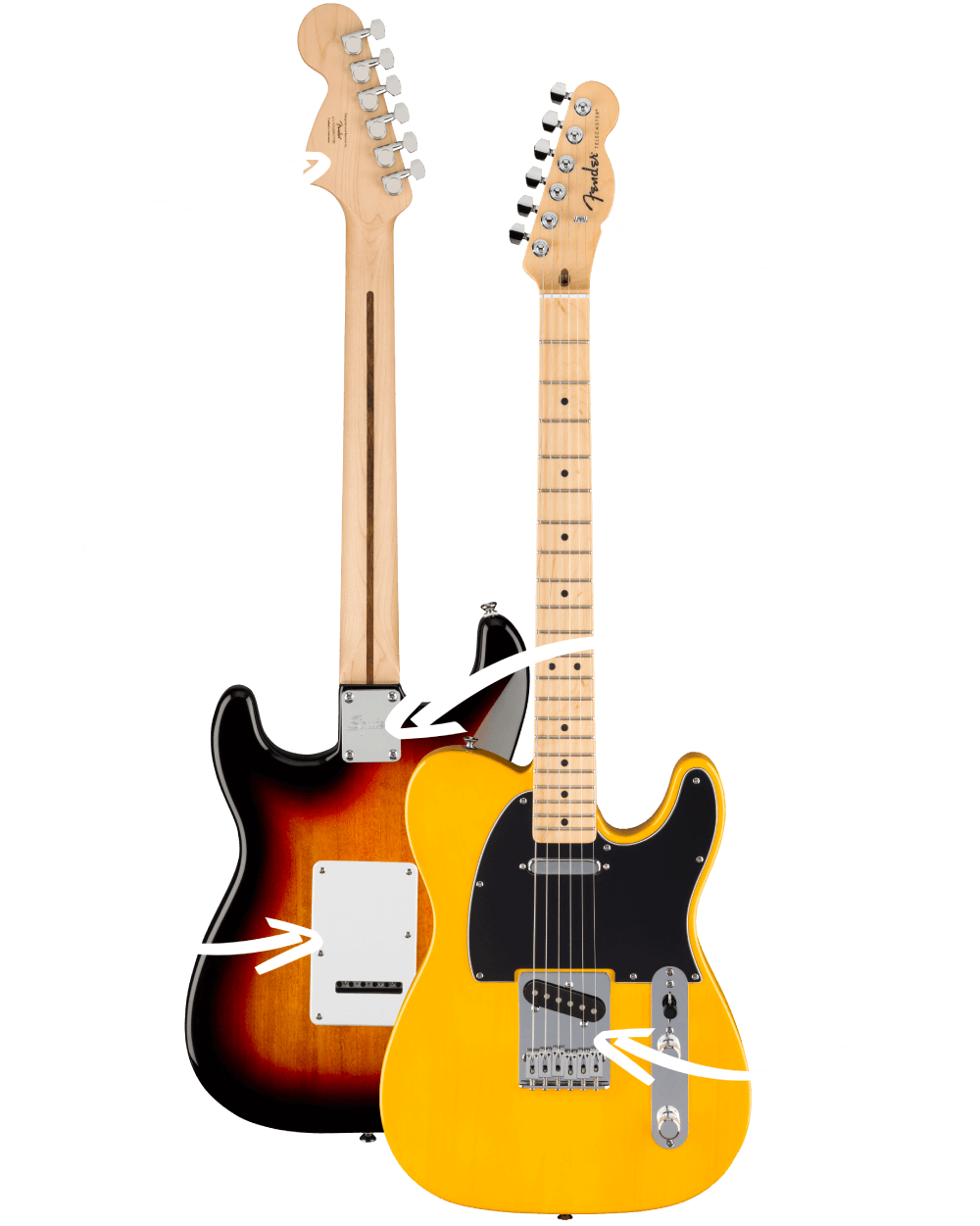
Front of Heastock 1976 to 2000s
Neck Plate1954-1976 Also Modern Reissues
Bridge Plate 1950 – 1954 Telecaster & Precision Bass Only
Back of Headstock1990 to Present
Neck Heel 1980s to Present (Japan Only)
Trem Cover 1954 (Early 1954 Only)
1
2
3
4
5
6
- Back of Headstock 1990 to Present
- Neck Heel 1980s to Present (Japan Only)
- Trem Cover 1954 (Early 1954 Only)
- Front of Heastock 1976 to 2000s
- Neck Plate1954-1976 Also Modern Reissues
- Bridge Plate 1950 – 1954 Telecaster & Precision Bass Only
Fender Serial Number Locations: Neck Plate, Headstock, Bridge, & More!
Listed below are the 6 most common Fender serial number locations. In order to find your serial number, check each possible location. You can then click on the location of your number in this body of text to be taken to the corresponding section of this serial number guide. If your guitar does not have a serial number in any of these locations, it is either a parts guitar, severely worn, or not a Fender. As always, you can always contact me and send photos if you need help figuring out what your guitar is.
- Neck Plate: The neck plate is the metal plate on the back of the body that attaches the body to the neck. Depending on the year, you’ll find a 3 screw or 4 screw neck plate. Fender stamped serial numbers on the neck plate from 1955 until 1976.
- Bridge Plate: The bridge plate is located near where the strings of the guitar go into the body. Just follow the strings downwards until they stop, and you will have reached the bridge/bridge plate. Only the earliest Telecaster and Precision Bass models as well as reissues (modern remakes of classic guitar models.) have the serial number stamped into the bridge plate.
- Front of the Headstock: The headstock is at the very top of the neck, where the guitar tuners are installed. Look for the serial number just below the Fender logo. Fender put serial numbers on the front of the headstock between 1976 and 1995.
- Back of the Headstock: Fender started putting serial numbers on the back of the headstock starting in 1996, and has continued to do so up until today.
- Tremolo Cover Plate (Early Stratocasters): On the very first Stratocasters, Fender stamped the serial number directly into the plastic tremolo cover plate on the back of the guitar. If you see this, you’re looking at a rare and highly collectible piece of Fender history.
Now that you’ve found your Fender serial number location, you can go to the corresponding section on this page to decode your Fender serial number. Learning how to read your Fender serial number will provide valuable insight on the year of manufacture, as well as the market value and collectibility of your vintage Fender guitar.
Fender Serial Number Formats By Era & Model
- Four or five digits on BRIDGE plate (1950-1954)
- Four or five digits on the NECK plate (1954-1963)
- Serial numbers that start with the letter “L” on the NECK plate (1963-1965)
- 6-digit NECK plate serial numbers with large “F” logo underneath (1965-1976)
- Serial numbers on the front or back of the headstock (1977-present)
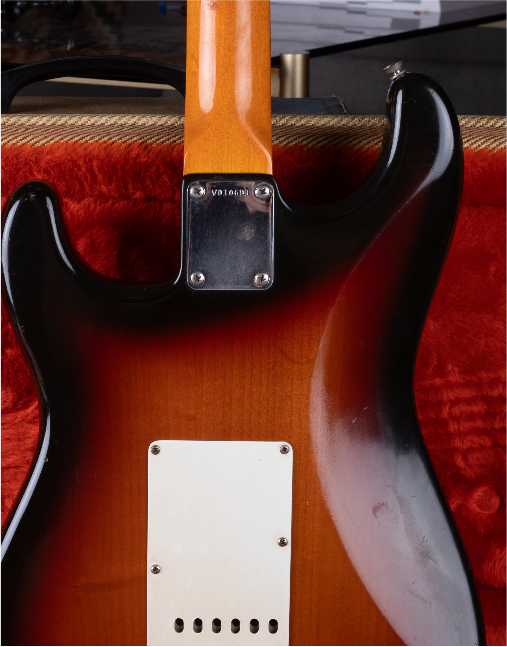
- Serial Numbers on the NECK plate that start with a “V” (1982 and up “reissue” models)
- Import guitars made in Japan and Mexico
Date a Fender by Bridge Plate Serial (4- or 5-digit)
Fender serial numbers from this period can be problematic to decipher, as the company used different numbering schemes for different instruments. Early instruments had their serial numbers on the bridge plate instead of the neck plate or headstock. To help, we’ve posted the serial number ranges per model below. These ranges facilitate narrowing the year of production of your Fender, although for the best possible dating you should also cross-reference neck and body date stamps as well as potentiometer codes. If you want help valuing your early Fender guitar, feel free to contact me or check out our Fender Telecaster Value Guide.
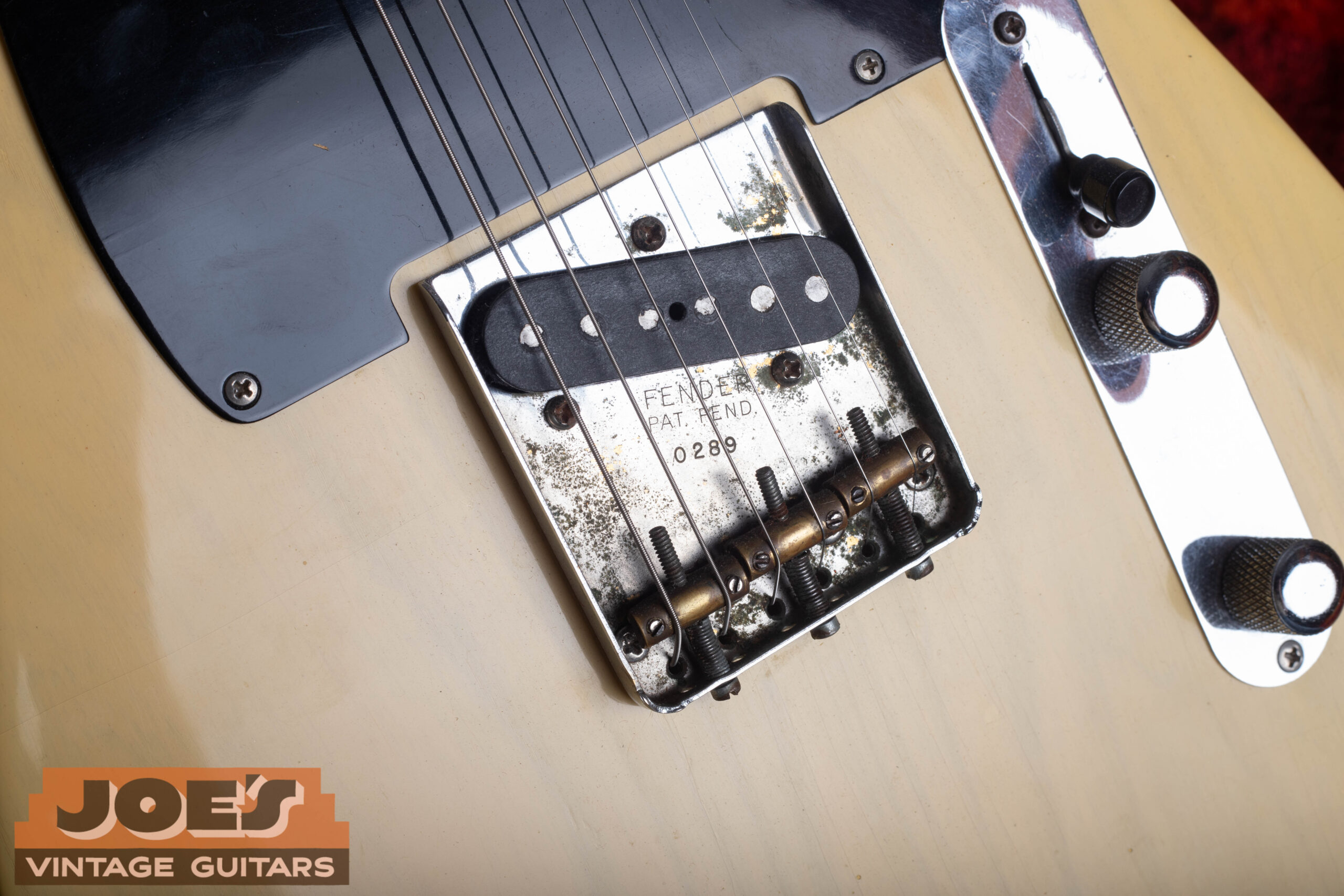
Fender Broadcaster, Esquire and Telecaster
Fender’s first ever electric guitar was the Broadcaster. Its name later had to be changed to “Telecaster” due to a copyright lawsuit. An esquire is just like a Telecaster, but has one pickup instead of two.
| Serial Range | Year of Manufacture |
|---|---|
| 0001 – 1300 | 1950 – 1952 |
| 1300 – 3000 | 1951 – 1954 |
| 3000 – 5000s | 1952 – 1954 |
Fender Precision Bass
On early Fender Precision Basses (1951–mid-1950s), the serial number was stamped directly onto the bridge plate. These numbers are one of the key indicators for dating and authenticating the earliest P-Bass models.
| Serial Range | Year of Manufacture |
|---|---|
| 100 – 600 | 1951 or 1952 |
| 0001 – 0900 | 1952 and 1953 |
| 0900 – 2000 | 1954 |
Dating Your Fender Guitar Using a 4- or 5-Digit Number on the Neck Plate
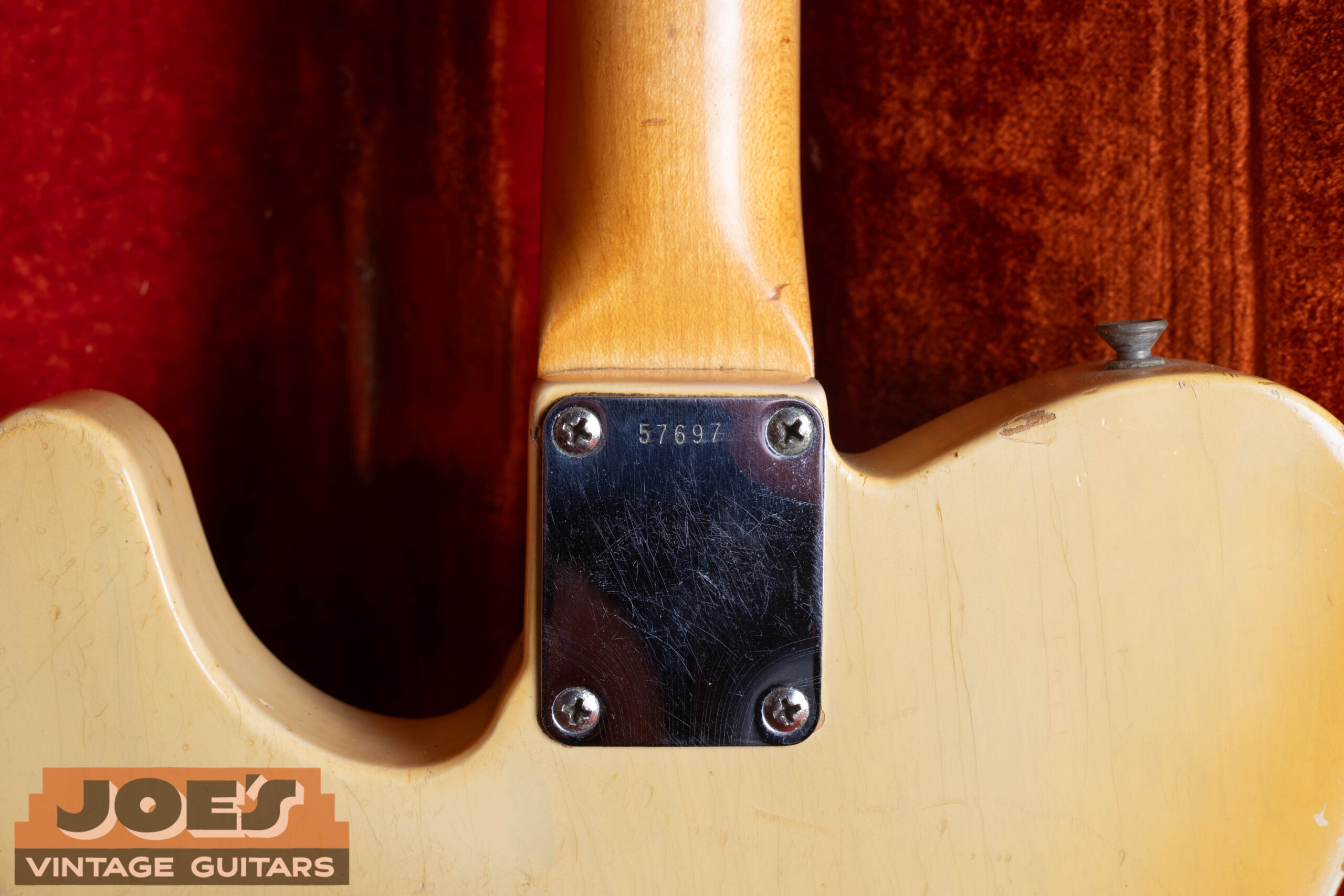
Fender used 4- and 5-digit serial numbers on the neck plate from the mid-1950s into the early 1960s. This format applies to nearly all models made at that time, including the Stratocaster, Telecaster, Jazzmaster, Jaguar, Precision Bass, Jazz Bass, Coronado, and more.
To narrow down the date even more, it’s best to also check the neck heel date, pot codes, and the pickup stamps, as Fender serial numbers for this period usually overlap.
| Serial Range | Year of Manufacture |
|---|---|
| 0001 – 8000 | 1954 |
| 6000 – 10000 | 1955 |
| 9000 – 16000 | 1956 |
| 16000 – 25000 | 1957 |
| 25000 – 30000 | 1958 |
| 30000 – 40000 | 1959 |
| 40000 – 58000 | 1960 |
| 55000 – 72000 | 1961 |
| 72000 – 93000 | 1962 |
| 93000 – 99999 | 1963 |
Fender L-Series Serial Numbers (1963–1965)
Fender L-series serial numbers used between late 1962 and 1965 place your guitar squarely in the pre-CBS transition era. Guitars produced then are highly valued for their hand built quality, collectibility, and historical importance. If your Fender has an L-prefix serial number, you can estimate its date of manufacture to around 1963–1965. To determine the specific year, compare your serial number to the list below. If you want an even more accurate way to date your guitar, examine the neck heel date, pickup codes, or potentiometer stamps, since serial numbers themselves may overlap slightly between years.
| Serial Range | Year of Manufacture |
|---|---|
| L00001 – L20000 | 1963 |
| L20000 – L55000 | 1964 |
| L55000 – L99999 | 1965 |
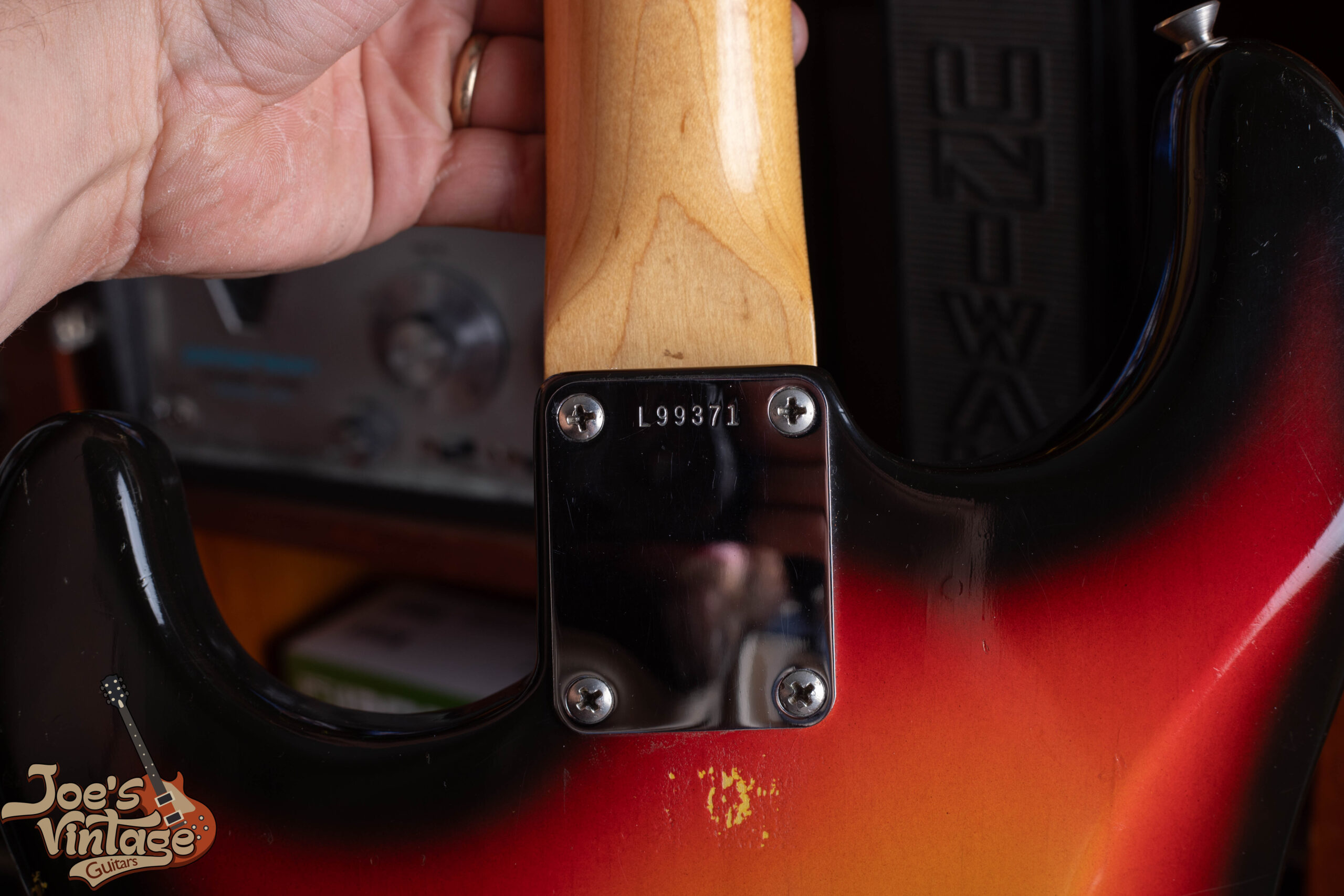
Fender 6-Digit F-Plate Serial Numbers (1965–1976)
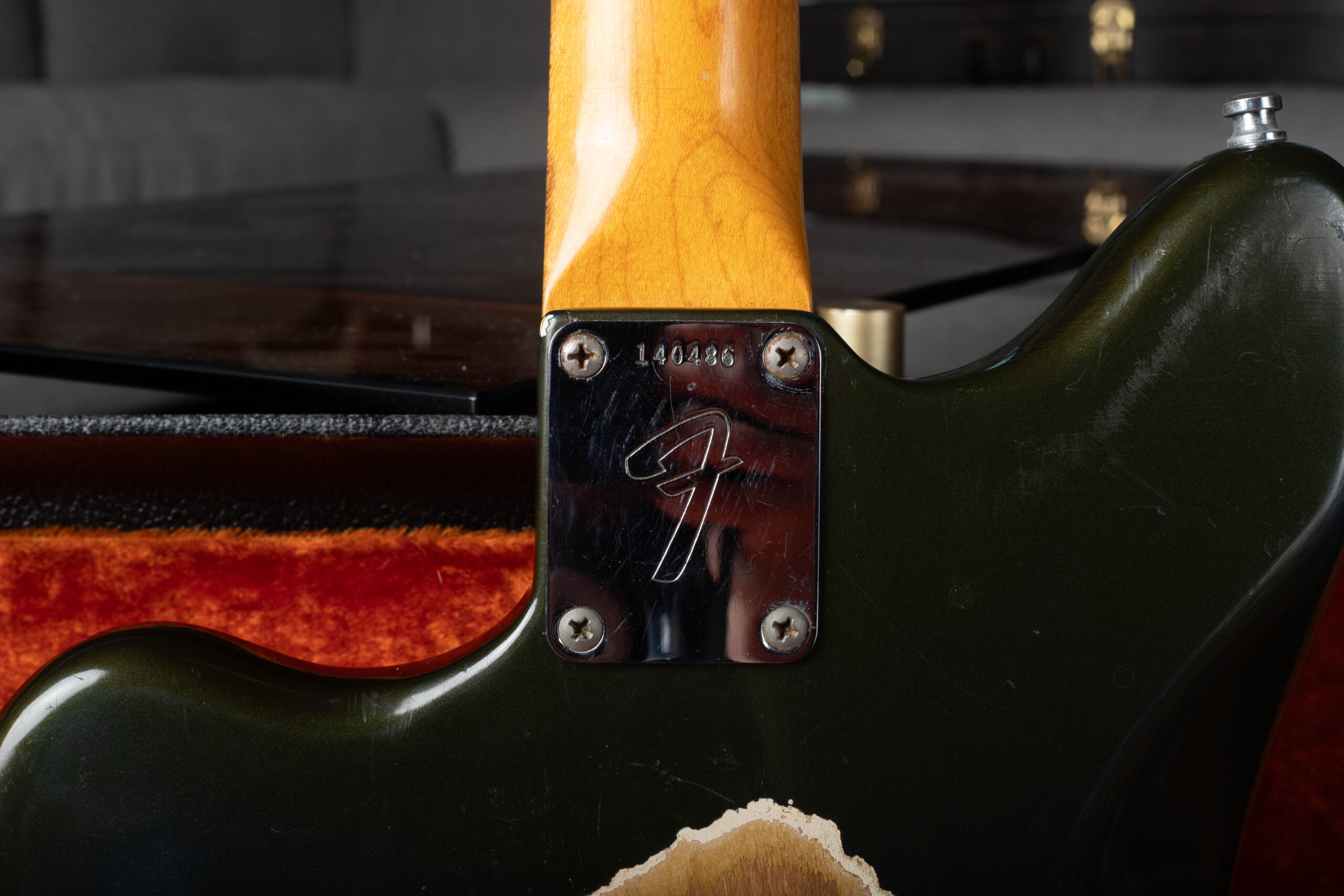
Fender started using the 6-digit serial number with “F” logo neck plate in 1965, and it remained in use until 1976. During this period, Fender phased out the earlier L-series serial numbers. F-plate guitars are easy to spot with their big headstocks, CBS-era styling, and model additions like the Telecaster Custom and Coronado.” If your Fender has a 6-digit F-plate serial number, you can date it to somewhere between 1965 and 1976. Use the list below to determine the year. For a more precise identification, it’s helpful to also check the neck heel stamp and pot codes, since serial ranges sometimes overlap.
| Serial Range | Year of Manufacture | Era |
|---|---|---|
| 100000 – 110000 | 1965 | Late ’65 (Transition) |
| 110000 – 200000 | 1966 | CBS Era |
| 180000 – 210000 | 1967 | CBS Era |
| 210000 – 250000 | 1968 | CBS Era |
| 250000 – 280000 | 1969 | CBS Era |
| 280000 – 300000 | 1970 | CBS Era |
| 300000 – 330000 | 1971 | CBS Era |
| 330000 – 370000 | 1972 | CBS Era |
| 370000 – 520000 | 1973 | CBS Era |
| 500000 – 580000 | 1974 | CBS Era |
| 580000 – 690000 | 1975 | CBS Era |
| 690000 – 750000 | 1976 | CBS Era |
How to Determine the Age of Your Fender Guitar Using Headstock Serial Numbers
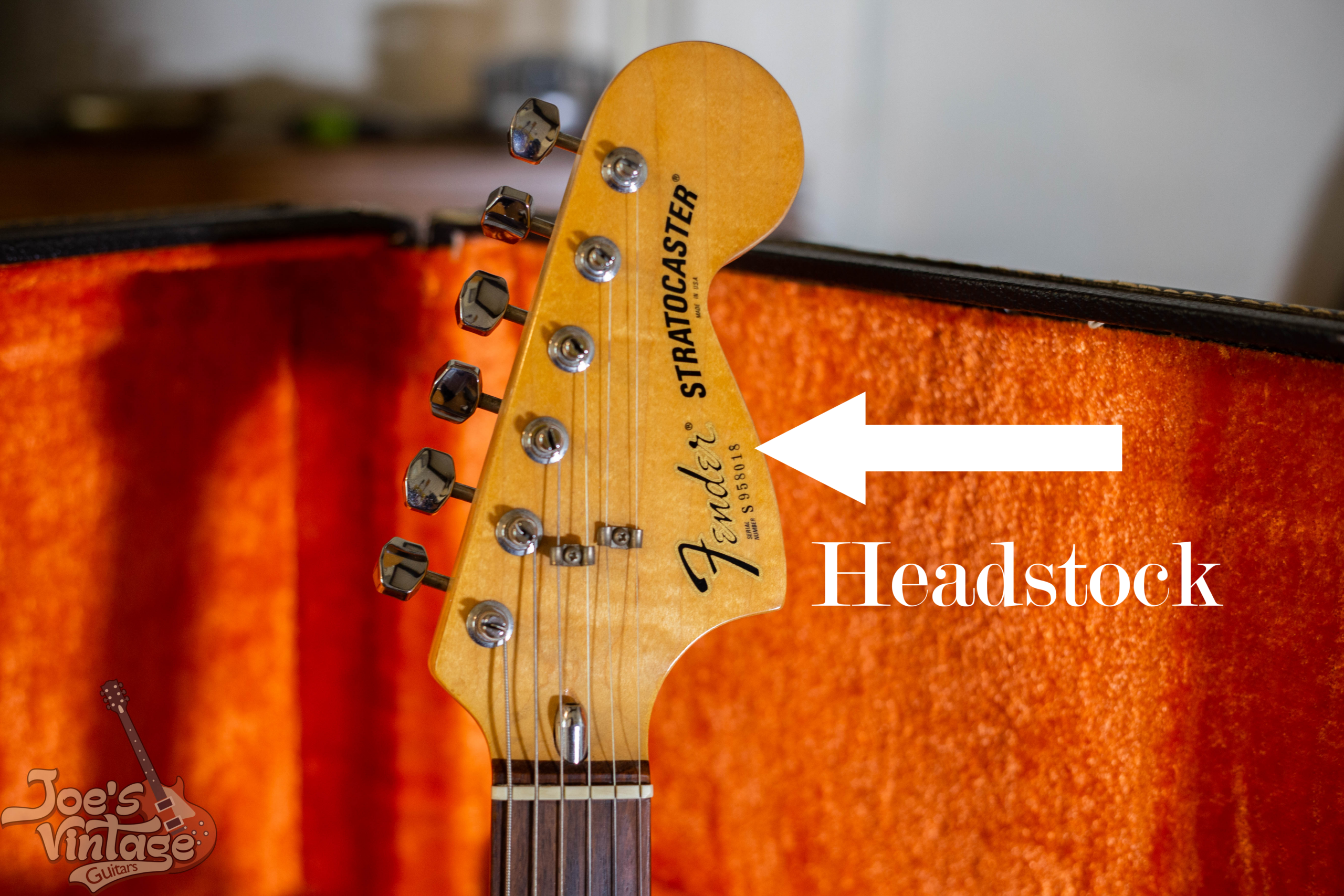
Since 1976, the serial numbers started with a letter that denoted the DECADE of manufacture. S=Seventies, E=Eighties, N=Nineties, and Z or DZ=2000s. The first number following the letter indicates the exact year. For example:
- S958010 = 1979 because S=70s and 9=1979
- E212355 = 1982 because E=80s and 2=1982
- N975436 = 1999 because N=90s and 9=1999
- Z504999 = 2005 because Z=2000s and 5= 2005
Fender Serial Number on Headstock (1976–present)

Between 1976 and the mid-1990s, Fender guitars placed their serial numbers on the front of the headstock, beneath the Fender logo. This headstock serial number position is most often used on Stratocasters, Telecasters, and Fender basses produced in this period. The system used letter prefixes to indicate the decade — for example, “S” prefix serial numbers indicate late-1970s Fenders, and “E” prefix serial numbers were used for the entire 1980s.
While headstock serial numbers are a reliable way to date a Fender guitar, the ranges often overlap. To determine a more exact year of manufacture, collectors also look at the neck heel stamp, potentiometer codes, and pickup markings in addition to the headstock serial number.
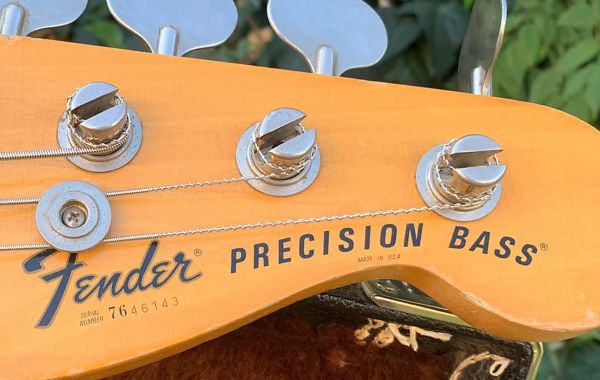
76 Prefix
76 prefix = 1976 Overlap in 1977 “76xxxxx” = 1976
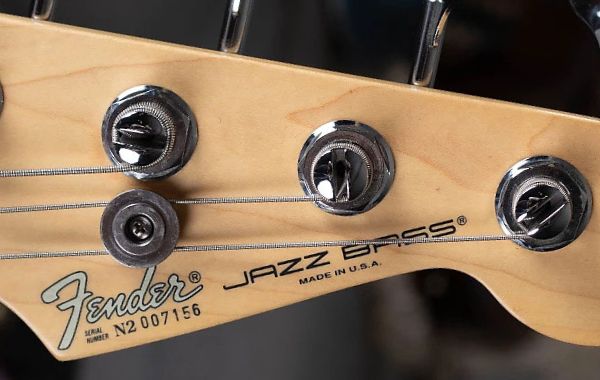
N Prefix
N prefix = 1990s 1st Digit = Year “N1xxxxx” = 1991
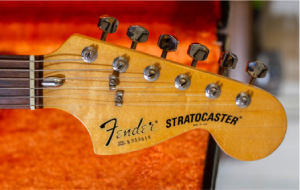
S prefix
S prefix = 1970s 1st Digit = Year “S8xxxxx” = 1978
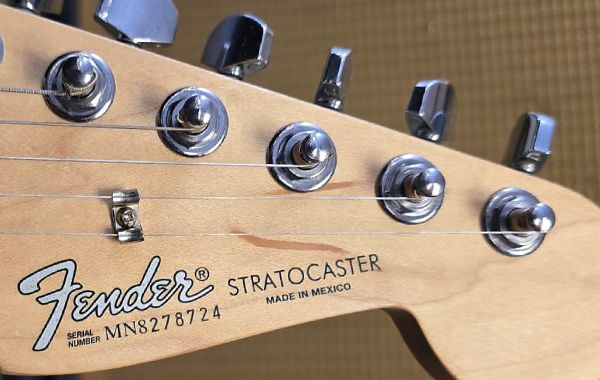
MN Prefix
M = Mexico N Prefix = 1990s 1st Digit = Year “MN0xxxxx” = 1990
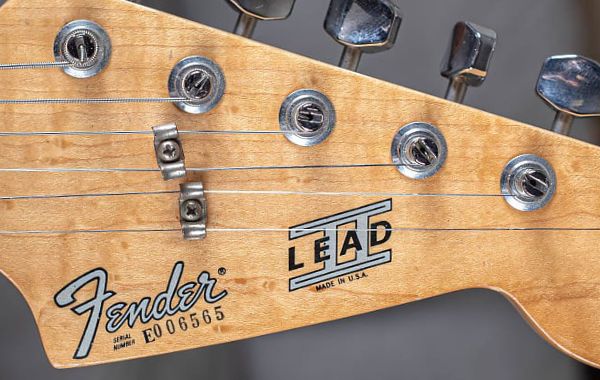
E Prefix
E prefix = 1980s 1st Digit = Year “E4xxxxx” = 1984
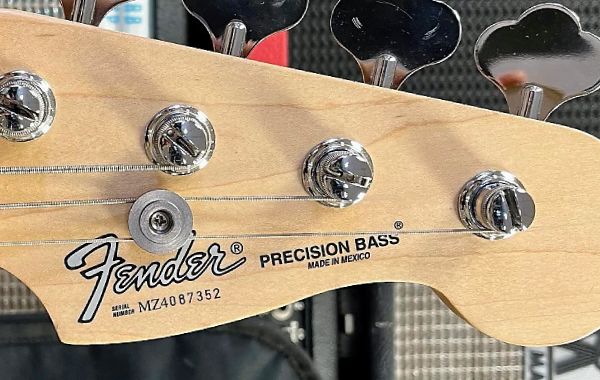
MZ Prefix
M = Mexico Z Prefix = 2000s 1st Digit = Year “MZ0xxxxx” = 2000
Fender V-Prefix Serial Numbers: What They Mean
Fender guitars with a V-prefix serial number were produced from the 1980s onward, but these serial numbers are not a reliable method for determining the exact year of manufacture. During this period, Fender V prefix serial numbers had no dating scheme, making it impossible to date a guitar precisely using the serial alone. For a more accurate production date, collectors and buyers should examine the neck heel date, as well as other clues like potentiometer codes, pickup markings, and model-specific features. Understanding the V-prefix can help identify the general era of your Fender guitar, but cross-checking with these physical details is essential for precise dating.
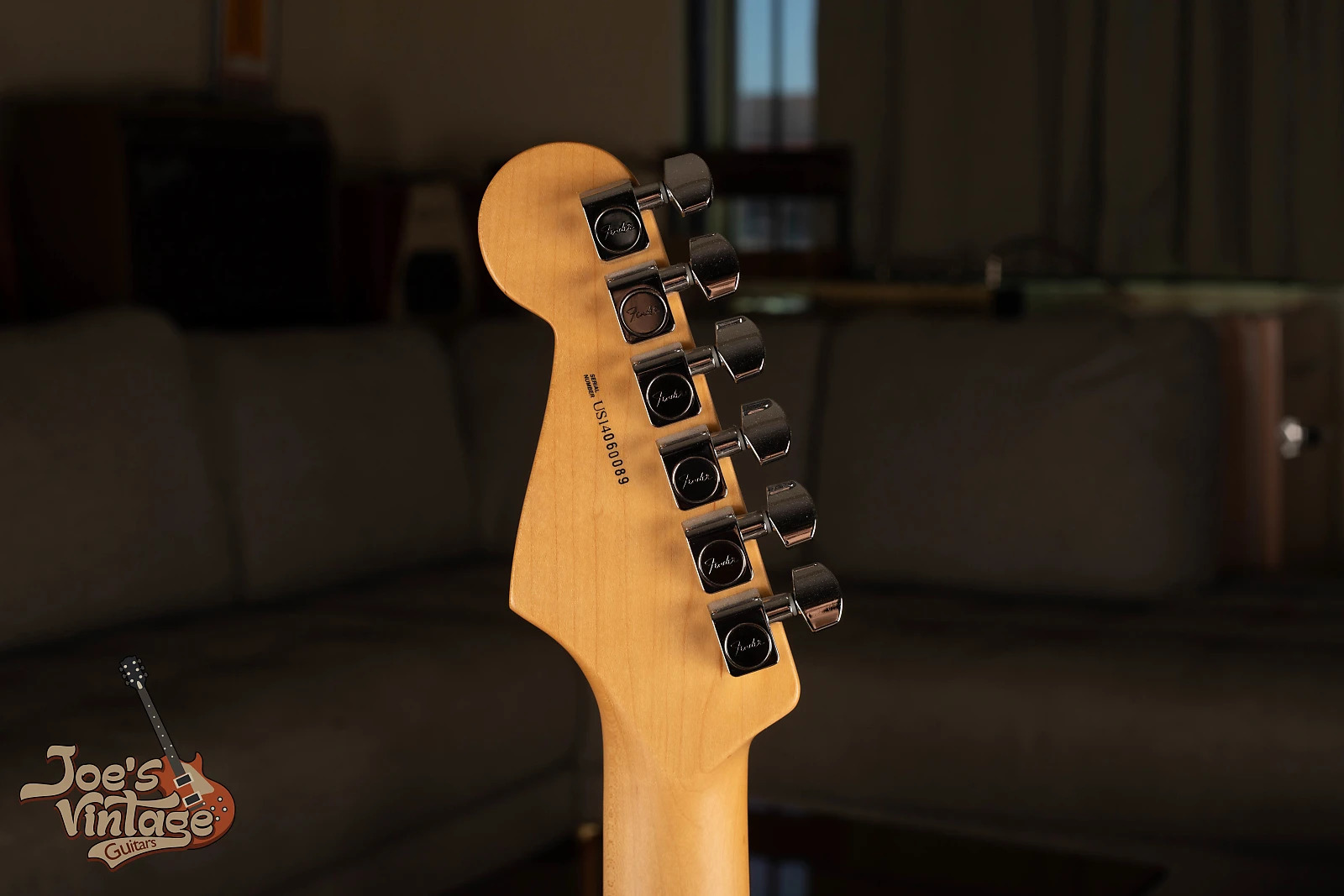
How to Read Fender Serial Numbers on the Back of the Headstock
Fender began placing serial numbers on the back of the headstock in the mid 1990s. Fender serial numbers on the headstock are comprised of a prefix to indicate a decade (and sometimes a factory), a preceding bold digit to indicate the year, then a sequential number. This section includes Fender guitars made in the USA, Mexico, and Japan:
| Letter Code | Digits | Year | How To Decode Your Serial Number |
|---|---|---|---|
| MX | 8 Digits | 2010s | “M” = Mexico Ensenada factory, “X”= 2010s, 2nd digit after X = Year. Example: “MX12012345” = 2012. |
| N | 6 Digits | 1990s | “N” = 1990s, First digit after N = Year. Example: “N2123456” = 1992. |
| Z | 6 Digits | 2000s | “Z” = 2000s, First digit after Z = Year. Example: “Z2123456” = 2002. |
| US | 8 Digits | 2010s & 2020s | “US” = USA, First two digits = year. E.g: “US10000001” = The first guitar made in the USA in 2010. |
| JD | 8 Digits | 2010s | Made in Japan – JD = “Japan Dyna.” Pattern: First two digits after “JD” = Year. E.g.: JD11xxxxxx = 2011 |
How to Read Fender Serial Numbers on the Back of the Neck Heel
For some Japanese-made Fender guitars, the serial number is found on the back of the neck heel. These markings are common on vintage and modern Japanese models. Use this chart to help with your Japanese Fender serial number lookup.
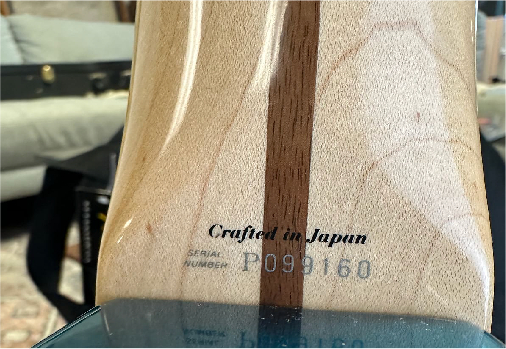
Marked “Made in Japan”
| Letter Code | Digits | Year | Notes |
|---|---|---|---|
| JV | 5 Digits | 1982 – 1984 | Made in Japan |
| SQ | 5 Digits | 1983 – 1984 | Made in Japan |
| A | 5 Digits | Mid 1980s | Made in Japan |
| B | 6 Digits | 1985 – 1986 | Made in Japan |
| F | 6 Digits | 1986 – 1987 | Made in Japan |
| H | 6 Digits | 1988 – 1989 | Made in Japan |
| I | 6 Digits | 1989 – 1990 | Made in Japan |
| J | 6 Digits | 1989 – 1990 | Made in Japan |
| K | 6 Digits | 1990 – 1991 | Made in Japan |
| L | 6 Digits | 1991 – 1992 | Made in Japan |
| M | 6 Digits | 1992 – 1993 | Made in Japan |
| O | 6 Digits | 1993 – 1994 | Made in Japan |
| P | 6 Digits | 1993 – 1994 | Made in Japan |
| Q | 6 Digits | 1993 – 1994 | Made in Japan |
| S | 6 Digits | 1994 – 1995 | Made in Japan |
| T | 6 Digits | 1994 – 1995 | Made in Japan |
| U | 6 Digits | 1995 – 1996 | Made in Japan |
| V | 6 Digits | 1996 – 1997 | Made in Japan |
| N | 6 Digits | 1995 – 1996 | Made in Japan |
Marked “Crafted in Japan”
| Letter Code | Digits | Year | Notes |
|---|---|---|---|
| A | 6 Digits | 1997 – 1998 | Crafted in Japan |
| B | 6 Digits | 1997 – 1999 | Crafted in Japan |
| O | 6 Digits | 1997 – 2000 | Crafted in Japan |
| P | 6 Digits | 1999 – 2002 | Crafted in Japan |
| Q | 6 Digits | 2002 – 2004 | Crafted in Japan |
| R | 6 Digits | 2004 – 2005 | Crafted in Japan |
| S | 6 Digits | 2006 – 2008 | Crafted in Japan |
| T | 6 Digits | 2007 – 2010 | Crafted in Japan |
| U | 6 Digits | 2010 – 2011 | Crafted in Japan |
Advanced Dating
Vintage Fender Guitar Neck Heel Stamps, Potentiometer Codes, and More
While Fender serial numbers are a fairly straightforward and accurate way to date your guitar, they are not always 100% accurate. For example, sometimes a guitar that was made in early 1963 may have a 1962 neck plate (and consequently, a 1962 serial number.) Fender was necessarily all that methodical or meticulous when it came to the assembly of their guitars, and so the best way to date them is by using a variety of corroborating factors. In addition to the serial number, the Fender neck heel date, Fender potentiometer codes and Fender pickup dates can help you to very accurately date your Fender guitar. Note: Finding these codes requires disassembly of the guitar.
While metal control cavity covers and necks are fairly easy to remove, great care should be taken when removing plastic pickguards, as they have a tendency to shrink, get stuck and crack. I do not recommend removing the pickguard unless you have prior experience doing so.
How To Read Fender Neck Heel Dates
Almost every Fender guitar made before 1970 has a written or stamped neck heel date. These dates are fairly straightforward to decipher, and for most collectors and enthusiasts, are the most accurate way to date Vintage Fender instruments. Because Fender did not always use serial numbers consistently, these neck heel dates are valuable for verifying the authenticity and age of vintage instruments. Collectors and enthusiasts often cross-reference these dates with body markings, pot codes, and pickup stamps to confirm the guitar’s production year. The neck heel stamp can be found by removing the strings and unscrewing the four neck screws that hold the neck plate in place. The neck can then be removed from the body. Never apply force when removing the neck. If the neck is difficult to move or stuck in the neck pocket, move slowly and take your time. Never force anything. Fender neck heel dates come in two formats. The pencil neck dates are read one way, and the ink stamp dates are read another way. Guitars made in 1959 and 1960 will sometimes lack a neck heel date.
Vintage Fender Guitar Neck Heel Pencil Dates
From the early 1950s through the early 1960s, Fender guitars were marked with the date of manufacture in pencil on the heel of the neck. These pencil neck heel dates are one of the most reliable ways to identify the production month and year of early Stratocasters, Telecasters, Jazzmasters and Precision Basses. The format is simple and easy to read, typically showing the month followed by the year (for example, “5-57” for May 1957). In some cases, you may also see the initials of the employee who finished or inspected the neck, adding an extra layer of historical detail for collectors.
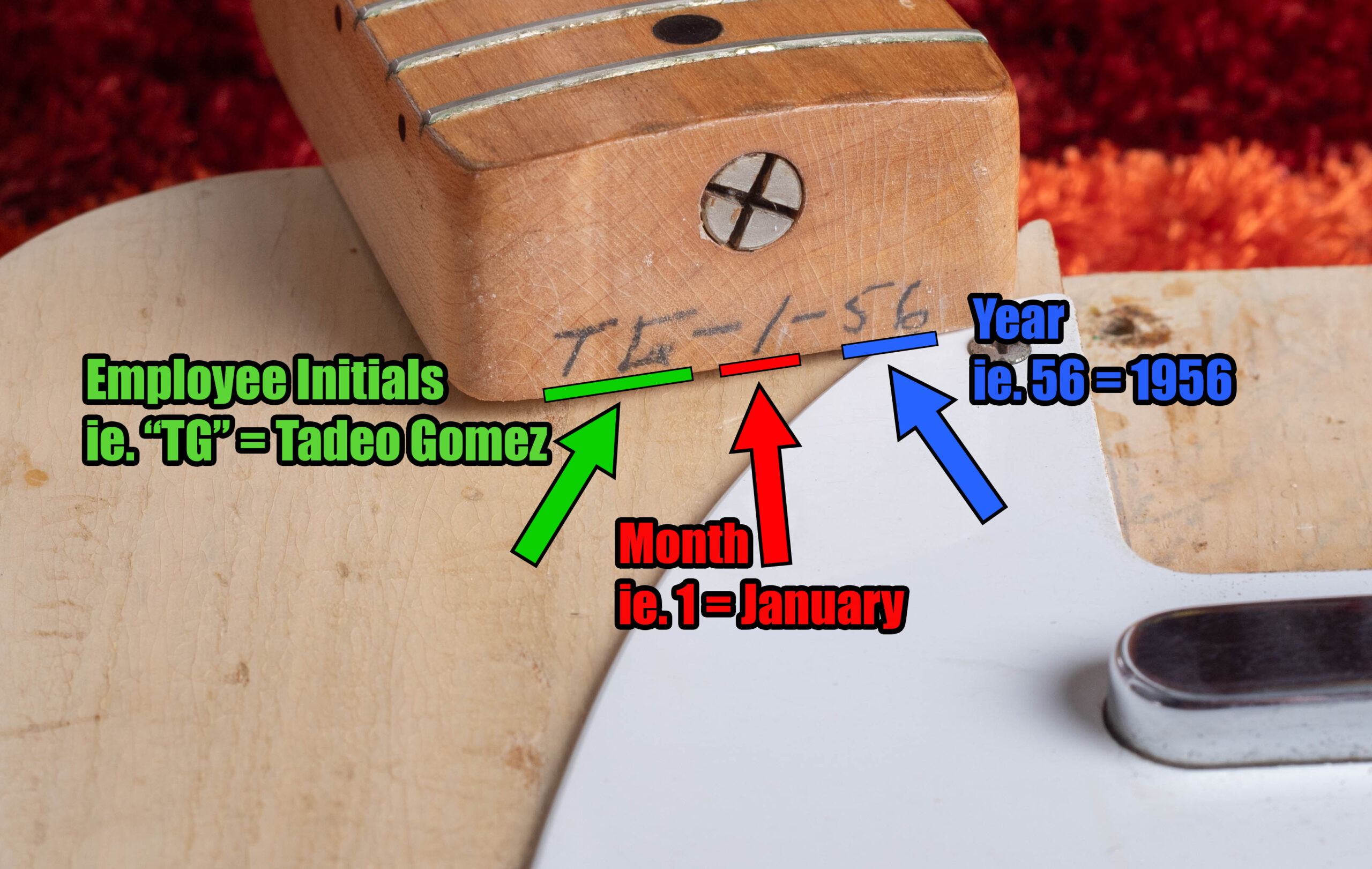
Vintage Fender Neck Heel Ink Stamps
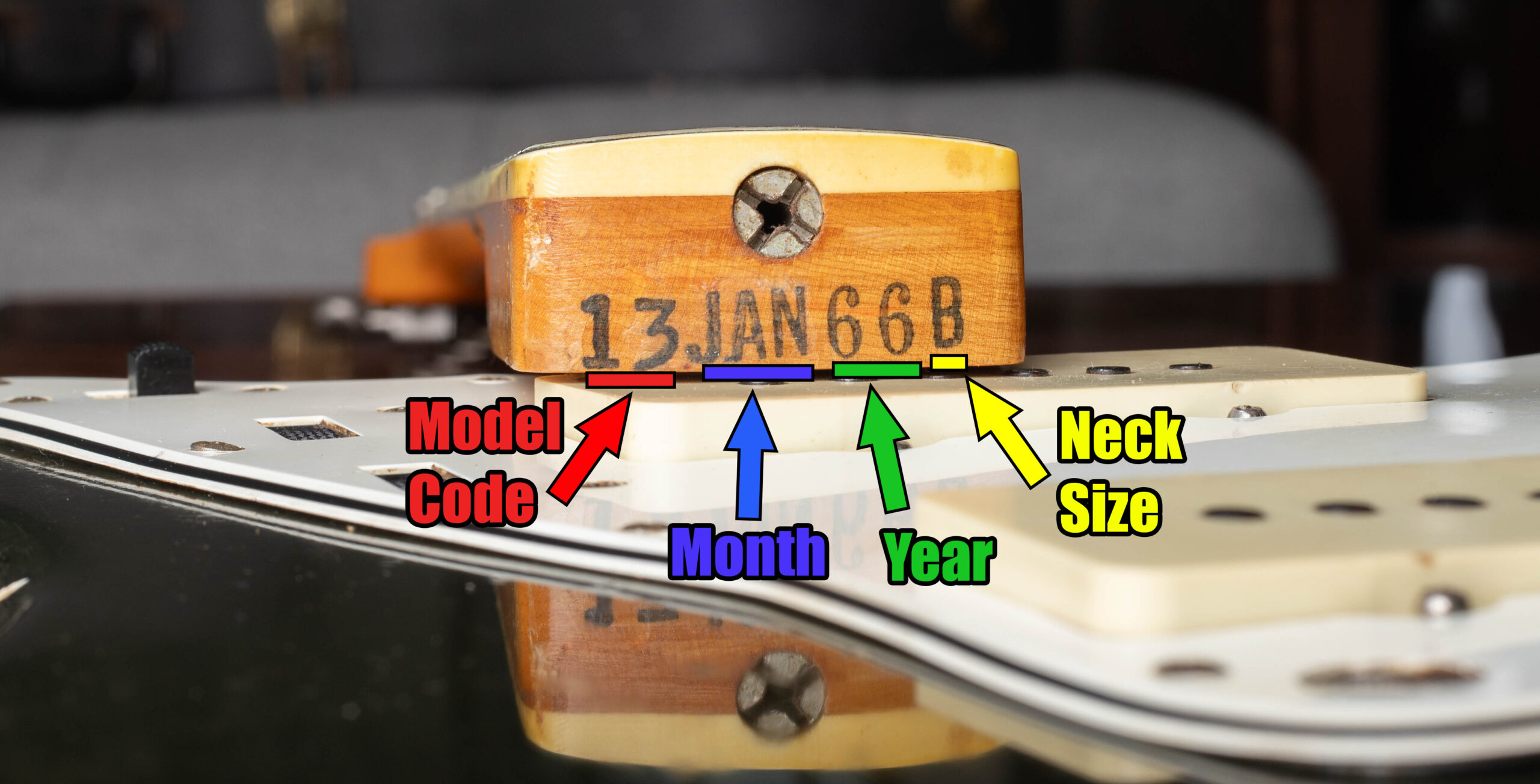
Beginning in the early 1960s, Fender did away with the pencil neck date and switched to an ink stamp. These ink stamps are slightly more difficult to understand than the pencil dates, but not by much! The first one or two digits before the month indicate the model code. Each Fender model (Stratocaster, Jaguar, Telecaster, etc.) had its own one or two digit code. These codes have nothing to do with the year of manufacture. Following this code, we see the month of manufacture, followed by the last two digits of the year (ie. 63 = 1963). The final letter following the year is the size of the neck. While the vast majority of Fender guitars have a “B” sized neck (a medium sized standard) they can sometimes be found with A (small), C (large) and D (x-large) necks. Instruments with such necks are rarer, but not necessarily more valuable than their “B-neck” counterparts.
Fender Guitar Body Date Codes
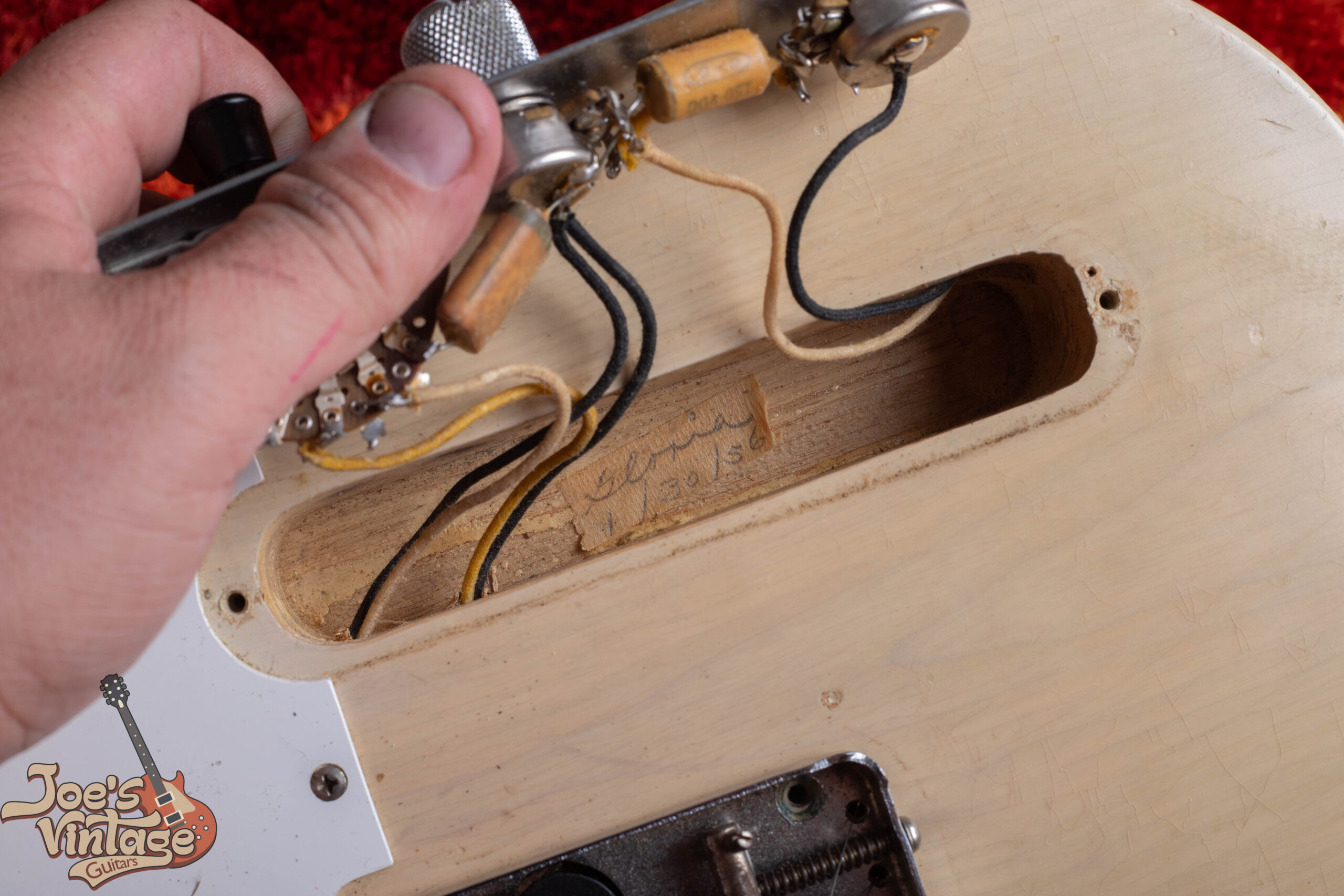
Fender guitars from the 50s and early to mid 60s often bear a written date somewhere on the body of the instrument. The location of this date varies, but it can most often be found in the neck pocket, one of the pickup cavities, or in the rear tremolo cavity for Stratocaster models. The date is a simple month and year format. Sometimes, a date can also be found written in pencil on a piece of masking tape inside one of the cavities of the guitar.
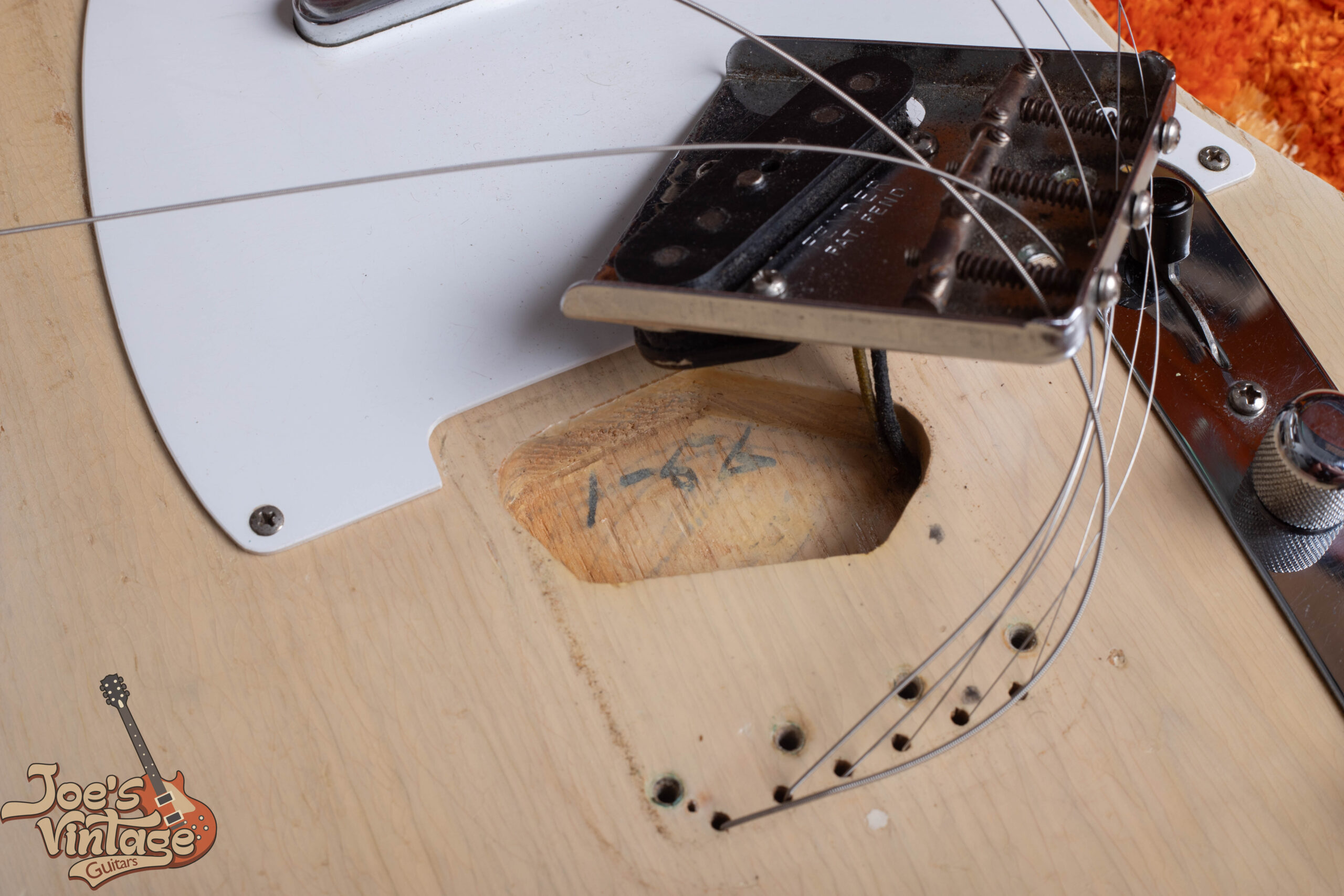
Vintage Fender Pickup Dates & Fender Pickup Codes
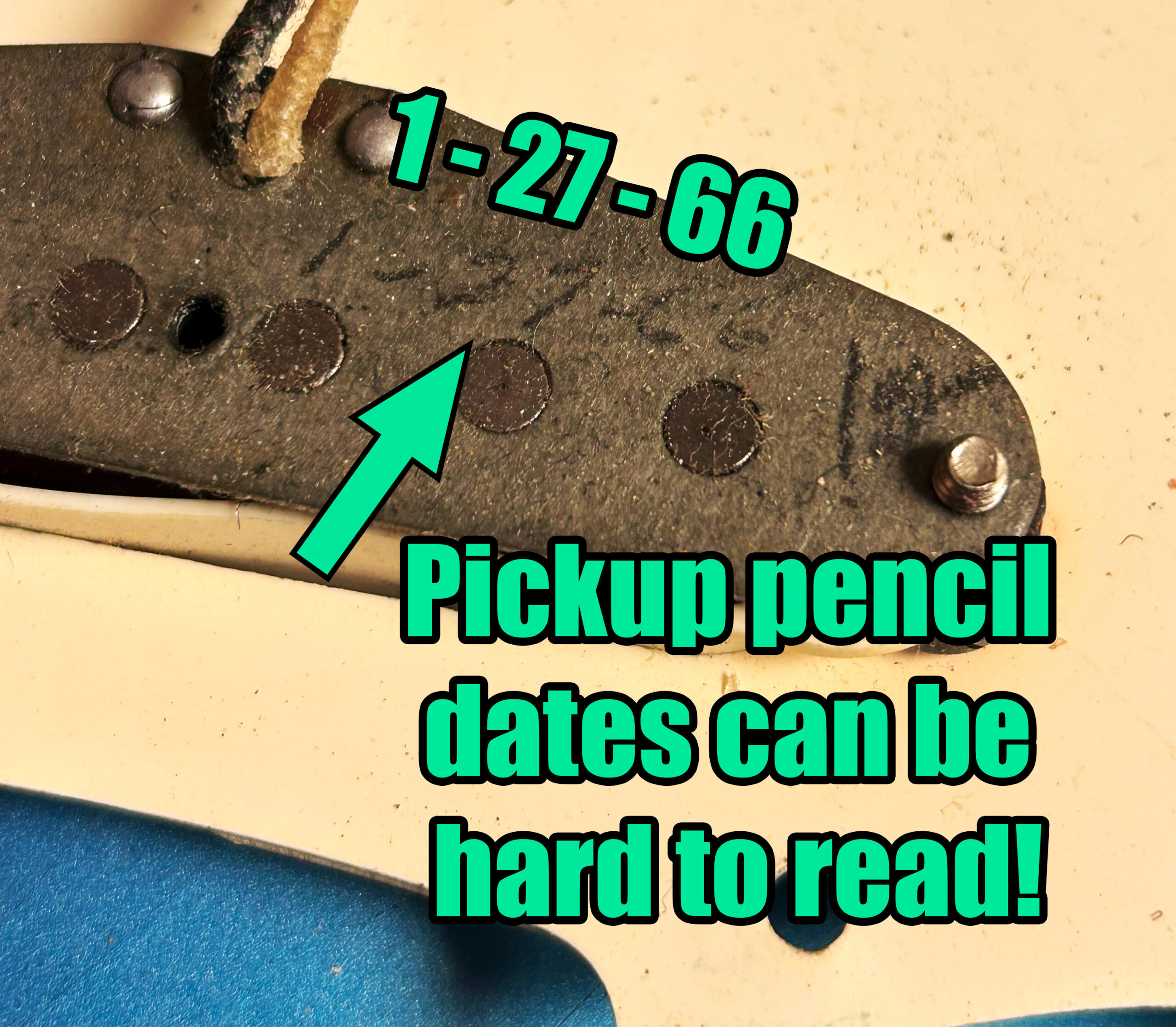
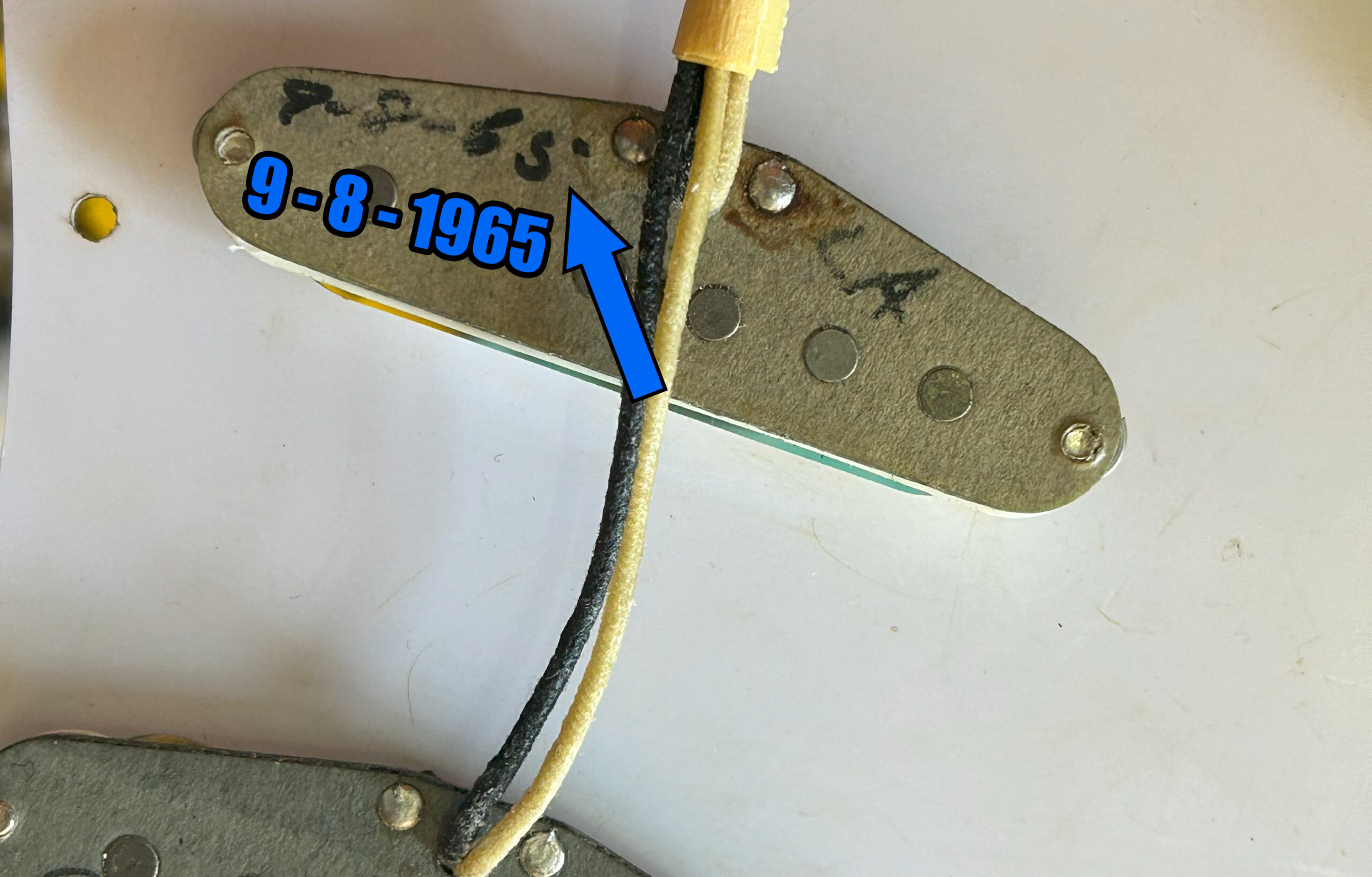
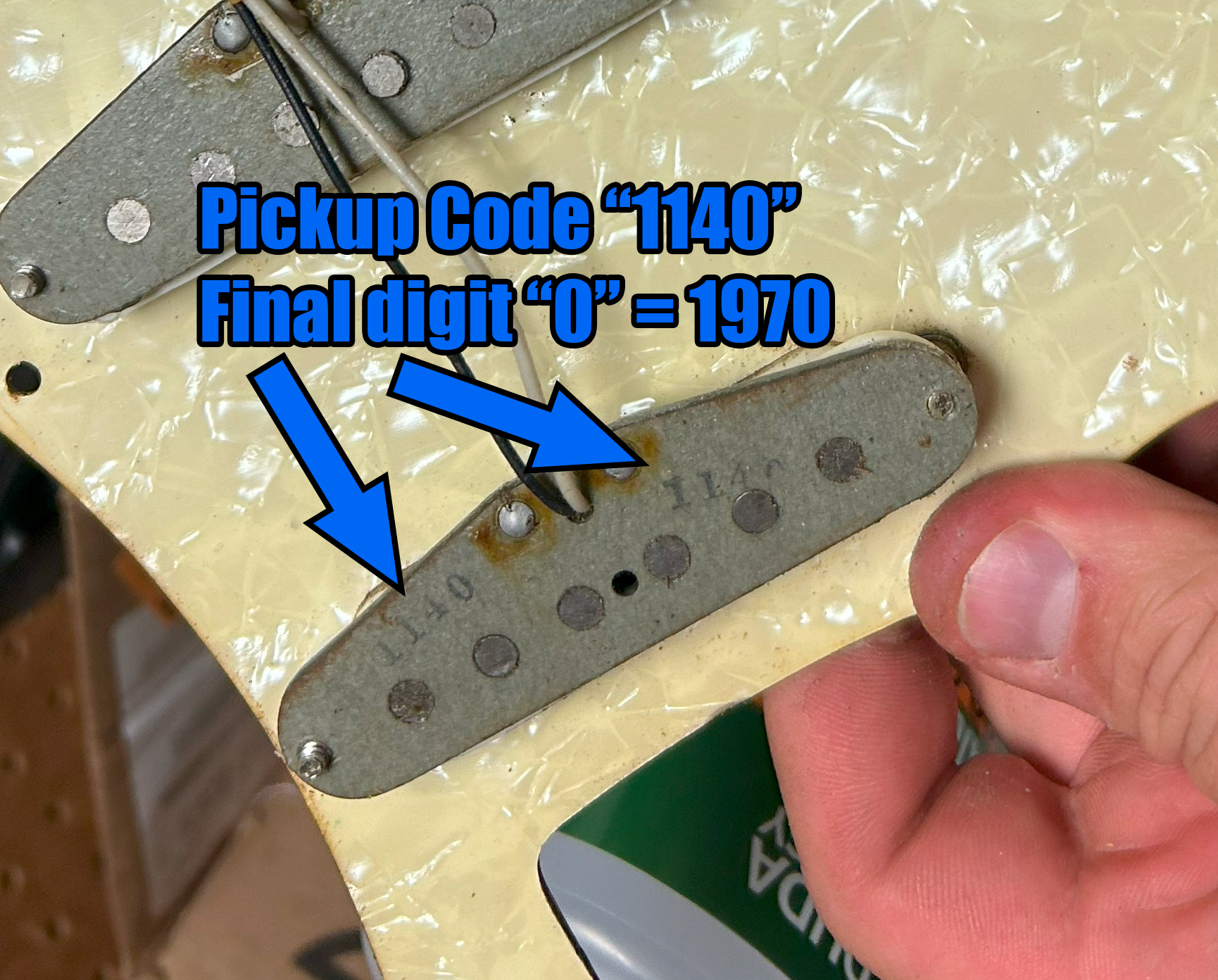
Dating your Fender guitar using pickup codes and pickup dates is not the most reliable way to do so, as the use of pickup dates was very inconsistent, however, when they are present, they certainly can aid in dating your instrument. Pickup dates can be found on the back of the pickups and consist of a pencil or ink date from the 1950s until 1968, or a 3-6 digit code beginning in 1969. To decode the 3-6 digit pickup codes, simply look at the last one or two digits of the code; these are the last one or two digits of the year. For example, 1139 = 1969 or 161377 = 1977. You will sometimes have to use a little bit of deductive reasoning to figure out if you should be looking at the last two digits, or just the last digit alone!
Fender Pot Codes (Fender Potentiometer Codes)
Potentiometers, or pots for short, are small metal cans mounted at the back of the control knobs on an electric guitar. On a Fender, they are found behind the control plate or pickguard and thus must be accessed by gently removing these parts.
Potentiometer codes are a great way to date an antique Fender guitar and verify the originality of its electronic parts. Musicians and collectors often rely on these codes to authenticate vintage Stratocasters, Telecasters, and other Fender instruments.
Please note that dating Fender potentiometers can be more complex than checking a serial number or neck stamp. The codes are sometimes hidden under solder, so they can be difficult or impossible to read. You may have to look at multiple pots in order to piece together the date codes.
Step 1: Find the Manufacturer Code
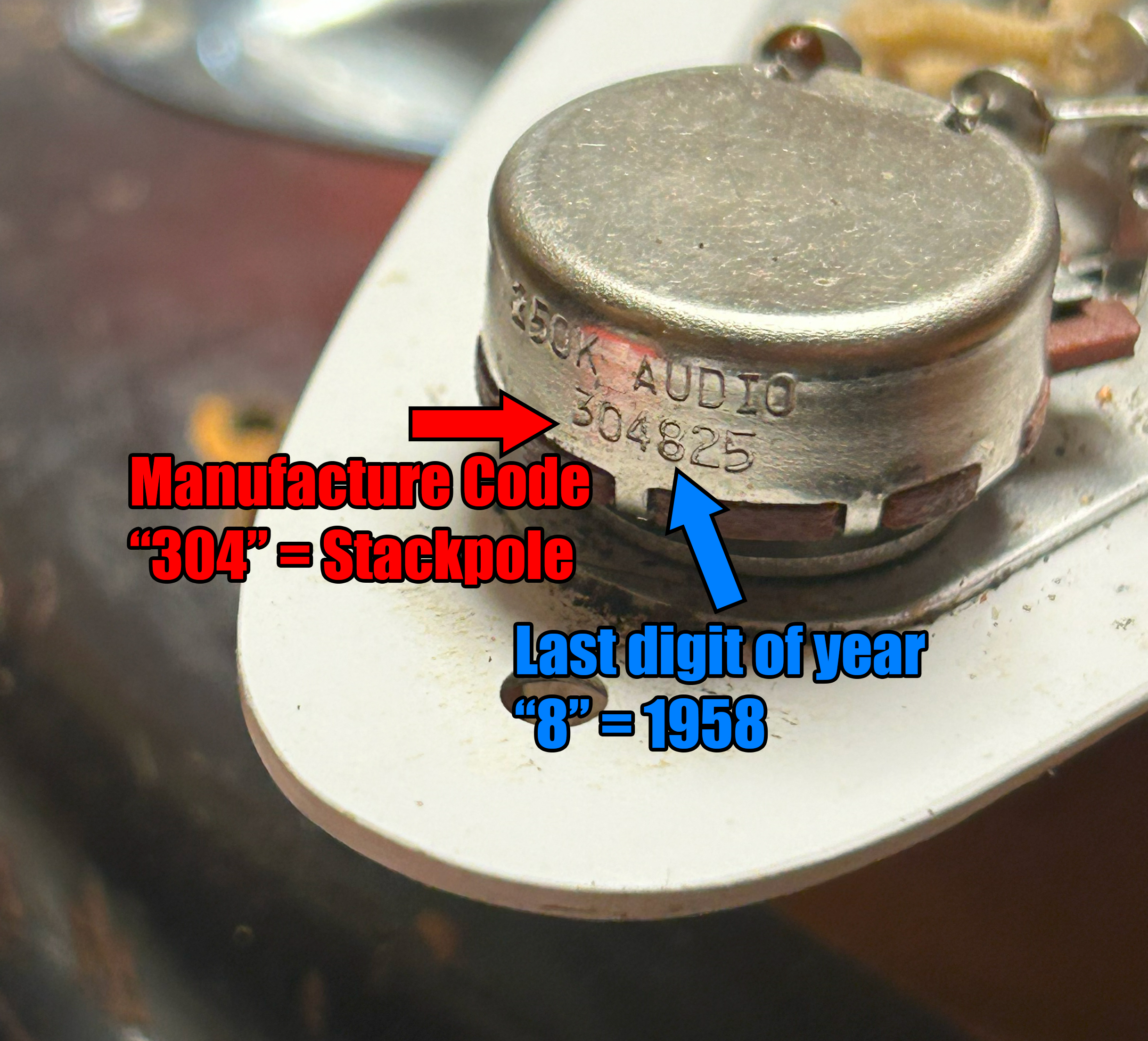
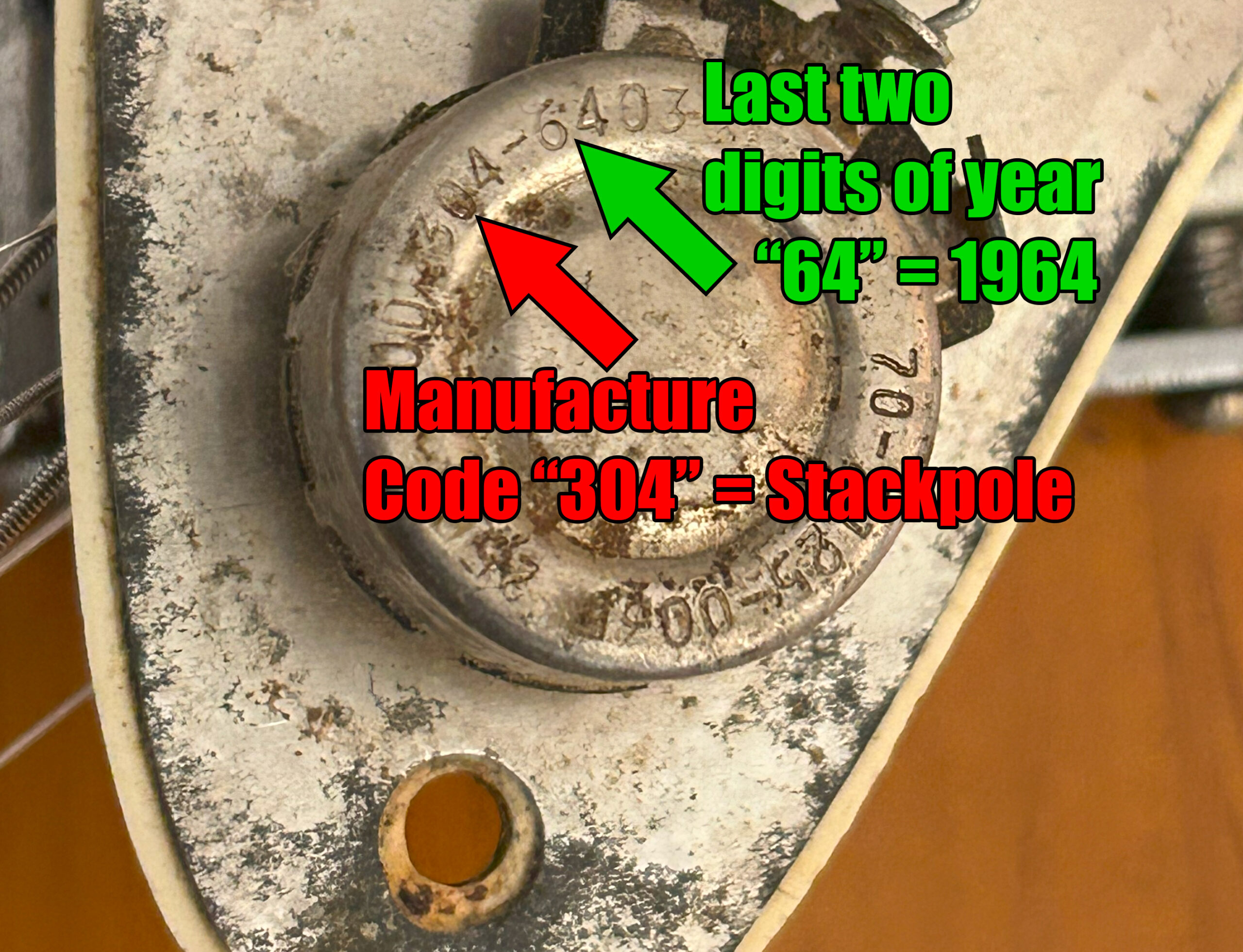
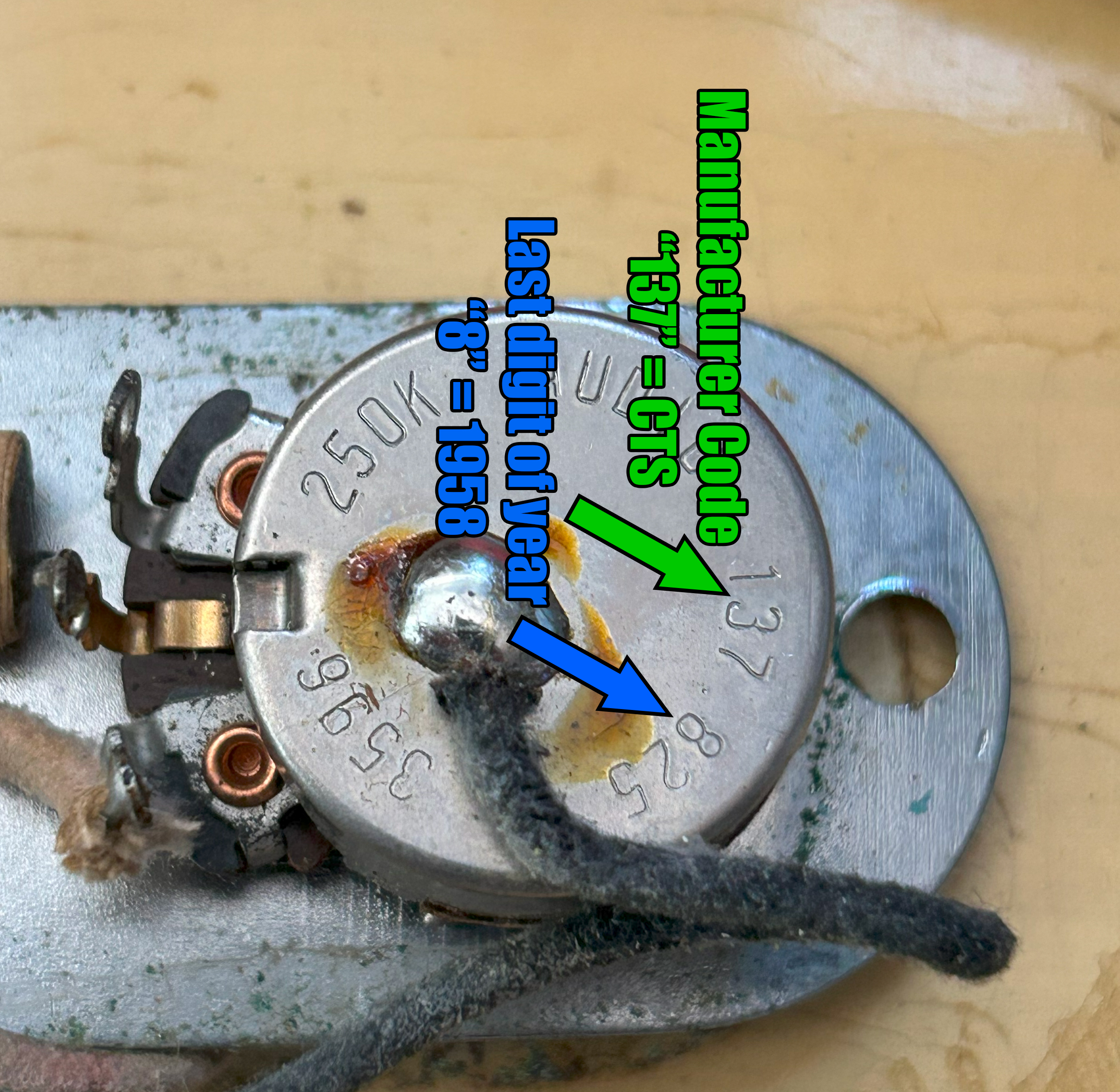
On Vintage Fender potentiometers, the first step is to find one of two manufacturer codes stamped into the back of the pot. You’ll be looking for “304” or “137”:
304 = Centralab
137 = CTS (Chicago Telephone Supply)
The manufacturer code will not aid you in dating the pot, but it will help you to find the digits that DO help to date it.
Why Potentiometer Codes Matter
- Help date your Fender guitar with greater precision
- Check whether the pots are actual vintage components or later replacements
- Provide valuable information for collectors, restorers, and appraisers
Step 2: Decode the Date
Directly following the manufacturer code, there will be three or four numbers which denote the date of manufacture:
Three-digit codes: The first digit is the last digit of the year, and the following two are the week of manufacture.
Example: 632 = 32nd week of 1956
Four-digit codes: The first two digits are the last two digits of the year, and the last two digits are the week of manufacture.
Example: 6243 = Week 43 of 1962
Because pots were occasionally produced months before being put into a guitar, keep in mind that the potentiometer date will usually predate the final assembly of the guitar by a few weeks or months.
Fender Serial Number Lookup Resources
If you’re trying to determine the authenticity, production year, or origin of your Fender guitar, using reliable lookup resources is crucial. While serial numbers can sometimes be tricky due to overlapping sequences and inconsistencies, there are still valuable methods to verify your instrument’s history.
Joe’s Vintage Guitars
Last but not least, you can always contact us at Joe’s Vintage Guitars for more information about your Fender! We’ll give you trusted details about your guitar so that you can learn all about it, especially if you’re planning to sell it. Call or text us at 602-900-6635!
1

Online Fender Serial Number Databases
There are several online resources where enthusiasts and collectors like us have compiled extensive databases of Fender serial numbers, including The Guitar Dater Project, GuitarHQ, and The Fender Forum.
2
Fender’s Official Serial Number Lookup Tool
Fender offers an official Serial Number Lookup tool on their website, where you can enter your guitar’s serial number to retrieve manufacturing details. This is one of the most reliable ways to verify the authenticity and date of your instrument.
3

Get In Touch With Joe
For A Free Fender Guitar
Consultation Today!
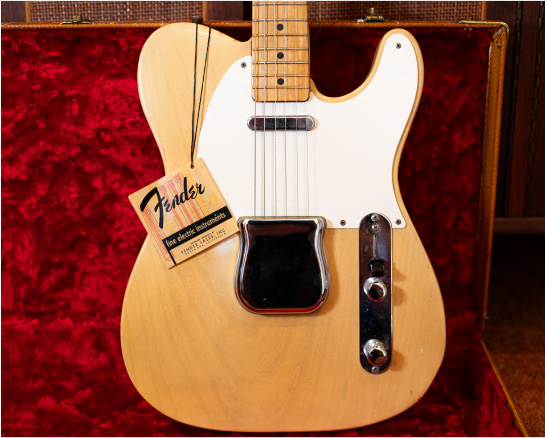
Decode your Fender’s Past With Joe’s Vintage Guitars
Looking over the history behind your Fender or considering its market value? Joe’s Vintage Guitars, specialized in collecting vintage guitars in Mesa, offers expert evaluations. If you’re thinking it might be time to sell your Fender guitar, we can help you determine its worth and make the process simple and stress-free. Reach out for a no-obligation assessment! Contact us today for more help!
Frequently Asked Questions About | Fender Serial Numbers
What Does My Fender Serial Number Tell Me?
A Fender serial number offers important details about your guitar’s production, such as its manufacturing location, production year, and sometimes the specific model. Fender uses different serial number schemes for various periods, so by decoding the number, you can learn when and where your Fender guitar was made. This information is valuable for authentication, tracking, and confirming its origin, especially when buying or selling a used Fender guitar.
Are Japanese And Mexican Fender Serial Numbers Different From American-Made Ones?
Yes, Fender uses different serial number formats for guitars made in Japan, Mexico, and the United States. American-made Fender guitars generally have serial numbers starting with “US” or using a 6-digit format. Mexican Fenders typically use an “MN” prefix or other formats, while Japanese Fenders may use numbers beginning with “E,” “A,” or “JV” for instruments produced in the ’80s. These differences help identify the country of manufacture and production year.
Can I Use a Fender Serial Number To Determine The Value Of My Guitar?
The serial number alone isn’t enough to determine the exact value of your Fender guitar, but it can help you assess its age and origin, which are key factors in determining value. Vintage instruments may hold higher value depending on their rarity, condition, and historical significance. To get an accurate value, it’s important to consider the guitar’s condition, rarity, specific model, and market demand. That’s why it is so important to find a reliable guitar expert for help.
Does The Serial Number Tell Me The Exact Model Of My Fender Guitar?
While the serial number can provide clues about your guitar’s age and manufacturing location, it doesn’t specify the exact model of the instrument. Fender serial numbers are primarily used to indicate the production year and country of manufacture. To determine the precise model, you can try cross-referencing the serial number with other identifying features such as body shape, hardware, and specifications, or refer to Fender’s product catalog or a vintage guitar expert.
Why Isn’t My Vintage Fender Guitar’s Serial Number Showing Up In Fender’s Database?
This can happen for many reasons. Older models, especially those made before the 1970s, may not have been registered in digital records, as Fender’s database is a relatively recent development. Additionally, some limited-edition or custom-built guitars may not be in the database. If your guitar is particularly rare or has a non-standard serial number format, it might not be easily identifiable through Fender’s current system. Luckily, you can count on us for more help with your vintage Fender guitar!
How do I identify the production date of a Fender Stratocaster or Telecaster by serial number?
Start by checking the serial number prefix and comparing it to Fender’s era-based charts. This gives a general time frame, not an exact date, so it’s always wise to confirm with neck dates, electronic codes, and visible period-correct features.
Where is the serial number located on different Fender models?
Serial number placement depends on the era. Older Fenders often have them on the bridge or neck plate, while later models usually place them on the front or back of the headstock. Some vintage guitars also hide dating information on the neck heel.
How can I check if my Fender guitar is authentic using the serial number?
The serial number should match known Fender formats for its era and country of origin. That said, authenticity isn’t confirmed by serial numbers alone. Checking hardware, decals, neck stamps, and build details together gives a much clearer picture. Similarly, contacting a vintage guitar expert (like us!) is also an excellent idea to confirm if the guitar is authentic or not.
What do Fender amp serial numbers indicate about manufacturing year and location?
Amp serial numbers can give you a clue about the product period and factory, but they’re usually inconsistent. Many players rely more on circuit design, transformer codes, and internal components, which usually provide a clearer and more reliable manufacturing timeline.
Are Fender serial numbers reliable for dating vintage instruments?
They’re helpful, but not foolproof. Fender reused serial ranges and didn’t always apply them in strict order. That’s why serial numbers should be treated as a starting point and verified with neck stamps, pot codes, and original construction details. Additionally, getting a professional check from our experts is another excellent approach to validate the guitar’s date and authenticity.
How can I date a Fender guitar made in Mexico, Japan, or the USA using the serial number?
Country prefixes like MX, MIJ, JD, or US are the first clue. These letters show where and roughly when the guitar was made. The numbers that follow usually narrow it down to a specific year or short production window.
How do Fender Custom Shop serial numbers differ from standard production models?
Custom Shop guitars use their own serial formats and don’t follow regular production charts. They’re typically backed by certificates of authenticity and detailed paperwork, which makes official documentation far more useful than the serial number alone.
Can the Fender serial number tell me if my guitar is part of a limited edition or special run?
Usually, no. Limited editions are identified through model names, special decals, certificates, or factory documentation. The serial number itself rarely indicates whether a guitar was part of a short run or special release. If you want to see if your guitar is a limited edition or special run, it’s better to contact a vintage guitar expert.
How do I read Fender Jazz Bass and Precision Bass serial numbers to determine the year?
Bass guitars follow the same serial number systems as Fender guitars from the same era. The model doesn’t change how serials work, so you can date them using the same charts and confirmation methods.
What’s the difference between pre-CBS and CBS-era Fender serial numbers?
Pre-CBS Fenders usually have lower serial numbers and include the famous L-series plates. CBS-era instruments introduced higher ranges, F-logo neck plates, and eventually moved serials to the headstock instead of the neck plate.
How do I interpret Fender American Professional and American Original serial numbers?
These modern USA-made models use more consistent serial formats. The prefix and first digits often directly indicate the production year, making them much easier to date compared to older Fender instruments with overlapping serial ranges.
Can a Fender serial number reveal if the guitar has been modified or refinished?
No, serial numbers won’t show modifications. Changes like refins, replaced pickups, or swapped hardware can only be spotted through hands-on inspection, checking finish texture, screw holes, solder joints, and part originality.
How do Fender serial numbers work for instruments made after 2010?
Post-2010 Fender serial numbers are more standardized and easier to decode. They usually include country and year indicators and can often be verified quickly using Fender’s official serial number lookup for accurate production details.
How can I date a Fender Mustang, Jaguar, or Jazzmaster using the serial number?
These offset models follow the same serial number eras as other Fender instruments. The best results come from pairing the serial range with neck stamps, pickup dates, and hardware styles that match the correct production period or simply getting the guitar checked by our expert.
How do Fender SN codes indicate factory location and production batch?
Letter prefixes identify where the instrument was made and roughly when. The number sequence groups instruments produced around the same time, but it doesn’t reflect the exact order they were built on the factory floor.
Read Our Blog For Vintage Guitar Serial Numbers, Values & More
Vintage Fender Amp Serial Numbers – How To Find The Year
Curious about your vintage Fender amp's age? Use tube codes, transformer details, and features to date it!
Martin Serial Number Lookup and Guide
Finding your Martin guitar's model and year is simple with this quick serial number lookup & guide.

How to Read Gibson Serial Numbers
Use this simple guitar to decode your Gibson serial number to ascertain the year of your guitar.